Why this book?
- It views dialogue as an ethical and human skill, not merely a communication technique.
- It clarifies the link between weak dialogue, misunderstanding, and social harms.
- It rediscovers the practical rules and manners of human communication.
- It connects dialogue to the possibility of a fair society (in Habermas’s terms).
- It is worth reading for those interested in ethics, contemporary religiosity, and a culture of mutual understanding.
About the book
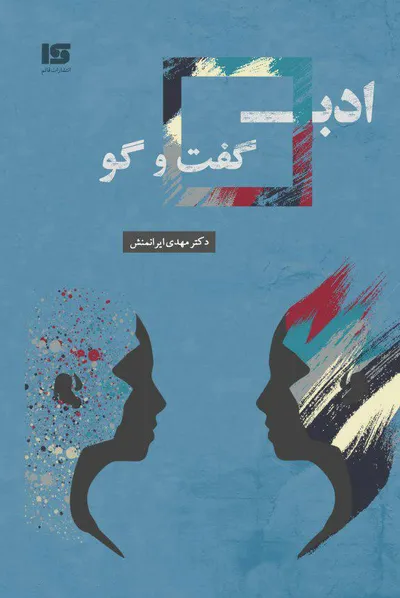
The Etiquette of Dialogue begins from the observation that modern humanity has built sophisticated tools for transmitting information, yet remains incapable of establishing human communication and reaching mutual understanding. The author argues that misunderstandings—from the family level to society, from culture to religion, and from intra-group relations to inter-group ones—largely stem from our weakness in the manners and skills of dialogue.
From this perspective, dialogue is not merely a method of exchanging views, but a way of shaping ethics, mutual understanding, and a more human way of living. In this work, Mehdi Iranmanesh seeks to identify the rules, manners, and skills of communication and dialogue, and to remind us of their importance in individual and social life. The reference to Habermas also shows that the book does not treat dialogue merely as a psychological matter or moral advice, but links it to the possibility of a human and fair society.
This book is suitable for readers interested in the ethics of dialogue, human communication, religiosity in the contemporary world, a culture of mutual understanding, and conflict resolution. It can also serve as a helpful text for those involved in education, cultural action, social activity, or interfaith and intercultural dialogues.