Why this book?
- Offering a different analysis of the intellectual and cultural underpinnings of the 1979 Revolution
- Examining the role of intellectuals and anti-Western discourses in contemporary Iranian history
- Understanding the relationship between modernization, cultural identity, and the crisis of political legitimacy
- Familiarization with a political sociology approach to the phenomenon of revolution
About the book
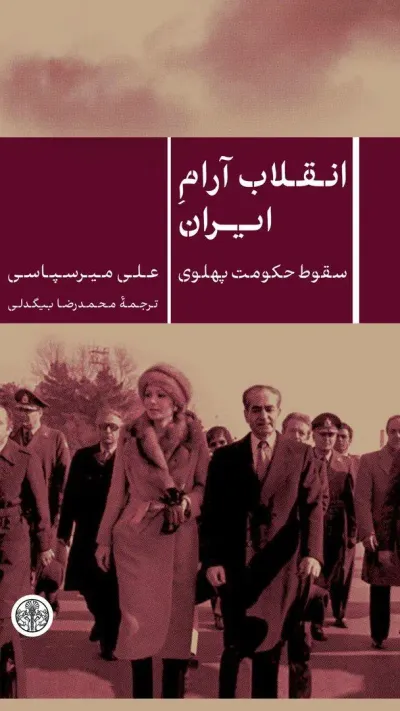
Iran's Quiet Revolution (The Downfall of the Pahlavi State) is a study by Ali Mirsepassi on the intellectual and cultural roots of the 1979 Iranian Revolution. In this work, the author attempts to distance himself from single-factor explanations for the fall of the Pahlavi regime and highlight the role of gradual transformations in the realms of thought, culture, and discourse.
Mirsepassi employs the concept of a "quiet revolution" to explain a process that took shape in mentalities, political language, and society's value systems before the political revolution erupted in the streets. He shows how certain ideas concerning Westoxification, cultural authenticity, and the return to self spread within Iran's intellectual climate before the revolution and influenced society's perception of modernity and the state.
Drawing on intellectual history and political sociology, the book examines the role of intellectuals and thinkers such as Ahmad Fardid, Jalal Al-e-Ahmad, and Ali Shariati in the formation of certain intellectual currents of that period. It also analyzes the relationship between the cultural policies of the Pahlavi regime and the critical discourses of its opponents.
This work is suitable for students and researchers of contemporary Iranian history, political science, sociology, and those interested in understanding the intellectual roots of revolutions. The book is an invitation to see the revolution not just as a political event, but as the result of profound changes in a society's worldview and culture.