Why this book?
- To become familiar with one of the foundational texts of religious existentialism.
- To understand the relation between faith, ethics, love, and solitude in Kierkegaard’s thought.
- To read a philosophical interpretation of the story of Abraham.
- To reflect on individual choice before the absolute.
About the book
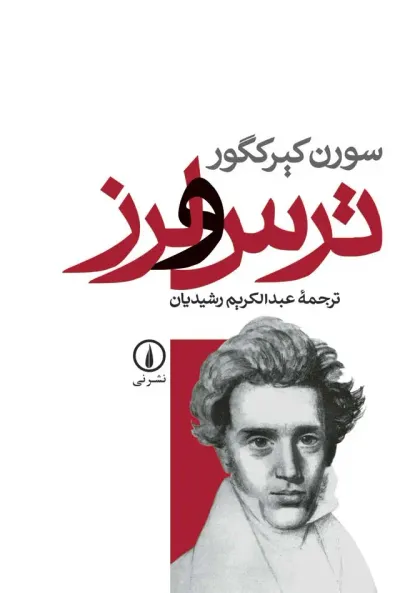
Fear and Trembling by Søren Kierkegaard is one of the classic works of modern philosophy and philosophy of religion. The book was published under the pseudonym Johannes de Silentio, and at its center stands the story of Abraham and the command to sacrifice Isaac; a story Kierkegaard treats not merely as a religious narrative, but as a test case for understanding faith.
In this work, Kierkegaard establishes a fundamental tension between universal ethics and religious faith. For him, Abraham is the “knight of faith”: one who, before the divine command, goes beyond the realm of universal ethics. Yet this going beyond is neither irresponsibility nor madness, but an experience filled with fear, trembling, solitude, and absolute trust.
The book occupies a central place in Kierkegaard’s thought, since many of the main themes of his philosophy are compressed within it: individuality, anxiety, choice, faith, paradox, inward truth, and the human relation to God. These themes later had a deep influence on religious existentialism and twentieth-century existential philosophy.
This book is suitable for readers interested in philosophy of religion, Christian theology, existentialism, ethics, and existential questions. Fear and Trembling is not an easy text, but it rewards the patient reader with one of the deepest philosophical reflections on faith.