Why this book?
- To gain a systematic introduction to the main problems of the philosophy of art.
- To see the historical course of aesthetics from ancient Greece to contemporary thought.
- To understand the relation of art to truth, society, modernity, and the audience.
- To become familiar with Babak Ahmadi’s reading of philosophers and theorists of art.
- For students and serious readers of philosophy, literature, and art.
About the book
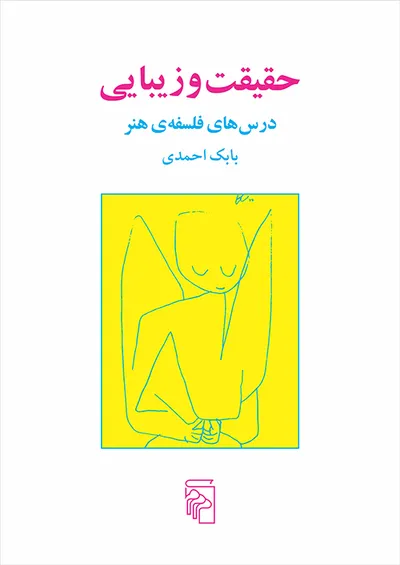
Truth and Beauty: Lessons in the Philosophy of Art is one of the most important Persian-language books on aesthetics and the philosophy of art. In this work, Babak Ahmadi pursues the fundamental questions of art across 13 chapters and 26 lessons: What is beauty, how is art related to truth, how does an artwork produce meaning, and what role does the audience play in understanding it?
The book begins with classical discussions of beauty in Plato, Aristotle, Plotinus, Burke, and Kant, then moves to Hegel, the German Romantics, Schelling, Schopenhauer, and Nietzsche. It then examines the social context of the artwork in the thought of Marx, Engels, Lukács, and Gramsci, and follows the question of art and modernity through Adorno, Benjamin, and Brecht.
In later chapters, Ahmadi turns to expression, form, structuralism, psychoanalysis, reception aesthetics, interpretation, media, and the problem of meaning. The final chapter is devoted to Heidegger and the mystery of the artwork, explaining the relation between poetry, truth, and the disclosure of world in his thought.
The book holds an important place in Babak Ahmadi’s body of work, because it gathers many of his enduring concerns with modernity, meaning, interpretation, language, and art into a coherent pedagogical form. Truth and Beauty is a guiding book for students of philosophy and art, readers of literary theory, and anyone who wants to enter serious debates in the philosophy of art through Persian.