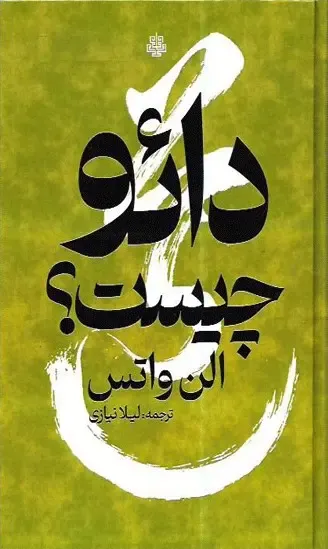
Why this book?
- Offers a clear, direct entry point into one of the most intricate concepts in ancient Chinese philosophy.
- Explains wu-wei (effortless action) through concrete, accessible examples.
- Places Taoism alongside Western thought, highlighting the contrast in their approaches to life.
- Serves as an invitation to simplicity and spontaneity in daily life, not merely a theoretical discussion of Eastern philosophy.
- Despite its brevity, offers a solid entry point for a first encounter with Alan Watts's thought.
About the book
"What Is Tao?" is a short but dense treatise by Alan Watts, one of the leading interpreters of Eastern philosophy and mysticism for a Western audience, in which he takes on one of the most difficult yet foundational concepts of Chinese thought: Tao, a term Watts treats not as a mere linguistic equivalent but as an experience that eludes definition and intellectual argument.
The book opens by asking what it means to live in harmony with the natural order of the world, and how this outlook differs from the Western habit of struggling against and mastering nature. From here, Watts leads the reader toward the book's central concept: wu-wei, often translated as "effortless action" or "non-action," meaning the alignment of one's conduct with the natural flow of things rather than passivity before it.
Another part of the book is devoted to the importance of simplicity and spontaneity in daily life, where Watts calls on the reader to set aside unnecessary complexity and respond naturally to situations. What sets this work apart among Watts's writings is its brevity and practicality: without sacrificing philosophical precision, it renders Taoism into language usable in contemporary life.