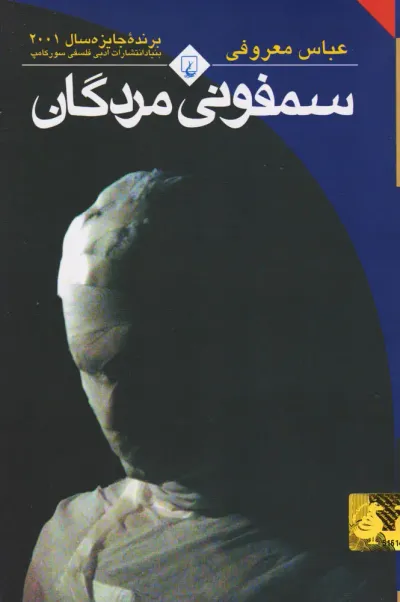
Why this book?
- To read a polyphonic and distinctive narrative of an Iranian family's collapse.
- To encounter a contemporary reimagining of the Cain and Abel theme and fratricide.
- To reflect on the conflict between tradition, individual freedom, love, and patriarchal authority.
- To become acquainted with the use of stream of consciousness and a movement-like structure in a Persian novel.
- To understand a part of Iran's social atmosphere in the mid-twentieth century.
About the book
"Symphony of the Dead" is one of Abbas Maroufi's best-known novels; the story of the Urkhani family in Ardabil, whose internal conflicts gradually lead to collapse and tragedy. At the center of this struggle are two brothers: Aydin, a poetic, bookish young man who wants to choose his own path, and Urhan, who is loyal to their father's traditions and whose jealousy of his brother drives the family's fate toward catastrophe. This confrontation evokes the story of Cain and Abel, making fratricide one of the novel's central themes.
Maroufi does not narrate the story from a single, fixed point of view. Events are recounted from the perspectives of various characters, and time does not progress linearly. The novel is structured in movements that, like sections of a symphony, juxtapose different voices and narratives. The use of stream of consciousness, temporal shifts, and polyphonic narration means the reader continually discovers new pieces of the family's past and relationships.
Behind the family story, the novel addresses themes such as patriarchy, the suppression of individuality, generational conflict, the authority of tradition, the position of women, jealousy, love, and family breakdown. The father opposes Aydin's poetry and reading, trying to make his sons follow in his footsteps; in contrast, Aydin is in search of an independent life, love, and the possibility of choice. Ayda, too, is trapped in a structure that gives her little room to determine her own destiny.