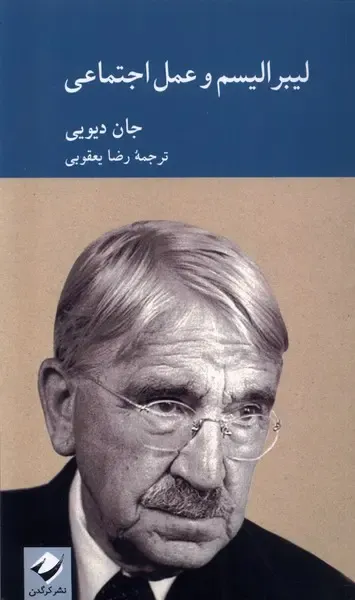
Why this book?
- To understand John Dewey’s pragmatist reading of liberalism.
- To recognize the crisis of classical liberalism in the face of modern industrial society.
- To see the connection between individual freedom, social responsibility, and democratic education.
- For readers interested in political philosophy, democracy, and social justice.
About the book
Liberalism and Social Action is one of John Dewey’s important works in political philosophy and social theory. In this book, Dewey returns to the history of liberalism and shows how concepts such as individual freedom, natural rights, and limited government made sense in their own historical context, but require rethinking in modern industrial society.
The book’s central aim is not to criticize classical liberalism in order to abandon liberalism, but to renew it. Dewey argues that genuine freedom is not achieved merely through the absence of external interference; freedom requires institutions, education, social opportunities, and conditions in which individuals can develop their capacities. From this perspective, the state and collective action can serve as instruments for reform and the expansion of freedom, not necessarily as its enemies.
This book has an important place in Dewey’s intellectual project because it connects his pragmatism to politics, education, and social reform. It is suitable for readers who want to understand liberalism not only in terms of individual rights and the free market, but also in relation to democracy, education, social justice, and the possibility of institutional change.