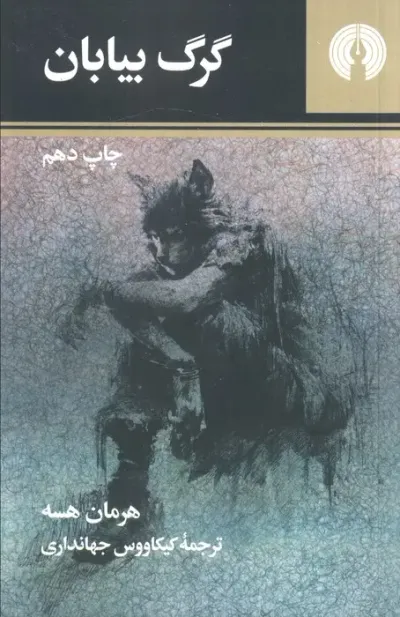
Why this book?
- To encounter a literary narrative of the fissures and fragmentations of the human psyche.
- To reflect on loneliness, alienation, and the crisis of life's meaning.
- To become acquainted with one of Hermann Hesse's most personal and psychological novels.
- To see Hesse's critique of the bourgeois values and intellectualism of his time.
- To experience a novel that blends reality, fantasy, and philosophical self-examination.
About the book
Steppenwolf is the story of Harry Haller; a lonely, melancholy intellectual who sees himself as a divided being: half rational, cultured human and half wild, isolated wolf, at odds with society. He loathes everyday life and bourgeois values, yet at the same time cannot completely separate himself from the world he despises.
The novel has a multi-layered structure, composed of Harry's notes, intermediary narratives, and fantastical sections. This structure allows Hesse to examine the protagonist's psychological crisis not merely as a story, but as a question about identity, freedom, loneliness, and the inner multiplicity of the human being. The arrival of Hermine in Harry's life, and his subsequent new experiences, steers the narrative from isolation toward a more complex encounter with life.
Steppenwolf is one of Hermann Hesse's major works and among the novels that clearly bear the traces of the author's personal experiences and spiritual crises. In this work, Hesse challenges the simple duality of "civilized man/wild wolf" and shows that the human personality cannot be reduced to two fixed components.