Knowledge can be communicated, but not wisdom.

Life and Thought
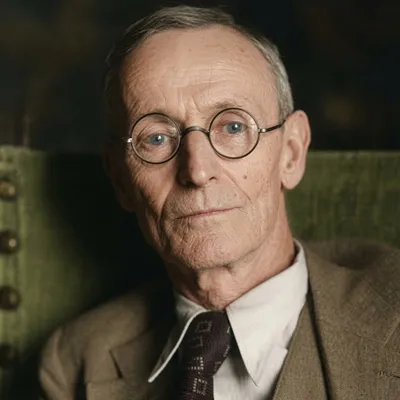
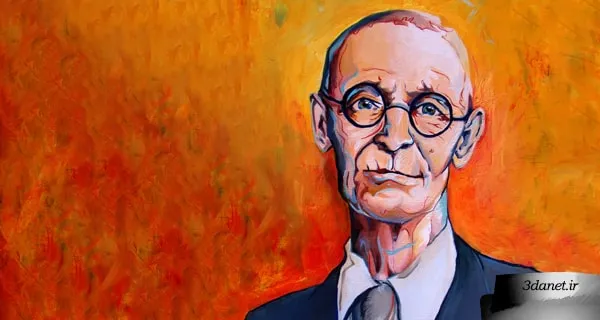
Hermann Hesse, 1877–1962, was a German-Swiss writer, poet, and painter, and the winner of the Nobel Prize in Literature in 1946. He was born in the town of Calw in southern Germany and grew up in a religious, book-loving family. His parents had a background in missionary work in India, a context that shaped Hesse's interest in Eastern mysticism and Indian philosophy.
In his youth, Hesse struggled with the strict educational and religious system, fled the Maulbronn Abbey seminary, and experienced periods of mental crisis, depression, and rebellion. He later worked for a time in a bookshop and gradually entered literary life. He emigrated to Switzerland in 1912 and acquired Swiss citizenship in 1923. Painting, gardening, solitude, nature, and spiritual seeking were important elements of his life and works.
Intellectual and Literary Domains
Hesse's works often revolve around the individual's conflict with society, the search for identity, spiritual crisis, the artist's solitude, the reconciliation of spirit and life, and the relationship between East and West. He was influenced by German Romanticism, naturalism, the psychoanalysis of Jung and Freud, Eastern mysticism, and Indian philosophy. In many of his novels, the protagonist embarks on a kind of inner journey and self-discovery.
Bibliography
Writings and transcribed lectures13 titles
A Journey Towards Dawn
Steppenwolf
Demian
Siddhartha
Peter Camenzind
Under the Wheel
Gertrude
Rosshalde
Narcissus and Goldmund
Journey to the East
The Glass Bead Game
Klein and Wagner
Klingsor's Last Summer


.webp)