Philosophy
Clifford's Ethics of Belief: A Summary
In 'The Ethics of Belief', William Clifford argues that believing without sufficient evidence is always morally wrong, regardless of the outcome, because belief is a social responsibility and credulity drags society toward barbarism. He insists that belief on insufficient grounds is always mistaken and that investigating the evidence is a duty.
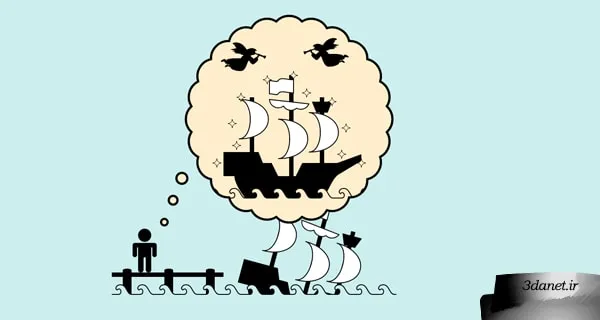
In 1877, William Kingdon Clifford, the Cambridge mathematician and philosopher, published an essay entitled "The Ethics of Belief" in a periodical called the "Contemporary Review," which later sparked considerable discussion and influence in this field. In this essay, Clifford addresses not the conditions of knowledge and how it is acquired, nor the issue of justification or cognition, but rather the ethical questions surrounding belief; that is, he examines what moral duties human beings have regarding believing something and what their responsibilities are in this matter. In this sense, Clifford's discussion, more than fitting within the domain of epistemology, is an ethical discussion which, of course, became highly significant in epistemology, and especially in religious epistemology, due to the response James later gave to it.
Clifford begins his writing with the example of a shipowner. The ship, though old and not entirely reliable as to its complete soundness and safety, had nonetheless made many sea voyages up to that point, and although it had delivered its passengers safely to their destination, it had often required repair and restoration. The shipowner was constantly in turmoil within his own mind, wondering whether to pay a hefty sum to repair and restore his ship, or to trust in God and send the ship to sea, and just as the ship had managed to complete all previous voyages safely, it would safely navigate this sea voyage as well. The shipowner finally overcomes his doubts and decides to send the ship to sea without restoration or repair, telling himself that God will surely protect all these worried families who have left their homeland to find a better life elsewhere. With these self-persuasions, he erases his doubts and, with a clear heart and a peaceful mind, watches the ship's departure and prays for the well-being of the passengers. The ship, of course, sinks in the ocean, and its owner collects his insurance money and speaks to no one about the matter.
In Clifford's view, the aforementioned shipowner has committed an immoral act; not merely because it led to a harmful outcome, but because the shipowner's action is wrong in its origin, meaning that morally, the shipowner should have obtained sufficient reasons for his ship's soundness before sending it to sea. The shipowner's moral responsibility lies here: "even if in the end he may have felt so certain that he could not think otherwise, yet inasmuch as he had knowingly and willingly worked himself into that frame of mind, he must be held responsible for it." (Faith and Reason, Collected Essays; translated by Hossein Kiani, essay "The Ethics of Belief," Ashiane Ketab, p. 29) Here we see that Clifford considers belief-formation to be a kind of voluntary action; not, of course, in the sense that the entire act of belief-formation is purely voluntary, but in the sense that the will is involved in it, and a person can voluntarily act in such a way that the undesirable aspects of a decision appear dimmer in his view, and the aspects he deems desirable appear more prominent. As we said, Clifford's judgment about the morality or immorality of an act does not depend on the outcome of that specific act; therefore, if that ship had completed its voyage safely, "would that diminish the guilt of the shipowner? Not one jot. When an action is once done, it is right or wrong for ever; no accidental failure of its good or evil fruits can possibly alter that. The man would not have been innocent, he would only have been not found out. The question of right or wrong has to do with the origin of his belief, not the matter of it; not what it was, but how he got it; not whether it turned out to be true or false, but whether he had a right to believe on such evidence as was before him." (ibid., p. 29) As we see, what matters to Clifford is the method of arriving at a belief, not the truth or falsity of the belief itself. If we have sufficient evidence for arriving at a belief, we are morally justified in believing it, and if we do not have sufficient evidence, we are morally unjustified. As we see, Clifford is an evidentialist here. That is, he considers belief in a particular matter justified only when one has sufficient evidence to support that belief or conviction.
But what does Clifford mean by sufficient evidence? Many of his critics have pointed out that one of the ambiguities in Clifford's theory is precisely this: he does not specify exactly what he means by sufficient evidence. Is there a clear boundary in this regard, or is the matter left to one's own discretion without any explanation being provided? In his essay, Clifford makes a small allusion and tries to explain what he means by "sufficient evidence." In his view, sufficient evidence means knowledge about everything, and this means having knowledge about how to confront a subject in all circumstances.
Now the question is, why does Clifford consider believing something without sufficient evidence to be an immoral act? In his view, human individuals are members of society, and the slightest belief or conviction of each individual in society will affect other members of that society. "The belief of any individual is of immense importance to others. But in view of the fact that no belief is held by an individual alone, this belief, however seemingly insignificant and trivial, and however obscure and unknown the believer, or however negligible and unimportant it may be in reality, or however little effect it may have on the destiny of mankind, we have no choice but to extend our judgment and verdict to all instances of every faith. Faith, that sacred faculty which stirs our decision, resolve, and will, and transforms all the compressed energies of our being into harmonious actions and deeds, is our possession, but not for ourselves—for humanity." (Ibid., p. 24) From Clifford's perspective, believing without sufficient evidence and reasons leads to the emergence of two vices: credulity and gullibility. In his view, these two vices do not only harm the individual but also cause the habit of inquiry and testing matters to fade among the members of society, plunging society into the depths of barbarism.
As we have seen, the rightness or wrongness of the action is not of great importance to Clifford; rather, what matters to him is the method of arriving at belief and conviction, in that believing without sufficient evidence leads to the emergence of credulity and gullibility in individuals, and thereby weakens the whole of society regarding testing and inquiry and causes the decline of society. On this basis, Clifford delivers his famous sentence in this essay: "It is wrong always, everywhere, and for anyone, to believe anything upon insufficient evidence" (The Ethics of Belief, Stanford Encyclopedia collection, translated by Amir Hossein Khodaparast, Phoenix, p. 15). At the end of his essay, Clifford states that "the inquiry into the evidence and grounds must not be done once and for all and thereafter regarded as a problem that has been completely settled. Stifling and suppressing doubt is never right, for it must be honestly answered by the investigation that has already been carried out; otherwise, it becomes clear that the investigation was incomplete" (Faith and Reason, pp. 39 and 40). Now, what if someone says, "I am a very busy person and do not have the time to weigh all aspects of every belief and conviction and subject them to investigation"? In Clifford's view, such a person should not believe at all and has no time for believing.
This rigorous attitude of Clifford's—that for all beliefs one must seek sufficient evidence, and if we do not obtain sufficient evidence we must not believe, and on the other hand we must always leave the path open for doubt and never block the path of inquiry—aside from displaying a kind of inconsistency, may also be impossible in practice. In daily life, we encounter many situations where we need to make a quick decision and do not have the time to investigate all aspects and obtain sufficient evidence, but according to Clifford's view, we are not permitted to believe or perform any action. It was precisely these objections to Clifford's theory that prompted William James to write his famous essay "The Will to Believe" in response to Clifford's "The Ethics of Belief."
.
.
Clifford's Ethics of Belief, A Summary
Vahid Hallaj
.
.






Discussion0 comments
No comments yet; let yours be the first voice.