Sociology
Compulsory Service and Combat: The Second Sexism (Gender Discrimination Against Men)
Compulsory service and combat are the most blatant examples of discrimination against men—pressures that force only them to risk their lives while women are exempt. David Benatar calls this overlooked discrimination 'the second sexism.'
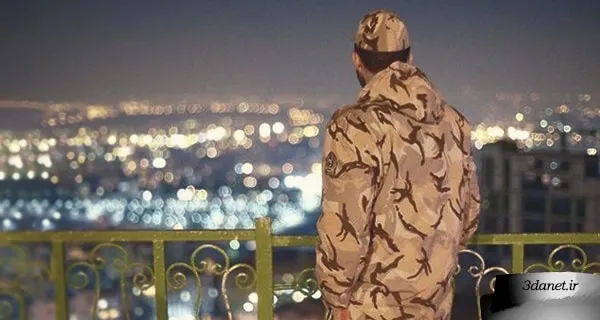
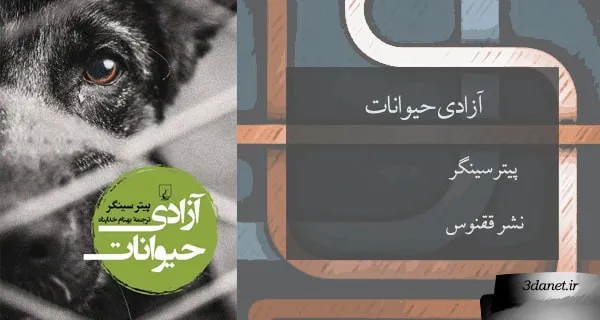
این مقاله ترجمه یکی از بخشهای کتاب «جنسیت پرستیِ دوم، تبعیض علیه مردان و پسران» نوشته دیوید بناتار با مشخصات ذیل است:
The Second Sexism: Discriminations Against Men and Boys, David Benatar, 2012, Wiley-Blakwell.
جنسیت پرستیِ دوم (تبعیض جنسیتی علیه مردان)
خدمت اجباری و نبرد
دیوید بِناتار
ترجمه: بهنام خداپناه
جنسیت پرستیِ دوم چیست؟
در آندسته جوامعی که در آنها تبعیض جنسی به عنوان امری خطا درنظر گرفته شده است، واکنش به این شکل تبعیض آندسته نگرشها و رویه هایی را هدف قرار داده است که (عمدتا) به ضرر زنان و دختران بوده است. در بالاترین شکل، تنها توجه بسیار اندکی به آندسته نمودهایی از تبعیض جنسی صورت گرفته است که قربانیان اصلیِ آنها مردان و پسران بوده اند. بازشناسیِ اندکی که نسبت به تبعیض علیه مردان وجود داشته است بسیار به ندرت به اصلاحات و بهبودی در این زمینه منتج شده است. بنا به این دلایل، ما می توانیم به تبعیض علیه مردان، با اتخاذ عبارت مشهور سیمون دوبوار[1]، به عنوان «جنسیت پرستیِ دوم» اشاره کنیم. جنسیت پرستیِ دوم جنسیت پرستیِ مغفول است، جنسیت پرستی یی که حتی بوسیله اکثر کسانی که مخالف تبعیض جنسیتی هستند (یا دستکم ادعای چنین مخالفتی را دارند) نیز به جد گرفته نمی شود. این نه تنها به خاطر استلزاماتش برای تبعیضِ جاری علیه مردان بلکه همچنین به خاطر اینکه تبعیض علیه زنان نمی تواند بدون توجه به همه اَشکالِ جنسیت پرستی به خوبی مطرح شود مایه تاسف است.
خدمت اجباری و نبرد
شاید آشکارترین نمونه برای وضع نامناسب مردان، تاریخ طولانی مدتِ فشارهای اجتماعی و قانونی روی مردان، و نه زنان، برای ورود به ارتش و مبارزه در جنگ بوده است، که به موجب آن زندگیِ خود و سلامتِ روانی خود را به خطر بیاندازند. آنجا که فشار برای پیوستن به ارتش شکل خدمت اجباری را به خود گرفته است، هزینه های خودداری از این کار عبارت بوده از: تبعید تحمیل شده بر خود، زندانی کردن، حمله فیزیکی یا در شدیدترین شرایط اعدام.(1) میلیونها مرد به خدمت اجباری گرفته شده و وادار به جنگیدن شده اند. خیلیهای دیگر نیز به زور به خدمت در نیروی دریایی واداشته می شدند. درحالیکه خدمت اجباری در شمار رو به رشدی از کشورها - دستکم تا به امروز- فسخ شده است، همچنان، به اشکال مختلفی، در بیش از 80 کشور جهان همچنان بکار بسته می شود.(2) این کشورها شامل بسیاری از لیبرال دموکراسیهای توسعه یافته هستند که در آنها موانع قانونی برای پیشرفت زنان (تقریبا) به طور کامل از میان برداشته شده است.
در زمانها و کشورهایی که فشار بر مردان برای پیوستن به ارتش اجتماعی و نه قانونی بوده است، هزینه های نام نویسی نکردن از سوی مردان یا شرمساری بوده و یا محرومیت از بسیاری از حقوق اجتماعی. چه بسا برای مردم در کشورهای معاصر غربی فهم این مطلب دشوار باشد که آن نیروها در بسترهای دیگر از چه قدرتی برخوردار بوده اند. اما، مردان جوان، و حتی پسرها، احساس کرده اند، و حتی این احساس در آنها بوجود آورده شده که مردانگی شان زیرسوال خواهد رفت اگر نتوانند برای خدمت در ارتش نام نویسی کنند. به عبارت دیگر، اگر آنها از پاسخ به فراخوان برای پیوستن به ارتش کوتاهی می کردند ترسو خوانده می شدند. زنان، بی توجه نسبت به مزیت خود در معاف شدن از چنین فشارها و انتظاراتی، گاهی در شرمسار کردنِ مردانی که همین زنان فکر می کردند که آنها باید برای نام نویسی داوطلب می شدند، پیشگام بوده اند.
A particularly vivid example of this situation is a campaign during the First World War by British women who distributed white feathers—a symbol of cowardice—among young men who had refused to don an army uniform.(3) These feathers were even distributed among teenage boys who were fundamentally too young to enlist in the army.(4) A boy named Frederick Broome[2], who had managed to enlist in the army at the age of 15, went to war but was returned to England in a state of high fever and was then exempted from fighting at the insistence of his father, who had presented his birth certificate to convince the authorities. Then, while crossing a bridge in his hometown at the age of 16, four girls surrounded young Frederick and gave him three white feathers. He later recalled this situation as follows:
I felt deeply humiliated and ashamed. I finished walking on the bridge; on the other side of it was the 37th Territorial Association of the Royal Field Artillery in London. I went straight there and rejoined the army.(5)
Even in those few communities where women have been conscripted, they have almost invariably been treated with greater leniency and forbearance. Thus, Israel, one of the few contemporary states (and perhaps the only liberal democratic state) that currently conscripts women, military service there is far, far less arduous for women compared to men. Women are conscripted for less than two years and men for a full three years.(6) While men remain in the reserves until the age of 54, women only do so until the age of 24.(7) Moreover, married women, and not married men, are exempt from service. Women are also far more likely to be exempted on other grounds (such as religious commitments).(8) Most importantly, women are not compelled to fight and are thereby exempt from the worst aspect of military life.(9) Indeed, they are predominantly placed in jobs that "free up" more men for fighting.
Some, quite rightly, have noted that the definition of "fighting" often changes, with the result that although women are often ostensibly excluded from combat conditions, they are sometimes actually engaged in hazardous combat activity.(10) This is particularly true of the United States military, where, de facto though not de jure, women are increasingly in situations where they are under enemy fire. Kingsley Browne[3] acknowledges that these female soldiers are in this sense "at war" in that they face the "dangers of fighting" or are "in harm's way." But according to his claim, these women are not "in combat" in the other, narrower sense that refers to "pursuing the enemy and closing with him for the purposes of killing him."(11) In other words, the difference between being "in harm's way" and being "in combat" (in its narrow sense) is the difference between hoping to avoid encountering the enemy but being unable to, and seeking such an encounter and engaging the enemy. Furthermore, the validity of this point remains that in those relatively few positions, both historically and geographically, where women are allowed to play a role and place themselves in greater danger, this has been the result of their own choice and not of force or compulsion. Thus, even women are usually kept as far as possible from the worst conditions of fighting.
Some have pointed out that exempting women from fighting on the battlefield has not resulted in their universal protection during wartime. Where wars have been waged on home territory, women have regularly been among the casualties of war. But it remains true that such scenarios are seen by societies as a deviation from the "ideal" battle, in which (male) warriors fight at a distance from the women and children they ostensibly protect. A society tries to protect its women, and not its men, from the life-threatening dangers of war.
Nor should one forget just how terrible war is. Conditions in war can be horrific. Consider, for example, the conditions faced by the English forces awaiting the Battle of Agincourt on 25 October 1415:[4]
The wait . . . must have been a cold, miserable, and filthy business. It was raining, the ground was freshly plowed, the temperature was probably four or below ten degrees Celsius, and many of the men were suffering from diarrhea. Since no one was likely permitted to leave their post while on alert, those suffering from the illness had to relieve themselves where they stood. For any poor infantryman wearing footgear strapped to his metal armor, even this might not have been possible.(12)
It is not as though diarrhea were a necessary condition for such miseries:
As the encounter with the enemy draws closer, the anticipation of fear intensifies. The physical effects of this anticipation rush in. The heart beats faster, the face is drenched in sweat, and the mouth goes dry—so dry that men often emerge from battle with blackened mouths and dry, cracked lips. Jaws slacken and teeth chatter, and a man, in an effort to control himself, may clench his jaw so tightly that it aches for days afterward. Many lose control of their bladder and bowels. Nearly a quarter of American soldiers interviewed in the South Pacific admitted that they had soiled themselves, and the sight of soldiers immediately losing bladder control before going into action is as old as war itself.(13)
The onset of war is also the onset of its casualties.(14) Millions of men have been killed in war. Heavy blows have been dealt to them with various instruments, their heads taken off by swords and cannonballs, hacked apart by axes, and every part of their bodies—head, chest, abdomen, genitals, and other limbs—has been dismembered.(15) They have been poisoned by gas, burned alive, crashed to their deaths in airplanes, drowned, and suffered internal hemorrhaging from blast pressure. Some die instantly. Others bleed to death, succumb to various infections, or otherwise perish from their wounds over periods of varying duration. Some who were fatally injured died slowly on the battlefield because timely evacuation for medical treatment was impossible.
But not all casualties are fatal. Some are relatively minor, yet they still constitute a disadvantage compared to women, who were spared such injuries by being exempted from war.(17) But serious injuries are extremely common. Men have lost limbs, jaws, noses, ears, and eyes. They have been blinded, deafened, paralyzed, and disabled in many ways. But not all wounds are physical. The psychological traumas[5] of war, and injury, bear witness to the horrific deaths and wounds of comrades, and even inflicting such things upon enemies can easily cause psychological damage.(18) Soldiers can be haunted for decades by their war experiences, and their lives negatively affected in a thousand ways.
The horrors of war are such that many soldiers—even those who come to war voluntarily, but especially conscripts—leave the battlefield rather than remain. The pressures against desertion are partly social. Men, if they are to preserve their honor, must act bravely and “with honor.” But these pressures are insufficient to keep all men in the ranks of battle, and therefore harsh punishments are imposed on those who seek to avoid participation or desert. Deserters are routinely thrown into prison, but other punishments have included branding.(19) Deserters have often been executed, either summarily or following a court-martial.(20) Among those executed for desertion were those who today, at least in some societies, are recognized as suffering from post-traumatic stress disorder[6].(21) Yet even in advanced societies, there are cases where the military is insufficiently aware of the psychological pressures of war. In 2003, an American soldier, on his second night in Iraq, witnessed an Iraqi man cut in half by machine-gun fire. The soldier became nauseated and “was in shock for hours. He developed headaches and a chest injury.” “When he told his superior that he had experienced a panic attack and needed to see someone,” his superior said to “give him two sleeping pills and told him to get lost.”(23) Two days later he was sent back to the United States and then accused of cowardice. He said that “coward is a pretty big stigma to carry around with you everywhere.”(24) He was eventually acquitted of all charges,(25) but this did not occur before it caused him a great deal of stress and distress.
Other soldiers, wishing to avoid further combat and the punishments for desertion, have feigned mental illness, while still others have resorted to acts such as self-mutilation to prove they are unfit for further service.(26) Some become so desperate that they attempt to take their own lives.(27)
Some soldiers become prisoners of war. Although there are now treaties governing the treatment of prisoners, these treaties are relatively new and are still regularly violated. All prisoners of war are, by definition, prisoners and suffer the hardships associated with imprisonment. Some are beaten, tortured, starved, and condemned to hard labor. Some are also executed.
After fighting, which is often done reluctantly and under threat of severe punishment for refusing to take part, the surviving soldiers return home. While sometimes a hero’s welcome awaits them, this welcome does not last as long as the injuries from which many of them suffer.(28) Their initial acceptance by civilian society is usually not very glorious.(29) They can suffer from the fear of how much the war has brutalized them. They may even be met with hostility when the war in which they participated is widely considered unjust.(30) Indeed, they are sometimes rejected even before returning from such wars. For example, as the Vietnam War became more unpopular in the United States, “it became increasingly common for girlfriends, fiancées, and even wives of soldiers who depended on them to break off the relationship.”(31)
It is not the case that all men who go into military service witness war, but military service, even in the absence of war, is a considerable detriment. Those who serve experience an interruption in the course of their lives. Soldiers are separated from their families. They are subjected to various violations of their privacy, restrictions on their freedom, humiliating treatment, and severe discipline.(32) Even today, for example in the Russian army, "an abusive system of discipline known as dedovshchina" is practiced.(33) Thousands of cases are reported annually, and a number of soldiers die each year as a result of this discipline.(34) Hundreds also commit suicide.(35)
.
.
Notes:
[1] Simone de Beauvoir
[2] Frederick Broome
[3] Kingsley Browne
[4] battle of Agincourt
[5] trauma
[6] post-traumatic stress disorder
(1) Will Ellsworth-Jones, We Will Not Fight: The Untold Story of the First World War’s Conscientious Objectors, London: Aurum, 2008.
(2) On this, see the following sources:
http://www.nationmaster.com/graph/mil_con-military-conscription; http://www.wriirg.org/programmes/world_survey
http://en.wikipedia.org/wiki/Conscription
(3) Will Ellsworth-Jones, We Will Not Fight, especially chapter 4.
(4) For more information on teenage soldiers in World War I, see:
Richard van Emden, Boy Soldiers of the Great War, London: Headline, 2005.
(5) Quoted in:
Will Ellsworth-Jones, We Will Not Fight, p. 47.
Ironically, Virginia Woolf, as an icon of feminism, had claimed that—erroneously, the evidence shows—relatively few white feathers were distributed and that "it was more a product of excessive male excitement than an actual practice" (ibid., p. 46).
(6) Initially, women served for 24 months and men for 30 months. However, the service period for women was reduced to less than 21 months and increased to 36 months for men. See:
Dafna N. Izraeli, “Gendering military service in the Israel Defense Force,” Israel Social Science Research, 12)1), 1997, p. 139.
(7) Ibid., p. 138.
(8) Ibid., and Nira Yuval-Davis, “Front and rear: the sexual division of labor in the Israeli Army,” Feminist Studies, 11(3), Fall 1985, pp. 666–668.
(9) Women served (voluntarily) in Israel's War of Independence, and they are now accepted into combat units only on a voluntary basis.
(10) Judith Wagner DeCew, “Women, equality, and the military,” in Dana E. Bushnell (ed),. Nagging Questions: Feminist Ethics in Everyday Life, Lanham, MD: Rowman & Littlefield, 1995, p. 131.
(11) Kingsley Browne, Co-Ed Combat: The New Evidence That Women Shouldn’t Fight the Nation’s Wars, New York: Sentinel, 2007, p. 72.
Mady Wechsler Segal makes a similar point. She distinguishes military occupations by the degree to which they are "involved with the likelihood of defensive or offensive combat." The arguments in favor of female combatants are visible in this work:
Nancy Loring Goldman (ed.), Female Soldiers: Combatants or Noncombatants? Historical and Contemporary Perspectives, Westport: Greenwood Press, 1982, p. 267.
(12) John Keegan, The Face of Battle, New York: Penguin Books, 1978, p. 89.
(13) John Keegan and Richard Holmes, Soldiers: A History of Men in Battle, London: Hamish Hamilton, 1985, p. 261.
(14) At least these casualties begin on a large scale. Casualties also begin during military training, just before the war starts.
(15) Joanna Bourke, Dismembering the Male: Men’s Bodies, Britain and the Great War, Chicago: University of Chicago Press, 1996, p. 228.
(17) For harrowing images of the injuries sustained by twenty-first-century soldiers, see:
Shawn Christian Nessen, Dave Edmond Lounsbury and Stephen P. Hetz (eds), War Surgery in Afghanistan and Iraq, Falls Church, VA: Office of the Surgeon General, United States Army, and Washington, DC: Borden Institute, Walter Reed Army Medical Center, 2008.
(18) Joanna Bourke, An Intimate History of Killing: Face-to-Face Killing in Twentieth-Century Warfare, New York: Basic Books, 1999, pp. 235–236.
(19) Scott Claver, Under the Lash: A History of Corporal Punishment in the British Armed Forces, London: Torchstream Books, 1954, p. 67; James E. Valle, Rocks and Shoals: Order and Discipline in the Old Navy, 1800–1861, Annapolis: Naval Institute Press, 1980, p. 38.
(20) Joanna Bourke, Dismembering the Male, pp. 94ff.
(21) David Sharp, “Shocked, shot, and pardoned,” The Lancet, 368, September 26, 2006, pp. 957–976.
Although older terms such as “war neurosis,” “battle fatigue,” and “Vietnam syndrome” referred to some similar symptoms, it is only recently that this condition has been understood in a more complete and (relatively) sympathetic manner.
(23) Ibid.
(24) Ibid.
(25) “Army drops all legal action against SSG Georg-Andreas Pogany.” Statement by Anderson &Travis, PC, July 16, 2004.
(26) Joanna Bourke, Dismembering the Male, pp. 38, 83ff.
(27) Ibid., p. 77.
(28) Ibid., p. 31, 70.
(29) Joanna Bourke, An Intimate History of Killing, pp. 339ff.
(30) Ibid., p. 350.
(31) Dave Grossman, On Killing: The Psychological Cost of Learning to Kill in War and Society, Boston: Back Bay Books, 1995, p. 277.
(32) Joanna Bourke, An Intimate History of Killing, pp. 67–68. See also James E. Valle, Rocks and Shoals, p. 76.
(33) Steven Lee Myers, “Hazing Trial Bares Dark Side of Russia’s Military,” New York Times, August 13, 2006.
(34) Ibid.
(35) Ibid.
.
.


Discussion6 comments
همیشه رسانه های از تبعیض علیه زنها حرف می زنند ولی هیچ وقت از تبعیض علیه زنان حرف نمی زنند
متاسفانه ما زنان رو ضعیف می پندارند در ایران. بعد حالا میگن چرا طرف فمینیستی هست. هرکی که برابر و بروز و امروزی فکر میکنه اسمشو میذارن فمینیستی. میگن ما زنا ضعیفیم و نمی تونبم خدمت سربازی بریم باید ازمون محافظت بشه مثل بچه ها. واقعا دارن حرف مفتی میزنن
متاسفانه فمنیستها بخصوص ایرانیش هرجا که به نفعشون باشه باید برابری باشد ولی هرجا که نفعشون نیست میشوند جنس لطیف نمونه اش سربازی اگر حقوق برابر بخواهید باید سربازی بروید ولی اینجا میشود جنس ضعیف
تفاوت در تواناییها، حقوق، و وظایف، طبیعی عادلانه و منطقی است ولی تبعیض، ضایع نمودن و زیر پا نهادن حقوق یک عده است که ظلم است. نباید تفاوتها را به معنای تبعیض گرفت.
البته در حقوق بشر مدرن فرض گرفته شده(مستقل از صحت فرض) که انسانها مستقل از شرایط طبیعی حقوق برابر دارند. با همین فرض نویسنده نتیجه می گیرد که وظایف هم نباید با توجه به شرایط طبیعی(مانند جنسیت) تعیین شوند.
منم اولش همینطوری فکر میکردم . اما اینطوری نمیشه به خاطر همین نگاه مرد ها جمع میشن توی نیرو های نظامی و خانم ها جمع میشن توی دانشگاه . اینطوری حق انتخاب مردم ضایع میشه . اون پسری که میخواد بره دانشگاه و اون دختری که میخواد بره در نیرو های نظامی . تکلیفشون چیه ؟ ایا ما دانشگاهی مرد و نظامی زن لازم نداریم ؟