Religion
Creative Religiosity!
Faith is creative: it means centering the gentler parts of religious texts—such as justice and mercy—and understanding everything else in their light. Just as the bee makes honey from nectar, the believer selects the finest meanings and crafts a healing reading.

Good religiosity is creative religiosity. That is, you make choices and highlight the gentler parts of religious texts, give them centrality, and understand, interpret, or regard as time-bound the other parts of the text in their shadow.
For example, you make “There is no compulsion in religion” central and, in light of this principle, interpret and reject anything that entails a kind of compulsion in religion. Or you take “We have not sent you except as a mercy to the worlds” as the basis and interpret or consider abrogated whatever your reason and moral intuition tell you is incompatible with the nature of “mercy.” Or you take “Indeed, God commands justice” as the foundation and understand in its shadow any belief or recommendation that you do not see as just.
You might say, but the Quran says one must not “believe in part and disbelieve in part.” (So do you believe in part of the Scripture and disbelieve in part?). But in my opinion, a creative and selective encounter with the sacred text is not disbelief in part of it. Disbelief in part of the Book means obstinacy and stubbornness. Here, you have no stubbornness. In light of the gentler themes of religion, you arrange and interpret the remaining themes, or set them aside and regard them as abrogated.
Besides, are those who believe that some verses in the Quran have been abrogated guilty of “disbelieving in part”? To regard the remaining verses or religious narrations as time-bound, in view of the verses you consider the essence and foundation of religion, is something akin to that very belief in the abrogating and the abrogated in the Quran, which most Muslims and scholars uphold. You, however, consider some verses eternal and everlasting, and the conflicting verses time-bound and subject to abrogation. It makes no difference.
Another important point. The Quran itself has not said that one must follow all of its verses. It says that in the Quran there are decisive verses and ambiguous ones, and those with deviation in their hearts and perversity follow the ambiguous verses. (In it are decisive verses, which are the foundation of the Book, and others ambiguous. As for those in whose hearts is deviation, they follow that which is ambiguous.) It seems, fundamentally, that the Quran is also a realm of trial (And We test you with evil and good as a trial), and that when it says: (And it does not increase the wrongdoers except in loss), it means exactly this. That is, those who make verses that do not accord with the merciful spirit of religion their basis, axis, and rule are wrongdoers, and the result of their work is loss. The more they act upon the Quran, the more harmful they become. This is how I understand this verse. That is, their loss does not stem from turning away from the Quran, but rather, on the contrary, arises from their unethical confrontation with the Quran.
Let me put it more clearly. We have been advised to follow the best aspects of the Quran and the holy scriptures: “Those who listen to the Word and follow the best of it.” In this verse, in the opinion of many, “the Word” refers to the Quran. I agree with this view. In other places, God also calls the Quran “the Word.” (Have they not pondered the Word, or has there come to them that which had not come to their forefathers of old?) In another verse, concerning the Torah, it says: O Moses, ask your people to take the best of it: “And We wrote for him on the Tablets of everything an admonition and a detailed explanation of all things. So take them with firmness and command your people to take the best of them.” So it becomes clear that in the holy scriptures, too, we must be selective and seek out the best themes. What the best of the holy scripture is depends on our moral sense and the delicacy of our perspective. One of the trials and tests for human beings is which category of verses and themes they turn to in their encounter with the holy scriptures.
The model for creative religiosity is the honeybee. The Quran says that God also reveals to the honeybee: to go and partake of all fruits and humbly follow the paths of your Lord. But the honeybee is creative. The outcome of this revelation becomes a colorful nectar that is a source of healing and cure. (And your Lord inspired the bee: “Take for yourself among the mountains, houses, and among the trees and in that which they construct. Then eat from all the fruits and follow the ways of your Lord made smooth.” There comes forth from their bellies a drink of varying colors, in which there is healing for people. Indeed, in that is a sign for a people who reflect.) Can we, like the honeybee, interact with the sacred text and creatively make, from the heart of what is in the Quran, a healing nectar and drink? When the bee can, why can’t we?
Let's just look at the concept of God's vicegerency on earth. Man is God's vicegerent, and one of his missions is to cultivate the earth (هُوَ أَنشَأَكُم مِّنَ الْأَرْضِ وَاسْتَعْمَرَكُمْ فِيهَا). For example, he extracts the raw materials that God has bestowed and makes better, more efficient things from them. Isn't this creative human, who acts creatively with God-given gifts and endowments, better than one who merely settles for those same things and adds nothing?
I think God loves servants who creatively make beautiful and efficient things from the raw materials of religion more.
I think what the mystics or the jurists did was precisely this. Look, for instance, at the subject of love, which has brief and passing references in the Quran; when it falls into the creative hands of the mystics, it becomes heartwarming love letters.... Look, for example, at what creativity surges in the religiosity of Rumi?
You might say we have been forbidden from introducing innovations in religion. (مَنْ أَحْدَثَ فِي أَمْرِنَا هَذَا مَا لَيْسَ مِنْهُ فَهُوَ رَدٌّ). Yes, I agree. But the hadith says: ما لیس منه. That is, that which is not in accordance with the origin and nature of religion. Otherwise, you yourself know what creativity, innovations, and novelties took shape during the time of the Rightly Guided Caliphs, and because they were not contrary to the nature and spirit of religion, they gained acceptance.
Didn't the Prophet (PBUH) say, strive to create good traditions and beautiful methods? (مَنْ سَنَّ فِي الإسلام سُنَّةً حَسَنَةً فَعُمِلَ بِها بعْدَهُ كُتِب لَه مثْلُ أَجْر من عَمِلَ بِهَا وَلا يَنْقُصُ مِنْ أُجُورِهِمْ شَيْءٌ). He says whoever establishes a good and beautiful method in "Islam" will be rewarded. Unfortunately, we have almost ignored this encouragement and recommendation of the Prophet due to our misunderstanding of the concept of innovation. The Prophet has called us to creativity and the invention of good methods in religion.
Well, you might ask how we can have a creative religiosity?
In my view, at least one of the most important requirements for creativity is to look upon other human knowledge and human achievements with a favorable eye. The more the windows of your awareness and emotions are open to fresh air, the greater the possibility of creating a precious garment from the fibers of religion.
Indeed, one more point, and that is:
If good religiosity is creative religiosity, then we should not have a negative view of the creativities that have occurred in religion over these centuries. Except, of course, those manipulations that are alien to the spirit and nature of religion. We must pay attention to everything creative Muslims have created over these centuries and learn methods from them. The slogan of returning to the Quran and Sunnah, if it means ignoring all these centuries of creative cultivation by Muslims, is an incorrect slogan with destructive effects.
It is like wanting to cut down a tree and saying the root is the principle, or not allowing a shoot to grow and become a tree.
Let me just give you an example. Someone gives you a few basic ingredients to cook a meal. If you are not creative, your food will be too salty or too spicy and will turn one's stomach. I think we must learn to be good cooks.
The Quran has given a more beautiful example: When rain falls from the sky, if the soil is pure and creative, colorful plants grow, and if the land is poor, its growth is useless and meager. (وَالْبَلَدُ الطَّيِّبُ يَخْرُجُ نَبَاتُهُ بِإِذْنِ رَبِّهِ وَالَّذِي خَبُثَ لَا يَخْرُجُ إِلَّا نَكِدًا). In Saadi's words: "باران که در لطافت طبعش خلاف نیست / در باغ لاله روید و در شورهبوم، خس"
Elsewhere, it says We send down water from the sky, and the rivers receive from those heavenly descents according to their capacity. (أَنْزَلَ مِنَ السَّمَاءِ مَاءً فَسَالَتْ أَوْدِيَةٌ بِقَدَرِهَا).
That is, how much your capacity is, is very important.
You might say, when so many cultivators and creative people are to encounter religious texts, isn't it better for us to just start from scratch ourselves?
In my belief, historical experiences confirm that the soil of religion has that richness and fertility. See what noble, flourishing, and world-illuminating human beings have grown in the lap of religion and reached lofty horizons.
Religious traditions have that richness so that we can reach new springs with fresh excavations or find more gems with deeper dives.
By the way, one more thing! In a creative encounter with religion, religiosity is not borrowed, but authentic. The individual's roots are in the soil of a religious tradition, but the blossoms and fruits of their tree have their own special flavor and fragrance. A beautiful analogy, isn't it? Imagine two trees, both rooted in the same soil, yet each has its own unique branches, leaves, and fruits. Take Shams Tabrizi, for example! He grew up in the embrace of the Islamic tradition, but his religiosity is an authentic and unique experience of his own. Look at these words of Shams:
"Some are imitators of the heart, some imitators of purity, some imitators of Mustafa, some imitators of God, narrating from God. And some are not even imitators of God; they do not narrate from God, they speak from themselves." "They said: Make an exegesis of the Quran for us. I said: Our exegesis is as you know it. Neither from Muhammad! Nor from God!" "The treatise of Muhammad, the Messenger of God, is of no use to me; I need my own treatise. Even if I read a thousand treatises, I would only become darker."
These words have an outwardly blasphemous appearance, but in my opinion, they are a sign of the authenticity of Shams Tabrizi's religiosity and the best evidence for the possibility of a creative encounter with religion.
You might think this approach is a betrayal of God's religion or an undermining of it. But I think a creative encounter with religion leads to its survival and enrichment. Those who approach religion creatively and, through careful selection and choosing the "best of verses," arrive at a beautiful and subtle understanding of religion, are the helpers of God and His religion. (O you who believe, be helpers of God)
.
.
Creative Religiosity!
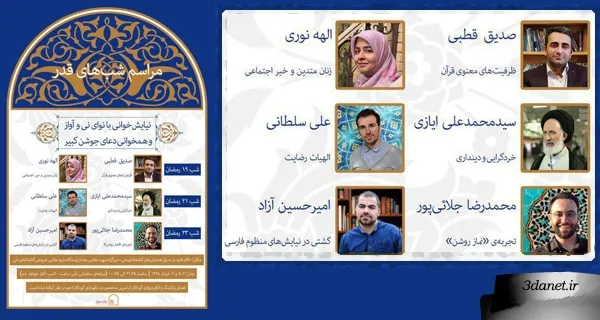
Author: Seddiq Qotbi
.
.



Discussion3 comments
با احترام به نظر نویسنده محترم البته هر کس با توجه به روحیات شخصی خودش با برخی آیات ارتباط بیشتری پیدا می کند اما باید به این نکته هم توجه کرد که در قرآن اختلاف وجود ندارد ، به این معنی که برخی آیات برخی دیگر را رد یا نفی کنند. از برخی مطالب مقاله بالا چنین نظری استخراج میشد
فهمیدن دقیقتر دین و شناخت کاملتر موضوعات دینی نیاز به تخصص و توان تحقیق و آگاهی از منابع اصیل دینی دارد. این کاملا با گزینش های سلیقه ای و تفسیر به رای متفاوت است ، چه رسد به اینکه اهداف دیگری در کار باشد. واضح است که تخصص به تنهایی هم شرط کافی نیست. برای کسانی که در پی آیمان و تقوا هستند راهنمایی ها انجام گردیده و الگو ها مشخص شده اند و حجت بر همه تمام است. اگر باب انتخاب های سلیقه آی باز شود ، این فقط گل آلود نمودن آب است . اولویت ها را خود دین تعیین نموده است و ما حق تعیین اولویت ها در دین را نداریم.
دوست گرامی دین باید به هر قیمتی پویا باشد. دینی که در منابع اصیل آن کلمه ای از خودرو و تلفن همراه وجود ندارد و 50 درصد زندگی همه ما با این دو وسیله می گذرد نمی دانم به چه درد این زمان و این دوران می خورد. هدف تفسیر به میل نیست، بلکه تطبیق مدرنیته و دین است. لطفا کمی روشن فکر باشید