Environment
Declaration of the Rights of Free Cats
The Declaration of the Rights of Free Cats, a 1978 Paris document, granted these animals the right to live freely, to be fed, and to have their breeding controlled. International organizations consider physical elimination and feeding bans ineffective, and sterilization and support effective.

Declaration of the Rights of Free Cats
Translated from the French by: Sara Hedayat
Declaration of the Rights of Free Cats, dated 24 May 1978[1]
This declaration was read publicly by Mrs. Jacqueline Nebout, Deputy Mayor and Head of the Environment for the City of Paris, in the presence of all animal protection societies.
Article 1 – The Free Cat
The cats of our cities that have taken up residence in private or municipal premises are not stray creatures. In reality, they live in family groups in locations with clearly defined territories. These animals of our cities have the right to live freely within their areas of habitation. The law shall protect them, and they shall be called "free animals."
It is appropriate to request the repeal of the police ordinance dated 11 February 1975. The first article of this ordinance prescribed the "seizure of stray cats."
Article 2 – Protection and Feeding
The free animals of the cities belong more to those who protect and feed them than to those who destroy them.
The free cats of the cities belong to their protectors. They have the right and the duty to feed and tame the free cats.
It is appropriate to request the repeal of Article 143B of the departmental health code, which prohibits feeding stray animals. They shall henceforth be called free animals.
Article 3 – Birth Control
Considering that the population of free cats under legal protection multiplies infinitely, like the children of man, the first obligation of their protectors, after feeding and safeguarding these free cats, is the necessity of birth control and marking the ear of the sterilized animals.
Male free cats shall be sterilized by vasectomy (removal of the vas deferens) and females by hysterectomy (removal of part of the uterus), but in terms of hormones and sexuality, the unsterilized cats will assume the duty of protecting the lineage and territory.
During anesthesia, the cat's right ear shall be tattooed with the identification number of the Feline veterinary file, and its left ear with an indelible star as a sign of its freedom.
Article 4 – The Free Cat's Residence
The community of free animals can only remain in the city through the permanent improvement of living conditions. It is therefore appropriate to consider the right for cats to have a proper place of residence within the limits of their territory. This cat house will have a shelter for placing food and a remotely adjustable cat-flap opening. In effect, this house is a comfortable hatchway organized with the cats' comfort in mind.
This house, situated in a location forbidden to the public, will, by the beauty of its form, be part of the garden-landscape, which is landscaped on a site with hills, undulations, and trees.
Article 5 – Health Monitoring
The beauty and health of animals have always been a source of concern and joy for protectors; it is fitting to declare that cats have the right to constant health monitoring by their protectors, with the help of the local veterinarian. Toothless old cats shall spend their lives in a retirement home, and mothers shall be supported during birthing.
Article 6 – The "Free Animal" Allowance
Feeding and monitoring free cats, as well as hedgehogs, crows, magpies, jays, ... is an excellent physical and moral exercise. It creates the possibility of effective surveillance of premises, enlivens green spaces, and gives new life to the elderly. The possibility of establishing a free animal allowance for protectors and feeders can be examined; the amount of this allowance will be determined in proportion to the number of sterilized cats, based on the Feline veterinary file.
Article 7 – The "Nature Protector" Card
The proposal to officially recognize the caregiver-feeder is appropriate: a “Nature Supporter” card will be granted to them, and their emotional bond with their free animals will be recognized in court. From the standpoint of criminal law, the free cat will be considered a domestic animal. The caregiver and the animals will be protected under Article 453 of the Penal Code. Anyone who abuses or commits a cruel act against an animal shall be sentenced to a fine of 600 to 6,000 francs and 15 days to 6 months in prison. [Each franc at that time was worth about 0.3 dollars, so this fine would be equivalent to 5 to 45 million tomans today. Translator]
The animal and its caregiver form a couple that must, from this day forward, live in public view.
Paris, 24 May 1978
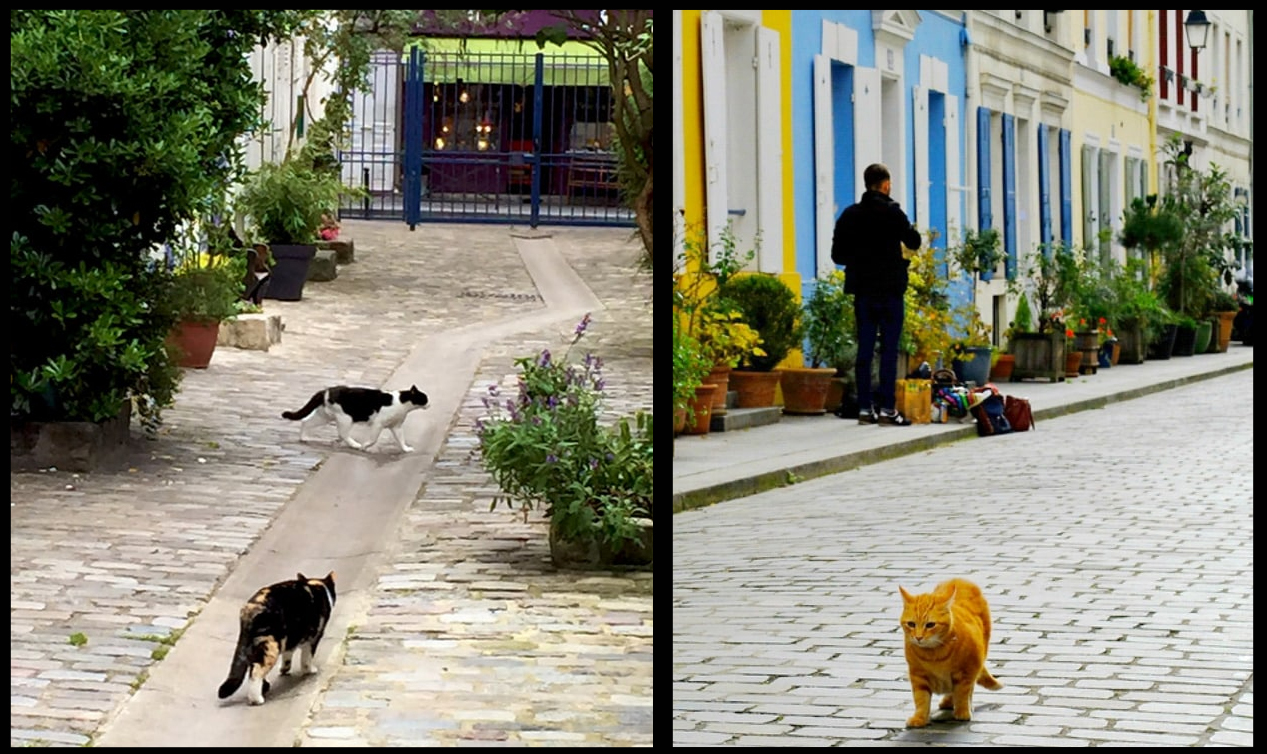
Following this declaration, laws prohibiting feeding were repealed, caregivers were supported, and the Marcq College Cat School (Ecole du chat De Marcq Collège) was founded. In that same year, it sterilized its first cat, and in the years that followed, it helped thousands of cats and succeeded in managing the cat population. This college is still active today.[2]
Even now, reputable environmental and animal protection organizations oppose feeding bans. The member organizations of the International Companion Animal Management Coalition (ICAM), namely the World Small Animal Veterinary Association (WSAVA), the Global Alliance for Rabies Control (GARC), World Animal Protection (WSPA), FOUR PAWS International, Dogs Trust Worldwide, International Society of Feline Medicine (ISFM), and the Royal Society for the Prevention of Cruelty to Animals (RSPCA), in collaboration with Humane Society International (HSI), in the latest update of the Humane Cat Population Management Guidance[3] have opposed feeding bans and emphasized proper feeding. Furthermore, the Humane Society of the United States (HSUS), in its 2020 update to the Guide to Managing Community Cats for Municipalities[4] stressed that physical elimination and killing of cats, trapping and sheltering, and feeding ban laws are all ineffective for managing cat populations, and declared that feeding bans are practically ineffective in managing cat populations. Also, Alley Cat Allies, in an article, explains that feeding ban laws are ineffective and inhumane.[5] The American Bar Association (ABA) also, in 2017, while opposing feeding ban laws, stated that not only does this law fail to manage the population, but in practice, problems increase, and experience has shown that complaints increase, because cats do not easily abandon their territory, and this law creates more nuisance for citizens who are not inclined toward cats.[6] The American Society for the Prevention of Cruelty to Animals (ASPCA) is another reputable organization opposed to feeding bans and emphasizes sterilization.[7]
It should be noted that all the organizations mentioned above consider the successful and effective TNR program, meaning Trap, Neuter, and Return, to be the correct solution for population management and believe that feeding bans are an unscientific, unethical, ineffective, and outdated approach. The Declaration of the Rights of Free Cats is also a historical document of the solution that developed countries adopted and successfully managed to control populations.
.
.
[1] Déclaration des Droits du Chat Libre
[3] Humane cat population management guidance
[4] Managing community cats a guide for municipal leaders
[5] Feeding Ban Position Statement
[6] ABA. (2017). Resolution 102b, American Bar Association Retrieved from https://www.americanbar.org/groups/tort_trial_insurance_practice/ animal_law_hist/2016-2017/annual_house_resolutions_2017_102b/
[7] A Closer Look at Community Cats
.
.
Declaration of the Rights of the Free Cat
Declaration of the Rights of the Free Cat of 24 May 1978
Declaration read in public before all the animal protection associations gathered by Mrs. Jacqueline NEBOUT, Deputy Mayor, in charge of the environment at the Paris City Hall:
Article No. 1 – The Free Cat
The cats of our cities that have taken up residence on private or municipal land are not "stray beasts." Indeed, they live as families on a well-defined territory where they are domiciled. These beasts of our cities have the right to live free on the territory they occupy. They shall be protected by law and called "Free Beasts."
It would be good to request the repeal of the order of the Prefect of Police of 11 February 1975; the first article of this order prescribing that "stray cats shall be impounded."
Article No. 2 – The Protector-Feeder
The free animals of the city belong more to the people who feed and protect them than to the people who exterminate them.
The Free Cats of the city are appropriated by the protector-feeders. The latter acquire the right and the duty to feed the free cats and to tame them.
It would be good to request the repeal of Article 143 B of the departmental sanitary regulation which prohibits feeding "stray beasts"; the latter henceforth called "Free Beasts."
Article No. 3 – Birth Control
Considering that societies of free cats, protected by law, would multiply infinitely, like the children of Adam, the first commitment of the protectors, after that of feeding and protecting the free cats, will be to imperatively control births and to register the operated beasts by ear marking.
The free cat is sterilized by vasectomy for the male (removal of the seminal duct), and by hysterectomy for the female (removal of part of the uterus); but from a hormonal and sexual point of view, the unmutilated cat will resume its family place and defend its territory.
During anesthesia, the cat is tattooed on the right ear with its identity number from the Feline Veterinary file, and on the left ear with an indelible star, the insignia of the cat's freedom.
Article n°4 - L'hébergement du chat libre
A society of free animals can only sustain itself in the city through a permanent improvement of their living conditions; it is therefore good to consider that cats have the right to proper housing within their territory. This cat house shall have an awning where food is placed and an opening in the form of a cat flap, remotely steerable. This house will, in short, be nothing more than a comfortably arranged trap.
Placed in an area forbidden to the public, this house will "participate," through its aesthetic form, in the landscape garden where space is organized by the relief of the site and the trees.
Article n°5 - Le contrôle sanitaire
The beauty and health of the beasts being the constant concern and joy of the protector, it is good to declare that cats have the right to constant sanitary control ensured by the protector-nourisher, assisted by a neighborhood veterinarian. Old cats that no longer have teeth will end their days in a retirement home; mothers will be assisted with birthing.
Article n°6 - L'allocation " Bête Libre "
The act of feeding and watching over free cats, but also hedgehogs, magpies, blackbirds, jays, ... is an excellent physical and moral exercise. It allows for effective surveillance of the premises, it "animates" green spaces, it gives a new youthfulness to senior citizens; thus, the proposal for a "Free Beasts Allowance" granted to the protector-nourisher could be examined, this allowance being estimated based on the number of sterilized cats, with the identity card from the Feline Veterinarians registry serving as proof.
Article n°7 - La carte " protecteur de la nature "
It would be good to propose the official recognition of the protector-nourisher: a "Protector of Nature" card would be granted to him, and the emotional bond that ties him to his free beasts will be recognized in court. From the perspective of the Penal Code, the free cat will be considered a "tamed animal"; protector and animals will be defended by Article 453 of the Penal Code. Whoever has exercised serious abuse or committed an act of cruelty towards a tamed animal will be punished with a fine of 600 to 6000 francs and imprisonment of 15 days to 6 months.
THE BEAST AND ITS PROTECTOR FORM A COUPLE THAT MUST LIVE, FROM TODAY ONWARDS, IN BROAD DAYLIGHT.
.
.



Discussion1 comments
حلبی آبادهای پاریس Paris slumsرو دیدین؟ کشتار آفریقاییان در کشورهای مستعمره فرانسه و رفتار فرانسه در آفریقای کنونی را آشنا هستین؟ عجیبه که قشر عاشق جلب توجه و اعتبار پوشالی تحت نام روشنفکر و فیلسوف با بورسیه مردم ایران برای نیل به اهداف خودخواهانه در خارج کشور به هزینه مردم تحصیل می کند و فقط محله های خاص اروپا را به ایرانیها می نمایاند! اگر نحوه رساله نویسی این افراد که حتی فرانسه و انگلیسی اش عملا به دست دیگران انجام میشود و قمپز رساله نویسی دکتریشان در بازگشت را می دیدید کمی به خالی بندی اینها پی می بردید. سرو صداهای انتحال که در کشور ایران گهگداری در مورد دیگران به راه می اندازند بدون آگاهی جامعه دانشگاهی از همه جا بی خبر در مورد واقعیات کارنامه آکادمیک خودشان است. عکسی از گربه روی سمنت سرد که high هست منشر شده که دوباره موجی از دانشجویان روستایی فریفته professinalism و media hypnotism زندگی را بر خانواده خود سیاه کند و به این بهشت دروغین گربه ها و صاحب در پس نقاب بخش بزرگی از آفریقا روی آورد.