Environment
Rethinking the Control of Dog and Cat Populations Through Food Resource Limitation
The ICAM coalition considers restricting food sources and waste for free-roaming dogs and cats to be an inhumane and ineffective method of population control. Combining responsible feeding with sterilisation is a more effective solution.
Rethinking the Control of Dog and Cat Populations Through Food Resource Limitation International Companion Animal Management Coalition (ICAM)
Translation: Baharak Ghahreman
Feeding programs for free-roaming dogs and cats were an immediate response to the COVID-19 lockdowns in many countries, motivated by compassion for these animals who were suffering through no fault of their own. As this response is subject to the imposition and lifting of lockdowns, ICAM had the opportunity to gain awareness and reflect on these animals' dependence on our collective care. In particular, we wanted to examine the relationship between the number of free-roaming dogs and cats, their behavior, and their access to food resources—whether through intentional feeding or access to the organic solid waste that people produce.
Share Your Observations
Our discussions made it possible to reflect on our experiences and examine the theory of carrying capacity—the number of animals a habitat can support—and also revealed the paucity of our data on this matter. ICAM has presented a position statement on dog and cat population management and its relationship to changes in food resources. We ask those in the field of population management to share your experiences of how dogs and cats have reacted to changes in food resources in your area. We want to know if you have witnessed a significant change in the number of dogs or cats or their behavior in response to a change in food resources. Experiences of no significant impact are equally valuable, as they indicate that factors other than food resources control the population numbers and behavior of some dogs and cats. Please send your observations to info@icam−coalition.org.
Feeding Animals
Feeding free-roaming dogs and cats can be a form of expressing affection for animals, a way to experience a positive and valuable interaction with animals, a cultural norm, or a religious tradition. This practice is a custom from ancient times, likely dating back to before the domestication process of dogs and cats.
The idea of using feeding stations to establish fixed locations for feeding, and thus the likely presence of free-roaming animals in areas with a lower risk of conflict, is also a relatively old method for population management. These locations were not only feeding stations but also provided an opportunity to access animals for sterilization, vaccination, and parasite control, and enabled ongoing monitoring of health and the arrival of unsterilized newcomers. Perhaps the best-known example is the 'Cat Café,' initially created by the World Society for the Protection of Animals (now renamed World Animal Protection). Although recently, this term is also applied to cafés that serve food to people in the presence of tame cats!
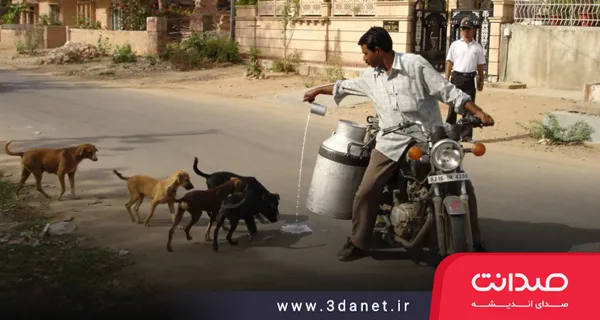
The practice of feeding free-roaming dogs and cats may date back to the process of their domestication, yet it carries the potential to create conflict within the community. Attitudes toward dogs and cats, as well as the presence of these animals, may not be uniform across society; especially if they congregate in high densities around a feeder, they may become a nuisance to some people. The reaction of some responsible authorities in this regard has been to attempt to ban feeding. These efforts are doomed to failure because feeders strongly defend their actions, and these attempts further fuel the fire of conflict within the community. In contrast, other responsible authorities have adopted an approach to define and request 'responsible' feeding. One example is Singapore, where animal welfare groups, in collaboration with the Animal and Veterinary Service, have set expectations for responsible feeding and integrated them with dog and cat sterilization programs.
Dry Organic Waste
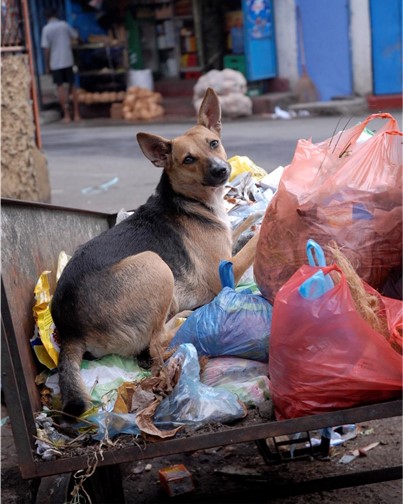
We also examined the issue of food resources from dry organic waste available to dogs and cats in trash bins, streets, and disposal sites. If you review the literature on dog population management, you will encounter many unsubstantiated opinions that consider improved waste management effective in controlling populations. However, in our collective experience, we have never heard of this being carried out in practice, in the field, for dogs or cats. Apparently, this view is presented entirely based on the theory of reducing carrying capacity to decrease population size.
Let us take a closer look at the mechanism of how reducing carrying capacity might practically bring about a change in dog and cat populations.
Populations are controlled by processes such as birth, death, immigration, and emigration. Our goals in humane population management are: 1) reducing births through reproduction control, 2) reducing immigration by preventing abandonment, and 3) increasing emigration through adoption.
Control through death is the business of culling and is fundamentally inhumane and futile because increased reproduction compensates for it. Improving organic waste management might (we will address this further later) reduce carrying capacity and consequently reduce the maximum number of animals that can be supported in that area. Emigration, if options to go elsewhere are available, and reduced reproductive output, observed in the form of decreased pregnancy rates and reduced litter sizes, are processes involved in the population. But there is a possibility of increased mortality rates because malnutrition shortens lifespan. We witness an increase in the number of animals clearly in poor body condition and an increase in the number of puppies and kittens that die before reaching adulthood. Behavioral changes may also emerge in free-roaming animals, including defensive aggression over the remaining limited food resources, as they become more desperate for food. Some of these changes in body condition and behavior were observed following the COVID lockdowns and strengthened our resolve for feeding programs. In summary, population control through the reduction of dry organic waste is inhumane.
We also addressed a published work by Michelle Morters[1]. She was studying dog populations in Bali and South Africa; most of these dogs had owners but were also free to roam and were often seen scavenging for food among rubbish. Michelle took the time to examine this rubbish closely and found that "most of the waste in the study areas consisted of inorganic, inedible materials. What remained was low-quality organic matter, such as food scraps." She tracked these conditions and the survival of individual dogs over time and found that those unowned dogs that relied on rubbish for their food source had poor welfare conditions and short lifespans. Those dogs seen roaming among the rubbish in visibly good condition were doing so merely out of habit, not to meet their nutritional needs, as most of their food was provided by their owners at home. But even the most pampered pet enjoys rummaging through rubbish for food scraps!
Let's set aside Michelle's experience. We can all recall examples of dogs and cats that have access to waste with high nutritional value, often the offal from slaughterhouses, butcher shops, and fishmongers. Animals that have access to such high-protein waste may be able to successfully survive and reproduce. In such cases, reducing waste could indeed lead to the population trends mentioned earlier.
What are the motivations for improving solid waste management?
We considered the published literature and our own experiences regarding places where organic solid waste management had been implemented and the motivation for creating that change. Based on our collective knowledge in this field, there was no published work, grey literature[2], or narrative indicating that any solid waste management improvements made with the intention of managing dog and cat populations had any effect on their numbers. If such evidence exists, we welcome the opportunity to learn more.
Solid waste management has a significant impact on many important issues besides dog and cat populations, including air pollution, water pollution, soil erosion, and greenhouse gas emissions. Improving solid waste management was one of the targets of SDG 11[3] (Sustainable Cities) and has implications for SDG 1 (No Poverty), SDG 6 (Clean Water and Sanitation), and SDG 13 (Climate Action). Therefore, improving solid waste management is an integral part of human development, especially for urban environments. The numerous and powerful motivations of human development will drive improvements in waste management and do not require additional motivations such as dog and cat populations.
What is our role in managing dog and cat populations?
After our careful and long-term investigations, we concluded that it is not advisable for those involved in dog and cat population management to demand greater management of dry organic waste. Improvements in dry waste will, in any case, occur under the influence of environmental and public health incentives. Instead, the task of dog and cat population management practitioners is to acknowledge this inevitability and prepare dogs and cats to adapt to the environment by ensuring they do not rely on this waste for their essential nutrients. This goal can be achieved by improving responsible ownership of owned animals and responsible care of community animals, including feeding, as well as reducing the density of roaming dogs and cats through sterilization and preventing the abandonment of owned animals.
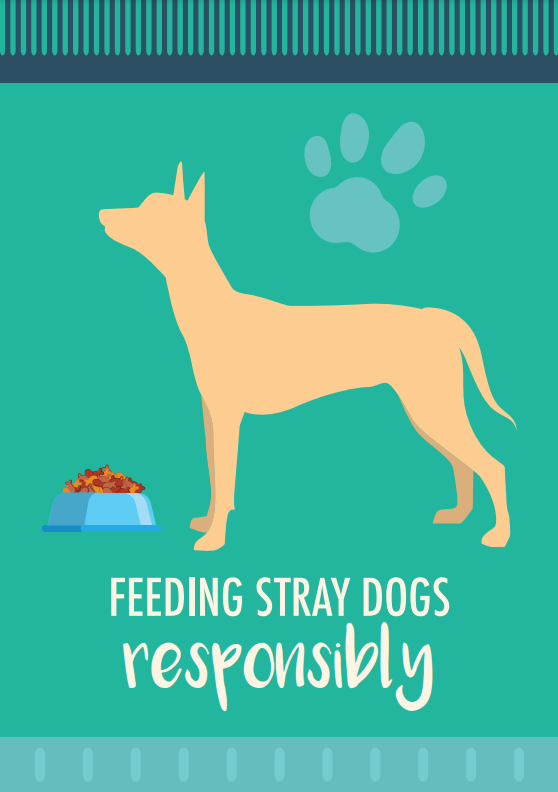
Acknowledging the fiercely advocated feeding done with the intention of kindness towards roaming dogs and cats, which we all witness in our personal and professional lives, we concluded that this practice should not be hindered. However, conflicts over feeding may arise in the community and should not be ignored. Consequently, ICAM supports the responsible feeding of dogs and cats, including expectations regarding what food is given, where, and how:
What food?
Use nutritious and safe food (i.e., food that is not contaminated or 'spoiled').
How?
Provide food in a container. Do not place food directly on the ground.
Collect uneaten food after 2 hours.
Change the water daily to prevent contamination and mosquito breeding.
Where?
Feed in locations that are safe for the animals and minimize conflict with community members.
Adhere to requests to feed at designated feeding locations and do not feed where it is prohibited (e.g., protected natural areas).
And ...
All roaming animals must be vaccinated against rabies (this is not necessary in countries where there is no rabies risk). Ideally, these animals are also vaccinated against other diseases and receive regular parasite treatment.
All roaming animals must be sterilized; if the animals are owned, this must be done with the owner's consent.
If signs of illness appear, prompt attention from a veterinarian or experienced animal health professional is essential.
Identifying individual animals helps track these management actions and allows feeders to discuss individual animals with one another.
Regular and frequent feeding may create dependency on these food sources. Therefore, feeders must be committed to continuing to provide these sources, and any change in schedule and frequency should be made slowly to give the animals time to find other sources.
We acknowledge that this represents an ideal situation and that individual feeders may not be able to meet all these requirements.
However, meeting these requirements may be possible for roaming animals fed by more than one person—if the feeders act collectively.
About the International Companion Animal Management Coalition (ICAM)
ICAM supports the advancement and implementation of humane and effective animal population management worldwide. The coalition was formed in 2006 as a forum for discussing global dog and cat management issues.
Our key objectives are as follows:
Let's share ideas and data
Let's discuss issues related to population management and welfare
Let's agree on definitions and thereby reach greater understanding
Let's prepare guidelines as a cohesive and collaborative group
Contact Information: info@icam−coalition.org
.
.
[1] Michelle Morters
2] Any information source that does not enter the commercial publishing market after compilation is a grey literature source. These sources are created for specific purposes and audiences and are reproduced in a limited manner.
[3] United Nations Sustainable Development Goals
.
.


Discussion1 comments
سلام،من از گروه ناجیان زندگی از مشهد هستم.گروه ما در جهت فرهنگسازی تصمیم به چاپ و انتشار بروشورها یا تراکتهایی،کوچک و خلاصه شده شامل بخش متنی و بخش سوال و جواب سوالهای پر تکرار ، برای پخش در بین مردم و پخش در بین مسئولان شهر مان،گرفته ایم.ممنون میشم اگر در این زمینه به ما کمک کنید یا شماره تلفنهایی از افرادی که میتونند کمک کننده ما باشند،برای من ایمیل کنید.متشکرم