Environment
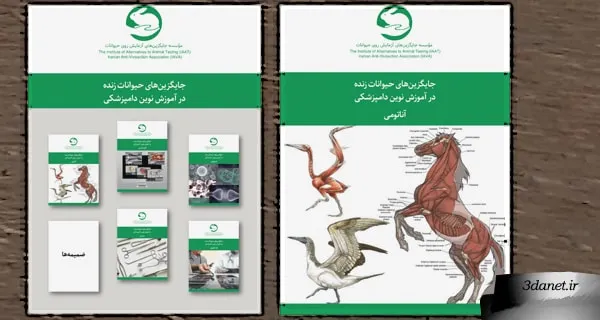
Download: Alternatives to Live Animals in Modern Veterinary Education
Using live animals in veterinary education contradicts the profession's oath to minimize their pain and suffering. Drawing an analogy with human medical training, this practice is identified as speciesism, and the necessity of transitioning to alternatives is emphasized.
Behnam Khodapanah
AuthorLet us begin this introduction with a quotation from the Veterinarian's Oath, in which the purpose of this profession is stated as follows: "Now, as I enter the veterinary profession, I solemnly swear that I will use my scientific knowledge and skills for the benefit of society through the protection of animal health and the relief of animal suffering . . . I will always adhere to the conscience, honor, and ethical principles of the veterinary science in the performance of my professional duties."
As stated in the Veterinarian's Oath, the goal of this science is "the protection of animal health and the relief of animal suffering" with "adherence to conscience, honor, and ethical principles." But to what extent can the use of live animals as models for teaching veterinary skills be ethically justified? To what extent does this serve to relieve animal suffering and protect their health? To answer these questions, it is better to apply them to the species to which we ourselves belong, namely the human species; in that case, to what extent can live humans be used as models for teaching medical skills, without their consent or by force and coercion? Without their consent or by force and coercion, because this is what we do in the process of experimenting on animals or using them as educational models. Our answer to this question is certainly negative, or it is hoped that it would be. We do not, under any circumstances, accept the use of live human models for conducting all kinds of experiments, dissection, mutilation, and so on, for the purpose of learning medical skills, unless it is done with their full free will and under completely fair conditions, and even in such cases, we find it intolerable and a violation of human dignity. When we consider a case like the Tuskegee Syphilis Study, a case in which, between 1932 and 1972, 399 poor African-American men who had volunteered to receive, free of charge, what they were told was a "special treatment" for their "bad blood," without knowing that they actually suffered from syphilis [1] and that the "medicine" given to them was not medicine at all and had no therapeutic effect, with the aim of not treating the patients in order to understand the long-term complications of untreated syphilis, as a result of which twenty-eight men died from the disease, one hundred died from related complications, forty wives were infected, and nineteen children were born with the disease, [2] we strongly condemn it and consider it a violation of human dignity.
On this basis, if we do not accept experimentation on and use of humans for the purposes of medical education, even assuming that these experiments yield positive results for others, then how can we consider the same logic valid for other species in another science, veterinary science? Is it not the case that, in both instances, we are dealing with beings who, regardless of the species to which they belong, are capable of feeling pain and suffering, flee from sources of fear and pain, and whose interest lies in being healthy and unharmed? If a case like Tuskegee suffered from discrimination based on race [3], the use of animals as educational models upon which researchers inflict whatever they wish in the name of science—simply because they do not belong to our species and, in this regard, consider themselves bound and limited by no principles—suffers from another discriminatory attitude which can be termed discrimination based on species, or speciesism [4]. But if the Tuskegee case occurred about eighty years ago, was condemned, and now 'human guinea pigs' are no longer used in treatment and education, the use of animals in education unfortunately still exists in some countries, particularly our own, and is carried out with particular stubbornness, intensity, and severity. Thus, it is no surprise that a researcher and veterinarian trained under these conditions might, in the future, sell and offer products like 'mouse glue' in their veterinary clinic [5] and themselves become an accomplice to the system of oppression for which all members of society, willingly or unwillingly, have been mobilized in some way: the oppression of animals. It is unclear how, under such conditions, a veterinarian whose purpose is supposed to be reducing animal pain and suffering can remain committed to this goal! It is unclear how a veterinarian who, during their training, has become desensitized through the multitude of observations of pointless pain and suffering inflicted on animals that had no illness or injury, can remain faithful to this oath of theirs? And this issue becomes more ethically complex when compassionate, alternative, and novel methods exist to reduce these processes, yet the reaction of the country's veterinary community towards them is one of reluctance and denial.
If the goal of the veterinary oath is to be realized, the discriminatory practice of using live animals in education is certainly not a practice that can bring about its realization. Under such conditions, fundamental changes in outdated and obsolete policies are a necessity whose possibility has been proven.
.
.
[1] syphilis
[2] See: "The Animal's Right, The Human's Wrong", Tom Regan, translated by Behnam Khodapanah, p. 127, Kargadan Publishing. (This book is in press.)
[3] racism
[4] speciesism
[5] Yes! This is something I encountered in one of the large clinics in Karaj!
.
.
PDF file of the book Alternatives to Live Animals in Modern Veterinary Education
Prepared and compiled by: Institute for Alternatives to Animal Testing
Author of the above introduction: Behnam Khodapanah (Translator and Philosophy Researcher)
.
.
Website of the Institute for Alternatives to Animal Testing
Telegram channel: Instead of Animal Testing
Telegram channel: Modern Biological Sciences Education
.
.





Discussion1 comments
بسیار عالی و تکان دهنده. تشکر بسیار آقای خداپناه می توان به مورد غیراخلاقی فوق موارد دیگری نیز افزود: http://www.bartarinha.ir/fa/news/535352/5-آزمایش-علمی-غیراخلاقی-که-روی-انسانها-انجام-شدهاند