Psychology
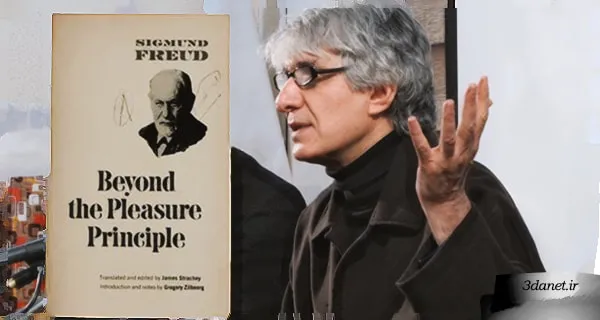
Download Beyond the Pleasure Principle by Sigmund Freud, translated by Yousef Abazari
Freud examines the function of the mental apparatus in regulating psychological tensions according to the pleasure principle—a principle that, though a powerful tendency in the mind, is countered by the reality principle, which, for the sake of self-preservation, defers gratification and diverts the pursuit of pleasure onto an indirect path.
We have no doubt that in psychoanalytic theory we assume that the course taken by mental events is automatically regulated by the pleasure principle. We believe, so to speak, that the course of these events is invariably set in motion by an unpleasurable tension, and that it takes a direction such that its final outcome coincides with a reduction of this tension—that is, with the avoidance of unpleasure or the production of pleasure. In taking this course into account in our investigations of the mental processes that are the subject of our study, we introduce an "economic" point of view into our work; and if, in describing these processes, we try to estimate and evaluate this "economic" factor in addition to the "topographical" and "dynamic" ones, I think we will arrive at the most complete descriptions of which we are presently capable, a description that deserves to be distinguished by the term "metapsychological."
In this matter it is of no importance to us at all to inquire how far, in putting forward this hypothesis of the pleasure principle, we have approached or adopted any particular, historically determinate philosophical system. We arrived at these speculative hypotheses in the course of our attempt to describe and account for the facts of our everyday observations in our field of study. Priority and originality are not among the aims that psychoanalytic work sets itself, and the impressions underlying the hypothesis of the pleasure principle are so obvious and self-evident that they can hardly be overlooked. On the other hand, we would readily express our gratitude to any philosophical or psychological theory that could give us information about the meaning and feeling of pleasure and unpleasure, which impinge upon us so powerfully. But, alas, nothing that serves our purposes is to be found here. This is the most obscure and inaccessible region of the mind, and since we cannot avoid touching upon it, the least restrictive hypothesis will, in my opinion, be the best. We have decided to relate pleasure and unpleasure to the quantity of excitation present in the mind but in no way "bound," and to relate them in such a manner that unpleasure corresponds to an increase in the quantity of excitation and pleasure to a diminution. What we mean by this is not a simple relation between the intensity of the feeling of pleasure and unpleasure and the corresponding modifications in the quantity of excitation; at least—in view of what we have learned from psycho-physiology—we do not directly suggest any relation based on proportion: the factor that determines the feeling is probably the amount of increase or diminution in the quantity of excitation in a given period of time. Experiment might possibly be of service here, but it is not advisable for us analysts to pursue the matter further until quite definite observations can be brought to bear upon it.
At any rate, we cannot remain indifferent to the discovery made by a researcher of such profundity as G. T. Fechner (2) on the subject of pleasure and unpleasure, a discovery that in its essence coincides with the one toward which our psychoanalytic work has driven us. Fechner's statement is expressed in a small work, Einige Ideen zur Schöpfungs- und Entwicklungsgeschichte der Organismen, 1873 (Part XI, Supplement, 94), and its meaning is as follows: "Insofar as conscious impulses always have a relation to pleasure or unpleasure, pleasure and unpleasure can also be considered as [states] that have a psycho-physical relation to conditions of stability and instability." This provides a basis for a hypothesis that I intend to elaborate in great detail elsewhere. According to this hypothesis, every psycho-physical motion that rises above the threshold of consciousness is attended by pleasure to the extent that, beyond a certain limit, it approaches complete stability, and is attended by unpleasure to the extent that, beyond a certain limit, it deviates from complete stability; while between the two limits, which may be described as the qualitative thresholds of pleasure and unpleasure, there is a certain margin of aesthetic indifference.
The facts that lead us to believe in the dominance of the pleasure principle in mental life also find expression in the hypothesis that the mental apparatus endeavors to keep the quantity of excitation present in it as low as possible or at least constant. This latter hypothesis is only another way of stating the pleasure principle; for if the work of the mental apparatus is directed toward keeping the quantity of excitation low, then anything that is calculated to increase that quantity is bound to be felt as adverse to the functioning of the apparatus, that is, as unpleasurable. The pleasure principle follows from the principle of constancy; the latter principle is actually inferred from the facts that compel us to adopt the pleasure principle. Moreover, a more detailed discussion will show that the tendency which we thus attribute to the mental apparatus is subsumed as a special case under Fechner's principle of the "tendency toward stability," a principle in the context of which Fechner relates the feelings of pleasure and unpleasure to one another.
In any event, it must be pointed out that, strictly speaking, it is incorrect to speak of the dominance of the pleasure principle over the course of mental processes. If such a dominance existed, the vast majority of our mental processes would have to be accompanied by pleasure or lead to pleasure, whereas universal experience completely contradicts such a conclusion. Therefore, the most that can be said is that there exists in the mind a strong tendency toward the pleasure principle, but that certain other situations or forces oppose this tendency, so that the final outcome cannot always be in harmony with the tendency toward pleasure. We may compare our statement with Fechner's remark on a similar subject: "In any event, since the existence of a tendency toward a goal does not mean that the goal is attained, and since in general the goal is attainable only by approximations...".
If we now return to the question of what situations are capable of preventing the pleasure principle from being carried out, we find ourselves once more on safe and well-trodden ground, and, in framing our question, we have at our disposal a rich source of analytic experience.
The first example of the pleasure principle being inhibited in this way is a familiar one that occurs regularly. We know that the pleasure principle is proper to a primary method of working on the part of the mental apparatus, but that, from the point of view of the self-preservation of the organism among the difficulties of the external world, it is from the very outset inefficient and even highly dangerous. Under the influence of the ego's instincts of self-preservation, the pleasure principle is replaced by the reality principle. This latter principle does not abandon the intention of ultimately obtaining pleasure, but it nevertheless demands and carries into effect the postponement of satisfaction, the abandonment of a number of possibilities of gaining satisfaction, and the temporary toleration of unpleasure as a step on the long, indirect road to pleasure. The pleasure principle, however, long persists as the method of working employed by the sexual instincts, which are so hard to "educate," and, starting from those instincts, or in the ego itself, it often succeeds in overcoming the reality principle, to the detriment of the organism as a whole.
In any case, there can be no doubt that the replacement of the pleasure principle by the reality principle can only be responsible for a small number of unpleasurable experiences, and by no means the most intense of these. Another occasion for the release of unpleasure, which occurs with no less regularity, is to be found in the conflicts and clashes that take place within the mental apparatus while the ego is undergoing its development into more highly composite organizations. Almost all the energy with which the apparatus is filled arises from its innate instinctual impulses. But these are not all allowed to reach the same phases of development. In the course of things it repeatedly happens that individual instincts or parts of instincts prove incompatible in their aims or demands with the remaining ones, which can combine into the inclusive unity of the ego. The former are then split off from this unity by the process of repression, held back at lower levels of psychical development and cut off, to begin with, from the possibility of satisfaction. If they subsequently succeed, as can so easily happen with repressed sexual instincts, in reaching a direct or substitutive satisfaction by circuitous paths, this event, which in other cases would have been an opportunity for pleasure, is felt by the ego as unpleasure. As a consequence of the old conflict which ended in repression, a new breach has occurred in the pleasure principle at the very time when certain instincts were endeavoring, in accordance with the principle, to obtain fresh pleasure. The details of the process by which repression turns a possibility of pleasure into a source of unpleasure are not yet clearly understood or cannot be clearly represented; but there is no doubt that all neurotic unpleasure is of that kind — pleasure that cannot be felt as such.
The two sources of unpleasure which I have just indicated are by no means the source of the majority of our unpleasurable experiences. But as regards the remainder one can assert with a fair show of justification that their presence does not contradict the dominance of the pleasure principle. Most of the unpleasure that we feel is perceptual unpleasure. It may be perception of pressure from unsatisfied instincts; or it may be external perception which is either distressing in itself or excites unpleasurable expectations in the mental apparatus — that is, is recognized by it as a ‘danger’. The reaction to these instinctual demands and threats of danger, a reaction which constitutes the proper activity of the mental apparatus, can then be directed in a correct manner by the pleasure principle or the reality principle which modifies it. This does not seem to necessitate any far-reaching limitation of the pleasure principle. Nevertheless the investigation of the mental reaction to external danger is precisely in a position to yield new material and raise new questions in regard to the problem with which we are here concerned.
The condition that arises after severe mechanical shocks, railway accidents, and other incidents involving a threat to life has long been recognized and described, and has been given the name "traumatic neurosis." The terrible war that has just ended led to the emergence of a great number of such illnesses, but this event at least put an end to the temptation to attribute the cause of the illness to an organic lesion of the nervous system brought about by mechanical force. The picture that traumatic neurosis paints of the symptoms of illness approaches hysteria in the abundance of similar motor symptoms, but as a rule surpasses it in the case of the quite pronounced signs of mental illness—which in this case resembles melancholia or hypochondria—and also in the evidence it provides of a far more comprehensive general debility and disturbance of the mental capacities. A complete explanation of war neurosis or the traumatic neurosis of peacetime has not yet been given. In the case of war neurosis, the fact that the same symptoms of illness sometimes appear without the intervention of any purely mechanical force seems at once both illuminating and bewildering. In the case of ordinary traumatic neurosis, two characteristics stand out prominently: first, the chief causative factor seems to be based on surprise and fright; second, a wound or injury sustained simultaneously as a rule works against the development of the neurosis. "Fright," "fear," and "anxiety" have been used incorrectly as synonymous terms; but in reality they can be clearly distinguished from one another in their relation to danger. "Anxiety" denotes a particular state of expecting the danger or preparing for it, even though the danger may be unknown. "Fear" requires a definite object of which one is afraid. "Fright" is the name we give to the state a person enters when he has encountered a danger without being prepared for it; the factor of surprise is emphasized here. I do not believe that anxiety can produce a traumatic neurosis. There is something in anxiety that protects the anxious person against fright and thus against fright neurosis. We will return to this subject later.
The study of dreams can be the most trustworthy method of investigating deep mental processes. The dreams that occur in traumatic neurosis have the characteristic of repeatedly bringing the patient back to the situation of the accident that befell him, a situation from which he wakes up in renewed fright. This astonishes people very little. They think that the fact that the traumatic experience constantly forces itself upon the patient even in his sleep is proof of the strength of that experience: one might say that the patient has become fixated upon his trauma. Fixations upon the experience that initiated the illness have long been familiar to us in hysteria. Breuer (3) and Freud declared in 1893 that "hysterics suffer mainly from reminiscences." In war neurosis, too, observers such as Ferenczi (4) and Simmel (5) were able to explain certain motor symptoms by focusing on the moment at which the trauma occurs.
At any rate, I do not know whether those who suffer from traumatic neurosis also dwell a great deal on the memories of the accident that befell them in their waking life. Perhaps they are more intent on not thinking about it. Those who have taken it as a given that their sleep and dreams must return them at night to the situation that caused their illness have misunderstood the nature of dreams. It would be more in keeping with their nature if they showed the patients images of their past healthy days or of the recovery they hope for. If the dreams of traumatic neurosis do not shake our view that dreams are wish-fulfilling processes, we still have one resource open to us: we may argue that the function of dreaming, like so much else, is disrupted in this condition and diverted from its purposes, or we may be forced to reflect upon the enigmatic masochistic tendencies of the ego.
At this point I propose to leave the obscure and gloomy subject of traumatic neurosis and turn to an examination of the method of working employed by the mental apparatus in one of its earliest normal activities—I mean the method of working in children's play.
The various theories of children's play have only recently been summarized and discussed from a psychoanalytic point of view by Pfeifer (6) (1919), to whose paper I would refer my readers. These theories attempt to discover the motives that impel children to play, but they fail to bring into prominence the economic motive, the consideration of the yield of pleasure involved. Without wishing to enter into the whole field covered by this phenomenon, I was able, through an opportunity that chance provided, to shed some light on the first game invented by a one-and-a-half-year-old boy and played by himself. It was more than a fleeting observation, for I lived under the same roof with the child and his parents for several weeks, and it took some time before I discovered the meaning of the enigmatic activity he constantly repeated.
This child was by no means exceptional or precocious in terms of intellectual development. At the age of one and a half, he could only say a few meaningful words; he could also produce a number of sounds that conveyed meaning only intelligible to those around him. At any rate, he had a good relationship with his parents and his nursemaid, and was praised for being a "good boy." He did not disturb his parents at night, he consciously obeyed injunctions not to touch certain things or enter certain rooms, and above all, he did not cry when his mother left him for a few hours. At the same time, he was intensely attached to his mother, who had not only fed him herself but had also cared for and looked after him without the help of others. Nevertheless, this good little boy had an occasional disturbing habit: he would take any small object he could get his hands on and fling it into a corner, such as under the bed. Finding these toys and gathering them up often became a time-consuming occupation. As he did this, he would emit a loud, drawn-out "o-o-o-o" sound, accompanied by an expression of interest and satisfaction. His mother and the author of this account agreed in thinking that this sound was not merely an interjection but represented the German word fort ["gone"]. I subsequently realized that this was a kind of game, and the only use the child made of his toys was to play the "gone" game with them. One day I made an observation that confirmed my view. The child had a wooden reel with a piece of string tied around it. It never occurred to him to pull it along the floor behind him as if it were a carriage for play. What he did was to hold the string and skillfully throw the reel over the edge of his curtained cot, so that the reel disappeared, while at the same time uttering his meaningful "o-o-o-o." He would then pull the reel out of the cot by the string and greet its reappearance with a joyful "da" ["there"]. This, then, was the complete game—disappearance and return. As a rule, the observer only witnessed the first act, which was repeated tirelessly as a game in itself, though there was no doubt that the greater pleasure was attached to the second act.
The interpretation of the game then became possible, relating to the great cultural achievement of the child—the instinctual renunciation (that is, the renunciation of instinctual satisfaction) he made when he allowed his mother to leave the house without protesting. He compensated himself, as it were, by staging the disappearance and return of objects within his reach. In judging the effective nature of this game, it is of no importance whether the child invented the game himself or learned it through external suggestion. Our interest is directed to another point. The child could certainly not have experienced his mother's departure as something pleasant or even indifferent. How, then, did the repetition of this distressing experience as a game conform to the pleasure principle? Perhaps one might answer by saying that the mother's departure had to occur as the necessary prelude to her joyful return, and that it is in the return that the true purpose of the game lies. But against this view, the observed fact must be stated that the first act, that of departure, was performed as a game in its own right, and its repetition was far more frequent than would be the case if it were merely part of the whole game with its pleasurable ending.
No certain conclusion can be drawn from the analysis of a single incident of this kind. From an unprejudiced perspective, one gains the impression that the child turned his experience into a game for some other motive. At the outset he was in a passive situation—he was overwhelmed by the experience; but by repeating it as a game, unpleasant though it was, he took on an active role. These efforts might perhaps be attributed to an instinct for mastery, which acts independently of whether the memory is in itself pleasurable or not. But another interpretation can still be made. Throwing the object away so that it was “gone” might satisfy an impulse of the child’s that is suppressed in his real life, taking revenge on his mother for going away from him. If this is the case, it could have a defiant meaning: “All right, go away! I don’t need you. I’m sending you away myself.” A year later, the same boy whose first game I had witnessed would pick up a toy and, if he did not like it, throw it on the floor and say: “Go to the front!” (7) At that time he had heard that his absent father was at the “front,” and he felt no regret at all over his father’s absence; on the contrary, he made it quite clear that he had no wish to be disturbed now that his mother belonged to him alone. We know of other children who liked to express similar hostile impulses by throwing objects away instead of people. We are therefore left in doubt as to whether the impulse to work over an overwhelming experience in the mind so as to master it can manifest itself as a primary event, independent of the pleasure principle. For in the case we are discussing, the child may, after all, only be able to repeat his unpleasant experience in play because the repetition brings with it a yield of pleasure of another sort, but a direct one.
Further study of children’s play does not help us to resolve our hesitation between these two views. It is clear that in their play children repeat everything that has made a great impression on them in real life, and that in doing so they discharge the strength of the impression and, so to speak, make themselves master of the situation. But on the other hand it is obvious that all their play is influenced by a wish that dominates them the whole time—the wish to be grown-up and to be able to do what grown-up people do. It can also be observed that the unpleasurable nature of an experience does not always make it unsuitable for play. If a doctor examines a child’s throat or performs a small operation on him, we can be quite sure that these frightening experiences will become the subject of the next game; but in this case we must not overlook the fact that a yield of pleasure from another source will be provided. As soon as the child passes from the passivity of the experience to the activity of the game, he transfers the disagreeable experience to one of his playmates and in this way revenges himself on a substitute.
Nevertheless, the conclusion emerges from this discussion that no special imitative instinct need be assumed as a motive for play. Finally, we must remind ourselves that the artistic play and artistic imitation carried out by adults, which, unlike children’s play, are aimed at an audience, do not spare the spectators (for instance, in tragedy) the most painful experiences and yet can be felt by them as highly enjoyable. This is convincing evidence that even under the dominance of the pleasure principle there are ways and means enough of making what is in itself unpleasurable into a subject to be recollected and worked over in the mind. The consideration of these cases and situations, whose final outcome is a yield of pleasure, should be undertaken by some system of aesthetics with an economic approach to its subject-matter. They are of no use for our purposes, since they presuppose the existence and dominance of the pleasure principle and give no evidence of the operation of tendencies beyond the pleasure principle, that is, of tendencies more primitive than it and independent of it.
The result of twenty-five years of intense work is that the immediate aims of psychoanalytic technique are today entirely different from what they were at the beginning. At first the analyzing physician could do no more than discover the unconscious material that was concealed from the patient, put it together, and communicate it to him at the right moment. Psychoanalysis was then above all an art of interpretation. Since this technique did not solve the therapeutic problem, the next aim quickly came into view: to compel the patient to confirm the analyst’s constructions from his own memories. In this work the chief emphasis was on the patient’s resistances: the art now lay in uncovering these resistances as quickly as possible, in pointing them out to the patient and, through human influence, urging him to abandon them—here the theory that was conceived of as “transference” (8) played its part.
But it has now become perfectly clear that the aim which has been set—namely, that everything unconscious should become conscious—is not fully attainable by this method. The patient cannot remember the whole of what is repressed in him, and what he cannot remember may be precisely the essential part of it. Thus he acquires no sense of conviction of the correctness of the construction that has been communicated to him. He is obliged to repeat the repressed material as a contemporary experience instead of, as the physician would prefer to see, remembering it as something belonging to the past. These reproductions, which emerge with such unwished-for exactitude, always have as their subject a portion of infantile sexual life—that is, the Oedipus complex and its derivatives; and they are invariably acted out in the sphere of the transference, the patient’s relation to the physician. When things have reached this stage, it may be said that the earlier neurosis has now been replaced by a fresh, “transference neurosis.” All the physician’s efforts have been directed toward keeping this transference neurosis within the narrowest limits; toward forcing as much as possible into the channel of memory and allowing as little as possible to emerge as repetition. The ratio between what is remembered and what is reproduced varies from case to case. The physician cannot as a rule spare his patient this phase of the treatment; he must get him to re-experience some portion of his forgotten life, but must see to it, on the other hand, that the patient retains some degree of detachment, which will enable him, in spite of everything, to recognize that what appears to be reality is in fact only a reflection of a forgotten past. If this aim is successfully achieved, the patient’s sense of conviction is won, and along with it the therapeutic success that is dependent on it is assured.
To make it easier to understand this "compulsion to repeat" which appears in the course of the psychoanalytic treatment of neurotics, we must above all free ourselves from the mistaken notion that what we are dealing with in our struggle against resistances is unconscious resistance. The unconscious—or in other words, the "repressed"—offers no resistance whatever to the efforts of the treatment. Indeed, the unconscious itself has no other endeavor than to break through the pressure weighing down on it and to force its way either to consciousness or to discharge through some real action. Resistance during treatment arises from the higher strata and systems of the mind which originally carried out the repression. But since we know from experience that the motives for the resistances, and indeed the resistances themselves, are unconscious at first in the treatment, this points us to a shortcoming in our terminology. We shall avoid a lack of clarity if we make our contrast not between the conscious and the unconscious but between the coherent ego and the repressed. It is certain that much of the ego is itself unconscious, and notably what we may describe as its nucleus; only a small part of it is covered by the term "preconscious." Having replaced a purely descriptive term by one that is systematic or dynamic, we can say that the patient's resistance arises from his ego, and we then suddenly perceive that the compulsion to repeat must be ascribed to the unconscious repressed. It seems probable that the compulsion can only manifest itself after the work of treatment has gone halfway to meet it and has loosened the repression.
There is no doubt that the resistance of the conscious and unconscious ego operates under the sway of the pleasure principle; it seeks to avoid the unpleasure which would be produced by the liberation of the repressed. Our efforts, on the other hand, are directed towards procuring tolerance of this unpleasure by an appeal to the reality principle. But how is the compulsion to repeat—the manifestation of the power of the repressed—related to the pleasure principle? It is clear that the greater part of what is re-experienced under the compulsion to repeat must cause the ego unpleasure, since it brings to light the activities of repressed instinctual impulses. That, however, is unpleasure of a kind we have already considered and which does not contradict the pleasure principle: unpleasure for one system and simultaneously satisfaction for the other. But we now come to a new and remarkable fact, namely that the compulsion to repeat also recalls from the past experiences which include no possibility of pleasure, and which can never, even long ago, have brought satisfaction even to instinctual impulses which have since been repressed.
The early efflorescence of infantile sexual life is doomed to extinction because its wishes are incompatible with reality and with the inadequate stage of development which the child has reached. That efflorescence comes to an end in the most distressing circumstances and amid the most painful feelings. Loss of love and failure leave behind them a permanent injury to self-regard in the form of a narcissistic scar, which in my opinion, as well as in Marcinowski's (9), contributes more than anything to the "sense of inferiority" so common in neurotics. The child's sexual researches, on which limits are imposed by his physical development, lead to no satisfactory conclusion; hence such later complaints as "I can't accomplish anything; I can't succeed in anything" are rooted in this. The tie of affection, which binds the child as a rule to the parent of the opposite sex, succumbs to disappointment, to a vain expectation of satisfaction, or to jealousy over the birth of a new baby—unmistakable proof of the infidelity of the object of the child's affections. His own attempt, made with tragic seriousness, to produce a baby himself, fails shamefully. The lessening amount of affection he receives, the increasing demands of education, harsh words and an occasional punishment—all these finally show him the full extent to which he has been scorned. These are a few typical and constantly recurring instances of the ways in which the love characteristic of childhood is brought to a close.
Patients repeat all of these unwanted situations and painful affects in the transference and revive them with the utmost ingenuity. They seek to bring the treatment to an end while it is still unfinished; they contrive once more to feel themselves scorned and oblige the physician to speak to them severely and treat them coldly; they discover appropriate objects for their jealousy; instead of the passionately desired baby of their childhood, they produce a grand plan or a promise of a grand gift—which is usually just as unreal. None of these wishes could have produced pleasure in the past, and one might suppose that they would cause less unpleasure today if they emerged as memories or dreams instead of taking the form of fresh experiences. They are, of course, the activities of instincts intended to lead to satisfaction; but no lesson has been learned from the old experience of these activities, which instead led only to unpleasure. In spite of that, these experiences are repeated under the pressure of a compulsion.
What psychoanalysis reveals in the transference phenomena of neurotics can also be observed in the lives of some normal people. The impression they give is of being pursued by a malignant fate or possessed by a 'daemonic' power; but psychoanalysis has always held the view that their fate is for the most part arranged by themselves and determined by early infantile influences. The compulsion which is here at work is no different from the compulsion to repeat which we have found in neurotics, even though the individuals we are now considering have never shown any signs of dealing with a neurotic conflict by producing symptoms. Thus we come across people all of whose human relationships have the same outcome: the benefactor who is abandoned in anger after a time by each of his protégés, however much they may otherwise differ from one another, and who seems doomed to taste all the bitterness of ingratitude; or the man whose friendships all end in betrayal by his friend; or the man who time after time in the course of his life raises someone else to a position of great private or public authority and then, after a certain interval, himself overthrows that authority and replaces it with a new one; or, again, the lover whose love affairs with a woman each pass through the same phases and come to the same conclusion. This 'perpetual recurrence of the same thing' causes us no astonishment when it relates to the active behaviour of the person concerned and when we can discern in him an essential character-trait which always remains the same and is compelled to express itself in a repetition of the same experiences. We are far more impressed by cases where the person seems to be having a passive experience, over which he has no influence, but in which he meets with a repetition of the same fatality. One might cite, for instance, the story of the woman who married three successive husbands each of whom fell ill soon afterwards and had to be nursed by her on their death-beds. The most moving poetic picture of such a fate is given by Tasso in his romantic epic Gerusalemme Liberata. Its hero, Tancred, unwittingly kills his beloved Clorinda in a duel while she is disguised in the armour of an enemy knight. After her burial he makes his way into a strange enchanted forest which strikes terror into the Crusaders' army. There he slashes with his sword at a tall tree; but blood streams from the cut and the voice of Clorinda, whose soul is imprisoned in the tree, is heard complaining that he has wounded his beloved once again.
In view of such observations—based upon the behaviour of patients in the transference and upon the life-histories of men and women—we shall find the courage to assume that there really does exist in the mind a compulsion to repeat which overrides the pleasure principle. Now too we shall be inclined to relate to this compulsion the dreams which occur in traumatic neuroses and the impulse which leads children to play.
اما بايد متذكر شد كه فقط در مواردى نادر مى توانيم آثار خالص اجبار به تكرار را به گونه اى كه ديگر انگيزشها آن را همراهى نكرده باشند مشاهده كنيم. در مورد بازى كودكان ما قبلاً شيوه هايى ديگر را مورد تأكيد قرار داديم كه بر مبناى آنها پديد آمدن اجبار مى تواند مورد تفسير قرار گيرد؛ اجبار به تكرار و ارضايى غريزى كه بلافاصله لذّت بردنى باشد، به نظر مى رسد كه در اينجا به همكارى صميمانه اى منتهى شوند. پديده انتقال را آشكارا مقاومتى مورداستفاده قرار مى دهد كه «خود» در اصرارِ سرسختانه خويش بر سركوب از خود نشان مى دهد؛ اجبار به تكرار كه مداوا سعى مى كند آن را به خدمت گيرد، به اصطلاح، توسط «خود» به طرف خود كشيده مى شود (زيرا كه خود به اصل لذّت متصل است). بخش اعظم چيزى را كه مى توان به عنوان اجبار سرنوشت توصيف كرد، به نظر مى رسد بر مبنايى عقلانى فهميدنى باشد؛ به گونه اى كه ما تحت فشار هيچ نوع ضرورتى نيستيم تا براى تبيين آن به نيروى انگيزشى رمزآلوده و جديدى متوسل شويم.
كمترين مورد مشكوك شايد خوابها و روءياهاى آسيب زا باشند. اما با تأملى فكورانه تر ناگزير مى شويم بپذيريم كه حتى در موارد ديگر نيز كلِ زمينه را عملكرد نيروهاى انگيزشى آشنا دربر نمى گيرند. مطالب بسيارى براى توجيه فرضيه اجبار به تكرار، تبيين نشده باقى مانده است ــ اجبارى كه به نظر مى رسد بدوى تر و ابتدايى تر و غريزى تر از اصل لذّت باشد كه اجبار به تكرار آن را ناديده مى انگارد. اما اگر اجبار به تكرار در ذهن عمل مى كند، بايد خوشحال باشيم كه چيزى در مورد آن بدانيم، بفهميم كه كاركرد آن با چه چيزى متناظر است، تحت چه وضعيتهايى مى تواند پديد آيد و نسبت آن با اصل لذّت چيست ــ اصلى كه دست آخر، قبلاً غلبه بر مسير جريانهاى تحريك در زندگى ذهنى را به آن منتسب كرده ايم.
آنچه در پى مى آيد تأملات و اغلب تأملاتى اغراق آميز است كه خواننده بر طبق تمايلات فردى اش مى تواند آن را قبول يا رد كند. فزونتر، اين تلاش، تلاشى است براى پيگيرى انديشه اى به صورت منسجم، آن هم از سرِ كنجكاوى، تا دريابيم كه ره به كجا مى برد.
تأملات روانكاوانه، اين تصور را كه از بررسى جريانات ناخودآگاه حاصل آمده است نقطه عزيمت خود قرار مى دهد كه آگاهى مى تواند، نه كلى ترين صفت فرايندهاى ذهنى، بلكه تابع خاصى از آنها باشد. اگر منظور خود را با اصطلاحات مابعدروانشانسانه بيان كنيم، مى توانيم تأكيد كنيم كه آگاهى تابعى از نظامى خاص است كه مابعدروانشناسى آن را Cs . (11) توصيف مى كند. آنچه آگاهى به بار مى آورد اساساً متشكل است از ادراك تحريكاتى كه از جهان خارجى مى آيد و [ همچنين [احساس لذّت و عدم لذّت كه فقط مى تواند از درون نظام ذهنى نشأت گيرد؛ بنابراين ممكن است كه به نظام pcpt._Cs . (12) ، موقعيتى در اين فضا منتسب كرد. اين نظام بايد در مرز ميان درون و بيرون قرار گيرد؛ و بايد به سوى جهان خارج متوجه گردد و بايد ساير نظامهاى روانى را احاطه كند. خواهيم ديد كه هيچ چيز نو و جسورانه اى در اين فرضيات نهفته نيست؛ ما فقط نظرگاهى را درباره جايابى اتخاذ كرده ايم كه آناتومى مغز آن را مشخص ساخته است و بر آن است كه «جاى» آگاهى در قشر مغز است ــ يعنى خارجى ترين لايه و لايه پوشاننده ارگان مركزى. آناتومى مغز محتاج بررسى اين امر نيست كه اگر بخواهيم از حيث آناتومى سخن بگوييم چرا آگاهى بايد در سطح مغز قرار داده شود به جاى آن كه به شيوه اى اَمن در جايى در درونى ترين بخش قرار گيرد. شايد ما در شرحى كه از اين موقعيت درباره سيستم خود يعنى pcpt._Cs . به دست مى دهيم موفقتر باشيم.
Consciousness is not the only distinctive characteristic that we ascribe to the processes within this system. On the basis of impressions gained from psychoanalytic experience, we assume that all excitatory processes occurring in the other systems leave behind permanent traces in them, which form the foundation of memory—such memory-traces have nothing whatsoever to do with the fact of becoming conscious; indeed, they are often most powerful and most enduring when the processes that left them behind are precisely those that never entered consciousness. At any rate, it is difficult to believe that permanent traces of excitations of this kind are also left behind in the system Pcpt.-Cs. If they remained conscious permanently, they would very soon impose limits on the system’s capacity to receive fresh excitations. If, on the other hand, they were unconscious, we would be faced with the problem of explaining the existence of unconscious processes in a system whose functioning is otherwise accompanied by the phenomenon of consciousness. We have, so to speak, changed nothing and gained nothing by our hypothesis that assigns the process of becoming conscious to a particular system. Although these considerations are not absolutely conclusive, they nevertheless impel us to suspect that becoming conscious and leaving behind a memory-trace are processes incompatible with one another within a single system. We may therefore say that consciousness arises from the excitatory process within the system Cs., but leaves no permanent trace there; rather, the excitation is transmitted to the systems situated alongside it, and it is within them that its traces are left. I pursued this same line of thought in the schematic picture I presented in the speculative section of The Interpretation of Dreams. It must be borne in mind that little is known from other sources about the origin of consciousness; therefore, when we put forward the proposition that consciousness appears in place of a memory-trace, this proposition requires reflection, in all cases and on the basis that it is presented with entirely valid content.
If this is so, then the system Cs. possesses a special characteristic (in contrast to what occurs in the other psychical systems), such that within it, excitatory processes do not leave behind any permanent alteration in its elements, but are, as it were, discharged in the phenomenon of becoming conscious. An exception of this kind to a general rule requires explanation by some factor that applies exclusively to one system. Such a factor, absent in the other systems, might well be the exposed and unprotected situation of the system Cs., which is situated immediately adjacent to the external world.
Let us picture a living organism in its simplest possible form as an undifferentiated vesicle of a substance that is exposed to stimulation. In this case, the surface of this vesicle, being in contact with the external world, becomes differentiated from its surrounding condition and turns into an organ for receiving stimuli. Indeed, embryology, with its capacity for recapitulating the history of evolution, actually shows us that the central nervous system originates from the ectoderm (13); the grey matter of the cerebral cortex remains a derivative of the primitive surface layer of the organism and inherits some of its essential properties. It is therefore easy to assume that, as a result of the incessant impact of external stimuli on the surface of the vesicle, its substance is continuously modified to a certain depth, so that the excitatory processes follow a different course there compared to what occurs in the deeper layers. Thus, a membrane is formed that is ultimately so 'baked through' by stimulation that it presents the most favourable possible conditions for the reception of stimuli and loses the capacity for further modification. In terms of the Cs. system, this means that its elements are no longer subject to further permanent modifications from the passage of excitation, because they have already been modified to the greatest possible extent in the matter in question. At any rate, they have now acquired the capacity to bring about consciousness. Various ideas can be put forward, which at present cannot be verified, concerning the nature of these modifications that have taken place in the substance and the excitatory process. It may be supposed that, in passing from one element to another, the excitation must overcome a resistance, and that the diminution of resistance thus achieved is what lays down a permanent trace of the excitation, namely facilitation. In the Cs. system, therefore, there is no longer any resistance of this kind to passage from one element to another. A connection can be drawn between this picture and Breuer's distinction between quiescent (or bound) and freely mobile cathectic energy (14) in the elements of the psychical systems; the elements of the Cs. system carry no bound energy, but only energy that can be freely discharged. At any rate, it is better to speak as cautiously as possible about these points. Nevertheless, these reflections and speculations enable us to link the origin of consciousness in some way to the position of the Cs. system and to the characteristics that must be attributed to the excitatory processes occurring within it.
اما بايد در مورد ريزكيسه زنده و لايه قشرى گيرنده آن بيشتر سخن بگوييم. اين بخش كوچك از ماده زنده در ميانه جهانى خارجى به حال تعليق وجود دارد كه آكنده از قدرتمندترين انرژيهاست؛ و اگر سپر محافظى در برابر محركات براى آن فراهم نشود، تحريكاتى كه از اين انرژيها نشأت مى گيرد مى تواند آن را نابود كند. بنابراين او بدين طريق اين سپر را فراهم مى كند: لايه بيرونى آن ساختى را از دست مى دهد كه مناسب ماده زنده است و تا درجاتى غيرارگانيك مى شود و بعد از آن به عنوان جوف يا غشايى ويژه عمل مى كند كه در برابر محركات مقاوم است. در نتيجه، انرژيهاى جهان خارج فقط با بخشى از شدت اصلى خود مى توانند به لايه هاى زيرين بعدى كه هنوز زنده اند عبور كنند؛ و اين لايه ها در پس سپر محافظ خود مى توانند خود را وقف گيرندگى شمارى از محركات كنند كه اجازه يافته اند به آن برسند. لايه خارجى با مرگ خود تمامى لايه هاى ژرفتر را از سرنوشتى مشابه نجات مى دهد ــ مگر اين كه، به اصطلاح، محركى كه به آن مى رسد چنان قوى باشد كه لايه محافظ را بشكند. حفاظت در برابر محرك يقيناً براى ارگانيسم زنده كاركرد مهمترى دارد تا گرفتن محرك. سپر محافظ داراى مخزن انرژى اى از آن خود است و بيش از هر چيز مى كوشد تا شيوه هاى خاص انتقال انرژى كه در آن عمل مى كند در برابر تأثيراتى محافظت كند كه انرژيهاى عظيمى كه در جهان خارج وجود دارند موجد آن اند ــ تأثيراتى كه متوجه تثبيت آنها و بنابراين متوجه نابودى آنهاست. هدف عمده گرفتن محرك، كشف جهت و سرشت محرك خارجى است؛ و براى انجام اين كار كافى است كه نمونه هاى كوچكى از جهان خارج را بگيرد و آن را به كميّات كوچك بدل كند و بيازمايد. در ارگانيسمهاى كاملاً تحول يافته، لايه قشرى گيرنده ريزكيسه سابق مدت زمانى طولانى است كه به اعماقِ درون بدن پس نشسته است، هرچند بخشهايى از آن در لايه رويى يعنى چسبيده به زير سپر سراسرى باقى مانده است تا حائل محرك شود. اينها همان اندامهاى حسى هستند كه اساساً از دستگاهى براى گرفتن آثار خاص معينى از تحريك، اما همچنين شامل ترتيبات خاصى هستند براى محافظت بيشتر در برابر شمار فزون از حدى از تحريك و همچنين طرد انواع نامناسب محركها. ويژگى آنها اين است كه فقط با شمار بسيار اندكى از تحريكات خارجى سروكار دارند و فقط نمونه هايى از جهان خارجى را مى گيرند. شايد آنها را بتوان با شاخكهايى مقايسه كرد كه تمام مدت به شيوه اى آزمايشى به طرف جهان خارج پيشرفت مى كنند و سپس از آن عقب مى كشند.
در اينجا سعى مى كنم تا اندكى به موضوعى بپردازم كه شايستگى بررسى تمام و كمال را داراست. در نتيجه برخى كشفيات روانكاوانه، امروزه در موضعى قرار داريم كه درباره اين نظريه كانتى به بحث بپردازيم كه زمان و مكان «صور ضرورى انديشه»اند. ما آموخته ايم كه فرايندهاى ذهنى ناخودآگاه، فى نفسه «بى زمان اند.» اين امر در وهله اول بدان معناست كه آنها به شيوه اى زمانمند نظم نيافته اند و زمان به هيچ رو آنها را تغيير نمى دهد و ايده زمان نمى تواند بر آنها به كار بسته شود. اين مشخصات، مشخصاتى منفى هستند كه فقط زمانى به روشنى درك مى شوند كه مقايسه اى ميان آنها و فرايندهاى ذهنى آگاهانه به عمل آيد. از سوى ديگر، به نظر مى رسد كه ايده انتزاعى ما از زمان كاملاً از روش كاركرد نظام pcpt._Cs . نشأت گرفته باشد و بايد با ادراك همان [ نظام ] از اين روش كاركرد متناظر باشد. اين نحوه عملكرد شايد مقوّم راه ديگرى براى تمهيد سپرى در برابر محركات باشد. من آگاهم كه اين نكات بايد بسيار مبهم به نظر آيد، اما من بايد خود را به اين سرنخها محدود كنم.
We have described how the living cell is equipped with a shield against stimuli from the external world; and we have previously shown that the cortical layer adjacent to the shield must be differentiated as the organ for receiving stimuli from without. In any case, this sensitive membrane, which later becomes the system Cs., also receives excitations from within. The position of the system between outside and inside, and the difference between the conditions governing the reception of excitations in the two cases [external and internal], have a decisive influence on the functioning of the system and of the entire mental apparatus. Towards the outside, the system is protected against stimuli, and the quantity of excitation impinging upon it has only a reduced effect. Towards the inside, there is no such shield; excitations from the deeper layers spread into the system directly and in undiminished form, insofar as certain of their characteristics give rise to sensations in the pleasure-unpleasure series. In any case, the excitations coming from within, in their intensity and in other quantitative dimensions—and perhaps in their amplitude—have more in common with the system's mode of operation than do the stimuli that stream in from the external world. This situation yields two definite results. First, the feelings of pleasure and unpleasure (which are an index of what is occurring within the apparatus) predominate over all external stimuli. Second, a particular method is adopted for dealing with any internal excitations that produce too great an increase of unpleasure; there is a tendency to treat them as though they were acting not from the inside but from the outside, so that it becomes possible to bring the shield against stimuli to bear as a means of defense against them. This is the origin of projection, a mechanism destined to play a great role in the causation of pathological processes.
I feel that these last considerations have brought us to a better understanding of the dominance of the pleasure principle; but no light has yet been cast upon those cases that stand in opposition to this dominance. Let us, therefore, go a step further. We describe as 'traumatic' any excitation from outside that is powerful enough to break through the protective shield. It seems to me that the concept of trauma necessarily implies a connection of this kind, plus a breach in an otherwise effective barrier against stimuli. Such an event, as an external trauma, is bound to provoke a disturbance on a large scale in the energy functioning of the organism and to set in motion every possible defensive measure. At the same time, the pleasure principle is for the moment put out of action. There is no longer any possibility of preventing the mental apparatus from being flooded with large amounts of stimuli; another problem arises instead—the problem of mastering the amounts of stimuli that have broken in, and of binding them, in the psychological sense, so that they can then be disposed of.
The specific unpleasure of physical pain is probably the result of the protective shield having been broken through in a limited area. From this point there then ensues a continuous stream of excitations from the periphery to the central apparatus of the mind. What we would normally expect can only arise from within the apparatus itself. How, then, do we expect the mind to react to this invasion? Cathectic energy is summoned from all sides to provide sufficiently high cathexes of energy in the environs of the breach. An extensive 'anticathexis' is set up, for the benefit of which all the other psychical systems are impoverished, so that the remaining psychical functions are extensively paralysed or reduced. We must try to learn from examples of this kind and use them as a basis for our metapsychological speculations. We therefore conclude from the present problem that a system which is itself highly cathected is capable of taking up an additional stream of fresh inflowing energy, that is, of converting it into quiescent cathexis, thus psychically binding it. The higher the system's own quiescent cathexis, the greater seems to be its binding force; conversely, therefore, the lower its cathexis, the less capacity it will have for taking up inflowing energy and the more violent the consequences of such a breach in the protective shield against stimuli. One cannot rightly object to this view that the increase of cathexis around the breach could be explained simply as the direct result of the massive streaming-in of excitation. If this were the case, the mental apparatus would merely receive an increase in its energy cathexis, and the paralysing character of pain and the impoverishment of all other systems would remain unexplained. The very violent discharge phenomena which pain brings about also influence our explanation, for they occur in a reflex manner — that is, they proceed without the intervention of the mental apparatus. The vagueness of all our discussions of what we have described as metapsychology is of course due to the fact that we know nothing about the nature of the excitatory process that takes place in the elements of the psychical systems and feel that we are not entitled to put forward any hypothesis on the subject. Consequently we are operating all the time with a vast unknown factor, which we are obliged to introduce into every new formula. It has been reasonably assumed that this excitatory process can be carried out with energies that are quantitatively variable; it also seems probable that this process has several qualities (for instance, in terms of amplitude). We have considered Breuer's hypothesis as a new factor, on the basis that the accumulation of energy can take place in two forms; so that we must distinguish between two kinds of cathexis of the psychical systems or their elements — a cathexis that flows freely and presses on towards discharge, and a quiescent cathexis. We might perhaps suspect that the 'binding' of the energy that flows into the mental apparatus consists in its change from a freely flowing to a quiescent state.
I think we should venture an experimental approach and regard the common traumatic neurosis as the result of an extensive breach in the protective shield against stimuli. This would seem to revive the old, naïve shock theory, which stands in apparent contrast to the later, more ambitious psychological theory that attributes aetiological significance not to the effects of mechanical violence but to fright and the threat to life. These opposing views are not, however, irreconcilable, nor is the psychoanalytic conception of traumatic neurosis identical with the shock theory in its crudest form. The latter theory takes the nature of the shock to be a direct injury to the molecular structure or even to the histological structure of the elements of the nervous system, whereas what we seek to understand are the effects produced on the mental organ by the breach in the shield against stimuli and by the problems that follow from it—and we still attribute importance to the element of fright. The cause of fright is the absence of any preparedness for anxiety, including the lack of hypercathexis in the systems that should be the first to receive the stimulation. Owing to their low cathexis, these systems are not in a good position to bind the onrush of excitation, and the consequences of the breach in the protective shield follow all the more readily. It will thus be seen that preparedness for anxiety and the hypercathexis of the receptive systems constitute the last line of defence of the shield against stimuli. In the case of a great many traumas, the difference between systems that are unprepared and systems that are well prepared through being hypercathected may be a decisive factor in determining the outcome; though where the strength of the trauma exceeds a certain limit this factor no doubt loses its weight and importance. As we know, wish-fulfilment is brought about in a hallucinatory manner by dreams, and under the dominance of the pleasure principle this has become their function. But it is not in the service of this principle that the dreams of patients suffering from traumatic neurosis lead them back with such regularity to the situation in which the trauma occurred. We must rather assume here that dreams are helping to carry out another task, which must be accomplished before the dominance of the pleasure principle can even begin. These dreams are endeavouring to master the stimulus retrospectively, by developing the anxiety whose omission was the cause of the traumatic neurosis. They thus offer us a view of a function of the mental apparatus which, though not contradicting the pleasure principle, is independent of it and seems to be more primitive than the aim of gaining pleasure and avoiding unpleasure.
پس به نظر مى رسد اينجا جايى باشد كه در آن براى اولين بار تصديق كنيم كه اين گزاره كه روءياها تحقق آرزوها هستند استثنايى دارد. خوابها و روءياهاى اضطراب آور همان طور كه به تكرار و به تفصيل نشان داده ام ارائه گر چنان استثنايى نيستند. روءياهاى مجازات dreams) (punishment نيز استثنا نيستند زيرا كه آنها به جاى تحقق آرزوى ممنوع، مجازات متناسب با آنها را مى نشانند. يعنى آنها آرزوى حس گناه را كه واكنشى به انگيزش و تكانه رد شده است تحقق مى بخشند. اما ممكن نيست روءياهايى را كه ما در حال بحث درباره آنها هستيم و در روان رنجورى آسيب زا رخ مى دهند يا خوابها و روءياهايى را كه در طول روانكاوى رخ مى دهند و آسيبهاى روانى دوران كودكى را به خاطره بازمى آورند تحت عنوان تحقق آرزو طبقه بندى كنيم. آنها از تسليم شدن به «اجبار به تكرار» نشأت مى گيرند. هرچند اين امر واقعيت دارد كه در جريان تحليل، اين اجبار را آرزويى پشتيبانى مى كند (و توصيه به ياد آوردن آنچه فراموش شده است و سركوب شده است مشوّق آن است). بنابراين چنين به نظر مى رسد كه كاركرد روءياها ــ كه متشكل است از كنار گذاشتن هر انگيزشى كه ممكن است خواب را قطع كند آن هم با تحقق آرزوهاىِ تكانه هاى آزاردهنده ــ كاركرد اصيل آنها نيست. براى آنها ممكن نيست كه اين كاركرد را انجام دهند مادام كه كل زندگى ذهنى سلطه اصل لذّت را پذيرفته باشد. اگر چيزى «وراى اصل لذّت» وجود داشته باشد، اين امر فقط هنگامى منطقى به نظر مى رسد كه بپذيريم همچنين زمانى وجود داشته است كه هدف روءياها، تحقق آرزوها نبوده است. اين امر متضمن نفى كاركرد بعدى آنها نيست اما اگر فقط يك بار اين قاعده كلى شكسته شود سوءال بعدى مطرح مى گردد. آيا احتمال دارد روءياها ــ با توجه به مقيّد ساختن روانى تأثرات آسيب زا ــ از اجبار به تكرار تبعيت نكنند و آيا ممكن است چنان روءياهاى در خارج از تحليل رخ دهند؟ و جواب فقط مى تواند مثبت باشد.
در جاى ديگرى بحث كرده ام كه روان رنجورى ناشى از جنگ (از آنجا كه اين واژگان متضمن چيزى بيشتر از ارجاع به شروع اوضاع و احوال بيمارى است) بسيار محتمل است كه روان رنجورى آسيب زا باشد كه درگيرى در «خود»، آن را تسريع كرده است. واقعيتى كه من قبلاً به آن اشاره كرده ام ــ مبنى بر اين كه جراحت فيزيكى محضى كه به طور همزمان با آسيب [ روانى ] ايجاد شده باشد بختهاى تحول روان رنجورى را كاهش مى دهد ــ زمانى فهميدنى مى شود كه دو واقعيت را در ذهن مدّ نظر داشته باشيم، دو واقعيتى كه تحليل روانكاوانه بر آن تأكيد كرده است: اوّل اين كه تحريك مكانيكى بايد به عنوان يكى از سرچشمه هاى هيجان و تحريك جنسى شناخته شود و دوم اين كه بيمارى دردناك و تب آلوده تا آنجا كه به درازا بكشد تأثيرى قدرتمند بر توزيع ليبيدو مى گذارد. بنابراين از يك سو خشونت مكانيكى آسيب مى تواند كمّيتى از هيجان جنسى را آزاد كند كه با توجه به فقدان آمادگى براى اضطراب مى تواند آثار آسيب زا بر جاى گذارد؛ اما از سويى ديگر جراحت فيزيكى همزمان با طلب هايپركتكسيس خودشيفته اندام مجروح مى تواند فزونى هيجان را مقيّد سازد. اين امر به خوبى بازشناخته شده است ــ هرچند نظريه ليبيدو هنوز از اين واقعيت به اندازه كافى استفاده نكرده است ــ كه چنان اختلالهاى جدى در توزيع ليبيدو مثلاً در ماليخوليا با وقوع بيمارى اندامى ديگرى موقتاً به پايان مى رسد و در واقع حتى وضعيت كاملاً پيشرفته اسكيزوفرنى در اين اوضاع و احوال مى تواند به طور موقت تسكين يابد.
اگر لايه قشريى كه محركات را دريافت مى كند فاقد هرگونه سپر محافظ در برابر هيجاناتى باشد كه از درون مى آيد، بايد اين نتيجه را به بار آورد كه انتقال محركات درونى از حيث اهميت اقتصادى برترند و اغلب باعث اختلالهايى اقتصادى مى شوند كه با روان رنجورى آسيب زا مقايسه پذير است. غنى ترين سرچشمه اين هيجان درونى همانى است كه ما آن را به عنوان «غرايز» ارگانيسم توصيف كرديم ــ نمايندگان تمامى نيروهايى كه سرمنشأشان در درون بدن است و به دستگاه ذهنى انتقال مى يابند ــ كه در عين حال مهمترين و مبهمترين عنصر در تحقيقات روانشناسى است.
It may not be too rash to assume that the impulses arising from the instincts do not belong to the type of bound nervous processes but rather to freely mobile processes which press towards discharge. The part of these processes that we know best is derived from our studies of the dream-work. There we discovered that the processes in the unconscious systems are fundamentally different from those in the preconscious (or conscious) systems. Cathexis in the unconscious can easily be completely transferred, displaced, and condensed. Such a procedure, however, if applied to preconscious material, could only yield invalid results; and this accounts for the familiar characteristics exhibited by manifest dreams after the preconscious residues of the previous day have been worked over according to the laws operating in the unconscious. I have described the type of process found in the unconscious as the 'primary' psychical process, in contrast to the 'secondary' process which governs our normal waking life. Since all instinctual impulses have their point of impact on the unconscious systems, it is hardly a novelty to claim that they obey the primary process. Again, it is easy to identify the primary psychical process with Breuer's freely mobile cathexis, and the secondary process with changes in his bound or tonic cathexis. If this is so, then the task of the higher strata of the mental apparatus is to bind the instinctual excitations that reach the primary process. A failure to achieve this binding would produce a disturbance analogous to a traumatic neurosis; and only after the binding has been accomplished would the way be clear for the dominance of the pleasure principle (and its modified form, the reality principle) to proceed without hindrance. Until then, the other task of the mental apparatus, that of mastering or binding excitations, would take precedence—not, indeed, in opposition to the pleasure principle, but independently of it and to some extent without regard to it.
The manifestations of the compulsion to repeat (which we have described as occurring in the early activities of infantile mental life and also among the events of psychoanalytic treatment) exhibit to a high degree an instinctual character, and when they act in opposition to the pleasure principle they give the appearance of some ‘daemonic’ force at work. In the case of children’s play, it seems from our observations that children repeat unpleasurable experiences for the additional reason that they can master a powerful impression far more thoroughly by being active in a role than they could by merely experiencing it passively. Each fresh repetition seems to strengthen the mastery they are in search of. Nor can children have their pleasurable experiences repeated often enough, and they are inexorable in their insistence that the repetition shall be an identical one. This character trait later disappears. If a joke is heard for a second time it produces almost no effect; a theatrical performance never creates the same great impression the second time as it did the first; indeed, it is hardly possible to persuade an adult who has very much enjoyed reading a book to re-read it immediately. Novelty is always the condition of enjoyment. But children will never tire of asking an adult to repeat a game he has shown them or played with them, till he is too exhausted to go on. And if a child has been told a nice story, he will insist on hearing it over and over again rather than a new one; and he will remorselessly stipulate that the repetition shall be an identical one and will correct any alterations of which the narrator may be guilty—though these may actually have been made in the hope of gaining fresh approval. None of this contradicts the pleasure principle; repetition, the re-experiencing of something identical, is clearly in itself a source of pleasure. In the case of a person in analysis, on the contrary, the compulsion to repeat the events of his childhood in the transference evidently disregards the pleasure principle in every way. The patient behaves in a purely infantile fashion and thus shows us that the repressed memory-traces of his early experiences are not present in him in a bound state and are indeed in a sense incapable of obeying the secondary process. It is to this fact of not being bound, moreover, that they owe their capacity for forming a wishful phantasy that emerges in the dream—in conjunction with the residues of the previous day. This same compulsion to repeat frequently meets us as an obstacle to the treatment, when at the end of an analysis we try to induce the patient to detach himself completely from his physician. It may be presumed, too, that when people unfamiliar with analysis feel an obscure fear—a dread of rousing something that, so they feel, is better left sleeping—what they are afraid of at bottom is the emergence of this compulsion with its hint of possession by some ‘daemonic’ power.
But how is the predicate of being ‘instinctual’ related to the compulsion to repeat? At this point we cannot escape a suspicion that we may have come upon the trace of a universal attribute of instincts and perhaps of organic life in general which has not hitherto been clearly recognized or at least not explicitly stressed. It seems, then, that an instinct is an urge inherent in organic life to restore an earlier state of things which the living entity has been obliged to abandon under the pressure of external disturbing forces; that is, it is a kind of organic elasticity, or, to put it another way, the expression of the inertia inherent in organic life.
This view of the instincts seems strange and alien, for we are accustomed to seeing in them a factor that tends toward change and transformation, whereas we are now asked to recognize in them something quite the opposite, which is the manifestation of the conservative nature of the living organism. On the other hand, examples from animal life immediately spring to mind that seem to confirm the view that instincts are historically determined. For instance, certain fish undertake arduous and exhausting migrations at spawning time in order to deposit their eggs in particular waters far removed from their usual habitat. According to many biologists, what these fish are doing is merely seeking out the localities where their species formerly resided, but which in the course of time they exchanged for others. The same explanation is thought to apply to the migratory flights of birds—but we are quickly relieved of the necessity of finding further examples by reflecting that the most compelling evidence for the existence of an organic compulsion to repeat lies in the phenomena of heredity and the facts of embryology. We observe how the germ-cell of a living animal is obliged, in the course of its development, to reproduce the structural characteristics of all the forms from which it has sprung (even if only in a transient and abbreviated manner), instead of proceeding rapidly by the shortest path toward its final shape. This behavior can be attributed to mechanical causes only to a very slight degree, and the historical explanation cannot therefore be neglected. Likewise, the power of reproducing a lost organ by growing it afresh extends into the animal kingdom, and is precisely analogous to this same matter.
We shall be met by the plausible objection that it may well be the case that, in addition to the conservative instincts which tend toward repetition, there are other instincts which press urgently toward progress and the production of new forms. This argument must certainly not be overlooked, and it must be taken into account at a later stage. But for the present, it is tempting to pursue this hypothesis—that all instincts tend toward the restoration of earlier states of things—to its logical conclusion. The result may give an impression of mysticism or a spurious profundity; but we can entirely disclaim having any such aim in view. We are only seeking the sober results of research or of reflection based upon it, and we desire to find in those results nothing but certainty.
Let us suppose, then, that all organic instincts are conservative, are acquired historically, and tend toward the restoration of earlier states of things. It follows from this that the phenomena of organic development must be attributed to external disturbing and diverting influences. The elementary living entity, from its very beginning, has no wish to change; if conditions remained the same, it would do nothing but constantly repeat the same course of life. In the last resort, what leaves its mark on the development of organisms must be the history of the earth we live in and its relation to the sun. Every modification which is thus imposed upon the course of the organism's life is accepted by the conservative organic instincts and stored up for further repetition. Those instincts are therefore bound to present a deceptive appearance, being forces that tend toward change and progress, while in fact they are merely seeking to attain an ancient goal by paths both old and new. Moreover, it is entirely possible to specify this final goal of all organic striving. If the goal of life were a state of things which had never yet been attained, this would be in contradiction to the conservative nature of the instincts. On the contrary, [this goal] must be an old state of things, an initial state from which the living entity has at one time or another departed and to which it is striving to return by the circuitous paths along which its development leads. If we are bound to conceive of this as a truth admitting of no exception, that everything living dies for internal reasons—becomes inorganic once again—then we shall be compelled to say that ‘the aim of all life is death’ and, looking backwards, that ‘inanimate things existed before living ones.’
The action of a force of whose nature we can form no conception once aroused the attributes of life in inanimate matter. Perhaps this process was similar to the kind of process that later brought about the development of consciousness in a particular layer of living matter. Then a tension arose in what had previously been inanimate matter, which strove to abolish itself. In this way the first instinct came into being: the instinct to return to the inanimate state. At that time, dying was still an easy and simple matter for the living organism; its lifespan was probably short, and its direction was determined by the chemical structure of a young life. Perhaps for a long time the living organism was continually created anew in this way and died with ease, until decisive external influences changed in such a manner that they compelled the still-surviving organism to deviate ever further from the original course of life and to traverse a more circuitous path before reaching its goal, namely death. These circuitous paths toward death, faithfully guarded by the conservative instincts, present us today with a picture of the phenomena of life. If we resolutely hold fast to the exclusively conservative nature of the instincts, we can arrive at no other conception of the origin and aim of life.
The meanings we have in mind for the great groups of instincts, which we believe lie behind the phenomena of life in organisms, appear no less bewildering and astonishing. The hypothesis of self-preservative instincts, of the kind we have attributed to living beings, stands in marked contradiction to the idea that instinctual life as a whole serves the summoning of death. Viewed from this angle, the theoretical significance of the instincts of self-preservation, self-assertion, and mastery is greatly diminished. They are component instincts whose function is to ensure that the organism follows its own path to death, and to ward off any possible way of returning to the inorganic except those which are immanent to the organism itself. We are no longer obliged to take into account the bewildering decisions of the organism (which can hardly be reconciled with any context), decisions it makes to preserve its own existence against every kind of obstacle and limitation. What remains for us is the fact that the organism wishes to die only in its own fashion. Thus these guardians of life are also fundamentally the servants of death. Hence a paradoxical situation arises whereby the living organism actively struggles against events (dangers, in fact) that could help it attain its life's goal more quickly, by way of a shortcut. In any case, such behavior is precisely characteristic of purely instinctual behavior, in contrast to intellectual strivings.
But let us pause and reflect for a moment. It cannot be so. The sexual instincts, to which the theory of the neuroses assigns a quite special place, appear from an entirely different dimension.
The external pressure that causes a constantly increasing degree of development does not impose itself upon every organism. Many organisms have succeeded in remaining at their present low level. Many of these beings, though not all of them, which must resemble the early stages of higher animals and plants, are alive today. In the same way, the entire path of development toward natural death has not been traversed by all the elementary entities that constitute the complex body of higher organisms. Some of them, namely the germ-cells, have probably retained the original structure of living matter and, after a certain time, with the complete endowment of all inherited and newly acquired instinctual dispositions, have separated themselves from the organism as a whole. These two characteristics must be precisely what enables them to have an independent existence. Under favorable conditions they begin to develop—that is, to repeat the performance to which they owe their existence; and in the end, once again one portion of their substance pursues its development to a final completion, while another portion once again returns as a residual cell to the beginning of the developmental process. These germ-cells, therefore, work against the death of the living substance and succeed in winning for it what we can only regard as potential immortality, though that may mean no more than a lengthening of the road to death. We must attach the greatest importance to the fact that the function of the germ-cell is strengthened, or indeed only made possible, if it merges with another germ-cell similar to itself and yet different from it.
The instincts which watch over the destinies of these elementary organisms that survive the whole individual, which provide them with a safe shelter while they are defenseless against external death, which bring about their meeting with other germ-cells, and so on—these constitute the group of the sexual instincts. They are conservative in the same sense as the other instincts in that they bring back earlier states of living substance; but they are conservative to a higher degree in that they are peculiarly resistant to external influences; and they are conservative too in another sense in that they preserve life itself for a comparatively long period. They are the true life instincts. They operate against the purpose of the other instincts, which leads, by reason of their function, toward death; and this fact indicates that there is an opposition between them and the other instincts, an opposition whose importance was long ago recognized by the theory of the neuroses. It is as though the life of the organism moved with a vacillating rhythm. One group of instincts rushes forward so as to reach the final aim of life as swiftly as possible; but when a particular stage in the advance has been reached, the other group jerks back to a certain point to make a fresh start and so prolong the journey. And although it is certain that sexuality and the distinction between the two sexes did not exist when life began, the possibility remains that the instincts which were later to be described as sexual may have been in operation from the very first, and it may not be true that it was only at a later time that they started upon their work of opposing the activities of the ‘ego-instincts’.
Let us now, for a moment, go back and consider whether there is any basis at all for these speculations. Is it really the case that, apart from the sexual instincts, there are no other instincts that do not seek to restore earlier states of things? And are there no instincts whose aim is to reach a state of affairs that has never yet been attained? I know of no example from the organic world that would contradict the characteristic I have just proposed. There is certainly no universal instinct that moves towards higher development observable in the animal or plant world, even though it seems undeniable that development in this direction does in fact occur. But on the one hand, it often depends on our opinion to say that one stage of development is higher than another. On the other hand, biology has taught us that higher development in one respect is repeatedly or evenly balanced, or overshadowed, by complexity in another. Moreover, there are many animal species from whose early stages we can conclude that their development has, on the contrary, taken on a regressive character. Both higher development and complexity may indeed be the results of adaptation to the pressure of external forces; and in both cases, the role played by the instincts could be the preservation (in the form of an internal source of pleasure) of enforced modifications.
It may also be difficult for many of us to abandon the belief that there is an instinct towards perfection at work in man, an instinct that has brought human beings to their present high level of moral elevation and intellectual achievement, and which may be expected to watch over their development into superman. I have no faith, however, in the existence of any such inner instinct and I cannot see how this benevolent illusion is to be preserved. The present development of human beings seems to me to require no different explanation from that of animals. What appears in a minority of human individuals as an untiring compulsion towards further perfection can easily be understood as a consequence of the repression of instincts, upon which all that is most precious in human civilization is built. The repressed instinct never ceases to strive for complete satisfaction, which consists in the repetition of a primary experience of satisfaction. No substitutive or reactive formation and no sublimation will ever suffice to remove the persisting tension of the repressed instinct; and the difference in amount between the pleasure of satisfaction that is demanded and that which is actually achieved provides the driving factor that allows no halting at any position attained, but, in the poet's words, 'presses ever forward unsubdued.' (15) The backward path that leads to complete satisfaction is as a rule obstructed by the resistances which maintain the repressions. So there is no alternative but to advance in the direction in which growth is still free — though with no prospect of bringing the process to a conclusion or of being able to reach the goal. The processes involved in the formation of a neurotic phobia, which is nothing else than an attempt at flight from the satisfaction of an instinct, present us with a model of the manner of origin of this supposititious 'instinct towards perfection' — an instinct which cannot possibly be attributed to every human being. The dynamic conditions for its development are, indeed, universally present; but it is only in rare cases that the economic situation appears to favour the production of this phenomenon.
I will only add a word to what I have said, that the efforts of Eros (16) to combine organic entities into ever larger unities probably provide a substitute for this 'instinct towards perfection,' whose existence we cannot confirm. The efforts of Eros, together with the results of repression, seem capable of explaining the phenomena that are attributed to it.
The outcome of our inquiries so far has been to posit a sharp distinction between the 'ego' instincts and the 'sexual' instincts, and to adopt the view that the former lead toward death while the latter aim at prolonging life. Yet this outcome must be unsatisfactory to us in many respects, even for ourselves. Moreover, in practice it is only the first group of instincts to which we can ascribe the conservative or, more accurately, regressive character—that is, the very characteristic that corresponds to the compulsion to repeat. For according to our hypothesis, the 'ego instincts' arise from the coming to life of inanimate matter and seek to restore the inanimate state; whereas the sexual instincts—although it is true that they reproduce primitive states of the organism—are clearly and by every possible means striving to unite two germ cells that have become differentiated from one another in a particular way. If this union is not achieved, the germ cells die along with the other elements of the multicellular organism. Only on this condition can the sexual function prolong the life of the cell and bestow upon it an appearance of immortality. But what is the important event in the development of the living organism—which is itself repeated in the process of sexual reproduction—or in its antecedent stage, namely the conjugation of two protozoa? We cannot answer this question, and we would therefore feel relieved if the whole structure of our argument turned out to be mistaken. The opposition between the 'ego' or death instincts and the life or sexual instincts would then disappear, and the compulsion to repeat would no longer possess the significance we have attributed to it.
Let us then return to one of the hypotheses we put forward earlier, with the exception that we will be able to refute it definitively. We drew far-reaching conclusions from the hypothesis that all living beings must die from internal causes. We put forward this hypothesis without any particular care, because it did not seem to us to be a hypothesis at all. We were accustomed to thinking that this was the case, and our thinking was reinforced by the writings of our poets. Perhaps we adopted this belief because it contained a kind of consolation. If we ourselves are to die, and death is to rob us of those who are dear to us, it is easier to submit to a remorseless law of nature, to sublime necessity, than to a chance that might perhaps have been escaped. At any rate, it may be that this belief in the inherent necessity of dying is only another of those illusions we have created 'to bear the burden of existence.' (17) This belief is certainly not a primal or primitive one. The concept of 'natural death' is entirely alien to primitive peoples. They attribute every death that occurs among them to the influence of an enemy or a demonic spirit. We must therefore turn to biology to test the validity of our assertion.
If we do so, we will be astonished to find how little agreement there is among biologists on the subject of natural death. We will also be astonished by the fact that the whole concept of death melts away under their gaze. The fact that there is a fixed average duration of life, at least among higher animals, is naturally an argument in favor of the existence of death from natural causes. But this notion is countered when we observe a number of large animals and gigantic plants that live to such an age that we are currently unable to calculate their lifespan. According to the widely held view of Wilhelm Fliess (18), all the phenomena that organisms display in their lives—and undoubtedly their death as well—are linked to the completion of fixed periods, which themselves express the dependence of two kinds of living being, one male and one female, on the solar year. At any rate, when we observe how easily and how extensively the influence of external forces can modify the timing of the appearance of living phenomena (especially in the plant world)—meaning that they can either accelerate or delay it—we must doubt the rigidity and limitation of Fliess's formula, or at least question whether the laws he has put forward are the sole determining factors.
From our standpoint, the greatest attention must be paid to the writings of Weismann (19) and his conception of the subject of the life-span and death of organisms. It was he who introduced the division of the living being into mortal and immortal parts. The mortal part of the body, in its narrow sense, is the “soma” (20), which alone is subject to natural death. The germ-cells, on the other hand, are potentially immortal, insofar as they are capable, under certain favorable conditions, of developing into a new individual or, in other words, of enveloping themselves with a new soma.
What astonishes us is the unexpected similarity between these views and our own, which we arrived at along a very different and much longer path. Weismann considers the living organism from a morphological standpoint. He sees in it a part that is condemned to death—the soma, separate from the material related to sexuality and heredity—and in the other part, immortality—namely the germ-plasm, which is directed toward the preservation of the species and reproduction. We, on the other hand, are not concerned with the living organism but with the forces operating within it. And as a result, we have been led to distinguish two kinds of instincts: those that seek to lead what is living toward death, and the others, the sexual instincts, which are perpetually striving toward and achieving the renewal of life. This theory appears to be a dynamic corollary to Weismann’s morphological theory.
But the appearance of a meaningful resemblance vanishes as soon as we discover Weismann’s views on the problem of death, for he attributes the distinction between the mortal soma and the immortal germ-plasm only to multicellular living organisms. In unicellular organisms, the individual and the reproductive cell are still one and the same. He therefore maintains that unicellular organisms are potentially immortal, and that death only makes its appearance in the multicellular metazoa. It is true that this death of higher organisms is a natural one, a death from internal causes. But this death is not based on any primal characteristic of the living being (Weismann, 1884) and cannot be regarded as an absolute necessity grounded in the very essence of life (Weismann, 1882, 33). Rather, death is a matter of expediency, a manifestation of adaptation to the external conditions of life; for once the body cells had been divided into soma and germ-plasm, an unlimited duration of individual life became a quite pointless luxury. Once this differentiation had been accomplished in multicellular organisms, death became possible and expedient. Since then, the soma of higher organisms has died at fixed times from internal causes, while the protozoa have remained immortal. Reproduction, on the other hand, did not first appear when death appeared; on the contrary, reproduction, like growth (from which it originated), is a primal characteristic of living matter, and life has been continuous from its first beginning on earth.
We shall find that it does us little good to accept in this manner that higher organisms have a natural death. For if death is something that organisms acquired only later, then the question of death instincts having existed from the beginning of life on earth loses its relevance. Multicellular organisms may die from internal causes, whether due to deficiencies in their differentiation or to imperfections in their metabolism; but this is of no importance for the problem before us. Moreover, such a conception of the origin of death differs little from our customary ways of thinking to favor the strange hypothesis of “death instincts.”
The discussion that followed upon Weismann’s hypotheses has, as far as I can see, led to no decisive conclusion in any direction. Some writers have returned to the views of Goethe (1883), who conceived of death as a direct result of reproduction. Hartmann (21) did not envisage the appearance of a “dead body”—the dead part of the living being—as the criterion of death, but defined death as the “termination of individual development.” In this sense, protozoa are also mortal; in their case, death is always coincident with reproduction, but reproduction obscures it to a large extent, since the entire substance of the parent animal can be directly transferred into the newly born offspring.
Very soon after, research turned to the experimental testing of unicellular organisms regarding the supposed immortality of living substance. The American biologist Woodruff (22), who was conducting experiments on a ciliate infusorian of the slipper animalcule type (23)—which reproduces by dividing into two units—continued his work up to the three thousand and twenty-ninth generation (at which point he ended the experiment). In each generation, he isolated one of these creatures and placed it in fresh water. This very distant descendant of the first slipper animalcule was as lively and active as its ancestor and showed no sign of aging or decay. Thus, insofar as organisms of this kind can prove anything, the immortality of the unicellular organism appears to be experimentally demonstrable.
Other experimenters arrived at different results. Maupas (24), Calkins (25), and others, contrary to Woodruff, found that after a certain number of divisions these ciliate infusoria become weaker, smaller, lose part of their organization, and finally die unless certain remedial measures are applied to them. If this is the case, unicellular organisms seem to die after a period of aging, just like higher animals. They thus act in absolute contradiction to Weismann's assertion that death is something living organisms acquire later.
From the sum of these experiments, two facts emerge that seem to provide us with a firm foothold.
First: if two infusoria, at the moment before the signs of senescence appear, can come together or, in other words, "conjugate" with one another (that is, shortly after which they separate once more), their aging is prevented and they are "rejuvenated." Conjugation is undoubtedly the forerunner of the sexual reproduction of higher organisms; but it has as yet nothing to do with multiplication and increase, and is limited to the mingling of the substances of two individuals (that is, the "amphimixis" of Weismann's theory). In any case, the restorative effects of conjugation can be replaced by certain specific stimulating agents, by changes in the composition of the nutrient medium, by raising their temperature, or by shaking them. We are reminded of the famous experiment of J. Loeb (26), in which he induced divisions in sea urchin eggs through certain chemical stimuli—a process that normally can only occur after fertilization.
Second: it is nevertheless probable that ciliate infusoria may die a natural death as a result of their own vital processes; for the contradiction between the findings of Woodruff and others arose from the fact that he provided a fresh nutrient fluid for each generation. If he had omitted this, he would have observed the same signs of senescence that the other experimenters had observed. He concluded that the infusoria are damaged by the products of metabolism which they themselves introduce into the surrounding medium. He was thus able to prove conclusively that it is only the products of its own metabolism that have lethal results for a particular species of animalcule. For these same animalcules, when crowded together in their own nutrient fluid, inevitably perish, whereas they flourish if placed in a fluid that is fully saturated with the waste products of a distantly related species. Thus, the ciliate infusorian, if left to itself, dies a natural death owing to the incomplete evacuation of the products of its own metabolism. (Perhaps this same defect is also the ultimate cause of death for all higher animals.)
Here a question arises in our minds as to whether the attempt to solve the problem of natural death through the study of unicellular organisms can reach its goal. The primitive organization of these beings may well conceal from our eyes important conditions which, although present in them too, become visible only in higher animals where they can find morphological expression; and if we abandon the morphological standpoint and adopt the dynamic one, the question of whether natural death can be shown to occur in unicellular organisms becomes a matter of complete indifference to us. The substance later recognized as mortal beings has not yet separated from the immortal substance. The instinctual forces that seek to conduct life toward death may be at work from the very beginning in unicellular organisms, yet their effects may be so thoroughly concealed by the life-preserving forces that finding direct evidence for their presence becomes exceedingly difficult. Moreover, we have seen that the observations made by biologists allow us to suppose that internal processes of this kind, leading to death, also occur in unicellular organisms. But if unicellular organisms turn out to be immortal in the sense Weismann intends, his insistence that death is a later acquisition applies only to its manifest phenomena and does not rule out the hypothesis of processes tending toward it.
Thus, our expectation that biology would flatly oppose the recognition of death instincts has not been fulfilled. We are free to continue our preoccupation with their possibility, provided we have other reasons for doing so. The distinction Weismann draws between soma and germ-plasm, and the separation we make between death instincts and life instincts, still stand and retain their significance.
Let us pause for a moment to reflect on this view of instinctual life, which is strikingly dualistic. According to the theory of E. Hering (27), two kinds of processes are constantly at work in the living organism, operating in opposite directions: one is constructive or assimilatory, the other destructive or dissimilatory. Should we venture to recognize in these two directions taken by vital processes the activity of our two instinctual impulses, the life instincts and the death instincts? In any case, there is something else we must not close our eyes to: we have unwittingly steered our course into the harbor of Schopenhauer's philosophy. For him, death is "the true result and to that extent the purpose of life," while the sexual instinct is the embodiment of the will to live.
Let us make a bold attempt and take a step forward. It is generally assumed that the coming together of a number of cells into a vital social union—the multicellular character of organisms—has become a means of prolonging their lives. One cell helps to preserve the life of another, and the community of cells can survive even if an individual cell must die. We have already learned that conjugation—the temporary coming together of two unicellular organisms—also has an effect on both of them in terms of preserving life and rejuvenation. In the same vein, we can try to apply the libido theory derived from psychoanalysis to the reciprocal relationship of cells. We must suppose that the life instincts or sexual instincts active in each cell make other cells their object, in the sense that they partly neutralize the death instincts in those cells (that is, the processes set in motion by them) and thus preserve their lives; while the other cells do the same for them, and still other cells sacrifice themselves in the performance of this libidinal function. The germ cells themselves behave in a thoroughly 'narcissistic' manner—we use a term customarily employed in the theory of the neuroses to describe a whole individual who retains his libido within his own ego and cathects none of it onto an object. The germ cells require their libido, the activity of their own life instincts, for themselves, as a reserve against their later momentous constructive activity. (The cells of malignant tumors—which destroy the organism—might perhaps also be described as narcissistic in this same sense: pathology is ready to regard their germ cells as innate and to attribute embryonic qualities to them.) The libido of our sexual instincts coincides in this way with the Eros of the poets and philosophers, which holds all living things together.
Here, then, an opportunity presents itself to look back at the slow development of our libido theory. In the first instance, the analysis of the transference neuroses compelled us to draw attention to the opposition between the 'sexual instincts,' which are directed toward an object, and certain other instincts with which we were not fully acquainted and which we provisionally described as the 'ego instincts.' Prominent among these, necessarily, were the instincts that serve the self-preservation of the individual. It was impossible to say what other distinctions could be drawn among them. No knowledge is more valuable as a foundation for a true psychological science than an approximate grasp of the common characteristics and possible distinguishing features of the instincts. But in no area of psychology do we grope so much in the dark. Everyone, according to his inclination, postulates any number of instincts or 'basic instincts,' and performs with them the same juggling tricks that the ancient Greek natural philosophers did with their four elements—earth, air, fire, water. Psychoanalysis, which cannot avoid making certain assumptions about the instincts, initially contented itself with the popular division of the instincts, the meaning of which is typified in the phrase 'hunger and love.' At least it can be said that there was nothing arbitrary in this choice; and with its help, the analysis of the neuroses was advanced considerably. The concept of 'sexuality,' and at the same time of the sexual instinct, was indeed expanded so as to encompass many things that could not be classified under the function of reproduction; and this caused no small uproar in a prudish, respectable, or merely hypocritical world.
The next step was taken when psychoanalysis felt that its path converged with the path of the psychology of the ego, an ego which psychoanalysis had initially known only as a repressing and censoring agency, an agency capable of building protective structures and reaction formations. Critical and perceptive minds had, in truth, objected from the very beginning to the concept of libido being restricted to the energy of sexual instincts directed toward an object. Yet they failed to explain how they arrived at their better knowledge or were at a loss as to how to deduce from their knowledge something that analysis could use. Psychoanalysis, proceeding with greater caution, observed the order in which libido withdraws from the object and turns toward the ego (i.e., the process of introversion); and by studying the libidinal development of children in its earliest stages, it reached the conclusion that the ego is the true and original reservoir of libido and that it is only from this reservoir that libido extends to objects. The ego now found its place among sexual objects, and the most prominent place among them was assigned to it. Libido lodged in the ego in this manner was described as something "narcissistic." This narcissistic libido was, of course, also a manifestation of the force of the sexual instinct in the analytical sense of these words, and it necessarily had to be identified with the "ego-instincts" whose existence had been recognized from the very beginning. Thus, it was proven that the establishment of the original antithesis between "ego-instincts" and "sexual instincts" was inadequate and insufficient. It was observed that a portion of the "ego-instincts" are libidinal; and sexual instincts—possibly alongside other instincts—operate in the ego. Nevertheless, we are justified in saying that the old formula stating that neurosis is based on a conflict between "ego-instincts" and sexual instincts contains nothing that we are currently required to reject. The issue is merely that the characteristic of the distinction between the two types of instincts, which was originally conceived as a qualitative distinction, must now be determined in another way—namely, as something topographical. And in particular, it is still true that the transference neuroses, the essential subject of psychoanalytic study, are the result of a conflict between the ego and the libidinal cathexis of objects.
But now it is more necessary than ever to emphasize the libidinal character of the self-preservative instincts, precisely at the moment when we have ventured to take a step further in recognizing the sexual instinct as Eros, the Eros that preserves all things, and wish to derive the narcissistic libido of the ego from the reservoirs of libido by which the somatic cells are connected to one another. But now we suddenly find ourselves facing another question. If the self-preservative instincts are also of a libidinal nature, are there any other instincts that are not libidinal in some way? At any rate, no instinct of another kind is to be seen. But if this is so, we will ultimately be driven to agree with the critics who from the first imagined that psychoanalysis explains everything by recourse to sexuality, or to agree with innovators like Jung, who, with a hasty judgment, used the term "libido" to mean instinctual force in general. Must it not be so?
In any case, it was not our intention to arrive at such a conclusion. The starting point of our reasoning has been a sharp distinction between the ego instincts, which we equate with the death instincts, and the sexual instincts, which we equate with the life instincts. (At one stage we were prepared to include the so-called self-preservative instincts of the ego among the death instincts; but we subsequently corrected and retracted this view.) Our views have been dualistic from the very beginning, and are now even more dualistic than before—now that we conceive the opposition as being between the life instincts and the death instincts, rather than between the ego instincts and the sexual instincts. Jung's libido theory, by contrast, is monistic; and the very fact that he named his single instinctual force 'libido' was bound to cause confusion, though this does not affect our theory. We maintain that instincts other than those of libidinal self-preservation are at work in the ego, and it should be possible for us to point to them. Unfortunately, the analysis of the ego has made so little progress that this is very difficult for us to do. It is indeed possible that the libidinal instincts in the ego are linked in some particular way with the other ego instincts that still seem strange to us. Even before we had gained a clear understanding of narcissism, psychoanalysts suspected that the 'ego instincts' had libidinal components attached to them. But these are very uncertain possibilities, to which our opponents pay little attention. The difficulty remains that psychoanalysis has not yet enabled us to point to any ego instincts other than those of a libidinal nature. At any rate, this is no reason for us to slide into the conclusion that no other instincts actually exist.
Given the obscurity and darkness that currently reign over the theory of the instincts, it would be unwise to reject any idea that promises to shed light upon it. We started out from the great opposition between the life and death instincts. Now object-love (28) itself presents us with a second example of a similar polarity—namely, the opposition between love (or affection) and hate (or aggressiveness). What if we could succeed in relating these two polarities to each other and deriving one from the other! From the very first we recognized the presence of a sadistic component in the sexual instinct. As we know, this component can make itself independent and can, as a perversion, dominate the entire sexual activity of an individual. It can also emerge as the dominant instinctual component in one of the 'pregenital organizations'—as I have called them. But how can the sadistic instinct, whose aim is to injure the object, be derived from Eros, the preserver of life? Is it not reasonable to suppose that this sadism is in fact the death instinct, which, under the influence of the narcissistic libido, has been forced away from the ego and consequently emerged only in relation to the object, and has now entered the service of the sexual function? During the oral stage of libidinal organization, the act of obtaining erotic mastery over objects coincides with the destruction of those very objects; later, the sadistic instinct separates off, and finally, at the stage of genital primacy, it takes on the function of overpowering the sexual object to the degree necessary for carrying out the sexual act, for the purpose of reproduction. Indeed, one could say that the sadism that has been forcibly expelled from the ego has pointed the way for the libidinal components of the sexual instinct, and that these follow it to the object. Wherever the original sadism has not undergone mitigation or fusion, we find the familiar ambivalence of love and hate in erotic life.
If such a hypothesis is permissible, we will then be faced with the obligation of having to provide an example of the death drive — albeit a truly displaced one. But this way of looking at things is very different from the laxity of grasping and creating a positive, enigmatic effect. This seems so suspicious as if we are trying at any cost to find a way out of a very bewildering situation. In any case, we may recall that there is nothing new in a hypothesis of this kind. We had put forward a hypothesis of this type at an earlier stage, before the problem of a bewildering situation arose. At that time, clinical observations led us to the view that masochism, that is, an instinctual element complementary to sadism, must be regarded as sadism whose object is the subject's own ego. But in principle there is no difference between an instinct that turns away from an object and towards the ego, and an instinct that turns away from the ego and towards an object — which is the new point under discussion. Here, masochism, the instinct's turning towards the subject's own ego, could be a return to earlier phases of the instinct's history, that is, a regression. The account previously given of masochism requires correction in one respect, as it was too sweeping and broad: there must be something as primary masochism — a possibility I doubted at the time.
In any case, let us return to the self-preservative sexual instincts. Experiments conducted on protozoa showed us that conjugation — that is, the coming together of two protozoa that soon separate from each other without cell division taking place — has a strengthening and rejuvenating effect on both of them. Their subsequent generations show no signs of degeneration and seem able to put up a longer resistance against the damaging effects of their own metabolism. I believe this single observation can be taken as the typical example of the effect that the sexual act also brings about. But how is it that the coming together of two cells that differ only slightly from each other can bring about a renewal of life? An experiment that employs chemical or even mechanical stimuli instead of conjugation enables us, without doubt, to give a definitive answer to this question. The result is produced by the influx of a quantity of fresh stimuli. This accords perfectly with the hypothesis that the life process of the individual, for internal reasons, leads towards the abolition of chemical tensions, or in other words, towards death, whereas union with the living substance of a different individual increases these tensions and introduces what can be described as new vital differences that must henceforth be lived out. But as regards this dissimilarity, there must certainly be one or more optimal levels. The dominant tendency of mental life, and perhaps of nervous life in general, is the effort to reduce, keep constant, or abolish the internal tension arising from stimulation (the Nirvana principle (29) — a term we have borrowed from Barbara Low (30)) — a tendency that finds expression in the pleasure principle; and our recognition of this fact is one of our strongest reasons for believing in the existence of the death drives.
But we still feel that the fact that we cannot attribute the characteristic of the compulsion to repeat — which first set us on the track of the death drives — to the sexual instinct, clearly blocks our line of thought. The field of embryonic developmental processes is undoubtedly very rich in such phenomena based on repetition; the two germ cells engaged in sexual reproduction and their life history are themselves only a repetition of the beginnings of organic life. But the essence of the process towards which sexual life is directed is the coming together of two cell-bodies. It is this alone that guarantees the immortality of the living substance in higher organisms.
In other words, we need more information about the origin of sexual reproduction and the sexual instincts in general. This is a problem that intimidates outsiders and which the specialists themselves have not yet been able to solve. We shall therefore provide only a brief summary of whatever, among the heterogeneous views and ideas, seems relevant to our line of thought.
One of these views empties the problem of reproduction of its enigmatic allure by presenting it as a manifestation of growth. (Compare with multiplication through division, sprouting, or budding.) The origin of reproduction by sexually differentiated germ cells can be traced in a soberly Darwinian line of thought, by supposing that the advantage of sexual amphimixis—which in some instances results from the chance conjugation of two unicellular organisms—is preserved and further exploited in subsequent development. From this perspective, “sexual intercourse” is not at all something ancient; and the extraordinarily violent instincts whose aim is to bring about sexual union are repeating something that once happened by chance and has since been established as advantageous.
A question arises here, just like the one that arose concerning death. Are we entitled to ascribe to unicellular organisms those properties that they actually manifest, and is it correct to assume that forces and processes that become apparent in higher organisms first originated in those higher organisms? The theory of sexuality we have just mentioned is of little help in reaching our goal. One might object to this theory that it has taken for granted the existence of life instincts that were already at work in the simplest organisms; for otherwise, conjugation, which runs counter to the course of life (31) and makes the task of dying more difficult, could not have been retained and developed but would have had to be avoided. Therefore, if we do not wish to abandon the hypothesis of the death instincts, we must assume that they have been associated with the life instincts from the very beginning. But it must be admitted that in such a case we are dealing with an equation with two unknown quantities.
Apart from this, science has so little to say about the origin of sexuality that we can liken this problem to a darkness into which not even the ray of a hypothesis has penetrated or cast light. The truth is that in a completely different domain we encounter such a hypothesis, but it is so fantastic—more myth than scientific explanation—that I would not dare to mention it here if it did not precisely fulfill a condition whose realization is our aim, for this hypothesis traces the origin of an instinct back to the need to restore an earlier state of things.
Of course, what I have in mind is the theory that Plato puts into the mouth of Aristophanes in the Symposium, and which deals not only with the origin of the sexual instinct but also with its most important variations in relation to its object. “The original human nature was not like the present, but something else existed. In the first place, the sexes were originally three in number, not two as they are now: male, female, and the union of the two…” Everything about this primeval human was double: they had four hands and four feet, two faces, two sets of genitals, and so on. Eventually Zeus decided to cut these humans in two, “just as an apple is cut in half for pickling.” After the division was done, “the two parts of man, each desiring the other, came together and threw their arms about one another, eager to grow into one.”
Should we follow the trail that the poet-philosopher has shown us and venture the hypothesis that living substance, at the moment of coming to life, was torn apart into small particles, particles that have since striven to reunite through the sexual instincts? And should we go on to suppose that these instincts—in which the chemical affinity with inanimate matter persists—gradually succeeded, as they developed through the kingdom of the unicellular organisms, in overcoming the difficulties that an environment charged with dangerous stimuli placed in the way of their efforts, stimuli that compelled these unicellular organisms to form a protective cortical layer? And that these fragmented portions of living substance thereby attained a multicellular state and ultimately transferred the instinct for reunification, in its most concentrated form, to the germ cells? But I think here we must stop.
البته نبايد بدون افزودن نكاتى تأملى و انتقادى مبحث را رها كرد. ممكن است پرسيده شود كه آيا من خود به حقيقت اين فرضيه ها كه در اين صفحات ارائه شدند اذعان مى كنم، آن هم تا چه حد. پاسخ من اين خواهد بود كه من خود به اين فرضيه ها باور ندارم و در پى آن نيستم كه ديگران را تشويق و ترغيب كنم كه به آنها معتقد شوند. يا دقيقتر بگويم، نمى دانم كه تا كجا به آنها اعتقاد دارم. به نظرم مى رسد هيچ دليلى وجود ندارد كه چرا عامل عاطفىِ اعتقاد داشتن اساساً بايد وارد اين پرسش شود. يقيناً اين امكان وجود دارد كه آدمى خط فكرى اى را بگيرد و از سر كنجكاوى علمى ساده اى تا هر آنجا كه پيش آمد آن را تعقيب كند، يا اگر خوانندگان اين عبارت را ترجيح مى دهند، به منتقدى بدل شود كه فقط براى برانگيختن بحث به اقامه هر نوع دليلى دست مى زند (32) ، اما به اين سبب روح خود را به شيطان نمى فروشد. من درباره اين واقعيت مناقشه نمى كنم كه سومين گامى كه هم اكنون در جهت نظريه غرايز برداشتم، به اندازه دو نظريه اوليه بتواند مدعى يقين باشد، يعنى بسط و گسترش مفهوم جنسيت و فرضيه خودشيفتگى. اين دو نوع نظريه بديع ترجمه مستقيم مشاهدات به نظريه بودند و ميزان خطاپذير بودن آنها بيشتر از خطاپذيرى اجتناب ناپذير در تمامى موارد مشابه نيست. اين امر حقيقت دارد كه تأكيد من بر خصوصيت واپس روانه غرايز نيز بر مواد و مصالح مشاهده شده استوار است، يعنى بر واقعيات اجبار به تكرار. البته به هر تقدير ممكن است كه من در مورد اهميت آنها اغراق كرده باشم. و به هر صورت غيرممكن است كه از پى انديشه اى از اين قبيل رفت مگر با تركيب مكرر مواد و مصالح واقعى با آنچه گمان ورزى ناب است و دست زدن به اين عمل، يعنى فاصله گرفتن بسيار از مشاهدات تجربى. در جريان ساختن نظريه هر چه اين عمل بيشتر تكرار شود، همان طور كه مى دانيم، نتيجه نهايى اعتمادناپذيرتر خواهد بود. اما درجه عدم يقين، تعيين نشدنى است. مى توان با يارى بخت به هدف زد يا مى توان به طور شرم آورى به انحراف كشانده شد. من گمان نمى كنم آنچه «شهود» ناميده مى شود تأثير بسزايى در اين نوع كار داشته باشد. از آنچه از شهود مى دانم، [ مى توانم بگويم [ به نظرم مى رسد كه شهود محصول نوعى بى طرفىِ فكرى است. بدبختانه وقتى پاى امور غايى و مسايل بزرگ علم و زندگى در ميان باشد، مردم به ندرت مى توانند بى طرف باشند. در چنان مواردى بر هر يك از ما تعصب درونى ديرپايى حكمفرماست كه ناخواسته گمان ورزيهاى ما را در دستان خود مى گيرد. از آنجا كه ما دلايل خوبى براى بدگمان بودن داريم، طرز تلقى ما نسبت به نتايج بررسيهاى خودمان نمى تواند چيزى باشد به جز خيرخواهى توأم با خونسردى. به هر حال بايد با تعجيل اين نكته را بيفزايم كه انتقاد از خود از اين قبيل بسيار به دور است از آن كه كسى در برابر عقايد مخالف خود راه تساهل و تسامح در پيش گيرد. كاملاً معقول است كه قاطعانه نظريه هايى را ردّ كرد، نظريه هايى كه از همان گامهاى نخستين، تحليل واقعيات مشاهده شده آنها را نقض مى كنند، و در عين حال از اين امر آگاه بود كه اعتبار نظريه خودمان صرفاً موقتى است.
ما نبايد به هنگام قضاوت درباره گمان ورزيهاى خود درباره غرايز زندگى و مرگ با توجه به اين واقعيت كه چه بسيار فرايندهاى گيج كننده و مبهمى در آن وجود دارد، ذهن خود را عميقاً دچار تشويش كنيم، فرايندهاى مبهمى از اين قبيل كه غريزه اى غريزه ديگر را كنار مى گذارد يا غريزه اى از «خود» روى برمى گرداند و به طرف ابژه مى چرخد و الى آخر. اين امر صرفاً به سبب آن است كه ما مجبوريم با اصطلاحات علمى سخن بگوييم يعنى با زبانى بازنمايانه كه خاص روانشناسى است (يا دقيقتر، خاص روانشناسى ژرفانگر). در غير اين صورت ما اصلاً نمى توانستيم فرايندهاى موردنظر را توصيف كنيم، و حقيقتاً نمى توانستيم از آنها آگاه شويم. نواقص توصيفات ما احتمالاً زمانى برطرف مى شد كه از قبل در موقعيتى مى بوديم كه اصطلاحات فيزيولوژيك يا شيميايى را جايگزين اصطلاحات روانشناسانه كرده باشيم. اين امر حقيقت دارد كه آنها نيز فقط بخشى از زبانِ بازنمايانه هستند، زبانى كه ما مدتهاست با آن آشنا بوده ايم و شايد زبان ساده ترى نيز باشد.
On the other hand, it must be made perfectly clear that the uncertainty of our speculations has been greatly increased by the necessity of borrowing from the science of biology. Biology is truly a realm of limitless possibilities. We can expect it to provide us with the most astonishing information, and we cannot guess what answers it will give, decades from now, to the questions we have posed to it. They may be of a kind that blows apart the entire edifice of our artificial hypotheses. If that is the case, one might ask why I have embarked on a line of thought such as the present one, and in particular why I have tried to make it accessible to the public. Well, I cannot deny that some of the analogies, correlations, and connections contained in this hypothesis seem to me worthy of investigation. (33)
If it is indeed the case that the striving to restore an earlier state of things is a universal characteristic of the instincts, we should not be surprised that so many processes in mental life occur independently of the pleasure principle. All the component instincts could share in this characteristic, and the aim of each in its own particular case could be a return to a specific stage in the course of development. These are matters over which the pleasure principle has not yet gained control; but it does not follow from this that any of them are necessarily opposed to the pleasure principle, and we still have to resolve the problem of the relationship of the instinctual processes of repetition to the dominance of the pleasure principle.
We have recognized that one of the earliest and most important functions of the mental apparatus is to "bind" the instinctual impulses that impinge upon it, to replace the primary processes prevailing in them with secondary processes, and to convert their freely mobile cathectic energy into a predominantly quiescent (tonic) cathexis. While these transformations are taking place, no attention can be paid to the development of unpleasure; but this does not entail a suspension of the pleasure principle. On the contrary, the transformation occurs on behalf of the pleasure principle; binding is a preparatory act that introduces and assures the dominance of the pleasure principle.
Let us make a sharper distinction than we have done hitherto between function and tendency. The pleasure principle is a tendency operating in the service of a function, whose task it is to free the mental apparatus entirely from excitation or to keep the amount of excitation in it constant or to keep it as low as possible. We cannot yet decide with certainty in favor of any one of these modes of operation; but it is clear that the function thus described is concerned with the most universal and general striving of all living substance—namely, to return to the quiescence and stillness of the inorganic world. We have all experienced how the greatest pleasure attainable to us, the sexual act, is associated with the momentary extinction of a highly intensified excitation. The binding of an instinctual impulse is a preparatory function designed to ready the excitation for its final elimination in the pleasure of discharge.
This raises the question of whether feelings of pleasure and unpleasure can be produced equally from bound and unbound excitatory processes. And there seems to be no doubt whatsoever that the unbound or primary processes give rise to far more intense feelings in both directions than the bound or secondary ones. Moreover, the primary processes are temporally earlier; at the beginning of mental life there is nothing else, and we can conclude that if the pleasure principle were not already active in them, it could never have become established for the later ones. We thus arrive at a conclusion that is, in the end, not a simple one at all, namely that at the beginning of mental life the struggle for pleasure was far more intense than later, but not as unrestricted: it had to submit to frequent interruptions. In later times, the dominance of the pleasure principle was much more assured, but this struggle itself could no more escape the process of being tamed and subdued than the other instincts in general. In any case, whatever it is that gives rise to feelings of pleasure and unpleasure in excitatory processes must be present in the secondary processes just as it is in the primary ones.
Here must be the starting point for fresh investigations. Our consciousness communicates to us from within feelings that are not only of pleasure and unpleasure but also of a particular tension which can itself be pleasurable or unpleasurable. Do the differences between these feelings enable us to distinguish between bound and unbound energy processes? Or is the feeling of tension to be attributed to the absolute magnitude of the cathexis, or perhaps to its level, while the series of pleasure and unpleasure indicates a change in the magnitude of the cathexis in a given unit of time? Another important fact is that the life instincts have far more contact with our internal perceptions — appearing as disturbers of the peace and constantly producing tensions whose resolution is accompanied by the feeling of pleasure — while the death instincts seem to do their work silently. It appears that the pleasure principle is actually in the service of the death instincts. It is true that the pleasure principle keeps watch over external stimuli, which both instincts regard as a danger; but it is especially on guard against increases in stimulation from within, stimulations that could make the task of living more difficult. This in turn raises a host of other questions for which we cannot at present find answers. We must be patient and await new methods and opportunities for research. We must also be ready to abandon a path we have followed for a time, if it seems to lead to no good end. Only believers who want science to be a substitute for the catechism they have forsaken will reproach the investigator for developing or even changing his views. We too may take comfort, for the slow and halting progress of our scientific knowledge, in the words of the poet:
"What we cannot reach by flying, we must reach by limping... The Book [makes clear] tells us that limping is no sin." (34)
.
.
The book Beyond the Pleasure Principle is a translation of:
Sigmund Freud (1984), Beyond the Pleasure Principle in, On Metapsychology , Penguin Books .
Arghanun / 21 / Spring 1382
1. G. T. Fcchner
.
.
PDF file of the book Beyond the Pleasure Principle by Sigmund Freud, translated by Yousef Abazari
.
.
Beyond the Pleasure Principle
By Sigmund Freud
Translated by Yousef Abazari
.
.



Discussion6 comments
فقط میتونم بگم متاسفانه این ترجمه فاجعه است.
واقعا متاسفم برای مترجم و صداقتش با خودش...
تخصص آقای اباذری دقیقا چیست؟ خیلی راه است از جامعه شناسی تا فلسفه کیرکگارد و از فلسفه کیرکگارد تا روانکاوی فروید. ایشون به نظریات اقتصادی نئوکلاسیک هم نقدهای دقیق !! و عمیقی !! دارند! این توهم همه چیز دانی با روح فعالیتهای آکادمیک در تضاد مستقیم است.
مترجمین آثار فروید می بایستی روانکاو باشند درغیر اینصورت درک دقیقی از مفاهیم فروید نخواهند داشت و ناچارند تحت اللفظی ترجمه کنند. همینطورش که متون فرویدی تتابع اضافات داره اگر تحت اللفظی و غیر دقیق معنی بشه که بالکل برای مخاطب کم آشنا غیر قابل فهم و کسل کننده میشه...برای انگیزه و زحمات آقای اباذری احترام قائل هستیم.
ترجمه متأسفانه مغلوط است و از آن بدتر، گاه تا حد یاوه بافی، بی معنا می شود.
این ترجمه غلط های فاحشی داره که نمیدونم چرا آقای اباذری اونها رو تصحیح نمیکنن و یا اینکه اقلا با کسی که المانی مسلطه همکاری کنن. براشون توصفحه فیسبوکشون پیام گذاشتم توجهی نکردن ظاهرا.