Psychology
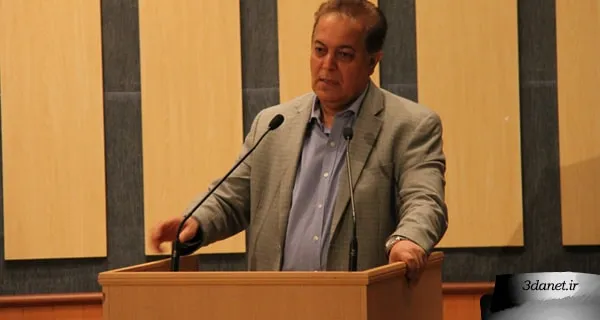
Dr. Farhang Holakouee: A Healthy Person Does Not Fall in Love at First Sight
Love is rooted in sexual relations, reproduction, and survival, and must be examined within the framework of a relationship between two adults; the distinction between love, dependency, and addiction, and the role of childhood in forming relationships based on trust or fear, from the perspective of Dr. Farhang Holakouee.

The Concept of Science:
- Any known thing in contrast to any unknown thing, or any science in contrast to an ignorance.
- A systematic and highly precise look at a subject or concept. The expression of its reality, truth, correctness, and accuracy.
Science is a cognition or perception of reality that attends to the properties and characteristics of things and heeds the relationships among them, and subsequently, through precise observation, experience, and experimentation, based on a methodology that is material, physical, and mechanical, grounded in a philosophy or worldview, and with an emphasis on and attention to quantity and measurement, presents a proposition.
Such an experience is material, physical, external, universal, general, and perpetual, and has nothing to do with non-material concepts, spiritual non-materialities, or inner and personal aspects.
The discussion of love will be a scientific look based on the more precise and correct concept and view of science. Consequently, it is accompanied by universal terms: always, everywhere, at all times, never.
The primary characteristic of science is the property of falsifiability or the capacity to prove it wrong.
Any subject that cannot be proven false will not be a scientific subject.
7 or 8 items accepted by you and me in the words of the greats that are not scientific:
- Tautology: The son of a human is male.
- Classification: Human morality arises from the factor of heredity or education.
In many instances, the work of science is, in truth, to break the world down into its smallest possible parts, then to name those parts, then to seek the properties and characteristics of that phenomenon, and afterward to address its relationship with the rest.
When you and I speak of a concept like upbringing, marriage, God, a chair, food, and vitamins, what matters is to what extent we have been able to break that subject into pieces, to call each part by a name, to have a comprehensive definition for it, and to speak in such a way that, with a familiar individual, we have no problem regarding the words, concepts, and content.
It is for this reason that many times the disagreements among people in all fields—whether individual and personal matters, psychological and social, even political and economic—lie in the definition they assign to these concepts; if they clarify the matter, in more than ninety percent of cases, people who appear to disagree do not disagree at all, or at least it will become clear in what area their views differ.
Unfortunately, perhaps no word or term has been used in such a strange and bizarre manner as love—no word at all. And how this word has been used for everything. From food, the simplest and least things, to the greatest. Of course, a truth is hidden here: usually, when people speak of love regarding something, their intention is that, for them, it is the most important, the best, the most valuable, at the present moment, generally, or always; and although it conveys a message, it lacks the necessary precision.
My preference is to see love only within the framework of human relationships, and my further preference is to see love only in the relationship between a man and a woman, and in a specific case, in the relationship between two human beings. Therefore, if the discussion is of love, it will not be a discussion of love for God, or for the homeland, or for one's fellow human being.
What most professors in this seminar will refer to is the discussion of love between a man and a woman. From a physiological, biological, neurological, and genetic perspective, there are numerous reasons that, contrary to the belief of many, love has emerged from these physical, material, biological, neurological, and genetic grounds of you and me, and it is there that it has taken on various and different aspects. Therefore, the concept of love not only has its feet firmly in the clay of the earth from this perspective, but somewhat higher and loftier, it is rooted in sexual relations and the matter of survival, reproduction, and fundamentally, the deepest, heaviest, most human, most physical, most material, most psychological, and most spiritual relationship between two human beings is the relationship of a man and a woman who are in love with each other and engage in a sexual relationship.
Words close to love, such as affection, kindness, tenderness, compassion, sympathy, and warmth—many of which are very similar and proximate to the concept of love—are at the same time connected to the pull between two people that passes through the path of developing human relations, to coexistence and oneness, to the issue of clinging and entanglement, to the matter of addiction and habit, to dependency, and finally to solidarity. Therefore, many times when love is spoken of, people may be addicted to one another, may be dependent on one another, may be engaged in a kind of symbiosis, like the relationship between a mother and child.
In this session, what is meant by love is the relationship between two adult human beings.
Perhaps the human child is one of the most helpless creatures in the world.
A human child, without proper and precise external care and attention, will face death. Scientifically speaking, the reason for this is, more than anything, the excessive attention of the mother to her child over millions of years, which has crippled him, and as a result, the human child has become weaker and weaker because of the mother's love and affection; whereas, in creatures where the mother probably paid no attention to her offspring, many of these creatures had no choice but to move after a while.
You and I, when we are born, are very weak creatures. Not only are we ignorant and incapable, we are very needy, and it is here that others care for and look after us and fulfill our physical, psychological, and social needs in one way or another and in various forms. It is for this reason that, little by little, a kind of connection develops within the human child. The human child, to fulfill its needs, must turn to the outside world, and this outside world, especially in the warm environment of the family, will most often respond positively
to fulfilling this need, and as a result, a path opens between it and other human beings, and as will be pointed out, perhaps the hundred billion cells of our body or the eleven billion specific cells that are involved in these connections, how each one, with thousands upon thousands of branches, provides the conditions for connection, and therefore, within you and me, from childhood and approximately around the age of eight, two types of connection emerge:
- A connection based on trust, confidence, affection, friendship, intimacy, and love.
- A connection based on fear, anxiety, pain, and suffering.
And do not be surprised that some individuals learn from childhood that the world is a place of animals. In the world they live in, they are not on a dance floor but in a boxing ring, where they must defend themselves before they are knocked down, and as a result, a predisposition for these states is formed from childhood.
Fortunately, since the human being and the human child are protected and cared for by the father and mother, most of us move along the path of affection, but there is no doubt that affection and malice and enmity exist in the human being to some extent, so much so that many people have a love and hate relationship from that very childhood, with the difference that 97-98 percent of my being is accompanied by love and affection, while I have a one or two percent predisposition for malice and enmity; but if this ratio reaches 20 and 80, then I am someone who, in relation to other human beings, very quickly leaves the realm of affection, friendship, and intimacy and pays attention to the bad and negative aspect of relationships.
It is for this reason that another matter of love suddenly emerges, which is the love of the child for the father and mother. On the other hand, the love of the mother for the child, or maternal love, is raised. The father, in the case of the human species, plays an important role in this connection. Therefore, paternal love emerges, and since relatives were important, there is love for relatives, and since these relatives, in connection with each other and others, encompass strangers, love for humankind is raised, and when all this love of the child for the parents, mother for child, father for child, relatives for one another, and humans for each other has emerged, little by little, an image and conception of self-love will also emerge, and as a result, you and I encounter various types of love or affection which, based on a precise definition, perhaps none of these are truly love.
The concept of love in a relationship between two human beings is one of equality, two human beings who, because of this equality, attain a kind of dignity and sanctity, and because of this equality and dignity, they develop a psychological skin, and in a way, he becomes "he" and I become "me." Not that in many cases we merge into one another, and based on this path and movement I have described to you, the issue of love between two human beings is an equal love, a love based on freedom, a love based on awareness, a love based on responsibility and constructiveness. But if you see the concept of love in this equal relationship, how can a mother's love for her child be called love? A conscious being with a completely unconscious being, a capable being and an incapable being, one aware of the other's presence and existence and the other completely in a world of unawareness, one aware of everything and the other unaware, one independent, free, and self-sufficient and the other dependent, trapped, and, as time passes, the distances grow greater, and perhaps after a while, it is the child who knows, understands, and acts more than the mother. Therefore, if the concept of love truly lies within the framework of equality, a mother's love for her child must probably be one of the strange and peculiar types of love.
It is for this reason that perhaps the time has come to give another name to these fraternal, maternal, and paternal loves.
Herbert Blumer, the head of the sociology department at Bradley University, years ago, in order to rescue the social and human sciences from the predicament they found themselves in due to the common, everyday language of the people, proposed that, just like in other sciences, we create concepts and terms, specify their definitions, and tell people what the scientific concept of love is or what the concept of upbringing is. Both can speak in any way they wish, but this discourse must ultimately lead to its scientific stage, which simplifies communication and prevents misunderstandings. Therefore, the point is that the concept of love that these friends will share with you, although related to all these loves, is, in a sense, a discussion about love between two human beings.
It is clear that this matter of love, which relates to parents, relatives, and others, also brings with it another concept, and that is the love of God. Because in most societies, consciously or unconsciously, God means all goodness, and if God means all goodness, and human beings seek all goodness, and human beings are lovers of goodness, and love fundamentally arises from the good behavior of people toward one another, then another love also emerges, and that is the love of God. And it is for this reason that many people, when they became engaged with the subject and issue of love, used this opportunity and pretext, and throughout the history of the evolution of thought and reflection, earthly love, love on the carpet, suddenly carried us to the heavens and onto the throne. And many suddenly spoke of love within the sanctuary of God and matters related to God: love for God, closeness to God, and fundamentally God as the source and origin of love. Consequently, it even became a love that no longer had a sexual aspect, nor a physical aspect, and not only lacked the concept of equality but possessed the concept of non-being and nothingness. And it was for this reason that another type of judgment about love suddenly emerged, that fundamentally love and the lover mean non-being. In our culture and in the history of written studies, we encounter a concept of love whose primary and essential condition is non-being, becoming nothing, non-existence. A negated, rejected, denied being, yet still running and pursuing love, and it was never raised how such a negated and abased being could be the object of another's love. And as a result, a strange and peculiar relationship emerged in this field. And although great figures suddenly soared to heights in this area and offered words that were profound, measured, and very wise, logical, and realistic, yet at the peak of human flight, and despite speaking of very universal concepts, unfortunately these great figures, whose number in my opinion does not exceed the fingers of one's hands and feet, were suddenly imitated and repeated by those who never understood the height and depth of the matter. The emanation of issuance, by which the entire world is created from the overflowing source that is God, and by saying a single word "Be," not only "it was" but "it is becoming," was suddenly transformed into the emanation of manifestation, where God, in the form of creatures, somehow spoke of pantheism, that we ourselves are that very God, or possibly higher and superior. Instead of a God-like human, God suddenly became human-like and entangled in specific relationships with humans. All that sanctity, grandeur, and all those attributes, essence, and the Unseen were suddenly turned into a completely human entity. And although those great figures claimed neither miracles nor saintly powers, and at the peak of their speech, they suddenly created such a wave in the world, like Rumi. Ordinary and common people, based on narcissism and selfishness, to attract customers and make a material living—whose financial and even sexual aspects are evident in many cases—suddenly turned their words into strange and bizarre things, and captivated the dispirited, possessed people throughout all centuries and ages, and even in our time. Therefore, the concept of love suddenly not only departed from the hands of God, humans, and human relationships but turned into such a strange and bizarre subject that you and I probably do not even have the right to discuss it. And for years, when I held classes on love and marriage, many friends confronted me harshly, saying these are not the subjects of love at all, but what the subject of their love is, I do not know.
That is, the point I wish to make to you is that we are in an age and time where a counterfeit of everything has been found. Greedy and envious individuals very quickly strive to imitate and repeat without becoming aware of the height and depth of the matter. To note the intensity of this vulgarity, let us pay attention to one point:
Those who consider themselves superior to others, who see themselves as the mirror of the visible and invisible realms, those who place themselves in a station and rank that no human, nor any angel, has ever approached, and those who attribute miracles and wonders to themselves, believing their mere attention can elevate someone to kingship and their ill glance can cast them into black dust; those who deem themselves above all things and at the pinnacle of humanity—when their wife gives birth to a daughter, they feel ashamed of this disgrace, and when interacting with their mother, daughter, sister, and wife, they regard them as wretched and insignificant beings. How can I claim even to be an animal, let alone a human being, and how can I claim to be a god, while still being captive to all the narrow-mindedness, sicknesses, and miseries of a captive culture that still considers man superior to woman and sees woman as frail and a cause of shame and embarrassment? Do not be surprised that of the thousand verses of poetry composed in praise of woman by these men, not one concerns her knowledge, her art, her understanding, her feeling, her affection, her goodness, her motherhood, her help, her companionship, her leadership, her humanity, her worth—none of these matter. She is a creature who, at times in commentaries, becomes a strange and wondrous being: with a stature like a cypress! Black hair that reaches from the top of the castle tower to the ground! And so on...
Would you be willing to accept that someone claims humanity and then looks upon his own mother, his own sister, his own wife, and his own daughter in such a way, and calls this a loving relationship and speaks of love? But where does the problem lie here?
Until today, love has not existed. Love is a recent phenomenon, just as medicine is a recent phenomenon.
Just as music is a recent phenomenon. Over ten thousand years, we have not progressed as much as we have in the last ten years. Therefore, the concept of love is an entirely fresh and new concept that deals with the new human and is completely different and distinct from what existed in the past.
Love at First Sight:
Is love at first sight possible? Yes.
That is, humans can fall in love at a single glance, in 2 to 3 seconds, which in English is called infatuation, meaning love fever, being enamored and bewildered, lust, and somewhat better, the madness of love.
Today we know that the heart and love have no connection whatsoever. When a heart was replaced with another heart or a mechanical heart was installed, no change occurred because everything is only in the brain, and therefore there is nothing in the heart.
The day you are seized by love fever and the lust of love, everything falls apart. Firstly, you lose yourself and, in truth, find another in a way.
Your body loses its normal connection and suddenly you, a forty-year-old, become not four years old, but four months old; you experience a state you have never had before, life finds a different direction and meaning, finds a different purpose, and sets off on a different path.
Studies show that the mind of these individuals spends 85 percent of its psychic energy on the beloved, reaching up to the 10 percent mark. Not only do they sleep with the thought of them, they wake with the thought of them, and even think about what the beloved thinks of them. It is a kind of obsession or fixation. Suddenly, someone occupies your entire being. In a way, you are no longer your own, but belong to them and are a part and possession of them.
Freud considered this a delay or blockage of the libido, and there is truth in that. But another specialist believes that infatuation, or this love fever state, is essentially a kind of friendship with a sexual inclination—there is truth in this as well—but the crucial point is that in this kind of love, the sexual relationship is not that important. Neither in this type nor in the other type we know as Romantic Love. To the extent that ninety-five percent of women and ninety-one percent of men, according to studies, have said that they were not at all thinking about a sexual relationship with the person they had fallen for in this way. Meaning the main and fundamental issue for us was absolutely not a sexual relationship. So the matter stems from somewhere else and is of a different nature. In truth, throughout your life you have built walls; you tear down these walls and build bridges. You have hooks with which to catch things; you turn it into a leash that you put around your own neck and hand over to that person. It has even been said that in this state, when these individuals take the beloved's hand, they even forget how to walk and sometimes lose their balance. They become so absorbed, stunned, and bewildered that there is no conceivable limit to it. But the interesting point is that, contrary to what one might imagine, such individuals do not enter the stage of Idealization or idol-making of the beloved (important in psychoanalysis: sometimes the beloved is turned into an astonishing being for what they are, and therefore you fall in love with something you imagine them to be, but in the state of Infatuation or love fever, the issue is Crystallization, which is another psychological interpretation meaning that not only does one see the beloved as they are, but one sees their flaws, mistakes, and faults even more clearly.
Why?
The first reason seems to be that this connection and this type of love fever and love madness comes from a microbe or virus called "Smell." That is, the greatest factor that causes a person to be afflicted with this type of love is the other person's smell, "smell." Therefore, many times the initial factor of such attraction lies in smell, which in a way sets the system in motion, and consequently, the affliction lies there.
Where is the sociological point of the issue?
In many cultures, they realized that the biggest problem between lover and beloved is the beloved's body odor.
Especially in some groups like the Japanese or other groups.
But later scientific studies showed the reason is that in these societies, all marriages were arranged marriages, meaning the boy and girl had no right to choose, and later divorce was by no means possible. Individuals were forced to have their sexual desires with a stranger they did not like, and therefore, over time, gradually, this closeness, which was body odor, bothers them. So if you are someone who is sensitive to the body odor of most people of the opposite sex, probably an event happened somewhere in your family history, in your respected lineage, and for this reason, you should pay attention to it.
And today we know that smell causes both fear and calm, both anger and affection and kindness, both love and hatred, both pleasure and pain, and therefore, the primary factor that causes people to become tied to each other in this way is smell.
Second, it seems that the human child, between the ages of five, six, and especially seven, eight, when they are in a way writing the draft of their life and in a way sketching the script of their life, determines what kind of being they want as their mate, which is often derived from the feeling and emotion or observation of the behavior of their father and mother, sister and brother, and loved ones and those around them.
Today, we know scientifically—and it may surprise you—that a person writes the script of their life by the age of six or seven, and more than eighty percent of people, what they do until the age of eighty is the same script they wrote at six or seven. Some in today's world revise this life script around the age of eighteen to twenty-two, but for many of us, just as at six or seven we wanted to be a hero, a savior, or perhaps to be dependent, the foundation of our relationships remains within that same framework and context for the rest of our lives. So another problem you and I have is that in our minds we have a blueprint and a frame of the person we want to fall in love with and cherish. Its shape and form are already drawn. Therefore, when you come here, you carry your frame with you, and whoever you meet who resembles it more, you look at them, you place them in your camera apparatus to see if they fit here or not. Of course, you gradually revise and see there is a great distance and difference, but sooner or later, sometimes someone exactly matches this in appearance.
Thus, it has been said that the ideal blueprint of your life, the ideal blueprint of the beloved, exists in all our minds, and for some it is so intense that they search for it everywhere.
Another important point here is that during infatuation and this love fever, you and I unfortunately lose the power of evaluation, judgment, and decision-making—that is, Evaluation, Judgment, and Decision Making, which should be in the conscious realm, goes to the unconscious, and it is clear that you and I regress to being a three- or four-year-old creature while we are forty, and that is when we decide. So, very often, one thing catches your attention: that person's beauty; their fame, power, money, and popularity are enough for me. There are those who think that only a woman's beauty, a man's good looks, financial power, or family pedigree is sufficient for these matters.
The next case is people who are bored with life, seeking excitement, and they create this excitement through risk, and so they go after someone they know will definitely harm them; I go after someone I know is inaccessible and unapproachable; I go after someone I know will disrupt me.
Therefore, whenever you are bored in your life, the danger of these kinds of loves and love fevers exists.
Another case is people who are lonely. You know that loneliness means having no one; separation means being without him/her.
Loneliness is my reaching the point where there is no one in the world. Everything is objects and commodities; everyone is after using and abusing me, so therefore, there is no one in the world. A lonely person sometimes begins to doubt that perhaps there is someone, and it is here that suddenly, at a party, in a place, in a work environment, for the first time or after a while, they suddenly see someone who is exactly the person who can eliminate their loneliness.
Another case is people who are empty. These are people who search for another to fill themselves with. So I take the other into my own being, fitting them to a certain extent, and now I feel a sense of everything I was always searching for, because I have them. But the problem is that, just like the body which easily rejects any foreign object, repels it,
unfortunately, anyone you take into your being because of your emptiness, you will inevitably expel them. That is, it is unavoidable, and it is here that I always say on radio programs that marriage is between two equal people, two similar and alike people. The reason is that the day you go after someone who has everything you lack, a danger threatens you: that you fall into the well of their love, but unfortunately, you suffocate in that well.
I, who have no fame, seek out a person who is famous and … it is clear that I go after that person not because I love them, but because I want to possess them within myself, with myself, and for myself. But unfortunately, this external object ensnares me, so that I, a shy and bashful person who does not even dare to express my ordinary opinion, when I encounter someone at a party who can easily attract attention and speak freely, it is obvious that I fall in love with them and want to possess them. Yet two or three months after marriage, at a party, when they start talking, I now want to hide under the table and chairs out of sheer embarrassment. The reason is that now they torment me, and for this very reason, I can no longer tolerate them. Therefore, the emptier I am, the greater the danger of this fever and madness of love, and it can ensnare you and me.
The next case concerns those who feel a lack of security. You know that two real human needs—not true needs—are physical needs and then security.
Anyone who lacks security is always searching for a shelter, and so you and I may seek a shelter solely and exclusively to find security and peace and to settle there for a while, because our anxious existence requires such a place. Another factor is low self-esteem, meaning that time when I hold no value, respect, or importance for myself, that time when I lack psychological skin, that time when I consider myself less and worse than others, I seek someone through whose possession I might arrive somewhere. The tragedy throughout history has been that men were supposed to become important people, and women were supposed to become the wife of an important person, and precisely therein lies the problem: that I wished to attain self-esteem through this route.
Another case is the desire to be wanted. This yearning to be loved drives me to the point where I love you so much that you have no choice but to love me. That is, I am so enamored, bewildered, and entranced by you, I accommodate everything about you in every way and form, I am even willing to look after rivals and competitors in the house, to become your maidservant, your slave and bondsman, just to possess you.
Therefore, unfortunately, many times when you and I want very much to be wanted, we say, "Now I will show you what it means to be wanted." That is, I will die for you so much that you have no choice but to glance my way, and unfortunately, this is where you become ready for that love fever.
The next case: you are fundamentally an addictive person. Like a heroin addict who, upon seeing heroin, loses all sense. That is, we have an Addicted Personality; these people just wander around looking to fall in love. They are not even in love with you; they are in love with being in love. That is, we just want to be in love.
Many people, to the extent that they have nothing, want everything from everyone. Because I am neither lovable nor desirable. My hope is that if I want you very, very much, perhaps one day, somehow, you will want me, and through this, you will learn—though we know scientifically that this stems from damage occurring between ages three and six, because someone who suffered damage at that age has a magical belief, thinking that if they do good, people will become good and will be good to them. If my behavior is good, your behavior will change too. This is a predicament we are unfortunately unaware of, due to the damage you and I sustained back then.
So, let me put you at ease:
A healthy person does not develop infatuation.
A healthy person is not someone who falls in love at first sight.
Love at first sight exists, but it is a sign of affliction, a sign of illness. It is a sign of a problem, and it certainly has a short duration.
.
.
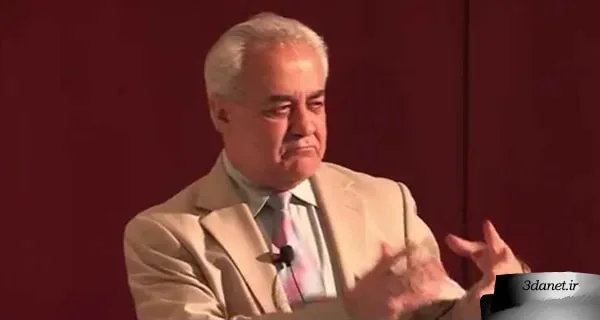
Dr. Farhang Holakouee, Seminar on Man and Love, Love at First Sight
.
.

Discussion6 comments
بسیار لذت بردماز سادگی کلمات متن و به نظرم توصیفی دقیق و موشکافنه بود
درود بسیار بسیار موافقم
دکتر فرهنگ هلاکویی درزمینه روانشناسی ورفتارشناسی تخصص دارند،،ولی لطفا جناب هلاکویی، درزمینه عشق درعرفان وشعر نظر ندهید،،که بسیار دراین زمینه .کم سواد و بدون آگاهی هستید
پسراستهکهمیگنازدواجدومعاقلانهترهوبهتربهسرانجاممیرسهاکثراازازدواجاولشونراضینیستن
صددرصد مخالفم. عشق چیزی نیست که در اختیار ما باشد...برادر گرامی... شاید بتوان گفت باید بعدش را درست تر مدیریت کرد اما نمی توان جرقه عشق را منکر شد.
خب وقتی در اختیار تو نیست پس در اختیار او است ؟چیزی که در اختیار من نباشد خب ارزشی هم از نظر داشتن و نداشتن ندارد