Literature
Dr. Mohammad Mehdi Ardabili in Conversation with the Culture and Art News Network
Rejecting a prescriptive view of language, Dr. MohammadMehdi Ardabili sees the influx of foreign words as an opportunity to enrich Persian. He argues that instead of coining new terms, we should focus on syntax and translation to make philosophical thinking possible within the structure of the language.
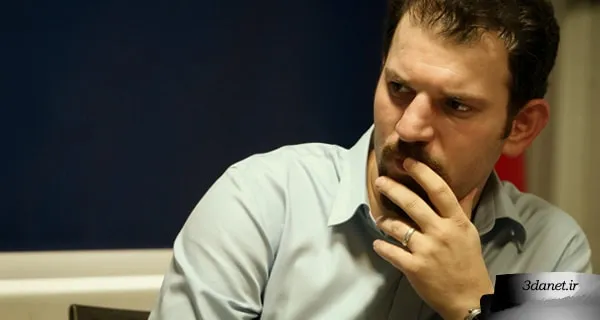
Dr. Mohammad Mehdi Ardabili: The acceptance of foreign words into a language enriches and strengthens it; in fact, the entry of new words allows a language to internalize and embrace other cultures within its framework.
Dr. Mohammad Mehdi Ardabili, translator, author, and university professor, in response to a question about the nature of language and the fear of non-Persian words entering its structure, and whether we should consider the influx of immigrant words as a kind of warning, stated: Language is not a simple matter, merely a tool for conveying meaning between humans; it is, in a way, a manifestation of culture, and one could even say that we fundamentally live under the sway of language. From this perspective, when we look at it more deeply, we realize that every language is a living entity that, throughout history, relates to other languages of the world—which are also changing—and is formed through this encounter.
The university professor added: Unfortunately, some cultural activists repeat the same mistake regarding the Persian language that they have made with a top-down, prescriptive approach to preserving culture. They think that preserving the Persian language means preventing it from changing and keeping it in its current state. Now, if we consider language a living entity, it is clear that this approach precisely means killing and suffocating the language. Can language be administered by directive?
He continued: Language must be free so that it can discover and reveal its own possibilities. Fortunately, in practice, the language itself pays little attention to directive-based and academy-driven activities and is growing on its own. Language creates its own words. I am not worried about the Persian language, of course; I am more worried about these friends who waste their time and lives on fruitless endeavors.
The translator of the book "Hegel and the Phenomenology of Spirit" added: The encounter with language occurs on several levels. In encountering language at the level of "utterance" and "word-formation," the best thing is to leave the language alone; at this level, we should make no effort to preserve vocabulary and should focus on "meaning." Have we really ever thought about why we so strongly defend the restriction of vocabulary and the blocking of so-called "foreign" words from entering the Persian language? What has truly been the achievement of these efforts?
Dr. Ardabili emphasized: On the contrary, in my opinion, the acceptance of foreign words into a language enriches and strengthens it; in fact, the entry of new words allows a language to internalize and embrace other cultures within its framework. In a word, we must know that the presence of foreign words in a language is an opportunity, not a threat, just as the Persian language's encounter with Arabic in one era, and with French in another, created many opportunities for us.
Dr. Mohammad Mehdi Ardabili continued: But language has another level, and that is "syntax." In my opinion, we should focus our attention here. And not for the sake of preserving structures, but precisely with the aim of deconstructing them and discovering the possibilities latent within the heart of the language. We all know that the Persian language has historically been primarily the language of lyricism, poetry, and mysticism. Some professors today even claim that Persian is not at all a language of philosophical thought and that we should, like our predecessors (Avicenna and Suhrawardi), write most of our philosophical treatises in other languages, think in those languages, and write our books of poetry or mysticism in Persian. This is the result of that intellectual-cultural blockage. If we preserve Persian at this same (poetic) level, it means we still want our encounter with the world to remain non-reflective and non-self-conscious. In my view, on the contrary, we must let the phenomenon of language itself think and advance freely.
In response to the Culture and Art News Network reporter's question about what must be done to create this groundwork, Ardabili said: If we want to create the possibility of thought in the Persian language, we must open the way for it and turn to the structure of the language, discover the structural possibilities of the language, and find possibilities for reflection and thought. This in no way means interfering with or controlling the language; rather, our main goal should be to create structural possibilities within the language. In my view, the most important groundwork for this is translation. If we pay a little attention, we realize that over the past century or so, most efforts to discover and open up new possibilities within the Persian language have been carried out through translation. This happened once in the Arabic language with the translation of Greek texts into Arabic, and now, in the translation revolution of the recent decade, it has become possible through the translation of philosophical and analytical texts into Persian.
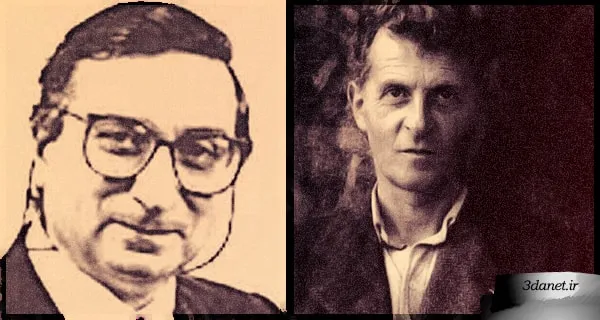
Ardabili then pointed to the missions of translators of texts into Persian and said: One of the important missions of philosophical translators in the present era is to find the possibilities of the Persian language, not only in word choice but in structures, grammar, sentence constructions, forms of expression, and so on. Why is it that when certain phrases of Hegel or Heidegger are translated into Persian, the language seems to go mad? This has nothing to do with finding equivalents; rather, it is the very structure of the language that seems to reject meaning. My point, of course, does not mean "the impossibility of thought in the Persian language," but rather that some of our translators have lost sight of the main goal. The esteemed master, Mr. Adib Soltani, took such pains to translate Kant into Persian and to provide the possibility of understanding Kant in the Persian language, but what was the result? He became so caught up in word-coinage that his translation verges on a kind of Wittgensteinian private language. He is exemplary both in terms of professional commitment and in terms of linguistic knowledge and expertise, but why did his efforts bear no fruit? We should have read Kant 30 years ago, and we did not, and this very fact caused all these fabrications about Kant's philosophy without having read Kant. In my view, this is a mission that our translators must shoulder today so that afterward we can finally philosophize in Persian and write original philosophical texts. It is here that we can think about ourselves in language and through the medium of language. I do not mean that we become a second-hand version of some Western philosopher; rather, I mean that, as far as I can see, today those who are engaged in reflecting on the possibilities of language for expressing ideas and thoughts are the translators. Translation is an opportunity for discovering conceptual possibilities in language, and this is a condition for any form of self-consciousness. Self-consciousness occurs neither in other languages nor in our nostalgic, unmediated, quasi-mystical encounter with ourselves; rather, self-consciousness becomes possible only in our own language, while maintaining a critical and non-conservative approach to language.
Regarding Western attention to the Persian language and the fact that recently German schools have been teaching Persian alongside other languages, Ardabili stated: I am unaware of this news, but in this initiative, the literary aspect of the Persian language was probably more of a consideration for the organizers and has no connection to the intellectual and reflective dimensions of our language. Of course, it should also be noted that the West's interest in our cultural products should not always make us happy. Most of the time, we are something different, alien, or exotic to them. We are unwittingly satisfying their desire for diversity. Their presence at traditional Iranian music concerts is, for them, more akin to a different kind of entertainment, much like buying a Persian rug. Their interest in the Persian language is also mostly for studying our poetic and mystical works; otherwise, I doubt they would want to learn anything from us or even recognize us as a kind of thinking culture. To be honest, I understand these things more as a continuation of that same Western colonialist approach. Once they sought our oil and resources; today they seek to enjoy our traditional music or cinema.
Dr. Mohammad Mehdi Ardabili concluded by noting: In my opinion, these matters should not deceive us. As long as the emblem of our culture and language is the “seize the day” Hafez, the “live merrily” Khayyam, and the “preaching” Saadi, our situation will remain the same. Our primary task today is to think about ourselves through the medium of language. But which language? A language that has been enriched through encounters with other languages and has been able to accommodate and translate philosophical ideas and thoughts within itself, and only then does the possibility of self-reflection and the production of ideas and thought become feasible, so that we can produce philosophical texts and, more importantly, be able to “think.” If one day those ideas and thoughts produced by us find advocates in the world, perhaps then we can speak of a kind of cultural interaction with the West and the East and take pride in our own culture.
.
.
Dr. Mohammad Mehdi Ardabili | In Conversation with the Culture and Art News Network | 2016/05/09
.
.

Discussion1 comments
عزیزم شما در سطح ماندی. این خزعبلات چیست که میگویی