Religion
Dynamic Thought: A Conversation between Mostafa Malekian and Abolghasem Fanaei on “Ethics, Religion, and Rationality”
A conversation between Mostafa Malekian and Abolghasem Fanaei examines the relationship between ethics, religion, and rationality. In this teacher-student session, Fanaei rejects the label of religious intellectualism while addressing the question of whether a rational life is compatible with religious devotion.
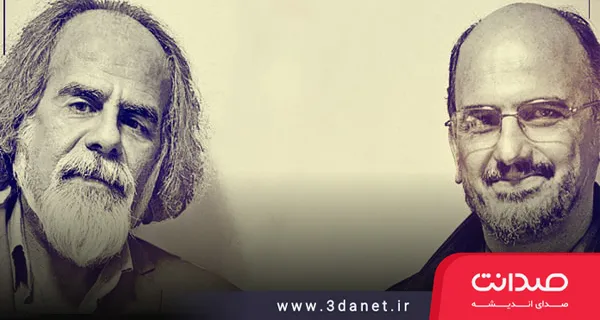
In May 2014, a conversation initiated and attended by Mostafa Malekian took place with Abolghasem Fanaei on two topics: “The Relation between Ethics and Religion” and “The Relation between Rationality and Religion.” The dialogue, spanning two sessions and five hours, continued between master and student—a student who is now himself a thinker with a unique project in the field of religious studies. Fanaei completed his advanced jurisprudence studies (kharij) at the Qom Seminary and earned his master’s degree in Theology and Islamic Studies, writing a thesis on “Ethics in the Twentieth Century” under the advisory of Mostafa Malekian. He received his doctorate in moral philosophy from the University of Sheffield in England, where he was engaged in teaching and research in the fields of moral philosophy and religious studies at the time. “Religion in the Scales of Ethics” and “The Ethics of Religious Studies” are his two major works, and although some critics have described these two books as among the most distinctive and outstanding studies in the field of religious intellectualism, he emphasizes in this very conversation that he does not wish his intellectual project to be subsumed under the heading of religious intellectualism.
Abolghasem Fanaei’s Remarks on This Conversation:
“In the name of God, the Compassionate, the Merciful. Last winter, I made a trip to my homeland. During this trip, I had the good fortune to be in the presence of Professor Malekian several times. When the esteemed professor learned of my presence in Iran, out of kindness, he suggested to the editors of the weighty journal Andisheh Pouya that they conduct a conversation with me. When I arrived at the journal’s office for the conversation, I realized that the professor himself was also present in the session. Apparently, by prior agreement between the journal’s editors and the professor, it had been arranged that the professor would be the interlocutor, and the posing of questions and the management of the session would be his responsibility. When the professor took the floor, I found myself in a situation that was, on the one hand, profoundly instructive and moving for me ethically, and on the other hand, highly unpleasant and surprising. I also told the professor that it would be more proper for our positions to be reversed. In any case, making a decision in that situation was very difficult for me. Ultimately, it seemed best to me to act according to the professor’s wish and not deprive readers of the spiritual and ethical delight arising from his unparalleled kindness and humility. The dear professor suggested that the conversation be conducted around three main axes: first, the relationship between religion and rationality; second, the relationship between religion and ethics; and third, the jewels of the Quran. Our conversation took place over three sessions.
.
A Conversation between Mostafa Malekian and Abolghasem Fanaei
Living Ethically without State Intervention
.
Mostafa Malekian: First, I must mention three general points. The first point is that I benefit greatly from your writings and statements, and I have said elsewhere that there are three very important characteristics in your writings. The first characteristic is precision of thought, subtlety, and depth of insight. The second characteristic is observing the ethics of critique, and its most important sign is the fairness you exhibit in your assessments and judgments. The third characteristic is that an ethical spirit surges through your words and writings, and regardless of whether I accept your statements and writings or not, I encounter an author who has an ethical concern, and this is very important. The second point is that I am never oblivious to the services that religious intellectuals have rendered in our culture over the past century, and I believe that the services rendered by religious intellectuals are truly undeniable and have led to the advancement of religious thought and of thinking itself in the country. A remark I sometimes make is that I want to know whether, within the project of religious intellectualism, there are answers to the questions that I and those like me have. The third point is that I truly hope these discussions take place in a healthy atmosphere, and even if they do not reach a conclusion and even if not a single topic is resolved, the very act of dialogue in this ethical and healthy atmosphere is a source of blessing. The first topic of our conversation is about rationality.
The rational attitude and rational life, or rational living, are counted among the virtues of human beings, and we assign positive value to a person who lives and thinks rationally. I think you would also accept that living and thinking rationally is a human virtue. On the other hand, you presumably consider being religious—in whatever sense you take 'religious'—to be not only beneficial but necessary for human beings. That is, we consider religiosity at least beneficial for humans, and we might even claim it is a necessity for them. But the question is whether the combination of these two things, namely living rationally and practicing religiosity, is possible or not, and if it is possible, does rationality, as it develops and deepens and penetrates the depths and profound layers of human life, still not conflict with religiosity? Or does rationality, if it expands beyond a certain limit, become incompatible and conflicting with religiosity? If you say that rationality, no matter how far it expands and deepens, does not conflict with religiousness, it would not be amiss to argue for this claim, and if you say that rationality must expand up to a certain limit and its further expansion and deepening becomes incompatible with religiosity, then the question is where this limit lies and where we should place the point of balance so that, standing at that point, we can both be religious and live rationally?
Abolghasem Fanaei: I am very grateful to you and to the friends who provided me with this opportunity. I do not consider myself at all worthy of the praise and commendation you offered, and if there is anything [of worth in me], it is among the fruits of the tutelage and training I received under your guidance. I completely agree with your statement that the very act of dialogue is a source of blessing; it clarifies the positions of both sides, increases mutual empathy, and if there is any ambiguity in the parties' positions, it is resolved. The very act of this dialogue, regardless of whether we reach a conclusion or not, has a value that justifies undertaking such an endeavor. Before addressing the main discussion, I find it necessary to explicitly state that throughout this dialogue, I will speak from my own personal position and viewpoint, not as a representative of religious intellectuals. Despite the value, importance, and respect I hold for some religious intellectuals, and while empathizing with some of their views and drawing inspiration from their ideas, for reasons that there is no opportunity to elaborate on here, I prefer to define and pursue my own concerns and topics of interest within the framework of philosophical and theological projects, rather than within the framework of intellectualist projects. Before I attempt to answer the important question that was posed, I must define rationality. I deeply empathize with your project of reconciling rationality and spirituality, and I have read almost everything you have said and written so far about rationality and spirituality, and I agree with a significant part of your views on the characteristics and components of spirituality, the spiritual life, and the spiritual person, although I do not consider spirituality a substitute for religion and I believe that religious traditions, including the Islamic and Shi'a tradition, are in need of rational, spiritual, and moral reconstruction. My main disagreement with you lies in the definition of rationality. I will first present my understanding of your definition of rationality, and then I will offer my own view.
I also strongly suspect that it will ultimately become clear that we are in complete sympathy with one another on this matter and are merely using two different expressions to convey a single purpose. As I have understood your remarks, you define rationality as synonymous with living based on reasoning. But in my opinion, this definition is somewhat narrow; meaning that the domain of rationality is broader than the domain of reasoning, and therefore rationality cannot be reduced to reasoning. The alternative definition I prefer says: rationality means following the decree of reason, or following a set of rational oughts and ought-nots. Or one could even say following the “law of reason.” In my belief, one of the fundamental functions of reason is that it is the source of public norms; that is, reason has its own oughts and ought-nots, and these oughts and ought-nots have a broad scope and encompass all the existential realms in which we have the power to choose and can decide to do or not do something, and then, based on that decision, perform an action or not; including the realm of beliefs, the realm of feelings and emotions, the realm of intention and will, the realm of speech, and the realm of external behaviors. A person lives a rational life to the extent that, in their decisions and in the behaviors based on those decisions, they do not violate these oughts and ought-nots and follow them. If we accept this definition of rationality, I think accepting this definition can have several consequences. One of the very important consequences is that the relationship between practical rationality and theoretical rationality is reversed. That is, within the framework of this definition, we must accept that practical rationality is, in a sense, prior to theoretical rationality. What I mean is that if theoretical reason is to function correctly and approach the truth, it must observe a set of oughts and ought-nots. These oughts and ought-nots, which originate from the commands of practical reason, are of various kinds. Some of them are logical, others are epistemological, others are ethical, and some are of other kinds. If we accept this definition of rationality, we arrive at the conclusion that to the extent we follow these oughts and ought-nots in our decisions in all realms, we have fulfilled the right of rationality and have remained faithful to this great virtue, and our life is a life of rationality.
On this basis, it can be said—and this is the second consequence of the aforementioned definition—that rationality only requires us to be subject to reasoning within a specific domain, and this domain consists of the realm where, firstly, reasoning is possible, and secondly, acquiring knowledge through reasoning in that realm is obligatory; that is, if rationality requires us to be subject to reasoning, then naturally, reasoning must be possible. But there are realms where reasoning is not accessible to us. Of course, when reasoning is not accessible to us, we cannot say that in this realm we have no rational responsibility, or that rationality has no ought or ought-not regarding it. There, we must be subject to some other things. For example, some of our beliefs are such that one cannot reason in their favor, yet those beliefs can still be justified. For instance, belief in the existence of the natural world cannot be proven through rational reasoning. Even if a reasoning could be offered, this reasoning would be based on premises obtained through sensory experience. In other words, reasoning is not the primary source of knowledge and justification, and we are compelled to grant authority to some sensory and extra-sensory or intuitive beliefs so that we can use those beliefs as raw materials in our reasonings. The function of reasoning is the transfer of justification from premises to conclusion, and the process of reasoning and argumentative/inferential justification cannot continue indefinitely.
Therefore, one cannot say that the rationality of all beliefs is based on reasoning. When we reason, we have in fact presupposed that we possess beliefs that have not obtained their justification through reasoning. Of course, this definition of rationality, which I believe to be correct, does not contradict reasoning, but reasoning becomes a subset of this broader definition of rationality. Where reasoning is possible and we can, based on reasoning, decide to accept or reject a belief, or to perform or refrain from an action, and our decision has the capacity to be justified through reasoning, rationality naturally requires us to follow reasoning. But in other domains where such reasoning is not possible, being rational no longer means being reason-based; rather, it means recognizing the rational oughts and ought-nots in that domain and following them. If we accept this definition of rationality, we arrive at a framework based on which we can separate rational beliefs and behaviors from superstitious beliefs and irrational behaviors. These criteria are not specific to the domain of religion.
If someone is not committed to rationality and violates these criteria, to the extent that they violate them, whatever conclusion they reach, their commitment to that conclusion will be irrational. With these explanations, we can use rationality as a filter or a falsifying criterion to correct our own understanding of religious texts. This is something I believe in, and in my view, to the extent that an individual is committed to this criterion, both their work is rationally sound and they are on the path to salvation and redemption; because this very rationality requires that when we grade human beings, our criterion should be their sincerity and seriousness, not the conclusion they reach as a result of sincere and earnest striving and effort. Someone may seek the truth with sincerity and seriousness, but due to factors beyond their control and choice, including epistemic errors and not moral errors, they may not reach the truth. God's justice requires that in the afterlife, He reward such a person, not punish them.
I should also add that we have two sources of knowledge: one is knowledge through reason, and the other is knowledge through testimony. It is not the case that the domain of rationality is entirely coextensive with the domain of knowledge through reason; rather, there are types of knowledge through testimony that have epistemological authority; meaning that the testimony of others, under certain conditions, can be a source of knowledge and justification for us, and rationality requires or permits us, under specific conditions, to accept and believe a claim based on the testimony of others.
In such cases, either we have no reason in favor of that conclusion, or that reason is available to us, but for various reasons, including time constraints and aspects related to the complexities of daily life, we cannot personally investigate and, based on personal research and reasons we have personally evaluated and tested for their correctness, believe something or perform an action. Here, within the framework of observing specific conditions, based on the testimony of an individual, we accept their word and act upon it. If we accept this matter, a space opens up for religious fideism; that is, we have a set of religious teachings that we ourselves cannot directly grasp through religious experience, and extra-religious reasons for or against them are also unavailable. But here, under specific conditions, rationality permits us to accept the testimony of those who claim to have access to a particular source of knowledge and to justify beliefs related to that specific domain based on their testimony. And if those beliefs necessitate a particular behavior, to perform those behaviors.
Malekian: Your remarks touched on various topics that caught my attention. Among them, I will discuss one point as the most important, which is that you say our reason—that is, our reasoning faculty—has nothing to say in certain domains; that is, there are domains in human life, living, and experience where reasoning is not available to us. This is a valid statement. The term I use for domains where reasoning is not available to us is “reason-elusive” domains—they are neither reason-accepting nor reason-opposing. Because I consider these domains reason-elusive, I have always been mindful that such domains exist. You say that in domains where we lack reasoning, we must turn to religion. Someone might ask: by what reasoning is this tunneling made possible? It is as if I say that from what I call “source one” I cannot obtain information. Does it follow from this that we must necessarily obtain information from “source two”? Our despairing of one source of information, one epistemic and knowledge-yielding source, only means we are deprived of the information and knowledge that source holds. But if you say there is a second source to which we must turn to remedy our deprivation from source one, someone else might say that for source one—by which reason and rationality are meant here—there is no alternative; because an alternative to rationality is also mysticism, and why, for instance, should I not turn to mysticism? On the assumption that we have no choice but to turn to this exclusive alternative once we have despaired of rationality. What ground of preference can there be here?
Fanaei: I do not share this formulation. The first point is that, in my view, reason is not merely the faculty of reasoning; rather, it has three distinct functions. First, intuition; second, reasoning; and third, command or normative ruling, and these three functions differ from one another. The second point is that I did not say there is a place where rationality has nothing to say. My point was that the domain of rationality is absolute; that is, we cannot find a single case where reason has no normative ruling in the general sense of the word. We may not be able to offer a rational argument for a particular belief, but even there, rationality guides us; that is, it has a normative ruling. In the sense that, rationally, we are either entitled to accept that belief, or to reject it, or our duty is to remain agnostic and take no position. Sometimes reason asks us to take no position because the evidence available for and against the claim in question is equally balanced. Therefore, being rational is different from being reasoned. These two titles do not completely overlap. Rather, rationality is broader than rational argument. In the realm of experience, too, our behavior can be rational. When we rely on experience, we have not relied on argument, yet insofar as we follow the rational oughts and ought-nots pertaining to the sensory faculties, our action is rational; even though there is no pure rational argument involved there. Here I return to the term 'trans-rational' that you used and have used elsewhere. I think this term has some ambiguity. Its ambiguity stems from the fact that we can use this term in at least two senses. Sometimes we mean that we have no rational argument for or against the subject under discussion. Other times we say that there are no rational oughts or ought-nots there to clarify our duty regarding that subject and tell us how we should take a position on it. In this second sense, I think we have nothing that is trans-rational, but in the first sense, there are a range of subjects for and against which we cannot argue. The next point is that if we accept rationality with the definition I have offered, it means that there are beliefs about which reason can say nothing, either negatively or affirmatively, and there is no rational argument for or against them. Yet, at the same time, there are specific rational oughts and ought-nots there that we can and are obliged to follow. The relation of these beliefs to religious beliefs is one of generality and specificity in some respects; that is, not all matters for which we have no rational argument necessarily fall within the domain of religion. My claim is that we must refer to religion only in a part of this domain, not in its entirety. Why should we refer to religion? Not because rationality has nothing to say there, but because rationality there entitles us or obliges us to accept the claims put forward based on the testimony of others. Regarding the other point you made, I must say that I do not see religion as an alternative to rationality; rather, I see rationality as the framework for religion. These two views on the connection and relation between religion and rationality are very different. I am not saying that in places where rationality has nothing to say, and because rationality has nothing to say, we must turn to another source. The relation between the two is that of framework and content, not that of two alternative sources where we say that if one source has nothing to say, then let us go to another source, and then the question arises that even if the first source has nothing to say, we still need an argument to show that we are obliged to refer to the second source. In my view, the relation between religion and rationality is not like that at all. My formulation and conception of the connection and relation between these two categories is that one is the framework and the other is the content. But you asked why we should refer to religion and not to mysticism? My answer is that if we accept that definition of rationality, our rational duty will be to always follow the reason/justification—of course, justification, as I said, is broader than argumentative justification—and if the available reasons conflict, our duty will be to follow the stronger reason. For example, if some mystical claims conflict with some religious claims, our rational duty here requires us to accept the doctrine for which a stronger justification is available.
Malekian: Let me assume that I accept everything you said in this part and do not dispute it, although I do have disputes with some of it. I will move on to a concrete and specific case. You say that when reasoning is not available to us in a domain, rationality, in your terms, requires us to issue a normative ruling to the effect that, where reasoning is also unavailable to us, we should do something.
Fanaei: Reasoning is not there, but justification is. We do not issue the normative ruling in question; reason issues it, and we, as rational beings, insofar as we are rational, will follow this ruling.
Malekian: Let us assume there is a domain in which reasoning is not available to us, but rationality requires that we adopt a position there. Could you explain where this domain is, where reasoning is not available to us, and how reason issues a normative ruling here to refer to religion?
Fanaei: I do not see the matter that way. The issue is that we are faced with a set of beliefs or claims, some of which are theoretical and some practical, and some of which are religious, some practical, some historical, and so on. Some of these beliefs or claims can be justified through assessment and reasoning, and we can make accepting them reasonable for ourselves. But there is a category of these beliefs or claims for which one cannot argue for or against, yet we nonetheless have rational justification for them. If we have rational justification in favor of that belief and accept it based on that justification, we have not violated rationality. And if we do not have theoretical rational justification, even there rationality has a demand, a requirement, or a normative ruling. For example, it either permits us to accept that belief based on prudential criteria or the practical benefits of accepting a belief, such as greater happiness and tranquility or less pain and suffering, and any criterion to which we can rationally assign greater weight. But if those pragmatic criteria also do not apply to that particular belief, we have no rational duty and are free. Therefore, I am not saying that wherever we lack argumentative justification for a belief, we should refer to religion there; rather, I am saying that some religious beliefs lack argumentative justification, and yet accepting them is not a violation of rationality; just as some non-religious beliefs, such as belief in the existence of the natural world or belief in the existence of other minds, are also like this.
Malekian: Do you take your statement that rationality has no requirement to mean that the requirement of rationality is permissibility? You say that where reasoning is not available to us, justification is, and this means that, epistemologically, you take justification and reasoning as two different things, which itself is open to discussion. Specifically, identify a place where rationality, having the function of issuing normative rulings, has asked me, for instance, to accept a certain statement in the New Testament.
Fanaei: The rationality to which I am committed does not require that I accept the apparent, word-for-word meaning of what is stated in religious texts.
Malekian: Would not "We believe in some and disbelieve in some" apply to such a statement?
Fanaei: Faith, in this sense, means that we accept that all the verses are the word of God, and are not fabricated, and we accept their authenticity. Faith that this religious text is from God means that these are God's speech acts. One of the speech acts is informing. God informs us of something to which we must commit as faith, not of the apparent meaning of the verse. But what the content of that speech act is in this specific case is another matter. In the common parlance of our traditional culture, the subject and object of faith is God's "serious intent," not His "usage intent." We are compelled first to discover God's serious intent from the speech He has uttered and then accept it. Of course, sometimes God's serious intent is the same as His usage intent, but this is not always the case. If we take these considerations into account, regarding some verses we can say that faith does not entail or necessitate commitment to the apparent meaning. The apparent meaning of the verses is God's usage intent, not His serious intent.
Malekian: By apparent meaning, do you mean the literal meaning as opposed to figurative or metaphorical meaning? You don't mean the esoteric meaning, do you? Because apparent meaning is used in contrast to esoteric meaning, but sometimes we use apparent meaning in contrast to metaphorical, symbolic, or allusive meaning. In any case, if you do not determine the non-apparent meaning and say that we don't even need to determine what its metaphorical, symbolic, or allusive meaning is, then doesn't faith lose its efficacy? We cannot desire faith in propositions whose meanings we do not even understand.
Fanaei: I am not saying that we should not try to find a reasonable meaning for those verses. But this effort may not always be successful. Sometimes the religious text may be ambiguous, and we may reach no conclusion at all. This is also noted by traditional scholars.
Malekian: Your point that reason does not only deduce but also has intuition and issues normative judgments has never been denied by me. However, I do not use your terminology. Firstly, I say that we have practical reason and theoretical reason. Practical reason is that whose function is issuing normative judgments, while the work of theoretical reason is intuition and deduction. I did not say that reason only has the power of deduction. I said theoretical reason deduces, and I believe in another theoretical reason about which the ancients said it intuits.
Fanaei: But in your definition of rationality, the emphasis is only on deductive reason...
Malekian: In my lecture at Amir Kabir University in the summer of 2001, I said that I recognize rationality in nine aspects, six of which are theoretical rationality and three of which are practical rationality. So I am in complete agreement with your view that the sole function of reason is not deduction. The question, however, is that perhaps someone might say, for instance, when one cannot derive an effective meaning from most of the letters of Paul the Apostle in the New Testament, why does practical rationality, or in your terms, that aspect of rationality which issues normative judgments, dictate that we accept them?
Fanaei: You have raised new points, but allow me to start from this last point. The specific question is: what meaning can faith in a statement whose content is not clear to us possibly have? This goes back to the definition we have of faith, the definition we have of clarity, and what the function of these texts fundamentally is. You would surely also accept that when any speaker speaks, his speaking is not solely a function of his own knowledge and his ability to speak. There is a set of limitations imposed from the outside by the audience, their culture, level of consciousness, and perceptual faculties. If we accept this, I think based on this presupposition we can accept the inclusion of certain passages in these texts and say that these passages had a clear and distinct meaning for the original audience, even if this is not the case for later audiences. However, because these are accidental matters, their lack of clarity or usefulness for subsequent generations of audiences poses no problem. Their rational duty was to accept, and the rational duty of later generations is, if they can, to find a more reasonable meaning for them in light of other parts of the religious text, and if they cannot, again, there is no problem. That is to say, the wisdom of God and His omniscience does not necessitate that every word He speaks has a clear, distinct, and specific meaning for all human beings.
Malekian: You say that these are not among the essentials of religion but are among its accidentals, and accidentals are not binding. My question then is: where does this story of essential and accidental come from in the first place? It is not written on the forehead of any part of a text that I am always essential and must be accepted in every time, every place, every situation, every culture, and every society; nor is it written on the forehead of another part of a text that I am accidental and depend on time, situation, culture, civilization, society, and historical period. Is this not something we resort to, in the words of philosophers of science, to save the phenomena? At one time we raised the discussion of the abrogating and the abrogated and said that this verse was abrogated by another verse. Similarly, another discussion was raised under the title of the clear and the ambiguous. Then our religious intellectuals saw that neither the clear and the ambiguous nor the abrogating and the abrogated could save all the phenomena and their needs. They said there is a third thing called the essential and the accidental. I absolutely cannot argue for the essential and the accidental through either intra-religious, critical reasoning or extra-religious, rational reasoning. I do not accept at all that the essential and the accidental is accepted in religion. When we say, “What Muhammad made lawful is lawful until the Day of Resurrection, and what Muhammad made unlawful is unlawful until the Day of Resurrection,” we should not tolerate the essential and the accidental. Why have you religious intellectuals, in addition to the clear and the ambiguous and in addition to the abrogating and the abrogated, created a third thing called the essential and the accidental? What intra-religious or extra-religious argument do you have that religion has an essential and an accidental? The Quran, according to our belief, is a heavenly book and therefore is not subject to the statement I am about to make. But if you have introduced the method of the clear and the ambiguous, the method of the abrogating and the abrogated, and the newly emerged method of the accidental and the essential, you should know that later others will come and, using this method, present any non-heavenly book as a very progressive book, and at the first conflict will claim that the clear must be separated from the ambiguous. Perhaps religious intellectuals in the future will add a few more titles to these three, but in my opinion, these methods do not solve any problem; rather, they create problems and are not considered a reasonable method.
Fanaei: Before addressing the points you raised, I would like to mention something. I am not very fond of the general term “religious intellectuals” as a whole with various instances, and I prefer not to use this expression as much as possible; especially considering the unconventional definitions recently proposed for this term by some contemporaries, which have only gilded the lily—that is, instead of dispelling existing ambiguities and knots, they have added new ambiguity and knots to the previous ones. It seems that, given the current situation, this expression has lost its initial explanatory and differentiating capacity. In any case, those known by this title sometimes disagree with one another so much that it is difficult to use a single title to refer to them. But I think the crux of your objection is the very issue of the essential and the accidental in religion, which is one of the hermeneutic theories or presuppositions accepted by some religious intellectuals, and I also agree with it; although I have a particular version of it, which is elaborated in the book The Ethics of Religious Studies. Here, I completely agree with you that no verse, narration, or religious teaching has “I am essential” or “I am accidental” written on it. Someone who accepts such a distinction in the realm of religion must naturally also provide criteria for distinguishing the essentials of religion from its accidentals; and those criteria must, in fact, be meta-religious criteria in their entirety. In The Ethics of Religious Studies, I have tried to provide a list of these criteria. This theory itself is not a religious theory but an extra-religious, interpretive, and philosophical theory, based on which we approach the text and try to understand it. Its domain is also not limited to religious texts and the interpretation of religious texts. Regarding your point about how the idea of the essential and the accidental arose in the minds of some, you yourself know better than I do that we must necessarily separate the context of discovery from the context of justification. What caused this idea to emerge in the minds of some may well be what you say; that is, familiarity with modernity and confrontation with the issues and problems that have arisen in people’s minds regarding the understanding of texts due to scientific and philosophical advances. But what is important is what justification we have for accepting this hermeneutic theory or presupposition. Regarding the famous hadith you mentioned, “The lawful of Muhammad is lawful until the Day of Resurrection, and the unlawful of Muhammad is unlawful until the Day of Resurrection,” we must pay attention to two points. One is that our discussion here is about understanding and how we should understand a religious text, not about the commitment to whether what we have understood is unlawful or lawful. The second is that I do not accept the presupposition that a single subject must necessarily and inevitably have a single, fixed, and eternal religious ruling, and that each of those rulings is suited to a specific context or set of circumstances. As long as we are within that specific context, the ruling of unlawful or lawful specific to that context is fixed and eternal, but when we leave that context and enter another context, another ruling exists, which is also part of the lawful and unlawful of Muhammad (PBUH) and endures until the Day of Resurrection. Regarding your point that this issue creates a basis for some to introduce a non-heavenly book to people as the Book of books, I do not have much sympathy for this claim. I think if we can distinguish truth from falsehood and separate justified belief and claim from unjustified belief and claim by relying on the rules of the ethics of belief, we can also judge various books and their contents by the same criterion. And I do not think accepting such a distinction provides a tool for anyone to present truly invalid books to people as valid books. Our discussion is fundamentally not about validity, but about understanding the content and substance of books. In light of this distinction, one cannot demonstrate whether a book is heavenly or non-heavenly, or valid or invalid. This distinction can also be applied to the books of Aristotle, Plato, Rumi, Saadi, Hafez, and any wise and sage thinker, writer, or speaker; that is, the teachings of Aristotle and Plato also have essentials and accidentals, and those who seek to reconstruct and offer new readings of classical philosophical texts are, in fact, a significant part of their work is this very separation of the essential from the accidental.
Malekian: In this conversation, I wanted to benefit from your presence in two areas. One area was what epistemological necessity compels me, as a sincere and serious person, to turn to religion if I am sincere and serious.
The second point is that, assuming such an obligation exists, what compels me to turn to religion? This discussion, of course, cannot be settled in a single conversation. For my part, I consider the matter closed and will move on to the next topic.Fanaei: These are indeed two serious questions. Regarding the first question, as I explained, if we accept testimony as one of the primary sources of knowledge and ascertain that the Prophet fulfills the conditions and prerequisites that this source of knowledge must satisfy in order to be a source of knowledge and justification, it seems to me that this yields the very epistemological obligation we need for accepting the testimony of the Prophet (PBUH) or, in your terms, for turning to religion. But concerning the second question, where you asked what obliges us to turn to a specific religion? It seems to me that perhaps the understanding of my position that has formed in your mind is not clear. Of course, if there is any ambiguity, the fault is mine for failing to articulate my meaning clearly. I view religion as a means, and I believe that the expression “instrumental use of religion,” which has acquired a negative and reprehensible connotation in our contemporary religious culture and discourse, does not fully convey the intended meaning. Of course, misusing this instrument to gain power, wealth, or fame and to violate the rights of others is reprehensible, but this does not mean that religion is not a means. Religion is a means that serves two principal goals: first, to transform human beings into more spiritual beings, and second, to transform these human beings into more moral beings. If we consider these two goals, and on the other hand, if we also consider the differences in the psychological types of human beings, then we can claim that for human beings, some religions are more efficient and effective instruments in achieving this goal. The criterion that I believe should be kept in mind for choosing a religion is the criterion of instrumental rationality; that is, the very proportionality between the goal and the means. Those who have moral and spiritual concerns, when in the position of choosing a religion, must see which religion and which reading of which religion better fulfills these two concerns and needs of theirs. Of course, being nurtured and breathing within the atmosphere of a particular religious tradition typically means that the teachings of that tradition are, in principle, more effective in fulfilling these two goals for those who have been nurtured under that tradition. Personally, although I am a Muslim and a Shia, I believe that accepting the good things found in other religious traditions does not contradict Islam; rather, it is something Islam encourages.
Malekian: The second topic of our discussion returns to the relationship between religion and ethics, on which you have been working seriously and with focus for several years now. In order for your view to become clearer, I would like to know: in your opinion, in what areas does ethics need religion? At least five areas have been stated in which ethics requires religion. The first area is in the conceptual clarification of the fundamental concepts of ethics. Some have said that for the conceptual clarification of the fundamental concepts of ethics, that is, for defining the key concepts of ethics, there is no choice but to resort to religious presuppositions. If we consider these key concepts to be concepts such as good and bad, right and wrong, moral ought and ought not, duty and responsibility, virtue and vice, some believe that to define at least one of these ten key concepts—that is, for their conceptual clarification—we need to base one, two, or three religious presuppositions. For example, those who, in defining "right action," have said it is an action that does not bring the agent closer to God or prevents their closeness to God. Others have said we do not need religious presuppositions in conceptual clarification. Rather, in the actual world, to determine what makes an action right or wrong, we need religion; meaning, the need for religion there was semantic and meaning-related, and here it is ontological; that is, in the rightness of truth-telling and the wrongness of lying, religious presuppositions are at work. It is like saying that in the definition of yellow, the sun is not incorporated. If you ask a physicist of light to define yellow, they will say the color yellow is a color that has such-and-such a frequency, and the sun is not mentioned at all. But if we ask them what causes this white paper to become yellow, they will say the radiation of sunlight. And if you leave the paper behind the window for a week, it turns yellow. So, in the definition of yellow, the concept of sunlight is not used, but what makes a white paper yellow in the actual world can be sunlight. In the same way, perhaps someone might say that in the conceptual clarification of the concept of right, we do not employ any religious presuppositions, but what makes lying a wrong action and truth-telling a right action in the actual world is attention to one of the religious presuppositions. Some have said that in conceptual clarification and in the attribution of moral properties to voluntary human actions, religious presuppositions are not necessary; rather, in the instantial recognition of right and wrong actions, that is, to understand whether a certain action is right or wrong, we must refer to religion. This is an epistemological need. So, we have now enumerated three needs: semantic, ontological, and epistemological. Fourth, there are those who said that in none of these stages is there such a need, but for guaranteeing the enforcement of moral judgments, religion is needed; meaning, if people, for instance, definitively and completely disregard the afterlife, heaven, and hell, there will no longer be any backing for moral judgments. If people adhere to moral judgments, it is because they have fear of punishment and hope for reward. Therefore, moral guarantee is the fourth need, which is a psychological need. So, we have now mentioned the semantic need, that is, at the level of definition, the ontological need, the epistemological need, and the psychological need. But some have said there is a fifth need that ethics has for religion, and that is that religion makes the pains and sufferings resulting from living ethically bearable. Living ethically involves pain and suffering; meaning, to the extent that a person resolves to live ethically, to that same extent they are deprived of wealth, power, status and position, social standing, fame, popularity, and even their academic knowledge; that is, to the extent that you live ethically, you constantly accept a deficiency in one of these seven directions. A good example is Ali ibn Abi Talib (AS), who lived ethically. Yet, in Nahj al-Balagha, he says: "O God, I have wearied these people, and these people have all wearied me. I have bored these people, and these people have all bored me." According to his own account, Ali ibn Abi Talib (AS), because of his ethical nature, would toss and turn in bed at night and not sleep, pondering the affairs of the people and thinking about whether to accept the caliphate after Uthman or not. [...] Living ethically involves pain and suffering, and to the extent that you want to adhere to ethics, you fall into hardship and difficulty.
Some say this pain and suffering becomes bearable because God ultimately defends those who live morally, that a crooked load never reaches its destination, and that there is a final triumph of good over evil. In our own Islamic and Qurʾanic expressions we have, “wa-qad khāba man ḥamala ẓulman”; that is, “He who bears a burden of injustice will meet with frustration and his load will never reach its destination.” Those who advocate for morality’s need for religion have put forward these five needs. I wanted to see in which area you believe morality needs religion, and in which area you believe morality is completely independent of religion?
Fanaei: If by morality’s need for religion one means an exclusive need—that is, a need that can only be met through religion—I personally use the phrase “morality’s dependence on religion” to refer to this. I do not believe in such a thing, and I have argued this in detail in the two books I have written on the subject. In all the cases you mentioned, morality is not dependent on religion. For instance, the sanction of morality or the compensation for the pains and sufferings caused by living morally can also be secured from other sources. Therefore, in all these cases, like you, I believe that morality is independent of religion; that is, both at the level of defining moral concepts, these concepts can be defined without reference to religious presuppositions, and at the level of the instantiation of moral attributes, it can be said that those moral attributes can be realized regardless of religious assumptions, including the existence of God or the existence of an afterlife or other matters. Epistemologically, we can also say that with reason independent of religion, or with moral conscience or a moral sense, we have the ability to discern our moral duties and to provide epistemological justification for moral propositions. Regarding sanction, I also believe that the sanction of morality is secured from within morality itself. And as I said, I believe that the pains and sufferings caused by living morally can also be compensated for through other means. Therefore, in all these cases, I hold to the independence of morality. Moreover, in some of these cases, I also hold to the primacy of morality over religion and the dependence of religion on morality, which is a separate discussion and, if necessary, we will address it later. Your question can also be posed in another way: if morality has no need for religion, how can one speak of religion’s services in the realm of morality? Perhaps in the five aforementioned cases, one can speak of religion’s important services to morality. For example, regarding conceptual clarification, we can say that although we do not need to rely on the judgment of religion to accept the truth of the definition of moral concepts, religious teachings may help us in discovering the correct definition of these concepts. Or, for instance, at the level of the instantiation of moral values and attributes, it can be said that we have a kind of religious morality that is a subset of independent trans-religious morality. This means that when trans-religious moral principles are combined with religious beliefs, trans-religious moral duties find new instantiations. A simple example is this: suppose two people, one who does not believe in the existence of God and another who does, both commit a moral error—for example, both tell a lie in a situation where they should tell the truth. In this scenario, the person who does not believe in the existence of God has, by lying, only violated the moral principle of the prohibition of lying, but the person who believes in the existence of God has, by this act, violated at least three moral values: first, the prohibition of lying; second, betrayal of a trust; and third, the violation of the duty of gratitude. According to the belief of the theist, language is a trust that God has placed at our disposal, and we have no right to use this trust contrary to moral standards. If someone uses language to commit a morally wrong act, they have committed a betrayal of trust. On the other hand, by lying, this person has shown ingratitude; for the minimum of gratitude, the lowest degree of thankfulness, is that a person does not sin with the blessing God has placed at their disposal and does not commit a morally wrong act. Regarding sanction, I also believe that religious beliefs can provide an additional sanction for living morally. Of course, this doubled sanction is only specific to those who have accepted those religious beliefs (such as belief in the existence of God, belief in life after death, and punishment and reward before and after death). Religion increases the motivation, reward, and benefit of living morally. Regarding the compensation for the pain and suffering caused by living morally, it also seems clear to me that religious beliefs can play a compensatory and mitigating role; although religion is not the exclusive source of this compensation, and such compensation can also be secured from other sources.
Malekian: You said that morality is independent in the definition and conceptual clarification of key concepts and has no need or dependence on any other source, and you stated that religion can, of course, provide a kind of assistance to morality. If possible, could you explain how this assistance from religion is possible?
Fanaei: In my view, religion can play the role of dispelling heedlessness here. While the acceptance of the definition of moral concepts is not based on religious teachings, the explanations found in religious texts—for instance, concerning the definition of the concept of justice—may help us understand or discover the correct definition of these concepts. I believe this assumption is entirely compatible with the independence of ethics from religion. I may not base my moral judgments on your instructions as a teacher of ethics, but at the same time, the explanations you provide about these moral concepts and values may prepare my mind to intuit a truth that is independent of your beliefs and will.
Malekian: For example, someone might define a right action as one that provides the greatest possible benefit for the greatest possible number of people. Here, it seems we are pursuing ethics solely in relation to human beings and other human beings. Then someone, due to their religious presuppositions, might say that ethics can also be discussed in the context of the human-God relationship, and for this reason reject that definition, offering a definition of a right action that also takes into account the human relationship with God and with oneself. Is this what you mean?
Fanaei: No! Here the discussion returns to the stage of judgment. In my view, two roles must be distinguished. One is the discussion of defining moral concepts and the conceptual clarification of moral concepts, and the assistance religion can provide in this area; the other is the role religion plays in expanding the domain of ethics, broadening the domain of ethics beyond the human-to-human relationship, and saying, for example, that the human relationship with God is also subject to moral value judgment. Suppose the discussion is about what the definition of goodness, rightness, and wrongness is. And suppose that, according to the definition we accept, a good act is one that brings the greatest benefit to the greatest number of people, but no matter how much I think, I cannot arrive at this definition. However, I come across a verse or a narration in which this definition is presented as the definition of a good act. I can accept the definition mentioned in that verse or narration in several ways. One is based on the reliability and authority of that source; that is, I say because religion says the definition of goodness is this, and I am a religious person, I must accept that definition. Another is to consider what relation this definition, which appears in the narration and verse, has to reality, and whether it is correct in and of itself. The role that religious texts play in the second case is that they draw my mind's attention to the correct definition. I believe such a role can be attributed to religious texts in the context of defining moral concepts and the conceptual clarification of these concepts, and this role is compatible with the linguistic independence of ethics from religion.
Malekian: Leaving aside the first case, in the second case, one in fact attains a kind of realization that this definition seems more correct than the definitions I have previously heard and read...
Fanaei: Yes! In the first case, the justification we offer for accepting the correction of our moral belief must necessarily be independent of religion, because if changing the belief is based on the reliability of that religious source, this would mean the dependence of ethics on religion.
Malekian: We want to explain in the real world why lying is a wrong act and truth-telling is a right act. You said that here too we have the assistance of religion. What does the assistance of religion mean in this context?
Fanaei: This assistance can be explained in several ways. One is that religion may expand the domain of applying moral values that are independent of religion; that is, we can say that normative ethics has two parts: one part is religious and the other is extra-religious. Religious normative ethics is the result of combining extra-religious moral values with religious beliefs. When we combine these two, new duties are placed upon us as human duties that are both moral and religious. These new duties are in fact new instances of extra-religious moral duties. The difference between a person who is religious and moral and a person who is only moral is that the former has more duties. Religion cannot remove a person's moral duties from their shoulders, but it can, by creating new subjects, instances, and conditions for the actualization of moral judgments, place new duties upon the religious individual. In my view, the moral responsibilities and duties of a religious person are greater than the moral responsibilities and duties of a person who has only moral commitment and no religious commitment.
Malekian: Your response pertains to the epistemological discussion. The idea that the instances of right and wrong action in a religious ethics are perhaps more numerous than the instances of right and wrong action in a non-religious ethics is an epistemological discussion. But I was not engaging in the epistemological part of the conversation; rather, I was engaging in the ontological part.
Fanaei: I believe the epistemological discussion is subordinate to the ontological discussion. If someone holds that, epistemologically, religion is an aid, they must necessarily show that, ontologically, religion expands the domain of morality. In fact, one can attribute a role to certain religious presuppositions as good-making and bad-making or right-making and wrong-making properties, the discovery of which and the identification of their instances—which is the epistemological level—depends on that very assistance from religion.
Malekian: Dr. Fanaei, you explicitly accepted the autonomy of ethics. If we accept this autonomy, doesn't it entail that, from a moral perspective, any belief or doctrine can be criticized?
Fanaei: In principle, yes; that is, it is one of the implications of that view. Of course, by assembling a set of premises, one can show that religion always emerges victorious from the crucible of such criticism, and what is actually criticized here is our understanding and interpretation of religious texts. It is this understanding and interpretation that we must correct. In other words, according to this model, if we show that a ruling is immoral, we have in fact shown that the ruling was never religious to begin with. One of the important presuppositions of this discussion is that religion itself has a moral framework and does not violate it. We said that ethics is independent of religion, but here we must ask: Is religion also independent of ethics? In my belief, religion has a moral framework and is therefore dependent on ethics and cannot violate that framework. Thus, if religion, in its actual reality, has a moral framework, then we will be methodologically and hermeneutically obliged to test our religious beliefs—which are the result of understanding and interpreting religious texts—against moral values. That is, moral values play a falsifying role here. The result of this discussion is a new formulation of the rule of correlation between the judgment of reason and the judgment of revelation. The reading that rationalist Muslim and Mu'tazili-inclined scholars had of the rule of correlation was that through the recognition of moral values, we can discover religious rulings. But I do not hold such a view. Rather, I believe that through the recognition of moral values, we can only correct and falsify our understanding of religious rulings; that is, if the interpretations we derive from those texts are incompatible with moral values, this very incompatibility is a convincing reason for the invalidity and incorrectness of that understanding and interpretation.
Malekian: That is, according to your view, there exists a common morality or a universal morality that all human beings, in all places, times, cultures, civilizations, societies, and historical periods, have accepted. And all people, regardless of any particular religion, denomination, creed, school, sect, disposition, doctrine, or specific -ism, are united in their adherence to it. So, if an understanding of a teaching, saying, or text conflicts with one of the rules of this universal and common morality, we must regard this conflict as evidence of a flaw in our understanding of it. Is that correct?
Fanaei: Yes! However, allow me to open a parenthesis here. When we speak of universal morality, we must distinguish between two conceptions of it: one is "descriptive universal morality" and the other is "normative universal morality." The universal morality I believe in is normative universal morality. I believe there is a universal normative morality that all human beings are obligated to accept. Otherwise, if we conduct sociological, historical, or empirical research, we may find many human beings who do not believe in such a morality. For instance, moral skeptics, relativists, and deniers of superior morality do not believe in the existence of such a universal morality. The existence of universal morality in the second sense of the word is an empirical and historical claim, the proof or justification of which is also very difficult. But the first claim—that is, the claim that there is a set of values that all human beings are obligated to accept, act according to, and not violate—is a normative claim, and all those who are realists in ethics accept it. I think the basis of our discussion is, in fact, normative universal morality.
Malekian: You say that there is a series of moral rules that everyone must accept. I ask, which moral system has pronounced this "must"?
Fanaei: This "must" is not a moral "must"; it is a rational "must." Moral realist philosophers try in various ways to argue for and justify this rational "must." One way of justifying this "must" is the method John Rawls employs in his book A Theory of Justice.
Malekian: Of course, Rawls's book is more a book about law and not morality. Our discussion, however, is in the domain of morality. What Rawls says in this book, and for example, the veil of ignorance he proposes, is a subject of discussion in legal matters. You might be able to extend it to morality with an argument, but you need an additional argument to permit extending and generalizing his words from law to morality. But the next point is that, again, you have proposed this "must" from the domain of a specific moral system, which here is the domain of Rawls's moral system. I ask, how does one moral system have the right to say that all human beings, without exception, in every place, time, and circumstance, must accept a series of rules? If this "must" emerges from within a moral system, many people do not adhere to that moral system, and therefore, they naturally do not accept the "musts" that this moral system deems as "musts" to which they should adhere. In other words, if universal "musts" emerge from within a moral system, only those who accept this moral system also accept that those "musts" are universal.
Fanaei: What Rawls puts forward in this book is a theory of justice. We can view that theory as both a legal theory and an ethical theory. Perhaps it has both aspects, but Rawls, in one of the book's footnotes, explicitly states that the method I use here to justify the principles of justice can also be applied to the justification of all other moral values. However, since my subject of discussion here was justice, I have only applied it to justice. Now, regardless of whether we accept that the book is more about law and the philosophy of law, or whether we say it also has an aspect of moral philosophy, Rawls's method, that is, the method of "reflective equilibrium," is, in my view, the correct method for justifying moral beliefs and principles. When we look at that justification, we see it is entirely general; that is, an individual who places themselves behind the veil of ignorance and imagines themselves in this hypothetical situation has certain intuitions. But the degree and weight of initial credibility among these intuitions is not the same. The individual must first sift through these intuitions and set aside those formed under the influence of emotions and feelings; then they are obliged to reconcile the remaining intuitions with one another and try to derive an ethical theory from them. Then, they must reconcile that ethical theory with the other meta-ethical beliefs they hold, and ultimately arrive at a coherent and justified system of particular moral beliefs and ethical theory.
Malekian: If you agree, let me step aside from this discussion a little and, for instance, not debate whether everyone has such an intuition or not, and secondly, even assuming everyone has this intuition, why one should act upon intuitions. I will just pose one more question and then move on from this discussion. Psychologically speaking, not morally, do you believe that human beings are created as egoists and self-interested, or have both egoistic (self-interested) tendencies and altruistic (other-regarding) tendencies been deposited in human existence? I am asking this from a psychological perspective to see, based on your answer, what situation is conceivable when we turn to ethics.
Fanaei: In this regard, what I believe is that our nature is a combination of egoism and altruism; that is, while we are egoists, we are also altruistic, and this combination leads to a dualism in practical reason. However, which of these two prevails over the other depends, in addition to personal choice, on many things; including the education and upbringing we are influenced by in our living environment, as well as social conditions and encounters and relationships with other human beings who are egoistic or altruistic. Many issues influence which of these two tendencies intensifies and prevails. One of the positive roles that religion can incidentally play in this regard is to help us gradually transition from egoism towards altruism. This transition also occurs in several stages. Religious teachings, if properly understood and received, can help us in several stages so that our altruistic aspect overcomes our egoistic aspect.
Malekian: You say that psychologically, we have both egoistic tendencies and altruistic tendencies. I intend to turn to ethics. In your view, does ethics require that all my voluntary actions be egoistic or altruistic? Or are there egoistic actions that, while being egoistic, are ethical, and altruistic actions that, while being altruistic, are ethical? In other words, if I want to be a moral human being, must all my actions be altruistic and prefer others over myself? Or must all my actions be egoistic? Or does ethics sometimes require me to do an egoistic act and sometimes require me to do an altruistic act? According to your own orientation in moral philosophy, which of these three approaches is your view?
Fanaei: In my view, ethics does not entirely negate self-regard; rather, it permits us to be self-regarding within the framework of moral values. Among the alternatives you mentioned, I agree with the third, provided we somewhat broaden the scope of self-regard to include those with whom we have a special connection. In my opinion, such a preference is morally acceptable, unless there is a more important moral principle that requires us to prioritize a stranger. For example, suppose I have promised my daughter that I will take her out this afternoon. Here I have a moral duty, and then I see that a stranger has been in an accident on the street and needs to be taken to the hospital. Here, because saving a person's life is a more important moral duty, ethics requires me to prioritize this, even though that person is a stranger.
Malekian: So sometimes ethics asks us to be other-regarding and sometimes self-regarding. The believer, by virtue of being a believer, always has in mind that by living ethically they will go to heaven and avoid entering hell. Does this not mean that a religious person always acts within the circle of self-regard and never performs an other-regarding act?
Fanaei: Self-regard and other-regard are sometimes parallel and sometimes sequential. Where they are sequential, no problem arises on the path of living ethically. That is, my ultimate motive for other-regard might be to go to heaven, but in any case, the act I have performed conforms to moral standards and possesses objective goodness [ḥusn fiʿlī]; meaning, morally speaking, I helped others, I was tolerant with them, I observed their rights, I did not oppress anyone, and I did not lie to anyone. These are all instances of other-regard, but in the final analysis, my ultimate reason for performing these moral acts was to attain a personal benefit in the afterlife or to avert an otherworldly harm. These two, in my view, are not contradictory, unless we fail to separate the goodness of the act [ḥusn fiʿlī] from the goodness of the agent [ḥusn fāʿilī].
Malekian: I will not address the separation of the goodness of the act and the goodness of the agent, and I say that if your analysis is correct, then why don't you say that ethics always necessitates self-regard? You just said that ethics sometimes necessitates self-regard and sometimes other-regard, but we see that all of ethics can be self-regarding and still be ethical. My objection is not that if we are self-regarding, we are not ethical. I accept that there is no reason that if we are not self-regarding, we should not be considered ethical. But your claim that ethics can have a self-regarding ruling and an other-regarding ruling does not square with the analysis you are making—and incidentally, it is an analysis that is entirely justified in a religious context. Would it not be better to say that if you take the self in a deeper sense, where the self does not mean the body and what pertains to matter, material things, the physical, and corporeality, then ethics must always be self-regarding?
Fanaei: I accept this, and I believe that non-religious people can also be self-regarding in this sense. Suppose I am not religious at all, and because a part of my existential nature is other-directed, I derive deep spiritual enjoyment and pleasure from the service I render to others and from the honesty I maintain with them, and my ultimate motive for performing those acts is to attain that pleasure. Here, egoism is sequential to altruism.
Malekian: Now imagine this situation I am describing. A person is not religious, but other-regard gives them pleasure. For example, I enjoy giving you my one-billion fortune, but what if the pleasure I derive from giving you my one-billion fortune is less than the pleasure I derive from not giving it? That is, I enjoy having one billion in my safe, and I also enjoy giving it all to you, but I enjoy having that money in my safe more. What do you say here?
Fanaei: Here I say your action is immoral.
Malekian: Which action is immoral?
Fanaei: Not giving.
Malekian: Why? Because you said that for a non-religious person, the pleasure of altruistic action can also be the criterion.
Fanaei: We must separate justification from motivation. Sometimes we look at the issue from a psychological perspective, at whether our motivations are altruistic or egoistic. Here, it is indeed possible for these motivations to be arranged along a spectrum. One may be stronger and another weaker, and this strength and weakness depends on many things. It depends on my psychological and mental structure, my circumstances and conditions, my upbringing, and many other things. But the discussion about the conflict between egoism and altruism is a discussion about justification, not about motivation. The question is whether we have a convincing reason to be altruistic or egoistic, or to prefer ourselves over others in some cases, and if we have a reason, is it a moral or non-moral reason? When it comes to justification, our moral intuitions tell us that in your example, preferring oneself over another is immoral. If we were to judge this example using Rawls's proposed method (from behind the veil of ignorance), we would also arrive at the preference for giving.
Malekian: I can accept that, but only when the ultimate purpose of living morally is one's spiritual and inner elevation. Otherwise, suppose someone gives you one billion tomans because you are in distress and need it. He gives you this one billion and, of course, derives some pleasure from this altruism, but this pleasure is far less than when that one billion was in his own safe. In any case, we give the money because we say the ultimate purpose of living morally is our spiritual and inner elevation, and we possess a soul, and our soul becomes enriched, joyful, pure, and refined through this. But if we assume that I do not hold such a religious belief and want to live morally, in this situation, am I morally obligated to give you this one billion or not? If you say my obligation is based on seeing whether altruism or egoism gives you more pleasure here, then you would have to say you should not give the money, because egoism gives me more pleasure, even though altruism also gives me pleasure. If you say that which one gives you more pleasure right now is not the criterion, but rather the criterion is which one brings you to the moral end, then it can be said that the assumption for this non-religious person is that since I have no soul, the end is nothing but deriving pleasure from altruistic or egoistic drives. For such a person, the goodness of life always becomes a branch of the pleasantness of life. That is, ethics is reduced to egoistic psychological pleasures. For now, I am not concerned with motivation; I am concerned with the justification of the moral judgment. I believe the ideal life has three components: goodness, pleasantness, and meaningfulness. I am not concerned with meaningfulness right now. Living morally is one component of the ideal life, and enjoying life is another component of the ideal life. I am saying that if we do not believe in spiritual and inner elevation, the goodness of life essentially becomes a subsidiary of the pleasantness of life; that is, living morally reverts to a form of hedonism. I derive pleasure from my egoistic drives and also from my altruistic drives. Sometimes I derive pleasure from these drives and sometimes from those, and only in order to be happy. Can you accept this?
Fanaei: Your point brings us back to moral commitment and why we ought to be moral. I believe that if someone does not subscribe to spiritual and inner advancement, your point is entirely correct; that is, within that framework we can no longer speak of ethics, and the drive and motive behind our actions will be pleasure. Naturally, someone who thinks within this framework seeks greater pleasure, regardless of whether the source of that greater pleasure is helping others or depriving others. Or oppressing others. Here there is no need for moral judgment at all; his need is to discern which of these two actions will bring him more pleasure, irrespective of whether that action is morally good or bad. It seems to me that here moral judgment becomes moot. Here he decides based on a psychological judgment about the degree of pleasure. But when we speak of ethics, our presupposition is that at least our moral intuitions tell us that sometimes we must forgo certain pleasures and deprive ourselves of them because attaining that pleasure entails violating some moral values.
Malekian: I do not go that far. I am not saying that this person violates moral precepts. Because the assumption is that he also has other-regarding inclinations, and therefore he does not oppress others; for when he oppresses another, he has suppressed his own other-regarding inclinations. The discussion is only about this: if a conflict arises between an other-regarding act and a self-regarding act, he sees which of the two gives him more pleasure. If the self-regarding act gives him pleasure, he acts self-regardingly, and if the other-regarding act gives him more pleasure, he acts other-regardingly.
Fanaei: Meaning their living morally is conditional?
Malekian: Conditional upon pleasure; that is, in the aforementioned example, paying you one billion would have given me little other-regarding pleasure, but having that money would have given me immense self-regarding pleasure. But now consider the reverse: take a poor person whose life runs on two hundred thousand tomans a month; in contrast, having two hundred thousand tomans for myself gives me little self-regarding pleasure because I earn ten million tomans a month. But when I see that the poor person gets by for a month on two hundred thousand tomans, helping him gives me enormous other-regarding pleasure. Here I give him this two hundred thousand tomans because I derive more pleasure from giving the money, and at the same time, having or not having two hundred thousand tomans makes little difference to me. In this sense, goodness becomes a function of happiness, and of course it does not follow that I am not living morally, because I still have my other-regarding inclinations, but again happiness is what matters.
Fanaei: The meaning of living morally is what you do when goodness conflicts with happiness, and on what basis you decide. Do you decide based on the requirements of morality, or based on the degree of pleasure? Our assumption is that in those conceptual clarifications we accepted that pleasure can be accepted neither as the definition of goodness nor as the criterion for recognizing it; rather, the relation between goodness and pleasure is one of generality and specificity in some respects. A good act may be pleasurable, and sometimes performing that act may be bitter for us. If, at the level of definition, we accept the separation and independence of these two from one another, being moral only finds meaning when these two are incompatible and your choice is a moral choice.
Malekian: Of course, some do not accept this "if" at all. The Epicureans, while considering themselves moral, are hedonists and pleasure-oriented.
Fanaei: Yes, you are right. But we are discussing our own position here, not the position of others. I believe ethical hedonism is indefensible, even if psychological hedonism is defensible.
Malekian: I have no doubt, however, that outside of this discussion, the conditions for living morally are greater for believers than for non-believers.
Fanaei: Yes, you are right in this regard as well, and I also accept that believers, compared to non-believers, have better conditions for living a moral life, because both the costs of living morally are lower for them and the benefits of living morally are greater for them, but only on the condition that the believers' conception of the relationship between religion and morality is a correct one. In my view, if believers substitute religion for morality, the result will be counterproductive; that is, the positive role of religion in the moral living and moral perseverance of believers depends on recognizing the independence of morality from religion, because if they do not accept this presupposition, their understanding of religion will be an immoral understanding and everything will fall apart. Like what we witness in the Taliban and religious fundamentalists. There is an interesting hadith that has apparently been narrated from both Imam Ali (AS) and Imam Sadiq (AS) — with a slight difference in wording — which says that human beings are of three types: The first group worships God out of fear of Hell. The morality of this group is the morality of slaves. The second group worships God to go to Heaven, and their morality is the morality of merchants. The third group are the free. The free here means those who perform moral acts with a moral motivation, and their driving force is not fear or greed, but solely the intrinsic moral value of the act. The act of this group possesses both goodness of the act itself and goodness of the agent's intention. Therefore, even from a religious perspective, we can say that there may be human beings who adhere to morality and moral commitment with extra-religious motivations.
Malekian: If by "Islam One" we mean the sacred religious and scriptural texts, which we refer to as the Book and the Sunnah, and by "Islam Two" we mean the collection of commentaries, interpretations, expositions, and explanations derived from "Islam One," which includes the works of theologians, jurists, moral scholars, philosophers, and mystics, and if by "Islam Three" we mean Islam in its historical realization and the totality of actions and reactions that Muslims have undertaken over the past 1,400 years and the effects and results consequent upon those actions and reactions, then I would say that perhaps in "Islam Two" and "Islam Three" the volume of engagement with ethics is not remarkable, but if we turn to "Islam One" and take the Quran and the Prophetic hadiths as the criterion, I believe that the greater part of the Quran, in addition to the Prophetic hadiths, is devoted to ethics. The Quran has six thousand six hundred and some verses, and the greater part of it is ethics. However, it is religious ethics, meaning ethics that presupposes the existence of God and life after death. In the Prophetic hadiths as well, if you look at Sunan al-Nabi, the majority of the hadiths are ethical; they are not even jurisprudential or theological. Therefore, in "Islam One," we are primarily dealing with ethics. But in "Islam Two" and "Islam Three," if you compare the volume of works written in the field of ethics with the volume of works written in the fields of theology, jurisprudence, and mysticism, you will see that we have only a small library of ethical books. I think that if Muslims wanted to adhere to their sacred books, they should have paid the most attention to ethics. I believe that from the very "Bismillah al-Rahman al-Rahim" and "Alhamdulillahi Rabbil Alamin," we are dealing with ethics. When in that very "Bismillah al-Rahman al-Rahim" the attribute brought for God is being Merciful (Rahim), we are dealing with ethics, and until the end, up to "Qul a'udhu birabbin-nas," the discussion is mostly ethical. But unfortunately, in "Islam Two" and "Islam Three," we have paid little attention to ethics.
Fanaei: Yes, you are absolutely right, and it is a matter of great regret that our priorities as Muslims, and in fact the value system we follow in practice, are inverted. Of course, a number of great Muslim thinkers such as Ghazali, Fayz Kashani, and Hafez must be excepted from this rule. One of Ghazali's aims in writing "Ihya' Ulum al-Din" was to restore ethics to its proper place. Fayz Kashani, who edited this book from a Shiite perspective, had the same concern. The primacy of ethics over jurisprudence in Hafez's poetry is so clear that it needs no elaboration or explanation.
Malekian: Not all human beings feel the need to live ethically in the first place. We have not decided to live morally. One of the major differences between ethics and law is that law is binding; that is, if you are not a good citizen and you break the law, you have committed a crime and must pay the penalty for it. But, for instance, I can be arrogant, and no one will fine me or take me to court for arrogant behavior. Legal obligations have compelled people to more or less accept the law, but in the realm of ethics, human beings are free. Except in two or three cases, like bearing false witness, which is considered a legal crime, is anyone punished for other kinds of lying? In other words, to survive, you have no choice but to observe legal rules, yet you can, until the end of your life, possess more power, more status and position, more social prestige, more fame, and more academic knowledge than those who have lived ethically, and no flaw or fault will be attributed to you, because ethics is not binding. Ethics is only binding for someone who has decided for themselves to elevate their soul and to purify and refine themselves. If someone has not made such a decision, firstly, no one can force them, and secondly, their life will not be harmed. Considering the point made at the beginning of the conversation, when a person lives ethically, they constantly suffer a deficit in terms of enjoying the seven consensual desiderata. If I want to live ethically, I can at most earn two million tomans a month, but if I violate ethics, I can earn two million tomans a day. Therefore, living ethically harms both my wealth and my power. In my view, for a human being to turn to ethics, they must take self-monitoring seriously; that is, they must be able to look at themselves from above. The poet says: 'I always remained in this wish that one day I would sit behind the window and watch my own way of walking in the street.' If we are not observers, we are merely agents; we live, but we never ask ourselves what we are doing in this life. Looking from above is like Rumi's expression: 'We who blindly strike with canes / Will inevitably break the chandeliers.' We see how many chandeliers I break in life, how I crush another's foot, break another's hand, and ruin another's reputation. So, a person must first look from above and then value their true self; otherwise, they will say to themselves, with all this crushing of hands and feet, I will ultimately attain wealth, and what is wrong with that? Unless they see that it is not worth sacrificing their true self for the accumulation of wealth and power.
Fanaei: I completely agree with your psychological explanation. Living ethically begins with feeling the need for ethics and valuing and attaching importance to an ethical lifestyle. Human beings take ethics seriously when the justification and motivation they have for living ethically is stronger than the justification and motivation they might have for violating ethical values. At the same time, I think we must distinguish between being binding and having an executive guarantee. In my view, ethics is also binding, and its difference from law, or one of its differences from law, is that in the realm of law, the executive guarantee is an external, worldly punishment imposed on the offender, whereas in the case of ethics, this executive guarantee is spiritual and internal. You also mentioned elsewhere that if someone does not live ethically, no flaw or fault is attributed to them. I think it is attributed, but the cost of the ethical flaw and fault is not imposed through state intervention in one's outward, this-worldly life; rather, it is imposed through other means by the individual themselves, by others, and by God, without state intervention in outward and inward life, whether in this world or the next.
Malekian: Another topic that could be a point of discussion for us is the issue of the select verses of the Quran. I always use this example: by definition, everything in a pharmacy is medicine. But when I go to the pharmacy, I don't say, since everything here is medicine, give me one packet of every drug. Because every medicine is a treatment for a specific ailment, and I do not have all the ailments in the world. So, I must first refer to myself and understand what illness I have, and then tell the pharmacist to give me the appropriate medicine for that particular pain. Well, I use this analogy to say that if what is in a sacred book is a remedy for a pain, some parts of the sacred book are more useful for me, and other parts are more useful for you; because my need differs from your need, and my illness and pain differ from your illness and pain. Perhaps the meaning of this Quranic verse that says: 'So give good tidings to My servants who listen to speech and follow the best of it' points to this very notion; that is, those who hear this speech, meaning the Quran, and follow the best of it. The 'best' for me is defined based on my pain, illness, and need, and for you in the same way. I have said many times that it is a sign of charlatanism for a merchant in the bazaar to write under the glass of his desk: 'Are those who know equal to those who do not know?'; meaning, are those who know equal to those who do not know? This is misleading for a merchant. A merchant should write under his glass: 'Woe to the defrauders'; meaning, woe to those who give short measure. 'Say,
Fanaei: Yes, I agree one hundred percent with the two very important points you made, and I believe that even further evidence from religious texts can be adduced in favor of this view. Among them, one that I find particularly delightful is one of the attributes that Imam Ali (AS) mentions for the pious in the Sermon of the Pious. In his sermon, he says that one of the things the pious do is recite the Quran throughout the night, and their aim in doing so is that "يَستَثيرونَ بِهِ دَواءَ دائِهِم"; meaning they have an ailment and are not without pain, and when they read the Quran, they seek a cure for their ailment. The analogy you gave with the pharmacy can also be extended to a dining table. If you are invited to a table laden with all kinds of food, naturally, depending on the criteria you have, you will begin selecting the best and most suitable food for yourself. Of course, to make a selection, you naturally need to know and assume a set of prerequisites. Among them, you must be familiar with the contents of the medicines in that pharmacy or the foods on that table, and which ailment each one treats or which one better meets your need for proper nutrition. But the discussion is about using these medicines and foods. After recognizing the specific property of each medicine or food, we adopt a selective approach. However, in the context of education, we naturally need to have preliminary information about the properties and effects of the medicines and foods.
Malekian: Now the next question arises: is this gem and shell distributed equally across all three categories of theological, jurisprudential, and ethical verses?
Fanaei: The truth is that I do not see the necessary competence in myself, nor do I have sufficient comprehensive knowledge to make such a judgment. I have not looked at the Quran from this perspective before. However, my preliminary assessment is that profound verses can be found in all three domains. Another point is that, in my opinion, some of the ethical points mentioned in the Quran are, in terms of importance, more significant, more valuable, and more pivotal than all other points mentioned in the domain of beliefs, the domain of rights and conduct, and even within the domain of ethics itself. One could say there is a core of verses that are beneficial and essential for all human beings and, without exception, serve everyone. Because it is the foundation of everything else, and based on it, one can establish a system of belief or a worldview, or accept a legal, normative, and value system and live according to it.
Malekian: I am not concerned with what criteria others who have written "Jewels of the Quran" used to separate the shell from the gem. If you yourself wanted to write "Jewels of the Quran," what criterion or standard would you set for distinguishing the gem from the shell? Someone might say, "I would take foundational teachings as the gem," or someone might say, "I see shells even in the foundations, and not every substructure is a gem, nor is every superstructure a shell." What is your conception? Can you make a distinction and state the criterion by which you separate the shell from the gem?
Fanaei: Again, my assessment on this matter is not a measured one based on sufficient research and investigation, but my feeling is that we can use several criteria alongside one another. Naturally, one of the criteria, and perhaps the most important one here, is being foundational; that is, being able to say that this teaching is foundational and all other teachings are based on it, and if our position regarding that teaching were different, our entire behavior, beliefs, and understanding of everything would be affected. Another criterion to which I am personally inclined is the impact of a verse on spiritual and moral awakening. We have all had the experience that some verses seem to jolt us more forcefully and awaken and elevate us more spiritually and morally. Such verses would receive more attention in the "Jewels of the Quran" that I would favor.
Malekian: Can our contemporary rationality, universal ethics, and human rights serve as this criterion for differentiation? It has always been on my mind that we have three contemporary criteria. One is that if we wish to be religious and faithful today, the doctrine in question must be compatible with the rationality of modern man and with the mentality of modern man. Another is that it must not be incompatible with universal ethics, and the third is that it must be compatible with human rights. Although we may not consider the list of human rights in the Universal Declaration to be a complete and perfect list, and we may believe that this list's dossier remains open and is constantly in need of revision. But do you accept that if something is measured against these three scales, it can be the essence of religion? I am not discussing the essential and accidental aspects of religion at all, because I do not accept the distinction between essential and accidental in the first place.
Fanaei: Yes! But when we talk about selection, I think we need to distinguish between two types of selection. One is selection at the individual level, and the other is selection at the collective and social level. Your criterion relates to the second type of selection. It is as if we want to choose verses from the Quran that are useful for people who live in the modern world, regardless of their personality traits, individual characteristics, and educational background; that is, we assume common needs that modern man has, and those verses are a fitting response to these needs. Now, that need could be an epistemic need or a practical need. But in any case, we can raise the issue of selection and the criterion for selection at two levels. One can also have other criteria for selection at the individual level.
Malekian: Do you accept that the part which you might also accept as the gems of the Quran is less propagated and taught at the social level?
Fanaei: Yes! In fact, one of the bitter and unpleasant events that has occurred in our religious culture, and perhaps in other religions as well, is the swapping of the gem and the shell, and we must try to correct this error.
.
.
A Conversation between Mostafa Malekian and Abolghasem Fanaei
Ethics, Religion, and Rationality
Dynamic Thought, No. 15, Ordibehesht 1393 (April-May 2014), pp. 52-63
.
.


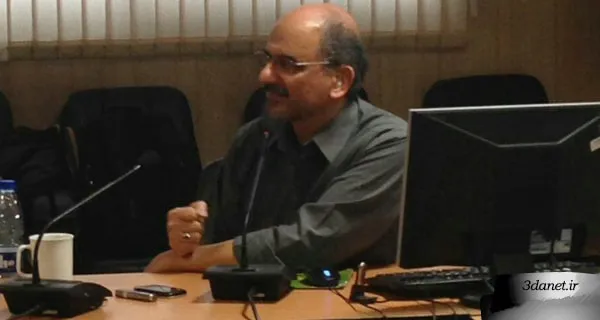
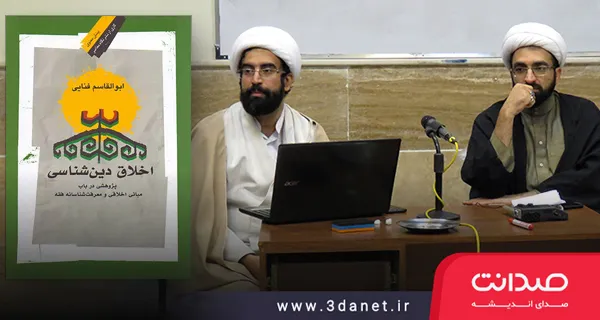
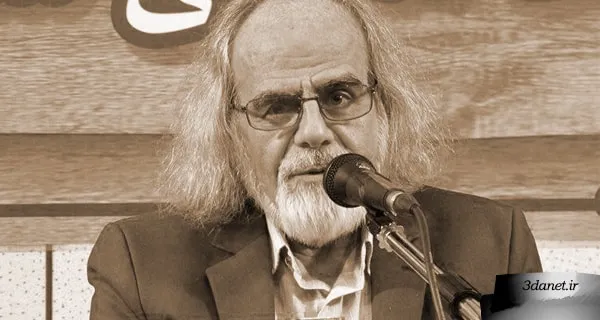
Discussion2 comments
چنین می نماید که چنین گفت و گویی نوعی هم سخنی است و تایید مواضع همدیگر است نه نگاهی انتقادی. گویا رابطه مریدی و مرادی در حوزه اندیشه نیز رخنه کرده است. بازگو کردن اندییشه های سروش و ملکیان به توسط شاگردانشان به شکلی هایی جدیدتر نامش روشنفکری دینی نیست تقلیدی است که مردم را دل می ربایاند اما خواص اندیشه را یاری نمی رساند.ارسطو افلاطون را دوست داشت اما حقیقت را بیش از او. کاش روشنفکران نا نیز نسبت به هم چنین بودند...
بسم الله اکرآنچه را که کلام الله تبیین می کند واقعیت منطبق برحقیقت باشد بدانیم که هست دیگر نیازی به موظف کردن بشر برای انتخاب بعنوان هنجار نخواهد بود وپذیرش انسان های اخلاق واقعکرا براساس حق بودن آنها می باشد نه یک ترجیح عقلی معارف الهی باید اخلاقی نیست به دلیل حق بودن آنها وفصل الخطاب بودن آنها نیز بدلیل حقیقت ظاهری وباطنی آنهاست وقتی استهزاء مومنان توسط غیر مومنان انجام می شود بشارت احاطه همان استهزاء برکافران آیات داده می شود یعنی آنان حقیقت را نمی شناسند وآن حقیقت برآنها واقع خواهد شد دردین اصل خودوتعالی ورسیدن خود است ودیگرگروی نیز تحت همین اصل قرارمی گیرد ووعده پروردگار هم بر تفوق مومنانش می باشد آنچه بظاهر از ناکامی درمدت زمانی خاص برمومنان رفته است با نهایت وعاقبت آنان ختم می گردد وبرای نکران تمتع موقت تبیین شده است واکر نرسیدن به خواست وهدف مومنین بیان می شود علت خود آنان وعمل برخلاف آنان است. ،مستند به آیات الهی مشروط به استفاده وعمل حق ومعیارهای پروردگار تفوق ورسیدن به سعادت دنیوی قطعی است مغلطه مصطلح ناشی از درست وحق نبودن ابزار مورد استفاده بظاهرمومنان می باشد مکر با عالم الغیب وشهود نتیجه. مثبت ندارد واو با کسی نسبت ندارد که به باطل اغماز کند وکسانیکه با نام او عمل می گنند را پیروز میدان زندگی نماید جهل هم یکی از فاکتورهای نرسیدن انسان به آرمانهای اوست یوت کل ذی فضلافضله درپایان بایدعرض کنم معارف دینی را نباید در عرصه انسانی تبیین نمود واین اشتباه منجر به اعوجاج در معرفت های ذینی ونرسیدن به حقیقت آنها می باشدضمن اینکه خود معارف را نیز باید تفکیک شده تحلیل وبررسی درک نمود که هرحقیقتی در میذان زمان مکانی خود قابل استفاده وکاربرد می باشد