Religion
Eastern Mysticism and Islamic Sufism: A Conversation with Mostafa Malekian
Mostafa Malekian makes the acceptance of mystical views conditional on their compatibility with modern rationality, universal ethics, and human rights. He prefers the practical mysticism of the Islamic East, with its emphasis on action and self-knowledge, over the theoretical mysticism of the Islamic West.
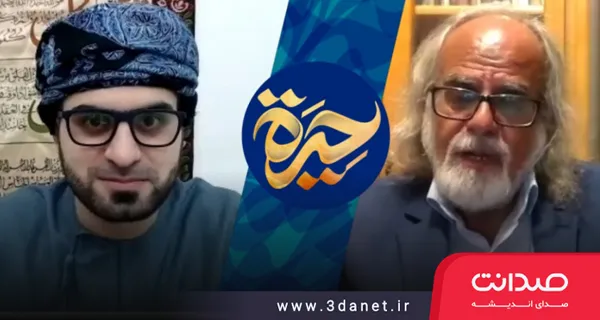
A Conversation with the Hira YouTube Channel on Eastern Mysticism and Islamic Sufism
Mostafa Malekian – June 2021
Transcription and editing: Davoud Qarajalou
Audio and video files of this conversation are available at the end.
Host: In the name of God. Tonight we are speaking with Professor Malekian, an Iranian writer and contemporary thinker. He has numerous discussions and books in the fields of ethics, philosophy of religion, moral philosophy, spirituality and mysticism, and Persian literature—particularly from spiritual and inner dimensions. He is known among some as the philosopher of ethics and spirituality. Among Professor Malekian's most important intellectual projects is the theory of rationality and spirituality, which he has elaborated and expounded upon in his own specific theory in his writings and books.
First, we greet you and wish you a good evening; we are very pleased to have you with us.
Malekian: I am pleased to be with you and your listeners and viewers, and I am grateful to you for serving as an intermediary so that I might also say something to non-Iranian audiences, make a point, and later benefit from their views.
Host: In this conversation, we want to discuss mystical and spiritual dimensions. We want to talk about Professor Malekian's views and opinions on these dimensions. Professor, as you yourself have stated in the discussion of rationality and spirituality, you believe that you have derived this theory from four main sources.
First, the founders of religions and faiths, particularly Eastern religions such as Hinduism and Buddhism.
Second, existentialist philosophers, whom we call existential or theistic philosophers, such as Kierkegaard.
Third, Western psychology, especially the third wave and the contemporary period, such as Irvin Yalom, who has a book titled "When Nietzsche Wept," which addresses the psychological problems and concerns of modern man.
Fourth, the mystics of religions and faiths.
I want to start from this fourth dimension and pose a question. What is the place of mysticism and mystics in your school of thought and in your own intellectual system, and what value and specific characteristics do mysticism and mystics generally possess?
Malekian: In the view I have expressed, that is, the synthesis of rationality and spirituality, in the second part—the "spirituality" part—there is no doubt that all the world's mystics are given consideration in the domain of spirituality. To put it more simply, just as in the domain of rationality my reliance is more on science and philosophy, in the domain of spirituality my reliance is more on mysticism and then on the world's religions and faiths. So there is no doubt that I accept mysticism as one of the sources of my view, but it is not the case that I consider every mystical opinion from every mystic to be acceptable. My belief is that even if we want to accept and embrace the views of the world's mystics, they must necessarily be compatible with modern rationality, universal ethics, and human rights. Therefore, if a mystical component derived from one of the world's mystics is to enter the system of thought, there is no alternative but for that component to successfully emerge from the crucible of modern rationality, universal ethics, and also human rights. On this basis, in my view, not all the teachings of all the world's mystics are acceptable, nor do I intend them to be. When it is said that one of the components of spirituality is mysticism, I do not intend to accept every word from every mystic.
Host: Professor, which schools of mystics and spiritual figures do you refer to? Because there are so many of them—the schools of Muslim Sufi and mystical orders, and likewise in the East in various places such as Shankara. Which ones do you hold in esteem and draw upon?
Malekian: One hundred percent, to none of them. But I can answer the question of which mystics I am most influenced by. In the Islamic world, I am more attached to the mystics of Greater Khorasan, not the mystics of the western Islamic world—that is, more to the mysticism of figures like Rumi, Ayn al-Quzat Hamadani, Abu Sa'id Abu'l-Khayr, and the like, than to the mysticism of the western Islamic world, meaning Ibn Arabi, who emerged in Andalusia. I vastly prefer the mysticism of the eastern Islamic world to the mysticism of the western Islamic world.
But at the same time, the mystics of the Islamic world are not my only focus. I feel a great closeness to Meister Eckhart, who is a Christian mystic, or to Teresa and John of the Cross—two Spanish mystics—and I agree with many of their views. Similarly, when I turn to Eastern religions, I am more attached to the views of someone like Shankara in particular, which is a kind of pantheistic Hinduism, than to Ramanuja. Therefore, when I say mysticism, I do not mean the mysticism of the Islamic world; I have in mind the mystics of all religions and denominations in all cultures. But if I were to make a selection within the mysticism of the Islamic world, I would choose the mysticism of the eastern Islamic world, and I see Rumi as the most prominent figure, and in the mysticism of the western Islamic world, Ibn Arabi. There is no doubt that I feel a greater affinity with Rumi than with Ibn Arabi.
Host: Professor, you pointed to an important issue. The pantheistic mysticism of Hinduism and Shankara, about which I will later pose a question concerning the essence of religion. But let us return to this subject you mentioned, the mysticism of the Khorasan school. This question is very important to me. If we want to discuss the mysticism of the Islamic world—Professor Malekian is in the process of writing a very extensive book on Rumi's ethical system—the question here is this: if you were to compare the systematic or academic mysticism of some followers of the school of Ibn Arabi, Qunawi, Jami, and Qaysari, on the one hand, and the Persian literary mysticism, that is, Rumi in the Masnavi-ye Ma'navi, Farid al-Din Attar of Nishapur, Hafez, Sa'di, etc., on the other—which encompass ethics and practical wisdom, practical lessons for a human being's life—on what basis do you prefer the mysticism of the Persian school, given that both speak of the unity of existence, the perfect human, and spiritual growth?
Malekian: It can be preferred from three perspectives: a) The mysticism of the western Islamic world pays more attention to abstract discussions and discussions about the universe, whereas the mysticism of the eastern Islamic world, that is, the mysticism of Greater Khorasan, is more concerned with practice rather than theorizing; or, to put it more simply, rather than wanting to make the world known to us, it tells us more about how to live, how we should be, and how we should look at the world. In my view, "the station of practice is preferable to the station of theory."
b) In the mysticism of the eastern Islamic world, the study of the self is more prominent than the study of the world. In the Socratic tradition, it was said, "Know thyself," and in the view of someone like Plato and Socrates, if a person does not know themselves, knowing the rest of the world is of no benefit, and if they know themselves, not knowing the world causes them no harm. So, the emphasis of someone like Socrates and his student Plato is more on the study of the self than on the study of the world. I am more interested in this tradition, which strives more for the knowledge of the human being, than in discussing the stations of the universe and the levels of the realms of Nasut, Lahut, Jabarut, Hahut, and the various levels of existence. Therefore, in my view, firstly, the station of practice is preferable to the station of theory, and secondly, within the station of theory as well, "the study of the self is preferable to the study of the world."
ج) عرفان شرق با توده های مردم سر وکار بیشتری دارد و جنبه اَشرافی و آریستوکراتیک ندارد و بیشتر با اصناف و مشاغل سروکار دارد و با توده های مردم سخن می گوید و توده های مردم را بیشترتحت تاثیر قرار می دهد. اما عرفان کسانی مثل ابن عربی، ابن حمزه الفناری و قیصری، عرفان اَشرافی است و نمی شود با آنها مردم عادی را مخاطب قرار داد یعنی مردم کوچه و بازار را. مردم کوچه بازار طاقت آن مباحث نظری و پیچیده نویسی ها و پیچیده گویی ها را ندارند. من هر جا هر آموزه ای که بتواند وجهه ای دموکراتیک تر داشته باشد به این معنا که تعداد بیشتری از مردم را مورد مخاطب قرار بدهد و با تعداد بیشتری از مردم بتواند گفتگو بکند، من این وجه را وجه رجحان می دانم. من معتقدم به اینکه شایسته نیست رضا بدهیم به تعداد محدودی از نخبه ها و اکثریت مردم را رها کنیم. هر قدر بتوان تعداد پرشمارتری را وارد فضاهای روحانی و معنوی یا لااقل فضاهای اخلاقی بکنیم، بهتر است. این کاری است که کسی مثل ابوالحسن خرقانی، ابوسعید ابوالخیر بسیار موفق تر هستند تا کسی مثل قونوی و قیصری یا ابن عربی و دیگران اینها عرفان آریستوکراتیک دارند تا عرفان دموکراتیک و من این را یک وجه مرجوحیت می دانم و آن قبلی را رجحان می دهم.
مجری: استاد در ادبیات و مباحث دینی این مطلب آمده که "معرفه النفس، اَنفَعُ المعارف"، "مَن عَرَفَ نفسه فَقَد عَرَفَه ربّه".
ملکیان: دقیقاً همینطور است و عجب این است که کسانی که مدعی اند که تحت تاثیر قرآن و حدیث و کتاب و سنت هستند، و در متون مقدس هم آن مواردی که اشاره کردید مثل معرفه النفس، انفع المعارف، من عرف نفسه فقد عرفه ربه وجود دارد و در عین حال می بینیم که بخش عظیمی از میراث عرفانی آنها اصلاً ربطی به خودشناسی و جان شناسی و معرفت شناسی ندارد. به کتابهای فلسفی ما از کِندی به این سو نگاه بکنید کِندی، فارابی و ابن سینا و ابن رشد تا ملاصدرای شیرازی و زمان ما، کتاب های حِکمی و فلسفی آنها را ببینید، ببینید که چه حجم از کتابهای آنان مربوط به جان شناسی است. اکثرا درباره اصالت وجود و اعتباریت ماهیت، جوهر، عرض، علت و معلول وحدت و کثرت، قوه و فعل، ثابت و متغیر و حرکت و سکون و ... است. دربارۀ همه اینها حرف می زنند ولی درخصوص انسانشناسی چه حجمی حرف زده اند. اتفاقاً از زمان کندی به این سو هر چه می آییم حجم انسانشناسی در متون فلسفی ما کمتر می شود یعنی شما اگر از آن حجم آثاری که از ابن سینا باقی مانده، حجم مطلب درباره انسانشناسی خیلی بیشتر است در مقایسه با آثار ملاصدرا و سپس ملاهادی سبزواری و سپس علامه طباطبایی. به نظر من این، یک نوع انحراف و متناقض اندیشی است كه شما در یك فرهنگی زندگی می كنید كه می گوید "اگر خواستی خودت را بشناسی، همه چیز را برنده ای و اگر خودت را نشناسی، همه چیز را باخته ای". سپس می بینیم كه قسمت عظیمی از میراث فلسفی و حِكمی و بلكه قسمت عظیمی از میراث عرفانی عرفای غرب جهان اسلام، اصلا ربطی به انسان ندارد. آن میزان كه بحث می كنند از مباحث وجود، جهان شناسی وضع عالم طبیعت در قیاس با عالم ماوراء طبیعت، عالم مجردات، عالم مثال در مقایسه با انسان بسیار زیاد است. به نظر من فارغ از اینكه طرفدار اسلام باشیم یا نباشیم، دیدگاه اسلام را بپذیریم یا نپذیریم و اگر كتاب و سنت ملاك عمل است، بخش عظیمی از بسیاری مباحث فلسفه و حكمت جهان اسلام عدول كرده اند و بیشتر تحت تاثیر یك سلسله فلسفه های غیراسلامی و دیدگاه های غیر اسلامی اند. من این را یك نوع نقد می دانم. گفتم كه اصلا مهم نیست كه آیا به اسلام معتقد باشید یا نباشید. مهم این است كه چرا كسانی كه می گویند ما معتقد به اسلام هستیم، به آن میزان كه از احكام ماهیت و ... بحث می كنند، اصلا دربارة عوالم درونی ما بحث نمی كنند و بحث نكرده اند در این باره كه چگونه باورهای ما شكل می گیرند، احساسات و عواطف ما چگونه شكل می گیرند، نیازهای ما چگونه شكل می گیرند، خواسته های ما چطور و نیز ارتباط باورهای ما با احساسات و عواطف ما چیست و چگونه است؟ ارتباط احساسات و عواطف ما با خواسته ها و اهداف و هنجارها و آرمان های ما چگونه است؟ شما توجه بفرمائید كه اگر ما می خواستیم دربارة انسان صحبت كنیم، چقدر لازم بود دربارة تنهایی انسان صحبت كنیم و چقدر دربارة مرگ، معنای زندگی، آزادی و مسئولیت صحبت می كردیم.
مجری: در كتاب هایی مثل منازل السالكین انصاری هروی اینها را چگونه توصیف می كنید كه منازل روح كه صد منزل و احساسات روح هست؟
Malekian: These are good, and they belong more to Greater Khorasan. My emphasis was on the fact that in the mysticism of the western Islamic world, these matters have been neglected.
Host: So these pertain to Greater Khorasan.
Malekian: Precisely. I want to say that Islamic philosophy is very meager and weak in this direction. In mysticism as well, the mysticism that has some strength is the mysticism of the eastern Islamic world, not the mysticism of the western Islamic world.
Host: I think you are presenting a profound thought on this matter, Professor. I recall a statement by Martyr Motahhari that distinguishes between philosophers and prophets: that prophets came to do what we call in Arabic the cultivation of souls, the refinement of the spirit, and the crafting of the human being, while philosophers came for deep rational discussions that only some individuals understand. Perhaps the problem with some mystical schools of the western Islamic world is that their discussions are mostly deep, elitist, complex, and difficult, and not useful for everyone. Of course, some try to say that no, there are aspects in them too, like Avicenna, in whose books there is also the discussion of the Stations of the Knowers and so on, but it is limited and not extensive.
Malekian: Precisely. Of course, there is no doubt that the Stations of the Knowers and On Joy and Happiness or The Secrets of the Verses in the book al-Isharat wa al-Tanbihat actually address this very thing. But compare this volume with the volume of other discussions devoted to other matters.
Host: I think these matters are influenced by things like the fact that a philosopher in the context of a scientific school, an academic and scholarly atmosphere, or with disciples of knowledge and learning, tends more toward theorizing and cosmology, whereas a spiritual master and mentor looks at all the people, and then we encounter a school like that of Attar, Rumi, Hafez, and so on.
Malekian: Yes. In my opinion, three factors influence our tendency to engage more with theoretical discussions than practical ones. First, theoretical discussions bring us more fame and yield greater social prestige. Suppose you are one of the best philosophers of your time; compare this with being one of the most ethical human beings of your time. If you are the greatest philosopher, are you likely to have more wealth and gain more fame, reputation, and popularity, or if you are a person deeply endowed with moral virtues? If a top-tier philosopher enters a gathering, does he receive the same amount of respect as a morally upright person entering? I mean to say that the social desirables we usually pursue in our lives are more manifest in matters related to knowledge—that is, in becoming a professor, having classes, an office, and a retinue—than in practical matters.
Second, acquiring knowledge is much easier than acting upon it. Learning knowledge, reading books, and becoming proficient in a scientific field is far easier than becoming endowed with moral virtues and acquiring excellences. Humans usually do not prefer difficult tasks. For example, I see that with 20 or 25 years of study, I can attain a remarkable scholarly position in my society, but with 20 or 25 years of ascetic practice, self-examination, self-purification, and self-conditioning, can I become a distinguished person in society? It is a very difficult task. Acquiring knowledge is much easier than acting upon its teachings.
Third, when a person learns science, they usually do not suffer from a guilty conscience, but when their attention turns to spiritual stations, mysticism, and the like, they are usually afflicted with a guilty conscience. If you spend a lifetime studying physics, chemistry, and philosophy, you generally never reproach yourself, but it is enough to read a single page of a book on ethics, and you begin to blame and censure yourself. “It is as if facing yourself is difficult for you” — as if you cannot bear yourself. Little by little, you enter into conflict with yourself. Human beings generally do not like to face themselves, and spiritual and ethical books confront a person with themselves, and facing oneself is no easy task. Yet you can read philosophy books for a lifetime and never face yourself, and therefore you are not overcome by regret, shame, remorse, and sorrow. These factors cause a person to turn to the pursuit of knowledge instead of self-purification and the like, and to obtain a doctorate in this or that field.
Host: Especially in this era, which is the era of postmodernism. Everyone is eager for scientific discussions that engage with politics, governance, and so on, and governments commend these things. Indeed, we live within the context of becoming elites and specialists, and this itself drives us in that direction, causing us to neglect the matters you mentioned and find them meaningless.
Malekian: Precisely. As I said, these things better fulfill social desirables. They give us more power, fame, wealth, and popularity. Well, we want these things, and we see that we can obtain them better by becoming a professor and having an office and staff than by choosing a monastery or convent, becoming a monk or nun, and attending to our own meditation and concentration.
Host: Professor, let us return to Persian literature, such as Rumi and Attar of Nishapur, and the wisdom-filled stories of Fihi Ma Fihi and the Masnavi, and the book of Musibat va Aalam — I do not know what it is called in Persian.
Malekian: Musibat-nameh (The Book of Affliction).
Host: Yes, Musibat-nameh. I think there is a very important characteristic, which can be likened to a fountain of wisdom and a sea of wisdom. You said that these are more democratic, but they also have layers; that is, ordinary people read and understand them, and scholars and philosophers also read them, and everyone comprehends them according to their own capacity, like the Quran. Do you accept this?
Malekian: Yes, I accept that a single utterance is understood in different ways, but its virtue is that everyone perceives its surface, even if not everyone perceives its depth; yet everyone perceives its surface. And in my view, this very surface also has desirable effects and outcomes.
Host: I emphasize the philosophy of wisdom, upon which they too have placed emphasis. Do you have a view? That is, do you see in other mystical schools something like an epistemological system and an existential system, yet when we read these, they seem like life stories?
Malekian: Yes, I completely agree with you. To put it in more technical terms, these mystics you refer to address issues that, when resolved in life, have a tangible and perceptible impact on our practical life. Suppose you become a full professor on the subject of causality in philosophy, or on substance and accident. Will your current practical life differ from your life before becoming a professor in these topics? Your practical life regarding your spouse, your children, the institution of the economy, your friends, your colleagues, your rivals and enemies, and so on — it has no effect whatsoever that you can distinguish between different causes or differentiate the types of substance.
Host: If, in the course of these discussions, it is proven that we are utterly dependent upon God, humility increases, but not in all discussions, and you are quite right.
Malekian: No, it is not in all discussions. Suppose you say we all have a specific cause-and-effect relationship with the Cause of causes. This brings a sense of need, belonging, and dependence, but that is within such a specific discussion. Yet, instead, you turn to those mysticisms, like the mysticism of Rumi, who says:
You know the price of every piece of pottery,
Not knowing your own worth is folly
For a person to know the price of everything but not know their own worth—how much they themselves are worth—this is the height of foolishness and stupidity. I think this has an impact on my practical life that all the discussions of substance and accident do not. I do not wish to find fault or set philosophy aside. My point is that, in comparing the mysticism of Greater Khorasan and philosophy, mysticism is more beneficial for our practical life; otherwise, philosophy has its own specific function, its own dignity, and fulfills other needs, and my discussion concerns the tangible, palpable needs of our life.
Host: If you like, it would be very useful and enjoyable for the viewers if you could share one or two examples of practical wisdom, perhaps from Rumi or Attar, that you have in mind.
Malekian: For instance, suppose in the Discourses of Shams, Shams repeatedly emphasizes this point: what use is all this talk and discussion of tawhid [divine unity]? That you constantly debate that God is One, simple, and without parts, while you yourself are shattered into six hundred pieces, and every piece of your being inclines toward a different aspect of the world. Go and bestow simplicity upon yourself, and grant unity to your inner being. If God is One and simple and has no parts, what benefit is it to you when you yourself are in pieces?
Do you know what this discussion means? It means, suppose God is indeed One, what is that to me? I myself must become one. I should not have so many biased whims and inclinations. Different desires, different passions, different wants. What use is it to me? Instead of placing so much emphasis on the tawhid of God, I must strive to emphasize my own tawhid, to grant unity to myself, and to give myself a kind of oneness and singleness. In my opinion, this is an important point.
Or there is another point in Rumi and also in Shams. Both of them emphasize: all this talk you do about the miracles of the Prophet, and the Prophet's Ascension—what use are these? We assume the Prophet went on the Ascension; what is that to you? You yourself must go on the Ascension. You tell so many stories: was the Ascension physical or spiritual? Did he ride upon Gabriel? From which stage onward did Gabriel say, 'I can fly not a particle higher, or else I will burn'? And so on. What use are these? If you truly wish to be a follower of the Prophet, tell yourself: the Prophet went on the Ascension, so I too must go on the Ascension, not merely narrate the story of the Ascension. This is an important point.
Host: Meaning, you yourself should be a person of the Ascension.
Malekian: Yes, exactly. Do not be a writer of tales; rather, be such that tales are written about you. What use is it to write and narrate the stories and tales of others? Live in such a way that the tale of your life is written. I call this wisdom the 'what-is-it-to-me' wisdom, which is emphasized by Shams and Rumi. One should not enter into discussions about things that are not useful in the realm of action, a point Rumi emphasizes in the Kulliyat-e Shams.
They say in Saksin a man has two bows
Of those two, one was lost; what loss is that to us?
They say that in one of the villages around Transoxiana, a person we do not know at all had two bows, and one of those bows was lost. What use is this story to me? Suppose I investigated and found out this news is true—what is that to me? In the same book, it is related that someone said to Juha—who was one of the wise fools, like Bohlul—'They are carrying gifts and trays of food.' He said, 'What is that to me?' They said, 'But they are carrying them to your house.' He said, 'What is that to you?'
That is, I must pursue things that concern myself. If the tray is not being carried toward my house, it is none of my business. If it is being carried toward my house, it is none of your business—what is it to you? You go attend to your own affairs and tend to your own life. This is what I call the 'what-is-it-to-me' wisdom.
That is, we should pursue sciences that have an impact on our practical lives. Knowing many topics, versus not knowing them, makes no difference in your life. Of course, academics must do this work, but my point is that when our lives are meant to improve, we, as human beings who intend to reform ourselves and our society, should pursue matters that are beneficial—like the Quranic verse, “Do not ask about things which, if disclosed to you, would trouble you.” Why do you ask about things that are of no benefit to you? This is a profound wisdom. Most books of philosophy are like this and are utterly useless. There is no doubt, of course, that if you want to take up a profession, you must specialize in a particular job, technique, or art, and to specialize, you must learn the books related to that technique, art, and science—this is certain. But I want to say that once we move beyond our profession, what kinds of knowledge should we pursue for the rest of our lives? For the rest of our lives, we should pursue knowledge that, when we know it, creates a change within us. Otherwise, what benefit is there in knowing what is happening in a galaxy billions of light-years away from us? I say, apart from a specific technical field in which we have no choice but to specialize in order to take on a job or profession, spend the rest of your life on something that benefits your being.
Host: The Quran also points out that it is not important to know whether the Companions of the Cave were five or several people, what was with them, or whether, for example, a dog was with them or not.
Malekian: Exactly.
Host: Master, the mystics have allusions that you should create your own Night of Qadr or find your own Night of Qadr, but this is not enough. When a person undergoes transformation, that very moment is their Night of Qadr.
Malekian: Exactly.
Host: I will raise another question here. In Islamic mysticism and Sufism, they say that tastes and dispositions vary; one becomes a kharabati mystic, another a jamali, and yet another a jalali. In this context, one can compare, for example, the personality of Abu Sa'id Abu'l-Khayr with that of Ayn al-Quzat Hamadani, whom some say was a mystic of love. What is the difference between these two, and which one do you prefer?
Malekian: I will first address this last point: if it came down to choosing between these two mystics, for certain reasons I feel a greater affinity toward Ayn al-Quzat, but this too may depend on my personal characteristics, my genetics, my upbringing, and so on.
Now I return to your first question. Your question was whether one can truly accept that even in mysticism our psychological type—our character and personality type—has an influence? For example, three specific individuals might be mystics of the mysticism of love, one a mystic of the mysticism of knowledge, one a mystic of the mysticism of light, and yet another a mystic of the mysticism of contemplation, and even another person a mystic of the mysticism of striving. Like the story of the two sisters in the Bible, that is, Martha and Mary, where one sister was transfixed by their guest, Jesus, and could not take her eyes off him, while the other sister was moving things around in the kitchen and trying to prepare food for the guest. They are, in fact, representatives of two types of mysticism: the mysticism of contemplation and the mysticism of striving. In my view, these matters relate to the personality type of the mystics, and therefore one cannot necessarily be preferred over the other. Indeed, one of the virtues of mysticism, unlike jurisprudence, is that it does not have a homogenizing effect. Jurisprudence has a homogenizing effect and makes everyone the same. In the sense that every boy who reaches the age of religious obligation, like other obligated boys, is subject to specific rulings; the same applies to girls. All obligated boys and girls are required to observe a single set of rulings. Their obligatory acts are the same, and so on. Jurisprudence fundamentally has a homogenizing perspective, meaning that once you become obligated, you are like all other obligated persons. But mysticism is not like this; it allows each person to go their own way. There is a saying that many mystics have clung to: al-ṭuruqu ilá Allāh bi-ʿadadi anfāsi al-khalāʾiq (The paths to God are as numerous as the breaths of creatures). This implies a kind of pluralism in mysticism and the mystical wayfaring. There is no pluralism in jurisprudence—not in Jewish jurisprudence, nor Muslim, nor in the six schools of Hindu jurisprudence. When you deal with mystical wayfaring, pluralism gradually emerges, and they say we must not condemn everyone to a single ruling, and not everyone must follow a single type of wayfaring.
Host: I think this is what causes mystical schools to respect the souls of human beings in wayfaring, spirituality, and reaching God.
Malekian: Precisely. In jurisprudence, as soon as you become obligated—male or female—you are like all other obligated males and all other obligated females. Even if you look closely, jurisprudence, in many of its rulings, applies a kind of uniform rule even between men and women, though not in all rulings.
I believe that mysticism's attention to the fact that not everyone should be set on the same path, but rather each person should be allowed to traverse the path in their own particular way, is a virtue: kullun yaʿmalu ʿalá shākilatih (Everyone acts according to their own disposition). Let us allow each person to act according to their own disposition, rather than neutralizing all dispositions and saying everyone must adopt a single disposition. I think this is an acceptable and justified teaching in mysticisms, and it is not present in jurisprudence.
Host: Perhaps jurisprudence deals with the minimum of obligation, that is, legal obligation, and has no regard for spiritual and inner dimensions, and for this reason, it has not addressed these discussions.
Malekian: I fully accept that, but on the other hand, I am saying something else. I am sorry for jurisprudence that it pays no attention to inner states. I mean to say that your point is correct, and jurisprudence concerns itself with outward appearances, not inner realities. It deals with behavior, not the mind, conscience, and psyche of the human being. In my opinion, by doing this, jurisprudence inflicts great losses on society, because it pays no attention to the differences—that no two human beings in the world are exactly alike—and therefore we must allow a kind of plurality to exist, whether in the realm of conduct, religious experience, or the relations of mystics with non-mystics and the general public.
Host: Of course, some jurists were themselves mystics and wrote rulings and etiquettes, and even wrote works like Asrār al-Ṣalāh (Secrets of the Prayer). For instance, in Ibn Arabi's al-Futūḥāt, we also see that in writing a legal jurisprudential ruling, spiritual and inner dimensions are also embedded, meaning a synthesis between them has been achieved.
Malekian: There is no doubt. This does not show that jurisprudence and mysticism have become one, but rather that a single person can be an instance of a jurist and an instance of a mystic, and therefore their jurisprudence can influence their mysticism, and vice versa. But in general, I want to say that jurisprudence looks to outward appearances, and mysticism looks to inner realities.
Interviewer: If it's not a restriction, we would like to hear about your own spiritual and mystical experiences. An important memory or event that has had a great effect on your personal, spiritual, and inner life.
Malekian: Unfortunately, I am not a practitioner of mystical wayfaring, and naturally, one should not expect me to have had any particular experience. However, I can mention some points that have been effective in my disposition and have inclined me toward spirituality, though none of them are of the type of strange, parapsychological, or extraordinary events.
For example, my father always told me that people act in life in such a way that when you look at their lives, you see that regarding what God has guaranteed, they act as if they do not accept this guarantee, as if they do not accept that God has become its guarantor. Conversely, regarding things God has not guaranteed, they suppose that God is the guarantor of those matters and has guaranteed them. He would then explain this. He said God has guaranteed that He will provide our sustenance, and He has guaranteed it. Yet people show such greed and avidity in acquiring wealth, competing and violating each other's rights, as if they do not believe that God has guaranteed sustenance and provision, as if God has not guaranteed it and has said, 'Go and find your own sustenance.' That is from one perspective. But on the other hand, there are two things He has not guaranteed: first, faith, and second, righteous deeds. These, He has said, you must acquire yourselves. Yet people act as if God has guaranteed faith and righteous deeds, and they make no effort for these two. It is as if God has said, 'Your faith is upon Me, and your righteous deeds are with Me, and I guarantee them.' So they pursue what is guaranteed, which in reality they should not pursue, and they do not pursue the things they should pursue, even though those are not guaranteed. My father told me, 'Do not act this way. You do not need to pursue guaranteed sustenance, but pursue faith and righteous deeds, because God has not guaranteed these.'
In the world of childhood, with human suggestibility and the respect one holds for one's parents, this had a great effect on me. Not that I can say I necessarily acted upon it and lived by it, but I have been aware that a person must pay attention to such things and matters. I have valued and continue to value this greatly, because the transformative power of this teaching is far greater than that of an extraordinary event.
I can mention things of this sort. I remember during my student days, I came across this sentence by André Gide: "Strive so that greatness lies in your gaze, not in that which you behold." Truly, this sentence was one of the ten sentences that had a great impact on me. It is possible that now, when I look at and contemplate that sentence, I might not be influenced to that degree, but back then, when I was a young 19-year-old, it had a great effect, and many things changed in my view. However, what you had in mind, I have not had in my life.
Interviewer: I did not ask about miracles and charismatic acts, but about these very things that affected your life and led you toward moral philosophy and spirituality.
Malekian: Yes, indeed, these things you have pointed to are more important.
Interviewer: If you have been influenced by any individuals—since Qom and Tehran are full of pure people, and even if they are not mystics or people of spiritual unveiling and witnessing, they may be pious and devout—please tell us.
Malekian: I have encountered such individuals, albeit few and far between, both at the university and at the Qom Seminary where I studied, and they have influenced me. At university, I was greatly influenced by the late Dr. Mehrdad Bahar, son of Malek al-Sho'ara Bahar, and Dr. Abdolhossein Zarrinkoub, some of whose sentences had a far greater impact than formal academic teachings. In Qom, similarly, single sentences from certain professors were very impactful. One of the professors in Qom quoted a saying from Imam Fakhr al-Din al-Razi, who, in his exegesis Mafatih al-Ghayb, or as it is also known, his Great Commentary, said in the commentary on the verse "And you have certainly come to Us alone, just as We created you the first time," that if, in some catastrophe, all copies of the Quran were to burn and only this verse, which concerns human solitude, remained among the pages, this verse alone would be sufficient for a person's awakening. If you feel your solitude with your entire being and understand that no one else will bear the responsibility for your actions, and consequently step onto the right path, this alone suffices. When I heard this sentence at that time, it had a profound effect on me. In fact, the depth of your feeling of solitude can be redemptive. In my view, this is very important. There have been instances of this kind in my life that I have learned from others.
Host: You made a good point, that a person might have great theoretical distance from their teachers but still benefit from these ethical matters.
Malekian: Yes, that is exactly right. I think the things that most influence our lives are these aphorisms that some professors teach us outside the formal curriculum. For example, a professor is teaching mathematics but suddenly looks up and says a single sentence, and that very sentence has an impact. That same sentence I quoted, "Do not be a writer of tales, but be such that tales are written about you," is an instructive and impactful sentence that says I should not merely be a transmitter, but must strive to reach a state myself. Being the narrator of such-and-such an ascetic, mystic, prophet, or founder of such-and-such a school or religion holds nothing for me.
Host: Professor, regarding Islamic-Shiite spirituality, particularly the supplications and visitations we have, what do you hold in high regard? Some are drawn to the Nahj al-Balagha, others to the Sahifa al-Sajjadiyya, and so on... What do you read more, or have an interest in, or feel a special connection to?
Malekian: First, I must honestly declare that I do not now accept any historical, institutionalized religion one hundred percent. I accept the strengths of every religion and creed, but there is no religion or creed in which I have not found a weakness and sought to avoid it. Therefore, I do not now accept any religion or creed from beginning to end. Nevertheless, if someone were to ask me, among the cultural heritage remaining in the Islamic world, setting aside the Quran, I believe that the Nahj al-Balagha of Imam Ali and certain supplications from the Sahifa al-Sajjadiyya are still, to a remarkable extent, more valuable than the rest of what remains in our tradition. Major portions of the Nahj al-Balagha and specific parts of the Sahifa possess a high degree of elevation and cause the elevation of human beings as well; they are beneficial and valuable to me, and their recitation, intonation, and imparting are still inspiring. For instance, in the Sahifa al-Sajjadiyya it is stated: "We do not rely for salvation from Your punishment upon our deeds, but upon Your grace toward us."
This is still deeply moving for me. It burns away the root of all self-admiration, arrogance, haughtiness, and pride. Let your reliance not be upon your own deed, but upon the totality of existence, which is God, not upon something very minute, which is myself. Trust in the whole versus a very unwise trust in the part. This is immensely valuable. And in the Nahj al-Balagha, there are countless such passages, God willing. Like that famous saying, though I should not take up your time: "I enjoin upon you five things, for which, were you to strike the camels' underbellies in pursuit of them, it would be well worth it: Let none of you hope except from his Lord, and let none fear except his own sin; and let none of you be ashamed, when asked about something he does not know, to say: 'I do not know'; and let none be ashamed, when he does not know something, to learn it; and upon you is patience, for indeed patience is to faith as the head is to the body, and there is no good in a body that has no head with it, nor in faith that has no patience with it."
These five sentences are meaningful to me and still deeply moving, for they are the five pillars of human well-being. First, he says that if you were to travel your entire life and wear down the soles of your feet against the sides of a camel in order to acquire these five sentences, it would be worth it. Then he says that one can place hope in nothing except God—I would now translate it as: one can place hope in nothing except the Whole of existence. If you place your hope in any of the parts of the universe, your hope will come to nothing; one can only place hope in the Whole of existence.
Then he says: one should fear nothing except one’s own wrong action. Nothing and no agent can ruin me except my own wrong action. And then he says: if you do not know something, feel no shame at all; go and ask so that you may know. Then he says: if someone asks you a question and you do not know the answer, do not be ashamed to say that you do not know the answer—say, “I do not know.” Be steadfast on your path; you cannot easily attain noble goals, and as Spinoza said, nothing noble is attained easily, and if you desire something noble, you must have patience and steadfastness. Whoever had uttered these sentences, I would have benefited from them and made use of them.
Interviewer: Some might say that many people have written much wisdom, and written spiritual and devotional books and so on, but the Nahj al-Balagha is regarded as wisdom in its entirety, and the Sahifa al-Sajjadiyya is considered the pinnacle of spirituality. Do you accept that there is a special luminosity in these that is not found in others?
Malekian: No, I do not accept that these are at the pinnacle of luminosity. When I read The Imitation of Christ by Thomas à Kempis, or Augustine’s Confessions, or The Pilgrim’s Progress by John Bunyan, or Paradise Lost, I see things in them as well, and I do not at all hold that the Nahj al-Balagha and the Sahifa al-Sajjadiyya are at the pinnacle. I do not accept this somewhat sectarian, exclusivist view at all. I learn as much from The Imitation of Christ as I do from the Nahj al-Balagha.
Interviewer: Ultimately, can it be said that every garden has its flowers, and even saints and friends of God are at a particular level each day and are on the path of perfection?
Malekian: Precisely. Who was it—Tabbat yada and Ya ardu abla‘i. Even the Qur’an is the same. Tabbat yada is an invective. How far is that from “O earth, swallow your water, and O sky, withhold [your rain].” Even the Qur’an itself—not all its verses are of the same rank, let alone what has been transmitted from the great figures. If you read the Dao De Jing, or if you read the Buddha’s Dhammapada, there are passages in them that are at the height of brilliance.
Interviewer: Professor, your words lead me to another question that many ask: to what extent has Islamic mysticism and Sufism been inspired by Eastern mysticisms? Some say that Islamic mysticism and Sufism drew heavily from Hinduism, Buddhism, and ancient Persian religion. There are now books that undertake comparisons, such as Izutsu’s book titled Sufism and Taoism, and other books that compare, for instance, Eckhart and Ibn Arabi. Moreover, we have mystics from Greater Khorasan who are literary mystics, like Rumi himself. What is your own view? Have these schools drawn upon one another? Have they completed one another? Or have they been inspired by one another?
Malekian: I personally believe that Islamic mysticism in general, and the mysticism of Greater Khorasan in particular, were heavily influenced by Eastern religions, among which Hinduism, Buddhism, and Daoism are the most prominent and significant. Again, note that Greater Khorasan existed before Islam, and a portion of its people were even Buddhists before they became Muslims. Balkh, the birthplace of Rumi, is also the birthplace of Buddha—though with a vast temporal gap—and these two are fellow townsmen. I personally believe that the mysticism of Greater Khorasan is deeply influenced by these three Eastern religions, and most of all by Buddhism. But it is also influenced by Hinduism and Daoism. Now, if someone were to ask another question: was the influence of these three religions greater, or that of the Quran and the traditions? If I am to be honest, I would say the influence of those three religions was far greater than that of the Quran. I know many will disagree, but this is my personal view. When I engage with Rumi, I see him as more akin to Buddhism, Hinduism, and Daoism than to the Quran and the prophetic traditions. I do not at all mean to say that Rumi was aware of this point and consciously took this path—absolutely not. But when I look at it as an observer, I see that the fanāʾ fī Allāh and baqāʾ bi-Allāh spoken of by the mystics are far more similar to Nirvana than to innā li-llāhi wa innā ilayhi rājiʿūn. Innā li-llāhi wa innā ilayhi rājiʿūn is not at all fanāʾ fī Allāh and baqāʾ bi-Allāh. Let me give another example. The waḥdat al-wujūd (Unity of Being) that the mystics uphold: out of all the verses of the Quran, except for 12 or 13 verses, God in none of them is a God of the Unity of Being. We have 6,600 verses in all of which God is personal and anthropomorphic; only in 12 or 13 verses is God a God of the Unity of Being. This entire dominance of the God of the Unity of Being and mysticism is, in my opinion, under the influence of Hinduism—not the idolatrous Hinduism of someone like Ramanuja, but rather the monistic Hinduism of figures like Shankara, and Buddhism. For this reason, I consider the influence of those three religions to be far greater than that of Islam itself (meaning the Quran and prophetic traditions).
Host: You gave an example about which I will pose a question. Can the concept of fanāʾ not be compared with “Ilāhī hab lanā kamāl al-inqiṭāʿ ilayk” (O God, grant us the perfection of being cut off unto You) found in the Shaʿbāniyya Supplication?
Malekian: I want to say two things: First, regarding “Ilāhī hab lī kamāl al-inqiṭāʿ ilayk,” your initial assumption is that this is definitely from a Shiʿi Imam, and I have great doubt about that. The very language of this supplication is not a language that could have been issued by the Shiʿi Imams of the first century AH. This language is a construct of later centuries. I absolutely do not accept that this so-called Shaʿbāniyya Supplication can be attributed to the Shiʿi Imams, like Imam Hasan and Imam Husayn, in the first century, just as we say “mā dhā wajada man faqadaka bi mā dhā faqada man wajadaka” (What has he found who has lost You, and what has he lost who has found You?).
Host: That is attributed to Ibn ʿAṭāʾ Allāh al-Iskandarī.
Malekian: Yes, yes.
Host: They say we have authentic hadiths, such as “mā zāla ʿabdī yataqarrabu ilayya bi-l-nawāfil ḥattā uḥibbahū” (My servant continues to draw near to Me through supererogatory works until I love him), and things like that.
Malekian: This, too, in my opinion, is a hadith that our Sufis have attributed to the Prophet and has no reliable chain of transmission. The nearness through supererogatory works (qurb al-nawāfil) and the nearness through obligatory works (qurb al-farāʾiḍ), etc., none of these have been transmitted from the Prophet, and we have no chain of transmission for them. But let us set all this aside. Let us suppose that “Ilāhī hab lī kamāl al-inqiṭāʿ ilayk”—does it mean Nirvana, or fanāʾ and baqāʾ fī Allāh wa bi-Allāh? Absolutely not. This phrase merely says: let all inner attachments be directed only toward You, and toward no being other than You. “Allāhumma ijʿal hammanā hamman wāḥidan” (O God, make our concern a single concern) is just like this: O God, make it so that among all the beings in the world, I love only You. Let my love be directed only toward You, and let my beloved be only You, and let other beings not be my beloveds. From these, fanāʾ fī Allāh and baqāʾ bi-Allāh do not emerge.
Host: Very good. I recall that ʿAllāma Ṭabāṭabāʾī, for instance, used to teach the Upanishads to some of his students, and he himself stated in some places that this is the very essence of Sūrat al-Tawḥīd and the very pure mystical concepts that we observe here exactly, and for this reason he commented on it and sees wisdoms in it.
Malekian: That is precisely the point made in the book Qur'an dar Islam (The Qur'an in Islam), which Allameh states at the beginning of the book, and then he says this monotheism is a bare monotheism, but in the Qur'an it is not this bare.
Host: I am reminded of Rumi's saying in his preface that this book is the very root of the roots of the roots of religion, and he himself believes that this book is among the esoteric and hermeneutical interpretations of the Qur'an. You said you are very much influenced by those three faiths.
Malekian: I say that what appears in this book, and in the Masnavi-ye Ma'navi, and subsequently in the Kulliyat-e Shams-e Tabrizi and the ghazals, and then in Fihi Ma Fihi, their mold cannot be extracted from the Book and the Sunnah. By Islam, I mean the Book and the Prophetic Sunnah. If it were just us and the Qur'an and the Prophetic Sunnah, these concepts are not within them.
I sincerely want to ask you, can you accept that the worldview of the Qur'an is based on love? The worldview of the Qur'an is based on faith and gratitude. The Qur'an considers faith to be the mother of all virtues and disbelief and ingratitude to be the mother of all vices.
But what do you see in Rumi? In Rumi, you see only love. Go through Rumi's works and trace the discussion of faith. How much importance did Rumi give to faith? Whether you search for the word faith or the concept of faith. Go and see what weight faith holds against love in Rumi's works. Go and see what weight faith holds against need in Shams's works. What Rumi does with "love," Shams does with "need." Need is the root of Shams's worldview, and love is the root of Rumi's worldview. Is it the same in the Qur'an? You find in the Qur'an: "And those who believe are stronger in love for Allah... He loves them and they love Him." Where is this, and where is all this repetition of love in Rumi? On the other hand, consider the repetition of faith in the Qur'an. Love is a very important concept, but such a thing does not exist in the Qur'an.
Host: We approach the Qur'an with a hermeneutical gaze and the spiritual experiences, unveilings, and intuitions we possess, and we try to create compatibility. Some mystics have attempted to do this, and many of them say they derived these stations and so on from the Qur'an itself. They claim this, is that correct?
Malekian: Yes, they claim this, but in my opinion, when they wanted to extract ideas they had arrived at from other sources from the heart of the Qur'an and hadiths, they trampled all principles of exegesis. I have said many times that when Ibn Arabi speaks about the people of Noah, where the Qur'an says "aghraqna" (We drowned them)—the Qur'an says "Because of their sins they were drowned," we drowned them because of their errors—but Ibn Arabi says "khati'at" should not be taken to mean errors, but rather from "khatwa," meaning step; that is, they were drowned because of their steps and not because of their sins. Ibn Arabi says: "They were drowned in the seas of God's mercy." Can you really, as a fair-minded person, conclude from a verse that says "We drowned them because of their sins" that "because of their steps..." The host interrupts the speaker.
Host: This discussion enters into hermeneutic currents and so forth, which is specialized, and we have other questions we will address so as not to take up too much of your time. Let us return to the mystics of different religions and denominations. You named Shankara, Eckhart, and Ibn Arabi. From three different faiths. Can we say that they spoke of the essence of religion and the transcendent unity of religions? Can that conclusion be drawn?
Malekian: If you mean that there are commonalities in the teachings and statements of the world religions, I say yes, there are. But if, as you put it, we want to say that all religions have unity or a transcendent unity—as the Traditionalists say, that there is a transcendent unity among religions—that is another point. I have doubts about both. First, I accept that religions have common aspects; for example, all religions believe that life is not limited to this worldly life and that the world is not confined to the realm of nature. There is no doubt that they have common aspects, but some believe that all religions have a single message, and from this they have concluded the transcendent unity of religions. I absolutely cannot accept this. I cannot accept that all religions say exactly the same thing. That they have a kind of overlap and common ground, I fully accept, but that they all say the same thing but in different languages and different garments, I do not accept. Because I have not seen any conclusive proof that the message of all religions is one.
You might say a second thing: that the mystics of different religions and denominations convey that common message. I say I still do not accept that common message, let alone then say that different mystics also convey that common message. I do not accept, and cannot accept, that Buddhism, which does not believe in a personal God, says the same thing as the Abrahamic religions. The Abrahamic religions—Judaism, Christianity, and Islam—strongly accept an anthropomorphic and personal God; Buddhism absolutely denies a personal God. Is there anything more important than this? How can you say that the religions say the same thing?
Similarly, when the Abrahamic religions believe in resurrection—especially Christianity and Islam, though there are doubts and ambiguities about resurrection in Judaism—regardless of whether we consider resurrection to be bodily, spiritual, or both spiritual and bodily, what affinity does this resurrection have with reincarnation? You say they all say the same thing: that after this worldly life, there is another life. I say yes, "there is life after death" in the form of resurrection is very different from "there is life after death" in the form of reincarnation.
Host: They are very different.
Malekian: They are very different. One says you go never to return (resurrection), and the other says you are constantly going and coming. Well, now that their God is like that, and the God of these is like this, and their afterlife is like that, how can you say they all share a common message? If you say there are also common components, I accept that, but I do not accept the transcendent unity of religions as proposed by figures like Frithjof Schuon and Seyyed Hossein Nasr.
Host: My view was not directed at the Perennial Philosophy and the Traditionalists, but you made remarks concerning the spiritual experience of individuals I had in mind, such as the efforts of people like Izutsu in his book Sufism and Taoism, where he says that a certain person in Daoism speaks of the unity of existence within the framework of that religion, and Ibn Arabi also speaks of the unity of existence within the framework of Islamic mysticism. I meant the spiritual experiences of mystics in various religions.
Malekian: Even if Izutsu is right, this point of ours does not follow from his either. We were asking whether religions have a common message or not, not whether Islamic mysticism was influenced by Daoism or not. Yes, it was influenced by Daoism. I myself also mentioned that it was influenced by Buddhism and Hinduism. The discussion was about religions, not the mysticism of religions. The question is whether world religions have a single message or not, which I deny.
Host: The more precise question becomes: do the mysticisms of religions have commonalities or not? Do they have commonalities there?
Malekian: Definitely. If you speak of mysticisms, I believe the world's mysticisms have serious common aspects, but these common aspects are not found in the world religions. When you move from the Abrahamic religions toward the Eastern religions, you see that everything changes.
Host: If we compare the schools within each religion with the schools of others, we find commonalities there more easily and more deeply.
Malekian: If we consider world religions as people moving toward a mountain peak, they are very far apart from each other at ground level, but as they climb the mountain, the distances decrease. I say that religions are very far apart in the realm of jurisprudence; it is as if jurisprudence is the most terrestrial matter, then comes the theology of religions, where their distance lessens, and then ethics, where religions are much closer. And when we reach the peak, which is the heart of religions and revelatory religious experience, the distance becomes much smaller.
Host: The last part of the questions concerns pluralism, where you criticized the Traditionalist view and the perennial philosophy. There are various opinions regarding the pluralism of truth or the pluralism of salvation. My question is, in brief, which theory do you favor and what conclusion have you reached? For any human being, from any religion, who wants to reach God and the highest spiritual and moral station, what is your view?
Malekian: Firstly, you have a presupposition that human beings attain felicity through religions. Well, if I do not want to reject this presupposition, it is nonetheless the first point of contention and must be discussed: whether our path to felicity is to be an adherent of a religion and denomination or not. I cannot simply accept that a person must necessarily be an adherent of an established, historical religion. But let us now assume that for felicity, we must subscribe to one of the religions. Is only one religion true among the religions, and the rest false? I say no, it is not so at all. So, what is Malekian's view? I say that in all religions, both truth and falsehood exist. Many of the teachings of all religions are unacceptable, and of course, many teachings are acceptable. So, if you say all are true, I do not accept it, because in all, there is both truth and falsehood. And if you say only one of the religions is true and the rest are false, I do not accept that either. In my view, all religions are a mixture of truth and falsehood.
Host: You mean in the very teachings that are available to us, correct? That is, in this very religious heritage that human hands have worked upon?
Malekian: Yes. I know of no religion that human hands have not touched. If there is something that human hands have not worked upon, it has not reached us. And all of them are a mixture of truth and falsehood. I cannot accept that only one religion is true, nor can I accept that all religions are true. But I can accept a third thing. If we are to be adherents of a religion, do all religions have the same degree of depth, or do they differ? I believe the depths differ, and we have deeper and more superficial religions. By historical religions, I mean Judaism, Christianity, and Islam, Zoroastrianism, Hinduism, Buddhism, Daoism, Confucianism, and Shinto; these have different depths.
Host: You have an article titled "Rumi's Approach to Religious Traditions," which I have read. In brief, not from Malekian's perspective, but from Rumi's—as you have understood Rumi—what is his view on this discussion? What is his approach to other traditions?
Malekian: I think that Rumi is neither an exclusivist nor a pluralist. Rather, he is an inclusivist. He believes that neither do all religions have the same degree of truth, nor is only one religion true. What does that mean? It means he says Islam is true, but other religions also possess truth. And whatever truth exists in other religions, those truths are also present in Islam. However, in Islam, we have truth in a more abundant [and augmented] form[1]. Therefore, Islam encompasses all the truths of other religions as well. Islam includes every truth that exists in any religion, and there are additional truths in the religion of Islam that do not exist in the rest of the religions.
Host: What about the prophets? Does he consider the Prophet of Islam superior?
Malekian: The name Ahmad encompasses all the names of the prophets / For when the hundred comes, ninety is also ours; if you accept Ahmad, you accept all the prophets, but it does not say that if you accept the rest of the prophets, you also accept Ahmad. If you accept Ahmad, 90, 80, and 70 are also at your disposal. Rumi's view is a kind of inclusivism. Islam is true; other religions are also true, but to the extent that they resemble Islam, they partake of truth, and there are truths in Islam that are not in other religions, and Islam possesses these truths in addition. Because Ahmad is 100, and the rest are not 100.
Host: Well, this was about the religion of Islam. In Rumi's view, do Muslims attain the truth sooner?
Malekian: In Rumi's view, yes. Because Islam is entirely true. Other religions partake of truth to the extent that they are close to Islam.
Host: If a devout person strives but does not reach Islam, yet strives on the path of reaching and attaining God, is there a way for them to ascend higher, or is it only Muslims who reach the higher stations?
Malekian: Well, you want to ask what soteriological pluralism is. I believe Rumi adheres to pluralism in salvation. The followers of any religion or creed, if they are truly committed to their religion and creed in theory and practice, are among the saved. I always distinguish between pluralism of salvation and pluralism of truth. Rumi adheres to inclusivism regarding truth, but to pluralism regarding salvation.
Host: Finally, I would like to return to the topic of ethics. In one of your works, I read that human beings have more than twenty fundamental emotions, feelings, sensibilities, and passions, such as joy, hope, anger, etc. You have suggested that we analyze and elucidate the depth of these issues through these sensibilities and emotions as seen in the ghazals of Hafez and the works of Rumi, etc. If you would like to say something on this matter, please do.
Malekian: Firstly, I do not consider Saadi and Hafez to be mystics. Therefore, I consider the entirety of their works to be outside of mysticism. I do not believe that anyone who uses a mystical term in their works is a mystic. When we say mystics, we mean Rumi, Shams Tabrizi, Ayn al-Quzat Hamadani, Attar Nishapuri, and the like. Secondly, you asked whether we can truly discern the emotions and feelings they possessed from the works of people like Saadi and Hafez—whether we consider them mystics or not, which of course makes no difference. I say yes, but there is no necessity to equate their evaluation of emotions and feelings. For example, see how much emphasis is placed on hope in Saadi's works, while it is not emphasized in Hafez. Both emotions and feelings are important, and both have a positive evaluation of hope, but Saadi places more emphasis on hope. By scrutinizing the works and the legacy left by these thinkers—mystic or non-mystic—we can compare their evaluations of emotions and feelings, but this comparison does not bring them closer; rather, it often leads to divergence.
Host: In conclusion, most mystics believe in the philosophy of love. If you would like to say something on this subject, please do. For instance, they place great emphasis on love, and in their intellectual systems, they have not addressed other matters to the extent that they have addressed love.
Malekian: In my view, the primary reason mystics place such emphasis on love is that as long as a person identifies with their own ego, as long as they believe in their own selfhood, they can neither live a good life nor a happy one. They say that goodness and happiness for me lie in stepping out of this ego. Out of the fence I have drawn around myself and declared, “This is Mostafa.” I must step out of this fence. The mother of all our problems is that we consider ourselves to be an ego and try to defend this ego—attracting every benefit to this ego and repelling every harm from it. Therefore, they believe the only path to felicity is to be freed from the bonds of the ego. What can free us from the bonds of the ego? In their view, only love. Nothing but love can grant you self-forgetfulness and make you think of the whole. They say that when a person falls in love, it is the first time they step outside themselves and, instead of constantly looking at themselves, they look at another. Rumi says that even metaphorical, worldly loves guide us toward true love. This is because even in erotic love, your selfhood is diminished to some extent, and the more selfhood diminishes and the more one gazes outward instead of staring at oneself, the better one’s condition, according to these mystics. From this perspective, they say that the greatest elixir and the red sulfur of humanity is love. Love turns a person’s copper into gold. Because as long as I am not in love, I consider myself to be my ego and think only of preserving the ego’s interests. If I fall in love, this ego disappears and I become oriented toward another, and according to Rumi, love, whether of this world or the next, ultimately guides one to that city.
Whoever’s breast is rent by love,
Is wholly cleansed of fault and flaw.
Interviewer: Isn’t it too idealistic that you become free of every kind of flaw?
Malekian: I think it is realistic, but difficult. As long as I do not feel a sense of unity with the whole and draw a circle around a piece of the universe and say, “This is Mostafa,” I stand against the rest of the world, and the interests of this Mostafa are not necessarily the interests of the world, nor are the harms of Mostafa the harms of this world. It is when I identify myself with the world that I will have a better life. But if you say that becoming this way is difficult—that is, it is difficult to break down this wall and feel unity with the world—I say, yes, it is difficult.
Interviewer: Regarding this very topic of love, if you have a poem in mind to recite here at the end, we would be glad to hear it from you.
Malekian: Our literature is replete with this very discussion of love, but Hafez said:
I have seen no memento sweeter than the sound of love’s speech,
A keepsake to remain within this revolving dome.
Sa’di says:
I am in love with all the world, for all the world is from Him,
I am delighted with the world, for the world is delighted by Him.
Of course, I do not consider these two individuals to be mystics, and I recited these verses from them. When we enter into the discussion of Rumi, God knows, such themes are exceedingly abundant in him. I think that couplet of Hafez is the pinnacle of what the mystics wanted to say, which Hafez, a non-mystic, expressed.
Interviewer: Many thanks to Professor Mostafa Malekian, the contemporary Iranian philosopher, for his insights, contributions, analyses, and presence on tonight’s program.
.
.
[1] . The sentence inside [ ] has been inserted by the author.
.
.
حيرة 18 | مصطفى ملكيان | العقلانية والمعنوية | العرفان بين الشرق والغرب | الأدب الفارسي الروحي
.
.
.
.



Discussion3 comments
به عنوان یک دانشجوی فلسفه و مسافر راه حقیقت، اگر بخواهم تعبد نسبت به استاد ملکیان نداشته باشم، باید بگویم با ایشان درباره وحدت متعالی ادیان، همداستان نیستم دیدگاه وحدت متعالی ادیان را هم البته باید بازاندیشی کرد و مورد حک و اصلاح قرار داد، اما بدون یک مبنا واحد و متعالی، نه عقلانیت امکان پذیر است و نه معنویت، معنای محصلی دارد تنها و تنها در سایه حقیقت استعلایی است که امکان نظر ورزیدن و عمل کردن و حتی گفتگو کردن و انتقاد کردن مهیا میشود. و دقیقا همین حقیقت استعلایی به خمیرمایه و جوهر دیدگاه وحدت متعالی ادیان اشاره میکند. بله، چه بسا فناء فی الله و بقاء بالله و انا لله و انا الیه راجعون، مساوی و یکسان نباشند و هم چنین معاد و تناسخ، مساوی و یکسان نباشند، اما این رویکردها و رهیافتها به (افق واحد و متعالی) اشاره میکنند. و دیگر آنکه، من به این نتیجه رسیدهام این (تمایز آهنین و رادیکالی) که استاد ملکیان میان خدای متشخص و خدای نامتشخص میگذارد گاهی وقتها خیلی تصنعی و شبیه دوقطبیهای ایدئولوژی اندیشان میشود. به نظر من، برخلاف اعتقاد استاد ملکیان، صحبتهای محیی الدین ابن عربی درباره هماهنگی و جمع الوهیت نامتشخص و متشخص بصیرت بخش است.
جناب هراتی بزرگوار ... همانطور که فرمودی چون در اول راه هستید آرزوهای بالا بلند و آمال دست نایافتنی دارید . هم با جناب دکتر هم داستان ! نیستید ؛ هم قصد بازاندیشی دیدگاه وحدت متعالی ادیان را دارید . تمام اینها را بگذارید در کنار اینکه به فرمایش خودتان رهروی تازه دارید . پس عقل حکم میکند : به می سجاده رنگین کن گرت پیر مغان گوید /// که سالک بیخبر نبود و راه و رسم منزلها .... موفق باشید انشالله
مصاحبه دقیق و خوبی بود سوالهای مرتبط و پرهیز از اظهار فضل توسط مجری