Sociology
Five Fundamental Flaws in the Institution of Education: A Conversation with Mostafa Malekian
Mostafa Malekian views the institution of education as transcending a mere ministry and identifies five fundamental flaws within it. The emphasis on memorization over comprehension, and the absence of rationalism in favor of dogmatism, are among the most basic defects of this institution in our country.
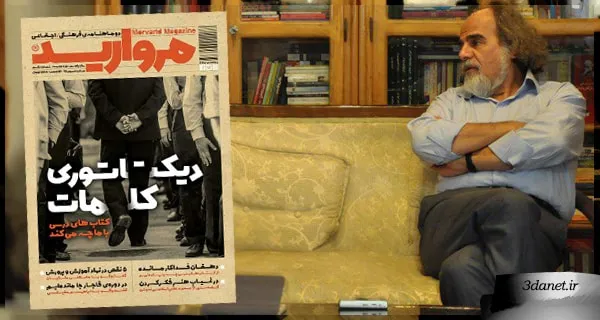
In his books, articles, and lectures, Mostafa Malekian has always looked with sensitivity upon our general culture, our educational system, and so on, and through critiques and the offering of solutions, he has called upon his audience to think more deeply about the issues and problems they face. In the report of a conversation with him that you have before you, he addresses the flaws and deficiencies present in our education, the weakness of textbooks in acquainting students with the art of living, and more.
.
Five Fundamental Flaws in the Institution of Education
A Conversation with Mostafa Malekian
Mohammad Sadeghi
A Definition of the Institution of Education
The reality is that when I look at education in the sense of the institution of education, of which the Ministry of Education is only a part, I see five painful realities in the institution of education. I am using institution here in its sociological sense, which includes, for example, the Ministry of Education; the Ministry of Science, Research and Technology; the Ministry of Culture and Islamic Guidance; orators, preachers, and lecturers; the national broadcasting service; and all those who, consciously or unconsciously, willingly or unwillingly, are engaged in the upbringing of you and me—you and me as citizens of this society. Therefore, I am not only considering the Ministry of Education; I am considering the institution of education. But there is no doubt that within the institution of education, the most significant share belongs to the Ministry of Education. Because from the earliest years of life, it holds us in its grip, and the early years of our lives are of the utmost importance compared to the later years, so the most criticism will also be directed at the Ministry of Education. But in any case, the entire institution of education has five fundamental flaws and deficiencies. Two of these five, in my opinion, are more foundational and basic, even though the subsequent three might perhaps seem more important.
Emphasis on Memory, Not Understanding!
The first flaw is that our education is not based on understanding; it is based on memory. That is, among our mental faculties, all emphasis is placed solely on memory, with no regard for understanding. In other words, instead of striving to make a subject comprehensible to the audience, the effort is made to lodge the subject in the audience's memory. The effect of this, naturally, is that instead of dealing with concepts, one deals with words, terms, and linguistic expressions. If I want to converse with my audience based on a reliance on understanding, it is always concepts that must be my focus. But when I speak to the other party based on memory, here I rely on words, terms, and linguistic expressions (whether a word, a phrase, or a sentence). This means you do not grasp the depth of reality, but you know how to express a reality whose depth you have not understood in the form of language. This is the consequence that follows. Even though throughout history there have been five schools of thought regarding education, and whichever of those five schools we accept (though in our country it is absolutely unclear which of those five has been adopted as the basis for education), in any case, all five schools share this common ground: the reality that the teacher conveys to the student must be understood. As I said, the institution of education is the subject of my discussion. Now, that teacher might be the host of a television program, or a teacher in an elementary or high school giving a lesson to students, and so on. According to all five philosophies of education that we have, we must make reality comprehensible, not make it so that the audience, without having understood the reality, can express it in linguistic forms. I will elaborate on this point further with a few examples so that my meaning is better understood. Therefore, we are not concept-oriented; we are word-oriented. We transact entirely with words. Of course, 'word' is not a precise term, and I should say linguistic expression, which is sometimes a word, sometimes a phrase, and sometimes a sentence. But in any case, we transact with each other through linguistic expressions, meaning I might converse with you for an hour, and after that hour, words may have been transferred from my mind to yours or from your mind to mine, and both of us may appear satisfied, even though nothing has actually been exchanged between me and my audience, and only words have been transferred from one mind to another. This is the first flaw, which is the most important flaw in education in our country.
The Absence of Rationalism
I will also present the second flaw and then clarify my point further. The second flaw is that our education is not based on reasoning. It is based on substitutes for reasoning, and although these substitutes are several things, for brevity I refer to all of them as taqlid (uncritical adherence). Otherwise, when reasoning is lost in the communicative space, its substitutes such as suggestibility, susceptibility to indoctrination, imitation, taqlid, conformity to public opinion, conformity to intellectual fashions, conformity to the spirit of the age, going along with the crowd, and so on emerge, which are also destructive alternatives. But in any case, such alternatives and substitutes exist. However, so that I do not constantly name these substitutes, I name one of them, which is the most prominent and embodies the spirit of all of them, and that is taqlid. Otherwise, all the alternatives I mentioned are unhealthy substitutes for rationalism. Our education is not based on reasoning. It is based on taqlid, meaning it does not show the audience why you should accept this claim; if it wanted to show why you should accept this claim, it would have to provide the reason for this claim. Of course, reasons have various types, and there is no doubt about that, but a reason must be provided for every claim. But instead, they say accept this because so-and-so said it. Now, that person starts from the child's own educator and teacher and goes higher and higher and higher. But ultimately, the implicit message seems to be: A is B, because X said that A is B. Even though the form of reasoning is: A is B (accept this from me) because A is C and C is B, therefore A is B. If you want me to accept that A is B, you must prove to me that A is C and C is B. Then I can accept that A is B. This form of reasoning does not exist in our education system, in our textbooks, and so on. We are always asked to accept something by referring to someone's statement. Rationalism does not exist in the institution of our education, and taqlid, meaning ultimately the "person" has replaced the "reason." The backing of the statement is a person, not a reason. Now, this person of course varies, starting from the kindergarten teacher to other individuals, but in any case, it is a person. Now let me give an example. Look, you tell your child or your younger sibling who is, say, in the fifth grade of elementary school that the capital of Italy is Rome. Then your audience says, "Mom or Dad or sister or brother, the center of Italy is Rome, not the capital of Italy." No matter how much you say the capital of Italy is Rome, they say, "No, our teacher said the center of Italy is Rome." They do not understand that your statement and their teacher's statement are the same statement. Why? Because they have not grasped the concept of center and the concept of capital. They know the word, and the word center is different from the word capital, and the word capital is different from the word center. Because these two words differ, they assume that your statement is different from their teacher's statement. Because the teacher said the center of Italy is Rome, and you say the capital of Italy is Rome. If they were dealing with the concept, they would understand that beyond the term center and beyond the term capital, there is one concept for it, which is sometimes expressed with the term capital and sometimes with the term center. Therefore, there is no disagreement between me and the teacher. Just like the story in the Masnavi. Four people found some money, and since they found the money together, they decided to spend it on buying one thing. The Persian insisted that we must only buy angur, the Arab insisted that we must only buy inab, and the Turk and the Greek each said something else. They did not know that they wanted the same thing. Why? Because they had not penetrated into the concept. They remained stuck at the word and the linguistic expression. A dispute arose among them, but someone who knew all four languages said, "I will go and buy what all four of you want, and I guarantee that all four of you will be satisfied." He went and bought the fruit whose name in Persian is angur, and each of them thought to themselves that this arbiter had bought exactly what they wanted. All were satisfied. The difference between those four people and the fifth person (the arbiter) was that he had grasped it conceptually and had not remained stuck in the multiplicity and plurality of terms. He had realized that behind these multiple terms, there is a single concept. The child who now says, "No, the center of Italy is Rome, because our teacher said so, and you are wrong to say the capital of Italy is Rome," does so because they have not understood that the center is the same as the capital. They have not dealt with the concept; they have dealt with the term.
That is one point, but the second point is this: let us suppose that what your teacher said really does contradict what I said. Why did you immediately prefer your teacher’s word over mine? Let us assume your teacher said the center of Italy is Rome and I said the capital of Italy is Rome, and let us suppose we are expressing two completely incompatible opinions. Why do you immediately say, “Our teacher said this”? You should rather say, “Our teacher says one thing and my father, mother, sister, or brother says another; I must see which of them is correct.” This goes back to the fact that deference has replaced reasoning. If you are faced with two opinions, you should see what reasoning your teacher has for saying the center of Italy is Rome and what reasoning I have for saying the capital of Italy is Rome—assuming, of course, that we were saying two different things. But to immediately rule that our teacher is correct, rather than that my father, mother, older sister, or older brother is correct, is because deference has taken the place of reasoning. Because the teacher said it, it is a correct statement, but you do not possess the authority of our teacher for me; you are my sister, or my brother, or… but you have no authority. The backing for the teacher’s word, instead of reason, is the teacher herself. The backing for my word, instead of reason, is myself, and since the teacher has authority over me and you do not, I accept the teacher’s word. If you deal with children, you will see this clearly. Of course, you also see it plainly everywhere at older ages, but I want to say that its basis and its origin must be seen in childhood. If you deal with elementary school children, you will see that most of these children have no concept of a country in their minds. Of course, they memorize that Iran is a country, America is a country, and so on, but they have no concept of a country in their minds, and none of them say, “We do not understand what a country means at all.” Concepts like country are unfortunately used in their textbooks (if I say unfortunately, it is because it is not made comprehensible at all), and they use, for example, the representative assembly, how many members it has, how many are elected and how many are appointed, and so on, and they memorize all of this. Based on grades, they also get a 20 because their memory is strong. But they have no conception at all of what an assembly means. What does a consultative assembly mean? What does a representative even mean? When it is said that someone is the representative of a city in an assembly or the representative of a country in a congress, they have no conception of what this means. Therefore, it is the same in physics and chemistry. Believe me, I was once speaking with a professor from one of the best technical and engineering universities in the country, and I saw that he did not conceptually understand the concepts he himself had been teaching for years. The transformation of matter into energy and energy into matter is constantly spoken of, but when I asked him, “Does energy belong to the world of bodies or to the realm beyond the world of bodies?” he did not understand what I was saying. Why? Because from the beginning, he learned that the law of the transformation of matter into energy has such-and-such a formula. We are immediately taught that the law of the transformation of matter into energy is this. We accept it and solve problems based on it. But we do not know at all, nor do we ask ourselves, whether this energy that is spoken of is corporeal or non-corporeal. I said to that professor, “In any case, energy belongs to the natural world, and in the natural world, everything has dimension.” He said, “Yes.” Then I asked, “So energy has dimension? And if it does, then it is no different from matter.” I do not want to say this is an unsolvable puzzle; no, it has a clear answer. I want to say that a professor who has been teaching at a university for 30 years does not himself have a conceptual understanding of energy. Of course, this exists even more clearly in the social sciences. As I said, the first flaw I see is that our education is based on memory, not on understanding. And the second flaw is that it is based on deference, not on reasoning. The difference is that in reasoning, the backing of a statement is reason, and in deference, the backing of a statement is the person who utters the statement and holds that statement.
Ideological Thinking
The third flaw in our education is ideological thinking. Today, when we speak of ideology in the press, our minds turn first and foremost to Marxists, socialists, and leftists, who are ideological thinkers. Then our minds turn to the religious as well, that religious people are also ideological thinkers. But ideological thinking is not about the content of what you say. Its meaning lies in how you relate to your own opinion. Being an ideological thinker does not mean that you must be a Marxist or an anti-Marxist in order not to be an ideological thinker. Or that if you are anti-religion, you have freed yourself from ideological thinking. It is absolutely and utterly not so. It is not the content of my beliefs and opinions that makes me ideological or non-ideological; it is the way I encounter and relate to beliefs and opinions that makes me ideological or non-ideological. Now, I define being ideological as follows: if you believe that on a subject, issue, or problem, the final word has been spoken and the file on that subject, issue, or problem is closed, then you are an ideological thinker regarding that subject, issue, and problem. Ideological thinking is believing that the last, conclusive word has been spoken, and now we must move on to other subjects, issues, and problems. But this particular subject, issue, or problem has been settled. Because the truth of the matter has been spoken about it. Now, by whom? Whether you say Marx said it, Jesus said it, Spinoza said it, Kant said it, Avicenna said it, Saadi said it, and so on... It does not matter who you say said it; what matters is that you believe the file on this subject is now closed, because we have heard the final word on this matter from so-and-so. In this sense, non-ideological thinking means that on any subject, issue, or problem, one can rethink, reopen the file anew, and critique and examine afresh what the correct solution to the issue or the right way to resolve the problem is. Not that this issue or problem has been solved or resolved for all eternity because so-and-so solved the issue and resolved the problem. Ideological thinking means declaring the file closed. This ideological thinking exists in our education. For example, all kings in history books have been evildoers, because our ideology demands it. Consider the kings from the Medes to the last Shah of Iran in the books; all these kings, to varying degrees, have been cruel, hard-hearted, ruthless, and bloodthirsty. Because we have declared the matter closed on a subject. Namely, that anyone who seizes power except through God, it makes no difference who they are; whoever they are, they are cruel, hard-hearted, ruthless, and bloodthirsty. Then, how much historical reality must you distort to make it fit with this ideology? You have no other choice; you must falsify reality. Instead of making your opinions subordinate to realities, you must make realities subordinate to your opinions. Of course, realities never become subordinate to your opinions. So, illusions must be taught to children in place of realities, so that those illusions are compatible with the desired ideology! In short, if we say that the final word has been spoken on a subject, issue, or problem, we have no choice but to be forced to distort history, culture, society, the individual realities of human beings, and the collective realities in societies, because the word that has been spoken is supposed to be considered the last word. So, everything must be sacrificed for it, and this exists in our education. Because so-and-so, in that speech they gave yesterday, spoke the last word, so no other word should be spoken, and the final word has been spoken, and this is expressed to the extent that each person has the power to do so. It might be me, the head of a small agricultural office in a small town, who declares the final word. At other times, the final word is declared by a politician, a president, and so on.
Formalism
The fourth flaw in our education is rigidity in behavior versus the mind. Rigidity in the outward versus the inward. Extreme behaviorism and a refusal to look behind behaviors. Indifference to the mind that produced this behavior. In the language of the mystics, a kind of formalism and superficiality, having nothing to do with people's inner selves. That is, when I, from whom this behavior has emerged—whether my behavior was right or wrong—what meaning I ascribe to this behavior. We have nothing to do with my intention, my motivation, my goal, my aim and purpose, my ideal, and my value; only the regulation of behavior in the desired form matters. But we do not concern ourselves with what mind lies behind this behavior and what meaning, goal, and motivation that mind had for this behavior. That an individual participates in a certain ritual is important, not what they derive from performing that ritual. We inculcate this formalism in children from childhood. A kind of behavioral uniformity is always important to us. But what individuals think behind this behavior, what beliefs they hold, what feelings and emotions they have, what desires they have, what their values are, what their ideals are, and so on... they have absolutely nothing to do with it. They look only and exclusively at the physical, and when we look only at the physical, we are naturally looking only at the body and the speech and actions that issue from the body. But what mind and psyche lie behind this body is not considered important at all. In a sense, we hold the most materialistic and physicalist view of the human being that can exist, even though we think we are spiritually minded. We express the most spiritual and ethereal views outwardly, but we hold the most corporeal views about the human being. Because we only consider the human body and the behavior and actions that issue from it, not what lies behind this speech or action? They want to consider the human being in the most spiritual aspect, and their discourse is about 'Where did I come from, what was the purpose of my coming?', 'Last night at dawn they delivered me from sorrow'... but in reality, they apply the most materialistic view of the human being. Because they do not believe that behind their body, a human being has a mind, and we must think about reforming that mind, and behind that mind, in a sense, there is a soul and psyche that we must think about; they have nothing to do with these. The individual's body is important, and because your body is important, what substance you eat or drink is important, and what clothes you wear or do not wear is important. Whether specific words or incantations flow from your tongue or not is important. In short, the human being equals the human body, whereas they wanted to say that our existential shell is our body. They speak the most spiritual and mystical words about the human being, but when it comes to practice, the human being is seen as confined to the body, and they have nothing to do with anything beyond that. So, affirming a statement that is uttered through the body and tongue suffices, and what lies behind it is of no importance. This is a very great contradiction in our education. When we intend to teach children poetry, we teach them the most mystical poems and consider ourselves a part of God, and then we say the angels prostrated before this body. But they have nothing to do with the mind and psyche behind this body. They only say: observe certain etiquettes, perform certain actions, maintain that silence we desire, speak that word we like, and so on... But what we endure within ourselves, what our pains and sufferings are, what our wishes and desires are, what value system we hold, and so on... is not important, and no attention is paid to it.
The Absence of Life Lessons
The fifth flaw in our education system, which I emphasize greatly, is the "art of living," which is not taught. Everything is taught except the art of living. In my view, the greatest tragedy relates to the third type of reading, which I also mentioned in the Tabriz lecture. The first and second types of reading exist to some extent. We must distinguish between three types of reading. In the first type, we turn to study based on the social division of labor, and we read books in order to grow better in our job, art, profession, and specialization. This type of reading enables a person to pass the university entrance exam, to be admitted to a master's program, and so on. This type of reading is the lowest form of reading—not valueless, but compared to the second and third types, it is less important. The second type of reading is not done to become more skilled in a job or profession, but for enjoyment. Human beings have curiosity and strive to satisfy it, and one form of curiosity is scientific curiosity, which is also satisfied through books. One person turns to history books, another to physics books, and so on. This type of reading, compared to the first, is less common among us Iranians, but it can still be seen to some extent. However, the third type of reading, which is absolutely not discussed in our education system, is reading to learn the art of living. Living is an art, and a very complex one at that. To play the setar, we must work for years, practice, receive training, and go to a master to learn how to play the setar. But life is apparently something whose art we know innately as soon as we enter it. This is a mistake; no task is this difficult, and we need education for it. We acknowledge that education, cultivation, and research are necessary for everything, but regarding life, we pay no heed to the necessity of education, cultivation, and research. In our textbooks, from kindergarten to the doctorate level, there is nothing called the art of living. Even though each of the 5 schools of education came into being precisely to answer this question and to draw attention to the art of living. When you hand over a child at age two to kindergarten and grant them a doctorate at age 32, it means you have this child at your disposal for 30 years. Now, in these 30 years, the child is raw material that you want to shape into something—what is that something? Those 5 schools address this very question. For example, suppose you have sculpting clay in your hand and someone asks you, what shape do you want to mold this clay into? Logically, one can ask the person holding the clay and working with it, what shape will you make of it? Now, what shape will we give to this human clay that is sent to kindergarten and is being educated for years? What was it lacking that they were handed over to the education system? Any answer from those 5 answers that speaks about the philosophy of education says one thing: that this being must, in any case, live, and living requires very complex skills, and this must be taught to them. Now, I refer people to their own intuition. You who have been in school and university for 30 years, from the beginning when you entered kindergarten to later stages, you learned mathematics, arithmetic, geometry, algebra, and so on, you learned fluid mechanics, you learned biology, you learned geography and history, and so on. I ask my audience, how much of that knowledge has even remained in your mind? Only the knowledge that was specialized has remained—for instance, you wanted to become an engineer, and the knowledge related to that has stayed in your mind, but other knowledge (history, geography, etc.) has not remained. But now I ask, have you ever had a problem in life where you could say, in the fourth year of high school or the second year of university, they taught us a certain subject, and if they hadn't taught it, my problem would still be there? For example, I had a problem with my spouse, or my children, or my friend, or my father, or my mother, or a colleague, and because in one of the academic years we had read a certain textbook, I was able to solve my problem. I don't think anyone can find such a thing in their life—that based on a course unit or a textbook, they were able to alleviate one of their problems. It's possible that a math teacher in high school, while teaching math, said something about life, and that became a lesson, but this was not in the textbook. They said it out of goodwill. Now let's see, was anything considered among the lessons and books for solving life's problems?
What good is it for us to know whether Argentina or Peru exports more cotton, when in our own practical lives, and in the face of the simplest issues and problems, we are beset by helplessness? The greatest surgeons, the greatest physicians, the greatest university philosophy professors, the greatest engineers, and so on—it is clear that they have high IQs and it is evident that they possess a great deal of knowledge. But if these same individuals cannot have a healthy interaction with the office water dispenser attendant and behave in an abrasive and corrosive manner with the office water dispenser attendant, it means they have not learned what they should have learned. Now, if they can design the world's largest dams, perform difficult surgeries, and so on, but cannot, for example, have a healthy interaction with a taxi driver, they have ruined both their own good time and the taxi driver's good time, and have soured their own mood and the taxi driver's mood. That is, they have inflicted pain and suffering upon themselves and another. These are things we should have learned.
Final Remarks
When the French expelled the occupying forces from France, General de Gaulle asked André Maurois, the great novelist and thinker, to take on the Ministry of Education. Maurois accepted but said I will fundamentally change the textbooks, and until the end of high school I will teach the children no more than three things. One, French language and literature so they know the culture of their own country. One, mathematics so they are not cheated when buying and selling, and the other, I will teach them only the lessons of life. Physics, chemistry, history, geography, and so on... I will leave for when they enter university and want to specialize in a particular field. But there are things that all of them need, whether man or woman, whether poor or rich... whatever they are, they need this, and I will teach them the lessons of life until the age of 18, the rest can wait for university. Of course, de Gaulle did not accept, and André Maurois himself wrote a three-volume book called "Lessons of Life."
My point is nothing other than Maurois's point. We have not been taught the art of living. Under any circumstances, we need life lessons, whether we have extensive social relationships or not, whether we have an important job or not, and so on... Ultimately, we need these lessons, and why is it important to learn them before the age of 18? Because after 18, it is too late, and the person must enter life in the social sense of the word. We have never been taught how to face our own loneliness, how to develop inner resilience in the face of despair and not give up hope, how to abandon a pessimistic outlook and adopt an optimistic one, how to establish a balance between freedom and responsibility in our lives, how to make our lives valuable, how to give our lives purpose, how to increase the efficacy of our lives, how to cope with the feeling of dread about death, and so on... and how to come to terms with the fact that we are not exempt from the laws governing the human world. Because, as you know, one of our problems is that each of us thinks the laws discovered by psychologists and other experts in the humanities apply to everyone else, but not to us. That is, if others do not exercise, sooner or later they will lose the health, strength, and beauty of their bodies, but my body, even without exercise, will maintain its health, strength, and beauty. How do we learn that we are cut from the same cloth as the rest of humanity? This is something Schopenhauer emphasized: learning that we are not exempt from the laws governing human relations. This is very clear theoretically, and everyone accepts it theoretically, but our entire lives pass by because I think I am exempt from the laws governing the human world and that these things have been said for others. How do we learn to distinguish hope from desire, and these two from wishful thinking, and these three from delusion and daydreaming? We need hope, we have desires, and at the same time, our desires should not exceed a certain limit, and we should never be wishful thinkers. And now, where are the boundaries between the hope I should have, the wishful thinking I should not have, and delusion and daydreaming? No one has taught us these things. How can I increase my threshold for tolerating pain and suffering in life, so that realities afflict me with less pain or suffering? What is the method of dialogue so that I do not confuse dialogue with argument and chit-chat? Dialogue cultivates life, chit-chat is necessary for life's entertainment, and argument is necessary for nothing in life. What is the difference between these? We have not learned these things. What is negotiation? What is the role of negotiation in life? What is the difference between a need and a want? Should I follow my needs, or should I follow my wants, or sometimes follow needs and sometimes wants? What is the difference between them anyway? In the marketplace, where every seller wants to sell their goods at the highest price and every buyer wants to buy the same goods at the lowest price, how can a balance between these two incompatible desires be achieved fairly? What is the difference between frugality and miserliness? Where is the boundary between courage and acting without deliberation? Where is the boundary between acting imprudently and acting audaciously? What are the advantages of silence that are important psychologically, ethically, and in social relations? And that silence should not be broken except as necessary and at the necessary time; speaking is not the principle of life. And we have not been taught these things. How can my relations with others be based on the principle of companionship rather than competition? How can I view my fellow human beings as companions on the road, not as rivals? What direction do human relations take when they are companionable, and what direction do they take when they are competitive? How can I put an end to theoretical comparison and practical competition with you within myself? When, in theory, I am constantly comparing myself to you, and in practice, I am constantly competing with you, this is destructive for me and has a ruinous effect. So, how do I put an end to this comparison and competition? How should I spend my personal time (the time I am alone with myself)? How should this time be passed? How can I organize my time for earning income, existential desires, and giving freely? How is a balance between these three possible so that one does not fill the place of the other two, or two the place of the other, and so on... To solve the problems and difficulties of life, we need to learn life lessons. In Iran, there are few books for teaching life lessons and the art of living.
جوابنگرفتن همین نیاز است که ما را به کتابهای زرد کشانده، همچون؛ مدیریت یک دقیقهای، چگونه در چند دقیقه ثروتمند شوید، ده راه سریع برای موفقیت و... و در فقدان درسهای زندگی و کتابهایی برای آموزش هنر زندگی است که این کتابها پدید میآید. کتابهای سودمند (برای آموزش هنر زندگی) که با کمک روانشناسان، ادیبان، اندیشمندان و... در این باب نوشته شده باشد هم در آموزش و پرورش ما مفقود است..
.
Source: Morvarid Magazine, Issue 1, Mordad and Shahrivar 1395
.
.



Discussion6 comments
علاوه بر نکاتی که جناب استاد ملکیان در مورد نقایص سیستم آموزشی در ایران فرمودند که بسیار به جا و منطقی بود , مورد دیگری هم وجود دارد. نقص در" استعداد یابی" دانش آموزان به طور جدی و عمده. دانش آموزی که اصلا ذهن ریاضیاتی و تحلیلی ندارد , به اجبار خانواده و یا کلاسهای متفرقه مجبورش می کنند که مهندسی بخواند . خروجی اش چه می شود؟ یک عده مهندس بی سواد و یا نهایتاً بدون شغل. یا پزشک بی سواد. دولت کلی هزینه می کند در دانشگاههای دولتی ,, خروجی چی؟ هیچ چی؟ اگر در مدارس ابتدایی از همان ابتدا "استعداد یابی" شود کلی مشکلات نظام آموزشی برطرف می شود. هرشخصی مانند پازل در جای خودش قرار می گیرد و جای دیگری را به اشتباه اشغال نمی کند.
با آرزوي سلامتي و طول عمر براي دكتر ملكيان و عرض تاسف از اينكه آموزش و پرورش از بركت وجود افرادي همچون ايشان بي بهره اند ،بنده شخصا چه در دوران تحصيل در مدرسه و دانشگاه و چه امروز كه خود در آموزش و پرورش مشغول خدمت هستم ،همه اين كمبود ها و معايب را با تمام وجود درك كرده ام و بايد بگويم كه فشرده اين 23 سال (از 6 سالگي كه رفتم كلاس اول تا امروز) فقط يك كلمه است:دلزدگي و البته دردناك تر از اين دلزدگي و تباه شدن عمر ،اين است كه هيچ كس عمق فاجعه را درك نمي كند نه همكار نه خانواده ها و نه مسئولين
حقیقتا عالمی از نو بباید ساخت وز نو آدمی. استاد به نکاتی مهم اشاره کردند اونهم با آزادگی و بدون سانسور. شاید برای اصلاح آموزش و پرورش کهنه ما ، اول باید شجاع بود. باید به صورت مستمر نتایج و دستاورد های این نهاد رو بررسی کرد
با سلام و تشکر این پست، در صفحهٔ اصلی وبسایت و در صفحهٔ مربوط به جناب ملکیان رؤیت نمیشود.
تشكر از جناب ملكيان، نشريه مرواريد و سايت شما به نظرم گرچه پاره اي از معرفت ها نيازمند گذشتن از صافي تجربه فرد هستش با اين وجود تجربه شخصي زندگيم به من نشون داده كه علي رغم تربيت در خانواده و محيط بيرون و سالهاي زياد تحصيل در مدرسه و دانشگاه؛ آموزش داده نشدن دست كم بخش هاي مهمي از "هنر زيستن" و يا جست و جو نكردن آنها توسط خودم منجر به مواجه ام با شكست ها و رنج هايي شده كه اگر اينگونه نبود، شكست ها و رنج هاي بسياري را تجربه نميكردم و يا حداقل كمتر از آنها آسيب ميديدم.
ممنون از شما، نشريه مرواريد و جناب ملكيان فكر ميكنم گرچه پاره اي از معرفت ها به گذشتن فرد از صافي تجربه نيازمند هستش با اين وجود زندگي خودم به من نشون داده كه علي رغم تربيت در خانواده و محيط بيرون و سال هاي زياد تحصيلم در مدرسه و دانشگاه؛ بارها در زندگيم شكست ها و رنج هايي را ديده ام كه در صورت آموزش داده شدن آنها به من يا جست و جو و دونستنش توسط خودم؛ آن شكست ها و درد و رنج ها يا نبود يا دست كم قدرت آسيبش كمتر از اين برايم ميبود.