Religion
The Gift and the Encounter of Islamic Mysticism: A Conversation with Mostafa Malekian
Mostafa Malekian regards Ibn Arabi's mysticism as an artificial system that forcibly reconciles reason, tradition, and unveiling. He favours the mysticism of the Khorasan school, which lacks authoritarianism and makes the verification of its claims possible in this world.
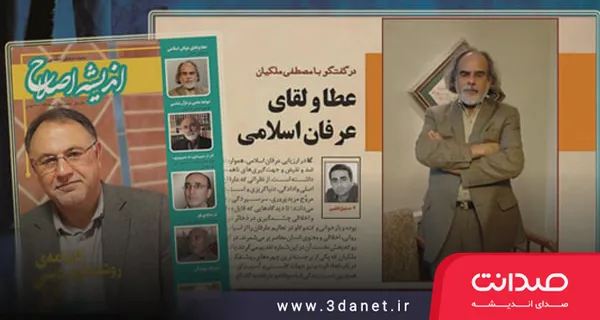
Seddiq Qotbi: In assessing Islamic mysticism, there have always been contradictory opinions and divergent orientations. From views that hold mystics primarily responsible for passivity, world-avoidance, and susceptibility to despotism, and as promoters of disciple-worship, subservience, and anti-rationalism; to perspectives that recognize significant spiritual and ethical dimensions in the treasures of Islamic mysticism and consider the re-reading and exploration of the mystics' teachings as a means of improving the psychological, moral, and spiritual condition of contemporary humanity. In the following conversation with Professor Mostafa Malekian, one of the most prominent figures of Iranian intellectualism, we discussed the strengths as well as the shortcomings and harmful aspects of Islamic mysticism, and also the relationship between the philosophical and the mystical life.
+ I would like to know your opinion on Islamic mysticism, and overall, where you see the positive dimensions and strengths of our mysticism, and on the other hand, what concerns and dangers you see in turning to the works of mystics and becoming attached to their path and method. What gifts do you think Muslim mystics can bring to modern life and the people of our time, in the more or less modernized condition we inhabit, and what fruits will the re-reading of their legacies and surviving works bear?
- In the realm of Islamic mysticism, the first thing I must say is that, on the whole, I feel no closeness or sympathy with the mysticism of Ibn Arabi. Especially when we move from the texts of Ibn Arabi himself toward the texts of his commentators and interpreters; that is, when we go to Jundi, Sadr al-Din Qunawi, Qaysari, Kashani, Ibn Hamza Fanari, Ibn Turka, and the commentators who have been numerous from the seventh century AH until now, over these eight centuries, my sympathy truly diminishes. In the works that Ibn Arabi personally wrote, I see sparks of thought that are agreeable from a rational and intellectual standpoint; but the reason for my lack of sympathy is that the system he sought to construct, by force and effort, is a highly contrived and artificial system, and the reason for this is that he wanted to reconcile three things that are incompatible with one another. He wanted to reconcile reason, transmitted tradition, and mystical unveilings. Contrary to what Mr. Hassanzadeh Amoli published a few years ago—which is, of course, the view of all of Ibn Arabi's commentators and interpreters—stating that the Quran, mysticism, and demonstration are inseparable, I am strongly and one hundred percent opposed to this claim. I believe the story of 'religion, creed, and revelation' is one matter, the story of 'demonstration, reason, and philosophy' is another matter, and 'mystical unveilings and experiences' is yet a third matter, and these cannot be reconciled except through the contrived and artificial work that figures like Ibn Arabi have done, in which, in my opinion, they have never succeeded. And because Ibn Arabi tried to create this reconciliation, his work fell into contrivance and artificiality. He was neither faithful to the sacred religious and creedal texts so as to satisfy at least the believers, nor faithful to demonstration so as to satisfy the philosophers and those of a philosophical disposition, nor faithful to mystical unveilings and experiences so as to satisfy the mystics.
In the mysticism of Ibn Arabi, I see interesting intellectual sparks that, for me, are both worthy of reflection and some of which I accept. But I do not approve of this seemingly very magnificent, very grand, and perhaps beautiful system. In the mysticism of the Islamic world, I approve of the mysticism of figures like Abu Sa'id Abu'l-Khayr, Bayazid Bastami, Abu'l-Hasan Kharaqani, Ayn al-Qudat Hamadani, Shams al-Din Tabrizi, and Mawlana Jalal al-Din Balkhi, though I have criticisms as well; but I see strengths in this type of mysticism, and I believe the words of these mystics can be made both comprehensible and acceptable to humanity today.
Therefore, my remarks will naturally pertain to this type of mysticism, which is sometimes referred to as the mysticism of Greater Khorasan. In any case, I have mentioned some of its exemplars, and anyone who recognizes these exemplars can roughly sense which other unmentioned exemplars I also have in mind. In our culture, the mysticism of Ibn Arabi is usually called theoretical mysticism, and the mysticism of the Khorasanians is called practical mysticism, although these terms are not precise.
This type of mysticism, in my view, has strengths, none of which can be overlooked by anyone who wishes to live a pleasant, good, and valuable life.
The first strength of this mysticism, which unfortunately many wish to strip from it, is that there is no authority in this system. That is, you must not have dogmatic submission toward any person or persons. For instance, in Rumi we see that despite his infatuation with Shams Tabrizi, Rumi constantly speaks well of Bayazid Bastami, while Shams reproaches Bayazid Bastami. That is, despite his infatuation with Shams, he disagrees with him on an important point of view.
This is a very important point. It means our scale is within ourselves, and our scale is not in others. That we should come and present our beliefs to others and say, wherever you do not approve of our beliefs, do not accept them. This is a very important point, and I believe that until we free ourselves from imitation, dogmatic submission, susceptibility to indoctrination, and suggestibility, we will not reach maturity. Neither will our individual reach individual maturity, nor will our society reach collective and social maturity.
The second point is that in mysticism, the verification of claims, in addition to being left to you (the same first point), is a this-worldly verification. They do not say that you should perform these deeds, carry out these rituals and rites, and you will see the results and fruits when you have drawn your last breath and entered the realm of the intermediate world and the world of the hereafter. Then you will see in what blessings, joy, and delight those who performed these deeds abide, and those who did not will dwell in ashes and what terrors they will encounter.
Of course, in religious and scriptural texts, this-worldly testability sometimes exists, but it has been taken from us. For example, in the Quran it is stated: "أَلَا إِنَّ أَوْلِيَاءَ اللَّـهِ لَا خَوْفٌ عَلَيْهِمْ وَلَا هُمْ يَحْزَنُونَ" (Yunus:62), meaning if you have any fear or grief here, it is a sign that you are not among the friends of God, or: "وَمَن كَانَ فِي هَـذِهِ أَعْمَى فَهُوَ فِي الْآخِرَةِ أَعْمَى وَأَضَلُّ سَبِيلًا" (Al-Isra:72). Or that: "أَلَا بِذِكْرِ اللَّـهِ تَطْمَئِنُّ الْقُلُوبُ" (Ar-Ra'd:28). This is a this-worldly testability that the remembrance of God should bring tranquility to the heart, and its meaning is that if it does not bring tranquility, I will not wait for you to give me eschatological and otherworldly promises. If it is said that the remembrance you performed was not truly the remembrance of God, I will ask you to state the characteristics of the true remembrance of God so that I may realize them within myself.
Of course, sometimes even the followers of these mystics, contrary to the explicit texts and declarations of the mystics themselves, give eschatological promises and say that the truth of our claims is only determined after death; and I do not know how, with this methodology, one can distinguish between a charlatan and a non-charlatan.
Of course, it should not be concluded from my words that anyone who makes an eschatological claim is necessarily a charlatan; not at all. But with this method, we lose the ability to distinguish a prophet from a false prophet and a charlatan from a non-charlatan. It is rationally possible that someone makes an eschatological claim and is truthful. My point is about the method.
In this respect, mystics have a secular viewpoint. They say, test it right here, and if it does not work, go your own way.
اما نقطهی قوت سوم این نوع عرفان تأکید هر چه بلیغترش بر این است که تو فردی و نه عضو. تو اندیویدوآلیته individuality داری نه مِمبرشیپ membership. تو ممبر member نیستی بلکه یک اندیویدوآل individual ای. معنیاش این است که اگر بنا باشد جامعه اصلاح شود یکان یکان افرادش باید اصلاح شود. دل نبندید به تغییراتی که امروزه از آن تعبیر میکنند به تغییرات نهادینه و فکر میکنند اگر یک سلسله احکام و قواعد و مقررات و تأسیسات و تنظیمات بیرونی را عوض کنند جامعه روی صلاح خواهد دید. نه، همهی فسادها از درون فرد انسانی بر میخیزد و طبعاً همهی صلاحها هم از درون فرد انسانی بر میخیزد. این دیدگاه شواهد قرآنی هم دارد: « ظَهَرَ الْفَسَادُ فِي الْبَرِّ وَالْبَحْرِ بِمَا كَسَبَتْ أَيْدِي النَّاسِ»(روم:۴۱)، « إِنَّ اللَّـهَ لَا يُغَيِّرُ مَا بِقَوْمٍ حَتَّى يُغَيِّرُوا مَا بِأَنفُسِهِمْ»(رعد:۱۱). ما باید در درون عوض شویم و عرفان میگوید تا ما در درون عوض نشویم، هیچ امیدی به عیچ عوضشدنی در بیرون نیست. اگر میخواهید در بیرون یک دگرگونی مثبت آبجکتیو و آفاقی داشته باشید، باید ابتدا در درون یک تغییر سابجکتیو و انفسی داشته باشید. و این نکته خیلی در نظر من حیاتبخش است و گمان میکنم هر راهی برای صلاح یک تشکل، یک گروه نیست، خواه یک گروه خانوادگی یا کل جامعهی جهانی، اگر معطوف به درون نباشد، راه درستی نیست.
این به این معنا نیست که نباید پی تغییر بیرونی باشیم، بلکه به این معناست که باید باور کنیم دگرگونی اساسی دگرگونیای است که نخست در درون رخ میدهد و بعد متناسب با آن دگرگونیهایی هم در بیرون رخ میدهد. همهی رژیمهای سفاک و خونخوار و آدمیخواری که دیدهایم به دست شکنجهشدگانشان سرنگون شدهاند ولی بعد شکنجهشدگان همین نظامها خودشان شکنجهگران نظام بعدی شدهاند. با اینکه به خیال خودشان همهی نهادهای نظام قبلی را عوض کردهاند. سراغ نهاد اقتصادی، سیاسی، حقوقی و قانونگزاری، تعلیم و تربیت، خانواده رفتند، اما سراغ چیزی که باید میكفتند نرفتند و خودشان از آنها که جانشینشان شدند بدتر کردند. ببینید که در مصر و لیبی چه کردند.
این پیام خیلی مهمی است که در عرفان هست. ما باید در درون عوض شویم.
نکتهی چهارمی که بسیار اهمیت دارد این است که بر علت مشکل درونی ما هم انگشت درست گذاشتند و آن أنانیت است. یا به تعبیر روانشناختیاش: ایگو. ایگو(Ego)ی فرویدی مرادم نیست که در برابر اید(Id) و سوپر ایگو(Superego) طرح میشود. ایگوی به معنای غیرروانکاوانهاش را مرُاد میکنم، ایگویی که روانشناسها میگویند، یعنی خود تجربی.
عارفان فهمیدهاند که دشمن اصلی همین ایگوی ماست، این أنانیت و نفسانیت ماست. حالا میتوان با تعابیر اندکی متفاوت گفت: خودشیفتگی، خودپسندی یا خودگزینی...؛ اینکه تو خودت را اولاً متمایز از سایر موجودات بدانی و ثانیاً ممتاز از سایر موجودات بدانی.
+ خودگزینی به نظرتان تعبیر مناسبی است؟
- خودگزینی ترجمهی بهتری است برای اگوئیزم و اگوئیزم لزوماً چیز منفیای نیست. من به این حالت بیشتر میگویم: خودشیفتگی، نارسیسیزم(Narcissism). اینکه آدم نرگسوار عاشق خودش باشد.
اینکه من معتقد باشم که متمایزم از شما و بعد اینکه ممتازم نسبت به شما. تمایز فقط نشان میدهد که ما با هم فرق میکنیم اما امتیاز به این معناست که من برترم از تو.
به زبان ساده، أمالمشاکل و أمالفساد را عرفان این میداند و به باور من هم تشخیص درستی است. همان که مولانا میگفت: »مادر بتها بُت نفس شماست» و حافظ میگفت: «خود را مبین که رستی!»
و این همان بود که شمس را وا میداشت که بگوید حتی اگر معشوقی نیافتید چوبی بتراشید و آن را معشوق خود کنید، یا عارف دیگری میگفت اگر عاشق گربهای باشی بهتر از آن است که عاشق خود باشی.
+ نظامی در خسرو و شیرین گفته است:
«مشو چون خر به خورد و خواب خرسند
اگر خود گربه باشد دل در او بند
به عشق گربه گر خود چیر باشی
It is better to be a lion with yourself"
What is wrong with considering myself distinct, without considering myself superior?
- Because if I consider myself distinct, I will still, in a situation of conflict, deem attracting benefit to myself as preferable to attracting benefit to you. Because I have thought that there is a benefit that is a benefit for me and a harm for you. Whereas whatever is a benefit is a benefit for all, and whatever is a harm is a harm for all. That is, if I steal something from you, I should not suppose that the harm was for you and the benefit for me. It is not the case that we are riding in a single boat and if something strikes this boat, it has struck everyone; the pantheistic view that mystics hold is that we are all fundamentally one tree, where the benefit of one tree is the benefit of all parts of that tree, and the harm to the tree is harm to all parts of this tree.
It is very important that while we accept multiplicities, we know that these multiplicities are in our possessions, and in our being, we are only one existent. This is why I do not accept distinction either. Because we identify with our bodies, we come to believe in distinction. All distinctions are in possessions; otherwise, at root and foundation, we are one existent. And this means that truth, goodness, and beauty are beneficial for all, and any kind of untruth, any avoidance of goodness, and any hostility to beauty is to the detriment of all of us. We are not riding in one boat; we are one existent.
+ Where does respect and acceptance of cultural diversities find its place?
- If you do not recognize cultural diversity, diversity of customs and traditions, diversity of religions and denominations, diversity of conventions and habits, diversity of legal systems, diversity of ethical systems, it is an instance of egotism. Because you are saying, let my culture remain and the rest go.
If you do not have narcissism and egotism, you allow every lifestyle and every style of thought to have its own life.
We must allow everyone to have their own lifestyle, but we have the right to benevolently say that the lifestyle you have chosen has these merits and also these drawbacks and costs. I share my experiences with you, but I do not enjoin good and forbid evil. I can only say that this lifestyle you have, considering the totality of experiences I have—that is, considering my knowledge, power of thought, depth of understanding, subjective experiences, and external objective experiences—this lifestyle of yours has these benefits and imposes these costs on you. Now, the calculation is up to you. My benevolence towards you is to make you pursue your life with open eyes.
The fifth strength of mysticism is that they have said the most important way to eliminate this egotism is love.
Become a lover, or else one day the world's work will come to an end
Unread, the design of purpose in the workshop of existence
If you want egotism to disappear, hurl the axis of the universe from yourself onto another. If you fall in love with a cat, to that same extent, you have eliminated your narcissism and self-centeredness.
The sixth strength is indifference to the value judgments of others and individuation in its existentialist sense. That I am, in the precise Kierkegaardian sense he articulated in the book "Purity of Heart," an individual, and I must not abandon what has been placed upon my shoulders in the jigsaw puzzle of existence because you do not praise me or another blames me. In the tree of existence, my role is a leaf, and if the blossoms smile at me or the fruits dislike me, I must not cease being a leaf.
And at the same time, I also minimize value judgments regarding others within myself to the lowest possible level. If I can, I reduce it to zero. In the sense that, since I am unaware of two things, I never say that what this person did necessarily ends to their benefit or necessarily to their detriment.
One is that I am simply not privy to your inner state; there may be worlds within you such that, although I do not see their outward manifestation, I misinterpret your gaze. For my interpretation to be correct, I would have to be aware of the inner state of you, the observer. For this reason, I must not permit myself to judge. Unawareness of another's inner depths prevents me from judging.
Another is that I am not aware of endings. In and of itself, I may be superior to you, but the ups and downs of my life and the ups and downs of your life ebb and flow in such a way that when I am drawing my last breath, I might be in the lowest possible state, and you in the highest possible state. We are always subject to rises and falls.
Therefore, for two reasons, we do not make value judgments about anyone. We can say that the lie this person told is not morally right; but this same lie may ultimately turn out to be to this person's benefit. Let me give an example: there are people who have committed a murder, and then this murder affected them so profoundly that in the subsequent years of their lives, not only did they not harm even an ant, but they benefited humanity a thousand times more than those who never committed any murder. The murder they committed was not the right thing to do, but as the mystics say, and it has also been attributed to the Prophet: God loves a sin that makes you ashamed more than an act of worship that fills you with self-conceit.
So, since I am unaware of two things about you—one, your inner state, and the other, the conclusion of your affair—I have no right to judge. Jacob does not tell his sons to be Muslims; rather, he says, "فَلَا تَمُوتُنَّ إِلَّا وَأَنتُم مُّسْلِمُونَ" (Al-Baqarah: 132); do not die except in a state of submission to the Truth. Because what matters is the end of the affair, and it is for this reason, and not for other reasons, that I oppose the death penalty. When I do not execute a criminal, I give them the possibility of a reconsideration, whereby I might well transform this murderer into a saint. But if I execute them, I have taken away this possibility of transformation.
And the seventh and final strength of mysticism is that it bestows a kind of optimism and hope upon the human being, such that even if we do not accept the metaphysical foundations of mysticism, we will live a much better life with this optimism and hope. Let us suppose that this claim of the mystics—that all of existence is filled with the Truth or Spirit—is a false claim, but in order to bring you to the truth of this claim, it destroys egotism within you, and it destroys this egotism through love. Even if you do not believe in the existence of a spirit, these practices themselves fill your life with joy and hope, and an optimistic and hopeful life is always preferable to a pessimistic and despairing one. I have said many times that it is not the case that every optimism and hope is realized, but pessimists and the despairing have always lost out, even if the optimistic and hopeful have not always profited.
+ And optimism and hope are two different things in your view?!
- Yes; optimism concerns the workings of the entire universe, while hope concerns the capacity for self-correction and improvement within myself and my own life. One has a predominantly metaphysical aspect, and the other a psychological one. That is, we are optimistic about the other and hopeful about ourselves. One is objective (āfāqi) and the other is subjective (anfusi).
+ If possible, could you also point to the harmful dimensions of Islamic mysticism and the dangers and afflictions that threaten those enamored with and drawn to the mysticism in question?
- Yes; there is no doubt that there are weaknesses within us human beings, and these weaknesses truly cause us to be deprived of the strengths of that mysticism.
Firstly, among the proponents of practical mysticism—for instance, the followers of Rumi, Attar, and others—a kind of sectarianism unfortunately sometimes emerges, and these individuals take on the characteristics of sects. Sects have three distinctive features. One is that they show devotion to a person or persons over time, and this devotion entails the suspension of reason and the faculties of argumentation, questioning, criticism, and the like. The second feature of sectarianism is a kind of seeing the truth as exclusive to one's own sect. It is as if whatever my sect, its members, and its leaders say on any matter is the pure, unadulterated truth and a clear, manifest reality. There is also a third feature, which is that they develop a disdainful view toward others; I do not necessarily say enmity or hostility toward others, but at least a disdainful gaze, a look of the wise upon the foolish, is observable in these individuals toward others. This view that the poor wretches are wallowing in their animalistic and lustful lives, are immersed in material things, do not inquire about their own destiny, and lead hollow and meaningless lives... That is, they at least harbor a certain arrogance toward those who are not in their sect. The threefold afflictions of sectarianism can also befall the proponents of Islamic mysticism.
The second point, which I believe is no small matter, is that they sometimes distort the message of the religion and creed under which they define themselves. For example, when someone considers themselves a follower of Attar, they are in fact defining themselves under Islam and believe they are committed to Islam, the Quran, and the prophetic traditions. They may interpret the Quran and prophetic traditions in such a way as to conform to the beliefs of Attar of Nishapur, and this act means they trample upon the principles of interpretation from a scholarly standpoint and betray the Quran and prophetic traditions from an ethical standpoint. Many times we say we are Muslims, but we offer an interpretation of the Quran and prophetic traditions that is "not pleasing to its author." I am not saying that only the teachings of the Prophet should not be distorted; no human being's message should be distorted. These individuals sometimes see opinions and beliefs in their intended figure—here, for instance, Attar—and then say that these words of Attar are perfectly, to the letter, compatible with the Quran and prophetic traditions, and this leads them to produce an unhealthy interpretation of the Quran and prophetic traditions. An interpretation that lacks scholarly soundness because it violates hermeneutic rules, and lacks ethical soundness because it distorts the words of the founder of the religion and creed.
The third point that exists is that a person may become indifferent to the pain and suffering of human beings. Here I must make two points. First: contrary to what some writers sometimes say, I never believe that a mere mystical inclination makes a person indifferent to the pain and suffering of human beings. This indifference to the pain and suffering of human beings does not at all arise from the essence of mysticism. The second point is that the pain and suffering of human beings is not limited to the pains and sufferings imposed upon them in terms of economic or political rights. A large part of the pain and suffering that human beings endure and bear is not the product of the violation of their economic or political rights, for which we would hold only power relations or political regimes responsible. In fact, I believe that a large part of our pain and suffering as human beings arises from within ourselves, and therefore it is pain and suffering that has afflicted us from the direction of culture. Therefore, I am not saying that someone who is a mystic is necessarily indifferent to the nature and destiny of people, nor am I saying that concern for the nature and destiny of people necessarily entails addressing power relations and wealth relations; but this affliction exists that you become solely preoccupied with yourself and think that you have so many faults and deficiencies within yourself that it is better not to stick your head out of your shell. This potential exists among these individuals, and sometimes it takes on a very justifiable and legally defensible appearance. For instance: "Ṭūbā li-man shaghalahu ʿaybu nafsihi ʿan ʿuyūbi ghayrihi" [Blessed is he whose own faults distract him from the faults of others], and the idea that we have so much darkness, corruption, and faults within our own souls that we must first struggle against them and should not concern ourselves with the state of other people. This potential has existed among the proponents of mysticism.
In my opinion, these three afflictions have always existed and are quite evident in the history of our culture, and we must be careful that when we turn to Islamic mysticism, we do not fall prey to these three afflictions.
+ The devotion that the seeker must have toward their spiritual guide and master has also been emphasized in the works of the mystics themselves, and this spirit of submission and devotion may have undesirable consequences in the social and political sphere. What is your view on this type of educational attitude among mystics? And furthermore, it seems you do not hold the mystics themselves responsible or at fault for the emergence of the three afflictions you enumerated, and you consider these three afflictions to be the concern of the followers of mysticism; have not the prominent figures of Islamic mysticism themselves sometimes paved the way for these three afflictions, and for instance, did they not interpret Quranic verses and prophetic traditions in an unregulated manner and encourage a kind of devotion? Do you exonerate the mystics?
- Not necessarily, but rather the opposite. I think in the vast majority of cases, the pretexts and grounds for such deviations are also present in the sayings and writings of the mystics themselves. A significant portion of the responsibility and even the fault lies with the great figures of mysticism themselves.
But it is not the case that if someone did not call for these three things, we would not consider them a mystic simply because they do not call for these three components; that is, these are not part of the essence of mysticism; although most of us, due to human weaknesses and sometimes due to errors in our educational theory, tend toward these three. Sometimes it is due to our human weaknesses and our desire to be the sheikh, the leader, and the center of attention, and sometimes it is because our educational theory is mistaken and not driven by carnal desires. For example, a person might believe that education is impossible without the submission of the learner and trainee to the teacher and educator. Well, this is a theory in education, although this theory is unacceptable to me. That is, we must distinguish the theories that existed in mystical and Sufi education from the human weaknesses of the mystics.
For instance, when Shams Tabrizi, as a form of self-praise and with an approving tone, refers to the violence he inflicted on children in the traditional school, in my opinion, this is Shams's educational theory, meaning that what was taken as the basis in Education might be wrong, and not that Shams Tabrizi possessed a kind of hard-heartedness and cruelty and took pride in this state.
+ Meaning you interpret it in the best possible light.
- Yes, I cannot say that all of these are merely carnal desires.
+ Can it be said that mystics often tend toward this type of educational theory? And fundamentally, is having such an educational theory not itself a flaw and a harm?
- Yes, in my opinion, they mostly tend toward this theory, and this is indeed a flaw and a defect; but sometimes a flaw is an intellectual defect, and sometimes it is a psychological defect.
+ In any case, the possibility that this miscalculation or psychological error has had undesirable consequences in the public sphere exists, does it not?
- Yes, it is very high. Because if you grant your learner and trainee a license for blind obedience, a license for imitation, suggestibility, susceptibility to indoctrination, and conformity to collective thought, you can no longer stop them in other situations. You cannot guarantee that they will not use this license in another situation. We must ensure that blind obedience and imitation in their reprehensible sense do not arise in the spirit of the learner and trainee, and this requires that our theory of education be based on the freedom and rationality of the learner and trainee. We must not sacrifice the learner and trainee's freedom in practice or their rationality in thought, or both, for the sake of education. We need a theory of education that states practical freedom and theoretical rationality are not only not obstacles to learning and training but are aids and requirements for learning and training.
Yes, this mystical educational theory exists, and one cannot deny the use that is made of it in the world of politics and in the world of law; and who does not know what abuses have been and are being made of this educational theory in the world of politics and law!
+ If the theory of mystical education predominantly entails a kind of imitation, devotional submission, and discipleship, how is it that, in your view, the first component of the strength of Islamic mysticism is its aversion to imitation and negation of devotional submission?
- The fact that mystics free us from the bondage of devotional submission to others serves us greatly, but the fact that they sometimes, and in many cases, invite us to themselves and free us from submission to someone only to hold us in the bondage of submission to themselves is unacceptable. But note, when someone says, 'How long will you say: ḥaddathanī fulān ʿan fulān ʿan fulān...'; meaning so-and-so narrated from so-and-so from so-and-so; I say 'ḥaddathanī qalbī ʿan rabbī' (My heart narrates directly from God), this kind of outlook is liberating from devotional submission and imitation.[Tadhkirat al-Awliya: It is related that: One day, a luminous elder, having cast aside his cloak with dignity, entered through the Gate of Bani Shaybah and approached Kattani – who had his head bowed – and said, after greeting him: 'O Shaykh! Why do you not go to the Station of Abraham, for a great elder has come, narrating from lofty reports, so that you may hear!' Kattani raised his head and said: 'O Shaykh! From whom does he narrate?' He said: 'From Abdullah ibn Mu'ammar from Zuhri, from Abu Hurayrah, from the Prophet.' He said: 'O Shaykh! You have brought a long chain of transmission. Whatever they relate there with a chain of transmission, we hear here without a chain of transmission.' The elder said: 'From whom do you hear?' He said: 'Ḥaddathanī qalbī ʿan rabbī,' my heart hears from God.]
A doctrine that says the ultimate end is experience should, as a rule, free us from all devotional submission. Because it says truth means becoming realized in truth, and that you yourself must attain mystical experience and reach the certitude of truth. This attitude, in its very nature, entails an aversion to devotional submission, but unfortunately, in many cases, this is not so. If we consider the true exigency of mysticism, we must regard Nietzsche's motto as the motto of mysticism, who said: 'The best followers of mine are those who go their own way.' Religious experience seeks to convey this. When Shams said: 'The epistle of Muhammad, the Messenger of God, is of no use to me; I need my own epistle,' it means the essence of mysticism is incompatible with devotional submission and imitation, because it is based on experience.
+ In your lecture series on 'The Philosophical Life,' you distinguished and differentiated between three lifestyles: the philosophical, the mystical, and the devotional, and you stated that, on the whole, you consider the philosophical life nobler and prefer it. Given that you consider aversion to devotional submission to be the nature and essence of mysticism, do you think the mystical and philosophical lifestyles cannot be reconciled?
- No; I think, again, when considered on the whole, I prefer the philosophical life. Because although the merits of the philosophical life are not as great as those of the mystical life, its flaws are a hundred times fewer than those of the mystical life. Everything in the philosophical life is lukewarm. In the mystical life, we have things that are hot, but in return, we have things that are very, very cold.
Someone was asked about the condition of a certain person. He said it is good; his average body temperature is 37 degrees Celsius, which is the best temperature one can have. Of course, he then explained that his head had been put in an oven at 200 degrees and his foot had been placed in a freezer at minus 80 degrees, and the average comes out to, say, 37 degrees Celsius. This is why some say not to pay so much attention to averages in statistics.
The philosophical life is a lukewarm life. It is not a life with one end in the freezer and the other in the oven. You might sometimes suffer from this lukewarmness if you are a fan of heat; but on the whole, a person's well-being in a lukewarm life is greater than that of a person whose average is this same lukewarm life, but with the difference that one end is minus 80 degrees Celsius and the other is 200 degrees Celsius.
I do not approve of a person being like a twin flask, with one side at minus 8 degrees ice and the other side at 95 degrees Celsius water. I consider this a kind of cultural schizophrenia, although it is not a psychological schizophrenia requiring hospitalization. The philosophical life, which I prefer over the devotional life and the mystical life, is a lukewarm life. People who favor excessive heat or excessive cold suffer from this lukewarmness, but on the whole it is closer to health. Those raptures, excitements, and those feelings and emotions may be absent—and indeed they are—but on the other hand, there is also none of the perilousness and hazardousness that exist in those kinds of lives. You will never see a philosopher in the ranks of the Taliban, Al-Qaeda, ISIS, and Boko Haram. But among the Sufis, one might find someone with the idea that we have mystical guardianship over the people in such ranks.
+ What about in the ranks of the Nazis?
- You probably mean Heidegger. By philosopher, I do not mean someone who studies philosophy or is a commentator on philosophy; otherwise, in our own country, we have philosophers who practice takfir. A philosopher who practices takfir is paradoxical in itself. I do not mean teachers of philosophy or even philosophers, many of whom do not live a philosophical life at all. I mean those who live philosophically. People like Epictetus, Marcus Aurelius, Seneca, Cicero, Epicurus, Kant, Schopenhauer, and Spinoza. I mean these individuals, not those who are philosophers or commentators and teachers of philosophy but do not lead a philosophical life. Otherwise, there is now among philosophers someone who is a philosopher and also practices takfir, even though the essence of the philosophical life is free-thinking. How can a person who engages in philosophy practice takfir? That is, how can they set red lines? This contradicts the very essence of engaging in philosophy. The essence of engaging in philosophy is that I—no matter what the cost—remain a seeker, a critic, and a questioner.
It is for this reason that, on the whole, I prefer the philosophical life and believe that although its merits may be fewer, its detriments and harms are also far less than those of other styles of living.
+ What exigencies and requirements does the philosophical life have that are incompatible with the mystical life? Can one not live philosophically and also pay attention to other sources of knowledge, and at the same time have a mysticism combined with philosophy? That is, can someone both undertake a mystical wayfaring and maintain that constant questioning? Is it not possible to combine the advantages of the mystical life and the philosophical life?
- Perhaps not one hundred percent. William B. Irvine, the author of the book A Guide to the Good Life [This book has recently been published in translation by Mahmoud Moghaddasi, by Nashr-e Goman.], who is a university professor, said in the introduction to this same book that when I reached my fifties, I realized that although I am a professor of philosophy, I did not have a philosophy for living; I saw that among all the outlooks I know, only two outlooks are of much use to the modern person and the modern person has no obstacle in accepting them: one is Zen Buddhism and the other is the Stoic school. He says I became a Zen Buddhist for a while, but then I saw that although it is a very profound school, some of these teachings are not digestible or acceptable to my analytical mind. So I turned away from Zen Buddhism and turned to the Stoic school, and I saw that in the Stoic school there is nothing incompatible with my philosophical mind.
If philosophy truly wants to carry questioning to its ultimate end and nowhere accept a statement based on authority, then this lifestyle becomes incompatible with the mystical life in some instances. You will not find a Buddhist mystic who has not accepted any teaching based on the authority of the Buddha. It is possible that after accepting it and conducting their life based on it for a long time, they themselves also realize the truth of that teaching, but in any case, on the first day, they proceeded based on accepting the authority of the Buddha.
+ But this objection apparently applies to the devotional life; according to your definition, the mystical life is based on experience, not devotion.
- Yes; but when did the mystics attain that experience? When, as a necessary though not sufficient condition, they had for a long time unquestioningly accepted certain teachings in order to reach those experiences. One might say that in education, an initial unquestioning acceptance is unavoidable, and one must always accept a few propositions or teachings. But in my view, it is possible to live a life in which you accept even those few initial teachings and propositions based on your own intuitions. Here, of course, I mean mental intuitions, which are one of the sources of knowledge, not mystical unveilings. That is one point.
The second point that makes a one-hundred-percent combination of the mystical life and the philosophical life impossible is that, in my opinion, someone who lives philosophically, when they reach matters beyond the realm of reason, acts upon Wittgenstein's advice: "Whereof one cannot speak, thereof one must be silent." But our mystics do not act this way. Mystics constantly speak, and after speaking at great length, they lament the straitness of language. How can a person believe in the straitness of language and yet continue to speak on these matters? If you, as a mystic, believe that this language constantly distances your audience from your intent and purpose, you must remain silent, you must be a mystic. Mysticism and mystic originally come from a Greek word meaning to have flour in one's mouth. When you have flour in your mouth, you cannot utter a single word because all the flour will spill out. Mysticism means truly believing that there is something that will be lost if I open my mouth. Why did the mystics speak so much, yet then lament the straitness of language and say that these words distance you from the purpose? Because they were in a state of rapture, and in my view, being in a state of rapture is incompatible with the philosophical life. That is, a typical philosopher, a Spinoza for instance, possesses complete composure. I can never imagine a Kant, an Epicurus, or a Spinoza who, from the intensity of emotion, has broken into dance in the middle of a crowd. Therefore, when a mystic, besides having composed the Divan-e Shams, laments the straitness of language, they will certainly answer your objection by saying: It is beyond my control, I am seized by raptures. In my opinion, this is incompatible with the philosophical life. The philosophical life is commitment to all the implications of the words we speak and believe in. If I believe that by speaking I distance my audience from the purpose, I must remain silent.
+ Is the fact that the verbal expression of mystical raptures and ecstasies can create warmth and yearning in the audience not a justification for the mystics' speaking? That although mystical findings and experiences cannot be transmitted through the medium of words, one can use the capacity of language to convey some of that fervor and warmth to the audience and warm them up to step onto the path. Rumi said that mystics are a resurrection and become a source of rising and yearning for warmth: "Within them are a hundred resurrections ready cash / the least of which is that the neighbor becomes drunk." Can the mystics' speaking not be seen and justified in this light? Is it not true that we need light and warmth for life, and mystics, by expressing their mystical ecstasies, provide some of this warmth: "The work of men is illumination and warmth," and they kindle the fire of yearning in a person, and as Rumi says: "This blessed seeking is a movement."
- I believe a human being is like an automobile, which needs both headlights to illuminate the road and fuel for the engine and movement. It needs both the illumination of the headlights and the energy generation and heat production of the engine. In the realm of theory, we need light, and in the realm of practice, we need warmth. I fully accept this. Someone who has light but lacks warmth is a comfort-seeker and an ivory-tower dweller, and someone who lacks warmth but is deprived of light is a very fanatical person, prone to dogmatism, rigidity, and prejudice. Like the terrorists we see. They have warmth but lack light.
We need both, but I believe that if we want to combine these two, we inevitably have to subtract a little from one of them. In my view, one-hundred-percent light damages one-hundred-percent warmth.
+ Is this not the same theory of heedlessness that Rumi and Ghazali point to?
- If they say so, then there is a contradiction in their teachings.
It is as if we gain warmth at the price of losing a fraction of light. It is good for a person to have both warmth and light, but the warmth that mystics want to give us often comes at the cost of turning down the wick of our lamp's brightness a little.
What, after all, is the difference between demonstration and rhetoric? In rhetoric, you appeal to the feelings, emotions, and passions of your interlocutor, but in demonstration, you attend only to their reason and their power of argumentation. Can a person be a rhetorical demonstrator? Or a demonstrative rhetorician? When they play with your feelings and emotions, they turn down the wick of your demonstrative faculty a little, and vice versa. I do not believe that a human being can be led forward with one hundred percent light and one hundred percent warmth at the same time. These are somewhat mutually exclusive. Therefore, a philosopher who values light has no choice but to diminish those ecstasies, the fire of longing, the burning pain of separation, and the excitements.
+ In your lecture "The Violence of Love, the Violence of Hatred," you pointed out that ethically we can make someone believe something in two ways: one is to provide them with arguments, and the other is to raise the individual's existential threshold so that they accept it themselves. You cited a poem by Rumi: "One asked, 'What is love?' / I said, 'You will know when you become like us.'" What is wrong with a mystic engaging people's feelings, emotions, and passions in order to raise the existential threshold of their audience?
- I accept the first part of your statement, that if we cannot convince someone with the aid of reasoning, we must change their existential threshold, but I do not accept the second part of your statement, that changing the existential threshold is achieved through arousing feelings, emotions, and passions. That is to say, whether arousing emotions, feelings, and passions is an instance of changing the existential threshold is a matter of doubt and reflection for me.
+ Meaning that we should consider the speech of mystics and the expression of their pleasant states as a kind of showing a green garden, presenting a pleasing landscape before our eyes and encouraging us to seek it. They say, look at what agreeable states we have; you too should strive and set foot on this path.
- In this showing of a green garden, have they acted philosophically?
+ But they have acted reasonably. That is, it does not seem irrational if, having failed to convince the audience with reasoning, we help them change their existential threshold. These two do not seem to conflict.
- Yes. It is not incompatible with practical rationality. When I use motivating forces to compel someone to do something, for example, saying I will increase your benefits at the office by thirty percent, this use of motivating forces is not incompatible with practical rationality, but it is incompatible with living philosophically.
+ But according to your own belief, where theoretical rationality is silent, that is, in cases of equally reason-transcending propositions, one can make someone believe a proposition by showing the positive effects of that belief.
- Yes, but there I said by showing the positive effects of a belief, not by arousing the individual's feelings and emotions. Showing is an entirely argumentative act. Practical rationality is not equivalent to or synonymous with playing on emotions. I have said that if a proposition is equally reason-transcending and accepting either side is not contrary to theoretical rationality, I look to see belief in which side brings me more peace, joy, hopefulness, and inner satisfaction in life. But these things cannot be understood through clamor, feelings, and emotions. In other words, there is reasoning for the psychological effects and consequences entailed by accepting a proposition. Although there is a difference between arguing that A is B and arguing that if you act as if A is B, you will gain such-and-such a benefit.
+ Meaning that if we change someone's existential threshold without regard for their argumentative faculty, it is incompatible with rationality?
- No; if we change the existential threshold, it does not conflict with rationality. But we must not equate changing the existential threshold with arousing feelings and emotions.
+ So what does change the existential threshold?
- Many things, for instance the passage of time. If an 8-year-old child asks me what love is, I say wait seven years. We should not consider the change of the existential threshold to be limited to the arousal of feelings and emotions. Someone says there is no altruism in me; I show them a film so that altruism is aroused in their being, but this does not mean I have merely agitated them. If I had merely agitated them, when they came out of the cinema and those feelings and emotions subsided, they would return to their previous state.
So firstly, the passage of time; secondly, that we enable them to have new experiences. For example, we show them an upright Buddhist and say, look, this person is a Buddhist but is upright, whereas you previously thought anyone who is upright must be a Muslim. Another is that the person becomes acquainted with new boundary situations and issues. Of course, we should not think a boundary situation means, for instance, a person being frightened once in the dark. Momentary terrors are not boundary situations. That is, if the earth shakes now, our existential threshold has not changed. But confronting death can change a person's existential threshold. The existential threshold has a complex mechanism. Of course, we can have an influence on changing someone's existential threshold. But we must not consider its creation to be the arousal of a series of feelings and emotions. Fleetingness is inherent in feelings and emotions, and they cannot change someone's existential threshold.
So changing the existential threshold is not about arousing feelings and emotions. If it were, when you sat listening to a very passionate orator, your life would have to change entirely. But we see you have a good aesthetic experience but not a good spiritual experience. If they came and excited you with a few of Hafez's ghazals or a few passionate ghazals from the Divan-e Shams, the next day when your excitement subsided, your joys and hopes would be the same former joys and hopes. So it is clear you have still not undergone transformation.
+ Well, I am not looking at it as a total and complete cause; can't these evocative poems themselves be a trigger and make a person inclined to search?
- No. Only if it is feeling and emotion, no. This is precisely the error that often occurs during the Hajj. During the Hajj days, a person has a few aesthetic experiences and imagines they have had a spiritual experience. Whereas this is not the case; a spiritual experience is that you, until yesterday, found joy in things you no longer do today, yesterday you placed hope in things you no longer do today, yesterday certain matters deprived you of peace that no longer do so today.
By seeing a beautiful landscape or hearing a highly emotional poem, my existential threshold does not change. Because my joys and hopes remain what they were.
+ So those beautiful landscapes and green gardens that mystics show have no effect on the turning toward and embracing of spiritual experiences? But when we look at it a posteriori, we frequently see that people have come and the reading of a poem by a mystic has been a point of departure for their movement. That is, an initial shock and a starting point.
- I deny it. Because it does not happen. Someone was praising Allameh Tabatabai and saying, "I wish I had his life." I said, you cannot live like him for even half a day; from the outside, it seems very attractive to you, but your existential threshold has not changed. By showing a photo of Allameh Tabatabai or a film of his life, the person's feelings and emotions are aroused, but their existential threshold does not change.
اما شما به این مدعا یک چیز دومی اضافه می کنید و میگویید اینهمه حرفی که عرفا زدهاند برای این است. یعنی کسی ۳۶ هزار بیت کلیات شمس و ۲۶ هزار بیت مثنوی بسُراید و بگوید به همین دلیل گفتهام؟ فقط برای اینکه احساسی برانگیزم و مخاطبان را به طلب و رغبت بیاورم؟ اکثر این ابیات ویژگی مد نظر شما را ندارند. این اولاً. ثانیاً اگر مقصود عارفان برانگیختن عواطف و احساسات بود که دیگر تنگنای زبان معنا نداشت. تنگنای زبان وقتی معنا دارد که فرد میخواهد افادهی مقصود کند. زبان که در احساسات و عواطف برانگیختن کم ندارد. تنگنای زبان وقتی است که میخواهند معارفی را انتقال دهند که با عقل و مفهوم و ذهن و طبعاً با لفظ و زبان قابل انتقال نیست. اگر کارکرد این ۲۶ هزار بیت این بود که شما میگویید که دیگر نباید از تنگنای زبان مینالیدند. به تعبیر دیگری، زبان تنها در وجه فعل گفتاری اخباریاش به تنگنا دچار میشود و در ۴ فعل گفتاری دیگر تنگنا وجود ندارد. یعنی وقتی زبان میخواهد تحریک کند یا التزام ببخشد یا وصف الحال باشد یا ایجاد، تنگنا ندارد. تنگنای زبان وقتی است که میخواهد فعل گفتاری اخباری داشته باشد. اگر فعل گفتاری تحریکی، التزامی، وصفالحالی و یا ایجادی باشد دچار تنگنا نمیشود.
+ عرفا میگفتند نمیتوانیم منتقل کنیم یا کامل نمیتوانیم؟ تصور من این است که عارفان میگفتند ما همهی معارفی را که داریم نمیتوانیم از معبر زبان با شما در میان بگذاریم. اما این مانع از این نمیشود که بخش از آن معارف را بازگو کنند.
- اگر اینگونه باشد که اولاً، نباید میگفتند زبان شما را از مقصود دور میکند، ثانیاً، اگر هم بگویید که نزدیکشدنی در کلامشان هست، باز به نظر من قابل دفاع نیست سخنی را بگوییم که تو را از وجهی نزدیک و از صد جهت دور میکند. همچنانکه خودِ عارفان میگفتند که این صناعات ادبی که ما استفاده میکنیم از جهتی مُقرِّبند و از صد وجه مُبعِّد. یعنی هزینههای چنین سخنی بسیار بیشتر از فواید آن است و با عقلانیت گفتاری سازگار نیست. البته این نوع سخن گفتن جُرم نیست، ولی با فلسفهورزی نمیخواند. در فلسفهورزی باید هزینه فایده را در نظر گرفت.
+ شما در گفتگویی که با نام «گریز معنوی» منتشر شده است گفتهاید که بین معنویتی که مُراد میکنید و اگزیستانسیالیسم ناسازگاریهایی وجود دارد. از جمله اینکه در معنویت، گر چه تعبد وجود ندارد، اما اعتمادکردنی نیاز است که با تفرد و زندگی اصیلی که در اگزیستانسیالیسم گفته میشود چندان وفق نمیکند. در معنویت گفتهاید نوعی اعتمادورزی ضرورت دارد و این برای انسان مُدرن قدری دشوار است. سؤال این است که این معنویت که اقتضای نوعی اعتماد را دارد با زندگی فیلسوفانهای که ترجیح میدهید سازگار میتواند باشد؟
- این ناسازگاری بین معنویت و اگزیستانسیالیسم وجود دارد البته؛ اما چندان جدی نیست و فاصلهی زیادی ایجاد نمیکند. فاصلهی زیادتری وجود دارد بین معنویت و اگزیستانسیالیسم که بعداً به آن میپردازم. معنویتی که من مُراد میکنم با زندگی فیلسوفانه قابل جمع است. اعتماد در تعلیم و تریبت اینگونه است که به شما بگویند اینگونه ضربه بزن، اگر دیدی اینگونه که من میگویم درست است بیا تا قدم بعدی را بر داریم. نه اینکه بگویند به این شیوه ضربه بزن،۸۰ سال بعد متوجه خواهی شد که درست گفتهام یا نه. یعنی کاملاً فرجامشناختی. اعتماد در تعلیم و تربیت این است که به هنرجو بگویند اگر اینگونه زخمه بزنی به سهتار، صدای بهتری خواهد داشت، حالا تو بیست جور دیگر امتحان کن، اگر به حرف من رسیدی بیا تا گام بعدی را برداریم. در این اعتماد، با موفقیت گام اول، اعتماد کمی پیدا میکنم و میآیم برای گام بعدی و هر مرحله اعتمادم بیشتر میشود.
مثل اینکه من به شما بگویم Pleasure یعنی لذت و بعد بگویم برو به فرهنگ لغت نگاه کن. اگر شما مراجعه کردی و دیدی درست است، معنای لغت دوم را با اعتماد بیشتری از من سؤال میکنی. اما اگر گفتم من ۵ هزار کلمه به تو یاد میدهم اما فرهنگ لغتی که میتوانی به آن رجوع کنی در ۸۰ سالگی تو چاپ میشود یا پس از مرگ، این دیگر ریسک بزرگی است. من اعتماد نوع اول را قبول دارم.
+ تعارض این نوع اعتمادی که شما هم قبول دارید با اگزیستانسیالیسم در چیست؟
- This is why existentialism places so much emphasis on individuality that it does not even accept this much trust.
But the incompatibility of spirituality and existentialism does not end there. Nietzsche, as an existentialist philosopher, said something more explicit than all other existentialist philosophers. He said: "Become what you are." If we look at the surface of this statement, it is utterly meaningless and a tautology. "Become what you are" means become in actuality what you are potentially. That is, bring all your potentialities into actuality. But spirituality says you must not bring many of your potentialities into actuality.
+ To what extent do you think this statement by Nietzsche can represent the entire school of existentialism?
- In my opinion, in the best possible way. They all say the same thing. Indeed, the Human Potential Movement says we have only one message, and that is: actualize every potential you have. Bring every potentiality into actuality.
+ How can theistic and God-believing existentialists believe in such a thing? People like Jaspers, Gabriel Marcel, and Kierkegaard?
- Then they should not say that we have come to tell you to construct your essence however you like. They suffer from a kind of contradiction. The core message of existentialism is that your existence has been given to you, and your essence is in your own hands, to construct however you wish. Just construct it with authenticity, and in the way that truly springs from within you. As Sartre says: Bad faith—meaning do not have hypocrisy and duplicity, and realize whatever comes from your spontaneity and natural disposition.
In my view, spirituality, on the contrary, seeks to perform a grand filtering and says that within you there is a dark half—and not just a dark half, but perhaps ninety percent darkness. Accept this dark half, but do not reinforce it, and reinforce that bright half, or ten percent of brightness.
+ So the divergence between spirituality and existentialism is significant?
- Yes, but if we consider the spirituality of figures like Kierkegaard, Jaspers, and Dostoevsky, we can say that our spirituality is close to this type of existentialism, yet that existentialism itself is afflicted by an internal contradiction. The idea of "Become what you are" is contrary to spirituality. Spirituality tells us that most of the things we can become, it is better that we do not become. Goethe says: "I am amazed; I did not believe I could be so evil."
+ So acting upon one's spontaneity is very limited in the spirituality you have in mind?
- My emphasis on spontaneity is for the negation of following others. By emphasizing autonomy, I want to negate heteronomy, or rule by others. But this does not mean that whatever exists in me potentially must be actualized; rather, with my reason and moral conscience, I must wither the seed of many of these potentialities.
It was not without reason that the May 68 movement in France and Europe generally emerged from the heart of this existentialism, with young people saying we want to actualize whatever we see within ourselves. We want to be what we are, and they turned to nudism and naturalism. I do not want to wear clothes, so I will not wear them. Of course, I do not want to reduce the issue to such a trivial level; there are things within us compared to which nudism is nothing.
It is from this perspective that I have said being moral is a three-component disposition: autonomy versus heteronomy; second, self-restraint or self-control; and third, altruism. Self-restraint is a serious filtering in the actualization of talents.
+ And this self-restraint is something the Nietzschean perspective cannot accept?
- Yes, it cannot, and it says you are beyond good and evil.
+ Can Hitler also be considered an outcome of this idea of "Become what you are"?
- If we reduce Nietzsche solely to this teaching of his, yes. But in anyone's teachings, one must consider the cluster of their teachings. However, if we really look only at this sentence of Nietzsche, yes, Hitler became what he was, and Stalin became what he was.
+ In your view, if we look at the cluster, does such a thing not emerge from Nietzsche?
- I truly don't know. I cannot judge.
+ I've strayed from the main topic. I want to know your judgment regarding the prominent figures of practical mysticism, or Khorasani mysticism, that you favor.
- One must distinguish between truth and falsehood, or in other words rightness and wrongness, on the one hand, and shallowness and depth on the other. When I reflect upon myself, I find that among Islamic mystics, the deepest is Rumi, but the purest is Ayn al-Quzat Hamadani. When I read the collected works of Ayn al-Quzat Hamadani, I see that I can affirm a large portion of what he said. For instance, if in his collected works I consider 90 percent of the propositions true, when I turn to Rumi, I consider 75 percent of his words true. But the depth of those true propositions of Rumi is greater than the true propositions of Ayn al-Quzat Hamadani.
If I tell you that a person's happiness is not unrelated to the size of their house, I have spoken a true statement, but it lacks depth. But if someone tells you: a person's happiness depends on the greatness of their heart, that is a truer, deeper statement.
A true statement in the world is far better than a false statement, but true statements themselves vary between deep and shallow, and shallow true statements are abundant.
I know no one purer and cleaner than Ayn al-Quzat. When I read Ayn al-Quzat's writings, they seem more wholesome to my eyes. In my view, false propositions in the works of Ayn al-Quzat are fewer than in those of other Muslim mystics, and I consider Ayn al-Quzat's views to contain more truths. When I read the story of the King and the Handmaiden in the Masnavi, I cannot accept it. That is, it is not compatible with my reason and moral conscience.
+ How do you see Shams's position in this context?
- It seems to me that Rumi has greater depth, but I still have more empathy with Shams; I see more truths in Shams. I am not concerned with the characteristics they had in the real world; I speak based on the works I have read and seen of them.
+ I wanted you to give a concise judgment on the various global mysticisms.
- I do not judge Islamic mysticism, Christian mysticism, or Buddhist mysticism as a whole, but I can say that I prefer a mystic who possesses these few characteristics, and these characteristics are absent in many.
The first characteristic is having a generous view of human beings. I cannot accept a mystic who believes "The paths to God are as numerous as the breaths of creatures," yet the moment they face someone's objection, says: "Suddenly a fool from a stable / Stuck his head out like a faultfinder" [a verse from the third book of the Masnavi]; or whose constant refrain is insults like ghar-khahar. [In Manaqib al-Arifin it is recorded: When Rumi was vexed by someone and their stubbornness exceeded bounds, he said nothing but ghar-khahar (a slur against one's honor).]
The utmost pessimism should be that I consider erring humans as sick and seek to treat them, not as evil beings whom I must insult.
The second point is that a mystic is someone who says: "My heart is the most populous city in the world" [from the caricature-aphorisms of Parviz Shapour]; someone who says: "Let whoever wishes, come, and let whoever wishes, say what they will / There is no pride, coquetry, chamberlain, or doorman at this threshold" [Hafez]. Not that specific individuals gather around them, and others can only enter their presence with the permission of those specific individuals, having insiders and outsiders, and appointing first and second caliphs.
Third, a mystic is someone who does not lead a luxurious life. Although they justify that such-and-such a mystic is a manifestation of divine beauty and such-and-such a mystic is a manifestation of divine majesty, a luxurious life is, in my view, unacceptable under any justification. For this reason, I prefer Francis of Assisi [1182–1226 CE], who walked barefoot, over a mystic who has pomp and circumstance, who mounts a horse with great fanfare while several people walk before and behind him. In this respect, Abu Sa'id Abu'l-Khayr, who led a luxurious life, scores lower in my estimation than Abu'l-Hasan Kharaqani.
The fourth point is that while I do not believe in physical asceticism, I cannot accept that a mystic be gluttonous, garrulous, and given to excessive sleep. In my view, we are a single entity; our body is not something unrelated to our mind or soul. Therefore, speaking little, eating little, and sleeping little are necessary conditions for a mystical life.
Fifth, in my opinion, the more of a mystic one becomes, the more tender-hearted one grows. I cannot accept hard-heartedness and cruelty. Tenderness of heart is a very important characteristic.
Sixth, in my view, a mystic looks upon all of their beliefs, emotions, feelings, and passions as their possessions. They are free from zealotry, fervor, and identifying themselves with those things that are the furnishings of prejudices, dogmas, and bigotries. If they share their own experience with another, it is only to say: I walked this path and saw such results; you are free to walk this path or not (and the Messenger’s duty is only to convey the message clearly). They are utterly indifferent to people’s acceptance or rejection and therefore defend nothing. A defensive posture is always a sign of identifying yourself with something. Whereas you are identified with Being, you are identified with the spirit, not with your beliefs. A mystic is someone who possesses a kind of detachment even from their own beliefs and teachings and is always ready to be criticized.
The seventh and final characteristic is that the mystic sees themselves as a process, not a product, and finds meaning in their own being-in-process. Therefore, they do not declare the file of their identity closed. In simple terms, a mystic is someone who says: I am like this, and I see existence like this, until further notice.
If this “until further notice” is absent, they will not be a mystic.
.
.
PDF file of the conversation The Gift and the Encounter of Islamic Mysticism
.
.
The Gift and the Encounter of Islamic Mysticism: A Conversation with Mostafa Malekian
Monthly magazine “Andishe-ye Eslah”, first issue, Tir 1394
.
.



Discussion1 comments
عالی بود درود بر استاد