Environment
From Field Measurement of Air Pollution to Informed Measurement of Air Pollution
Ministers' remarks on revising air pollution standards reveal the necessity of a shift toward 'informed measurement'—an approach that, beyond the numbers, scrutinizes infrastructure, calibration, and the political management of air pollution.
From Field Measurement of Air Pollution to Informed Measurement of Air Pollution
Author: Mahmoudreza Momeni, Air Pollution and Climate Change Specialist
Source: Climate Change and Air Pollution Telegram Channel
In shocking remarks, the Ministers of Interior and Education stated that the standards for decision-making in the Air Pollution Emergency Committee should be changed so that schools do not have to be closed!
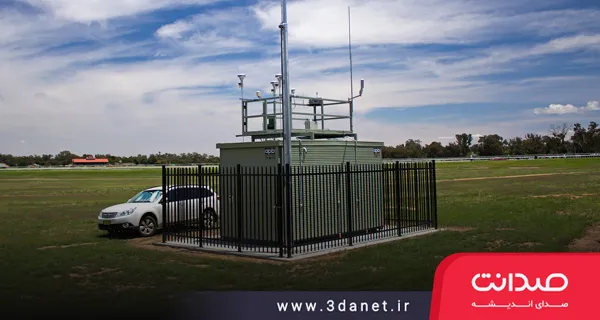
In 2009, the Madrid City Council in Spain, in a decision, relocated some of the air quality monitoring station sites without informing the public and introduced them under new names.
In this relocation, stations by the roadside (which had high pollution) were moved next to parks (which had lower pollution).
This naturally caused the average air pollution reported by the stations to decrease and the air quality index to show healthier air, thereby enabling the local government to legally be accountable to the European Union and escape their pressure.
This issue caused a great deal of controversy in Madrid, Spain, and also sparked a series of civic actions.
This controversy shed light on the fact that in air quality measurement, only the final data should not be considered, and in addition, attention must be paid to the infrastructure, station locations, devices, calibration, and data calculation methods.
This event led to the emergence of a concept called "attuned sensing," which states that alongside the measured data, one must be sensitive to the infrastructure and data calculation methods, as well as the political (mis)management of air pollution, and in the event of a violation of proper procedure in data reporting, the capacity for public participation and public opinion can be used to pressure the relevant authorities.
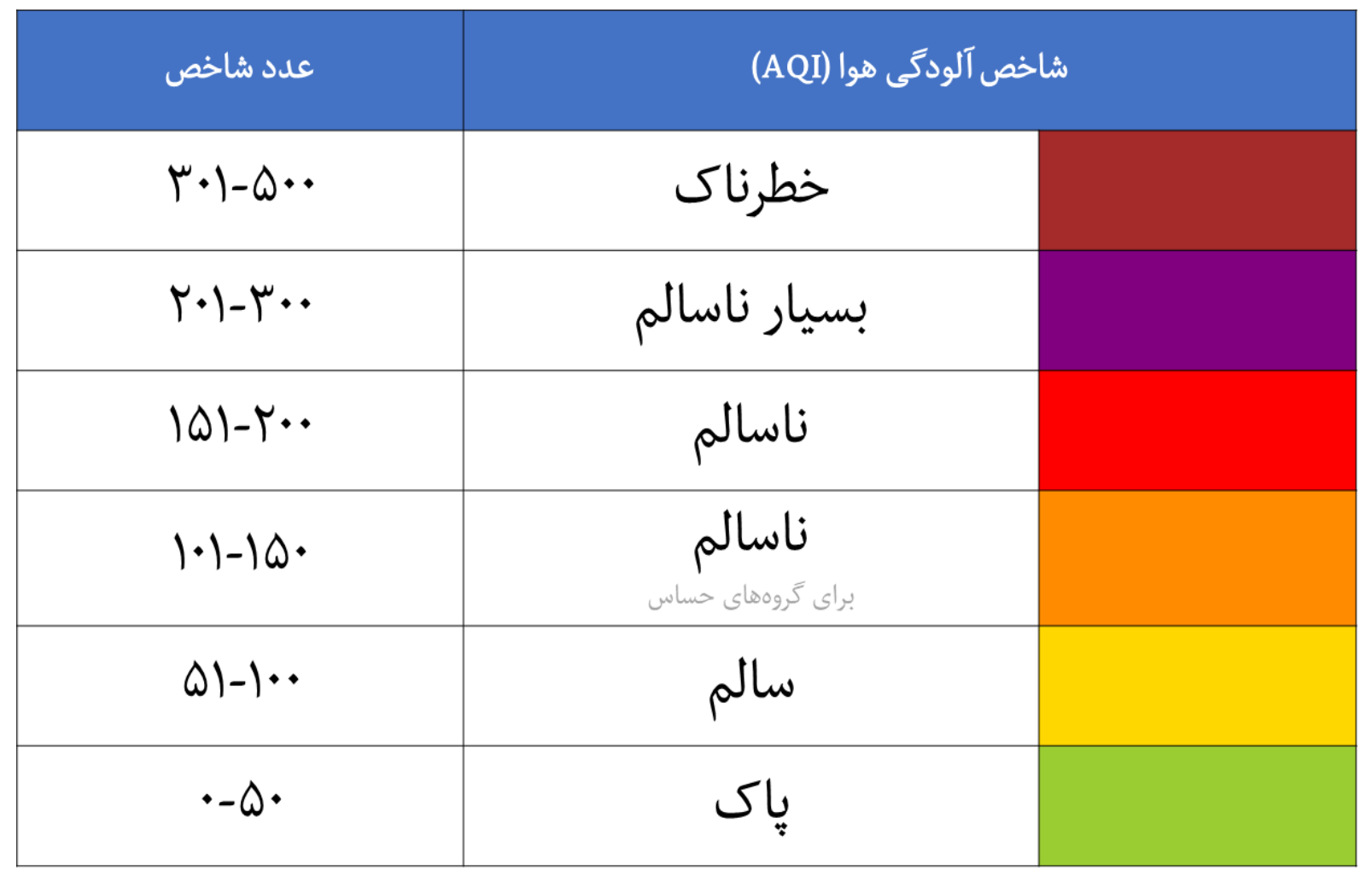
Considering the remarks of the Ministers of Interior and Education, we realize the pre-existing importance of the issue of attuned sensing in Iran, because this is while students are classified as a sensitive group in air pollution categorization and stricter measures should be taken!
The Air Quality Index in Iran is calculated and reported using an incorrect method. According to the guidelines provided by the United States Environmental Protection Agency (EPA), the Air Quality Index should be reported based on the maximum concentration across all stations. However, unfortunately in Iran, the index is calculated and reported based on the average concentration of the stations, which creates two fundamental problems:
1- The actual level of air pollution is not seen.
2- Polluted areas are ignored and their importance is diminished.
No information is available on the calibration of air quality devices! Until just a few years ago, the calibration of stations for the ozone pollutant was not done correctly, and for this reason, these stations did not display high ozone concentrations.
There is also no information regarding the proper functioning of air quality devices. There are reports that some air suction pumps at certain stations are not working properly, and this issue causes the concentration of fine particles (PM2.5) to be displayed lower than actual.
In most stations, not all pollutant-measuring sensors are present, or rather, it is better to say that for some pollutants, they are deliberately removed by decree. For example, there is no sulfur dioxide sensor in Isfahan, and the extent of mazut burning in this city is unknown! Or the sulfur dioxide sensor report from the Azarbaijan Square station in Tabriz is suddenly not reported.
The siting of some stations also has problems, and some stations have either been eliminated entirely or moved next to a park. The station in the city of Mohajeran in Markazi Province, which clearly showed the amount of mazut burning at the Shazand power plant, was suddenly removed! Or the Hamedan station was relocated next to a park, which caused the level of air pollution in Hamedan to be shown as lower!
There is no information whatsoever about calibration, the type of devices, the method of measuring pollutants, or the supervision of vehicle technical inspection centers, and this is while vehicles have the largest share in the emission of air pollutants!
Environmental justice for all citizens requires that the Department of Environment address these issues as soon as possible, put informed measurement of air pollution on its agenda, and respond to the statements of the Ministers of Interior and Education in a declaration.
It is also time for environmental experts and non-governmental organizations (NGOs) to demand transparency regarding the status of calibration, sensor functionality, and the measurement methods of air quality monitoring stations, as well as technical inspection devices, through advocacy.




Discussion0 comments
No comments yet; let yours be the first voice.