Economic Sciences
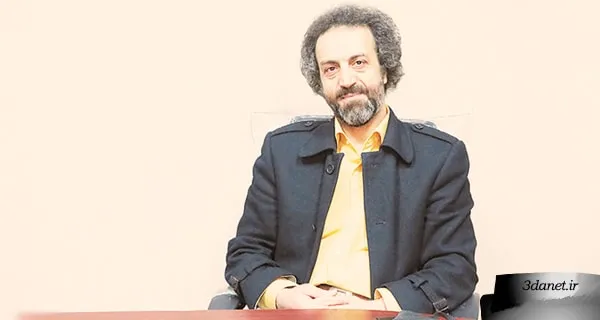
A Conversation with Dr. Mohsen Renani: The Fog of the Economy
The core problem of Iran's economy is not the business environment but the investment climate; zero growth despite sufficient capital points to a fog of uncertainty clouding investors' minds. Until this uncertainty is resolved, improving technical indicators will remain futile.
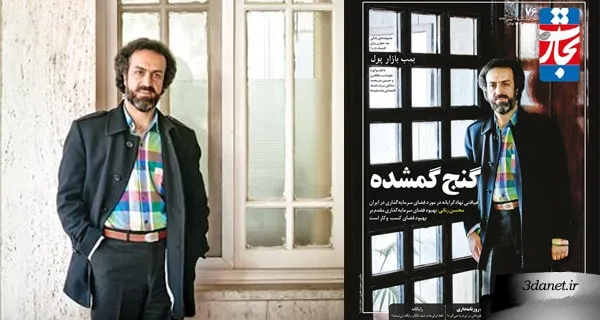
These days we often hear that the problem with Iran's economy is the unfavorable business environment, but I feel that a kind of intellectual error has occurred in Iran's economic discourse and everyone is repeating it. In my opinion, this is not the case. The primary problem of this economy is the investment climate, and then the issue of the business environment. Today, Iran's economy does not have the insoluble economic problems of capital shortage or human resource shortage; we have buried enough capital underground. We have invested enough in nurturing human resources. But the question is, why, despite all these expenditures, does growth and employment not emerge from within Iran's economy? You might say that today, firms' liquidity has decreased or banks do not have surplus deposits. This is true, but overall, we are not facing a shortage for lending. I believe other external factors have entered the economy and crippled our human and economic capital; otherwise, how is it possible that a thousand billion dollars is injected into an economy over 10 years and its growth is zero? The average growth in recent years, which of course was positive for a few years and negative for a few, has been between zero and one percent. How is that possible? A thousand billion dollars is not a small amount of money to be injected into an economy and yield such an output. It is like you constantly pour raw materials and fuel into a factory's production line, but no product comes out. There must be a flaw somewhere. Therefore, we do not have an insoluble structural dilemma. I believe Iran's economy has a dilemma that has crippled all variables, and I call this dilemma the investment climate, not the business environment.
We usually use the term business environment for obstacles, issues, and institutional structures. That is, technical barriers, technical infrastructures that allow business to flow smoothly or not. For example, in America, if you want to start a business, the legal procedures are completed within three hours. In Iran, however, it takes 60 working days. Today, this time has increased even more. Of course, the business environment in Iran has a defective legal and institutional structure that confronts individuals with many problems. We call these problems business environment obstacles, which, according to the World Bank's definition, have 10 indicators and are calculated and announced annually. Regarding Iran, we see that this indicator is continuously falling. But in truth, in my opinion, it makes no difference whether Iran's business environment indicator is 60, 110, or reaches a rank of 120, because nothing changes. Because there are so many problems in Iran's economy that these changes do not alter anything. In contrast to the business environment, we also have a psychological and mental business climate, which is called the "investment climate." I believe that until this mental climate is reformed, improving the business environment will be ineffective.
The Foggy Economy
To improve the business environment, one must seek to improve technical indicators such as starting a business, the time required to establish a firm, obtaining permits, registering property, obtaining credit from banks, and the enforceability of contracts. But as I mentioned, these are not important for a country like Iran and do not significantly affect our business. At this stage, reforming the business environment is time-consuming, requires legal reforms, requires increasing the knowledge of managers, and requires a generational change in management. A generation of managers does not understand certain issues, does not grasp them at all, or it takes a very long time for them to understand. For example, when I wrote the book "Market or Non-Market" in 1997, one of the economic ministers asked me, what do you mean by the transaction cost you wrote about? Today, transaction costs and exchange costs have become established among economic actors. I mean to say that we must move past a generation of managers for some concepts to become clear to them, and this is a time-consuming and gradual task. But the other discussion, or the more important issue, is the issue of the investment climate, which we sometimes also call the psychological or mental environment of business, and the term investment climate is usually used for it. Our problem is here: the factors that affect the investor's mentality, leading them to decide or not to decide. That is, the message that a capitalist might receive from the set of influential governing institutions. For example, it is natural that an investor will not invest in conditions of political turmoil and chaos. Or, for instance, the psychological environment of investment tells me not to invest at this particular time, or even if banks readily offer loans, these factors tell me not to take a loan right now, or even if I register a company, these factors tell me to hold off. These are factors that affect the investment climate or the psychological environment of business. If the investment climate is not favorable, no matter how much the business environment indicators improve, it has no effect. The factors that affect the investment climate or the psychological environment of business can be political or economic. For example, in recent weeks, investment in Turkey has decreased, and this was not caused by a decline in the quality of the judicial system or a drop in the services of the company registration office, but it was certainly due to the creation of political tensions and conflict among the country's senior officials. Here we say the investment climate or the psychological environment of business in Turkey has been disrupted. It is natural that in such a climate, investors hesitate and do not continue their work. Allow me to better explain what I mean with a simple example. In my view, economic activity is like driving on a road. On this road, you must make several calculations to travel the path. Consider the twists, turns, and bumps of the road. Recognize the dangerous curves of the road and pay attention to how many guide signs exist along the way. Paying attention to these issues means you are paying attention to the structural issues of the road. These constitute the obstacles to business. The bumps, dangerous curves, uphill stretches, and the lack of sufficient signs to know the road's characteristics are the bumps in the business environment. But if the road is covered in thick fog, that becomes the investment climate. In this case, there are three states. If there is no fog or dust at all, this is the state of certainty. If there is a little fog, you move with caution. If the road is covered in thick fog, you do not move. These three states are the state of certainty, risk, and uncertainty. When you are in a state of uncertainty, you do not engage in economic activity. Whenever the investment climate is in a state of uncertainty, meaning the road is faced with complete fog, you can make three decisions. Do not move at all. Take the side roads you know, or wait to drive behind a large truck. In investment, if the climate is one of long-term uncertainty, you will not invest at all, or you might move via side roads; and in the third state, you might deliberately, and for greater protection, place yourself under the protective umbrella of the ruling power groups.
From these discussions, I conclude that the problem of Iran's economy today is a political problem, not an economic one. If economists cannot offer a solution, it is because the problem is not economic but political, and it is beyond the economists' hands. A solution exists, but in this economy, even if you gather the best economists from around the world, they cannot prescribe an economic remedy. Our problem today is a political one. Thus, we used to say that our economy is trapped in the deadlock of politics, and our politics is entangled in the snare of the nuclear dispute. This chain must be broken. From the dispute
I believe that external factors have entered the economy and crippled our human capital and economic capital; otherwise, how is it possible that a thousand billion dollars has been injected into an economy over 10 years and its growth is zero? The average growth in recent years, which of course was positive for a few years and negative for a few, has been between zero and one percent. How is that possible? A thousand billion dollars is not a small amount of money to be injected into an economy and yield such an output.
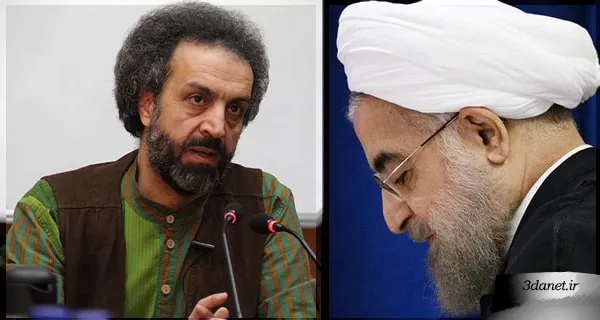
We must be freed so that politics can be freed, and we must also be freed from politics so that the economy can be freed. I believe that turmoil in political relations can disrupt the psychological climate of business. Or relations with foreign countries become disrupted over a simple matter. Over an interview or a speech, relations with foreign countries become tense, and this disrupts the investment climate. The general or political atmosphere of the country can also be disrupted by a political call, demonstrations, or even a political speech, and the investment environment and climate can be tarnished. Late last year, an investor asked whether it was better to invest in gold or land. I said that with this cost of capital, you have better opportunities for real and productive investment. He said the political horizon is not clear. I prefer to wait longer and see who becomes a candidate and what plan they have for exiting the international deadlock. These issues change the horizon of the investment climate. Ultimately, I summarize this part by saying that in Iran's current conditions, what is decisive is the investment climate or the psychological and mental environment of business. Because an investor first thinks about whether a country's climate is suitable for investment and then pays attention to the technical indicators of business. The technical indicators of the business environment are not important in the short term. They are important in the long term. The technical indicators of the business environment only affect the horizon and the long-term structure of the growth rate, as well as the long-term interest rate. But what guides investors is the investment climate or the psychological environment of business. As long as we do not improve the psychological environment, the technical indicators are not very effective either. So let us not applaud that the business environment index has fallen, nor worry that it has declined. Because it does not have much effect. The investment climate can sometimes be changed with a rapid transformation. For example, after an election, a government comes to power whose election leads to an improvement in the psychological environment. Like the election of Mr. Rouhani, which improved the psychological environment or the investment climate. It made it somewhat hopeful and provided a horizon. In this way, I conclude that our main problem today is the investment climate, then the business environment, then the issue of liquidity and other issues.
How Does Risk Turn into Uncertainty?
The general environment, or investment, has three layers. The first layer is certainty. The second layer is risk, and the third layer is uncertainty. These three layers determine the state of the investment climate. The layer of certainty is when we proceed in our business with confidence and sufficient, complete information. For example, I want to make a transaction and buy or sell a house. If I buy or sell my house with a relative or acquaintance whom I know, we conduct the transaction without any worry, because we have sufficient certainty. The next stage is the risk environment. The risk environment takes shape when our information is incomplete. In a risk environment, I know the danger but I do not know its magnitude. Sometimes I know both the magnitude and the danger; I know the danger and its magnitude. This is a risk environment. Therefore, in an environment of certainty, you make decisions quickly and with confidence, but in a risk environment, you make decisions slowly, with deliberation, and by calculating the dangers and costs of risk. So, in a risk environment, you do not stop your work. You carry out your work, but with more calculations. The third stage is the environment of uncertainty. The environment of uncertainty arises when you do not know what the danger is, nor do you know the probability of the danger. The environment of uncertainty is when you do not recognize the danger at all. You do not know its probability either. Currently, the investment climate in Iran is close to such a state. To clearly express what I mean, I will refer to an incident I witnessed just recently. After the presidential elections and the election of Mr. Rouhani, one Iranian investor residing in Dubai was seeking to arrange conditions for investing in Iran. But after hearing one of the Friday prayer sermons in Tehran, he abandoned the idea of investing. I asked why? He said: until a few days ago, the discussion was about ending the house arrest and freeing political prisoners, but suddenly it was announced that some of them deserve execution. His reasoning was that Iran has not yet reached the stability needed for investment. Of course, I must point out that we rarely know an economy
In my opinion, it makes no difference whether Iran's business environment index is 60, 110, or reaches a rank of 120, because nothing changes. Because the problems in Iran's economy are so numerous that these changes do not alter anything. In contrast to the business environment, we also have a psychological and mental business environment, which is called the "investment climate." I believe that as long as this mental climate is not reformed, improving the business environment will be ineffective.
where the investment climate is completely characterized by certainty. In personal transactions and friendly environments, a climate of complete certainty can be created, but in the macro environment of countries, such an occurrence is unlikely. In some countries, including Iran, a climate of uncertainty prevails. Of course, if this climate exists for a short-term period—two months, three months, or six months—it is tolerable for the investor. Like Turkey, which seems to have currently entered a climate of uncertainty, and the investor does not know, for example, who will be arrested tomorrow and what will happen. But the horizon shows that this climate of uncertainty will be resolved within a few months, and the country will return to a risk climate. So, climates of uncertainty exist in all countries, but they are not permanent. In America, you see a climate of uncertainty less often. For example, an investor can predict, based on polls two years in advance, who the president will be. Even if the polls cannot determine it, the economic actor knows that if Obama comes, the tax rate will go up by one percent, or conversely, if someone else is elected, the tax rate will go down by one percent. The investor in such economies knows that their business will face a two percent fluctuation in rates, not that it will be ruined by the arrival of one and strengthened by the arrival of another. So, in a system like America, you do not even face uncertainty during presidential elections. In some countries, uncertainty becomes long-term, and the more long-term the uncertainty becomes, the shorter the investment horizon becomes. The time preference rate rises. In this state, I prefer to consume a good today rather than tomorrow. Of course, the general tendency is that people usually prefer to consume today rather than tomorrow. Why? Because they say nothing is certain until tomorrow, so it is better to consume today. If we want to tell a person not to consume today, but to consume tomorrow, we must say that if you do not consume today and save it for tomorrow, you will gain more profit. In principle, people prefer present consumption to future consumption. If we want to postpone present consumption, we must put an interest on it. But we say that money in my hand today is better than tomorrow. If you want me to receive the money tomorrow, you must add an amount to it to give me tomorrow. This is where the interest rate is formed. So, where is the root of the interest rate? Time preference, which in principle all people naturally prefer today over tomorrow. Why? Because they allow for the probability of unforeseen events. When a climate of long-term uncertainty persists, the time preference rate constantly increases. We all prefer today over tomorrow. Gradually, our horizon shrinks; the instabilities of investment climates or the psychological business environment cause our horizon to shrink. In what horizon does an entrepreneur emerge? A horizon where this procedure and this government will remain for 10 or 20 years, and it is worth it for me to go and invest for the next 20 years. If the entrepreneur does not know whether a procedure will remain for 20 years or not, they will not invest. They take their money to the gold and currency market and will only invest on the condition that they know their investment will not be harmed, regardless of who the president is. If they know that in a year the president will change and everything will fall apart, they will not invest. So, the greater the uncertainty in the investment environment, the smaller the investment horizon becomes. Therefore, our entrepreneurs exit entrepreneurial activity and move towards speculative activities. In this state, even entrepreneurs turn into speculators, into people who hold onto money to see what will happen. In economics, we technically call them opportunity-seeking managers. Today, Iran's economy is filled with managers who could have been entrepreneurs, but due to long-term uncertainty, they have turned into watchful managers or opportunity-seeking managers. An entrepreneur who returns to entrepreneurship in a climate of long-term uncertainty is called a gambler.
Factors Affecting the Investment Climate
The factors of uncertainty are of several kinds. We say that the atmosphere of Iran's economy today is one of uncertainty. A thick fog has covered the road and has reached right in front of investors' vehicles. In this state, investors must either stop, continue their journey behind a powerful political current, take a side road, or be certain they will not be harmed. The factors affecting the investment climate are of three categories. First, random factors. Factors that occur by chance, such as the issues that took place in Turkey. Or the occurrence of a terrorist operation that disrupts the investment climate for a short period. These are random factors resulting from the random errors of humans or the random errors of officials. In such a situation, if the political structure is healthy, it can even lead to the growth and advancement of the system. Random errors are like vaccines. They strengthen the system. If a system is advanced and complete, random events enable it to understand where the system's flaws lie. Random factors that lead to disruption are beneficial for dynamic systems. But some factors of uncertainty are structural and intrinsic. That is, the system is systematically producing uncertainty. If you see a few spoiled cans of compote on a mass production line, it is not a problem because this spoilage could be random. But if you see that compotes are continuously coming out spoiled, you must certainly know that the production line or the raw material supply line has a serious problem. Allow me to point to the trajectory of economic corruption over the past three decades, which shows that Iran's economy has a structural problem. When the figure of 12,300 billion tomans in financial misuse by Fazel Khodadad reaches the figure of three thousand billion tomans in the case of Mahafarid Khosravi, we must certainly pay attention that this is not random. It is a structural flaw, and this structure is systematically producing corruption. This is where we say that the uncertainty arising from the existence of corruption in Iran's economy is not a random issue and has become intrinsic. Or a parliament that changes the law every day is a factory producing uncertainty. Parliament should not change the law every day. Law is the rule of the game, even if it is wrong. The rule of the game must change very slowly, even if it is wrong. I saw in a book that in 1966, the parliament of Finland or Norway decided to change a clause of the constitution, assigning a group the mission to go and study and bring back a proposal. The remarkable thing is that in 1993, that clause of the constitution was changed. That is, they studied for 27 years, because when the constitution is changed, it means the rule of the game for a nation is being amended for several hundred years, so it must take 20 years
As long as we do not improve the psychological environment, technical indicators are not very effective either. So let us not applaud that the business environment index has fallen, nor worry that it has declined. Because it does not have much effect. The investment climate can sometimes be changed with a rapid transformation. For example, after elections, a government comes to power whose election leads to an improvement in the psychological environment. Like the election of Mr. Rouhani, which improved the psychological environment or the investment climate. It made it somewhat hopeful and provided a horizon.
should be studied. Therefore, a parliament that changes the law every day—for instance, to confront a minister, it alters the law—is not a parliament; in truth, it is an engine inherently producing uncertainty in the system. In this situation, the investor does not know what will happen tomorrow. Some of our policymakers and politicians personally manufacture uncertainty; some of our political figures are uncertainty factories. These individuals constantly perpetuate long-term uncertainty. They extend the period of uncertainty. As you know, according to one official report, the unofficial interest rate in the free market is above 50 percent. This means the time preference rate has become very large. It says, if you want to take this amount of money from me this year, you must return one and a half times that amount next year. So, long-term uncertainty has caused our subjective time preference rate to increase, and consequently, the interest rate has reached 50 percent. It is not because, say, the bank interest rate has become 25 percent; it is not because the money supply has gone up or down—no. The interest rate is high because the time preference rate in our minds has grown large. That is, the horizon at which we think we will quickly encounter risk has continually shrunk. It says, you want to give my money back in another year!? Another year is too late. I will give it on the condition that you add 50 percent on top of it. But in Japan, where it is one percent, it means one is certain that no upheaval will occur; even if you give me one percent interest, it is very good. I am not worried.
Engines of Uncertainty Production
There are a series of fundamental intellectual errors that exist among our policymakers. For example, there is a presupposition in the view of many politicians who believe that capitalists are somehow dependent. This is a presupposition, and for this reason, you see that we do not have a national capitalist whose name can be mentioned everywhere or who is a kind of brand for the country. Why? Because the policymaker's presupposition has been that the investor has a problem. The view is like this. Of course, this view also exists in society. But it has been reinforced by the policymaker. There is another issue that we call the "fallacy of composition," which has entered the political system from traditional domains. When traditional thinking is transferred to the macro level, it brings the fallacy of composition with it. This is one of those factors that, like a factory producing uncertainty, produces uncertainty. Some knowledge is for the micro and individual level. But there are people who transfer knowledge to macro levels. Sometimes individual virtues become collective vices. Things that are good at the micro level are not necessarily good at the macro level. For example, an addict comes to propose to one of my relatives. I say to myself, it is impossible that we give a woman to an addict. This is an individual value that is valuable to me. When I am in the position of legislating, I say to myself, it is better to write a law that prohibits giving women to addicts. This law becomes a collective vice. In this case, addicted individuals will also suffer from other problems. Or it might be good for me individually not to smoke, but if I write a law that smoking is prohibited, I have committed a collective error and I ruin society. You must allow the individual who can achieve psychological release with a cigarette to release. You can say do not smoke on the bus, but you cannot say smoking is prohibited. We sometimes cannot bring individual virtues or individual preferences to the collective level. It is like you are sitting in the stadium and see that you cannot see the football well, you get up and stand. You see how well you see, then everyone stands and again everyone sees poorly. Micro-level rulings cannot be extended to macro-level rulings. We call this the fallacy of composition. Our legislators, in macro decision-making, constantly commit the fallacy of composition. A person who was previously a teacher or studied in a seminary, if they want to become a politician, must study systems theory, study macroeconomics, study philosophy so that later they do not make errors at the macro level. Or they must go and train in a party for 30 years. Parties in the West are factories for producing macro-minded politicians. Obama studied law but apprenticed in parties for 20 years. He sat on committees, was trained, and acquired macro thinking. But in our country, individuals from various fields are suddenly placed in the position of policymaker. In this way, micro-thinking is generalized to the stage of macro policymaking. So one of the fundamental factors in the continuous production of systematic error in our society's policymaking is the transfer of micro thought towards policymaking at macro levels. Other factors, such as the government of heterogeneous influences, also play a role in producing uncertainty. Economics assumes a unified government is ruling, then says go manage the money supply this way, go manage investment this way; all economic theories are formulated with this assumption that a government
If you ask me what the most important problem is, I will certainly say the biggest problem is that "our management system still does not know that it is in crisis." Some time ago, when I was invited to one of the expert meetings at one of the country's important policymaking institutions, I was faced with this question and immediately said the biggest crisis is that we do not know we are in crisis. This disbelief has, of course, become a predicament in all domains, and it is very difficult for independent experts to convince the political system that we are in crisis.
is unified, whereas the government in our country is characterized by heterogeneous influences. A government of heterogeneous influence is one where different fragments of power are held by different fragments of political factions and is not unified, and each part of the power pursues its own goals. I once told Mr. Khatami, give five blank sheets of paper to officials and ask them to write down three national priorities. I said that if, in the responses, the three national priorities were not the same, it would mean the government is being run through heterogeneous influence. If the government were unified, government or governance managers should have reached a consensus on the country's priorities. Not that one says solving the employment problem takes priority over other problems, one says atomic energy is the most important, and another says cultural invasion is the most important of all. This means the government is not unified. I still believe that great damage has been inflicted on national interests from this quarter. For example, the Ministry of Foreign Affairs decides to negotiate to break the international deadlock, but other sectors decide to disrupt the atmosphere of the negotiations. The political structures dominated by these views constantly and systematically produce uncertainty. The system of deliberation in our country is troubled. I do not know what the reason for the repeated errors of our deliberation system has been, but in any case, it is clear that many errors have been made, the result of which is today's situation. Perhaps part of the current problems stems from the injection of a traditional intellectual system into the deliberation system. Of course, why our deliberation system has made so many mistakes is not the subject of this discussion, but there is almost a consensus that we have faced many strategic errors over the past three decades. The result of repeated errors in the economic spheres has been that today we have reached the brink of crisis and have neither the opportunity for error nor the right to error. Therefore, everyone must strive so that we do not commit a new error. In my opinion, our society is on a knife's edge today, and in many matters, we have no choice. We must decide whether to continue or turn back, to move toward development or toward collapse. Iran's economy is now at a point where even a single economic policy error can push the country close to economic turmoil. Entering this cycle could even lead to political problems. But if you ask me what the most important problem is, I will certainly say the biggest problem is that "our deliberation system still does not know it is in crisis." Some time ago, when I was invited to an expert meeting at one of the country's important policymaking institutions, I was faced with this question and immediately said the biggest crisis is that we do not know we are in crisis. This disbelief has, of course, become a predicament in all areas, and it is very difficult for independent experts to convince the political system that we are in crisis. Parts of the political system have taken charge of resolving the crisis, a part of this system's management has almost realized the acuteness of the issues, but my impression is that effective parts of the political system and the deliberation system still do not realize the criticality of the situation.
The Nuclear Energy Dispute
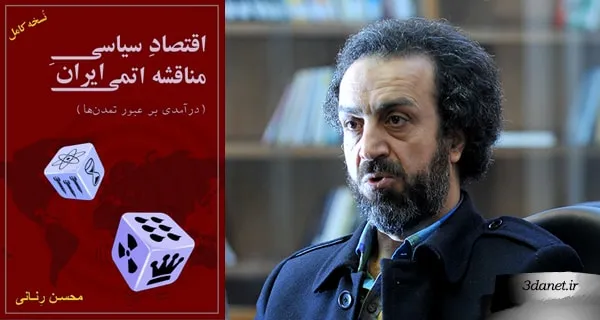
Recently, in a book titled "Political Economy, the Atomic Dispute," I have explained that Iran's atomic dispute has, on the one hand, helped the West manage and resolve four of its historical crises, and on the other hand, caused Iran's economy to enter a long-term period of uncertainty. This book argues that the atomic dispute has been designed in a way to draw Iran into a long-term game. The West does not want this dispute to last less than five years; it must continue between five to ten years so that the West can achieve four goals: overcoming dependence on oil in the Persian Gulf and the Islamic Middle East, escaping the oil shocks that lie ahead, solving the problem of systemic aging, and solving the problem of global warming. If it can prolong the atomic dispute between five to ten years, it can prevent the fall in oil prices. High oil prices at the level of 100 dollars make investment in new energies economical. In this way, they can move more quickly toward replacing fossil fuels with new energies. This is the general idea of the book, but it also points to the important consequence of the atomic dispute for Iran. I believe this atmosphere provides the necessary tools for Iran's economy to enter into uncertainty
A parliament that changes the law every day—for instance, to confront a minister, it changes the law—is not a parliament; it is, in fact, an engine inherently producing uncertainty in the system. In this situation, the investor does not know what will happen tomorrow. Some of our policymakers and politicians personally produce uncertainty; some of our political figures are factories of uncertainty production.
has created. That is, it has created conditions where an irresponsible person can easily disrupt the business environment with a single remark. A politician, with one interview and one speech, can disturb our business environment. The nuclear dispute has prepared a ground where inept or errant political actors can, with a series of small games, disrupt Iran's economic climate. So, the nuclear dispute has become a platform for uncertainty. This is the most important issue. That is, the damage we see comes from this side. The damage we see is not from the investment costs in this project. The core issue is that the nuclear dispute has provided the necessary ground to confront the investment climate with uncertainty. We must move past this point, and fortunately, in the new government, steps have been taken to transition from this stage.
The Effect of the Geneva Agreement on the Investment Climate
In the first place, I believe that some of the sanctions will not be lifted anytime soon, and if they are lifted, it will be time-consuming; therefore, we cannot regain lost markets in a short period. However, the recent agreement can transfer part of the climate of uncertainty to a climate of risk. That is, in areas where the dispute has caused uncertainty, it may turn into risk. Of course, some of the uncertainties in Iran's economy have nothing to do with nuclear issues and stem more from internal conflicts. They relate to the quarrels between the parliament, the government, and various institutions. But if the dispute is resolved, some of the uncertainties that formed due to nuclear issues, especially uncertainty in the realm of foreign trade, will decrease and shift to a climate of risk. This is the first step. Resolving the dispute will, of course, improve the investment climate for the domestic investor. But it will not bring in the foreign investor. Because the foreign investor enters the field after two conditions are met. First, investment by the domestic investor must have reached a saturation stage, and second, the domestic investor must have been sufficiently supported. Domestic laws must first support the domestic investor, and signals must be sent to the foreign investor that the domestic investor is supported and satisfied, and the climate is suitable for activity. If the nuclear dispute is resolved, some of the floating capital will go toward completing unfinished projects, but new investment in long-term projects will not occur. Because the nuclear dispute is only one of our problems. We have other internal issues that have confronted the investment climate with uncertainty.
Essential Steps for the Government
In any case, the investment climate is currently improving, and if the government intends for the climate to change in a real way and for the domestic investor to be encouraged, two steps must be taken. The first step is to eliminate the uncertainty that is produced internally. The second step is to open the way for the entry of capital from Iranians abroad into the country. These two steps must be taken for the investment climate to improve in a real way. Currently, the dispute over the 2009 election has become an issue producing uncertainty in the existing climate. That is, political groupings and internal conflicts have caused the 2009 dispute to become a source of uncertainty production and have left the hands of many profiteers open to use this dispute to produce uncertainty or create rent.
Today, Iran's economy is filled with managers who could have been entrepreneurs but, due to long-term uncertainty, have turned into watchful managers or opportunistic managers. An entrepreneur who, in a long-term climate of uncertainty, goes back to entrepreneurship again, we call a gambler.
We must reduce the domestic factors that produce uncertainty by any means possible. A ready platform and atmosphere must be created so that investors have a realistic horizon. The second issue is a 30-year general amnesty. We have about three to four million Iranians abroad, a thousand billion dollars in assets belonging to Iranians abroad, about 200 billion dollars in capital has moved from Iran to Dubai; with this situation, our economy will not enter the global economy for the next 20 years. Under the current circumstances, we do not have the necessary conditions to join the WTO. Given the conditions we see today, it is unlikely we will be able to become a member even within a 20-year outlook. We lack the necessary capacity, capability, and capital domestically. Our markets are limited. The government no longer has the multi-hundred-billion-dollar oil revenues to inject into the economy. This remnant of oil revenue might be spent on government employee salaries. So the government can no longer inject capital into this economy. Nor will they give us loans—the large loans with which we could lift our economy off the ground. We have only one path. Iranians abroad must bring back a portion of their capital. Even if 100 billion or 200 billion returns, an immense power will enter our economy. And we have no choice but to declare a general amnesty for all those who have no private plaintiff. For whatever reason they left and emigrated, left illegally, became refugees, gave an interview to obtain asylum—if someone has a private plaintiff, well, we will try them, but a large portion of these individuals have no private plaintiff and are merely worried. Therefore, we have no choice but to declare a general amnesty. I have deliberately raised these two issues in almost all the meetings I have attended in the past five or six months. We must keep saying it until, gradually, these ears open and hear. I have sometimes mentioned it in the press as well, but they do not write it, though they sometimes write about parts of it in a veiled manner. This issue must be spoken and repeated until it gradually takes hold. To summarize, our primary problem is not the institutional and technical business environment; our primary problem is the investment climate. We are facing a kind of systemic disruption and systematic errors that regularly produce uncertainty. To rectify the existing uncertainties, we need to create structural reforms in the country's political structure, and we require consensus, agreement, and a general resolve among senior officials to change the current trend. ٌ
.
.
An Institutionalist Approach from Mohsen Renani on the Investment Climate in Iran's Economy
A Conversation between Tejarat-e Farda Weekly and Dr. Mohsen Renani
Tejarat-e Farda Weekly, 8 February 2014, Issue 76
.
.

Discussion0 comments
No comments yet; let yours be the first voice.