Political Science
Hassan Ansari's Observations on Seyyed Javad Tabatabai's History of Political Thought in Iran
Hassan Ansari argues that Seyyed Javad Tabatabai's History of Political Thought in Iran lacks conceptual analysis and historical context, highlighting its errors in examining the authenticity of Ghazali's Nasihat al-Muluk and in refuting Patricia Crone's views.
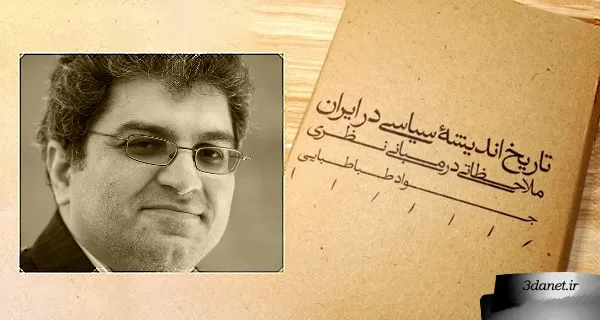
Dr. Seyyed Javad Tabatabai has claimed to offer observations on the theoretical foundations of political thought. From the perspective of the historiography of thought, one of the prerequisites for such an approach is conceptual analysis grounded in historical developments. This requires a meticulous examination and historical analysis of texts and conceptual evolution within the sphere of political thought. This book is anything but an effort in that direction. What he has presented in describing the content of the works under discussion, besides the tedious and repetitive rehearsal of material in a structure devoid of any order and resembling mere verbiage, is merely a rereading of texts without regard for historical backgrounds and analytical discussions of concepts. Precisely because of this historical poverty, ethics and politics are everywhere conflated, and the boundary between political thought, ethics, and moral exhortations is unclear from a conceptual and theoretical standpoint. Just as, for example, the various concepts of Imam and Sultan, their distinctions and semantic transformations across different genres, including the distinctions between theological, jurisprudential, and mirror-for-princes texts, have not fallen within the author's field of vision. The complete disregard for the efforts of other writers who have worked in the historiography of political thought, and the overt insults directed at figures such as Hamid Enayat, Mohammad Taqi Daneshpajouh, and Patricia Crone on the one hand, and the neglect of numerous works in this field written by Arab and Western authors, especially in the last twenty years, on the other, have turned the book into a hodgepodge that tosses the hapless reader about like a football, leaving him thirsty and exhausted at the end of this chaotic book. Had Dr. Seyyed Javad Tabatabai paid even the slightest heed to the criticisms written or addressed to him over these twenty years, this third attempt of his at editing a book that was not originally, and in reality, a book in the true sense but merely a collection of a few articles, might have met with some small success.
1- Patricia Crone, and before her Abdolhossein Zarrinkoub, have rightly doubted the authenticity of the second part of the book Nasīhat al-Mulūk attributed to Ghazali. If one is even slightly familiar with Ghazali's works and has read his books, one would not doubt that the second part of this book cannot possibly, even by one percent, be by Ghazali. In the new edition of the book History of Political Thought in Iran, Dr. Seyyed Javad Tabatabai has vehemently rejected Patricia Crone's view regarding the inauthenticity of the second part of Ghazali's Nasīhat al-Mulūk. I will return to this point in an independent piece. If we compare the works of Ghazali in which he has elucidated discussions on politics, the status of the science of jurisprudence, the Imamate, and the Caliphate with the second part of the book Nasīhat al-Mulūk, there is no doubt that Patricia Crone is right. Moreover, even if the title of the first part of Nasīhat al-Mulūk is authentic (which, in my opinion, is also doubtful, and perhaps Ghazali himself did not directly give it such a name), it is merely a kind of ethical admonition and a credal text, and has nothing to do with the literature of ādāb al-mulūk, or mirror-for-princes writing, or what is called marāyā al-umarāʾ. Dr. Tabatabai, imagining this book to be an example of the mirror-for-princes genre, has discussed it within this framework, and then, because he considers the second part of the book authentic, has drawn conclusions about Ghazali's political thought that, in my opinion, are absolutely incorrect. In this context, I do not know for what reason dear Mr. Tabatabai has spoken and judged so unkindly about Patricia Crone, her works, and the extent of her familiarity with the history of political thought in Iran? However much I think, I cannot understand the reason....
2- The late Homāʾi published Ghazālī’s Naṣīḥat al-Mulūk twice, and in the introductions to both editions he wrote things about the authenticity of the second part of the book which, along with the insistence on that error, have led many other writers—including Mr. Seyyed Javad Tabatabai—astray in their analyses of Ghazālī’s political views. A number of the mistakes also appear in the late Homāʾi’s book Ghazālī-nāmeh, which are likewise visible in the first edition of Naṣīḥat al-Mulūk, though some of them were corrected in the second edition. To be sure, in the second edition of Naṣīḥat al-Mulūk the late Homāʾi does not rule out the possibility that the second part was not authored by Ghazālī; nevertheless, because he considers the extant Arabic translation of the book, entitled al-Tibr al-Masbūk, to be an ancient translation, and that translation, as we know, also contains the second part of the book, he is ultimately more inclined to attribute the whole extant book of Naṣīḥat al-Mulūk to Ghazālī. Among those mistakes, the first is that the late Homāʾi supposed Ghazālī taught in Nishapur for only a year or less; this is not the case, for Ghazālī travelled back and forth and held a teaching post in Nishapur and Ṭūs from 499 to 503 AH and around that time, until he requested exemption from the teaching post from Sultan Sanjar. Based on this same erroneous inference, the late Homāʾi also suggested in the first edition that Naṣīḥat al-Mulūk was written in 499 AH, whereas, as the late ʿAbbās Iqbāl rightly noted in his glosses on Ghazālī’s letters, it is perfectly clear from the text of Ghazālī’s collected letters (Faḍāʾil al-Anām) that the book was written in 503 AH or even later (this mistake was corrected in the second edition of the book). On the other hand, in a strange error and based on a mistaken inference, the late Homāʾi assumed that a short, few-line text—which, according to the compiler of Ghazālī’s letters, Ghazālī had written on the back of a quire containing the chapter on his discourse in the presence of Sanjar (a discourse delivered in that same year 503 AH or thereabouts, and in any case some time before the composition of Naṣīḥat al-Mulūk, which discourse was written down in that chapter by Ghazālī himself at Sanjar’s suggestion) and which explained the reason for writing that chapter—was the introduction to Naṣīḥat al-Mulūk, and took it as confirmation that Naṣīḥat al-Mulūk was written in 499 AH. Furthermore, in the second edition of Naṣīḥat al-Mulūk, the late Homāʾi again mistakenly imagines that the chapter the Sultan asked him to write was in fact this very Naṣīḥat al-Mulūk, whereas that chapter consisted of Ghazālī’s oral discourse in the Sultan’s presence, which he was asked to write down later, and Naṣīḥat al-Mulūk was in fact written and sent some time later in response to a favour from the Sultan.
The reality is that Naṣīḥat al-Mulūk was written some time after his meeting with Sanjar—which appears to have been his only meeting with the Sultan—after which Ghazālī apparently abandoned the Nishapur teaching post altogether with the Sultan’s permission and returned to Ṭūs, and it was probably written in that same year 503 or even slightly later. This is entirely clear from the text of Ghazālī’s collected letters, just as it is also perfectly clear, based on certain other strong indications, that he wrote this book—contrary to the claim of the Arabic translation—for Sultan Sanjar and not for Sultan Muḥammad (as the late Homāʾi accepted. In the second edition, although he also considers the possibility of Sultan Sanjar to be strong, he is ultimately still more inclined towards the book’s composition for Sultan Muḥammad, or some sort of elaboration on the matter. This insistence stems from accepting the claim that the aforementioned extant Arabic translation of the book possesses authenticity and antiquity and must serve as the basis for judging the content of Naṣīḥat al-Mulūk).
One of the correct criteria for discerning that the second part of Naṣīḥat al-Mulūk is not by Ghazālī (which it certainly is not, and we will set out our proofs for this in the future) is a comparison between the texts of what Ghazālī said in the presence of Sultan Sanjar (and later wrote down in the aforementioned chapter) and the letter he wrote to him from Mashhad al-Riḍā before meeting Sanjar—in which he counselled Sanjar in an ascetic, reproachful and critical tone—and what is seen in the second part of Naṣīḥat al-Mulūk regarding the themes of the mirror-for-princes and king-centred discourse. The interval between the composition of those two texts and the composition of Naṣīḥat al-Mulūk was perhaps only two or three months (as is perfectly clear from Ghazālī’s collected letters), and what he said in Sanjar’s very presence should naturally be more conservative. How, then, is it possible for the second part of Naṣīḥat al-Mulūk to be a work by Ghazālī?
When Ghazali wrote Naṣīḥat al-Mulūk, he was in such a troubled state that in the very text now seen as the first part, he merely contented himself with quoting fragments from the book Kīmiyā-yi Saʿādat. How could it be possible that in the second part, which is a lengthy text, he would write things contrary to the mood of those days of his, a period shortly before which he had written those letters and those requests to be excused from meeting the Sultan and from teaching?
Note: Although the late Zarrīnkūb, in his book Farār az Madrasa, was not influenced by these errors, he mistakenly considered the aforementioned component, containing the chapter of Ghazali's counsels in the presence of Sanjar, to be a part of the book Naṣīḥa.
3- The late Jalāl al-Dīn Humāʾī, who edited and published the book Naṣīḥat al-Mulūk, attempted in both its editions to prove that the greater part of the book, which is in fact the second part, is, like the first part, by Ghazali. In reality, the first part constitutes a very small portion of the entire book, and most of it consists of material that has the character of a book of counsel and a creed, and similar content can be seen in Ghazali's other works. Throughout this part, Ghazali also refers to his other works. There is a possibility that the book's title was actually given to it later, and not that Ghazali himself called it by this name; however, in any case, this title should not create the impression that we are dealing here with a book whose format and content are of the به همین سادگی اصرار بی جهت مرحوم همایی برای انتساب کل اثر به غزالی موجب شده است تا در ویراست جدید تاریخ اندیشه سیاسی در ایران آقای طباطبایی کلی به غزالی به دلیل تناقضات درونی فکرش و آشفتگی های فکریش بد و بیراه بگوید که وقتی بدان خواهم پرداخت. این در حالی است که نه تنها ساختار کتاب دوم اساساً ربطی به بخش اول کتاب ندارد بلکه اساساً قلم فارسی و شیوه نگارشی نویسنده بخش دوم به کلی متفاوت با قلم بخش اول و اساساً قلم فارسی و شیوه تألیفی غزالی است. بگذریم که اساساً مطالبی که در بخش دوم کتاب آمده مطلقاً با اندیشه دینی و سیاسی غزالی آنطور که در آثار دیگرش و از جمله احیاء و الاقتصاد و کیمیای سعادت و المستظهری می شناسیم نسبتی ندارد. شگفتا که مرحوم همایی توجهی به این امر واضح و روشن نداشته و بی جهت بر امر واضح البطلانی اصرار ورزیده است.
آقای طباطبایی استدلالات مرحوم همایی از طریق تمسک به قواعد فقهی و اصول عملیه ( قاعده ید و استصحاب) را در تعلق بخش دوم کتاب نصیحه الملوک به غزالی قبول می کند و جدی می گیرد (که طبعاً یکسره با پژوهش تاریخی و سندی نسبتی ندارد و ملاک استدلال و حجیت در این دو زمینه کاملاً متفاوت است) اما استنادات و شواهدی تاریخی را که زرین کوب و پاتریشیا کرون بر عدم اصالت این انتساب فراهم کرده اند به هیچ می گیرد؛ سهل است با بدترین عبارات پاتریشیا کرون را به باد انتقاد می گیرد. نوشتن نیازمند چنین رعد و برق ها نیست. درست بنویسید کتاب به خودی خود جذاب می شود و جای خود را پیدا می کند. اگر چنین نباشد البته اثر ماندگاری را نمی توان توقع داشت. آقای طباطبایی در مقابل اظهار کرده اند چطور صد سال بعد از غزالی بخش دوم کتاب را به نام غزالی ترجمه کرده اند؟ آنان بسی بیش از اهل ادب ما با روح اندیشه غزالی آشنا بوده اند. این سخن دیگر از آن حرف هاست که نمی دانم چه نامی باید بر آن گذاشت؟ در خود عصر غزالی و به تصریح خود او تکه ها و فصل هایی را به کتاب های او می افزوده اند تا بر او راه خرده گیری را هموار کنند. چطور پس از صد سال این کار ممکن نباشد. به عنوان یک متخصص در ادبیات دینی می گویم دهها نمونه کتاب در تاریخ اسلام داریم که در فاصله اندکی پس از مرگ نویسندگان آنها جعل و پرداخته شد و به نام آنها منتشر گردید. چه بسیار آثار منحولی که به فارابی و ابن سینا و حتی خود غزالی و بسیاری دیگر و تنها بعد از گذشت چند دهه از مرگ آنها نسبت داده نشد. در مورد غزالی از چندین کتاب منحول دیگر خبر داریم که خیلی زود و بعد از تنها چند دهه پرداخته و به او منتسب شد. اگر آقای طباطبایی در این کتاب تنها نیم نگاهی هم به تحلیل تاریخی و ادبی داشتند در رد نظر زرین کوب و پاتریشیا کرون اندکی صبوری پیشه می کردند. این نکته را هم باید اضافه کنم که برخلاف تصور آقای طباطبایی انتساب ترجمه عربی موسوم به التبر المسبوک به سده ششم اصلاً قطعی نیست. در جای دیگری خواهیم گفت که عقیده مرحوم همایی مبنی بر اینکه این ترجمه از علی بن مبارک اربلی است قطعی نیست و در واقع بعید نیست دیگر ترجمه عربی کتاب که اتفاقاَ بخش دوم را شامل نیست و آقای همایی آن را متأخر فرض کرده به احتمال زیاد ترجمه اربلی باشد. چنانکه می دانیم در کهنترین نسخه شناخته شده کتابنصیحة الملوک بخش دوم دیده نمی شود.
۴-آقای دکتر جواد طباطبایی در کتاب تاریخ اندیشه سیاسی در ایران ، ص ۲۰۷ چنین نوشته اند: ...ولی همین غزالی که چو بید بر سر ایمان خویش می لرزید آن گاه که فتوای قتل عام رافضیان را صادر کرد، گمان نمی کرد که شاید در میان این کرور- کرور رافضی نیز مؤمنی وجود داشته باشد... در نظر این متخلق به اخلاق زاهدانه رافضی مهدور الدم حتی این مایه ارزش نداشت که امام محمد آن جزو از احکام منطق را که او اعتبار آن ها را می پذیرفت در مورد او به کار گیرد. تمام شد کلام ایشان.
من نمی دانم منبع این فتوای غریب چیست؟ کجا ابو حامد غزالی چنین فتوایی در مورد رافضه (یعنی امامیه) داده است؟ غزالی اتفاقاً از کسانی است که درباره تکفیر عقیده متفاوتی داشته است با بسیاری از سنیان دیگر که ساده تر بدان حکم می کرده اند. کتاب فیصل التفرقه غزالی شاهدی است بر این معنا. وانگهی درست است که غزالی گاه و از جمله در المستصفی عقیده ای را کفر می داند اما این به معنی تکفیر عقیده مندان به آن عقیده از نظر او نیست. چرا که اهل اصطلاح می دانند که این دو مسئله جدا از هم است و ارتباطی با هم ندارد. بسیاری از عالمان اهل سنت قائل به کفر بالالزام نبوده اند و کفر بالتأویل را صحیح نمی دانسته اند. در مجموع نظر ابو حامد غزالي نسبت به اماميه در قياس با بسياري ديگر از عالمان اشعري و ماتريدي بهتر و مثبت تر بوده و درآثارش کمتر تعرض به امامیه داشته است.
5- Dr. Seyyed Javad Tabatabai, in the new edition of his book History of Political Thought in Iran, has discussed the political thought of Iranshahri, in his own terms, in two chapters on Khwaja Nizam al-Mulk and Ghazali. What I can say about these two chapters is that they are merely a rereading of the two books Siyasatnama and Nasihat al-Muluk from a particular perspective and with the intention of aligning with the author's theorizing about the continuity of cultural Iran and the persistence of the ideal royal tradition, or Iranshahri political thought, as he puts it. In this rereading of the two texts, no attention has been paid to the fact that the authenticity of the Siyasatnama, at least in parts, is not certain and one cannot solely on that basis know Khwaja Nizam al-Mulk and identify his political thought (regarding Khwaja, there are dozens of documents and books that must also be read); nor, as I said before, has Ghazali been reread apart from the Nasihat, which is certainly not his. In both cases, there is a stark confrontation with two texts, heedless of historical contexts. Dozens of books have now been published on the history of the Seljuks and the political, religious, cultural, and social relations of the Seljuk era and the various factors influencing the political actions of them and the viziers of the House of Seljuk, which have completely challenged previous conceptions about them. Regarding each and every issue of that era, factors other than their religion or their Turkic lineage in the Seljuks' relations with the society under their rule are now discussed in Seljuk studies, which completely changes our understanding of Khwaja Nizam al-Mulk's politics. The same is true of Ghazali and his relations with the powerful and the scholars of the age. One example is the discussion of the conflicts between Persian Iraq and Khorasan, the dispute between the men of the pen and the sword, local rivalries among city chiefs, secretaries, and government bureaucrats, and the complex relations of Khwaja Nizam al-Mulk with the sultans and with other emirs, secretaries, local ruling families, and the influence and dispute of the Shafi'is and Hanafis on the one hand, and the conflicts between Shiites and Sunnis on the other, and so on, which has completely affected our rereading of the Siyasatnama. In the book's bibliography, apart from a few books, mostly works from the early decades of the twentieth century, nothing of the new research related to these topics is seen, and throughout these two chapters, there is almost no reference to historical contexts based on new studies in the field of the medieval period of Iranian history before and contemporaneous with the Seljuk era. Reducing all that complexity to the confrontation of two elements, Iranian and Turk, or the opposition of the Arab Caliphate to Iranshahri thought, is clearly misleading. Is an examination of political thought possible apart from an examination of the history of governments and the political role-playing of the masters of politics? Throughout these two chapters, the author's basis has been as if a kind of historical and ethnic self-consciousness has always dominated the religious and political action of all the actors and stage-managers of this ideological conflict. It is clear that this is not the case...
6- One of the most important problems in the theory of Iranshahri political thought as formulated by Dr. Seyyed Javad Tabatabai is that the connection between the intellectual foundations and elements of this political-intellectual problematic and pre-Islamic literature is not clear. His claim is that the Iranshahri political theory is the continuation of Iran's pre-Islamic political thought, which after Islam became the source of the continuity of Iran's cultural identity and its unifying cultural, political, and national factor. Well. How can we consider what is presented in the Siyasatnama-style literature in the Islamic era of Iran as a continuation of pre-Islamic thought? Should not reference to the political history of the Sasanians (and of course, Mr. Tabatabai claims its precedent goes back to the Achaemenids as well) be taken into consideration? Should we not refer to religious and political literature in the Avestan and Pahlavi languages? Should we not demonstrate the various modes of continuity of Sasanian cultural and political elements after the Arab invasion and up to the period of the formation of the Persian language and classical Persian literature? Should we not precisely show what theoretical foundations exist in Siyasatnama-style political thought whose roots directly, and with the citation of evidence, reach back to the pre-Islamic religious and political literature in Iran? Is merely referring to the Letter of Tansar to Gushnasp (which had a Pahlavi origin) or the Book of the Deeds of Ardashir son of Papak sufficient for this purpose in your opinion? Should we not see which parts of the thought of figures like Ibn al-Muqaffa' or the writings of the Khodaynamag and A'in-nama traditions truly go back to Pahlavi literature, and which parts are merely among the apocryphal literature that, for political and cultural reasons, was attributed to Iran and Iranian culture during the first three or four centuries and throughout the Shu'ubiyya movement?
Shouldn't one, in order to understand the pre-Islamic political culture, consult not only Avestan and Pahlavi literature but also other pre-Islamic Iranian sources in Syriac, Manichaean, and even Christian traditions? Shouldn't one consult coins and their inscriptions, as well as rock inscriptions, to understand the prevailing political thought of pre-Islamic Iran? Or examine the intellectual elements and political and administrative institutions of the Islamic era in continuity with the Sasanian period?
What Mr. Tabatabai refers to under titles such as justice, the king's status as the Shadow of God, and similar matters as symbols of Iranshahri political thought exists, in various forms, to a greater or lesser extent, in the political literature of all peoples and nations. Many of these themes are originally seen in the literature of the Abrahamic religions, including the Quran itself. Large portions of his book also fall more under the category of ethics, and their connection to Iranshahri thought has not been discussed at all.
Referring to the Avesta or one or two Pahlavi texts without a meticulous examination and a comprehensive discussion in this field clearly cannot be considered a scholarly and historical research endeavor.
If the intended meaning is the language employed by the siyasatnamehs in this context (the Persian language, which he repeatedly emphasizes), it must be said that the siyasatnameh literature, before being presented in Persian, was presented in Arabic several centuries earlier and raised precisely the same themes and beyond. Even where the sayings of Ardashir and Anushirvan were cited, we know that those sayings were first formulated within a body of apocryphal literature in Arabic, although they naturally had their own specific Pahlavi roots, which, unfortunately, have not been comprehensively studied in Mr. Tabatabai's book.
Much has been written about Ibn al-Muqaffa' and his contribution and the political-intellectual dimensions of Kalila wa Dimna in Iranian political literature, both in European languages and in Arabic. Just as much has been written about the conceptual political dimensions of writings such as the A'in-namehs, the Kitab al-Taj, and the Andarz-namehs. The bibliography of Mr. Tabatabai's book does not reference most of these studies, and what he has written in this specific area does not engage with this type of research. It is here that I believe what he has written on this subject is not historiography; it is a free narrative and a personal, abstract reading of the relevant texts.
7- In this book, Dr. Seyyed Javad Tabatabai has claimed to offer observations on the theoretical foundations of political thought. From the perspective of the historiography of thought, one of the prerequisites for such an approach is conceptual analysis based on historical developments. This task requires a meticulous examination and historical analysis of texts and conceptual evolution within the sphere of political thought. This book is everything but an effort in this direction. What he has presented in describing the content of the works under discussion, besides the tedious and repetitive reiteration of points in a structure governed by no order and merely resembling prolixity, is only a rereading of texts without considering historical backgrounds and analytical discussions of concepts. Due to this very historical poverty, ethics and politics are intermingled everywhere, and the boundary between political thought, ethics, and admonitions is unclear from a conceptual and theoretical standpoint. Similarly, for instance, the various concepts of Imam and Sultan, their distinctions, and semantic evolutions across different genres, including the distinctions between theological, jurisprudential, and siyasatnameh texts, have not fallen within the author's purview. The complete disregard for the efforts of other writers who have worked in the field of the historiography of political thought, and the overt insults directed at figures such as Hamid Enayat, Mohammad-Taqi Daneshpajouh, and Patricia Crone on the one hand, and the neglect of numerous works in this field written by Arab and Western authors, especially in the last twenty years, on the other, have turned the book into a hodgepodge that tosses the hapless reader around like a football, ultimately leaving them thirsty at the lip of the spring, agitated and exhausted at the book's end. Had Dr. Seyyed Javad Tabatabai paid even a little, just a little, heed to the criticisms written about him or addressed to him over these twenty years, this third attempt of his in editing a book that was originally and in reality not a book in the true sense but merely a collection of a few articles might have met with some modest success. How can one write a book on the history of political thought in Iran but not dedicate an independent chapter to the political philosophy of Farabi and the Islamic philosophers? How can one write a book on the history of political thought in Iran but not present a chapter in it on the idea of the Caliphate, the historical evolution of this concept, and the political jurisprudence oriented towards it?
Mr. Tabatabai has stated that for centuries no Iranian thinker paid any attention to the theory of the caliphate. I do not know who or what he means by Iranian. But I know well that the discussion of the caliphate is found in most theological works of writers belonging to various cities of the historical land of Iran, and the legal rulings pertaining to the jurisprudence of governance have been discussed to varying degrees in the jurisprudential works of all these writers. In any case, if al-Mawardi wrote an independent book on this subject, contrary to Mr. Tabatabai's incorrect view, it does not mean that he was the first theorist of the caliphate. Everything he wrote in his al-Ahkam al-Sultaniyya can be traced in its particulars in works from the second to the fifth centuries AH. Al-Mawardi is important—and he is certainly important—not for theorizing the caliphate, but rather because of the transformation he adopts in the relationship between the caliphate and the newly emerging sultanate, and the relationship of its legitimacy in comparison with the foundational legitimacy of the caliphate from the perspective of the Ahl al-Sunnah wa'l-Jama'ah.
8- Some time ago, I wrote my opinion about the works of Dr. Javad Tabatabai on Facebook in response to friends' questions. But some people did not like it. There I said that as a speculative thinker with a philosophical mind, Mr. Tabatabai's writings have their own particular appeal, but his work cannot be called the historiography of thought. As an intellectual with a philosophical outlook, Dr. Tabatabai's rereadings of our political heritage are interesting. The questions he raises, the judgments he makes—not from a historical point of view but from a philosophical perspective on the hermeneutical implications of texts—and finally the gaze he casts upon this tradition from the outside, with theoretical questions, can naturally be interesting. But call this work that he has done in his writings, with titles like the historiography of Iranian political thought, whatever you want, but please do not call it the historiography of political thought. The historian deals with documents, with the historical analysis of texts, with contexts, with discussions of the authenticity of texts and documents, with textual and literary comparisons, and with conceptual developments. Issuing general judgments and historical anachronism in historical analysis is not befitting a historical researcher. One must see everything in its own time and not impose philosophical judgments or a contemporary perspective on the text. This is while a philosopher can present his own narrative of what he reads and, in fact, not narrate that thought but reconstruct and recreate it. The philosopher's job is to create thought, not to narrate it. Mr. Tabatabai creates a thought and presents his own narrative, which reflects his philosophical thinking and is the result of his own theoretical reflections. In this respect, there is no objection to him, but he cannot call it the historiography of political thought, and if he does so, he naturally cannot expect a lasting work. In contrast, a historian does not theorize. When I say he does not theorize, I do not mean that historiography without a theory of historiography is possible. I have absolutely no such intention. That would no longer be historiography; it would be the narration of history. What I mean is that a historian, within the framework and container of a theory of historiography that he has adopted as his model, looks first and foremost at documents and texts and reconstructs historical reality in such a way as to provide the closest possible narrative to what happened.
You ask for an example. It is simple: compare Patricia Crone's book on the history of political thought with the several volumes Mr. Tabatabai has published in the same field. You will see the distinctions clearly.
In any case, in my opinion, the name given to this book in its first edition, calling it a philosophical introduction, is more fitting for it.
9- On the extent of the authenticity of the text of Khwaja Nizam al-Mulk Tusi's Siyar al-Muluk
Since some references were made in my critique of Mr. Tabatabai's book regarding the issue of the attribution of the book Siyar al-Muluk to Khwaja Nizam al-Mulk, a friend asked me to write my opinion here about Khismatulin's articles and his theory concerning the book's forgery by Amir al-Shu'ara Mu'izzi. What he has stated on this matter entails layers of probabilities and assumptions, the sum of which is not easy to accept and, in my opinion, cannot be considered valid. Almost none of those assumptions can be independently confirmed, and putting them together does not solve the problem either. There are problems in the discussion of the book's attribution that some researchers have pointed to, and even one of the scholars of Qom published some material on this a few years ago in the journal Kalam-e Qom, but solving those textual and historical problems related to the text of the book Siyar al-Muluk absolutely does not require accepting such strange assumptions, none of which has any clear textual documentation.
Regarding the second part of Ghazali's Naṣīḥat al-Mulūk, assumptions have been put forward in those same articles that, in my opinion, are absolutely unacceptable. The truth of that book is what Zarrinkoub and Crone have said, and I have added one or two points beyond theirs, which I touched upon briefly in previous notes and will write more about in the near future.
In a separate piece, I also hope to address the Sīrat al-Mulūk. For several years I have been gathering material on this book and have read it from beginning to end several times. I hope to elucidate what I have come to believe about its identity in that piece.
.
.
Dr. Hassan Ansari's Observations on Dr. Seyyed Javad Tabatabai's *History of Political Thought in Iran*
Excerpted from the website Historical Studies
Articles and writings of Hassan Ansari in the field of Iranian and Islamic history and culture
.
.
Discussion1 comments
مغالطۀ پهلوان پنبه!!!