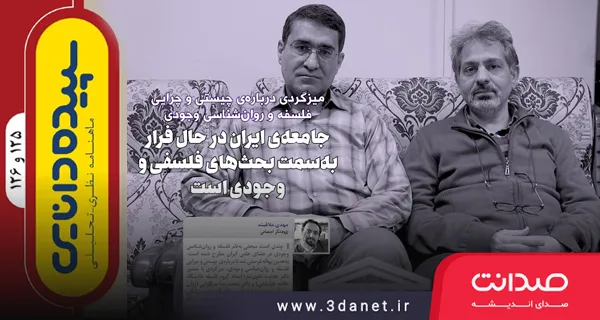
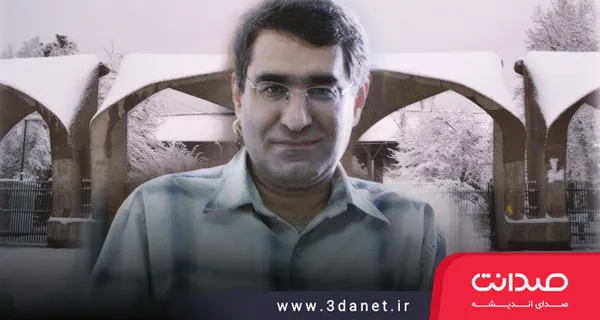
Translating the works of Western philosophers is an undeniable necessity and opens the way for understanding the course of philosophical thought in the West. In our country, translators have long been engaged in this important task, but it seems there are pathologies in this field, the resolution of which would pave the way for better translation of philosophical texts. We have sat down for a conversation on this subject with Dr. Hedayat Alavitabar, a faculty member at Allameh Tabataba'i University.
To begin, please tell us, given that a large portion of books in the field of philosophy consists of translated works, what is your assessment of the quantity and quality of the translation of philosophical works in Iran?
Quantitatively, we experience ebbs and flows. Some philosophers, such as Nietzsche, have had almost all of their works translated into Persian, but in contrast, for others like Auguste Comte, not even a single work has been translated. This is despite the fact that Comte is the father of one of the major philosophical schools, namely positivism. It seems that some philosophers have become fashionable in our society for certain reasons, and consequently, translating their works has been placed on translators' agendas, while others have remained out of fashion and have not been favored.
Qualitatively, we see a great disparity in levels among translations. It must be understood that translation is a science, a craft, and an art. Insofar as it is a science, it can be learned or taught. Insofar as it is a craft, one must gain proficiency in it through practice. But insofar as it is an art, it is an innate matter, not an acquired one, like a talent for poetry, which cannot be learned. This is why machine translation cannot replace human translation, because at the very least, craft and art cannot be taught to a machine. Unfortunately, some of our translators have either not learned the science of this work, have not gained proficiency in this craft, do not possess the art of it, or lack two or all three of these. If we limit our discussion to the translation of philosophical texts, we encounter another problem. Some of those engaged in translating philosophical works lack sufficient philosophical education or literacy and have entered this arena relying solely on their linguistic knowledge, and conversely, some who know philosophy do not possess sufficient linguistic knowledge.
In the current situation, a mechanism must be devised so that only qualified individuals undertake the translation of philosophical texts, and every newcomer does not take up the pen merely because they know a publisher. Of course, I do not mean that translation should become a state matter and that the Ministry of Culture and Islamic Guidance should issue translation licenses to individuals, because in that case, translation would take on a political hue, and whichever faction controls the government and the ministry would issue licenses to its like-minded fellows and block the path for opponents. I think the academic community must find a solution in this regard. Publishers on one hand and critics on the other can play an important role.
One of the problems that exists in translating philosophical works is the translation of certain specialized terms in this field, which may encounter difficulties in English-to-Persian translation. It is for this reason that we observe a single word being translated in different ways by various translators. What is your opinion, and indeed your solution, on this matter?
In finding equivalents for foreign words, usually either the root of the words is considered or their function. For example, the translation of automobile as "khodro" is based on etymology, and the translation of fax as "dournegar" is based on function. Therefore, knowing the root of words, especially philosophical terms, helps the translator in choosing an equivalent for them, and if the said term has a suitable equivalent based on function, it aids the reader of the text in better understanding its meaning.
One of the existing problems in the field of finding equivalents is that translators do not have access to all the books that have been or are being translated, and consequently, they are not aware of the various equivalents that have been or are being coined. To solve this problem, the capacity of cyberspace can be utilized. For example, a system could be launched and translators asked to upload their proposed equivalents for specialized terms into it, or a center could be established to extract equivalents from books and articles and place them in this system. In this case, various equivalents would be listed under each term, and subsequent translators could choose from among them. Of course, some terms have been used with different meanings in different philosophies; for example, the meaning of the term "objective" in Descartes' philosophy is fundamentally different from its meaning in Kant's philosophy. The equivalents for such terms should be categorized according to the philosophy in question.
Regarding a suitable equivalent for specialized terms, some believe that a center should be established to determine and announce one equivalent for each term. In that case, we would no longer witness a great variety of equivalents for a single term, and the current confusion would disappear. In my opinion, this is neither possible nor correct. Because those who would work on finding equivalents in this center would do so based on their own taste, and it is not clear that their taste should be preferred over the taste of others. Fundamentally, science and knowledge are not realms where one can act in a dictatorial manner. The correct approach is to allow different translators to offer their different equivalents and to provide a field for competition among equivalents. Over time, the equivalent that is more deserving will push aside the other equivalents and establish itself. In other words, we must allow the scientific community to carry out the task of selecting the most appropriate equivalent.
It should also be noted that finding equivalents is not possible for all philosophical terms. For example, Dasein in Heidegger's philosophy is rendered as such in the Persian language because translators believe that this term cannot be translated correctly. Interestingly, some have generalized this matter to the entire philosophy of a philosopher and have stated that the philosophy of a certain philosopher (for example, Hegel) is untranslatable! This statement is incorrect. If a philosopher's philosophy is understandable in the original language and the people who speak that language can comprehend it, then a people with another language should also be able to understand that philosophy if it is translated correctly. Those who speak of the untranslatability of philosophy have either considered the understanding and intellect of one nation to be superior to other nations, or have deemed one language to be far superior to other languages. On the other hand, if a philosopher's philosophy cannot be translated, then one cannot author works about that philosopher either, because if we have not understood his philosophy through translation, how can we express this philosophy through authorship?!
What factors cause a translator to translate a work? Market needs or the translator's interests?
Since professional translators view translation as a source of income and the sale of the book is important to them, they usually pay attention to market needs. They undertake the translation of a book that will sell, not one that will remain on the publisher's hands and gather dust in a warehouse. A book not selling causes financial loss not only to the publisher but also to the professional translator. Therefore, it is natural that a translator who makes a living through translation would tend to translate books that have readers and, consequently, buyers. However, those who do not view translation as a profession and translate solely with scholarly motivation prioritize their own interests. Undoubtedly, they also wish for the book they translate to be widely read and a bestseller, but they do not prefer market needs over their personal interests.
To what extent do the financial issues a translator grapples with affect a good translation of a work?
As I said, those who translate philosophical texts either do translation as a profession and a job, covering at least part of their living expenses through it, or they have an independent profession and do not view translation as a source of income but pursue it purely out of interest. Professional translators of philosophical texts face several fundamental problems in earning a living. Firstly, translating philosophical texts, due to the difficulty of the subject matter, is harder and consequently more time-consuming than translating other texts. For this reason, the translator of philosophical texts translates at a slower pace and has a lower quantitative output. Secondly, philosophical books, due to their specialized nature, have a limited readership and therefore do not enjoy high sales. Many philosophical books are published in low print runs, and there is no hope of reprinting them, at least in the near future. The translator of these books cannot hope to make a living by receiving ten or fifteen percent of the book's sales revenue. A philosophical book is not a novel that can become a hit and sell tens of thousands of copies. Therefore, translating philosophical texts is not a suitable job, and as the saying goes, one cannot earn a living from it. Most of those who have tried to make a living through translation have, in practice, been forced to sacrifice quality for quantity and accuracy for speed. Most of the translators who are today considered among the good translators of philosophical works in the country had another source of income and did translation out of interest. As Mr. Karim Emami said, "A good translator in Iran is someone who is adorned with a hundred arts and also has no material needs."
In the market for philosophical works, it seems that each translator takes on the translation of a specific philosopher's works, and the market for translating philosophical works is not very competitive. Do you see this as a virtue or a flaw?
The world is becoming specialized, and the sciences have expanded so much that a single scholar cannot specialize in various fields. In the field of translating philosophical texts, one cannot expect a translator to translate works concerning numerous philosophers or diverse philosophical schools, because one of the conditions a translator must meet is mastery over the subject matter they are translating. For example, one cannot expect a translator who works in the field of philosophy of religion to also translate in the fields of political philosophy, philosophy of art, and philosophy of science, because mastering all these domains is beyond the capacity of one person. Therefore, the specialization of translation in the field of philosophy is a virtue, and translators should be asked to work only in the area in which they specialize. This does not contradict translation becoming competitive, because competition can occur among specialists within a single field.
Many philosophical books are written in German and French. What is the problem with translating these books into Persian, and how should it be resolved?
In our country, the French language initially became widespread, and for this reason, many words we use in daily life today, such as television and restaurant, etc., are pronounced in their French way. Translations were also initially done from French, but gradually English replaced French, and in schools and universities, only English was taught as a foreign language. Hence, those educated in this educational system are not familiar with, or at least not proficient in, languages like French and German, and cannot translate books written in these two languages, including philosophical books, from the original language. As a result, today the vast majority of philosophical books are translated directly or indirectly from English. Of course, it is sometimes seen that a translator translates a book whose original is in French or German from its English translation into Persian, but because they want to pretend they know French or German, they claim to have translated the book from the original text! Without a doubt, if the book did not have an English translation, the translator would not have succeeded in translating it into Persian.
Translating philosophical books from their English translations has two fundamental drawbacks: first, not all books are quickly translated into English, and if we wait for their English translations to be published, we lose time and our philosophical knowledge is not updated rapidly. Second, the English translator may have mistranslated some sentences or terms, in which case those same errors are reflected in the Persian translation. This is why one of the hallmarks of any distinguished research is that it is based on primary sources. To avoid these drawbacks, it is necessary for the educational system, at least at the university level, to pave the way for students interested in learning non-English languages, especially French and German. In philosophy departments, there are courses titled General Language, Basic Language, Philosophical Texts in a Foreign Language, and Interpretation of Philosophical Texts in a Foreign Language, but as far as I know, the foreign language in these courses has always been English. It would be appropriate to make arrangements so that in these courses, some students are taught French or German, enabling them to translate French and German philosophical books from the original text in the future.
Another issue in translating philosophical works is joint translations, meaning a translation that has more than one translator. What is your opinion on this?
Several factors can lead to a book having more than one translator. The first factor is having multiple authors. A book has several authors, and several translators divide the book's sections among themselves. The second factor is the large volume of the book. Some translators lack the patience to translate thick books and prefer to translate these books in collaboration with another person or persons. The third factor is the thematic diversity of the book. Some books address various subjects in their different sections, and since one of the prerequisites for a translator is familiarity with the subject, several translators, depending on their expertise, translate different parts of the book. The fourth factor is learning a language through translation. One of the two translators does the main translation work, and the second person tries to strengthen their language skills through apprenticeship and learn the craft of translation. The fifth factor is that the main translator of the book does not have a good command of Persian prose. Therefore, the second person helps them in making the Persian prose of the translation more fluent. The sixth factor relates to the involvement of emotional and sentimental factors in translation work. In some cases, it is seen that the joint translators are husband and wife, or parent and child, or two friends. In these instances, sometimes one of the two has done the main translation work, and the second person's name appears on the cover due to their emotional connection with the translator!
Now the question arises whether joint translation is fundamentally a correct practice or not. Books that have more than one translator are divided into two categories: in the first category, it is clear which translator translated which section. For example, a book has four sections, and each section was translated by one person, and the translator's name also appears in the book's table of contents or at the beginning of the section they translated. In this case, the responsibility for the translation quality of each section is clear, and the quality of other sections is not related to them. The drawback of this type of translation is that because the translators are different, the quality level of the translation is not uniform across all sections. A book that falls into this category has unbalanced sections in various aspects such as translation quality, equivalence, and Persian prose, and this harms the book. In the second category, it is not clear who translated which section. A book has been translated, and the names of two translators appear on its cover. Should we assume that both translated the entire book together? This assumption is not reasonable because it is impossible for both to have agreed on the meaning of all sentences and the equivalent of all terms, and even if they did, who rendered the meaning of the sentences into Persian in writing? It should be noted that each individual's prose is as unique as their fingerprint, and if one person wrote some sentences and the other wrote others, the translation will not be uniform in terms of Persian prose. Therefore, books that fall into the second category also suffer from a fundamental flaw.
In general, it seems that the phenomenon of “joint translation” is undesirable and should be avoided. The only exception that can be made to this rule is a book that has several authors and it is clear who wrote each section, or one that possesses such thematic variety that a single translator cannot adequately handle the translation of all its parts. In this case, several translators can translate different sections of the book according to their expertise, and the name of the translator of each section must be mentioned in the table of contents or at the beginning of the section. Apart from this exception, the correct method in translation is for a book to have one translator, one content editor, and one copy editor. The translator translates the book; the content editor provides the translator with the correct translation of sentences they believe have been mistranslated, and the translator, if in agreement, revises the sentence in their own words; and the copy editor standardizes the orthography. Of course, an individual or individuals may have assisted the translator in understanding certain sentences or in other matters, for which the translator can thank them in the preface.
Given that your area of specialization is the philosophy of religion, how do you assess the existing translations in this field?
One of the outcomes of the Islamic Revolution in our country was the entry of religion into the political arena. After the revolution, a religious government was formed, and it was natural that many thinkers would engage in discussions about the role of religion in society and politics, and in religious topics in general, including the philosophy of religion. Gradually, religion-related disciplines expanded in the seminary and the university, and numerous universities, faculties, and academic departments in the field of religious studies, including the discipline of the philosophy of religion, were established. With the expansion of these centers, we have witnessed a quantitative growth of works in the field of the philosophy of religion, although the quality of these works is not uniform, and good and bad works have been produced alongside one another.
A point that must be noted is that because a religious government is established in our country, most works in the field of the philosophy of religion have an affirmative orientation and strive to prove religious subjects. We also see this tendency in the translation of Western works on the philosophy of religion. The result of this approach is a one-sided and incorrect understanding of the prevalent discussions in the West regarding religion. Some Western thinkers are believers and have written works proving God or religion, but others are not believers and have addressed the refutation of God or religion in their works. A comprehensive and correct understanding of the West requires that we see both the affirmative and negative aspects and, alongside translating the works of believers, also undertake the translation of the works of atheists.
Unfortunately, narrow-minded individuals imagine that if a translator translates a book written in refutation of God, they are promoting atheistic ideas. These individuals label the translator an atheist and, if they can, restrict their civil rights. This is while such a translator is merely presenting a comprehensive and accurate understanding of the Western approach to religion. It is sometimes observed that a translator, to remain safe from this label, alters the translation and changes it in a way that does not provoke sensitivity. For example, Sartre has a book called “Existentialism Is a Humanism,” which Dr. Mostafa Rahimi translated into Persian in 1965 under the title “Existentialism and the Authenticity of Man.” In this book, wherever Sartre, who is an atheist philosopher, speaks of the absence of God, the translator changed the word “God” to “the Necessary Being” and wrote, for instance: “There is no Necessary Being,” without asking himself how it is possible for the Necessary Being not to exist?!
Another problem is that a book deemed atheistic, or one containing atheistic passages, may not be granted a publication license, and the translator's time and energy will be wasted. Sometimes it is observed that, to avoid this problem, the translator themselves takes up the censor's blade and removes parts of the book that might cause trouble! Let me give an example. In 1997, I studied several chapters of the book Discussion in Metaphysics by Jean Wahl, translated by Dr. Yahya Mahdavi, and I encountered some issues, including that in a footnote on page 809, it states: "In the original, there is a reference to Nietzsche's thoughts and their problems and contradictions, which, due to the various interpretations made of those thoughts, we have refrained from translating one page of the original." One of my objections was that not translating this page was a breach of trust. In March of that year, I sent the objections to Dr. Mahdavi through Dr. Pourjavadi, and at the end of his written response, while accepting most of them, regarding the objection about the failure to observe trustworthiness, he wrote: "The book Discussion in Metaphysics was published in the early years of the revolution. If the translation of some pages was withheld, it was solely to observe the exigencies of time and place. The untranslated page concerns Nietzsche's views and, in the discussion about God, contains problematic material whose publication at that time might have prevented the book's release. In any case, it is gratifying that someone has read my book with such care."
These two factors—the fear of being labeled an atheist and the worry about not getting a license for the book—have caused some translators to err on the side of caution and, as the saying goes, not to bandage a head that doesn't hurt, and to forgo the translation of certain texts altogether.
A group of translators also removes the translation of certain texts from their agenda based on their own religious beliefs, considering this a service to religion. I remember during my student days, one day I asked Dr. Jahangiri, who had translated Spinoza's Ethics, why he did not translate Spinoza's other book, the Theologico-Political Treatise. Given his religious devotion, he replied that in this book, Spinoza raises certain doubts about religion that it is not advisable to bring up in our religious society. I said that these doubts could be raised and answered. He said: "Why should we throw a stone into a well and then try to pull it out with a thousand hardships?" In other words, a doubt only needs to be answered once it has been raised, and if it has not been raised, it is better to leave it unspoken and hidden.
It must be noted that we live today in the age of communication, and all kinds of communication tools, from real to virtual, are available to everyone, and anyone can easily publish any content. The era is past when books were called "misleading books" and, by placing them on a list of banned books, their publication was prevented, and they were reassured that the content expressed in these books would not reach the people's ears. In the present age, there is no place for talking about keeping a doubt hidden, and those who wish to serve religion must raise doubts and answer them. The refusal of translators to translate certain texts, whether their motive is caution or belief, leads to a one-dimensional and incorrect understanding of Western philosophy, and as a result, we will have a caricatured knowledge of philosophy in the West.
Source: IBNA News Agency (with additions)


Discussion0 comments
No comments yet; let yours be the first voice.