Sociology
Hedayat Alavitabar in Interview with SNN: The Crisis of Reading, Dialogue, and Critique in the University
The crisis of reading, dialogue, and critique in the university stems from faculty economic hardship and the politicization of the academic environment; Hedayat Alavitabar: economic pressure has turned professors into 'academic cab drivers' and stripped the university of its independence.
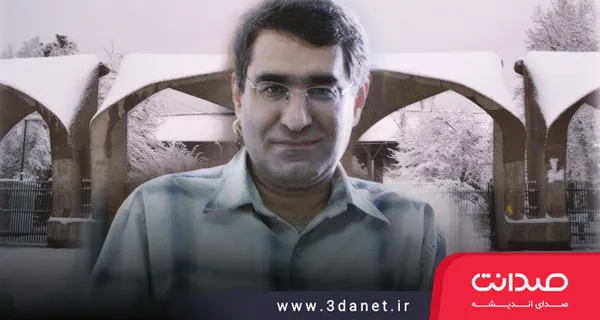
The Crisis of Reading, Dialogue, and Critique in the University
Interview with the Student News Network (SNN) (Revised and Expanded)
SNN: One of the strategies for the growth of the humanities is the expansion of research, as well as the promotion of reading, dialogue, critique, and debate among university professors. In this regard, although much publicity has been made so far, it has not become a serious trend among our academics as it should, and the established professors of this field, on the one hand, show little inclination to study new philosophical works, and on the other, have little enthusiasm for attending philosophical dialogue and critique sessions. To examine this issue, we sat down for a conversation with Dr. Hedayat Alavitabar, professor of philosophy at Allameh Tabataba'i University, the result of which you will read below:
In your opinion, what is the reason that professors in today's Iranian scientific community pay less attention to reading?
The lack of reading among university professors has multiple causes, two of which I will mention: The first factor is not having enough time. University professors, as part of contemporary Iranian society, suffer from the same economic problems that the majority of society struggles with. A university professor, especially if they do not have much experience, cannot manage their life with the salary they receive from the university and is forced to engage in other work. One of these jobs is teaching at various scientific centers. Some professors, in addition to teaching at educational centers in Tehran, also travel to other cities to teach. Other tasks that professors usually do to earn income include supervising, advising on, or examining theses. Some professors take on theses not only at the university where they work but also at other universities and research institutes, and sometimes they lose count of these theses themselves. The interest in participating in theses, especially doctoral theses, is such that sometimes there is competition in academic departments in this regard, and some professors, using various methods, impose themselves on the student. Of course, it is certain that such professors do not spend enough time reading the thesis, but even flipping through numerous theses and attending defense sessions takes up part of their time. Going from one class to another and from one defense session to another has practically turned professors, in the words of one notable figure, into
The second factor is the absence of a sense of need. Some professors base their class on a single book or pamphlet and teach it, seeing no need to supplement it with new information. They teach this worn-out pamphlet or book every semester, and no one calls them out on it. Here, students can play an effective role. If students attend class with scholarly motivation and show interest in the subject, they can encourage the professor to study and update their material; but unfortunately, many students attend class only to obtain a degree, and the content of the class matters little to them, which in turn demotivates the professor. If the professor lacks personal interests, they see no reason to invest time in studying new sources and enriching their class. With a little study, they can teach any course. That is why we see some professors teaching in various, and sometimes entirely different, fields. Professors feel no need to study, not only for teaching but also for their own written work, because in our scholarly community there is no such thing as critique. If every published scholarly work were subjected to rigorous judgment and evaluation, the author would not dare to submit just any material to a journal or publisher. When a published work meets with no reaction, neither positive nor negative, the author loses the motivation for meticulous work grounded in extensive study, and by reading a few sources, permits themselves to write on the subject. Hence, we witness some professors writing on completely different topics.
Under such circumstances, has our academic environment created conditions in which it can be said that, at this university, thought is answered with thought?
If the university is to be a safe space for the free clash of opinions, there must be a safe distance between the university and politics. Unfortunately, one of the afflictions that has gripped academic environments and caused great harm is the politicization of these environments. Of course, I do not mean that political issues should not be discussed in academic settings; rather, the party or faction that comes to power politically should not dictate the university's course or use the academic environment for its own ends. Regrettably, it must be said that in our country, nothing is separate from politics, and this very issue has forced the academic atmosphere to inevitably follow the ruling political faction. In fact, politicians have always determined the task of academics. From the founding of the university in the country until now, whenever the political atmosphere has been open, we have witnessed thought being answered with thought at the university, and whenever the political atmosphere has been closed, thought has been answered with the club at the university. This signifies the subordination of science and knowledge to politics and the loss of the university's independence, which has adverse effects. This is while in the developed countries of the world, the atmosphere prevailing at the university has nothing to do with which party wins the elections. The university atmosphere is in the hands of academics, and no politician has the right to interfere in it. That is why academics openly criticize politicians and are not worried about losing their jobs!
When reading, as one of the most important factors in the growth of the humanities, becomes a habit or merely a cultural fad, what harms does it entail for our academic community?
When we hear the word “fashion,” we usually think of clothing and the like, but we should know that in cultural and scientific matters, we sometimes encounter this phenomenon as well. Sometimes students and even professors, without a subject having become a problem for them and consequently without having a concern to address it, turn to it merely because of its prevalence, and in fact, they conform to the crowd, oblivious to the fact that study is purposeful only when it seeks to solve a problem. A person who has a problem and wants to solve their intellectual issues through study can hope to reach a solution, but if study is only for aligning oneself with the existing atmosphere, it will not lead to a result or solution because no problem was posed in the first place to have a solution. On the other hand, just as followers of fashion sometimes wear clothes they do not like simply because they have become fashionable, students also sometimes read books they do not like in order not to be left behind. Various examples can be given in this regard. After Sadegh Hedayat’s suicide, his works and thoughts became fashionable, and many students read his books merely to strike a cultural pose. Of course, some would also just tuck the books under their arms without having read them and put on an intellectual act. The same thing happened with the works of Marx and his followers when leftist ideas were prevalent in Iran. Today, it can also be seen that some students’ attention to philosophers like Heidegger is merely for following fashion and striking a pose, not for solving any of their own or society’s intellectual problems. One of the harms of this type of approach to cultural subjects is that individuals’ time and energy, as well as the university’s resources, which could be used in the right place, are practically wasted.
What is the relationship between erudition and book reading? Does reading books mean being erudite?
Erudition is a combination of knowledge and refinement, or education and upbringing. Therefore, reading books is a necessary condition for erudition, not a sufficient one. The first component has a quantitative aspect, but the second is qualitative. A person who is devoted to books and study increases their knowledge, and this is necessary in its own right, but refinement and upbringing are not necessarily acquired through study. The difference between a scholar and an erudite person lies precisely here. A scholar or scientist is someone who has accumulated knowledge in a specific field and has increased their learning quantitatively, but this same person can be a malicious individual or at least lacking in moral virtues. Knowledge acts like a lamp; if it is in the hands of a thief, “he will carry off the goods more selectively.” In other words, knowledge can be like a blade in the hands of a drunken Zangi. It is enough to look at history to see many scholars or avid readers who have committed immoral acts and, for this reason, were by no means erudite. For example, Mussolini and Mao were very fond of study and had read many books, but they also committed many crimes. Recently, John Searle, the analytic philosopher, was dismissed from the university for sexually harassing his students. A few years ago in our own country, the academic plagiarism of several full professors of philosophy caused a great uproar. We also sometimes witness scholars turning on one another, dismissing all of each other’s scientific achievements as worthless, and speaking with rancor and malice. This approach bears no sign of erudition and shows that one can be a book reader and a scholar, yet not be erudite.
Iranian philosophers, at least the philosophers of this era, have little to do with dialogue, exchange of ideas, or, to put it better, debate. Why has this issue faded among thinkers in the field of philosophy in Iran? And how can the spirit of disputation be revived among this group?
If we accept the division of people into the masses and the elite, we must say that one of the characteristics of the masses is that they do not engage in rethinking their beliefs and do not seek to change, reform, or qualitatively develop them. They have come to believe in a theory for certain reasons, live by that belief, and die without feeling the slightest need to re-examine it. In contrast, the elite, which includes philosophers, are constantly examining their theories and weighing their merits and demerits. Of course, this examination and assessment does not necessarily mean a fundamental change in the theory; rather, it can complete or enrich it. Undoubtedly, one of the ways to achieve this goal is dialogue and the exchange of ideas. It is in discussion and the exchange of ideas that the strengths and weaknesses of a theory reveal themselves. Humans usually have an attachment to their beliefs for psychological and sociological reasons, and this attachment may prevent them from making an impartial judgment regarding the correctness or incorrectness of their beliefs and may not allow them to look at them without prejudice. Here, the person who is a party to the dialogue and lacks such an attachment can better identify the weaknesses of the theory. Therefore, dialogue is one of the appropriate ways in the process of rethinking theories and beliefs.
Unfortunately, one of the factors that has caused insufficient dialogue and exchange of ideas among Iranian philosophers in the current era is an affliction called “vulgarization.” Today, in the country’s philosophical community, we are, in some cases, faced with the phenomenon of “vulgar philosophers” who consider their beliefs to be absolute truth and close the door to any questioning regarding them. The growth of this group of philosophers’ beliefs is only quantitative, not qualitative. Like the masses, they cling to their beliefs and do not even consider the possibility that at least a small part of them might be wrong. Hence, they see no need for dialogue, and if they do engage in dialogue, it is to dispel doubts or to convince and silence the other party, not to discover the shortcomings of their own theory and arrive at the truth. It is clear that such dialogue cannot be constructive. This dogmatism and exclusivism is not befitting a philosopher and practically makes dialogue impossible. No constructive dialogue will take place between two people if one of them claims to know the whole truth. Because in this situation, the other party will be someone who must be made to understand the truth, that is, a misguided individual who must be guided. Here, the mutual respect that is a prerequisite for dialogue is absent. In Socratic dialogues, we see that Socrates, who can rightly be called the “philosopher of dialogue,” seeks the truth without prejudice and pursues it through dialogue. He pays attention to every theory that is put forward and discusses it without necessarily accepting it. This method should be the guiding principle of philosophical work.
We rarely see the views of other philosophers (whether Western or Islamic) being subjected to serious critique; what do you see as the reason for this?
Not only in philosophy but in our society in general, there is a lack of serious and constructive critique. The reason for this is that we fundamentally consider critique to be an ugly thing. It is not possible to address the various causes of this issue here, but from long ago, whenever we have wanted to praise someone, we have only mentioned their merits, and our perception has been that if we mention one flaw alongside a hundred merits, we have disrespected them. Conversely, when we have decided to criticize someone, we have only seen their flaws. In other words, we have seen everything and everyone as either black or white.
Criticism of Western and Islamic philosophers is also not very common in our academic community. This has several causes, and in each case I will point to one factor. Regarding Western philosophy, it must be said that to critique any field of knowledge, one must first specialize in it and understand it correctly. Understanding is a prerequisite for critique. Now we must see how many specialists in Western philosophy exist in the country who have read this philosophy thoroughly and know all the historical, social, economic, and intellectual contexts of its development. Specialization in any field has its conditions and criteria. For example, one of the conditions for specialization in philosophy is the ability to read a philosopher's works in the original language. Therefore, someone who, for instance, does not know German cannot claim expertise in any German philosopher. Now, how many among the people of philosophy know German or French? Most philosophy professors not only do not know these two languages but are also not proficient in English. It must be accepted that in many areas of Western philosophy in our country, there is no specialist in the true sense of the word, and for this reason, in these areas, either no work has been done or very little work has been done. In the Persian language, regarding many schools of Western philosophy or Western philosophers, we do not even have a single good book, whether authored or translated. In some areas, good works are very scarce, and with them, one cannot gain a complete and comprehensive understanding of all dimensions of the subject. In these areas, one cannot engage in critique because criticizing a philosophy that has not yet been properly understood is not a scholarly endeavor. Therefore, one of the reasons for the lack of critique regarding Western philosophy is the absence of specialists in many areas of this philosophy in the country.
It might be said that we have various professors who are teaching Western philosophy in numerous philosophy departments. In response, it must be said that in our country, teaching the views of a philosopher does not mean having expertise in their philosophy. Therefore, the existence of Western philosophy professors in our universities should not be taken to mean the existence of specialists in this type of philosophy. Many instructors of Western philosophy in universities lack the necessary expertise for this task. On the other hand, the number of these instructors is not large either. The number of academic departments where Western philosophy is taught is very few, and it does not seem that the authorities of higher education intend to expand them. If we want to critique Western philosophy, we must first know it well, and the prerequisite for this is the expansion of centers engaged in teaching this type of philosophy. Of course, it should not be forgotten that many of the individuals who write in the field of philosophy in the country today and have done serious and important work are outside the university environment, and their numbers are increasing day by day, which should be taken as a good omen, but their number is still small, and not all of them can be considered specialists in philosophy.
The problem becomes acute when we want to critique Western philosophy from the perspective of Islamic philosophy. Here we need an individual who is a specialist in both realms, meaning they know Arabic and are proficient in Islamic philosophy, and also know one of the European languages and are proficient in Western philosophy. The number of such individuals is not large, and this very fact makes the task of critiquing Western philosophy from the perspective of Islamic philosophy difficult.
Regarding the critique of Islamic philosophy, it must be said that one of the reasons preventing the critique of this type of philosophy is that a group has tied Islamic philosophy to Islam and imagines that this philosophy is one of the essential components of Islam, such that they consider its critique to be a critique of Islam, and for this reason, not only do they avoid it themselves, but they also accuse those who engage in the critique of Islamic philosophy of opposing Islam. Today, in our universities, one cannot easily criticize Islamic philosophy and Islamic philosophers. Of course, if the professor is an instructor of Islamic philosophy and criticizes some views of Islamic philosophers from the standpoint of this philosophy, the matter is tolerated, but if they are an instructor of Western philosophy and criticize Islamic philosophy from the standpoint of that philosophy, this is intolerable for some individuals, and they imagine that the professor is striking at the root of Islam (or even the Islamic Republic)!
The truth is that although Islam has addressed and valued theoretical and rational discussions, if we define philosophy in its precise sense, it has no connection to Islam or any other religion. Islam or other religions did not come to teach philosophy to their followers. Some even consider the term “Islamic philosophy” incorrect because it creates the impression that this type of philosophy is a part of Islam. It must be accepted that philosophy entered the Islamic world through the translation of Greek texts during the Translation Movement, and Muslim thinkers recognized it as a good tool for the rational defense of Islamic beliefs. And, of course, it has been useful for many people in its own right, but this does not mean that one cannot be a Muslim without it. A person can know nothing of philosophy, or even be opposed to it, and still be a Muslim. For example, Imam Muhammad al-Ghazali was an opponent of philosophy but held the title “Hujjat al-Islam.” In his important book Tahafut al-Falasifa (The Incoherence of the Philosophers), he considers the rational method of the philosophers to be incorrect and believes that instead of this method, one should seek recourse in revelation and the Sharia and receive the truth from its authentic source. Some Islamic scholars have also deemed engaging with philosophy necessary only for answering the philosophical doubts of the infidels, and otherwise have seen no need for it.
Therefore, one group does not critique Islamic philosophy because they believe Islamic philosophy and Islam have an intrinsic link, and another group, which does not hold this belief, prefers to take the path of caution and forgo the critique of Islamic philosophy because this belief is somewhat prevalent. This is one of the factors that has prevented the critique of Islamic philosophy from becoming widespread in our country.
Some believe that for philosophizing (thinking philosophically) to become common among people, this knowledge must be made practical. In your opinion, what are the solutions for making philosophy practical? And how will philosophy be present in society in an applied capacity?
Philosophical topics can, from one perspective, be divided into two categories: first, abstract topics, which are discussed, for example, in metaphysics, such as substance and accident, etc.; and second, concrete topics, which are discussed, for example, in the so-called “philosophies of…” such as the philosophy of religion, philosophy of art, philosophy of politics, philosophy of ethics, and the like. In traditional philosophy, both Western and Islamic, the second type of topics has been addressed to some extent, but today in Western philosophy, a great tendency is seen toward discussing the “philosophies of…,” and the reason for this is that Western philosophy is becoming increasingly practical. Abstract topics are subjects that have no direct connection to the daily lives of humans, but the topics discussed in the “philosophies of…” are concrete and practical subjects and are mostly the result of issues that have occurred in the daily lives of humans, and addressing them can help solve many of people’s social issues and problems.
On the other hand, in the past, philosophy had a closed domain, and not every discussion was allowed entry into this domain, but today Western philosophers have moved toward opening up the scope of philosophy and considering many discussions that were not previously counted as philosophical topics to be among these topics. For example, in some philosophy departments in Western universities, considering the existing issues in those societies, courses or lectures are seen with titles such as “Feminism,” “Homosexuality,” “Abortion,” “Philosophy of Money,” “The Meaning of Life,” “Philosophy for Children,” and the like, which indicates the entry of new topics into the domain of philosophy. Today, the traditional understanding of philosophy has changed, and any fundamental discussion regarding any subject, which delves into its foundations, is considered a philosophical discussion.
Philosophies of and new philosophical subjects resemble each other in one respect: both discuss concrete and applied matters and seek to solve society's problems. In fact, the turn of Western philosophers toward applied philosophy shows that they want, as citizens, to play a role in the practical advancement of their society and to prove that philosophy is not a subject to be discussed only in the classroom, but can be brought from the classroom into the fabric of society, demonstrating that this field of knowledge has considerable practical applications. This is why, in the West today, philosophers are consulted on social and political issues, and their presence in various programs, such as television programs, indicates philosophy's entry into the social arena.
Therefore, engaging with philosophies of on the one hand, and introducing new concrete subjects into the domain of philosophy on the other, can pave the way for philosophy's entry into the social arena. In that case, people will no longer imagine that philosophy is a strange and exotic subject pursued only by certain individuals with no livelihood worries in their ivory towers, having no effect whatsoever on the individual's life in society.




Discussion0 comments
No comments yet; let yours be the first voice.