Sociology
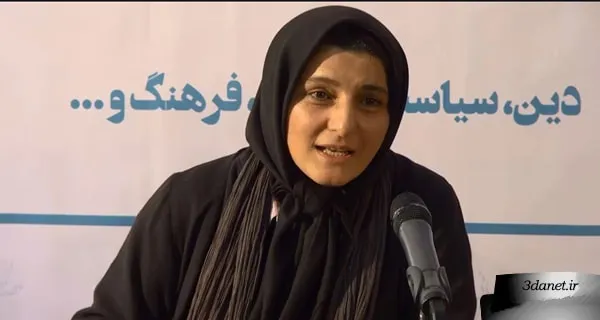
The Challenges of Publishing the Humanities: Hedayat Alavitabar in Conversation with Iran Book News Agency
In an interview with IBNA, Hedayat Alavitabar argues that the preference for translation over original authorship, combined with the pressure from the higher education system to publish rapidly, threatens the humanities in Iran. He also discusses hidden plagiarism disguised as authorship and the phenomenon of book-fabrication.
The Challenges of Publishing the Humanities: Hedayat Alavitabar in Conversation with Iran Book News Agency
If Wittgenstein Were a Professor in Iran, He Would Have Been Fired Due to Scientific Stagnation!
Iran Book News Agency (IBNA): One of the issues afflicting the publishing industry, in addition to the economic problems that have arisen for writers and publishers, is that even the presentation of content, especially in sensitive scientific fields such as the humanities, has undergone not-so-pleasant transformations in recent years. One cannot turn a blind eye to the tireless efforts of concerned researchers and thinkers, but sometimes in certain areas we encounter so much repetition that it is as if the content is the same, and merely a few people have added some extras, translated a book, and sent it off to bookstores. Why we are truly faced with such a phenomenon is a matter for much discussion. Now that the book year 1398 has closed, we decided to speak with “Hedayat Alavitabar,” a professor in the Philosophy Department at Allameh Tabataba'i University, about the aforementioned issues. He has conducted numerous studies and is among the thinkers who accord a special status to both translation and authorship, not seeing them as separate but rather considering both these components as a strengthening arm and a wing for the other's flight in the realm of science. You can read the full conversation below.
.
.
1_ We have passed a challenging year in the field of publishing humanities works, and the country's publishing industry barely stood upright under the weight of sanctions and economic problems. As a university professor and researcher, do you think we were still caught up in the business of translating works?
Generally speaking, in our country, in the field of humanities, translation is more welcomed than authorship. On the one hand, if an author is to write a high-level authored book, they must spend more time than translating a book. Therefore, someone who can both write and translate usually prefers translation. The publisher is also not inclined to spend their time and capital on work whose product is slow to arrive. On the other hand, readers, for various reasons that must be addressed in their proper place, show more interest in translated books, and this draws publishers, for whom book sales are of fundamental importance, toward translation. Of course, the priority of authorship over translation, or vice versa, depends on the field in question. In the field of Islamic studies or Iranian studies, although one should not neglect the translation of works by Western Islamologists and Iranologists, it is clear that in this area, authorship takes priority. But in the field of Western studies, if we want to introduce an unknown Western thinker or school, translation takes priority over authorship. Of course, if the said thinker or school has become known through numerous translations, the ground is prepared for authorship, and one can undertake authorship and even criticism.
One of the problems in the field of translation is that some imagine that translating a work means accepting all the content contained within it, and for this reason, they consider translation a way for Western culture to enter the country and, in fact, see it as a kind of Westoxification. The dominance of this attitude in the higher education system has caused policymakers in this arena to view translation negatively and to consider the advancement of the country's scientific level contingent upon an increase in authored articles and books. Hence, in the regulations for the promotion and advancement of professors, little importance is given to translation, and on the other hand, scientific-research journals are prohibited from publishing translated articles. Unfortunately, officials have not realized the necessity of translation and are oblivious to the fact that the value and impact of translating an original work on the country's scientific progress is no less than authorship, and on the other hand, they perhaps do not know that most of the professors' authored works are, in fact, translations.
This last point brings us to the second problem. Some authors, instead of translating a work, simply compile it! In other words, they read a book written by a Western thinker, piece together the parts they have understood, and publish it under their own name as an authored work, even though this constitutes a form of plagiarism. Others, who are somewhat fairer, combine several works, select passages from each, concoct a mixture, and publish it as an authored book—a book that has the flavor of a translation, where one can sometimes deduce from the Persian phrasing what the original English was and why it was mistranslated! As I said earlier, there is nothing wrong with writing in the field of Western humanities, but this is only acceptable when we have first become thoroughly familiar with the subject area through translation and are able to analyze it properly. Unfortunately, some consider it beneath their dignity to be known as a translator. In order to be recognized as an author, these individuals resort to the methods described above to adapt works and present themselves as thinkers.
2. Many professors tell their students to write; even before that, during school years, teachers emphasized writing. But sometimes writing is misunderstood, and some assume that upon obtaining a university degree—whether a bachelor's, master's, or doctorate—they must write down whatever comes to mind and turn it into a book. This is a serious and growing problem in the humanities. In your view, what is the cause of this issue?
The problem is, on the one hand, publishing too soon, and on the other, publishing too much. Regarding the first problem, I refer to Descartes. At the beginning of the First Meditation in his Meditations, he says that since many of the beliefs he had held from his youth turned out to be false, he concluded that he must postpone the foundation of his thinking until he reached an age when he could be certain he had attained the peak of competence to undertake this task. Descartes's words should be a guiding principle for every researcher. A researcher should publish the results of their research only when they have reached maturity and are confident they will not revise it further. Unfortunately, our university system compels students to take up the pen and write as quickly as possible. To get a top grade for a master's or doctoral thesis, a student must write articles; to score highly in a doctoral interview, they must have published works; to become a faculty member somewhere, if they lack connections, they must have a book or at least articles. All of this drives the student toward writing, even if they have nothing to write about. The result of this pressure is either buying articles, plagiarism, co-authored articles, or book fabrication. Ironically, some professors are not only prolific and quick to write and publish themselves, but they also encourage their students to do the same. I have repeatedly witnessed, in thesis defense sessions—even at the master's level—a professor advising a student to publish their thesis quickly, even though the thesis was not worthy of publication by any standard. This shows that some professors treat academic work as a joke and think that a student who still has a long way to go to reach scholarly maturity is at a level where they can write a book.
Regarding the second problem, that of excessive publishing, I refer to Wittgenstein. In his entire life, he published only one small treatise and one article, yet he is now recognized as one of the greatest philosophers of the twentieth century. If he were a professor at one of our universities, he would probably have been dismissed for academic stagnation! This shows that being influential and enduring is not about the quantity of works but their quality. However, some individuals who cannot produce quality works try to compensate for the weakness in quality by increasing quantity, and for this reason, they engage in mass production of works and have, in fact, contracted "academic diarrhea." These people write a lot but actually write nothing. There are various motivations behind this behavior: career advancement, the pursuit of fame, and economic benefit. Unfortunately, the university system is structured in a way that encourages quantitativism. The university pays attention only to the number of works, not only in the promotion and advancement of professors but also in selecting the exemplary professor. Every year during Research Week, an exemplary professor is chosen at the faculty, university, and national levels. Officials take out their abacuses for this selection, tally up the professors' works, and designate the exemplary professor. This has led to a résumé-writing competition among professors. Each professor, in competition with others, tries to add a line to their résumé, as if a person's literacy is measured by the length of their résumé, and the longer the résumé, the greater the literacy. It has reached a point where sometimes strange things are seen in résumés, for example, helping to organize a conference or membership in a doctoral interview committee! Some professors, since they do not have many published works, resort to unpublished works and list them in their résumés, writing "forthcoming" or "in press" or even "in preparation" next to them. The interesting thing is that sometimes several years, or even several decades, have passed and the aforementioned works are still forthcoming, in press, or in preparation!
3. You referred to a vicious cycle in the humanities within the educational structure that fuels book-making and article-making. What harms does this structure face in the field of publishing?
There are numerous harms, and I will mention a few:
The problems of the publishing industry in our country are not separate from the macro-level problems of society. In a country where many people live below the poverty line, are in need of their daily bread, must hold a second job to make a living, and take up another job even after retirement, one cannot expect a large number of readers. Reading a book requires leisure time, and leisure time will exist when there is no worry about bread. Hence, we see that book print runs are low, and the number of bookstores in cities is decreasing every day, with these shops giving way to sandwich shops, grocery stores, and the like. Some publishers, in order to stay afloat, have reacted to this situation in unprofessional ways. Some, to reduce publishing costs, do not send the book to an editor and do not adequately supervise the content of the works they publish. Others publish the book at the author's or translator's expense, and since their capital is not at risk, they do not care about the book's content, nor do they make any effort to promote and sell it. Still others, to avoid paying high royalties or translation fees to the author or translator, turn to novice writers and translators.
Currently, a large number of publishers are active in the country, and when we go to the book fair in the month of Ordibehesht, we are faced with a multitude of publishers. The large number of publishers is good in one respect, but the problem it creates is that, because we do not have a sufficient number of good authors and translators, publishers are forced to turn to individuals who lack the necessary qualifications for writing or translating. It should be noted that a publisher can only fulfill its cultural mission well when it does not have economic problems. Unfortunately, the economic problems of some publishers and the profiteering or irresponsibility of others have cleared the field for the activities of illiterate individuals to publish their worthless books. If criticism were prevalent in the academic community, it would be possible to separate good works from bad, but in the current situation, where conservatism has prevented the spread of criticism, readers cannot make choices among the mass of books and have become confused.
Low print runs have created problems not only for publishers but also for authors and translators, making it impossible for anyone to earn a living by the pen. For this reason, we have no professional authors or translators in the country, and if we do, they barely scrape by, especially since their rights are sometimes not honored and a publisher who has, for example, printed 1,000 copies declares only 500, pocketing part of the author’s or translator’s share. On the other hand, when an author or translator seeking income from publishing a book is faced with low print runs, they try to increase the number of their books and thereby compensate for the low circulation, but this leads to a faster pace and a decline in the quality of their work. Sometimes it is also seen that a university professor makes their book a course resource and thus compels students to buy it so that the book quickly goes into another printing.
Alongside low print runs, another factor that has compounded the problem and harmed the publisher, author, and translator, and endangered the entire publishing industry in the country, is the dissemination of PDF files of books on the internet. Currently, the files of many Persian books can be obtained for free from various websites or Telegram channels. On the other hand, we also face the phenomenon of book piracy, with some books being illegally reproduced and sold on the market, and sellers finding customers by claiming that the copy they are selling is uncensored. Here, legal and regulatory bodies must enter the scene and deal with offenders to help the publishing industry. In addition to these, one must also point to the strictness of the Ministry of Culture and Islamic Guidance in granting publication licenses. Sometimes an author or translator has invested time and written or translated a book, and the publisher has also invested capital, but the publication license is not issued, and the time and capital spent go to waste.
There was a time when the only way to read a book was to hold a printed, paper copy, but the tremendous progress made in the realm of cyberspace and electronic publishing has completely transformed the publishing industry, to the extent that in the future we may no longer see books being printed. Currently, many newspapers and magazines in developed countries have only electronic versions, and anyone who wishes can easily purchase and read this version through the newspaper’s or magazine’s website. Publishers also release their books in both paper and electronic formats, and each person, according to their preference, can buy one of them from the publisher. On the one hand, apartment living in today’s world and the lack of space for a large home library, and on the other hand, the features of the electronic version, such as the ability to search within the book, have caused readers to no longer desire a paper copy and to prefer the book file. Now every researcher has a virtual library on their computer, laptop, tablet, or even mobile phone, with a number of books incomparable to the paper books in their apartment library. Unfortunately, the sale of electronic versions of books has not yet become common among Iranian publishers, and in this respect, Iranian publishers lag behind foreign publishers. Some Iranian readers refrain from buying a paper book solely because they lack sufficient space to keep it. One of the developments that must take place in the country’s publishing industry is precisely this matter, which will cause book sales to increase and the industry to flourish to some extent.
Unfortunately, the Ministry of Culture and Islamic Guidance, in its dealings with publishers, prioritizes quantity over quality, and privileges are often granted to publishers who release more books. For instance, booth allocation at the book fair is based on the number of books a publisher has released. On the other hand, to maintain their license, a publisher is obliged to print a certain number of books per year. In such a situation, if publishers do not have good books to print, they are forced to publish low-quality books and even resort to book fabrication to boost their statistics. One way to achieve this goal is to reprint a translated book with minor changes, or to publish a thick book as several smaller ones and count them among their publishing statistics. The Ministry of Culture and Islamic Guidance must distinguish between quality publishers and quantity publishers, grant more privileges and facilities to the former group, and consider penalties for publishers who merely fabricate statistics.
Another harm facing the publishing industry is the issue of editing. This is one of those professions whose status and boundaries are not clearly defined in Iran. Editing is considered a great advantage for any work because the author or translator may have been careless, and the editor, by identifying this, helps improve the work. The correct method is for the edited text to be given to the author, and only the changes approved by them be applied to the text. But the problem arises when the editor wants to impose their own opinion on the author or translator, disregarding that the final responsibility lies with the author. It has been seen many times that an editor, due to unfamiliarity with the subject, has made changes to the text and caused errors. For example, some time ago in an interview, I mentioned the German psychoanalyst "Erich Fromm." After the magazine was printed, I saw that "Erich" had been changed to "Eric" without my permission! Reputable Western publishers and magazines never print an author's book, article, or interview without obtaining their approval, because if they print it and a flaw is found, the author might take the matter to court and demand compensation. This practice must become established in Iran as well. But in practice, we see that our magazines state on the first page, "The magazine is free in editing the content," and sometimes they intend the general meaning of the word "editing," meaning both formal and substantive editing, and then, with peace of mind, make any changes they wish to the text.
The question that arises here is: what is the purpose of publishing a book or magazine? Presumably, the goal is to publish accurate and correct content that contributes to the country's scientific progress. This work certainly requires spending time and money. But it seems that some of our publishers and magazines are simply content to publish something and continue their existence, and the quality of the publication is not very important to them. Of course, we have good publishers and meticulous editors in the country, but many publishers and magazines either do not use an editor at all or do not employ expert editors. I can confidently say that I have rarely read a Persian book or even article that was free of spelling or editing errors, and conversely, I have rarely read an English book or article that contained such errors.
What has exacerbated this problem is the indifference of some authors or translators toward the quality of their published works. I recently told a colleague that an article he had written contained both factual and editorial errors. He replied, “What matters is that the article got published!” The goal of these individuals in publishing articles is not the scientific advancement of the country but rather gaining points and career promotion, and given that articles are scored based on quantity rather than quality, the content of the article is not very important to them. Interestingly, those who do not raise objections and acquiesce to any edit or change are more favored by publishers and journals, whereas those who are sensitive about the quality and content of their work and do not tolerate every change harm themselves in this regard, because some publishers and journals, upon seeing the meticulousness, fastidiousness, and persistence of the author, are no longer willing to work with them and consider them a troublesome and inflexible individual who must be gotten rid of somehow. While in an ideal situation, the matter should be the opposite, and authors and translators who care about their work in terms of form and content should be welcomed.
Some publishers and journals do not realize that spelling and editorial errors are more attributable to the publisher or journal than to the author. When a reader reads a book, article, or interview and sees such errors in it, they hold the publisher or journal more responsible. The fewer formal errors a published text has, the greater the credibility of the publisher or journal will be. Therefore, it is expected that they should be more sensitive to these errors than the author, and if an author or translator is insistent and persistent about the error-free publication of their work, they should be thanked, not upset, and efforts should not be made to somehow get rid of them.
Some publishers and journals wish to publish a work according to their own or their editor’s taste, but at the same time, they also want the author’s approval. To achieve this goal, they use a ploy and send the final version of the work to the author or translator on the verge of publication, thus giving them very little time for review. It has happened to me many times that a journal has sent the final version of my article and said I have a maximum of twenty-four hours to approve it! This is while, in this short time, the author or translator might be ill, traveling, or otherwise occupied. It seems that the final version is like a matter of honor for some publishers, journals, newspapers, news agencies, and generally any place that publishes something, and they do not want to make it available to anyone, not even the author, before publication! Some editors absolutely must tamper with the text to show that they have done something, and sometimes the author or translator is forced to reluctantly accept some of the editor’s changes just to satisfy them and get the work published. The larger and more reputable the publisher, the greater the likelihood that the editor’s opinion will be preferred over the author’s, and for this reason, some authors and translators prefer to work with small and obscure publishers so that their work is published according to their wishes and is not tampered with.


Discussion5 comments
ناشناس عزیز بزرگترین دست آورد جامعه فریبکار و قلدر جهانی در شکل دادن به زبان من و تو و بکار بردن الفاظی مانند جهان سوم، دیکتاتوری، دموکراسی، و وربیاژ آکادمیک بوده است. کمی اندیشه کن. اگر شما قبول کنی که جهان سومی دیگر چه از توان اندیشه تو باقی می ماند؟ چگونه می توانی مانع حاکمیت اقتصادی دیگران بر خود شوی؟ اگر فریب تحمیل نگاه stratified و سلسله مراتبی را بپذیری دیگر هویت فکری نخواهی داشت. هیچ گاه جرات اندیشه به صدق و کذب مواضع به ظاهر نظری اما در واقع تحمیلی و جزمی را نخواهی داشت.
بزرگترین دستاورد جامعه فلسفی ایران در 50 سال اخیر چیست ؟ ترجمه اثار فلاسفه غرب در بهترین حالت . گویا جوامع فریبکار و قلدر جرات اندیشیدن بیشتری دارند..
این را هم اضافه کنید که اکثر اساتید فلسفه به خودشان برچسب فیلسوف هم می زنند.باور کنید این قدر که فیلسوف در ایران وجود دارد هیچ دپارتمان فلسفه ایی در جهان فیلسوف ندارد.خودفیلسوفان بزرگ در جهان این قدر توهم فیلسوف بودن نداشتند,که برخی از اساتیدفلسفه دارند.اگر واقعاایران اینقدر فیلسوف دارد چرا جهان سوم هستیم؟پس کو تولید علم؟
عالی بود، خیلی خوشم اومد، خوشحالم که این سایت خوب رو پیدا کردم، ازتون ممنونم واقعا بخاطر مطالب مفیدتون
نگاه اهل فکر ایرانی: " در کشوری که بسیاری از افراد زیر خط فقر زندگی میکنند و محتاج نان شب خود هستند و برای امرار معاش باید شغل دوم داشته باشند و پس از بازنشستگی نیز به شغل دیگری مشغول شوند، نمیتوان انتظار داشت که تعداد افراد کتابخوان زیاد باشد. دوم اینکه خواندن کتاب وقت فراغت میخواهد و وقت فراغت زمانی وجود خواهد داشت که غم نان وجود نداشته باشد. " این حاصل حاکمیت و تسلط مطلق زور بر جامعه دانشگاهی است. دانشگاهی که از درون جنگ و غلبه اسلحه و فریب بیرون بیاید حاصلش این می شود که متفکر کشوری فقری را که خود حاکمان بر اندیشه وی بر کشور تحمیل کرده اند را مانع اندیشه بداند و وضع مطلوب را تعریف انگلیس و بیتانیا و تصویر تحمیلی جوامع حاکم میلیتاریستی تعریف کند که از از دو طریق به دیگران زور می گویند: 1. حمله نظامی و تحریم ظالمانه ، 2. فریبی بنام دانشگاه و آکادمیا در حالی که جوان و پیر در غرب التماس می کند: I can't breathe! On mama I can't breathe صدانت کامنت های منتقد را بلاک می کند، از militia فاشیستی ضد ایرانی و ضد بومی حمایت می کند، و با فریب دانشگاه و اندیشه سر من و تو کلاه می گذارد. اگر مدعی اندیشه هستید چرا سانسور می کنید؟ اگر با آزادی فکر موافقید چرا افراد فحاش را حمایت می کنید؟ اگر توهم موجه بودن باورهای تحمیلی خود را دارید چرا عدالت موضوعی را رعایت نمی کنید؟ اگر اهل آزادی هستید این همه فریاد تظلم که در خارج کشورشما بلند است را سانسور می کنید؟