Psychology
How Much Truth Is There in Astrology?
Despite popular claims, astrology and fortune-telling have no credible scientific basis for predicting personality or the future. By examining the Barnum effect, the Forer experiment, and the psychological techniques used in fortune-telling, this article shows why so many people perceive vague, flattering statements about themselves as accurate and deeply personal.
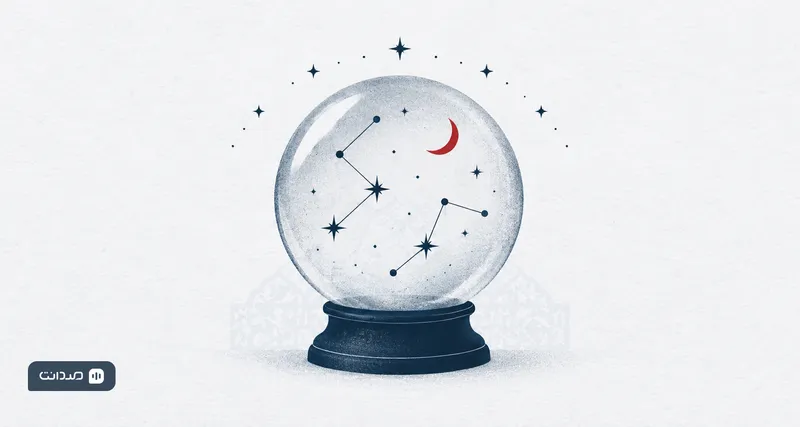
If you still sit in front of the television and the PMC astrology program influences you, unfortunately we must tell you that you are under the influence of the "Barnum effect" or the "Forer effect." For decades, centuries, and perhaps millennia, from the itinerant fortune-tellers whose catchphrase was "let me tell your fortune," to the sharply dressed individuals in suits who speak at conferences on "the effects of cosmic energy on you" about the influence of stars and planets on your personality. And satellite channels, with their flashy, multi-minute videos giving you news of the imminent future, have only added insult to injury. Interestingly, all of these cases attempt to predict the future and try to solve your problems.
Despite numerous studies and clarifications refuting "the influence of planets and the cosmos on your personality and temperament," why do so many people still show interest in these absurd astrologies and predictions?
If you still sit in front of the television and the PMC astrology program influences you; or if, after hearing the words of an itinerant fortune-teller, you still say to yourself, "He's right, you know...!", unfortunately we must tell you that you are under the influence of the "Barnum effect" or the "Forer effect." The Barnum effect is named after a circus owner named P.T. Barnum. It is worth noting that Barnum's shows were famous for having "something for everyone."
In 1948, a psychology professor named Bertram Forer, in a personality test, asked his students to answer some questions. Regardless of the students' answers, Forer provided exactly these 3 sentences in response to each of their tests:
You have a high tendency to criticize your own personality.
You have a strong need for attention and admiration from others.
You have a great deal of ability which you have not yet been able to put to good use.
A few days later, Forer asked the students to rate the accuracy and correspondence of these descriptions and traits compared to their own personality on a scale of 1 to 5; 1 being the least and 5 the most similarity. After collecting the scores and calculating the average, Forer arrived at the number "4.26," meaning that the majority of individuals considered the text to be an assessment extremely close to their personal traits. The interesting point was that Forer had taken these 3 sentences randomly from the astrology section of a weekly magazine and had given exactly these same three sentences, identically and equally, to all the individuals!
Forer considers the reason for the believability of such astrologies, apart from the nature of the teller and the fortune itself, to lie more in the gullibility of the fortune-seekers. He says that in such astrology and fortune-telling, individuals are often searching for their suppressed wishes and desires rather than new, unheard, and unknown news; so, in reality, people do not want to know anything about the future; they are more waiting to hear words that serve as a balm for the bitter repressions of their past. For example, in Forer's experiment, the sentence "You have a great deal of ability which you have not yet been able to put to good use" emphasizes this very point. That you are a talented person, but circumstances have obstructed your path. Otherwise, what you are doing is right!
This type of attitude and approach by individuals confirms the psychological phenomenon of the "Pollyanna principle." The mind's bias towards hearing or receiving positive feedback and, on the other hand, fleeing from and ignoring negative feedback. For instance, we very easily remember the beautiful and pleasant events of our lives, and conversely, low-intensity, unpleasant daily events quickly fade into the depths of our memory.
In the continuation of this article, we will introduce you to 10 methods so that you do not fall into the trap of such people, and also, if you are looking for a new line of work, you can use these cases and get busy fleecing those around you!
1. The first point for fortune-telling and astrology is having high "self-confidence". Individuals who can speak with high confidence in certain situations, even if there is no significant scientific-theoretical backing behind their claims, make the tone of their assertions appear justified.
2. Using academic research, statistics, figures, questionnaires, and surveys available in databases and journals. With such information, one can easily guess, to some extent, the socio-economic status of different social classes and use this information to influence the recipient of the fortune.
3. Professional astrologers are usually good psychologists. They buy time with small, general claims and, during the conversation, guess specific characteristics from your words, personality, and behavior.
4. Using a crystal ball, tarot cards, or even holding hands in palm reading gives the fortune-teller enough time to think and analyze the other person's character. For example, cold hands might be seen as a sign of the person's discomfort with the fortune-teller's previous claim.
5. Having ready-made general statements and phrases that fit any personality and background, which build reassurance and trust in the fortune-teller.
6. A sharp eye; many traits of different people can be deduced from their style of dress, face, makeup, accessories, and other such things.
7. Using the technique of casting a wide net and presenting claims in the form of a question. Many fortune-tellers try to guess and speculate about more general matters by asking minor questions, and undoubtedly these are not free from error. If you have ever experienced a fortune-telling session, you have certainly noticed that among the claims made, there are usually a few incorrect ones. But according to the psychological principle of "confirmation bias", we rely more on the points that confirm our personality and character than on the incorrect and negative ones.
8. Dramatizing the fortune; undoubtedly, in a fortune-telling session, a professional fortune-teller will guess some things about your personality. Such individuals do not explain their deductions to you all at once but try to tell you these things gradually throughout the entire fortune-telling process to keep your trust at a high level for the whole duration of the session.
9. Using ambiguity; that is, many sentences and claims can be presented in a way that the listener can derive several different meanings from them. This technique is one of the most widely used methods in fortune-telling, astrology, and this kind of charlatanism.
10. The last and golden rule is to tell people what they want to hear. They have not come to be criticized or humiliated, and most of the time, supportive and encouraging statements appeal to the taste of such gullible individuals!
.
Sources: Psychologytoday | Psych.Fullerton.edu | Apsychoserver.Psych.arizona.edu | Skepdic.com
.



Discussion1 comments
به عنوانشخصی که سالها در مورد طالع بینی مطالعه کرده ام و 100 البته بسیاری از این طالع بینی ها را واقعا کلاه برداری و مسخره دیده ام سوالی از شما دارم 1. کدام منطق و استدلال علمی را در مقاله تان در رد تاثیر سیارات و بخصوص ماه و خورشید بر مغز انسانها که تاثیرات شگفت آوری چون جذر و مد در زمین دارند آورده اید. در متن شما تنها و تنها تکفیر و نهی دیده میشود و ادعای یک تحقیق یک فرد در یک گوشه دنیا. متاسفانه در رد تاثیر سیارات و ماه و خورشید بر مغز انسانها که تاثیرات آنها بر کره زمین غیر قابل انکار است نیاورده اید 2. خصوصیات یک فرد متولد فروردین را با یک فرد متولد شهریور مثال می زنم. در جامعه و روانشناسی این دو فرد خصوصیات بارزشان جدای از خصوصیات تربیتی و اکتسابی واقعا به چشم دیده میشود که یک فرد فروردینی پر انرژی عجول و آتشین مزاج و کلی نگر است و برعکس شهریوری تاحدودی خصوصیات دیتایل گرا و تقریبا کم انرژی حوصله دار و صبور تر... اکثر خردادماهی ها زبان و مغز بسیار فعالی دارند و آذر ماهی ها از بقیه ماهها خوشقلب تر و شفاف و رک تر هستند یک آبان ماهی نگاهوانتقادی بیشتری نسبت به بقیه ماهها به اطراف خود دارد و و و و بدون هیچ تحقیقی علمی و بدون ارائه هیچ آماری از موارد بالا که عرض کردم صرفا باوبرچسب بارنوم فورر زدن به دیگران و تکفیر برخی باورها نمیشود مقاله ارائه داد و واقعا باید در مورد چنین موضوعات مهمی مغز را و فکر و استدلال و منطق را بکار بست و کار علمی انجام داد تا من تحصیلکرده مهندس یا دکتر بتوانم مقاله را سبک سنگین کرده قبول یا رد نمایم با تشکر