Philosophy
Introducing Conjectures and Refutations by Karl Popper, translated by Abbas Bagheri
In Sources of Knowledge and Ignorance, Karl Popper identifies the belief in a definitive source of truth as the root of authoritarianism and proposes critical rationalism instead. Rather than seeking the source of knowledge, he emphasizes the discovery and elimination of error.

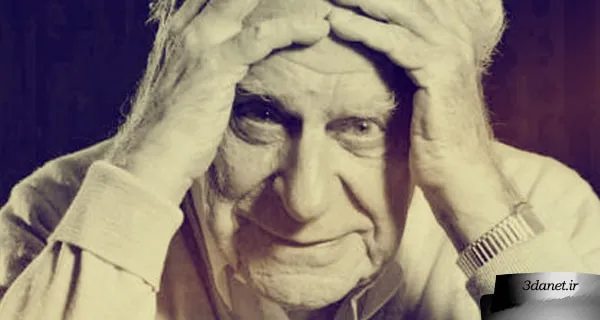
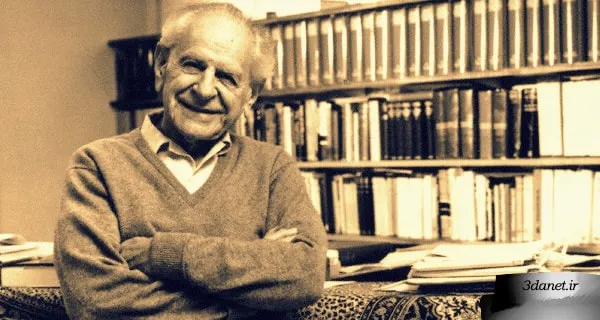
Karl Raimund Popper (1902–1994) is a renowned contemporary philosopher of Austrian origin whose theories, particularly in the philosophy of science, are widely celebrated and have placed him among the foremost philosophers of science. His two major books, The Logic of Scientific Discovery and The Open Society and Its Enemies, are among the finest scholarly works in their fields. “On the Sources of Knowledge and of Ignorance” is one of his short published essays, originally the text of a lecture delivered at the British Academy in 1960. Although the volume is very slim and, owing to its nature as a lecture, expressed in simpler language, it contains important points concerning his theories. Popper’s argument in this book carries a highly significant epistemological message that can, in a broader dimension, also extend to the methods of statesmanship and governance. In fact, the core idea of the book is that our way of looking at epistemological questions is closely bound up with authoritarianism and totalitarian concepts.
In this book, Popper first examines the conflict between two great schools in the philosophy of science. The first is the school of classical empiricism, represented by Bacon, Locke, Berkeley, Hume, and John Stuart Mill; the second is classical rationalism and intellectualism, whose theorists are Descartes, Spinoza, and Leibniz. Both empiricists and rationalists believed in one fundamental principle: the characteristic of the “manifestness of truth.” In their view, truth is a gem hidden behind a veil, and with a little investigation the face of that enchanting idol can be revealed (optimistic epistemology). Empiricists regarded observation and the test of experience as the means of revealing truth, whereas rationalists considered reason and mental deductions to be its discoverer. Popper states that the belief of both groups can lead to dreadful consequences. From the perspective of the representatives of these two schools, if the searching individual makes sufficient effort, he will certainly attain the truth. Consequently, if someone cannot partake of the truth, he is probably in the clutches of the devil, or his senses and reason are captive to falsehood. Yet there has also been another group in history that defended a kind of pessimistic epistemology. Plato and Socrates are the chief representatives of this group. In this school, truth becomes manifest to man when the searching individual connects his soul to the divine soul and transports himself from the material world to the world of Forms. In this approach, the world is merely an appearance of truth, and to reach its essence one must connect oneself to a higher power. This theory was later expressed in the form that all truth lies within us, and to attain it we need a kind of “midwifery” to draw it out from within. Popper sees optimistic and pessimistic epistemology as sharing a common principle, namely their authoritarian character. For example, Bacon, as a quintessential representative of the empiricists, also—alongside Plato and Socrates—believes in a kind of midwifery, with the difference that in his philosophy nature replaces God, and as before, human beings must purify themselves in order not to be deceived and to be able to uncover truth through the observation of nature. Hence, all three mentioned schools suffer from a “tendency toward a single source of authority.” Plato and Socrates sought this source in the heavens; empiricism sought it in the senses, and rationalism in the intellect. With this approach, in the philosophies of Bacon and Descartes, authoritarianism was not eliminated; rather, its reference point changed, shifting from God to man. Because this philosophy entrusts the authority over truth to human beings—and in fact to a group of human beings—it is afflicted by corruptions whose examples can be clearly observed throughout history.
But this question remains unanswered: what, then, are the sources of human knowledge? Popper’s answer to this question is as follows: these sources are various, but none of them holds authority. Both experience and reasoning can assist humans in the process of knowing, but neither is considered the ultimate source. In fact, classical epistemological systems answer the question of what the source of knowledge is, but they never question the legitimacy of the question itself. From Popper’s perspective, the very nature of such questions has an authoritarian root. Similar questions circulate in politics as well, for example: Who should rule? Authoritarian answers can also be given to this question, such as the best, the wisest, the majority, and so on. Whereas Popper sees a flaw in the very principle of this question. This question should be reduced to questions like, “How should we organize political institutions so that the harmful deeds of bad or incompetent rulers are limited as much as possible?” From Popper’s perspective, just as there are no ideal governments, there are also no ideal sources of knowledge, and all sources may lead us into error. We must also replace such authoritarian questions with another kind, such as: “How can we detect and eliminate error?” Accordingly, there is no definitive, pure, and unblemished source in the world. Popper calls his epistemology “critical rationalism” and believes that theories and hypotheses must be subjected to continuous criticism, refinement, and correction. Authoritarian theories seek to find a pedigree for the validity of truth, like a pure-hearted, noble knowledge or, if possible, God, but in critical rationalism, the origin of an idea is not important; rather, the importance of a hypothesis lies in the resistance and evolution it can demonstrate in the face of the onslaught of forthcoming criticisms. All hypotheses must be put to the test. One should not seek the source of truth, but rather the proposed solutions for attaining truth must be constantly tested so that we may draw closer and closer to the truth. With this modest claim, Popper sees truth as dependent on the critical discourse of various hypotheses and states that a hypothesis possesses a greater share of the truth if it can evolve through criticism, refinement, and correction by means of various tools such as tradition, observation, and reason. Hence, the solution to every problem itself gives rise to new problems. And this process will continue indefinitely.
In Popper’s words, the more we learn about the world, and the deeper this learning becomes, the more our knowledge of what we do not know—our knowledge of our ignorance—takes shape, and its precision and clarity increase. In fact, “the great source of ignorance” lies in the fact that our knowledge is certainly finite, whereas our ignorance is necessarily infinite. He believes: even if we learn nothing else from this path beyond the small expanse of our knowledge, it is still worthwhile to strive for an understanding of the world. This scientific ignorance can remove many problems. It is also fitting not to forget that while the various small knowledges we possess distinguish us greatly from one another, we are all equal in our infinite ignorance.
.
.
The book Conjectures and Refutations has been published by Ney Publishing, translated by Abbas Bagheri.
Introducing the book Conjectures and Refutations, Karl Popper, translated by Abbas Bagheri
Text author: Iman Taji
.
.




Discussion5 comments
انصافا جامعه باز کتاب به شدت غیر علمی و ضد فلسفه است. پوپر به هر رطب و یابسی متوسل شده تا از شأن افلاطون حکیم و هگل بزرگ بکاهد. بقول دکتر داوری این کتاب در خود بریتانیا ناشر معتبری پیدا نمیکرد تا آن را چاپ کند. حجم مغالطات و دروغ پردازی ها درباره افلاطون از حد گذشته و به نفرت از او رسیده. لذا تعجب است که میگویید از بهترین کتابها ست
سلام و عرض ادب لطفا اگر امکان داره کتابی رو برای آشنایی با فلسفه معرفی کنید. سپاسگزارم
سلام و درود به این مطلب در کانال تلگرامی صدانت توجه کنید: t.me/sedanet/4347
با سلام بیش از یک سالی هست که با این وبسایت آشنا شدم. واقعا مطالب مفید و بسیار جدیدی در این وبسایت منتشر میشه به همین خاطر میخوام قلبا از همه دست اندرکاران این مجموعه تشکر کنم. تندرست و شادکام باشید.
سلام و درود ممنون از نظر لطف شما