Religion
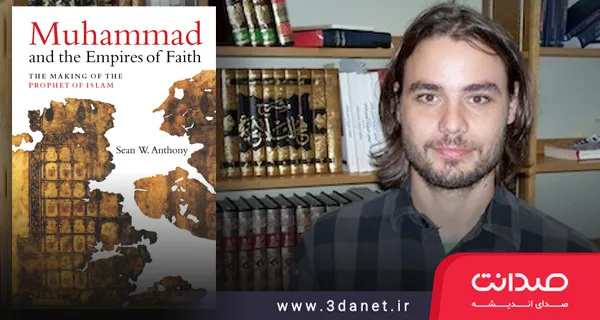
A Report on the Book Muhammad and the Empires of Faith
The book Muhammad and the Empires of Faith is a methodological attempt to reconstruct the image of the Prophet; by critiquing the sīra and maghāzī texts, it proposes horizontal and vertical methods to illuminate the Prophet's life through archaeological evidence and non-Muslim sources.
A Report on the Book Muhammad and the Empires of Faith
Iman Taji
Muhammad and the Empires of Faith, subtitled The Making (or Production, according to the translation of Zuhair Mirkarimi) of the Prophet of Islam[1], is a work by Sean William Anthony[2], published in 287 pages by the University of California Press in 2020. According to one researcher[3], when Anthony went to the Princeton Institute for Advanced Study in 2013, he was supposed to work on the subject of apocalypticism in Shi‘i texts. However, most of his time was spent researching the historical figure of the Prophet, and the result was this book. He is a student of the renowned historian and Islamicist, Fred Donner[4], and is currently a professor at Ohio State University.
Before entering the main text, one must understand the context in which this book was written and what its purpose is. Anthony attempts to answer these questions in the book's introduction (The Making of the Historical Muhammad). Muslims began writing the biography of the Prophet approximately two to three centuries after his death, resulting in texts known as sira and maghazi (battles). These texts are essentially a compilation of all the oral reports available in the author's era. Of course, for greater assurance, the authors tried to collect these reports from individuals whose lineage could be traced back to the Companions close to the Prophet. Throughout history and even now, the sira-maghazi texts have been trusted by Muslims for extracting the life of the Prophet. However, modern historical methods show that these texts are by no means reliable, due to their basis in oral reports and the significant temporal distance from the Prophet's era. Oral reports are reconstructed based on the memory and recollection of the narrator. These reports are, in fact, memories, and memories should not be conflated with history. Memories, rather than conveying history, reflect the inclinations and aspirations of their speaker. Memories are a narrative, story-like account of history in which an effort is made to construct a collective or individual identity for their proponents. History, as soon as it is remembered and narrated, transforms into a legend woven into the fabric of the present time. Hence, many researchers have questioned the historical value of the sira-maghazi texts, viewing them with great skepticism and deeming their use for reconstructing the history of the Prophet impossible. In the opinion of many researchers, our knowledge of the Prophet's life is almost nothing, or at least very limited. Anthony's book is written within this context. He accepts that the sira-maghazi texts are manipulated, derived from memories, and in other words—historically speaking—second-hand texts, but in this book, he endeavors to show that, despite all this, methods can be employed to make historical use of these texts. Anthony believes that if we utilize correct and scientific methods, we will be able to illuminate corners of the Prophet's dark and obscure life.
Someone unaware of the book's aim might, after reading it, think that it lacks logical order and is a collection of unrelated chapters. But it must be understood that Anthony's book is not a biography of the Prophet, nor—contrary to what its title suggests—an attempt to construct one. This book is a methodological endeavor for scholarly research and working with sira-maghazi texts, and the correct, comprehensive method of analyzing them. Using these methods and the examples[5] provided in the book, Anthony hopes that in the future and through further research, a clearer picture of the Prophet's life can be presented. In fact, this book is significant more for its methodology than for its historical information and data.
Thus, to elucidate his method, he divides the sources necessary for accessing the life of the Prophet into four categories in order of importance: (1) the Qur’an, (2) inscriptions, writings, and archaeological evidence, (3) writings by non‑Muslims—in Aramaic, Greek, or Syriac—who lived contemporaneously with or close to the era of the Prophet, and finally (4) sources conveying the biography of the Prophet in Arabic within Muslim hadith texts, which are not necessarily confined to the sīra‑maghāzī genre.
He believes that the Qur’an—which tops this list—should not be understood through exegetical texts, occasions of revelation, or the sīra‑maghāzī literature in general; rather—precisely contrary to common assumption—the reliability of the sīra and maghāzī should be measured against the text of the Qur’an. Of course, working with the Qur’an as a historical text presents its own difficulties, some of which the author enumerates in the introduction. The first and perhaps most significant problem in approaching the Qur’an is that this book is not a historical text. The Qur’an is a text written with a particular worldview(s), and it is difficult to extract historical events from it. The language of the Qur’an is rhetorical and literary rather than historical. For this reason, Anthony in this book relies more heavily on the second and third categories of sources and, by using them, attempts to achieve two main objectives: (1) a comparative reading and subsequent validation of Islamic sīra‑maghāzī texts alongside contemporary non‑Islamic sources available from the first and second centuries AH. He terms this the horizontal method. (2) The vertical method, in which the chain of narratives within Islamic texts—sometimes transmitted in separate traditions—is examined and analyzed, and the original transmitters are identified; in this way, amid various readings, one can explore the environmental factors, political circumstances, and social parameters that shaped the sīra‑maghāzī genre. Following this introduction, what comes in the remainder of the book are examples and instances—at times scattered and unrelated—of the method Anthony explained in the book’s introduction. The book is structured in three general parts, each containing different chapters.
Part One: Before the Formation of the Sīra‑Maghāzī Texts
Chapter One: The First Witness
The first question that arises is: apart from the Qurʾān, where is the earliest source that mentions the historical figure of the Prophet, and where was it found? It should be added here that some researchers, due to the absence of historical sources in the first century that contain a direct reference to the Prophet, have questioned the historical existence of Muhammad. Anthony, however, believes that our earliest sources for proving the historical existence of the Prophet are not only limited but are rich enough that certain historical and biographical details can be extracted from them. He first analyzes certain archaeological findings, including papyri surviving from the years 23 and 24 AH, coins remaining from the first century, and inscriptions (for example, the inscription of al-Rayyān ibn ʿAbdallāh from the year 78 AH). Yet it can still be said that such documents are at least twenty to thirty years removed from the Prophet’s death. The closest source in which the historical Muhammad is mentioned are non-Islamic sources that are only two years removed from his death. Here he analyzes three surviving non-Arabic texts—Greek and Syriac. These texts belong to Christians who lived in the Eastern Roman Empire (around present-day Syria). Although these sources, due to their age, have lacunae and are also very brief (a few sentences), they can provide us with valuable information. This information is obtained when we can engage with them methodically. This section of the book is particularly important from a methodological standpoint and shows us how much information and analysis can be extracted from a text of a few lines. In one of the texts, it is specifically mentioned that the Prophet of the Saracens[6] (the name by which the Romans called the Arabs; probably the name of an Arab tribe that lived near the Roman borders) claims to possess the key(s) to Paradise.[7] For this reason, in the next section, Anthony analyzes the motif of the key to Paradise. The appearance of this motif in a Christian text from Late Antiquity should not be taken lightly, for an ideological meaning is embedded within it. This issue is particularly important because some researchers believe that Muhammad—in his own view—was not the bringer of a new religion but rather a continuator of the Judeo-Christian religious line, and that the official religion of Islam was constructed later, especially during the time of Caliph ʿAbd al-Malik ibn Marwān. The key to Paradise can be interpreted in two ways. The first interpretation carries a Christian ideological charge, wherein, in Late Antiquity, the holder of the key to Paradise was in fact the heir of Christ (or Peter[8]). If we look from this perspective, the Prophet was in fact claiming the inheritance of Jesus and was practically positioning himself in opposition to the Pope and the Roman government. Through various analyses and comparisons, Anthony concludes that this interpretation is incorrect and that the meaning of the key to Paradise in the aforementioned text is an apocalyptic narrative and a reference to Paradise in the other world. He then proceeds to a vertical analysis of Islamic sources and considers ḥadīths that, for example, introduce jihād or the sword as the key to Paradise to be later Umayyad fabrications intended to encourage conquests. One of the features of Anthony’s book—given his research background—is his attention to Shīʿī sources, which are less frequently considered by other researchers. In this same section, he offers an analysis of the issue of intercession in Shīʿism along the lines of the motif of the keys to Paradise.
Chapter Two: Muḥammad the Merchant
Some researchers have doubted the Prophet’s occupation as a merchant, which is mentioned in the sīra texts. In this chapter, using the same horizontal and vertical methods mentioned, Anthony addresses this issue. Despite the mention of the trade profession in some early Arabic sources, the oldest Arabic sources introduce the Prophet as a shepherd. He critically analyzes many of the sīra-maghāzī texts in this regard with great perceptiveness and tries to uncover the reasons behind the fabrication of certain narratives. For example, one of the most important narratives is the Prophet’s meeting—when he had come for trade—with a Christian monk who, right then and there, discerns the gem of prophethood within him. He compares this narrative with Christian texts and shows examples of the exchange between sīra-maghāzī texts and the Christian tradition in the early centuries.
Part Two: The Formation of the Sīra-Maghāzī Texts
Chapter Three: The Beginning of the Sīra-Writing Tradition
This section examines the origins, causes, factors, and the manner in which the earliest sīra-maghāzī writings took shape. In particular, the role of the Umayyad and Abbasid caliphates is highlighted. The earliest reports of the writing of the Prophet's sīra are linked to the Umayyad caliph ʿAbd al-Malik ibn Marwān. Therefore, understanding the Umayyads and their objectives is crucial for grasping how these texts were composed. Attention must also be paid to the personal and tribal aims of the first authors and transmitters of the sīra. For example, ʿUrwa ibn al-Zubayr (son of the Prophet's Companion al-Zubayr ibn al-ʿAwwām) is one of the most important transmitters of the sīra. His role in foregrounding the Zubayrid tradition, as well as his connections with ʿĀʾisha, the Prophet's wife, and Abū Bakr, the first caliph, should not be overlooked. The earliest sīra writings can be attributed to the letters of ʿUrwa ibn al-Zubayr and ʿAbd al-Malik ibn Marwān. Hence, Anthony devotes a chapter to these very letters and presents in full nine letters attributed to him—which have reached us through other texts.
Chapter Four: The Letters of ʿUrwa ibn al-Zubayr
As noted, this section translates and quotes the text of the letters. The different narrative traditions (Basran, Medinan, and the transmission of Ibn Shihāb al-Zuhrī) are analyzed, and what is said and left unsaid is subjected to critique. In dealing with historical texts—especially those suspected of being ideological—one must note that it is not only what is said that matters; what is left unsaid, whether deliberately or inadvertently, can also be significant for a historian. Although ʿUrwa can be counted among the earliest transmitters of the sīra, one must also not forget that the accounts of ʿUrwa ibn al-Zubayr were not written down but were transmitted orally. Thus, one must ask: when can the earliest written records of the sīra be traced? This topic is pursued in the next section.
Chapter Five: Courtly Motives
Determining the precise time when the sīra-maghāzī texts were written is difficult, but it appears that ʿUmar ibn ʿAbd al-ʿAzīz was the first to order the compilation of books on this subject. However, it can be sought with greater certainty in the time of Hishām ibn ʿAbd al-Malik. He requested a Medinan scholar named Muḥammad ibn Muslim, known as Ibn Shihāb al-Zuhrī, to write down what he knew of ʿilm (ḥadīth). Although there is evidence that al-Zuhrī himself undertook the writing of certain treatises, no direct source from him survives today. Therefore, understanding the different narrative strands from him can aid us in analyzing the remaining sīra texts. Anthony enumerates his various schools and different students, providing the necessary explanations about them. However, with the onset of the Abbasid period, an individual named Muḥammad ibn Isḥāq (80–151 AH) becomes the principal transmitter of the sīra texts. Thus, the book analyzes Ibn Isḥāq's relationship with the Abbasid court and examines the accusations leveled against him by some contemporary scholars in this context. Unfortunately, no writings from Ibn Isḥāq himself have reached us directly either. Hence, it is necessary to examine his narrative traditions as well. Consequently, the Medinan-Baghdadi, Kufan, Ḥarrānian, the tradition of the people of Rayy, and the Baghdadi tradition in transmitting the accounts of Ibn Isḥāq are introduced. Ibn Isḥāq can be called the creator of the sīra-maghāzī genre. After him, this path continued officially and professionally.
Part Three: Analysis of Sīra-Maghāzī Texts in the Context of Late Antiquity
Chapter Six: Prophethood and the Empires of Faith
In light of what was said in the previous sections, governmental and political demands were the impetus and driving force behind the writing of the sīra-maghāzī texts. Hence, the “imperial discourse,” derived from Muslims’ familiarity with the Sasanian and Roman empires, is clearly visible in these books. Although the Prophet is not called a king and the term malik is rarely found in such texts, the use of the term mulk (dominion) of the Prophet and his community is abundant. In these texts, it is made to appear as though the Prophet harbored ambitions for power from the very beginning. For example, reports can be found in these texts from the Prophet’s childhood in which it is predicted that he would one day possess mulk and his dominion would endure among his tribe—a narrative fabricated to suit the taste of rulers. This line can also be traced in the development of Qurʾānic concepts of this period, where they extract the worldly concept of mulk in the exegesis of Qurʾānic verses from the “dominion of Abraham” and consider themselves the Abrahamic heirs to whom God had granted dominion. In this section, verses from the Qurʾān used in Muslims’ governmental analyses are presented. Then, one of the most overtly governance-oriented reports in the sīra-maghāzī books is critiqued. This report concerns Heraclius, the Eastern Roman emperor, who, after defeating the Sasanians, dreams that the kingdom of the circumcised has arrived. The dream interpreters, who interpret the aforementioned term as referring to the Jews, advise him to kill the Jews, but later an astrologer tells the king that the Jews are not meant, but rather the Arabs. Anthony traces the roots of Heraclius’s dream in Christian texts and analyzes the various elements of this story in Latin and Greek texts to uncover the origins of the Muslim narrative. He concludes that what is transmitted in the sīra-maghāzī texts is not entirely a fabrication of the Muslim mind but is rooted in an oral narrative among the people of that time, which the earliest sīra writers adapted by altering part of the narrative to suit their own purposes. Anthony’s investigations show that Ibn Shihāb al-Zuhrī (as the first transmitter of the story) relied on a Syriac source for his account. Ample evidence is then cited to support this hypothesis. What is presented in this chapter helps the researcher to (1) see the influence and intervention of foreign texts and royal discourse (specifically Roman, in this case) in the recording and transmission of sīra narratives, and (2) learn to what extent a horizontal and parallel analysis of Arabic and non-Arabic sources can yield valuable information and data that will astonish historians.
Chapter Seven: Muḥammad and Cadmon[9]
The sound æ in Scandinavian languages is the same as the fatḥa vowel, which does not exist independently in modern English. Some scholars believe that the Scandinavian languages are the root of the English language. The story of Cædmon—who lived in the lands of present-day England—is as follows: In the seventh century CE (the first century AH, roughly contemporaneous with the rise of Islam), an obscure man named Cædmon lived in a region far from the city. He was a trustworthy person, and everyone in his tribe regarded him as reliable, entrusting their animals to him for care. But one night his life was transformed. When he had withdrawn from the village festivities and crowds and settled in a quiet place, he suddenly fell asleep. In that state, he felt someone standing before him, calling him: Cædmon, sing something for me[10]. Since Cædmon was not a learned or literate man, he replied, I cannot sing. The figure answered, You must sing. Cædmon asked, What should I sing? The voice said, Sing about the beginning of created things! He then began to sing verses about God the Creator, things he had never heard before. When he awoke, he remembered everything, as if a divine trust had been placed in his heart. As can be seen, this narrative is astonishingly close to the famous account by Ibn Isḥāq in his Sīra of the Prophet’s first revelation in the Cave of Ḥirāʾ and the relevant verses in Sūrat al-ʿAlaq (the Iqraʾ narrative). In this chapter, the roots of these two stories and their connection to one another are examined. The main problem with these two narratives is that they were transmitted at almost the same period, making it difficult to consider one as derived from the other. Anthony recounts the opinions of other specialists in detail and critically examines all the elements of the story with particular precision. Many possibilities for analyzing this similarity have been offered. For instance, it is not even unlikely that Ibn Isḥāq’s account reached England (just as some Umayyad-era coins reached English lands in the same period) and provided the material for constructing the Cædmon story. But Anthony’s view is that both narratives (independently) are accounts blended with literary and aesthetic elements, aimed at mythologizing and heroizing great figures—a literary genre that can be traced in the hagiographical writings of late antiquity. Followers of great figures usually like to mix their biographies with exaggerations and imaginary tales to present an appealing and artistic narrative. To bring this closer to mind, one can look, for example, at ʿAṭṭār’s Tadhkirat al-Awliyāʾ. In each entry, if we look at the early accounts of each mystic, we notice that before their transformation they were ordinary people (though with one or more outstanding character traits—in the accounts of Ibn Isḥāq and Cædmon, trustworthiness), but a single extraordinary, story-like event in their lives turns them into a wayfaring mystic. In the end, to further prove his claim, Anthony states that in the early texts of the Sīra, the Iqraʾ narrative is not the only account describing the beginning of revelation. Qurʾānic scholarship also shows that the early verses of Sūrat al-ʿAlaq relate more to the middle and late Meccan period, not the beginning of the Meccan era. He then cites the differing accounts in the Sīra books that describe the beginning of revelation, although in this section Anthony’s evidence for proving his claim appears weaker than in previous sections, his power of analysis and dissection of material is something that seems very impressive.
In the end, I must reiterate that this book is not a biography or a coherent narrative like other books, but rather a scattered collection of different and sometimes unrelated chapters brought together for another purpose. Anthony’s effort in this book has been to convince the reader and researcher that although the Sīra-Maghāzī texts are—historically speaking—second-hand sources for accessing the life of the Prophet, through their methodical analysis one can obtain first-hand information about the Prophet’s life, in order to illuminate at least a part of his obscure life.
.
.
[1] Muhammad and the Empires of Faith: The Making of the Prophet of Islam
[2] Sean William Anthony
[3] Khalil, Mohammad Hassan, Journal of the American Academy of Religion 88.4 (2020): 1205-1208.
[4] Fred M. Donner
[5] Case Study
[6] Saracens
[7] Keys to paradise
[8] Peter
[9] Cædmon
[10] Sing
.
.


Discussion0 comments
No comments yet; let yours be the first voice.