Religion
Is a Secular Muslim Possible?
A virtuous Muslim can reconcile faith with 'tolerance based on mutual respect,' thereby making a form of Muslimness compatible with the fundamental requirements of secularism; an exposition of the framework for this compatibility and the ethical principles of secularism in the public sphere.
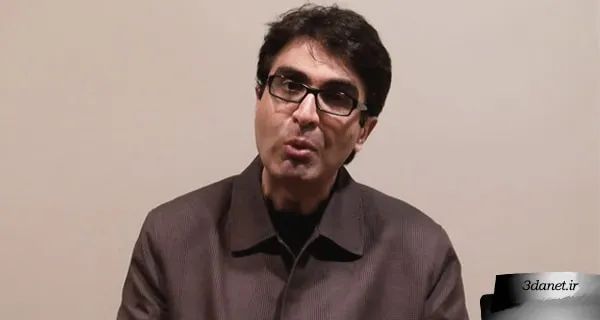

Arash Naraghi
AuthorMy claim in this essay is that being a Muslim is compatible with the virtue of “toleration based on mutual respect,” and therefore a form of Muslimness can be reconciled with the fundamental requirements of secularism. Thus, in this article, in the first step, I will briefly state my conception of secularism and the concept of “toleration based on mutual respect,” and then in the second step, I will briefly explain within which theoretical framework one might possibly arrive at an understanding of Muslimness that is reconcilable with toleration based on mutual respect and the requirements of secularism.
1- My main question in this essay is:
Are being a Muslim and secularism compatible with one another? Can an individual be both a Muslim and consistently adhere to the requirements of secularism?
As far as I understand, one of the most important preconditions for the realization of secularism is commitment to a virtue that can be called “toleration based on mutual respect.” If this claim is correct, then the answer to the first question will depend to a large extent on another question:
Can a Muslim, qua Muslim, recognize the virtue of “toleration based on mutual respect”?
My claim in this essay is that being a Muslim is compatible with the virtue of “toleration based on mutual respect,” and therefore a form of Muslimness can be reconciled with the fundamental requirements of secularism. Thus, in this article, in the first step, I will briefly state my conception of secularism and the concept of “toleration based on mutual respect,” and then in the second step, I will briefly explain within which theoretical framework one might possibly arrive at an understanding of Muslimness that is reconcilable with toleration based on mutual respect and the requirements of secularism.
2- In this article, the phenomenon of secularism is defined in relation to the public sphere. According to this conception, the binding laws and policies that are to be applied by the government for the administration of the public sphere in a pluralistic society must be subject to the following three moral principles (let us call these three principles the “moral principles of secularism”):
First principle: Certain secular or non-religious reasons can justify the binding laws and policies regulating the public sphere, but no religious reason, by virtue of being religious, can play such a role.
Second principle: Therefore, citizens morally ought not to support laws and policies for which they believe there exists no acceptable non-religious rational basis, even if from a religious perspective, cogent evidence can be provided for those laws and policies. In other words, the moral duty of citizens is never to use their political influence to enact and entrench laws and policies that, in their belief, are justifiable only on religious grounds and for which there is no acceptable secular reason.
Third principle: Believers and practitioners of religion may support laws and policies rooted in their religious and faith-based beliefs, but they must be able, in the space of public and political dialogue, when justifying those laws and policies, to also present non-religious, reason-approved grounds. The moral foundation of these three principles is a form of the principle of justice. According to this principle, in a pluralistic society where citizens follow diverse theological, moral, or philosophical systems, it is contrary to justice for the beliefs of one particular group to become binding upon other groups who do not share those beliefs—against their will and judgment.
For example, suppose a group of citizens in a pluralistic society believes that unveiling is a sign of women's independence and freedom, and therefore a law should be enacted requiring Muslim women to unveil against their will and judgment. Here, a particular group seeks to impose its own beliefs about lifestyle on other groups who do not share those beliefs—against their will and judgment—and therefore, by virtue of the principle of justice, this effort and the law resulting from it must be considered unjust. On the other hand, suppose that within a pluralistic civil society, a group of Muslims believes that abortion is forbidden by religious decree, and therefore, it must also be prohibited by law. According to the “ethical principles of secularism,” this group, when advocating for a law banning abortion in the public sphere, should not resort to religious verses and traditions. However, this group can, in advocating for a law banning abortion, argue, for example, that: (a) the fetus has a right to life, (b) violating the right to life is unjust, (c) abortion violates the fetus's right to life, therefore, (d) abortion is unjust. This argument can be understandable, and under certain conditions acceptable, to citizens who do not recognize the authority of Muslim religious sources. Therefore, the moral duty of Muslims as responsible citizens of a civil society is to defend, in the public sphere, the rulings to which they have a religious attachment, by virtue of non-religious reasons that are, in principle, understandable and acceptable to other citizens, and to try in this way to influence the laws and policies regulating the public sphere—which is the rule of life for all citizens.
Of course, in some circumstances, social reformers may use a religious language to advocate for the enactment of a law or the adoption of a public policy, as it is more understandable to the majority of religious citizens. But even in these cases, those reformers must ensure that they can also defend those laws or policies by virtue of non-religious reasons.
3. This conception of secularism entails that the individual permits others to turn away from what, from their perspective, is right and to organize their lives on a basis that, in their opinion, is false. In other words, it seems that a precondition of secularism in the aforementioned sense is a kind of tolerance or forbearance.
The concept of tolerance, in the strict sense of the word, has three essential aspects:
The first aspect can be called the “epistemic or doctrinal aspect.” Tolerance gains meaning and existence when individual or group A considers their own belief or behavior to be right and considers the belief or behavior of the opposing individual or group to be false.
The second aspect can be considered the “volitional or practical aspect.” Tolerance gains meaning and existence when the individual or group that considers itself right and the opposing party false is willing, for some reasons, to coexist peacefully with the opposing group.
The third aspect can be called the “criterion of distinction.” The tolerant individual must be able to determine the limits of tolerance in a rationally acceptable manner. Tolerance or forbearance cannot be considered an absolute virtue. Some beliefs or behaviors are intolerable. For example, suppose the followers of a particular faith believe that the path to salvation is engaging in sexual relations with young children. Should one tolerate the belief and behavior of this people? Tolerance is not complete unless the individual finds a rationally acceptable basis for distinguishing between false beliefs that are worthy of tolerance, on the one hand, and false but intolerable beliefs, on the other.
Therefore, tolerance is not possible unless (at least some degree of) the “right to be wrong” is recognized. The essence of tolerance is recognizing (at least some degree of) the right to be wrong. (This degree must be determined based on conventional collective reason.)
To clarify the meaning of the “right to be wrong” or “tolerance,” one must distinguish between the two concepts of “being right” and “having a right.” The following propositions illustrate the distinction between these two uses of the word “right”:
(1) Performing action A is right. (That is, it is correct and commendable for action A to be performed. For example, when we say helping the poor is right, we mean it is a correct and commendable act.)
(2) I have a right to perform action A. (That is, performing action A is among my rights, and therefore others are obligated not to prevent me from enjoying that right. For example, suppose I have lent you money and the time for its repayment has now arrived. In this case, I have a right to demand that money from you; I am a right-holder with respect to the repayment of that loan, and you are obligated to repay it.)
Now, keeping this distinction in mind, we can claim that “the right to be wrong” or “toleration” entails affirming the following proposition:
Proposition (1): From the fact that I have a right to perform action A, it does not follow that performing action A is right.
(For example, suppose I have lent you money and the time for its repayment has now arrived. But a few days before the due date, your young child suddenly fell seriously ill, and you were forced to spend that money again to save your child's life, and therefore, you are now unable to repay that loan. Under these circumstances, I still have a right to demand that money from you, but in all likelihood, demanding that money under these conditions is not a right / correct / commendable thing to do.)
This proposition can also be expressed as follows:
Proposition (2): From the fact that performing action A is wrong / incorrect / uncommendable, it does not follow that I do not have a right to perform it, or that you have a right to prevent me from performing that action.
(For example, many doctors believe that smoking is harmful to human health, and therefore, it is a wrong / incorrect / uncommendable act. But from this, assuming it is true, it does not follow that I thereby lose the right to smoke and that you become permitted to prevent me from smoking.)
These examples show that there is no logical entailment relationship between “being right” and “having a right.” That is, affirming or denying one does not logically entail affirming or denying the other.
Therefore, in the expression “the right to be wrong,” the first “right” is of the “having a right” type, and the second “right” is of the “being right” type, and the meaning of that expression is that “being wrong” does not necessarily negate “having a right.”
Assuming this basis, we can now distinguish between three types of toleration: (first) toleration based on domination; (second) toleration based on a balance of power; and (third) toleration based on mutual respect.
The first type, namely “toleration based on domination” or “vertical toleration,” is generally a relationship established within the power structure between dominant and subordinate groups. Here, the dominant group (e.g., the ruling majority) permits the subordinate group (e.g., the defeated minority), within a limited framework, to organize its life based on its own beliefs, provided it does not challenge the authority and domination of the dominant group in the public sphere. This type of toleration can be carried out either based on practical expediencies (for example, the dominant group concludes that other options are more costly and this degree of toleration can more effectively contribute to the stability and peace of society), or based on certain moral principles (for example, the dominant group believes that from a moral perspective, it might be wrong to forcibly compel the subordinate group to abandon some of its deeply rooted beliefs and behaviors).
The second type, namely “toleration based on a balance of power” or “horizontal toleration,” is generally a relationship established within the power structure between groups that enjoy more or less equal political and social power. Here, each opposing group strives to impose its domination and authority on the other rival groups as much as possible, but ultimately, they all realize that none possesses sufficient power to dominate the others, and consequently, it is better to tolerate one another and establish a kind of expedient ceasefire in society to ensure social stability and tranquility, as well as to secure their own interests more effectively.
The third type, that is, “toleration based on mutual respect,” arises not so much from necessity or practical expediency as from the respect that both parties hold for the principle of justice and for the human dignity of the “other.” Here, “others” are also regarded as autonomous, moral agents who possess equal human worth and dignity and have the right to organize their lives according to their own judgment and their own conception of happiness. Here, the tolerant individual, even if they consider the other’s thought and way of life to be false, nonetheless sees it as the product of that person’s autonomous judgment and decision, and views respecting that judgment and decision as the very essence of respecting their reason and free will as a dignified human being. Under these conditions, if one group tries to impose its beliefs and values on others against their will and judgment, it has in fact violated respect for their reason and free will as autonomous, moral agents.
But in this case, on the basis of which rule should the public sphere—which is the common property of all citizens, regardless of their system of beliefs and values—be managed and regulated? In other words, based on which mechanisms should the citizens of a pluralistic civil society determine the binding laws and policies that regulate the public sphere? It seems that the principle of justice requires that these rules be, as far as possible, independent of the specific beliefs and values of a particular group in society, and be founded on a basis that is understandable and acceptable to all citizens, regardless of their specific ideological and value systems (including their religious beliefs). It seems that the best rule for managing and regulating the public sphere here is the recognition of secularism. Therefore, those who are committed to toleration based on mutual respect are highly predisposed to accept secularism as a necessity for the fair management and regulation of the public sphere.
Of course, both “toleration based on the balance of power” and “toleration based on mutual respect” can pave the way for secularism. However, toleration based on the balance of power is relevant merely by virtue of force or practical interests and necessities, and becomes unstable and void as soon as the balance of power is disrupted, whereas toleration based on mutual respect fundamentally arises from the conscious and autonomous decision of citizens and reflects the culture and ethics of society, and can remain effective even in the absence of external factors (such as the balance of power). Therefore, in a society where toleration results from the balance of power, secularism is an accidental and essentially transient matter, but in a society where toleration is based on mutual respect, secularism is an endogenous matter and a necessary, inseparable part of the manner of fairly managing and regulating the public sphere as the common property of the society’s citizens.
4. But in contemporary Iranian culture, religious intellectuals (especially Abdolkarim Soroush) have tried to provide a basis for peaceful coexistence based on mutual respect within a pluralistic civil society, based on the theory of religious pluralism. This theory of religious pluralism is built upon two claims:
The first claim is that religious pluralism is true. Here, the claim of religious pluralism can be considered of two types:
The first type can be called “descriptive pluralism.” According to this type of pluralism, historical data indicates that in the realm of religions, there exists an inevitable diversity that cannot be reduced to any unity.
The second type can be called “prescriptive pluralism.” According to this type of pluralism, irreducible diversity in the realm of religions is epistemically justified; in other words, different religions can be considered various and (at least to some extent) truthful conceptions of the divine reality.
The second claim is that affirming “prescriptive religious pluralism” can lay the groundwork for a kind of peaceful coexistence based on mutual respect. When the followers of a particular religion seriously consider the phenomenon of religious diversity, and reflect fairly on the reasons for their own belief and commitment, and those of the followers of other religions, they reach the conclusion that their reasons are not necessarily better than the reasons of the followers of other religions. The reasons for a Muslim’s commitment to Islam are not necessarily epistemically better than the reasons for a Christian’s commitment to Christianity. In this case, epistemically speaking, it is difficult for the followers of a particular religion to claim that truth or salvation is exclusive to them and that the followers of other religions have no share of the truth and that the path to salvation is not open to them. This awareness leads to a kind of epistemic humility, meaning that a (for example) Muslim does not see themselves as epistemically permitted to make an exclusive claim to truth and salvation. This epistemic humility inclines the individual, in the realm of theory, to recognize a share of the truth for the followers of other religions, and in practice, to show more tolerance and acceptance towards the beliefs and values of the followers of other religions. Thus, “prescriptive religious pluralism” opens the way for a kind of “peaceful coexistence based on mutual respect.”
It seems that proponents of religious pluralism and fundamentalist believers who consider truth to be exclusively theirs share an important but (in my belief) incorrect presupposition: both believe that “having rights” depends on “being right.” In other words, if person A is not right in their beliefs and values, then they either lack any rights whatsoever, or at least possess fewer human rights compared to someone who is right. The difference between an exclusivist fundamentalist and a pluralist individual is that the former considers the truth to belong entirely to themselves and their own faith, and on this basis denies the human rights of the followers of other religions (or at least grants them fewer human rights), whereas the pluralist individual, in order to avoid that conclusion, divides the truth among the followers of various religions and grants everyone a share of the truth.
Here, I am not judging the truth of the theory of religious pluralism (i.e., the first claim of the pluralist individual). But is religious pluralism the only or the best way to justify peaceful coexistence based on mutual respect?
I would like to point out two important points in this regard:
The first point is theoretical. The theory of religious pluralism is, at best, a sufficient condition for peaceful coexistence based on mutual respect, but it is not a necessary condition for it. In other words, it might be accepted that affirming the theory of religious pluralism obligates an individual to peaceful coexistence with the followers of other religions based on mutual respect, but it is entirely possible for an individual to be committed to peaceful coexistence based on mutual respect with the adherents of various religions and beliefs without necessarily believing in the theory of religious pluralism. For example, as we will see, it is entirely possible for a Muslim to believe in the exclusive truth or superiority of their own religion, but at the same time, to respect the human rights and dignity of the followers of other religions, and to coexist with them peacefully and based on mutual respect.
The second point is practical. Muslims, like the followers of other religions, deeply believe in the exclusive truth or superiority of their own religion. But the theory of religious pluralism asks them to abandon this belief and to see the truth of their religion as equivalent to that of other religions. In this respect, accepting religious pluralism seems difficult for many Muslims. Therefore, a theory that can simultaneously satisfy the following two conditions will be practically superior to the theory of religious pluralism:
The first condition is that it can justify the principle of peaceful coexistence based on mutual respect with the adherents of other religions and beliefs on a rational basis.
The second condition is that, at the same time, it does not obligate Muslims to abandon their belief in the exclusive truth or superiority of their own religion.
In fact, the theory of “religious tolerance based on mutual respect” (assuming it is possible) is the very theory that fulfills these two conditions. As we saw earlier, religious tolerance becomes meaningful and relevant only when an individual considers their own faith to be true and the faith of others to be false or (at least in terms of truth-representation or salvation) inferior, yet at the same time considers themselves morally obligated to uphold the dignity and respect of the followers of other religions and beliefs. The theory of religious tolerance and religious pluralism share the first condition, but their difference lies in the second condition.
5. The question now is whether Muslims, as Muslims, can make room for tolerance based on mutual respect and, on this basis, recognize secularism as the rule for the fair management and regulation of the public sphere within a pluralistic society? As far as I can discern, the answer to this question can be affirmative. In my view, the most important reason that can be offered for this claim rests on two main pillars:
The first pillar is the principle of justice. In the theory of religious pluralism, the fundamental concern is care for truth, but in the theory of tolerance based on mutual respect, the main concern is care for justice. One of the most important requirements of the principle of justice is the following rule (let us call it the “fair principle rule”):
The fair principle rule: Principle A is morally justified and fair only if it is universalizable, meaning that all human beings who share a common world can, in principle, adopt that principle (i.e., understand it, accept it, and apply it).
In other words, the formal condition for fairness is universalizability. If matter A under certain conditions B is good for me, this matter must also be good for others under the same conditions. For example, if repaying my loan to you under conditions A is obligatory upon me, then under the same conditions, repaying your loan to me must also be obligatory upon you. A moral rule that makes that matter obligatory upon me, but under the same conditions exempts you from it (or vice versa), would, according to the “fair principle rule,” be unjust.
In the context of a pluralistic civil society, the public sphere is the common property of all citizens, and therefore all citizens have an equal right in managing and regulating this common property. In managing common property, the rule of management and regulation is fair only if all rights-holders, that is, the owners of the common property, can, in principle, accept and apply that rule (and this is the import of the “fair principle rule”). If Muslims believe that adherents of other religions and beliefs should not impose their life beliefs and values upon Muslims, and should not establish the rules of the public sphere solely based on their own specific religious beliefs and values, then the “fair principle rule” requires that they, too, in the context of a pluralistic civil society, do not impose their life beliefs and values as a Muslim upon the adherents of other religions and beliefs.
In Islamic culture, particularly in Mu'tazilite theology and, following it, Shi'a theology, the principle of justice is regarded as a decisive principle prior to religion. In other words, the principle of justice and its requirements are determined and defined independently of religion and serve as a decisive basis for evaluating the moral validity of religion, including the rulings of Sharia. An understanding of religion, or a ruling of Sharia, that is incompatible with the principle of justice and its requirements is considered invalid. On this basis, one can conclude that those rulings of Sharia which dictate that the rule for managing and regulating the public sphere (as the common property of citizens) be established unilaterally and solely for the benefit of a specific group among those partners (i.e., Muslims) are unjust and void of validity. In this sense, within a pluralistic civil society, those rulings of Sharia that violate secularism must be considered unjust and, on this basis, invalid. The second pillar can be formulated in the form of the following principle (let us call it the principle of the “right to be wrong”):
The principle of the right to be wrong: Being wrong does not negate having a right, unless, in specific cases, a rationally convincing reason to the contrary can be provided.
As I have pointed out earlier, “being in the wrong” and “having a right” are two independent concepts, and there is no logical entailment between them; that is, affirming or denying one does not logically lead to affirming or denying the other. Of course, in a just legal system, it is entirely possible that, under certain conditions, a person’s being in the wrong in a particular case may rightfully deprive them of certain rights. For example, killing an innocent person is a wrong/incorrect/unseemly act, and if someone commits it, they will rightfully be deprived of some of their rights, such as the right to freedom. Therefore, in a just legal system, a rational criterion must be found to determine which types of “being in the wrong” can deprive an individual of some of their rights. Whatever this criterion may be, it possesses moral validity only if it adheres to the principle of justice.
The main question here is whether the assumption of a citizen being in the wrong in the realm of religious beliefs can negate their right to effective participation in the management and regulation of the public sphere. If we consider the public sphere as the common property of the citizens of a civil society, then it seems that the condition of justice is that all partners in this property enjoy an equal right in its management and regulation. In this case, as I mentioned earlier, if the rule for managing and regulating the public sphere is established unilaterally and in favor of one of the partners (for example, Muslims), then that rule must be considered unjust and therefore morally, and consequently religiously, invalid. Thus, the requirement of the principle of justice is to accept that “being in the wrong” in the realm of religion does not deprive an individual of the right to effective participation in the management and regulation of the public sphere. In other words, a religious Muslim, insofar as they are committed to the principle of justice, is morally and religiously obligated not to consider being in the wrong in the realm of religious beliefs as negating the right to effective participation in the management and regulation of the public sphere.
Of course, in Islamic religious sources, particularly the Quran, regarding tolerance towards the followers of other religions and beliefs, we encounter two types of intra-textual evidence: evidence that is apparently contrary to tolerance, and evidence that is apparently in favor of tolerance. In the face of this intra-textual evidence, two approaches can be adopted: the dominant approach among traditionalists and fundamentalists has so far been to take the intra-textual evidence against tolerance as the principle and to interpret the intra-textual evidence in favor of tolerance. However, the alternative approach is to take the evidence in favor of tolerance as the principle and to subject the evidence against tolerance to critique and re-understanding within its historical context. Muslims who have accepted the authority of the principle of justice as a moral principle prior to religion consider themselves morally and religiously obligated to always organize their intra-religious understanding in proportion to and within the radius of the principle of justice, and therefore, from their perspective, the second approach towards that intra-textual evidence is a more defensible option. One of the most important consequences of the second approach is that Muslim thinkers continuously measure the rulings of Sharia against the touchstone of the principle of justice, and revise those rulings that are incompatible with the principle of justice. A condition of being a Muslim includes adherence to the rulings of Sharia, but rulings contrary to justice lack validity and authority from a religious perspective.
6. Therefore, the main claims of this writing can be summarized as follows:
(1) One of the fundamental assumptions of this essay is that the public sphere is the common property of all citizens of a pluralistic civil society. (2) The principle of justice requires that all owners of this common property enjoy an effective and equal right to participate in its management and regulation. Therefore, the rules concerning the management and regulation of this common property must be fair, that is, such that all citizens (or owners) can choose those rules. A necessary condition for this is that the validity of these rules does not rest upon the religious beliefs and values of a specific group of citizens. (3) The principle of justice requires that being in the wrong within the realm of religion does not negate the right of citizens to effective participation in the management and regulation of this common property (i.e., the public sphere). (4) From the perspective of Muslims who adhere to the principle of justice, rulings contrary to justice are religiously invalid. (5) Therefore, a justice-seeking Muslim, by virtue of his adherence to the principle of justice, should not entrust the task of managing and regulating this common property (i.e., the public sphere) to rules that are considered valid solely on the basis of his intra-religious beliefs and values. From his perspective, rulings that dictate otherwise are religiously invalid. (6) Likewise, a justice-seeking Muslim, by virtue of his adherence to the principle of justice, should not consider being in the wrong within the realm of religion as negating the right of citizens to effective participation in the management and regulation of this common property (i.e., the public sphere). From his perspective, rulings that dictate otherwise are religiously invalid. (7) Therefore, a justice-seeking Muslim is committed to tolerance based on mutual respect, and this tolerance allows him to consistently, while considering his own religious beliefs and values as true or superior, organize the management and regulation of the public sphere in a pluralistic civil society based on fair rules that are the product of the collective common reason of all citizens of that society—rules whose validity is not indebted to the beliefs and values of any particular religion.
If the arguments of this essay are valid, then not only is being a Muslim compatible with secularism, but moreover, within the context of a pluralistic civil society, being a good Muslim depends on adherence to secularism.
.
.
Is a Secular Muslim Possible?
Author: Arash Naraghi
Pennsylvania, Bethlehem
.
.






Discussion5 comments
سکولاریسم یعنی لیبرالیسم یعنی جدایی دین از سیاست یعنی حکومتی که به دین اصالت ندهد یعنی همون آزادی واقعی حکومت لائیک مسلمان سکولار قابل تصور است
به نظر می رسد دوستان عزیز آقایان علی و علی سبط هردو با تعصب خاصی و درفضایی فاقد صلاحیت داوری نظر و تئوری آقای نراقی را به داوری نشسته اند به عبارتی دیگر درصورتی که نظریه آقای نراقی قابل نقد و احیانا رد بوده باشد حداقل اینگونه داوری و نقد و رد مقبول و علمی نبوده فاقد اعتبار لازم علمی است.بایستی مدنظر داشت که هرگونه دفاع ضعیف از هر تئوری موجب خسارت و کاهش وجهه عمومی آن نظر و هرگونه انتقاد ناشیانه و فاقد لوازم مربوطه موجب تقویت نظریه مورد انتقاد است.
بنام خدا در تایید موضوعی که «علی» در ۱۹ شهریور نوشته اضافه می نمایم که: اسلام به انسان بها میدهد روش های پیشرفت و تعالی و سعادت همیشگی را نشان میدهد . خدا از انسان می خواهد که از ارزشمند ترین الگو ها برای آموزش و تربیت نظری و عملی خود درس بیاموزد.درست برضد این ، انکار خدا و سکولاریزم تاریکی و بی هدفی است.سکولاریزم انسانها را مانند حیوانهایی می پندارد که فقط باید مواظب باشند که دیگری به آنها حمله نکند و دیگر هیچ!
متاسفانه آقای نراقی همچنان درگیردار مغالطه هایی هستند که از جنس مغالطه های سروش و ملکیان حق حسن و پسندیده نیست بلکه حق چیزیست که غیر آن باطل است پس حق بودن به یعنی که باطل نبودن و حق داشتن یعنی بر باطل نبودن, اگر اسلام حق است پس غیر آن باطل است, اگر اسلام حق دارد پس غیر اسلام باطل دارد.حال اگر عدالت به معنی محقق ساختن حقوق باشد, با این پیشفرض به طرح این مسله می پردازیم, عدالت در سکولاریسم برابر با آزادی عقیده و عمل در بعد اجتماعیست, و تنها محدودیت حاکم محدود نکردن آزادی دیگزان است که البته این در جای خود قابل بحث است, حال آنکه عدالت وقتی حاکم میشود که حقوق اجتماعی بر مبنای شریعت در بعد اجتماعی حاکم گردد, شریعت اسلام با آزادی عقیده و عمل در بعد اجتماعی در تضاد است که این خود مانع بزرگیست دربرابر جمع اسلام و سکولاریسم, فارق از طرح مباحث فقهی و قرآنی.
چه کسی وبر اساس چه مبنایی گفته که اسلام حق است ؟ که شما انرا پیش شرط فرض کرده اید ؟ اسلام هم مانند دیگر ادیان ومکاتب هم قوانین حق و بجا دارد وهم قوانین باطل ونابجا. هیچ دین ومکتبی نه حق مطلق است ونه باطل مطلق.اینکه بپنداریم که دینی که به ان معتقدیم حق مطلق است پس هر حکمی داده از طرف خدا امده است وتماما بدون اشکال است وحق چون وچرا را ازخود سلب نماییم اخر جهالت است هیچ مدرکی دال بر این نیست که احکام دینی تماما از طرف خدا امده باشد وتماما حق مطلق باشد اگر این مطلق اندیشی را از خود دور نماییم با دید بازتری میتوان همه ی ادیان ومکاتب را دید و گفته های انان را نیز شنید وانگاه بهترین را در هر حکمی انتخاب کرد نه اینکه بهترین را انتخاب کرد بعد او هرچه گفت بدون اندیشه پذیرفت خیر بهترین را در هر حکمی پذیرفت یعنی ممکن است بی دینان در حکمی معقولتر از مسلمانان ومسیحیان و.... سخن گفته باشند باید انرا پذیرفت وبرعکس انهم صادق است