Philosophy
Knowing Yourself, Knowing the Way
Without self-knowledge, choosing any school of thought leads to disorientation. Before asking how to reach a goal, one must ask why one wants it; for without self-knowledge, pursuing desires is like chasing a mirage.

Preface
In this discourse, we briefly examine the relationship between self-knowledge and choosing a path, and explore the difficulties and inevitable bewilderments a person faces in selecting any intellectual or practical school or system without knowing themselves.
1. The Human Being and Perplexity
When a human being comes into the world, they find themselves confronted with a vast and astonishing universe; a world whose material bounds are unfathomable, whose unknowns are countless, and whose sealed secrets are many. In the face of all these mysteries and wonders, human life is short, their time is limited, and their power is insignificant. In this boundless ocean, the human being sees themselves as alone and adrift, and it is for this reason that wonder, dread, and astonishment encompass not only the individual's existence but the whole of human history.
We are ignorant of the beginning and end of the world,
The first and last pages of this ancient book have fallen out. (Kalim Kashani)
Every thoughtful human being tries, to the best of their ability, to draw back the veil from the mysteries of existence and illuminate a corner of this endless unknown for themselves and others. And one of the greatest of these mysteries is the human being's own existence. The human being finds themselves faced not only with a sea of wonder in the external world but also with an infinity of unknowns in the inner world. And the wonder of the inner world is perhaps greater than the majesty of the outer world. Questions such as who the human being is, where they have come from, where they are going, what their place is in this world, and what they should do in this not-so-long opportunity of presence, have always challenged human thought.
My thought by day, and all night my speech,
Is why I am heedless of the state of my own heart.
From where have I come, what was the purpose of my coming?
To where am I going? Will you not show me my homeland?
I remain sorely amazed: for what reason did He make me?
Or what was His purpose in this making of me?
Until you truly show me my abode and the way,
I shall not rest a moment, I shall not draw a breath... (Attributed to Rumi)
And it is from here that self-knowledge and gnosis, in the sense of knowing the nature of the human being and discovering the secrets of their inner self, enters the arena of thought and reflection. The motivation for self-knowledge is to illuminate the human being's place in the universe, and what causes their suffering and what is the source of their happiness. What causes their flourishing and what things cause the corruption and fruitlessness of their life. And knowledge of the human being is, of course, not separate from knowledge of the world. In this sense, self-knowledge encompasses an immensely vast domain of human knowledge. So much so that it can be said the entire adventure of the conscious human being's life and growth is a continuous process of self-knowledge and self-actualization. A self-knower is one whose entire movement is a quest on the path of self-discovery and bringing their capabilities and potentialities to fruition.
Throughout history, all philosophical schools and divine and non-divine religions have tried to answer the human being's deep need to discover and to know. Each has claimed to have unveiled the important mysteries of existence and to have illuminated the path to joy and happiness from the byways of suffering and misguidance. Every school declares itself correct and true and invites people to follow it. It is for this reason that the world has always been full of countless religions, systems, and isms, all of which have claimed, and continue to claim, to lead the human being to joy and happiness.
2. Two Kinds of Questions
Amid the clamor of all these religions and schools of thought, it is natural for a person to become confused and remain hesitant in discerning right from wrong. Of course, each individual or group usually gravitates toward one of these approaches based on their own discernment and perspective, sets foot on the path it indicates, and follows its teachings. This is natural and unproblematic. But an important question that is sometimes neglected is this: regardless of which school or system we choose to answer our questions, what is our own motivation for turning to that school or following that person? What is it within us that has inclined us toward that particular path? And this is a very fundamental question. For in the first place, the important issue is not whether that person or that school is right or wrong, but rather to what extent our own desire stems from a genuine seeking of truth. In other words, the first thing that must concern every seeker of truth is a question about his own truth. One must first ask oneself: Who am I? What do I want and why do I want it? If I do not know myself, what benefit will knowing that person or that school be to me?
The reality is that very often our real motivations are hidden even from ourselves, because we take them so much for granted that we rarely question them, or we prefer to close our eyes and not see them. Suppose I discover that my motivation for following a certain religion was nothing but self-deception or showing off; what benefit would the teachings of that religion or that person have for me, no matter how useful or true they may be? It is said that one who is asleep can be awakened, but one who pretends to be asleep can never be awakened!
A look at the behavior of individuals and societies clearly shows that environmental indoctrination, prevailing social trends, and being swept up by propaganda can so mesmerize the human mind that one takes the desirability of any goal for granted, and one's only concern becomes going and arriving, without ever doubting the rightness of what one is doing. When we are pursuing a task or striving for a goal, our mind is usually filled with the question, "How can I do such-and-such a thing?" or "How can I reach such-and-such a goal?" whereas the question that should be addressed first is, "Why do I want to do such-and-such a thing?" or "Why do I want to attain such-and-such a thing?" Am I aware of my real motivations?
There is a fundamental difference between these two attitudes. When we ask ourselves "How can such-and-such a goal be reached," it means we have taken the rightness of that goal for granted, and now the only issue is the way to reach it. In such a state, the thought of "arriving" may so occupy our mind that we never get a chance to ask ourselves, why should I attain that thing in the first place? What is the motivation that draws me toward it? And it is clear that why I want to attain something is far more important than by what path that thing can be reached.
How to attain something is a question about that goal. The answer to this question will at most bring us to that desired object, but it will never clarify for us whether what we have chosen is a right choice or a wrong one. The result is that we may spend a large part of our energy and life striving to attain something that yields us nothing but physical and mental exhaustion, and which, had we thought properly, we would never have pursued.
But the question "Why do I want to attain that thing" is a question about my self. The answer to the second question will lead me to know my own inclinations and what truly causes my happiness or unhappiness. Without knowing oneself, pursuing any goal or desire is like chasing a mirage, the result of which will be perpetual fatigue and thirst.
3. Self-Knowledge and Fundamental Questions
Self-knowledge is an effort to answer just such questions. In self-knowledge, before rushing after ill-considered goals and spending our life and energy on an unknown path, we seek to discover what is going on inside us and whether what moves us is the result of our conscious will or the effect of upbringing, indoctrination, and environment—that is, in fact, the will of others?! It is clear that if what we pursue is not a response to our real need and if intelligent choice plays no part in it, the result will undoubtedly be only inner captivity and outer ruin. So the most important thing we must ask ourselves before embarking on any path or following any person or school of thought is this: what is the motive that draws me to choose that school or follow that person? Conscious thought and assessment, or imitation and herd mentality? Or fear and the need for a crutch? Or the desire to vent anger and hatred? Or propaganda and the noise of the environment?
The reality is that a school of thought, belief, or mystical or practical system, or any other path or method, however good and true, can only lead to human growth and flourishing if, firstly, its message is clear and comprehensible to the individual's own mind, and secondly, it opens their eyes to the truth it claims in such a way that the person can directly and immediately observe that truth with the eye of their own reason. This is while many schools and systems that claim to speak the truth and guide human beings to happiness and comfort explicitly or implicitly present themselves as the intermediary connecting the person to the truth. Such systems instill in people that to reach the truth, it is necessary to resort to this particular school or this particular person. Consequently, someone who follows such a school can never see the truth they claim with their own reason, or rather, their own reason cannot accept it. In such methods, what is before the eyes is not the truth but that school, that master, that elder. All that such schools teach the individual is a set of grand and vague slogans and claims such as: "This is the path of liberation" and "This person is the guide to the truth." They never tell the individual: "This is truth and this is falsehood; open your eyes so you too can see." Instead, they say: "Your path to reaching the truth is this system and this person. Your duty is to submit and be a follower of this individual or system." Of course, they may say or insinuate this in various overt and covert ways, but in any case, the essence of the matter is the same: setting aside rationality and assessment, and instead, following and submission.
And if we look closely, this means nothing! It means, so to speak, "we still haven't understood what happened." This master knows the truth, but only he can see it, and I must simply cling to the hem of his robe to be saved! This means that once again, someone else reaches the truth, not me! The simple question is: if the truth is visible, why don't this gentleman or this school help me to see it too? And why must I necessarily be their follower to reach the truth?
4. Showmen and the Assault on Rationality
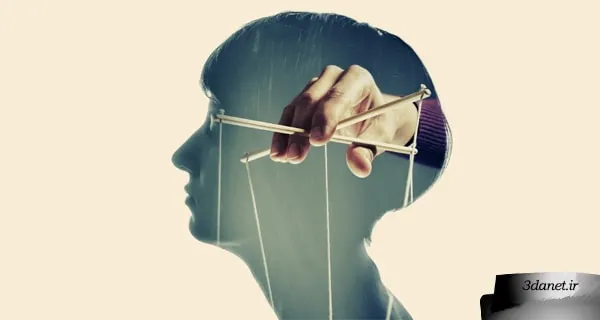
We know that throughout history, countless false schools and isms and self-seeking individuals have sought to exploit and use human beings, and they still do today. But if you look closely, there is one thing common among all the exploiters and deceivers of the world, and that is that they have all tried and continue to try to disarm people of the power of thought and discernment. All of them, in some way, fire a coup de grâce at the individual's reason and thought in order to subjugate them without trouble. The reason, of course, is clear: the greatest obstacle in the exploiter's path to achieving their goal—that is, plundering and exploiting the human being—is their wisdom and awareness. These counterfeit schools and deceitful individuals know well that if a person, with the aid of their own reason and thought, critiques and examines every claim, they will not be fooled by charlatans and tricksters. No one will be able to deceive and abuse—whether emotionally or materially—an aware and critical human being. Whether this setup is a seemingly religious and spiritual spectacle, a school of thought, a political system, or a self-knowledge system. It is for this very reason that exploitative schools always try, through various forms of propaganda and clamor, and by using high-sounding words and hollow slogans, to present themselves as great and rightful. They always portray their path as the sole path of truth and tranquility, and instead of logic and clarification, they tell the individual in the language of noise and propaganda: "You don't understand. You cannot discern, so I will think for you and show you the way. Follow me and do not question."
Unfortunately, people who are intimidated by the crowd or beguiled by propaganda and have lost trust in themselves and their own reason are often deceived by such schools and opportunistic individuals and fall into the trap of subservience and following. They are oblivious that on this path, they are destroying their own freedom and awareness.
Let us note that what we are saying here is not directed at any specific individual or system. Our point is the necessity of awareness and intelligence. Essentially, the whole point is that what matters is not the schools or systems; what matters is you and me! It is we who must rely on our own reason and intellect and be vigilant in all of life's relationships and choices, so as not to fall into the trap of false leaders and exploitative systems. Of course, it must be understood that exploitation is not always motivated by material gain; many deceivers, by setting up offices and apparatuses and gathering disciples and followers, satisfy their own psychological and neurotic needs, without apparently needing the followers. In any case, the point is that the wayfarer must be clear-sighted, otherwise, on every path, there are many pitfalls.
The reality is that if someone sincerely and compassionately wants to open a person's eyes to the truths of life, the way to do this is not to encourage them to follow and be subservient; rather, one must help people to see the truth with their own eyes. And if someone is incapable of seeing the clear truths of the world, the question is: how will their following of a certain religion or a certain spiritual guide help remedy their ignorance and blindness? Fundamentally, if I deny the sun or lack the ability to see the sunlight, simply by following you, will you be able to show me the sun? Or must you remedy the defect in my vision so that I, too, can see the brilliance of the sun with my own eyes, without being dependent on you to describe the signs of light to me?
5. The Sellers of Colored Beads
Another point is that we know whenever a commodity becomes popular in the market and its enthusiasts multiply, counterfeiters think of exploiting people's interest and need by sending a fake or worthless imitation version of that commodity into the market, and by, so to speak, "palming off" their false goods onto people, they obtain illicit profit. Sometimes, in such conditions, the prevalence of all kinds of counterfeit goods becomes so great that distinguishing the genuine and pure commodity from all these fake and inauthentic goods becomes difficult, to the point where, in such a chaotic marketplace, recognizing the pure and genuine gem from the worthless colored bead requires great discernment and insight.
The same issue, of course, holds true for mysticism and self-knowledge. It is certainly heartening to see that the human being of our time is gradually realizing the necessity of self-knowledge and self-awareness as the sole key to happiness, and our generation in particular is increasingly turning its attention and interest toward exploring the inner world. I believe this intelligence and maturity is the fruit of centuries of human experience in testing various paths and reaping no results from them. But on the other hand, precisely for this reason, so many fake and fraudulent pseudo-schools and mystical "shops" have been invented today—such as "happiness in a few days" or "self-knowledge in a few hours," or palm reading, astrology, snake charming, and the like, in the name of mysticism and self-knowledge—that distinguishing who is telling the truth and who is lying is sometimes very difficult. Palm reading, astrology, Tarot, Marut, and such things may be a technique, an art, or anything else, but whatever they are, they are not self-knowledge and mysticism.
But in this chaotic marketplace, before anything else, it is I myself who must honestly clarify my own position. I must ask myself from the depths of my conscience: "What am I, myself, searching for?" Am I seeking entertainment, or am I desirous of self-deception? Am I looking for a way to attach myself to this famous school or that great personage so as to feel grand by association? Or am I truly in search of the truth? After the truth I seek is illuminated, if that truth differs from what I am and what I secretly wish to attain, am I ready, without stubbornness or bias, to surrender myself to it?
I think it is clear that mysticism means knowledge; it means insight and awareness; and self-knowledge means attaining a lucid view of oneself and one's needs, motivations, emotions, and mentalities. And of course, knowing oneself is impossible without knowing the universe, of which the human being is a part. It is certain that if knowledge is genuine knowledge, its fruit will be the pushing aside of the veils of ignorance and darkness from the human mind, in such a way that it will lead one to intellectual and inner freedom and outward harmony with the world and with other human beings.
With such a definition, whatever leads to the removal of ambiguity from the human mind and awakens it is beneficial, and whatever distances one from the main goal through deception and self-occupation is harmful. As long as I have not recognized my inner knots, such as prejudice and self-deception, and as long as I look at myself and the world with a gaze contaminated by superstition and truth-aversion, how is it possible to attain awareness and liberation by following some spiritual guide, studying some discipline, tying some talisman to my arm, or by chanting "Hu" a hundred times a day and doing such things?
6. A Finger on the Eye!
In my opinion, the most beautiful and at the same time simplest point about the truth is this: truth is like the sky, open and boundless. It is always before your eyes, but no one can describe it for you, because the sky cannot be described. It must be seen with one's own eyes. And to see it, it is enough that you yourself wish to and open your eyes. On this matter, Rumi, nearly eight hundred years ago, gave you and me a very stirring message:
Place two fingertips upon your eye; see you aught of the world? Be fair.
Lift your own finger from your eye, come now! And then behold whatever you wish to see.
And if you see not, this world is not non-existent; the fault lies only with the finger of the wretched ego.
If we are thoughtful, there are many subtle points in these verses. First, by saying "place two fingertips over your eyes" to a person who has put themselves to sleep, he is saying that it is you yourself who has put yourself to sleep. You yourself insist on remaining in sleep and fantasy and deceiving yourself, so your awakening is also in your own hands. Another point is that it is this very act of falling asleep that has caused you to be unable to see anything. That is, a veil of unexamined beliefs and psychological needs has fallen over your gaze, preventing you from seeing the world and what is in it with a clear vision. In a thousand tongues, he cries out to humanity: it is enough for you to remove the finger of ignorance and prejudice from before the eye of your reason to observe everything as it is. And the noteworthy point is that he does not say let me or someone else show you the truth; that is, to see the realities of life, he does not advise subservience or following others, but rather says instead of seeking the truth from this person or that, stop deceiving yourself. If you want to and open your eyes, you yourself will see everything.
7. Insight and Knowingness
The wise have always cautioned that people's ignorance is not from not knowing, but from knowing and knowing wrongly. And it is for this reason that this pen considers self-loss through environmental indoctrinations to be the cause of all human misguidance and misery❊. In truth, what we are often happy or proud to possess is not insight, but knowingness, and there is a great difference between insight and knowingness. Insight is a process, a living and flowing inner force. Insight is the current of seeing and understanding, whereas knowingness is a product. Knowingness means accumulating a collection of borrowed and imported knowledge in the mind. The result of knowingness is a weakness in the power of critique and discernment, and a readiness to accept or reject anything uncritically. Hence, we often accept many things without thinking and even pursue them hastily, or content ourselves with a "borrowed" definition.
Many of the most fundamental questions of life remain unresolved and ambiguous for us, and we are not at all worried about this lostness—although its suffering clearly weighs upon our lives. What truly is happiness? What does success mean?
❊ The issue of "self-loss" as the root of all human suffering has been discussed and analyzed extensively in the works of this pen. See, for instance, the article "What is Self-Knowledge?" recently published on the "Sedanet" website.
What is respect? What is patriotism? What is the nature of love? What is tradition and why should we respect everything that is "older"? If, after consulting ourselves, we find that we do not clearly know the answers to such questions, does it not mean that for years we have been spending ourselves on something we do not even know what it is?
8. False Satiety
Have you ever wondered why most of us are uninterested in thinking? Why do we have no enthusiasm for studying and why do we see no need to think? Why, unlike in childhood, does the great pleasure of discovering and knowing no longer hold any appeal for us? Is the reason not that we no longer feel a need to learn? Do we know everything? You might say, "No, of course we don't know everything." Of course, you are right, but the reality is that we unconsciously hold this ridiculous and dangerous notion, the notion that we know everything and that what we do not know is unimportant and not worth learning! This is something our behavior and lives clearly attest to. But why?
If we look closely, we will see that our minds are filled with definitions, titles, and labels that society, tradition, propaganda, and our own needs have stamped upon the face of the world. By doing so, they have defined everything according to their own taste for my thought and yours. Through the "pre-definition" of phenomena, they have afflicted us with a great predicament that should be called "false intellectual satiety." Our thoughts are so filled with imposed definitions and knowledge that very often, while not knowing, we feel we know and are aware. We imagine we know everything. This is why we often see no need to think or ask. We live based on this false knowledge and bring these notions into all our relationships and decisions, big and small. You and I have blindly accepted the common labels in our society and surroundings as the truth of things. Now it is through these very definitions that we are in contact with everyone and everything, not based on our own insight and judgment; and if you look closely, this is the very essence of captivity and ignorance.
.
.
Knowing Yourself, Knowing the Way
Author: Sasan Habibvand
Ways to contact the author:
telegram.me/sasanhabibvand
email: sasan.habibvand@yahoo.com
.
.



Discussion0 comments
No comments yet; let yours be the first voice.