Religion
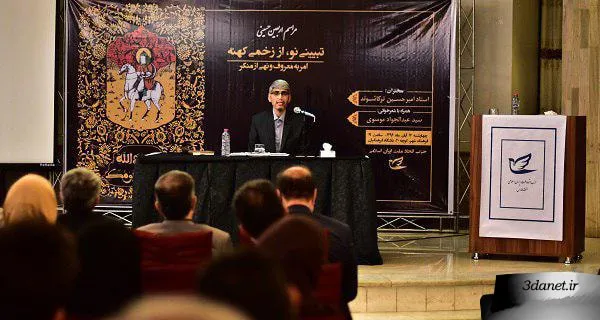
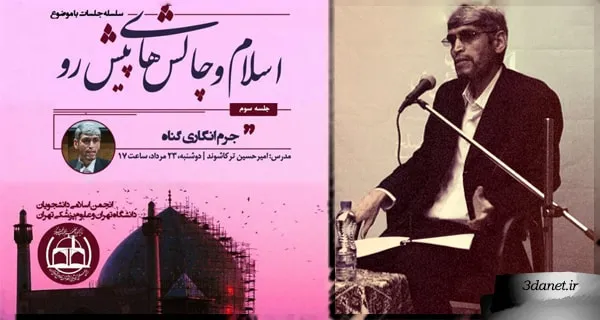
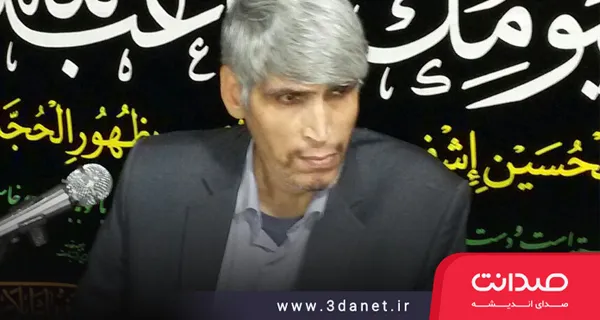
Lecture by Amirhossein Torkashvand: “Commanding Right and Forbidding Wrong”
Amir-Hossein Torkashvand examines the consequences of enforcing the duty of commanding right and forbidding wrong in a religious state—such as the hijab case—critiques the traditional jurisprudential understanding of this obligation, and presents his own Quranic theory as a way forward for the religious community.
Our subject of discussion is commanding right and forbidding wrong. As you know, in these thirty-nine years that governance has fallen into the hands of us religious people, one of the very important and fundamental subjects has been commanding right and forbidding wrong, and it has been a matter of serious attention from the jurisprudential custodians of the system and certain observant believers and revolutionaries. To speak a bit more tangibly, let us consider just one instance of commanding right and forbidding wrong, which is the hijab, and reflect on how much of our country's and our religious government's energy and potential it has absorbed. Perhaps the most serious issue in our domestic policy has been focused on the matter of the hijab, and many efforts have been made to make women wear the hijab, to preserve the headscarf, to ensure hair is not visible, and that forearms and calves are not exposed, and how much propaganda is made about this, how much is spent, and how many prohibitions and commands there are. In this regard, in addition to the extensive propaganda, there follows admonition and confrontation, the Guidance Patrol, detention, the opening of files on the daughters and women of our land, fines, and denial of employment and promotion. Does our religious selection system allow someone who does not observe the hijab to be employed? This situation has existed since the beginning of the revolution, so let us not try to distance ourselves from it; these are things we religious people do. The issue of the hijab and the necessity of its observance by women has become the longest-running case in the country and is still the number one case of our government. Many of our people emigrated from the country because of the strictures of the hijab. The emigrations at the beginning of the revolution were less for political reasons and more because of the strictures and restrictions related to the hijab that we imposed on the people and women. This is just one instance of commanding right and forbidding wrong! Tonight, on the occasion of the Arbaeen of Husayn and the issuing of that statement related to our discussion by Imam Husayn, "I only rose to seek reform in the community of my grandfather; I want to command right and forbid wrong," we want to open the file on commanding right and forbidding wrong and share two perspectives on this with you dear ones:
One- The traditional/jurisprudential understanding of commanding right and forbidding wrong; which leads precisely to the aforementioned pressures and strictures, and what is currently being done is actually a diluted form of the harsh jurisprudential rulings on the subject of commanding right and forbidding wrong.
Two- The presentation of a theory from this speaker, which I am unveiling today in your esteemed gathering in the city of Shiraz, and I will demonstrate that the Quranic commanding of right is the most sublime, path-opening subject for religious people in the era of the finality of prophethood.
And now the explanation of each;
Explanation of the first understanding- Commanding right and forbidding wrong in the traditional view: This reading of commanding right and forbidding wrong can be traced in the books of traditional jurisprudence, which have been narrated over the entire past thousand years almost without change and passed down from generation to generation until reaching us today at the station of religious governance.
In this view, commanding right and forbidding wrong is the guarantor of the implementation of Islamic rulings. Islamic rulings mean religious obligations and prohibitions. So they command right and forbid wrong so that religious duties like prayer, fasting, hijab, and other things are performed and forbidden acts are prevented.
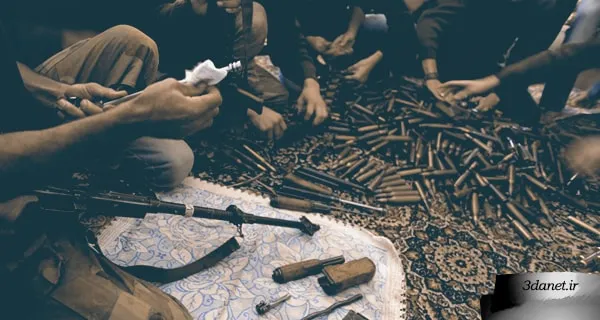
In fact, commanding right and forbidding wrong is “the mission of the people and the government in a relentless, step-by-step confrontation with individuals who are indifferent to religious obligations and prohibitions. In many cases, the instances of these obligations and prohibitions are things whose neglect causes no harm to anyone! For example, if there is a thief, well, this causes evil, loss, and harm to others, and everyone accepts that the thief must be dealt with; but what harm does it do to others whether Mr. A prays or not; what evil or loss does it cause to another whether Ms. B fasts or not. Most instances related to commanding right and forbidding wrong that we religious people focus on, their performance or non-performance causes no harm to anyone, yet we have become accustomed to having our minds work on the actions of others more than attending to ourselves. The goal of commanding right and forbidding wrong in this view is the actualization of religious rulings, meaning the occurrence of obligations (and the non-occurrence of religious prohibitions) among all people, even by means of force. In jurisprudential books and within the Book of Jihad (which the ancients interpreted as the expansion of Islam by the force of the sword), the subject of al-amr bil-maʿruf wa al-nahy ʿan al-munkar is discussed and has several chapters, including the definition of commanding right and forbidding wrong, the conditions for commanding right and forbidding wrong, the stages of commanding right and forbidding wrong, and so on. Fortunately, with the establishment of the Islamic Republic, the ground has been prepared for a re-reading of these jurisprudential books, and we can identify the problems within them.
One of those chapters, as I said, is the stages of commanding right and forbidding wrong, and it explains how we should deal with someone who ignores obligations or commits a religious prohibition; and in this regard, they have written five stages for dealing with them so that it leads to the individual's change.
The stages of commanding right and forbidding wrong in traditional jurisprudence:
First stage – With the tongue of no tongue (disapproval in the heart): What they mean is that if someone fails to perform an obligation or commits a prohibition and sin, others must, without saying anything, show their displeasure in some way; for example, if our son does not pray, we should not return his greeting or turn our face away from him in anger, or if our daughter does not fast, frown at her. We must, through anger, cutting off social relations, not returning greetings, frowning, shaking the head, and the like, show anyone who does not observe religious obligations and avoid religious prohibitions that we are displeased with them so that they reform themselves and become observant.
Second stage – With the tongue: If the previous stage does not work, one must proceed to the verbal stage. Say, my brother, my classmate, why don't you pray? My sister, my colleague, why don't you fasten your headscarf properly? This stage begins initially with gentle language, admonition, guidance, and reasoning, until it ultimately reaches harsh language, coarse words, and even threats. Some even believe that if the person comes to their senses through insults, they deem it permissible.
These cases that have been mentioned are, in a way, a lament, because it is enough to place the luminous verses of the Holy Quran, the guidelines of the exalted Prophet of Islam, and the pure Imams regarding the purification, teaching, and upbringing of human beings alongside these methods to realize their weakness.
Third stage – Beating: If change is not achieved through the implementation of the first two stages, the person must be stopped by beating so that they no longer commit the forbidden act and are not indifferent to obligations. In other words, we must deal with them through coercive force; for example, it is near sunset and they want to leave the house without having prayed; in this case, they must be prevented from leaving so that they perform their prayer. Prevention, pushing, imprisonment, tying up, and beating are among the methods used at this stage to compel the individual to observe obligations and abandon prohibitions.
Fourth stage – Wounding.
Fifth stage – Killing.
Until the end of the third stage, there was no disagreement among our scholars. Of course, there is also no disagreement on the principle and basis of the fourth and fifth stages; meaning that if the individual persists in their sin, they may be wounded, and if they are still not guided, the earth can be cleansed of the pollution of their existence and they can be killed. On this basis, the authorization to carry out the first three stages exists perpetually, but there is disagreement among the jurists regarding the implementation of the fourth and fifth stages: a small minority say these two stages pertain to the time of the Imam's presence and require his permission, and a very small percentage believe the authorization for these two stages also exists for the commanders and forbidders, but the majority of jurists believe that the implementation of the fourth and fifth stages is contingent upon obtaining the permission of a jurist and mujtahid.
In jurisprudential books, conditions have also been mentioned for commanding right and forbidding wrong: for example, one must be knowledgeable about the right and the wrong, know that the commanding and forbidding will have an effect (and on this basis, if you know that a certain stage, for instance the verbal stage, has no effect and whatever you say does not influence them, you must abandon that stage and proceed to the next stage, i.e., striking! Unless you lack the ability to carry out this stage). Another condition is persistence in committing the sin; if someone has become remorseful, they should no longer be commanded or forbidden. Also, carrying out commanding right and forbidding wrong must not cause corruption or harm to the commander and forbidder themselves or to other believers.
Based on what has been said, we conclude that the efforts made by some jurisprudential authorities and certain fanatical individuals to combat what they call evils are entirely derived from jurisprudential texts. And it is for this reason that no action is taken against the commanders and forbidders who cause crimes and injuries in various corners of the country, because they claim, "I have carried out the jurisprudential ruling." Why do we make irrelevant objections to the courts? The court does not have permission to intervene because the accused have acted in accordance with jurisprudence. Therefore, we must address the root of the problem, namely the incorrect explanation of the issue of commanding right and forbidding wrong in traditional jurisprudential texts, and look at the matter fundamentally in academic and research environments, and save the people from being set against one another.
So that my discussion is accompanied by evidence, I will read the relevant section from the book Jame Abbasi by Sheikh Bahai, which is also written in Persian.
Text from the jurisprudential book Jame Abbasi:
The issue of commanding right and forbidding wrong is part of the Book of Jihad! The same Jihad that means spreading Islam by the sword in all lands. The text of the book:
“On the exposition of commanding right and forbidding wrong. Know that commanding an obligatory good deed, such as the obligatory prayer, is obligatory [meaning that if someone, for instance, does not pray, we must command him to pray], and commanding a recommended good deed [i.e., a supererogatory act], such as the supererogatory prayer, is recommended; and forbidding a wrong deed, that is, a reprehensible act such as adultery, is obligatory, and forbidding a disliked act is recommended. In both of these there is great reward [meaning that if a lady in the office has not covered her headscarf properly, there is great reward!! in telling her to pull her headscarf forward, and if you do not say it, you have sinned, because according to this view, it is obligatory to command the obligatory acts and to forbid the legally prohibited acts]. The obligatoriness of commanding obligatory right and forbidding wrong is a matter of consensus, and none of the jurists have any disagreement [i.e., difference of opinion] regarding the obligatoriness of these two [meaning, as I said, this is the opinion of the generality of jurists]. However, the disagreement is over whether this obligatoriness is according to custom or according to the revealed law; the stronger view is the second. And also among the jurists there is disagreement over whether it is a collective obligation, which, when a group undertakes it, is discharged from the others, or whether it is obligatory upon everyone. Some have gone with the first, some with the second; meaning that whenever a person commands right and forbids wrong to someone and that person does not accept, it is also obligatory upon others to carry it out, until he accepts. The stronger view is the second [meaning that if you go on a camp and there is someone who does not pray, and you tell him to pray and he does not pray and does not comply, in that case it is not discharged from another person, and the second person must also tell him, and likewise the third and fourth persons must tell him until he is compelled to pray]. And it does not become obligatory until five conditions are met. First, that the one who commands the good deed and forbids the evil deed must be sane and of age. Second, that he knows the good deed is good and the evil deed is evil, so that he is safe from error. Third, that he knows that if he commands or forbids, it will have an effect on that person; so if it has no effect, it is not obligatory. Fourth, that the person whom he intends to make desirous of the good deed or whom he forbids from the evil deed is resolved to do the good deed and not do the evil deed [i.e., still intends to sin and is not remorseful]; so if he has repented, commanding or forbidding him is not obligatory. Fifth, that commanding the good deed and forbidding the evil deed does not entail harm to him, or corruption for him, or harm to Muslims; so if it entails harm or corruption, it is not obligatory [meaning that if an individual does not pray, or a woman does not wear a headscarf, and you want to beat him/her, if you feel that this action of yours will bring about retaliation, do not do it]. And after these conditions are fulfilled, whenever a person knows that by merely showing displeasure he will desist, it is obligatory to show that; and likewise, if he knows that he will not desist by showing aversion, but will desist by keeping away from him, it is obligatory to keep away from him; and if he knows that he will not desist by these means until he expresses it verbally, it is obligatory to express it verbally, by preaching to him and advising him gently; and if he does not desist by gentleness, he should speak harshly until he desists; and if he knows that he will not desist by that, it is obligatory to beat him; and if he knows that he will not desist by beating, and it is necessary to wound one of his limbs or to kill him, is it permissible without the permission of the Imam or not? Sayyid Murtadha, may God have mercy on him, holds that it is permissible without the permission of the Imam, and the soundest view is that it requires the permission of the Imam ... Jāmiʿ-i ʿAbbāsī, p. 162.”
This was a brief acquaintance with the subject of commanding right and forbidding wrong in traditional texts, and we are paying the costs of this interpretation of the issue today, because they are acting upon it, even if in a diluted form.
Explanation of the Second Conception – The Verses of Commanding Right! They Entail the Communication of a New Religious Source, Namely Reason:
Now in the second part, I will share with you a new exposition of commanding right and forbidding wrong, with the help of the luminous verses of the Qur’an. Of course, this is a theory that your friend, who is entirely at fault and with his scant knowledge, has arrived at, and perhaps the esteemed audience will examine it and find that it has shortcomings or is fundamentally erroneous; however, my effort has been that it should possess initial precision, although I do not conceal that it requires further work.
In the Qur’an, commanding right and forbidding wrong, meaning the combination of command or prohibition plus right or wrong, is used approximately twelve times; it is used three other times which have less connection to my discussion today.
Two of these twelve verses belong to the Meccan period. The first verse revealed [according to the extraction in Mehdi Bazargan's book *The Evolution of the Qur'an*] pertains to the blessed Prophet of Islam himself: verse 199 of Surah Al-A'raf, "Hold to forgiveness, enjoin what is right, and turn away from the ignorant." The other verse revealed in Mecca is verse 17 of Surah Luqman, which contains Luqman's counsels to his son: "O my son, establish prayer, enjoin what is right, and forbid what is wrong."
Ten verses belong to the Medinan period. Three of these ten are in Surah Al-Imran: verses 104, 110, and 114; three are in Surah At-Tawbah: 67, 71, and 112; one is Al-A'raf 157 (in addition to the one revealed in Mecca); one is Al-Ma'idah 79; one is An-Nisa 114; and one verse is Al-Hajj 41.
Al-Imran 104: "And let there be from among you a community inviting to good, enjoining what is right, and forbidding what is wrong."
Verse 110: "You are the best community ever brought forth for mankind, enjoining what is right and forbidding what is wrong." Then the verse continues, saying that if the People of the Book were like you, it would be good: "And if the People of the Book had believed, it would have been better for them."
Surah Al-Hajj 41: "Those who, if We establish them in the land, establish prayer, give zakah, enjoin what is right, and forbid what is wrong." An interesting point in the verses about commanding right and forbidding wrong is the mention of prayer and zakah alongside it.
Reliance on rational rulings: the Qur'an's gift in the time of finality:
When we look at the verses, we feel they carry a new message, a different message; and it seems they have a meaningful distinction from other verses of the Qur'an. Now I want to establish a connection between these verses—that is, the verses of commanding right and forbidding wrong—and the subject of the finality of the blessed Prophet. For this important matter, and due to the sensitivity of the issue, we must proceed step by step, and in this regard, we will first have a lexical study and define the words *ma'ruf* (right), *munkar* (wrong), *amr* (command), and *nahy* (forbid).
Meanings of the words and their usage:
Let us begin with maʿrūf (the right). Maʿrūf is the same as ʿurf (custom); there is no difference between them. The book Mufradāt by Rāghib states: “al-maʿrūf ism li-kulli fiʿl yuʿraf bi-l-ʿaql aw al-sharʿ ḥusnuhu wa-l-munkar mā yunkar bihimā”—Maʿrūf is a name for every act whose goodness and excellence is known through reason or through the revealed law. So the most famous lexicographer of the Qurʾān has said that maʿrūf is an act whose goodness reason discerns, or the revealed law does. Now let us examine the commentaries; I have selected the most famous among them, namely Majmaʿ al-Bayān and al-Kashshāf. These two commentators were both exegetes and men of letters, and they knew the vocabulary well. Ṭabarsī, the author of Majmaʿ al-Bayān, says in his commentary on verse 104 of Āl ʿImrān: “al-maʿrūf mā yuʿraf ḥusnuhu ʿaqlan aw sharʿan wa-l-munkar mā yunkiruhu al-ʿaql aw al-sharʿ”—Anything whose goodness is confirmed by reason or the revealed law becomes maʿrūf. And in his commentary on verse 157 of al-Aʿrāf, he says: “wa-l-maʿrūf al-ḥaqq wa-l-munkar al-bāṭil li-anna al-ḥaqq maʿrūf al-ṣiḥḥa fī al-ʿuqūl wa-l-bāṭil munkar al-ṣiḥḥa fī al-ʿuqūl”—Maʿrūf and munkar are the same as truth and falsehood, because the soundness of truth is recognized by the intellects. As you can see, here the revealed law is no longer mentioned, and the criterion for discernment is reason. And on verse 17 of Luqmān, he says: “fa-inna al-maʿrūf mā yadʿū ilayhi al-ʿaql wa-l-sharʿ wa-l-munkar mā yazjur ʿanhu al-ʿaql wa-l-sharʿ”—Maʿrūf is that to which reason and the revealed law summon, and munkar is those things from which reason and the revealed law deter. We will gradually come to understand the secret of the connection between commanding right and the finality of prophethood. And in his commentary on verse 199 of al-Aʿrāf, he says: “wa-ʾmur bi-l-ʿurf yaʿnī bi-l-maʿrūf, wa huwa kull mā ḥasun fī al-ʿaql fiʿluhu aw fī al-sharʿ”—Everything whose performance is deemed good by reason! or by the revealed law, that becomes maʿrūf; note that in what follows, he only raises the discussion of reason and the rational, and says nothing of the revealed law: “wa-lam yakun munkaran wa-lā qabīḥan ʿinda al-ʿuqalāʾ”—And it is not munkar nor repugnant in the eyes of the rational! And in his commentary on verse 12 of Sūrat al-Mumtaḥana, he says: “wa-l-maʿrūf naqīḍ al-munkar wa huwa kull mā dalla al-ʿaql wa-l-samʿ ʿalā wujūbihi aw nadbihi”—Maʿrūf is the opposite of munkar, and it is everything that reason and audition/revelation indicate is obligatory or recommended. Perhaps the question might arise: if we are extracting reason from within maʿrūf to this extent, why did he not directly say “reason”? In what follows, he explains the etymology of maʿrūf! and its lexical connection to reason: “wa summiya maʿrūfan li-anna al-ʿaql yaʿtarif bihi min jihat ʿiẓam ḥusnihi wa wujūbihi”—Maʿrūf is called maʿrūf! because reason acknowledges! its goodness and its obligatoriness, and so it becomes maʿrūf. Maʿrūf is born of reason’s acknowledgment of the goodness of a certain deed or action. He has explained it clearly and transparently. Zamakhsharī also says in al-Kashshāf: “kull mā sakanat ilayhi al-nafs wa aḥabbathu li-ḥusnihi ʿaqlan aw sharʿan min qawl aw ʿamal fa-huwa maʿrūf wa mā ankarathu wa nafarat minhu li-qubḥihi fa-huwa munkar.”
And now, regarding "commanding": one of the knots in the interpretation of commanding right and forbidding wrong is the reason for the presence of "commanding" (issuing orders and commands) in the subject under discussion. In explaining the reason for this choice by the Quran, it must be understood that in commanding right and forbidding wrong, the pressure and focus is on the right and the wrong, meaning the discussion is about introducing and drawing attention to the right and the wrong, and not about commanding and forbidding!; because the people of that era (unlike today, where more diverse methods of expression, showing the way, and guidance exist among them, but they) spent their individual and social lives with commanding and forbidding, and therefore it says: let these commands and prohibitions you give each other henceforth be directed towards the right and the wrong, that is, towards rational and reason-approved actions, meaning the direction of the arrow in commanding and forbidding should turn from attention to ignorant characteristics, ignorant customs, ignorant prejudices, successive tribal wars, ethnic supremacism, unjust discriminations (between men and women, free and slave), and sacrifices, towards attention to rational and humane matters and avoidance of ignorant and reason-defying matters. I do not think that with this interpretation, there would still be a knot in confronting commanding right, and anyone would have a problem with it, because it means the turning of commanding towards what reason approves of and forbidding from things that reason deems ugly. At that time, they fundamentally had no problem with the literature of commanding and forbidding, and even today, if we say that commands and prohibitions must be based on rationality and the discernment of the rational among the people, again no problem will arise. And as a result, commanding, whether in the sense of ruling and administering the tribe and society or in the sense of order and command, had to manifest in attention to recognized rational matters (and the religious law that the Prophet conveyed), and in fact, commanding had to turn from ethnic and tribal concerns and ugly, irrational customs and traditions not emanating from correct discernments, towards Quranic and rational concerns.
According to the verses on commanding right and forbidding wrong, people up until the era of the finality of prophethood received their religious commands and prohibitions from the heavens. Now, in the era of finality, a new gift has been given to the community; it says: do not constantly wait for the heavens and revelation to receive commands, prohibitions, and the rulings of life from above through the prophets!; henceforth, you must manage your lives by referring to the rulings of reason and establish earthly law. That is, the source of legitimacy for religious people until the sealing of prophethood was only revelation; from this date onward, according to the verses of commanding right, the necessity of paying attention to the source of reason was proclaimed, meaning it wants to say: stop waiting for the communication of commands, prohibitions, and life's rulings from a prophet and heavenly law, and henceforth, whatever you yourselves discern as worthy, approved, and correct, make that the criterion for your lives. Henceforth, legislate yourselves, and let administrative and social commands and prohibitions be based on your own discernment.
Commanding right and forbidding wrong has two simultaneous reactions: one is a reaction against the heavenly source of legislation, and as I said, the intent is that you do not necessarily have to take commands and prohibitions from revelation and a heavenly source, but rather you can, and indeed must, take them from an earthly source, that is, through the discernment of your own intellects. The other is a reaction against the ugliness of a society afflicted by ignorance, and it says: henceforth, let your commands and prohibitions be towards worthy and approved things, and not towards the ugly and foolish things of ignorance.
The final point I must make in explaining "commanding" is that the word amr in Arabic has two meanings: one is issuing an order and command, and the other is ruling and acting as a commander. I feel that both are embedded within the verses of commanding right, because at that time, commanding and forbidding in the sense of order and command were of the same nature as, and indeed one with, governmental orders and ruling, because given the absence of a government and state and the existence of tribes and a larger-smaller system at that time, therefore the commander and forbidder in both cases (whether in individual relations or in ethnic-tribal governance) were one and the same, and that is why the word amr in Arabic means both order and command, and also ruling and governance.
Therefore, from what has been said in defining "right" and explaining "commanding," we conclude that commanding right and forbidding wrong means that do's and don'ts, orders, commands, and also ruling, politics, and governance must be regulated based on rational and logical values and rulings and the discernments of human beings themselves.
Examining the Verses – The verses of commanding right, with the commencement of the sealing of prophethood, seek to introduce a new religious source, namely human intellects:
Now, with the aforementioned lexical meanings and the definitions provided, let us turn to the verses. In these verses, it is as if the Qur'an seeks to introduce a new source for legislation and law, and as if, with the commencement of the seal of prophethood, it aims to introduce an alternative source in the absence of revelation. It seems there is a connection between the finality of prophethood and this source, namely human reason. Until yesterday, we spoke to you by the light from without and laid the path before your feet; henceforth, you must attain this important matter by inspiration from the light within. Imam Musa al-Kazim says to Hisham: 'O Hisham, indeed God has two proofs and means of communication with the people: an outward proof and an inward proof. The outward proof consists of the prophets, messengers, and Imams, and the inward proof is human reason.'
Now let us see, in addition to the lexical definitions and explanations we provided for the words in the verses of commanding right and forbidding wrong, what other reasons and indications exist in these verses confirming the connection between the finality of prophethood and the introduction of reason as God's new source for legislation:
*As a preliminary point, we know that with the advent of the noble Prophet, the office of prophethood was sealed, and naturally, it is expected that in this final religion, a new plan has been devised.
*All these verses pertain to the community of Muhammad onwards. It is as if humanity until that time either lacked the capacity or was merely waiting for the heavens.
*In confirmation of its novelty and its being specific to the era of the seal of prophethood, one can refer to verse 79 of Al-Ma'idah, which criticizes the absence of forbidding wrong among the predecessors and considers them cursed by the tongue of David and Jesus for that reason: 'Cursed were those who disbelieved among the Children of Israel by the tongue of David and Jesus, the son of Mary. That was because they disobeyed and were transgressing. They used not to forbid one another from any wrong they did. Wretched indeed was what they used to do.'
*Again, in confirmation of the novelty of this source and its lack of application among previous prophets, one can point to the case of Luqman the Wise!! Luqman was wise and sage, and it is not known whether he was a prophet; and even if he was, the aspect of his being wise is more prominent, and for this reason he became known as Luqman the Wise. He himself was wise and sage, and relying on these very attributes, he also enjoins his son to reform society by promoting rationality and human development itself, that is, commanding right: 'O my son, establish prayer, enjoin what is right, forbid what is wrong, and be patient over what befalls you. Indeed, that is of the matters requiring resolve.'
*In verse 110 of Al Imran, the specificity of this matter to the community of the Prophet is stated almost explicitly; this verse says: You are the best community (or be a good community) raised up for mankind; you are to enjoin what is right and forbid what is wrong and believe in God. And if the People of the Book had believed, it would have been better for them. Among them are believers, but most of them are defiantly disobedient.
*The salvation of the believers in the final religion is deemed dependent on the designation and selection of a specialized group to invite to good and to govern right!: 'And let there be from among you a community inviting to good, enjoining what is right and forbidding what is wrong. And those are the successful ones.'
*The hypocrites, who act contrary to their inner conscience and contrary to the pure inner call, implement right and wrong in reverse! They enjoin wrong and anti-values, and forbid right, values, and rational rulings; and because they do so, they forget God, and God forgets them. 'The hypocrite men and hypocrite women are of one another. They enjoin what is wrong and forbid what is right and close their hands. They have forgotten God, so He has forgotten them. Indeed, the hypocrites are the defiantly disobedient.' (At-Tawbah 67).
*Undertaking what is right and warning against what is wrong in the verses of commanding right and forbidding wrong is not made conditional upon the revelation of other verses to determine the instances of right and wrong!! Because reason itself and the human being itself are supposed to discern them, and this itself clearly indicates the independence of right and the discernments of reason from revelation and heavenly legislation.
*In the first verse related to commanding right, revealed in the tenth year of the Biʿtha, the Messenger of God was personally obligated to be charged with ʿurf (the rationally recognized good) and rational problem-solving in his life; because his religion, which is to establish the authority of reason's judgment in discerning the good and evil of a faithful life and to found a rational Sharia, requires that he himself first be characterized by it: Khudh al-ʿafwa waʾmur bi-l-ʿurfi wa aʿriḍ ʿan al-jāhilīn (al-Aʿrāf 199).
*He considers the distinguishing feature of the followers of the Final Religion from the followers of previous prophets to be their formation under the banner of commanding right and forbidding wrong.
*And as I explained in the clarification of terms, within the word maʿrūf lies the necessity of referring to oneself, the legal validity of reason's discernment, and consequently the emergence of an earthly Sharia with the aid of the inner messenger.
The sourcehood of reason and human discernment:
Religion and Sharia mean law. This religion, until the life of the Noble Prophet and the emergence of Islam, was legislated and instituted from heaven with the help of revelation. Thereafter, when God's will pertained to the closing of the window of legislative revelation and the office of prophethood was sealed, it was decreed that humanity, this vicegerent of the Almighty Truth, should itself pull its own weight—that is, by referring to the abundant potential talents deposited within it, it should produce rational laws appropriate to time, place, and circumstances, alongside the constants of the religion of Islam and previous Sharias. The verses related to commanding right and forbidding wrong, which are among the special characteristics of the Final Religion, can be justified and interpreted in this same direction. Therefore, maʿrūf in the social sphere means what the elected rational individuals of the people approve and what brings them tranquility. Maʿrūf means human-written laws, rulings, and regulations. Maʿrūf means human discernments for a better life. Thus, the earthlyization of the Sharia is God's will and in accordance with the Quranic verses. This Sharia and religion of maʿrūf and ʿurf is in complete conformity with the upright and firm religion communicated in the verse of primordial nature: Fa-aqim wajhaka li-l-dīni ḥanīfan fiṭrata Allāhi allatī faṭara al-nāsa ʿalayhā lā tabdīla li-khalqi Allāhi dhālika al-dīnu al-qayyim (Sūrat al-Rūm, verse 30), in which it introduces the source of the firm, unchangeable, and ageless religion as inward.
Revelation was the exclusive source of the era of the prophets, and reason is the source of the era after the Finality of Prophethood. Revelation and reason are considered two gushing sources of legislation; in other words, the sources for attaining God's ruling and will are two: revelation and reason. The former was more effective in the time of the prophets, and the latter in the time of the Finality of Prophethood onward.
Reasons for the renewal of the Sharia by humanity itself (reasons for the authoritativeness of reason):
Now I bring confirmations for the sourcehood of reason and human discernments. Why should we not fear that humanity itself can establish an earthly Sharia?
First—because humanity is God's vicegerent: Innī jāʿilun fī al-arḍi khalīfa. We have a hadith from the Prophet, peace be upon him, which can perhaps be understood in this same direction: Man amara bi-l-maʿrūfi wa nahā ʿan al-munkari fa-huwa khalīfatu Allāhi fī arḍihi wa khalīfatu rasūlihi wa khalīfatu kitābihi (Tafsīr al-Kashshāf and Tafsīr Majmaʿ al-Bayān, verse 104 of Āl ʿImrān). This is the first reason for the renewal of the Sharia: that humanity is God's vicegerent, and this statement should not be taken lightly.
Second—that the divine spirit was breathed into humanity: Wa nafakhtu fīhi min rūḥī. This breathing in must manifest itself somewhere. If we possess the divine spirit, then we can use it for establishing laws and legislation.
Third—the necessity of being characterized by divine attributes and actions. If God promulgates religion, Sharia, and law, humanity, by virtue of needing to be characterized by His attributes and actions, will also possess this capability.
Fourth—we have an inner prophet. We humans have been created in such a way that an inner messenger resides within us, and through that, God's will can be attained.
Fifth—the Seal of Prophethood and the beginning of the era without an external prophet.
Sixth—If we are not to have a second source for the renewal of the Sharia, namely reason and human discernment itself, then our situation will become worse than it was before the Seal of Prophethood. Why? Because in the era of previous prophets, a prophet would arise; after a long time, his religion would become distorted, and new issues would emerge in society, yet the followers would continue to act based on distorted or outdated and obsolete matters. Then a new prophet would appear, correcting the distortions and, in accordance with the new situation, verses would be revealed. Now, if there is to be no other source, our situation will be worse than it was then.
Seventh—Reason as a source has been accepted in jurisprudence, but unfortunately, it has not yet been actualized. The late Motahhari gives an example regarding opium addiction and the fact that there is nothing in the transmitted proofs about its ruling, and then he says: But through sensory and empirical evidence, the harms and evils of opium addiction have been established. Thus, here, with our "reason" and knowledge, we have arrived at a criterion—namely, an evil that must be avoided—regarding opium. By virtue of knowing that anything harmful to human beings and containing evil is forbidden according to the Sharia, we rule that opium addiction is forbidden (An Introduction to Islamic Sciences, Principles of Jurisprudence, p. 40).
Eighth—The rule of correlation: Whatever reason rules, the Sharia rules (Kullamā ḥakama bihi al-ʿaql ḥakama bihi al-sharʿ).
Ninth—Endorsed rulings: Endorsed rulings are those laws and jurisprudential rulings that existed in the Age of Ignorance and, with the advent of Islam, because they were good, Islam decreed they should continue. That being the case, are the people of the present age any less than the people of the Age of Ignorance, that their rational laws should be endorsed while our rational laws are not endorsed and not considered canonical?
Tenth—The verse of Fiṭra (primordial nature).
Eleventh—Unaddressed and newly emerging subjects: Now, a large part of human life lacks a specific title within jurisprudential subjects. For example, today, automobile insurance, including third-party insurance, plays a very important role in life, even though nothing has been said about it in the heavenly Sharia. Or the law of retirement, which the overwhelming majority of people find peace of mind in its existence, even though nothing is said about it in the heavenly Sharia. Or addiction to narcotics and psychotropic substances and their rulings, about which, as quoted from Motahhari, nothing exists in the transmitted sources. Moreover, there are some things whose rulings have changed relative to official jurisprudence, such as the dissection of cadavers, upon which medical science is largely dependent. Or the buying and selling of blood, which is forbidden, yet now we have a blood transfusion organization. In reality, today we are practically living based on an earthly Sharia and the renewal of the Sharia.
Twelfth—The communication of the verses on commanding right and forbidding wrong! And the necessity of turning to the confessions of reason and its rulings; which we explained today.
I apologize for taking up more of your time than scheduled, and I hope I have been able to share what I had in mind with you. And peace be upon you, and God's mercy and blessings.
.
.
Audio of Amirhossein Torkashvand's lecture titled "Commanding Right and Forbidding Wrong"
.
.
Lecture by Amirhossein Torkashvand titled Commanding Right and Forbidding Wrong (A New Explanation of an Old Wound) on the eve of Arba'in, hosted by the Union of the People of Islamic Iran Party (Fars Region)
Transcription: Saeed Houshyar
.
.

Discussion0 comments
No comments yet; let yours be the first voice.