Religion
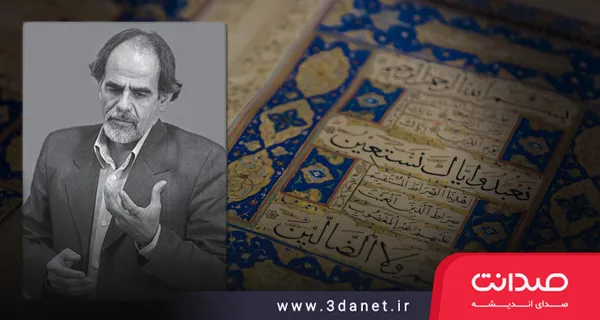
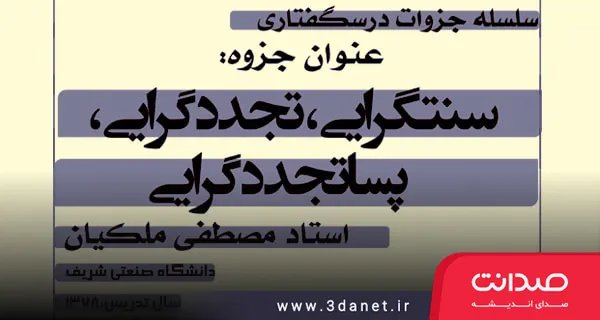
Lectures on the Influence of Religion on Human Character by Mostafa Malekian
Otherworldly reward and punishment are natural, not contractual, and religion is a human invention that will endure as long as the need for it remains; intercession, too, is access to the channels of divine grace through deeds, not flattery. From Mostafa Malekian's lectures on the influence of religion on human character.
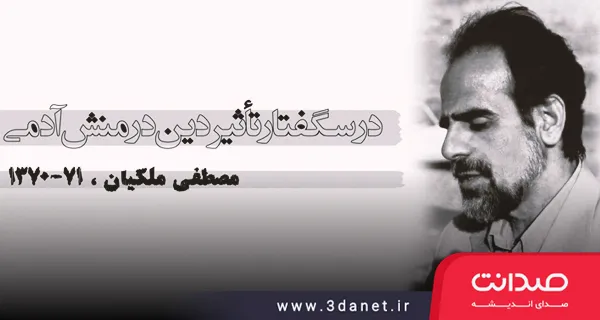
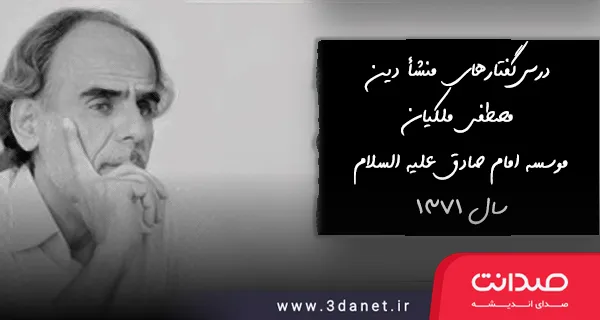
The lectures on the Influence of Religion on Human Character by Mostafa Malekian were delivered over 8 sessions between 1991 and 1992 and subsequently transcribed and typed by his students.
Excerpts from the Lectures on the Influence of Religion on Human Character:
When a person who performs good and bad deeds in this worldly life dies, are the rewards and punishments given to them in that other world conventional or natural? Our view is that they are natural, and there is no convention involved whatsoever. What is meant is that if a person does a bad deed in this world, they are, with their own hand, inflicting a blow upon themselves. When a person dies, they are not, in fact, taken to hell because of this blow; rather, they inflicted the blow upon themselves without being aware of it, and when they die, they realize what a blow they had been dealing themselves. The belief of many, including myself, is that when we die, we are not dragged kicking and screaming to hell, nor are we invited to heaven. When we die, we find ourselves in hell or we see ourselves in heaven, naturally or ontologically.
My belief is that when we die, we are not taken to a place, nor are we invited to a place; only, if we have lived a heavenly life, here when we die, we suddenly realize our heavenly nature, and if in this world we have lived a hellish life, we suddenly realize that we are hellish, and this means that the consequence is natural. If the consequence is natural, those three effects of a natural consequence must apply here. The first was that natural consequences are not more or less acceptable; if this too is a natural consequence, then it is not subject to increase or decrease; rather, it must run its own course and trajectory. If your hand is burned, for the pain to lessen, time must pass, and as time goes by, this pain diminishes, and after 7 or 8 hours you no longer feel pain; but ultimately, it is not conventional such that you could remove this pain from yourself with a command or prohibition.
Religion is among the inventions of humanity. By calling religion an invention, we do not mean it is fabricated; rather, it means it is like script and language: until humanity feels a need for religion, religion does not come into being, or if it does come into being, when the need for it is no longer felt, it will disappear. Of course, the fact that religion belongs to the category of inventions is in no way a disparagement of religion. If the invented nature of language is a disparagement to language, then the invented nature of religion must also be considered a disparagement to religion; it is not, and consequently, neither is this. Therefore, at whatever stage of history religion exists, you must understand that humanity still needs religion. Similarly, regarding script, as long as it exists in the world, you must be certain that humanity needs script and that this need cannot be fulfilled by anything other than script. As long as religion exists, know that there is a need that is still being fulfilled by religion. That is, firstly, there is a need that religion fulfills, and secondly, no other phenomenon fulfills that need like religion does. Otherwise, there would be no reason for religion to have come into existence and to continue its existence.
The meaning of intercession is that, in an ontological – natural – manner, a series of blessings are bestowed by God, without exception, upon all servants through the channel of great religious and mystical figures and moral scholars. Let me give an example. Consider God Almighty – we seek refuge in God – as a reservoir full of water, and let water symbolize all the graces, blessings, and favors that God Almighty has for each and every one of His servants without exception. Suppose this source itself has a series of conduits through which this water flows outward. Consider each of these conduits – we seek refuge in God – as one of the great figures of religion, the saints and prophets, the pure men of God. God Almighty has designed the ontological system such that His blessings and graces sometimes, if not always, reach God's servants through certain conduits. Every blessing, of whatever kind, reaches God's servants through a conduit. These conduits are open to all human beings; that is, these conduits are not exclusive to anyone, for example, for the use of men only, or women only, or only Shiites, or only Sunnis, and so on; rather, they are installed for the use of all human beings, but a particularity arises from our own side, and that particularity is that anyone who wants to use it must reach out and open this tap.
Intercession means that a person does something by means of which that tap is opened toward them; anyone in any creed, religion, nation, or tribe who has done a deed such that it can open the tap, that tap has been opened for them. When we have closed these taps upon ourselves through our own actions, we come and stand aside and flatter the tap itself! And this is the very flattery of His Holiness Imam Hussein (AS), the flattery of His Holiness Ali ibn Abi Talib (AS), the flattery of every man of God.
.
.
PDF file of the transcribed first session
PDF file of the transcribed second session
PDF file of the transcribed third session
PDF file of the transcribed fourth session
PDF file of the transcribed fifth session
PDF file of the transcribed sixth session
PDF file of the transcribed seventh session
PDF file of the transcribed eighth session
Complete PDF file of the lectures on the Influence of Religion on Human Character, with session and topic divisions
.
.
Discussion0 comments
No comments yet; let yours be the first voice.