Philosophy
Martyred Sheikh or Reactionary Mullah?
Seyyed Javad Tabatabai sees Sheikh Fazlollah Nouri as a victim of the intellectuals' failure to understand him, calling him the 'martyred Sheikh'; but Ali Shariati, criticizing the Sheikh's political ties to despotism, labels him a 'reactionary mullah' and deems his actions unjustifiable.
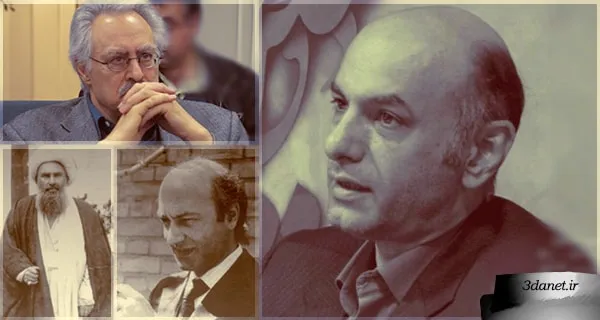
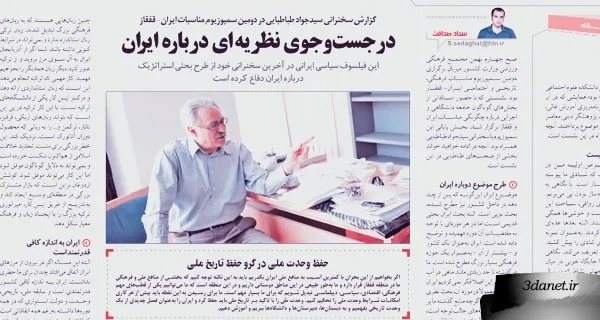
Seyyed Javad Tabatabai, when it comes to thinkers he considers his rivals, resembles someone who shuts his eyes and hurls insults. Just as he said of Al-e Ahmad: “He is someone who neither went to university nor knew what a university was” (from the text of his recent speech at the “Iran is right here where we stand” session), he has also stated about Shariati: “As for the ahistorical and anti-historical nature of the forms of political ideologies formulated by Shariati and Soroush, suffice it to say that in the writings of these two we find no reference, whether negative or positive, to the Constitutional movement” (Tabatabai, 2006: 29-30, cited in Mirzania, 2010). A researcher who meticulously hunts for translation errors in the texts of this or that person in order to chalk up their translation flaws to their illiteracy (for example, see the critiques Tabatabai published on Dariush Ashouri’s translation in Mehrnameh and Hatam Ghaderi’s translation in Farhang-e Emrooz magazine), how can he commit such great errors himself!? Truly, how can one prattle on about research and inquiry and yet utter such manifestly false statements (regarding Al-e Ahmad’s university education, refer to his biography, and regarding Shariati’s views on the Constitution, refer to Mirzania). Moreover, what kind of logic is this that Tabatabai has resorted to: if someone has not spoken about what we deem important, then necessarily the rest of their words will be “ahistorical, anti-historical, and ideological”! Truly, someone who claims to be a historiographer of thought, how can they speak like this?!
Anyway, this very “elite of the scholars” (Tabatabai called Al-e Ahmad the “layman of the scholars”; presumably he considers himself the “elite of the scholars”) who is so free with his insults toward Iranian intellectuals, speaks very kindly, gently, and with rare subtlety about the clerical tribe, especially those who are particularly favored in the Islamic Republic. The reason for this is also very clear: intellectuals, especially religious intellectuals, are not backed by any political power, but the story of the clerics is very different. One of those whom Seyyed Javad Tabatabai criticizes in a very gentle, subtle, and philosophical (!) manner is Sheikh Fazlollah Nouri. In this case, this “elite of the scholars” follows someone he himself called the “layman of the scholars.” It was Jalal Al-e Ahmad who first called Sheikh Fazlollah the “Martyred Sheikh.” In his critique of Sheikh Fazlollah, Tabatabai has spoken of a “descent into fallacies”! He also attributes this “descent into fallacies” to the fact that the “most learned scholar of Tehran” lacked the capacity to grasp the subtleties of the matter under dispute! Thus, Sheikh Fazlollah’s actions are justified, and he is elevated to the status of “Martyred Sheikh” because, in Tabatabai’s view, the Sheikh was practically a victim of a “lack of understanding” that was perhaps caused by the shortcomings of the intellectuals! It was the intellectuals who “raised the concepts of modern thought in the theoretical discussions of Iran with disregard for the system of ancient tradition” and, due to their intellectual ambiguities, paved the way for the “Martyred Sheikh” to “descend into fallacies”!
But Ali Shariati, while criticizing the intellectuals of the Constitutional era, never sought to justify the actions of Sheikh Fazlollah Nouri. He does not gloss over Sheikh Fazlollah Nouri’s personal attachments, social affiliations, and political dependence on the despotic system. Shariati, an intellectual who was under pressure from the government of the time and was repeatedly rejected or even excommunicated and attacked by the clerisy wielding religious authority, considers Sheikh Fazlollah and his ilk a “reactionary mullah,” not a “Martyred Sheikh.” Instead of a “descent into fallacies,” he speaks of religious conservatism and “guarding outdated traditions”; meaning that the issue is not merely a mental one related to perceptions! For if it were so, the warnings and admonitions of Akhund Khorasani, Naini, and others should have at least stirred some sense of caution in Sheikh Fazlollah Nouri in his opposition to the Constitutional movement. / You can follow the rest of the article in the file below.
.
.
PDF file of the article: A Comparison of the Views of Seyyed Javad Tabatabai and Ali Shariati on Sheikh Fazlollah Nouri
.
.
"Martyred Sheikh" or "Reactionary Mullah": A Comparison of the Views of Seyyed Javad Tabatabai and Ali Shariati on Sheikh Fazlollah Nouri
Author: Hassan Mohaddesi Gilvaei, Hamid Naderi Noureini
.
.


Discussion4 comments
حالا تا ابد هم به این دو اندیشمند و روشنفکر فحاشی کنید باز هم هر کدام جایگاه خودشان را حفظ می کنند و با فحاشی چیزی از آنها کم نمی شود
اقای محدثی شما که خودتون رو همتراز طباطبایی میدونسد کمی روی انشا و درستنویسی کار کنید، باقی پیشکش. بزرگوار شما در هر نوشته حداقل ۲۰ اشتباه املایی و انشایی دارید!! چطور شما مطالعه کردین که املای کلمات متداول رو هم بلد نیستید؟
واقعا گمان میکنید بی مایه ای چون شریعتی قابل دفاع است که در مقابل اندیشمند والایی چون دکتر طباطبایی این سخنان بی مایه را میگویید. البته دکتر طباطبایی درد فکر جامعه ایران را به نیکی دریافته و آن میکربهای فکری چون شریعتی هستند که باید از ذهن ایران پاک شود
نشان دادن بی مایگی شریعتی و والایی طباطبایی ، پیشکش ؛ فقط نشان دهید که چرا « این سخنان » را بی مایه می دانید .