اندیشهفلسفهخردگفتگوحکمتمعناپرسشفرهنگ
Philosophy
Modern Moral Philosophy
Anscombe considers moral philosophy unprofitable without an adequate philosophy of psychology; she calls the concepts of moral obligation and duty harmful and proposes a return to Aristotelian virtue ethics.
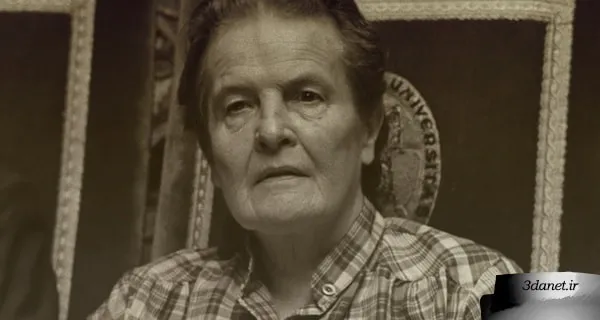
Modern Moral Philosophy[1]
G. E. M. Anscombe
Translated by Yaser Pouresmaeil[2]
Published in issue 128 of the Specialized Scientific Quarterly of Hekmat va Marefat Information
Translator's Introduction: The article "Modern Moral Philosophy" is one of Anscombe's seminal writings in the field of moral philosophy. In Anscombe's view, as long as we lack a conception of psychological states, such as intention, action, and motive, we cannot answer the questions of moral philosophy. For instance, the question of whether an unjust person is a bad person is a moral question, but answering it is impossible without a "philosophy of psychology" (issues pertaining to intention and action). As a famous example of moral problems, Anscombe points to the problem of deriving "ought" from "is": in her view, this is not really a problem; for example, in the case of everyday non-moral matters, we usually derive "ought" from "is." For instance, from the fact that a plant "needs" water, we judge that one "ought" to water the plant. But if this "ought" is to have an effect on an individual's "action," it is necessary that the person "wants" the plant to grow (a matter that pertains to psychology). Only moral "oughts" influence an individual's action. According to the common conception, these oughts are influential because they are of the nature of law (whether divine law or the law of reason). But such an idea, in Anscombe's view, no longer has any adherents, so the moral "ought" must also be set aside. Furthermore, in Anscombe's view, utilitarian and consequentialist attempts to explain morality are problematic. Nevertheless, Anscombe wishes to defend the thesis that one can still discuss morality in the same way that Aristotle and other ancient philosophers discussed it: something that has today become known as "virtue ethics." This article was first published in 1958 in issue 3 of the journal Philosophy and was later published as the first article in the collection Virtue Ethics, edited by Roger Crisp and Michael Slote.
I will begin by stating three theses that I present in this paper. The first is that it is not profitable for us at present to do moral philosophy until we have an adequate philosophy of psychology; we should set aside moral philosophy, and clearly we do not have such a philosophy of psychology at present. The second is that the concepts of obligation[3] and duty[4]—moral obligation and moral duty, that is—and of what is morally right[5] and wrong[6], and the moral sense of "ought," ought to be jettisoned if this is psychologically possible; because they are survivals, or derivatives from survivals, of an earlier conception of ethics which no longer generally survives, and without such a conception they are merely harmful. My third thesis is that the differences between the well-known English writers on moral philosophy from Sidgwick to the present day are of little importance.
Anyone who has read Aristotle’s Ethics and also read modern moral philosophy must have been struck by the great contrasts between them. The concepts that are prominent among modern philosophers seem to be lacking, or at any rate buried or far in the background, in Aristotle’s thought. Most noticeably, the very term “moral”[7], which we have directly inherited from Aristotle, does not seem, in its modern sense, to fit at all into an account of Aristotelian ethics. Aristotle distinguishes moral and intellectual virtues[8]. Do some of what he calls “moral”[9] virtues count as what we should call a “moral” aspect? It seems so; the criterion is presumably that failure in an “intellectual” virtue—like failure to have good judgment in calculating how to bring about something useful, say in city government—may be blameworthy[10]. But—it can reasonably be asked—is there any failure that cannot be a subject of blame or reproach? Any disparaging criticism, say of the workmanship of a product or the design of a machine, can be called blame or reproach. So we want to put in the word “morally” again: sometimes such a failure may be morally blameworthy, sometimes not. Now has Aristotle got this idea of moral blame, as opposed to other blame? If he has, why is it not more central? He says that there are errors that are causes, not of actions being involuntary, but of their being vicious, and for which a person is blamed. Does this mean that there is a moral duty not to make certain intellectual errors? Why does he not discuss duty in general, and this duty in particular? If someone claims to be expounding Aristotle and talks in a modern way about this or that “moral” such-and-such, he must be very imperceptive if he does not constantly feel like someone whose jaws are somehow out of alignment: the teeth don’t come together in a proper bite.
So we cannot look to Aristotle for any elucidation of the modern way of talking about goodness, duty, and other “moral” matters. And it seems to me that all the most famous writers of ethics in modern times, from Butler to Mill, are, as thinkers on this subject, guilty in a way that makes it impossible to hope for any direct elucidation from them. I shall state these objections with the brevity their nature makes possible.
Butler exalts conscience[11], but appears to be unaware that a person’s conscience might tell him to do the vilest things.
Hume defines “truth” in such a way as to exclude ethical judgments from it, and professes to have proved that they are thus excluded. He also implicitly defines “passion” in such a way that aiming at anything is having a passion. His objection to passing from “is” to “ought” would apply equally to passing from “is” to “owes” or from “is” to “needs”. (But, owing to his historical situation, he has a point here, which I shall come back to.)
Kant introduces the idea of “legislating for oneself”[12], which is as absurd as if in these days, when majority votes command great respect, one were to call each reflective decision a man makes a vote resulting in a majority, which majority is a quite significant proportion, for it is always 1–0. The concept of legislation requires superior power in the legislator. Kant’s own rigoristic convictions on the subject of lying were so intense that it never occurred to him that a lie could be relevantly described as anything but just a lie (e.g. as “a lie in such-and-such circumstances”). His rule about universalizable maxims is useless without stipulations as to what shall count as a relevant description of an action with a view to constructing a maxim about it.
Bentham and Mill do not attend to the difficulty of the concept of “pleasure.” It is often said that they erred by committing the naturalistic fallacy, but this charge does not interest me, because I do not find the formulation of the charge coherent. It seems to me, however, that the other point—about pleasure—is a devastating objection from the very start. Ancient philosophers found this concept deeply perplexing. It reduced Aristotle to mere babble about “the bloom on the cheeks of youth,” because, for good reasons, he wanted to identify it with the pleasant activity and yet also to distinguish it. Generations of modern philosophers found this concept entirely unperplexing, and it reappeared in the literature as a problematic concept only a year or two ago when Ryle wrote about it. The reason is simple: since Locke, pleasure was taken to be a sort of inner impression. But if that is the correct account of pleasure, then it is superficial to make it the ground of actions. One might adapt what Wittgenstein said about “meaning” and say “pleasure cannot be an inner impression, for no inner impression could have the consequences of pleasure.”
Mill, like Kant, also fails to recognize the necessity of constraint regarding relevant descriptions if his theory is to have content. It did not occur to him that acts of murder and theft could be described otherwise. He holds that where the proposed action is of a sort that falls under one principle founded on grounds of utility, one must go by that; where it falls under no principle or under several, i.e., conflicting and various proposed views of the action, the thing to do is to calculate particular consequences. But any action can be so described as (as I will briefly argue) to fall under a variety of principles of utility, if it falls under any at all.
I now return to Hume. The features of Hume’s philosophy I have mentioned, like many others, incline me to think that Hume was a mere—clever—sophist; and his procedures are certainly sophistical. But I am forced, by one of the peculiarities of Hume’s philosophizing, to add something to this judgment rather than alter it: namely, that although he reaches his conclusions by sophistical methods—to which he is attached—his considerations always open up to us problems of great depth and importance. It is often the case that in the act of displaying sophistry one finds oneself attending to matters that deserve investigation; as a result, the points Hume apparently makes cause obvious things to require investigation. In this respect, he differs from, say, Butler. It was already well known that conscience could dictate wicked actions; that Butler writes about overlooking this point opens up no new topic for us. But with Hume things are different: as a result, despite his sophistry, he is a very profound and great philosopher. For example: suppose I say to my grocer: “Truth either consists in relations of ideas, as that 20s. = £1, or matters of fact, as that I ordered potatoes, you supplied them, and you sent me a bill. So it does not apply to such a proposition as that I owe you such-and-such a sum.”
Now if one makes such a comparison, it becomes clear that the relation of the aforementioned facts to the description “X owes Y this amount of money” is an interesting relation, which I call having a “brute relation to” it. Moreover, these “brute” facts themselves, which were mentioned here, have descriptions in relation to which other facts are “brute”—just as, for example, he sent the potatoes to my house by cart and they remained there are brute facts in relation to “he supplied me with potatoes.” And the fact itself that X owes money to Y stands in relation to other descriptions—for example, “X is solvent.” Now, the relation of “relative bruteness” is a complex relation. To mention just a few points: if xyz is a set of facts that are brute in relation to description A, then xyz is a set from a range such that one of its sets holds if A holds, but the holding of some set from among these does not essentially entail A, because exceptional circumstances can always make a difference, and what the exceptional circumstances are in relation to A can generally only be explained by giving several diverse examples, and no theoretically adequate provision can be made for exceptional circumstances, because one can always theoretically imagine another special context that reinterprets any special context. Furthermore, although in normal circumstances, xyz is a justification for A, this does not mean that A is no different from “xyz,” and it is also likely that there is an institutional context that provides the reason [or point] of the description A; an institution of which, of course, A itself is not a description. (For example, the statement that I give someone a shilling is not a description of the institution of money or the currency of this country.) Thus, although it is absurd to pretend that there cannot be something like a transition, for instance from “is” to “owes,” in fact the nature of this transition is rather interesting and becomes clear as a result of reflecting on Hume’s arguments.[13]
That I owe the grocer such-and-such an amount is one of a set of facts that are “brute” in relation to the description “I am a bilker.” Of course, “bilking” is a species of “dishonesty” or “injustice.” (Naturally, this consideration has no effect on my actions unless I want to commit or avoid unjust actions.)
So far I have conceived of “bilking,” “injustice,” and “dishonesty,” despite their strong connections, in a purely “factual”[14] manner. That I can do this in the case of “bilking” is clear enough; I have no idea how to define “justice” except that its sphere is actions that relate to another person, but “injustice” can, for its defect, be put forward as a generic name covering various species, for example, bilking, theft (which is relative to whatever property institution exists), slander, adultery, punishment of the innocent.
In contemporary philosophy, this subject requires an explanation of how an unjust person is a bad person or an unjust action is a bad action; providing such an explanation belongs to ethics, but until we are equipped with a correct philosophy of psychology, such an explanation cannot even begin, because proving that an unjust person is a bad person requires a positive account of justice as a “virtue.” But this part of the subject of ethics is entirely closed to us until we have an account of what type of characteristic a virtue is—a question that belongs not to ethics but to conceptual analysis—and how it relates to the actions in which it is instantiated: a subject that, in my view, Aristotle did not really succeed in clarifying. For this, we certainly need at least an account of what a human action fundamentally is and how its description as “doing such-and-such” is affected by its motive and the intention or intentions within it; and for this, an account of such concepts is necessary.
The words “ought” or “should” or “must” are related to good and bad: for example, a machine needs oil, or a machine ought or should be oiled, because running without oil is bad for the machine, or the machine runs badly without oil. Of course, on this view, “ought” and “should” are not used in a special “moral” sense when someone says one ought not to defraud. (According to Aristotle’s use of the word “moral” (ἠθικός), they are used in connection with a moral subject-matter: namely, human non-technical emotions and actions.) But they have now acquired a special sense called the “moral” sense — i.e., a sense in which they signify an absolute verdict (like the verdict of guilty/not guilty on a person) about what is described in the [containing] “should” sentences used in certain kinds of contexts: not only the contexts that Aristotle calls “moral” — emotions and actions — but also some of the contexts he calls “intellectual.”
The ordinary (and quite inescapable) words “ought,” “must,” and “should” acquired this special sense by being equated in the relevant contexts with “is obliged” or “is bound” or “is required”; in the sense in which one can be obliged or bound by a law, or something can be made obligatory by law.
How did this come about? The answer lies in history: between Aristotle and us, Christianity came into being, with its law conception of ethics[15], for Christianity derived its ethical notions from the Torah. (One might be inclined to think that a law conception of ethics could only arise among people who have accepted a supposedly positive divine law; that this is not so is shown by the example of the Stoics, who also thought that whatever is involved in conformity with human virtues is required by divine law.)
In consequence of the dominance of Christianity over many centuries, the concepts of being bound, permitted, or excused became deeply embedded in our language and thought. The Greek word ἁμαρτάνειν, which was better suited than any other word for being turned to this use, acquired the sense of “sin” because it meant “error,” “missing the mark,” and “going astray.” The Latin word peccatum, which roughly corresponded to ἁμάρτημα, was even more suitable for the sense of “sin” than this word, because it was already associated with culpa — “guilt” — a juridical term. The general term “illicit,”[16] “unlawful,” which has a meaning very similar to the general term “wrong,” explains itself. It is interesting that Aristotle had no such general term. He has general terms for wickedness — “villain,” “scoundrel” — but of course a man does not become a villain or scoundrel by doing one bad action or a few bad ones. And Aristotle has terms like “disgraceful,” “impious,” and specific terms signifying a lack of the relevant virtue, like “unjust,” but no term corresponding to “illicit.” In Aristotelian terminology, one can only indicate the extension of this term (i.e., its range of application) by a rather lengthy sentence: that is “illicit” which, whether it be a thought or a wanted emotion or an action or an omission in thought or action, is contrary to one of the virtues the lack of which shows a man to be bad qua man. This formulation gives a concept co-extensive with the concept “illicit.”
To have a law conception of ethics is to hold that what is needed for conformity with the virtues the lack of which shows a man to be bad qua man (and not merely, say, qua craftsman or logician) — that what is needed for this is required by divine law. Naturally, it is not possible to have such a conception unless you believe in God as a law-giver; like Jews, Stoics, and Christians. But if such a conception has been dominant for many centuries, and then given up, it is a natural result that the concepts of “obligation,” of being bound or required by law, should remain though they have lost their root; and if the word “ought” has become invested in certain contexts with the sense of “obligation,” this too will remain expressed with a special emphasis and a special feeling in those contexts.
[This situation] is as if the concept of 'criminal' were to remain while criminal law and criminal courts had been dismantled and forgotten. Hume, discovering this situation, might conclude that there was a special sentiment expressed by 'criminal' which alone gave the word its meaning. Similarly, Hume discovered a situation in which the concept of 'duty' survived and the word 'ought' was invested with that special emphasis said to give it a 'moral' sense, but where the belief in divine law had long since been abandoned: for it had been fundamentally abandoned among Protestants at the time of the Reformation.[17] If I am right, this situation is the interesting one of the survival of a concept outside the framework of thought that made it a really intelligible concept.
When Hume propounded his famous remarks about the transition from 'is' to 'ought,' he was putting together several quite different points. One point is what I tried to express by talking about the transition from 'is' to 'owes' and the relativity of 'brute' facts.[18] A different point can be made by inquiring into the transition from 'is' to 'needs'; for example, from the characteristics of an organism to the environment it needs. To say that the organism needs that environment does not mean, for instance, that you want it to have that environment, but that it will not flourish unless it has it. Certainly, it all depends on whether you want it to flourish! as Hume would say. But what 'all depends' on whether you want it to flourish is whether the fact that it needs that environment, or will not flourish without it, has the slightest influence on your actions. Now it is supposed that that thing's being such-and-such 'ought to be' or 'is needed' has an influence on your actions: from which it seems natural to infer that the judgement that it 'ought to be' is in fact the acknowledgement that what you judged 'ought to be' influences your actions. And no amount of truth about what is the case can possibly have a logical claim to influence your actions. (It is not the judgement as such that sets us in motion, but our judgement about how to get or do something we want.) Consequently, it must be impossible to infer 'needs' or 'ought to be' from 'is.' But let us say that in the case of a plant, the inference from 'is' to 'needs' is certainly not in the least dubious. It is interesting and worth examining, but not at all questionable. Its interest is similar to the interest of the relation between brute and less brute facts: these relations have been very little considered. And although you can contrast 'what it needs' with 'what it has got'—like contrasting the factual[19] and the verdictive[20]—that does not make its need for this environment any less of a 'truth.'
Certainly, in the case of what the plant needs, the thought of a need only affects action if you want the plant to flourish. So here there is no necessary connection between what you can judge the plant 'needs' and what you want. But there is a sort of necessary connection between what you think you need and what you want. The connection is a complicated one; you may not want something you judge you need. But this is a fact not about the meaning of the word 'to need,' but about the phenomenon of wanting. We can say that Hume's reasoning, in effect, brings out this fact about the word 'to need' or 'to be good for [something].'
Thus we face two problems already implicit in the matter of the transition from “is” to “ought”; now, supposing we had clarified the “relative bruteness” of facts, on the one hand, and the concepts involved in “needing” and “flourishing,” on the other, still a third point would remain. For someone might say, following Hume: perhaps you have made your point about the transition from “is” to “owes” and from “is” to “needs,” but only at the cost of showing that the sentences “owes” and “needs” express a kind of truth and a kind of fact. And it remains impossible to deduce the “moral ought” from “is.”
It seems to me that this point is correct. This word “ought,” having become a word of purely magical force, cannot, in virtue of having this force, be inferred from anything. It might be objected that it can be inferred from other “moral ought” sentences: but this cannot be true. That it appears to be so is a result of the fact that we say “All men are φ” and “Socrates is a man” entails “Socrates is φ.” But here “φ” is a dummy predicate. What we mean is that if you put a real predicate in place of “φ,” the entailment will be valid. A real predicate is required; not merely a word containing no intelligible thought: a word that retains the suggestion of force, and is suited to have a strong psychological effect, but which no longer signifies any real concept.
Its suggestion is that of a verdict on my action, in accordance with its agreement or disagreement with the description in the “ought” sentence. And where one does not think there is a judge or a law, the notion of a verdict may retain its psychological effect but not its meaning. Now imagine that it was precisely this word “verdict” —with a particularly solemn emphasis— that came to be used, so that its atmosphere was preserved but not its meaning, and someone said: “After all, you need a law and a judge for a verdict.” The answer could then be: “Not at all, for if there were a law and a judge issuing a verdict, the question before us would be whether accepting that verdict is something there is a verdict about.” This is similar to an argument that is repeatedly referred to as decisive: if someone holds a divine law conception of ethics, he must equally accept that he has to have a judgment that he ought (morally ought) to obey the divine law; so his ethics is in exactly the same position as any other: he merely has a “practical major premise”:[21] “The divine law ought to be obeyed,” where someone else says, for example, “The greatest happiness principle ought to be employed in all decisions.”
I should judge that Hume and our present-day ethicists would have done a considerable service by showing that no content can be found in the notion “morally ought,” had it not been the case that later philosophers tried to find an alternative (and highly dubious) content and to retain the psychological force of the term. The most reasonable thing is to drop it. It has no reasonable sense outside a law conception of ethics; they are not going to maintain such a conception, and you can do ethics without it, as the example of Aristotle shows. It would be a great advance if, instead of “morally wrong,” we always named such a genus as “untruthful,” “unchaste,” “unjust.” We would no longer ask whether doing something is “wrong,” passing directly from a description of an act to this notion; rather, we would have to ask whether, for example, the act is unjust; and the answer would sometimes be immediately clear.
I now come to a period in modern English moral philosophy marked by Sidgwick. There appears to have been a significant change between Mill and Moore. As we saw, Mill assumes there is no problem about calculating the particular consequences of an act such as murder or theft; and we also saw that his position was foolish, because it is by no means clear how an act can fall under just one principle of utility. In the thought of Moore and the subsequent academic moralists of England, we find it taken completely for granted that “right action” means the action that produces the best possible consequences[22] (counting among consequences intrinsic values which some “objectivists”[23] ascribe to certain types of act[24]). Now it follows from this that, speaking subjectively, a person does well if he acts for the best particular consequences in accordance with his own judgment of the overall consequences of this particular action. I say this follows, not that any philosopher has exactly said it. For discussion of these questions can of course be very complicated: for example, it may be doubted whether “such-and-such is the right action” is a satisfactory formulation, on the grounds that things must exist to have predicates—so perhaps the best formulation is “I am obliged”; or again a philosopher may deny that “right” is a “descriptive” term, and then take an indirect route through linguistic analysis to arrive at a view which comes to the same thing as “the right action is the one that produces the best consequences” (for example, the view that you frame your “principles” to bring about the same end you have chosen to pursue, while the connection between “choosing” and “best” is supposedly such that choosing reflectively means choosing how to act so as to produce the best consequences); furthermore, the roles of what are called “moral principles” and “the motive of duty” must be described; the differences between “good” and “morally good” and “right” must be examined, and the special characteristics of “ought” sentences investigated. Discussions of this sort make it seem as if there is a striking contrast between views where what is really striking is the overall similarity. This overall similarity becomes clear if you note that every one of the best-known English academic moral philosophers has put forward a philosophy according to which, for example, it cannot be held that the murder of an innocent as a means to any end cannot be right, and that anyone who thinks otherwise is in error. (I must mention two points; for Mr. Hare, for instance, while teaching a philosophy that would encourage a person to judge that murdering the innocent would be what he ought to choose for overriding purposes, would also, I think, teach that if a person chooses to make avoiding the murder of the innocent for any purpose his “supreme practical principle,” he cannot be said to be in error: that principle is precisely “his” principle. But with this qualification, I think it can be seen that the point I have made holds good of every single English academic moral philosopher since Sidgwick.) Now this is striking: for it means that all these philosophers are completely incompatible with Hebrew-Christian ethics. For it is characteristic of that ethics to teach that certain things are forbidden regardless of any consequences, such as: choosing to murder the innocent for any purpose, however good; vicarious punishment; treachery (by which I mean obtaining a person’s trust in a grave matter by a promise of trustworthy friendship and then betraying him to his enemies); idolatry; sodomy; adultery; making a false profession of faith. The prohibition of certain things simply in virtue of their description as such-and-such identifiable types of action, regardless of any further consequences, is certainly not the whole of Hebrew-Christian ethics, but it is a noteworthy feature of it; and if every academic philosopher since Sidgwick has written in such a way as to exclude this ethics, it would argue a certain simplicity of mind not to see this incompatibility as the most important fact about these philosophers and not to regard the differences between them as comparatively negligible.
It is striking that none of these philosophers displays any awareness of the existence of such a morality, which is paradoxical: among them it is taken as entirely obvious that a prohibition such as the prohibition of murder does not hold in the face of certain consequences. But of course the stubborn point of the prohibition is that you must not be tempted by fear or hope about the consequences.
If you notice the shift from Mill to Moore, you will suppose that someone somewhere has made such a shift; Sidgwick will come to mind as a likely name; and indeed you will find that this persists in him. He is a rather boring writer; and the important things in him occur in the margins and footnotes and small passages of argument that are not relevant to his grand classification of the “methods of ethics.” The divine law theory of ethics is reduced to a kind of insignificance in a footnote; this footnote tells us that “the best theologians” (God knows whom he means) tell us that we must obey God in his capacity as a moral being. ῆ φορτικος ὀ ἐπαινος; we seem to hear Aristotle saying: “Is it not vulgar praise?”[25] —but Sidgwick is vulgar in just this way: for example, he thinks that humility consists in underestimating your own merits—i.e., in a kind of dishonesty; and that the basis for having laws against blasphemy was that it is offensive to believers; and that to go precisely into the virtue of purity is to violate its principles; something for which he reproaches the “medieval theologians” for not recognizing.
از منظر پژوهش حاضر، مهمترین نکته در مورد سیجویک تعریف او از قصد بود. او قصد را چنان تعریف میکند که باید گفت که شخص هر پیامد پیشبینیشدۀ[26]عمل ارادیاش را قصد میکند. این تعریف بهروشنی نادرست است و من بهجرأت میتوانم بگویم که در حال حاضرنمیتوان کسی را یافت که از آن دفاع کند. او از این تعریف برای طرح تزی اخلاقی استفاده میکند که امروزه بسیاری از افراد آن را خواهند پذیرفت: این تز که برای مسئولیتپذیری کسی در برابر چیزی که پیشبینی کرده است، تفاوتی نمیکند که هیچ تمایلی را به آن احساس نکرده بود، خواه بهعنوان یک غایت و خواه بهعنوان وسیلۀ یک غایت. با استفادۀ صحیحتر از زبان قصد و با احتراز از تلقی نادرست سیجویک، میتوانیم این تز را بدینسان بیان کنیم: برای مسئولیتپذیری شخص در برابر اثری از عملش که میتواند آن را پیشبینی کند هیچ تفاوتی نمیکند که آن را قصد نمیکند. حال این تز نسبتاً پذیرفتنی به نظر میرسد؛ من فکر میکنم که این امر کاملاً مشخصۀ انحطاطات بسیار بد تفکر دربارۀ چنین پرسشهایی است که پذیرفتنی به نظر میرسند. با ملاحظۀ یک مثال میتوانیم ببینیم که این امر به کجا میانجامد. فرض کنیم که کسی مسئولیت حفظ کودکی را دارد. بنابراین برداشتن عامدانۀ حمایت از کودک از آن نوع کارهایی است که انجام دادنش برای او بد است. برای او بد است که از حفظ کودک به این دلیل پا پس بکشد که دیگر نمیخواهد او را حفظ کند؛ و برای او بد است که از آن به این دلیل پا پس بکشد که با انجام دادن این کار، مثلاً، کس دیگری را به انجام دادن کاری وامیدارد.(از باب جدل، میتوانید فرض کنید که واداشتن آن شخص به آن کار فینفسه کاملاً ستایشپذیر است.) اما حال او باید میان انجام دادن کاری ننگین و رفتن به زندان دست به انتخاب بزند؛ اگر به زندان برود، نتیجهاش برداشتن حمایت از کودک خواهد بود. طبق آموزۀ سیجویک، در مسئولیت او نسبت به توقف حفظ کودک، میان موردی که در آن او این کار را به خاطر خود کودک یا بهعنوان وسیلۀ هدف دیگری انجام میدهد و هنگامی که این امر بهعنوان پیامد پیشبینیشده و اجتنابناپذیر زندان رفتنش و نه امری شرمآور رخ میدهدتفاوتی وجود ندارد. نتیجه این است که او باید بدی نسبیِ برداشتن حمایت از کودک و انجام دادن عمل شرمآور را بسنجد؛ و شاید بهآسانی چنین باشد که امر شرمآور در واقع عملی کمتر رذیلتمندانه از برداشتن قصدی[یا عامدانۀ] حمایت از کودک باشد؛ در این صورت اگر این واقعیت که برداشتن حمایت از کودک اثر جانبی زندان رفتن او باشد تفاوتی در مسئولیت او ایجاد نکند، این ملاحظه او را به انجام دادن آن کار شرمآور متمایل خواهد ساخت؛ که همچنان میتواند بسیار بد باشد. و البته به محض اینکه او این موضوع را در این پرتو بنگرد، تنها کار معقولی که باید ملاحظه کند پیامدها و نه بدی ذاتی این یا آن عمل خواهد بود. در نتیجه، با توجه به اینکه او به طور معقولی حکم میکند که زیان بزرگی بر آن مترتب نمیشود، میتواند کار بسیار شرمآورتری از برداشتنِ عامدانۀ حمایت از کودک انجام دهد. و اگر در واقع معلوم شود که محاسبات او نادرست بودهاند، به نظر خواهد رسید که او مسئول این پیامدها نیست، زیرا آنها را پیشبینی نکرده بود. زیرا در واقع تز سیجویک به این امر منتهی میشود که برآوردِ بدی یک عمل جز در پرتو پیامدهای مورد انتظار کاملاً ناممکن است. اما در این صورت، شما باید بدی را در پرتو پیامدهایی که خودتان انتظار دارید برآورد کنید؛ و در نتیجه شما میتوانید خودتان را از پیامدهای بالفعل شرمآورترین اعمال مبرّا سازید، مادامکه بتوانید دلیلی بیاورید که آنها را پیشبینی نکرده بودید. درحالیکه من باید ادعا کنم که شخص مسئول پیامدهای بد اعمال بد خود است، اما بهواسطۀ اعمال خوب اعتباری نخواهد یافت، و به طور لجبازانهای مسئول پیامدهای بد اعمال خوب نیست.
Sidgwick did not advance the denial of any distinction between foreseen and intended consequences, as far as responsibility is concerned, in the design of any of the “methods of ethics”; he did this important work on behalf of everyone and solely on the basis of his own account, and I find it an acceptable suggestion that this work on Sidgwick’s part explains the difference between old-fashioned utilitarianism and consequentialism,[28] as I name it, which marks him and every English academic moral philosopher since him. By this move, the kind of consideration that was formerly regarded as a temptation, the kind of consideration that wives and flattering friends would incite men to, was given a place in their theories by moral philosophers.
One of the essential characteristics of consequentialism is that it is a shallow philosophy. For there are always borderline cases in ethics. Now if you are either an Aristotelian or a believer in divine law, you will deal with a borderline case by considering whether doing such-and-such an action in such-and-such circumstances is, say, murder or an unjust act; and according to your decision, this action either is such or it is not; you judge that this is something that either must be done or must not be done. This is the method of casuistry; and while it may lead you to draw a point on the circumference of the circle, it will not allow you to destroy the centre [of it]. But if you are a consequentialist, the question “What is the right thing to do in such-and-such circumstances?” is a question whose posing is foolish. The casuist raises such a question in order to ask “Is doing such-and-such an action permissible?” or “Is not doing such-and-such an action permissible?” Only if not doing such-and-such an action is not permissible can he say that “This is what must be done.”[29] Otherwise, although he may speak against an action, he cannot prescribe any action because in an actual case, circumstances (beyond what is imagined) may present all sorts of possibilities, and you cannot know in advance what these possibilities are going to be. Now the consequentialist has no basis on which to say “This is permissible and that is not permissible,” because according to his own hypothesis, it is the consequences that are to decide, and he has no business pretending that he can determine what possible alterations a person can bring about by doing this or that; the most he can say is: a person ought not to bring about this or that; he has no right to say that in an actual case he will bring about such-and-such unless he does such-and-such. Furthermore, in order to imagine borderline cases at all, the consequentialist must of course assume some kind of law or standard according to which this is a borderline case. Where then does he get this standard from? In practice, the answer is always: from the standards current in his society or his circle. And indeed it has been the mark of all these philosophers that they are extremely conventional; they have nothing in themselves with which to rebel against the conventional standards of their own sort of people; it is not possible for them to be deep. But the probability that the whole range of conventional standards is acceptable is slight. Ultimately, the point of considering hypothetical circumstances, and perhaps quite improbable circumstances, seems to be to extract from yourself or someone else a hypothetical decision to do a bad sort of action. I have no doubt that the effect of this is to incline people—who never enter the situations for which they have made hypothetical choices—to consent to similar bad actions or to praise and flatter imaginary people who do these things, so long as their crowd does so too, when the imaginary circumstances are not in place at all.
Those who discern the origins of the concepts of “duty” and the emphatic moral “ought” in the divine law conception of ethics, but reject the concept of a divine legislator, sometimes seek the possibility of retaining a law conception without a divine legislator. I think this search has an attraction. Perhaps the first thing that presents itself is the “norms” of a society. But just as it is impossible to be impressed by Butler when reflecting on what conscience can tell individuals to do, I think it is impossible to be impressed by this idea when reflecting on what the “norms” of a society might be. That legislation can be “for oneself” I reject as meaningless; whatever you do “for yourself” may be admirable, but it is not legislative. Once this point is grasped, one can say: I must frame my own rules, and these are the best I can frame, and I will proceed by them until I discover something better: just as one might say, “I must go by the customs of my ancestors.” Whether this turns out well or ill will depend on the content of the rules or the customs of one’s ancestors. If one is lucky, it will turn out well. Such an attitude is in any case hopeful in this respect: it seems to have a Socratic doubt in it, where, from having such materials to falling back from them, it must be clear that Socratic doubt is good; indeed, it should be rather generally good for anyone to think “perhaps in some way I cannot discern, I may be on a bad path, perhaps I am hopelessly wrong in some essential way.” The search for “norms” might lead one to look for laws of nature as if the world were a legislator, but at present it is not likely to lead to good results: it might lead one to eat the weaker according to the laws of nature, but it will hardly lead anyone nowadays to concepts of justice; the pre-Socratic feeling about justice as something comparable to the balance or harmony that keeps things going is very remote from us.
There is another possibility here: “obligation” might be contractual.[30] Just as we look at the law to find out what a man subject to it is required to do by it, we look at a contract to find out what the man who has made it is required to do by it. Thinkers, certainly remote from us, might have the idea of a foedus rerum [covenant of things]; the world not as a legislator but as the embodiment of a contract. Then, if you could discover what the contract was, you would learn your obligations under it. Now, you cannot be under a law unless it has been promulgated to you; and the thinkers who believed in “natural divine law” held that it was promulgated to every adult man in his knowledge of good and evil. Similarly, you cannot be in a contract unless you have contracted, i.e., given the [signatures or] signs of entering upon the contract. It is arguable, merely as a possibility, that the use of language which a man makes in the ordinary conduct of life in a sense amounts to giving the [signatures or] signs of entering into various contracts. If anyone had this theory, we should want to see it worked out. I suspect that it would be largely formal; it might be possible to construct a system embodying the law (whose status could be compared with that of the system of “laws” of logic): “what you do not wish done to yourself, do not do to others,”[31] but it could hardly descend to such particularities as the prohibition of murder or sodomy. Also, while it is clear that you can be subject to a law that you do not accept and have not thought of as law, it does not seem reasonable to say that you can enter upon a contract without knowing that you are doing so; such ignorance is usually thought to destroy the nature of a contract.
Perhaps what remains is to seek the “norms” in the human virtues: just as man has many teeth, which is certainly not the average number of teeth that humans have but the number of teeth of this species, so too perhaps the species man, regarded not merely biologically but from the perspective of the activity of thinking and choice in relation to the spheres of life—powers, faculties, and the use of necessary things— “has” such and such virtues: and this “man” with the complete set of virtues is the “norm”[32], just as “man” with, for example, the complete set of teeth is a norm. But in this sense, “norm” is no longer roughly equivalent to “law.” In this sense, the concept of a “norm” brings us closer to an Aristotelian, rather than a legalistic, conception of ethics. I think there is no harm in this, but if someone gives “norm” a meaning by looking down this path, they must notice what has happened to the word “norm”; a word they wanted to mean “law—without bringing in God”: it no longer means “law” at all; and consequently the expressions “moral obligation,” “moral ought,” and “duty” are best put on the index, if he can manage it.
But in the meantime, is it not clear that there are several concepts that need investigation simply as part of the philosophy of psychology and—as I should recommend—will banish ethics entirely from our minds? Namely, to begin with: “action,” “intention,” “pleasure,” “wanting.” If we start with these, more concepts will arise. Eventually, it might be possible to go on to consider the concept of virtue; which I imagine is the sort of thing we should begin a study of ethics with.
I will end the article by describing the advantages of using the word “ought” in a non-emphatic way and not in a special “moral” sense: the advantages of discarding the word “wrong” in a “moral” sense and using concepts such as “unjust.”
If we may be allowed to proceed only by giving examples, we can distinguish between what is intrinsically unjust and what is unjust given the circumstances. That a person should be judicially punished seriously for a deed which it can be clearly seen they did not do is intrinsically unjust. Of course, such a thing can be done in various ways and has often been done; by suborning someone to perjury, by a legal rule by which something is "deemed" to be the case which is certainly not the case as a matter of fact, and by open insolence on the part of judges and powerful people when they more or less openly say: "I don't care a straw for the fact that you didn't do it; we intend to condemn you for it in any case." What is unjust, for example, given normal circumstances is depriving people of their ostensible property without legal procedure, not paying debts, not honouring contracts, and a number of other things of that kind. Now, circumstances can clearly make a very great difference in estimating the justice or injustice of such procedures; and these circumstances may sometimes include expected consequences; for example, a person's claim to some property can be void if its seizure and use can avert an obvious disaster: as, for instance, if you can use one of their machines to produce an explosion in which it is destroyed but by which you can divert a flood or make a gap so a fire cannot spread. Of course, this certainly does not mean that what is ordinarily an unjust action but is not intrinsically unjust can always be rendered just by a reasonable calculation of better consequences; far from it, but the problems involved in trying to draw a boundary line (or a boundary area) here are obviously complicated. And although there are certainly general points to be made here and boundaries that can be drawn, the decision about particular cases is largely determined κατὰ τὸν ὀρθὸν λόγον—"according to what is reasonable"—for example, whether such and such a delay in paying such and such a debt to a person under such circumstances, by someone in such circumstances, is unjust or not is really only done "according to what is reasonable"; and in principle there may be no principle for this except the provision of a few examples. In other words, although it is due to a great gap in philosophy that we cannot give a general account of the concept of virtue and the concept of justice, but are forced, using these concepts, to proceed only by giving examples; there is still an area where this is not due to any gap, but it is in principle the case that there is no account except by way of examples: and that is where our principle is "what is reasonable": which is, of course, not a principle.
This is all I wanted to say about what is just in some circumstances and unjust in others, and about the way in which expected consequences can play a role in determining what is just. To return to my example of what is intrinsically just: if a procedure is one of judicially punishing a person for what it is clearly known they did not do, there can be absolutely no argument about describing it as unjust. No circumstances, and no expected consequences, which do not alter the description of the procedure as one of judicially punishing a person for what it is known they did not do, can alter the description of it as unjust. Someone who tried to dispute this would merely be pretending not to know what "unjust" means: for this is a paradigm case of injustice.
And here we see the superiority of the term "unjust" over the terms "morally right" and "morally wrong." For in the context of English moral philosophy since Sidgwick, it appears legitimate to discuss whether it might be "morally right" to adopt this procedure under some circumstances; but it cannot be argued that the procedure would be just under any circumstances.
I cannot now do the philosophy in question —and I think that no one in the present state of English philosophy can do it— but it is clear that a good man is a just man; and a just man is a man who habitually refrains from committing or participating in unjust actions for fear of any consequences, or to obtain any advantage for himself or for another. Perhaps no one will disagree. But it will be said that what is unjust is sometimes determined by the expected consequences; and certainly that is true. But there are cases where it is not: now if someone says "I agree, but all this needs an explanation," he is right, and, moreover, the situation at present is that we cannot give that explanation; we lack the philosophical equipment. But if someone really thinks in advance[33] that the question can be raised whether an action such as procuring the judicial execution of the innocent should be quite excluded from consideration, I do not want to argue with him; he shows a corrupt mind.
In such cases our moral philosophers seek to impose a dilemma on us. "If we have a case where the term 'unjust' applies merely in virtue of a factual description, can one not raise the question whether perhaps one should sometimes do injustice? If 'what is unjust' is determined by the consideration whether it is right to do such a thing in such circumstances, then the question whether committing injustice is 'right' cannot arise, simply because 'wrong' is built into the definition of injustice. But if we have a case where the description 'unjust' applies purely in virtue of the facts, without bringing in 'wrong,' the question can arise whether perhaps one 'ought' to commit injustice, and whether it might not be 'right' to do so. And of course 'ought' and 'right' are here used in their moral senses. Now either you must decide what is 'morally right' in the light of some other 'principles,' or make up a 'principle' about this case and decide that injustice is never 'right'; but even if you do the latter, you are going beyond the facts; you are making a decision that you will not commit injustice, or that it is wrong to do so. But in either case, if the term 'unjust' is determined simply by the facts, it is not the term 'unjust' that determines that the term 'wrong' applies, but a decision that injustice is wrong, together with the recognition that the 'factual' description entails injustice. But the man who makes an absolute decision that injustice is 'wrong' has no ground on which to criticize someone who does not make that decision, for judging incorrectly."
Of course, in this argument, “wrong” is explained as meaning “morally wrong,” and the whole atmosphere of the term is retained, while it is guaranteed that its content is entirely empty. Now let us recall that “morally wrong” is a term that inherits the concept of “illicit” or “that which there is an obligation not to do,” which belongs to the divine law theory of ethics. Here something is really added to the description “unjust” if we say there is an obligation not to do it; for what obliges is the divine law, just as in a game, the rules oblige. So if the divine law, by prohibiting injustice, imposes an obligation not to commit injustice, something is really added to the description “unjust” if we say there is an obligation not to do it. And it is for this reason that “morally wrong,” being the heir of this concept, but an heir cut off from the family of concepts from which it sprang, both goes beyond the merely fact-stating description “unjust” and seems to have no discernible content except a certain compelling force, which I call purely psychological. And such is the force of a term that philosophers actually assume the concept of divine law can be dropped, in that even if it is retained, it makes no essential difference; because they think a “practical principle” that “I ought (i.e., am morally obliged) to obey divine laws” is necessary for someone who believes in divine laws. But really this concept of obligation is one that operates only in the context of law. And I should like to congratulate modern moral philosophers on having deprived “morally ought” of its spurious appearance of content, and I wish they would not display a detestable desire to retain the atmosphere of the term.
If we are determined, we might perhaps drop the word “morally ought” and simply return to the everyday “ought” which, it should be noted, is a very common word in human language and one without which it is difficult to imagine getting on. Now if we return to this word, cannot one reasonably ask whether it might ever be necessary for someone to commit injustice, or whether such an act would not be the best thing to do? Of course it can. And the answers will be clear. One person—a philosopher—can say that since justice is a virtue and injustice a vice, and virtues and vices are built up by performing the acts in which they are instanced, an unjust act will make the agent bad, and the flourishing of man qua man essentially consists in his being good (e.g., in the virtues), but for any X to which such terms apply, X needs what makes it flourish, so man needs, or ought to perform, only virtuous acts; and even if, as must be admitted may happen, he flourishes less, or not at all, in non-essential respects by avoiding injustice, his life is ruined in essential respects by not avoiding injustice, so he still needs to perform only just acts. That is roughly the way Plato and Aristotle talk, but one can see that there is a philosophical gap, at present unfillable as far as we are concerned, which needs to be filled by an account of human nature, human action, the type of characteristic a virtue is, and above all of human “flourishing.” And it is this last concept that seems the most doubtful. For it is a bit much to swallow that a man who is suffering, hungry, poor, and friendless is flourishing, as Aristotle himself admitted. Furthermore, someone might say that one needs to survive in order to flourish. Another person, unimpressed by all this, will say in a hard case “What we need is such-and-such, which we cannot get without performing this act (which is unjust), so this is what we ought to do.” Another person, who does not follow the philosophers’ rather elaborate argument, simply says “I know it is in any case shameful to say that one had better commit this unjust act.” Someone who believes in divine laws will perhaps say “It is forbidden, and however it looks, committing injustice is to no one’s advantage”; he can, like the Greek philosophers, think in terms of flourishing. If he is a Stoic, he will likely have a distinctly strained conception of what flourishing consists in; if he is a Jew or a Christian, he need not have a very distinct conception: how he benefits from refraining from injustice is something he leaves to God to determine, and he himself only says “Acting against this law cannot do me any good.” (He also hopes for a great reward in a new life to come, e.g., at the coming of the Messiah, but he relies on specific promises for this.)
The construction of systems according to which the man who says “We need such-and-such, and will only get it this way” may be a virtuous character, is left to modern moral philosophy—the moral philosophy of all the well-known English ethicists since Sidgwick: that is, it is left open for debate whether a procedure such as the judicial punishment of the innocent might not in some circumstances be the “right” one to adopt; and though the present Oxford philosophers grant a man permission to “make it his own principle” not to do such a thing, they teach a philosophy according to which the man who discusses what he ought to do can consider the particular consequences of such an action “morally”; and if these are such as to accord with his ends, it will be a step in his moral education to frame a moral principle under which (to use Mr. Nowell-Smith’s[34] expression) he “can bring himself” to bring about that action, or it may be a new “decision” about a “principle,” the adoption of which is an advance in the formation of his moral thinking (to adapt Mr. Hare’s conception), to decide: in such-and-such circumstances, one ought to secure the judicial condemnation of the innocent. And that is my complaint.
.
.
[1].Anscombe, G.E.M., 1958. “Modern moral philosophy,” Philosophy, 33: 1–19
[2]PhD student, Institute for Research in Analytic Philosophy, Institute for Research in Fundamental Sciences
[3]obligation
[4]duty
[5]right
[6]wrong
[7]moral
[8]intellectual
[9]virtue
[10]blameworthy
[11] conscience
[12]legislating for oneself
[13]The two paragraphs above are a summary of the following article:
'On Brute Facts,' repr. In The Collected Papers of G. E. M. Anscombe, iii, Ethics, Religion and Politics (Oxford: Basil Blackwell, 1981), ch. 3.
[14]factual
[15]law conception of ethics
[16]illicit
[17]They did not deny the existence of divine law; but their most characteristic doctrine was that these laws were given not to be obeyed, but to demonstrate man's inability to obey them, even with divine grace, and this applies not only to the ramified prescriptions of the Torah, but also to the requirements of “natural divine law.” Compare in this regard the decree of Trent against the teaching that Christ is to be relied upon only as a mediator and not to be obeyed as a legislator.
[18]bruteness
[19]de facto
[20]de jure
[21]As it has been meaninglessly called. Since the major premise = the premise containing the term that is the predicate in the conclusion, it would be a syllogistic error to speak of it in connection with practical reasoning.
[22]consequences
[23]objectivists
[24]Of course, the Oxford objectivists distinguish between “consequences” and “intrinsic values,” and thus misleadingly appear not to be consequentialists. But they do not hold—and Ross explicitly denies—that, for example, the gravity of condemning the innocent is such that, say, national interests cannot outweigh it. So their distinction is of no importance.
[25]Nicomachean Ethics 1178b 16.
[26]foreseen
[27]utilitarianism
[28]consequentialism
[29]This is necessarily a rare case: for positive precepts such as “honor your parents” seldom prescribe, and seldom necessitate, a specific action.
[30]contractual
[31]What's sauce for the goose is sauce for the gander
[32]norm
[33]. If he considers it in the concrete situation, he is of course merely tempted in a normatively human way. In the discussion at which this paper was read, this case was, as might be expected, brought up: a government, in the peril of a “hydrogen bomb war,” is obliged to try, condemn, and execute an innocent person. It seems strange to me to have much hope of preventing a war in this way, threatened as it is by the sort of people who would give such an order. But the most important thing about the way such cases are invented in discussions is the assumption that only two courses are open to us: here, compliance and open defiance. No one can say in advance what the possibilities are going to be in such a situation—for example, evasion by a feigned will to comply, along with a skillfully arranged “escape” of the victim.
[34]P. H. Nowell-Smith, Ethics (Harmondsworth, 1954), 308.
.
.


Discussion5 comments
دوستان عزیز سایت صدانت بابت مقالات عالیتون ممنونیم، اما اگر لطف کنید مقالات رو به صورت pdf هم ارائه دهید خیلی عالی تر هم میشود. با تشکر
نمی دانم گویا از جهت فهم "فارسی" دچار مشکل جدی شده ام چون هر چه می کوشم برخی از جملات این مترجم را بفهمم چیزی دستگیرم نمی شود. مثلاً از کلیۀ هموطنان آشنا به زبان فارسی درخواست دارم معنای جملات زیر را که مترجم ادعا دارد ترجمه اش کرده بیان فرمایند و از صدانت عزیز مژدگانی دریافت کنند: «برای مثال: فرض کنید که من به بقال خودم میگوید "صدق یا عبارت است از روابط ایدهها، مانند اینکه ۲۰s. = 1£ یا امور واقع، مانند اینکه من سیبزمینی سفارش دادم، شما آنها را عرضه کردید و رسید را برایم فرستادید. پس در مورد گزارهای مانند اینکه من فلان و بهمان مقدار را به شما بدهکارم کاربرد ندارد"». ؟؟؟؟؟
سلام خواهش میکنم در صورت امکان همیشه گزینه دانلود پی دی اف فایل را بگذارید خیلی ممنونم
سلام و درود اگر امکان دارد فایل پی دی اف مقاله را هم قرار دهید
عالی