Philosophy
Consequentialism, Hedonism, and Capitalism in Zoroastrian Moral Philosophy
Zoroastrian moral philosophy is a form of hedonistic consequentialism built on the duality of pleasure and pain, evaluating agency by its outcomes. The school's celebration of wealth and innovation reveals the roots of capitalism before the Industrial Revolution.
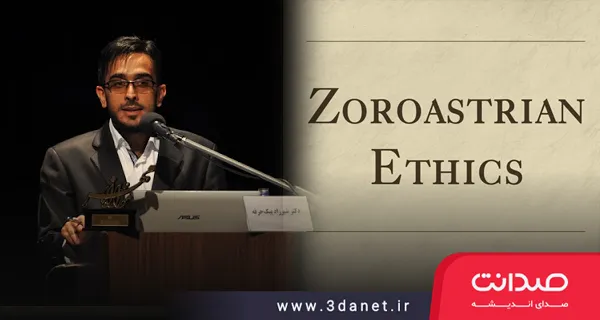
Consequentialism, Hedonism, and Capitalism in Zoroastrian Moral Philosophy
"Ancient Iran" possesses various "ethical texts" and "books of counsel" (andarz-nāmeh). These texts and "books of counsel" are not merely scattered, incoherent, and inconsistent ethical maxims; many of them, in a reasonable and coherent manner, provide a "consequentialist" "criterion" for evaluating human "action" as well as "character." "Zoroastrian moral philosophy" is a form of "hedonistic utilitarian consequentialism" founded upon the duality of "pleasure and pain" and "happiness and unhappiness." This duality is entirely consistent with the dualistic ontology, metaphysics, anthropology, and theology of Zoroastrianism. The fundamental opposition between "good" and "bad," "pleasure" and "pain," and the "forces of life" and the "forces of death" in "Zoroastrian moral philosophy" is based on the fundamental opposition between "good" and "evil," "Ahura Mazda" and "Ahriman," and Spenta Mainyu and Angra Mainyu in the Avesta. Pahlavi ethical texts, such as Dēnkard Book Six, also emphasize that the body should be kept in rāmišn (ease) and happiness, that pain and suffering should be avoided, and that doing good deeds is difficult for one who allows pain into the body. Furthermore, "Zoroastrian moral philosophy" evaluates all aspects of agency, such as the agent's wisdom, disposition, character, and action, based on "consequences," and in this respect, like some modern theories in "normative ethics" such as the theories of Parfit, Pettit, Smith, and Driver, it is a form of "global consequentialism."
The praise of these concepts, alongside concepts such as wealth, agility, innovation, and productivity, is a unique feature of "Zoroastrian moral philosophy." Consequently, in addition to "consequentialism," the roots of "capitalism" can also be sought in "Zoroastrian moral philosophy." Years before the "linguistic turn" and the "great change in public opinion towards life, productivity, and innovation" that occurred in the seventeenth and eighteenth centuries in northwestern Europe, leading to the "Industrial Revolution" and subsequently "economic growth in the modern world," the main foundations of "capitalism" existed in "Zoroastrian moral philosophy." In the interpretations of some Iranologists, such as Darmesteter, in the nineteenth and early twentieth centuries, there are references to this feature of "Zoroastrian moral philosophy," but the new generation of Iranologists, probably influenced by the prevailing methodology in the interpretation of Biblical sacred texts and the spirit dominating intellectualism in the mid-twentieth century, ignores this feature of "Zoroastrian moral philosophy" and offers no explanation for these concepts.
.
.
Session One
Session Two
Session Three
Session Four
Session Five
Session Six Part One
Session Six Part Two
Session Seven
.
.
[1] . With thanks to the great and unparalleled master of ancient Iranian culture and languages, Dr. Seyyed Ahmad Reza Ghaemmaghami
.
.





Discussion1 comments
سلام الباقی درس گفتار را چگونه تهیه کنم