Philosophy
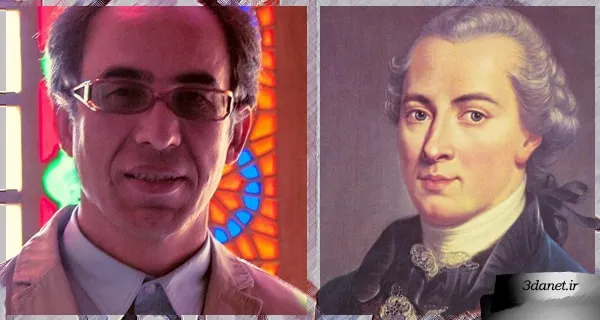
Lecture: “Contemporary Varieties of Consequentialism” by Shirzad Peik Herfeh
The shortcomings of classical utilitarianism led philosophers, under the banner of 'consequentialism', to propose variants such as hedonistic and preference consequentialism, where Robert Nozick's 'experience machine' argument shifted the criterion of the good from pleasure to preference.

The inability of “classical utilitarianism” to answer the criticisms raised against it (by philosophers such as Bernard Williams, John Rawls, Robert Nozick, etc.) brought it such disrepute that most “contemporary utilitarians” preferred to call themselves “consequentialists” because, as Julia Driver rightly says, very few philosophers now accept the outlook of the “classical utilitarians” one hundred percent.
Contemporary “consequentialists,” most of whom were born between 1941 and 1961 and, apart from Derek Parfit, are all still engaged in teaching and research, have, by deeply analyzing the two concepts of “maximization” and “the good,” put forward a wide range of contemporary varieties of “consequentialism.” These philosophers, such as Michael Slote (1941–...), Peter Unger (1942–...), Derek Parfit (1942–2017), Frank Jackson (1943–...), Philip Pettit (1945–...), Peter Singer (1946–...), Peter Railton (1950–...), Michael Zimmerman (1951–...), Michael Smith (1954–...), Shelly Kagan (1955–...), Elinor Mason, Frances Howard-Snyder, and Julia Driver (1961–...), by posing new questions, provide us with a deeper understanding of “consequentialism.”
“Actualist consequentialism versus possibilist consequentialism,” “objectivist consequentialism versus subjectivist consequentialism,” “act-consequentialism versus character-consequentialism,” “consequentialism based on absolute maximization of the good versus consequentialism based on satisficing the good,” and “hedonistic consequentialism versus preference consequentialism” are among the various types of contemporary consequentialism that will be explained in this lecture.
In what follows, a brief reference will be made to the dichotomy of “hedonistic consequentialism versus preference consequentialism” (to become acquainted with contemporary varieties of consequentialism, see the lecture). One of the most important objections raised against hedonistic utilitarianism is a hypothetical situation called the “experience machine.” J. J. C. Smart was the first philosopher to consider our reluctance to enter the “experience machine” as problematic for hedonistic utilitarianism (Smart, 1973, pp. 19-22). Nevertheless, the clear and vivid description of such a machine by the famous libertarian philosopher Robert Nozick attracted the attention of philosophers. Nozick’s main goal in depicting such a situation was not to argue against hedonistic utilitarianism, but later some philosophers, including himself (Nozick, 1989, pp. 99-117), used this situation to argue against this type of utilitarianism. Nozick’s hypothetical “experience machine” scenario led many utilitarians, in order to respond to it, to change the criterion of the good from “pleasure” to the “preference” and “desire” of the agent:
Suppose you are in an experience machine that allows you to experience anything you desire. Expert neuropsychologists can make you think and feel that you are writing a brilliant novel, having a romantic relationship, or reading a fascinating book. All the while, you are floating in a tank with electrodes attached to your brain. Would you be willing to spend your entire life in this machine, programmed with the experiences you enjoy [and experience any pleasure you like]? Do not worry about possibly being unaware of some pleasurable experiences [and thus missing out on them]. A seasoned team has studied the lives of a great many people and provides you with a diverse list of various pleasures. You can choose any pleasure you like from that list, for, say, two years. After trying all those pleasures over the two years, you get out of the tank for ten minutes or ten hours to select the pleasures you want to experience in the next two years. Moreover, while you are in the tank, you have no idea that you are in the tank and think those pleasures are one hundred percent real. Others can also enter the tank and experience any pleasure they like. Therefore, you do not need to leave the tank to help them at all. ([There is no dispute in the example. So] ignore issues like who would service the machines if everyone wanted to do this.) [Given these explanations] Would you enter the tank? What could be more important to us than our inner feeling about our lives? The stress of a few brief moments between deciding and entering the tank cannot be so significant that we reject this offer because of it. (If you make such a decision) a few moments of stress are nothing compared to a lifetime of pleasure. Besides, if your decision is the best decision, why should you be stressed at all (Nozick, 1974, pp. 42-3)?
Nozick, R. (1974). Anarchy, state, and utopia.
Smart, J. (1973). “An outline of a system of utilitarian ethics” in Utilitarianism: For and against.
.
.
Listen on Castbox | Anchor | Spotify
Download audio directly
.
.





Discussion0 comments
No comments yet; let yours be the first voice.