Philosophy
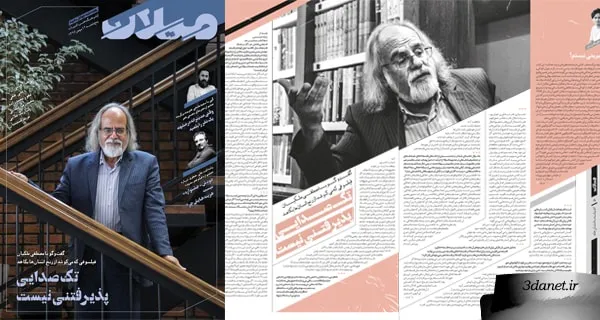
Monologue Is Unacceptable: A Conversation with Mostafa Malekian in Milan Magazine
Malekian attributes his successes to the givens of existence and his sensitivity to suffering to his personality type. He rejects monologism and champions diversity as the guarantor of culture, goodness, and blessing.
Ali Bagherian—You have said that you are concerned about human beings who suffer, and that you consider the duty of the philosopher and the artist to be precisely addressing these sufferings and striving to alleviate them. To what extent has the fact that you yourself have been a very sensitive person in life been influential in this matter?
I think a great deal. The psychological type or personality type of every person influences many of their opinions and views. In my case, too, I think my psychological and personality type has been very influential. I think it is because of this intensely emotional nature of mine that my attention to the problem of suffering is greater than that of some of my colleagues. Yes; I have no doubt.
In the realm of poetry, Akhavan speaks of the "ray of prophetic consciousness," of inspiration and such matters. Presumably, in the domain of philosophy and thought as well, we cannot focus solely on the individual's effort and say they arrived here purely through effort. Please elaborate a little on this.
I believe far more than what you said in the givens of nature, the givens of God, the givens of existence; however you wish to interpret it. I emphasize, even more than the degree you mentioned, that a part of our successes is the result of the fortunes that have come our way in life; now, whether you want to interpret these as fortune, luck, or divine decrees, or...; whatever interpretation you wish to make. What has been given to us is far more than what appears at first glance. None of us have acquired any of the three primary values of our body—namely, physical health, physical strength, and physical beauty—through our own efforts. From the moment we are born of our mother, we have had a degree of beauty, a degree of strength, and a degree of health. When we enter the mind, it is the same: the power of learning, the power of memorization, the power of recall, IQ, speed of transmission, power of thought, depth of understanding, power of reasoning, and the power of teaching and conveying what is in one's mind to others are mental abilities, none of which we have given ourselves. If I had given myself my IQ, I would not have given myself an IQ of 70; I would have given myself 700! If I had given myself the strength of my memory, my memory power would not be what it is. After the body and mind, when we enter the psyche, it is again the same. You see that some people are born quick-witted, born witty; and there is also a person who has to think for a month for a joke to come to mind or not. This is why I accept your point far more than what you emphasize, that we are subject to the positive fortunes of life—call them divine decrees, call them natural gifts, call them God-given endowments, whatever you want to call them—and for this reason, I also believe that we should not be seized by self-conceit. If these givens that have been given to you had been given to anyone else, they would have reached the same place you have reached. From this perspective, we should have absolutely no self-conceit or vanity that "It is I who has done such and such." In fact, when someone says, "It is I who has done such and such," it is as if they are saying, "I am the one who, like Rostam, has conquered the world." Someone else has conquered the world; it is not we ourselves who conquer the world, whether it be the material world, the world of thought and science, or the world of ethics and spirituality. I estimate the role of the free and gratuitous givens of existence in human life to be far greater than this.
Is it because of this very concern for human beings and their sufferings that you write more in the fields of moral philosophy and philosophy of religion, because presumably in moral philosophy and philosophy of religion you can better address the issues that afflict human beings? Can this not be done in, say, the philosophy of mind?
It is possible, but of course everyone has limited abilities. I cannot work in every field. I believe that five areas of human knowledge are closely connected with the problem of suffering: one is psychology, one is world literature (such as great novels, important poems), one is philosophy (certain branches of philosophy, like philosophy of mind, ethics, philosophy of religion), one is mysticism, and one is religion. These are the five areas that deal with the problem of suffering. My wish has been to be able to work in all five areas, but with the limitations I have just mentioned—that one's IQ might be low, one's memory weak, one's body also infirm—with these, one can no longer expect to work in all areas. Of course, I am grateful for God-given gifts, but I enjoy them only to an average degree. But you are right: one must also work in other areas in which I have not worked at all, including the area you mentioned, namely philosophy of mind.
A tangential question: You have been involved in the translation of many books on ethics, both first-rate books and second-rate, so-called "introductory" ones, whether as translator, editor, or advisor. At the same time, you have always been a critic of monologue. Do not all these books advocate a particular type of ethical view, for instance belief in the "Golden Rule"? If so, does this not conflict with opposing monologue?
No; the "Golden Rule" is one of the common precepts and rules of all ethical schools, ethical systems, and ethical theories. You know better than I that we have something called "global ethics" or "common ethics," which is the common denominator and common element of all ethical schools, ethical systems, and ethical theories. One of the precepts and rules of that global ethics is the Golden Rule; therefore, the Golden Rule has no opponent at all. All ethical schools, all ethical systems, all ethical theories subscribe to the Golden Rule; however, some subscribe to both aspects of it, both its positive and its negative aspect, and some subscribe only to its negative aspect: some say, "Treat others as you would like them to treat you, and do not treat others as you would not like them to treat you"; some accept only the second part, that "Do not treat others as you would not like them to treat you." Therefore, the fact that the Golden Rule is usually mentioned in all the books translated at my suggestion or by my own hand does not mean that all those books belong to one ethical school, one ethical system, one ethical theory. No; the Golden Rule is common to all schools, systems, and theories. In support of this statement, I would like to say that, for example, I have edited G. E. Moore's Principia Ethica, but I have also edited other books that do not agree with Moore's book at all. I myself am in no way such that I could accept monophony. I believe that if our culture becomes more polyphonic, it will lead to the good and blessing of us all. Monologue has never gotten the human individual anywhere, nor human society. The survival of the plant ecosystem depends on its having as much diversity as possible. If one day you destroy all the plants on earth and plant only one plant across its entire surface, the whole earth will very soon become barren. The ecosystem, that is, the native environment of plants, animals, and humans, guarantees its own survival through its plurality. If all the people in a society were as identical as aspirin tablets, the society would not survive. The more diverse a society is in the realm of opinions and views, in the realm of feelings and emotions, in the realm of desires, in the realm of speech, in the realm of action, the more dynamic it will be. Some think that such a society will fall apart, and that to prevent it from falling apart and to preserve social solidarity, we must make everyone uniform. Making a society uniform is tantamount to its destruction, as we saw in the Soviet Union after the October Revolution of 1917. How much they tried to make half the people of the world, who were under the banner of communist governments, exactly alike, but it did not work. It is true that I have not had the chance to translate or recommend books in all areas of ethics, but I truly regret this; I say, I wish this had been done. I myself do not believe that any school, even if, by an impossible assumption, the most perfect school existed, should have the only say and that the rest of the schools should step aside in its favor, absolutely and never.
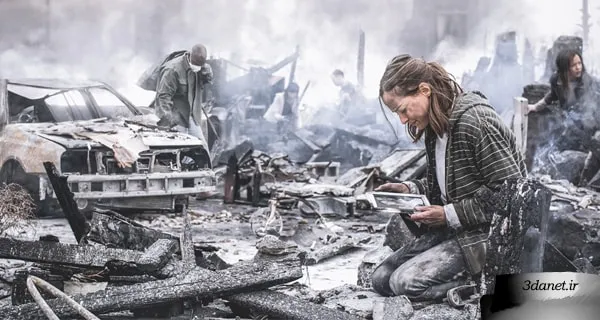
It seems our thinkers pay very little attention to this issue, to human pain and suffering, and instead engage with matters that have nothing to do with us; for instance, they write books about industrialization and postmodernism and things of that sort, which seem, at the very least, not to be among our priority issues, whereas in Europe, after the Lisbon earthquake, dozens of books were published, some of which are among the first-rate works of philosophy, such as "Candide," yet it appears we have nothing of the sort in our own philosophy. For example, what did our thinkers do after the Bam earthquake or the recent earthquake in Kermanshah? Of course, we have it in literature; for instance, this very "Nafthat al-Masdur"—which, by the way, is one of our technical prose works and was edited by your professor, Amir-Hasan Yazdgerdi—is entirely and directly devoted to human suffering. What is the reason for this?
I see the validity of your criticism, that one must deal with problems, not with pseudo-problems, problem-like facades, and issues that only appear to be our problems but are not really our problems. The gist of your point is entirely correct, but I want to make a remark, which is that when Voltaire writes "Candide," which concerns the events in Lisbon, he lives in an environment where these views can have an impact, but your intellectual, if he writes a book about a social problem—whatever problem it may be—is almost hopeless that this book will have an impact. He can hope that a few readers will read his book, but that, in practice, the situation will improve by even a hair's breadth because of this book is not possible in a country like ours. One should expect speech about every theoretical problem and practical difficulty only in a country where those who speak are not crying out in a wilderness, where someone pays heed to their words and says: "If it is as you say, then we must do this, not that." In a country like ours, men of action fundamentally do not think at all; men of thought also have no opportunity for action. This matter somewhat diminishes motivation. If I, as a typical person, write four books and two articles, but see that no practical consequence has been given to them, my motivation for writing a new book or a new article is at least reduced. I do not mean to say that I have made an excuse and defended the intellectuals; on the contrary, I completely accept your point: an intellectual must, in any case, address the problem, but when he addresses the problem and sees that, in practice, nothing has changed at all, this naturally reduces his motivation. When Voltaire writes a letter to the King of France or, say, the ruler of Holland, that letter has an effect.
Well, when they do not pay attention to these works, do they pay attention to postmodernist works, for example?! If men of action do not pay attention to such books, are we able and permitted, with the justification that our works have no impact, to move towards pseudo-problems?!
No; I believe that despite this we still must struggle against our own demotivation and address the real problems of society. I only wanted to explain why the intellectual becomes demotivated, but I believe the intellectual must resist this demotivation within himself and take some action. I have said that the pain and suffering of human beings matters to me. When the pain and suffering of human society in general is this intense and powerful, I consider engaging with pseudo-problems almost a betrayal. It is like my child having cancer and me researching types of pine trees! Everyone would say: "If your heart burns for your child, you must do something about his cancer." Our society is a cancerous society in every respect; should I then research types of pine trees?! When these are the problems of my society, should I come and ask, for instance, whether Deleuze made an error in his interpretation of Kant or not?! Not that there is never time for this; now is not the time. If one day your society becomes like the societies of the Scandinavian countries, then one should also address whether Deleuze's interpretation of Kant was correct or not, but for now, suppose I addressed this issue and found out whether Deleuze's interpretation of Kant was correct or incorrect; what does it have to do with me?! "They say in Saqsin a person [originally: a Turk] has two bows/ If one of those [originally: if from these] two is lost, what loss is it to us?!" They say in Saqsin, a place whose name we have not even heard, a person had two bows and now news has arrived that he has lost one; what does it have to do with me?! I have at least one extensive lecture titled "The Wisdom of 'What Is It to Me?'" in which I said we should not pursue learning things that, even when we learn them, have no effect on our practical lives. I consider part of the record of our intellectuals and academics to be engagement with pseudo-problems. These are not the problems of our people; we must see why we are wretched, why our situation is like this, why violence has become the norm among us, why we distrust one another, why we are moving toward pessimism, why we are moving toward despair, why the feeling of loneliness has become so deadly, why there is no social security, why there is addiction, why there is prostitution, why there is no work, why one cannot make a living with 6 or 8 hours of honorable work a day. These are our problems. Anyone who speaks about these and things like them is speaking about our problems. In a society where almost no human being can manage his life with 8 hours of honorable work and must either increase the quantity of his work from 8 hours to 12 or 14 hours, or must forgo the honorableness of his work, in such a society, asking whether Deleuze's interpretation of Kant is a correct interpretation or not is laughable to me. "What would Rostam do with a bouquet of roses and basil [originally: eglantine] in the battle line?" After all, it is laughable for Rostam to take a bouquet of flowers in his hand and go to the battlefield. They say: "Sir! Are you not aware where you are going?! You are Rostam! You are going to the battlefield! You are taking a bouquet of flowers?!" I see many works similar to this, and it is all because we have become heedless of the pain and suffering of flesh-and-blood human beings; we engage with issues that, even when their answers are known, make no difference; our life remains the same. It is from this perspective that I say problem-identification and distinguishing a problem from a pseudo-problem is the first duty of an intellectual, to first understand what the problems of my society are and to address those. This is why I myself, of course as far as my reason has allowed, have never entered into these discussions, never. Whatever proponents and opponents say, I neither support these nor those, not because I believe none of them speak the truth, but because the words of none of them, whether they speak truth or falsehood, have anything to do with us. If I now tell you that in a galaxy 45 billion light-years away from us there is oxygen, it might even be true, but it has nothing to do with my life and yours. Not every truth relates to my life and yours. This is why I do not consider the greatest error in the intellectual record to be the errors others have named; I consider it to be that they engage with pseudo-problems instead of problems, with false problems instead of real problems, they confuse problems with pseudo-problems. We have so many problems that the turn never comes for pseudo-problems. Of course, when society evolves, it finds new needs, because its previous needs have been met.
Then, in that society, some things that are now pseudo-problems truly become problems and must be addressed. In this regard, there is no difference among intellectuals; religious intellectuals, secular intellectuals, laic intellectuals, leftists, rightists, socialists, liberals—all are the same. If I am an intellectual of my own society, I must look into what it is that the people of my society are suffering from; see whether I can do something for them or not. If I can, I should do it; if I cannot, at least say that there is nothing I can do here; do not expect anything from me. But I am enjoying all the blessings of a society, yet the only thing I do not think about is the problems of this very society that nourishes me, has given me social standing, in which I have become famous, in which I have flourished. In my view, this is not right.
Is suffering, or more precisely the undergoing of suffering, the same as evil? If we say that suffering is not an action but rather being in a passive position, can we also say that evil is this very state of being passive?
I cannot accept the first point, that every instance of suffering is evil. Meaningless suffering is evil, as is suffering that does not lead to pleasures greater than itself. There are two types of suffering that are evil: one is meaningless suffering, and the other is suffering that does not enable me to attain a pleasure greater than that suffering. If I suffer for a year, but as a result I am accepted into a university through an entrance exam, the pleasure derived from that acceptance is greater than the suffering of that year, and this suffering is not evil. Meaningless suffering is evil, and suffering that does not bring us to a pleasure greater than itself. So some of the sufferings we undergo in life are not evil, because they bring us to a pleasure greater than themselves or are meaningful. Therefore, I cannot accept this equation. So we conclude that some sufferings are evil and some are not. From this, it becomes clear that while we should not welcome suffering (I disagree with those who believe we should fundamentally welcome suffering), we must also know that we can derive many benefits from this suffering; that is, no suffering is such that it closes off the path to benefiting from it. One can suffer and achieve something from it. Therefore, not welcoming suffering, but also not fleeing from every suffering. There are sufferings that are meaningful for you; there are sufferings that bring you to a pleasure greater than themselves. There is no problem in accepting these sufferings, but these arguments that one can learn lessons from suffering and that suffering matures a person, and therefore we should welcome suffering, seem to me to be pointless heroics—throwing yourself into a sea of suffering, immersing yourself in the waves of suffering, suffering does such and such... No. Until the answer to "Why am I suffering?" is clear, suffering is futile. The more meaningless suffering you undergo and the more you immerse yourself in it, the more wretched you become. If you undergo sufferings that do not bring you to a greater pleasure, the more you immerse yourself in them, the more miserable you become. These are myth-like heroics that I do not defend. Therefore, I say we should not welcome suffering, but in times of suffering that, in any case, afflict life, we can achieve our purposes by giving meaning to that suffering or by using it as a means to reach a greater pleasure.
So, if we do not consider maximal determinism, can we say that meaningful suffering is something like working, which we choose ourselves, and meaningless suffering is working excessively to attain things that are not necessary at all, and this latter is precisely the state of being passive, because, as Schopenhauer says, those things that are luxuries wear a person down in life, and luxury-seeking is an infinite path on which you can always advance. So from this perspective, is suffering the same as being passive?
Yes. I can accept what you say.
Ultimately, it seems that suffering can be defended in three ways—the meaningless suffering that, as you say, is equivalent to evil. One is the Ashʿarite account, which is to say that fundamentally there is no suffering or evil at all, because God is the owner of existence and can dispose of His property in any way He wishes; for this reason, there is no evil whatsoever. The second is to apply the critique leveled at utilitarians—or, more precisely, consequentialists—to this issue as well. It is as if consequentialists ascribe to themselves the power of prophecy. A minimal version of utilitarianism is this: we calculate whether the benefit of this action is greater or the benefit of that action, and we choose the one whose benefit is greater. Now, a critic could say: “How far does this prediction and this choice carry meaning? You might conclude tomorrow or the day after that you made a mistake in your choice.” Can’t the same be said about evil? The third is to say that the very principle of this evil is good, in the sense that the very fact that a human being suffers, even meaningless suffering, is the principle of good; for example, we have a toothache that may be the result of our own negligence and mistakes, but this itself is a cause and occasion for good, because we can derive good even from this and, for instance, realize the value of health. How can these three defenses be answered?
I do not accept any of these three. I do not accept the Ashʿarite defense at all, because the Ashʿarites say that everything other than God is God’s creation and therefore God’s property, and God can do whatever He wants with His property. I say that this very rule, “the owner can do whatever he wants with his property,” is contrary to ethics. Suppose in everyday life you are the owner of this recorder. I cannot ethically accept that the owner of this recorder can smash it on the ground and shatter it to pieces.
What if we take “owner” in a different sense?
I am explaining. So, if by “owner” you mean to say that because God created us, He owns us, and the owner can inflict any calamity upon His property, I say this is wrong. But if by “owner” you do not mean conventional ownership, like my ownership of this recorder, and you say God owns us, meaning He has dominion over our circumstances and we have no escape or recourse from His power, I say the situation becomes worse, because then one could say that a being who has no escape or recourse from the power of its owner expects that owner not to mistreat this being that cannot flee from him.
Does this contradict God being absolute good?
Yes; it is incompatible. But regarding consequentialism in ethics, I have said many times that in law, that is, in legislation, I am entirely a consequentialist. I believe the right law is the law that has the greatest good consequences or the greatest preponderance of good consequences over bad ones; therefore, in law, I am completely a consequentialist. But in ethics, I am completely opposed to consequentialism. One of the problems with consequentialism in ethics is precisely what you pointed to: that it is as if we can predict, forever and ever, in all places, at all times, and in all circumstances, what consequences this action of ours will have, so that we can understand whether its good outweighs its evil or its evil outweighs its good. Human beings absolutely and utterly lack such a power. One of the greatest objections raised against consequentialism is exactly what you pointed to, and in my view, for this reason, ethical consequentialism is entirely indefensible, absolutely.
How can one believe in consequentialism in law but not in ethics?
Because the law does not claim to take all consequences into account for all eternity; the law says we want to assess consequences within this specific spatio-temporal framework, not for all eternity, but in ethical consequentialism there is a claim [the thread of the argument is lost, and Malekian, while acknowledging this critique, does not reject the justification of evil in this way]. But regarding the third defense, which says that if evils exist, we appreciate goods, if uglinesses exist, we appreciate beauties: three objections apply to this: First, could a world not have been made, could God not have made a world, in which, in order to know the value of good, affliction with evil was not necessary? You and I are faced with a made world, faced with a done deed, but God is not faced with a done deed. Could God not have made a world in which, for humans to know the value of good, their prior affliction with evil was not necessary, and people could know the value of good without being afflicted by evil? Second, sometimes the evil is such that no opportunity for a subsequent good arises for us to appreciate it.
Even assuming another world?
Yes. They have thought that whenever an evil occurs, you have the opportunity and possibility of encountering a subsequent good, so that through encountering this evil you appreciate the subsequent good. Very often, the opportunity is lost altogether.
Does the other world not provide an opportunity?
No. Suppose they separate me from my child and execute me. The bitterness of separation from my child is a bitterness they have imposed on me, and it involves immense pain and suffering. Now, suppose there is a life after death; in that afterlife, I will no longer be reunited with my child. You have imposed a pain on me that you cannot possibly compensate for. Third, if evil were the condition for understanding a good greater than itself, that would be one thing, but very often evil is the condition for knowing the value of a good whose magnitude is less than the magnitude of this evil. There is no guarantee. If they say: "We give you an evil of degree 80 so that afterward you appreciate a good of degree 5," I say I do not want to appreciate that good of degree 5, because even when I appreciate it, I have only just perceived a good of degree 5; I am still owed 75 by you! I cannot accept these things. I say these are because we want to save the ideology, we want to save our school of thought from the criticisms leveled against it. If we had truth-seeking, and in Gandhi's excellent phrase said: "My religion is truth, and nothing else," we would not come to betray the truth in order to save our religion or save our ideology. The truth is what I have stated.
.
.
Download the PDF of this interview from Milan Magazine
.
.
A conversation with Mostafa Malekian, who strives to reduce human suffering
Monologue Is Unacceptable
Source: Milan Magazine (Mashhad Youth Weekly)
.
.



.webp)
Discussion0 comments
No comments yet; let yours be the first voice.