Religion
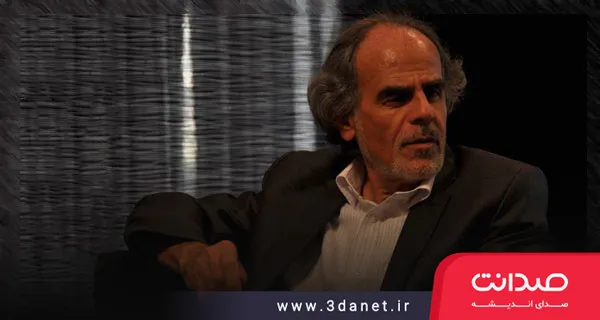
Mostafa Malekian on the Resurrection of Some Humans in Animal Form
Mostafa Malekian considers the theory of humans being resurrected in animal form to be unfounded, critiques the attribution of moral qualities to animals, and, drawing on zoology and the Quran, argues that such verses require interpretation and rejects the assumption of innate human goodness.
The statement that “humans will be resurrected in the form of roosters, pigs, and the like” rests on certain presuppositions:
One of these presuppositions is that, for instance, the peacock is arrogant, the donkey is truly stupid, the fox is genuinely deceitful and cunning, and the rooster is a lustful creature. But is this presupposition actually correct? Just because the fox is clever at hunting, can we say it is deceitful and cunning? And that the peacock, which walks with a strut, is arrogant, and that the ant, which instinctively usually consumes only half of its provisions, is greedy? Do these claims really have a scientific basis, or are they taken from common convention? (Whereas in Western convention—unlike our own—the donkey is considered intelligent.) In my opinion, these theories have no sound foundation. What rational or psychological proof do we have that the peacock is arrogant? If we find no proof for this claim, even if it appears in verses and narrations, we must interpret it differently, just as we interpret “yad” (hand) in “Yad Allah fawqa aydihim” (The Hand of God is above their hands) due to a necessary rational judgment. And fundamentally, arrogance and similar attributes are conceivable only in beings that possess qualities such as “being perceivers of universals,” and if we are to trust the information provided by zoology, twentieth-century zoology does not deem such a thing correct. The second presupposition of this statement is that when it is said that humans who are perfect in every respect will be resurrected in human form, and the rest will be transformed into various animals, it means that human beings are innately good, and goodness is an essential and predominant attribute of humans. Can we commit to the idea that goodness and freedom from sins are the defining characteristic of humans? If so, what do you make of verses such as: “Khuliqa al-insanu halu‘a” (Man was created anxious) and “Khuliqa al-insanu min ‘ajal” (Man was created of haste)?
.
.
Mostafa Malekian’s View on the Resurrection of Some Humans in Animal Form
Mostafa Malekian, Lectures on Death and Immortality, pages 139 and 140
.
.


Discussion1 comments
در آیاتی مثل یدالله فوق ایدیهم، برهان قاطع داریم که مراد از ید، نمیتواند دست فیزیکی باشد. ولی درباره صفات حیوانات، برهان نداریم، تنها چیزی که وجود داره، اینه که نمیدانیم آیا این صفات برای حیوانات ثابت هست یا نه؟ با این بیان، حق نداریم آیات و روایات را تاویل ببریم. نهایت این است که میتوانیم بگوییم ما آیه را نمیفهمیم. نه اینکه به قول آقای ملکیان، آیات و روایات را تاویل ببریم. نکته دیگه اینکه محشور شدن انسان بر صورت حیوانات، نقصی بر حیوانات نیست و ظلمی در حق انان نیست، بلکه نقصی برای انسان حساب میشود