Philosophy
Mostafa Malekian, The Crisis of Spirituality: “Components of the Spiritual Life” (2004)
Spirituality is neither religiosity nor mysticism, nor is it ethics or new religious movements. By distinguishing these concepts, Mostafa Malekian examines the crisis of spirituality and identifies the ultimate goal of the spiritual life as attaining the quality of 'security and serenity' that human beings have always sought.

The discussion I wish to share some points about concerns the crisis of spirituality. But to discuss the crisis of spirituality, especially with an emphasis on the concept and the word crisis, it is necessary to go through three stages.
The first stage is to specify what we mean by the spiritual life, or in other words, spirituality. What do we call spirituality? Particularly because spirituality is very close to several other categories, and the most important task for understanding spirituality is to distinguish it from these phenomena that are near to spirituality but not exactly spirituality itself.
In the second stage, in order to clarify what spirituality and the spiritual life are, the question is what factors can provide this spiritual life. In other words, what are the things that, when they come together, provide us with a life that can be described as a spiritual life? What are the set of partial causes of the spiritual life that collectively constitute the complete cause of the spiritual life? What are the things that, if I lack them, I lack a spiritual life, and if I possess them, I possess a spiritual life? In other words, the spiritual life must be considered an effect, whose causes are a set of things that can be referred to as the factors of the spiritual life. Therefore, in the second stage, the discussion concerns the factors that generate and bring about this spiritual life.
In the third stage, we address the crisis of spirituality itself; and given that the identity of spirituality is known to us and we know what factors bring it into existence, in what sense can we speak of a crisis of spirituality? In the third stage, we address the problems that stand in the way of those who wish to pursue a spiritual life; and there I will say that because these problems are to such an extent that it seems they are close to rendering the spiritual life impossible, the term "crisis of spirituality" is therefore not an exaggerated or inappropriate expression. If we spoke of the problems of living spiritually, the emphasis on these problems would not be as great as when we use the term "crisis of spirituality," and this means that there are more problems in the way of living spiritually than can be resolved.
Part One: What is Meant by Spirituality?
When spirituality is spoken of in the modern era, many people's conception of spirituality is religiosity, and they think spirituality means being religious, or religiosity, or practicing religion. But while spirituality has no conflict or opposition with religiosity, spirituality does not mean religiosity. Of course, spirituality is not incompatible with your having a greater or lesser practical or theoretical commitment to one of the religions, but at the same time, it has not entered into a pact or brotherhood with any specific religion or denomination, and therefore you can adhere to any religion or denomination and still be spiritual, or you can adhere to no specific religion or denomination and still be spiritual. In logical terms, spirituality is indifferent towards religion in general and towards any specific religion in particular.
So all three—being religious in a specific religion or denomination, not being religious in a specific religion or denomination, and not being religious in the general sense—are compatible with being spiritual; but in any case, spirituality itself does not mean religiosity. Spirituality is a phenomenon that, although very close to religiosity, does not mean religiosity per se.
In the same way, spirituality does not mean mysticism either. It is not the case that if we say someone is spiritual, it means they are a mystic, or at least it means they are engaged in the mystical path and wayfaring. That is, the very same story told regarding spirituality and religion can be repeated exactly regarding spirituality and mysticism. You can have a practical or theoretical commitment to a specific mystical system, or you can have none, and in either case, you may or may not be spiritual. Of course, this also does not mean that spirituality has no dependence on mysticism in general.
Nor does spirituality mean any kind of ethical living. That is, there is a boundary between spirituality and ethics as well; of course, a specific kind of ethics prevails in spirituality, but this does not mean that everyone who lives ethically is spiritual; however, it does mean that everyone who lives spiritually subscribes to a form of ethical life. In other words, spirituality necessitates a specific kind of ethics, but it necessitates only one specific kind of ethics, not every kind of ethics. Therefore, not everyone who lives ethically is necessarily spiritual.
Spirituality is not a fourth meaning either, and that is adherence to the religions of the new age. That is, spirituality does not mean the religions of the new age. In our era, we have new religions that we refer to under the name new age [1], which have been around for about a century and a half in Western culture. These, too, have more or less an affinity with spirituality, religion, and mysticism, but none of these new religious movements is what we mean by spirituality. Of course, there is no doubt that the influence of these new religious movements in the West has been increasing day by day. The daily return of people from historical and institutionalized religions has led to the spread of these new religious movements, which, of course, are not alike in terms of their strengths and weaknesses, or their divergence and convergence. Some are more divergent and some more convergent. They are also not alike in terms of how much they resemble historical religions. They also differ in terms of how eclectic they are or are not. Many stories can be told in this regard, but in any case, what is meant by spirituality is not adherence to any of these new religious movements either.
So far, it has only been said what spirituality is not, but nothing has been said about what it is. Before precisely specifying what spirituality is, I want to draw attention to one point, and that is that spirituality, despite all that has been mentioned that it is not, learns from all of them. That is, spirituality can learn lessons from mysticism, from religion, from ethics, and from new religious movements. It can learn something from all of these, but on the whole, it has no adherence to any of them.
Now, regarding spirituality, besides these negative points that were mentioned about it, I would like to mention a few positive points about it as well. We can picture what we mean by spirituality as follows: It seems that every human being, regardless of where, when, and under what circumstances they live, wants their life to be accompanied by a component or components and for their life to be coupled with an attribute or attributes. Much has been said about those attributes that all human beings want their lives to possess; but in my opinion (and in this respect, I greatly benefit from Wittgenstein's teachings), human beings have always sought a life that has at least one attribute, and that attribute is the attribute of "security and tranquility." Security and tranquility is the comprehensive point of all the positive things that human beings want to have in their lives. Of course, before Wittgenstein, some had also said that the ultimate end of human life is a life accompanied by a feeling of security and a feeling of tranquility; for example, among the founders of religions, Buddha greatly emphasized this point that a life accompanied by tranquility is the life we all want to have.
A life accompanied by peace is a life in which anxiety and worry, unease and concern have no place, and everything that is in some way incompatible with peace is absent from this life; this peace is a peace in the realm of the body, a peace in the realm of the mind, and a peace in the realm of the soul or, in a less precise but more conventional term, in the realm of the psyche. And this kind of peace is the peace that we all desire to have in our lives. Of course, this does not mean that we can arrange our surrounding system in such a way that our life has peace, or that we can so skillfully intervene in and manipulate our surrounding environment and change this environment in any way we wish that we are able to live in it with peace. Those who seek security and peace know that the world, in terms of its external condition, is not conducive to this state and situation; that is, it is not something one can expect from the world itself, but it is possible to create transformations within oneself so that, despite the unfavorable condition of the external world, one can attain this security and peace almost completely or nearly completely. In other words, one should not think that those who want a life accompanied by security and peace harbor a kind of wishful thinking, naivety, or a kind of optimism, believing that one can tinker with the nuts and bolts of the world in such a way that the world becomes a world of peace for them. They know that the external world can always be unfavorable or hostile and at odds with human beings, but they say that we can do something with ourselves so that, in this world that drives human beings to restlessness, we can preserve our peace. If we wish to use an analogy, we can say that they do not want the ocean of the world to be without turbulence, but they can keep their ship steady in this world with peace, and they know that the nature of being a sea is that it is sometimes restless, has waves, and one must always expect turbulence, but they can build and steer their ship in such a way that they do not drown in this turbulent sea and reach their destination safely.
Now, if we accept that spirituality means a life accompanied by security and peace, then this question arises: how should we live so that we can have such a life? This is where we enter the second stage of the discussion. The point where we must know what the factors of a spiritual life are. In mathematical terms, I mean what things are both necessary and sufficient conditions for a spiritual life. What are these conditions such that if they are absent, a peaceful life will not be attainable, and if they are present, nothing else is needed for a peaceful life? In other words, we want to identify and reflect upon things about which we are certain that if we do not have them, we will not have a peaceful life, and at the same time, we are certain that if we have them, we will not need anything else for the peace of our life.
Of course, before discussing this matter, we must first answer the question: what is the methodology for discovering these necessary and sufficient conditions? That is, in what way can one understand what conditions are both necessary and sufficient for a spiritual life?
Where should we find these conditions? This is where another aspect of spirituality becomes clear to us. It seems that in order to find these necessary and sufficient conditions, we must only turn to psychology, and there is no other source available by resorting to which we can discover the nature of these conditions.
But we must be careful that when we speak of psychology, we mean psychology in the broad sense of the word, not only the experimental psychology that we usually refer to today when we say psychology. Of course, this experimental psychology is a subject of discussion, and we make use of the achievements of this psychology and of all four of its schools; that is, from the first school of psychology, psychoanalytic psychology, from the second movement or school of psychology, behaviorist psychology, from the third movement of psychology, humanistic psychology, and from the fourth movement or school of psychology, namely transpersonal psychology; and we make especially full use of transpersonal psychology. But apart from this psychology, that is, experimental psychology, we will make use of psychological teachings wherever we feel they exist. For example, in mystical systems there is a psychological part from which we can draw as mystical psychology; likewise, we also draw upon religious psychology; we also refer to the spiritual and ethical figures of the world to see how they understood the human psyche and what help they can offer us regarding the kind of tranquility we seek. Psychology in the precise sense of the word means everything related to the knowledge of the human psyche, whether in the domain of intuitive sciences, experimental sciences, philosophical sciences (such as the philosophy of mind or philosophical psychology), or religious sciences. From this totality, we can extract the necessary and sufficient conditions.
However, it should be noted that although all the spiritual figures of the world seek these necessary and sufficient conditions, there is no complete consensus on this matter. In some cases, all mystics, spiritual figures, and psychologists agree, but regarding some other components, there is still doubt and uncertainty. Among these components, I will point to 13 components that, in my opinion, by taking these 13 components into account, we will arrive at the necessary and sufficient conditions. Of course, this is an open field, and all of these components can be debated, and some may even not accept these components.
1_ Autonomy / Living an Authentic Life
The first matter is something sometimes referred to as autonomy. It is also sometimes called authenticity or an authentic life, meaning a life based solely on one's own understanding and discernment. That I should live as the totality of my own perceptual faculties dictate, not as is suggested or inculcated from the outside.
Regarding every step, whether theoretical or practical, I should take that step based solely on my own understanding and discernment, and not trust or rely on any force outside myself, and settle the matter of life for everything presented to me by referring to myself, that is, the totality of my perceptual faculties and personal resources, or, in the terms of epistemologists, solely by resorting to the 6 sources of knowledge that are at our disposal. Which, as you know, these sources of knowledge are: sense perceptions, introspection, memory, intuition, testimony (under specific conditions), and reason, by which is meant the totality of reasoning powers. [Sense perceptions: which consist of sight, hearing, taste, smell, and touch.
Introspection: Some individual states cannot be understood through sense perceptions, such as hunger or thirst, etc., and we are only able to discover them through this source of knowledge; for example, thirst cannot be seen or heard, etc.
Memory: A cognitive source that pertains to the past and in many cases helps in discovering events in the present time.
Intuition: What is meant here is Cartesian intuition, not mystical intuition; which consists of matters whose contrary cannot be conceived. For example, is it possible to conceive of something that has shape but no color?
Testimony: As a source of knowledge, under specific conditions, it can provide us with reality; for instance, a person can never know who their real parents are except by resorting to the words and accounts of those around them. Through their testimony, one can arrive at the truth.
Reason or the power of reasoning, which is of three types: induction, deduction, and abduction.
Induction: Inferring a judgment from the succession of events under specific and appropriate conditions.
Analogy: inferring similar cases from several instances that resemble one another.
Inference: logical conclusion-drawing by considering the fewest verifiable presuppositions. For example, suppose you are in a closed room and have no news whatsoever of the conditions outside; the next day you are permitted to leave the room. When you come out, you observe that everything is wet. Here three possibilities occur to your mind: first, that the government has sprayed the entire city using helicopters; second, that all the city’s pipes, both secondary and main, have burst; and third, that it has rained. By referring to the power of reasoning, you can determine that, for instance, it has rained, because fewer verifiable presuppositions are needed for rain to fall. [Ed.] Those who live as these six conditions require, and who, on the other hand, deal with external sources of knowledge in such a way that they either obtain the epistemological authority of that external source of knowledge by resorting to one of these six sources of knowledge, or pay it no heed at all, in fact lead an authentic life. In other words, if we say something to someone and want them to act according to it, either they can accept that statement on the basis of their own perceptive faculties—in which case they have accepted our statement, but still through their own inner perceptive faculties—or not, in which case they have lived their life according to their own understanding and discernment.
But do we not always live our lives according to our own understanding and discernment, such that the condition for a peaceful life is to act according to our own understanding and discernment? Apparently, this is not the case; in many instances we are subject to conformity with the crowd, in many instances we follow what, in the Hegelian phrase, is the spirit of the age, in many instances we are under the influence of society’s prominent figures, or under the influence of our childhood educators and teachers, and our course of action is always based on statements we have accepted through their indoctrination. As Socrates says, we live an unexamined life in this sense; an unexamined life is one whose behavioral rules I have not tested myself, about which I myself have said nothing, whether in denial or affirmation; and of course, the reason we live on this basis is that we are under the suggestion of others.
In this sense, any susceptibility to indoctrination or suggestion, any imitation, any unquestioning obedience—all of these are negated. Of course, if someone said something and, based on our own perceptive faculties, we had a reason to follow their statement and we did follow it, this means that we have, in fact, still followed our own perceptive faculties; because we have secured and guaranteed the epistemological authority of that matter by using our own perceptive faculties. Much can be said about the unexamined nature of life, about how much we walk the path others have walked and do not wish to fill our own place in life, how much we are inclined to step in the footsteps of others, and how much we lack an authentic life, and it is this lack of an authentic life that causes a series of anxieties and perturbations.
2 – Indifference to the Judgments of Others
The second component, which is also a prerequisite of the first, is indifference to the judgments of others about us. If we want to pay heed to the judgments of others concerning ourselves, we will never have a peaceful life. Someone who wants to eat according to the appetite of others, and to eat as much as others want and of what others want, will never have peace. Peaceful people and great spiritual figures are those who attach absolutely no importance to the judgments of others about themselves. Of course, I will later note, and I will insist greatly upon this point, that one of the conditions of a peaceful life is that we love all human beings, and we must not infer unkindness toward others from this indifference to their judgments. Those who have a peaceful life are those for whom it is not important how others judge their lives. Whatever judgment they wish to make, I act according to my own understanding and discernment. This matter is important from two perspectives: firstly, it is impossible to live in such a way that all people are pleased with our life, in the expression attributed to Ali ibn Abi Talib, and which others (such as the Stoics) have also expressed: "The satisfaction of all people is a goal that no one has ever achieved." We cannot behave in a way that all people are satisfied with us; and secondly, even supposing this were possible, why should I live based on the likes and dislikes of others? And what is the problem here? The problem is that others do not want a single thing from me, and if I want to live according to the likes of others, I can no longer have a single life. A Quranic example is appropriate here: the Quran says, consider someone who is the servant of one master, and someone who is the servant of several masters, and the masters are in disagreement with one another. When a person is the servant of one master, no matter how unjust, irrational, and hard-hearted the master may be, the servant's duty is clear; if he says sit, he sits, if he says stand, he stands, and so on; but if the servant has several masters and the masters are in disagreement with one another, what can the servant do then? One master says sit, another says stand, that one says go, another says come, and so on. In reality, those who want to listen to the words of others make themselves servants of masters who disagree among themselves. Therefore, however I live, some of you will be pleased and some of you will not. From this, spiritual people realized that since living according to the likes and dislikes of others is neither possible nor desirable—meaning that this kind of life is not possible, and even if it were possible, it would not be desirable—they decided to act in life based on their own understanding and insight.
3 – Not Comparing Oneself with Others
The third point is that a person who wishes to live spiritually must not compare themselves with anyone or see themselves as being in a race with others; rather, they should only compare themselves with themselves, and this means always thinking about whether they can become better than what they currently are, and if they can, striving to become better. In fact, those who see themselves as being in a race with others fail to notice that when a group of people compete, at the moment the referee's whistle blows, they are standing in one place; and indeed, races are races in the sense that the start of the race begins from a single point, both temporally and spatially. For example, if we suppose that in a race one person is standing a hundred meters ahead and another person a kilometer behind, that is not a race; and the issue is that we human beings, when we are born, are not standing in the same place. We are born neither in the same physical conditions, nor in the same mental conditions, nor in the same psychological conditions. Therefore, whenever I compare myself with you, since we were not standing at the same point at birth, the result of the race, whatever it may be, will be to my detriment; and the reason for this is that if I compare myself with you and you are behind me in terms of position, I will attribute my being ahead to my own effort and striving, which is incorrect, and on the other hand, if in the comparison I am behind you, I will attribute my backwardness to my own laziness, which is also incorrect. Human beings who have not been placed in the same physical, mental, and psychological coordinates cannot compare themselves with others, and the point here is that no two human beings can be found with identical physical, mental, and psychological coordinates. Therefore, the only human being we can compare ourselves with is ourselves. In this way, at every moment we should ask ourselves, can I be further ahead and better than this position I am in and this thing that I am, or not, and if I can, move in that direction.
We see many problems in our lives as a result of these comparisons. At least three undesirable social relations can be observed in life as a result of this comparison. First, envy; second, competitiveness; and third, that in some cases I consider you an obstacle and a wall.
People of meaning do not compare themselves with anyone and say that I am just this thing that exists, and I must find my place in the puzzle of existence and fill it. Neither can I fill anyone else's place in this puzzle of existence, nor can anyone else fill my place in this puzzle.
4. Understanding and Digesting One's Differences with Others
The fourth point I wish to present to you, and which is related to the previous point, is that we must be able to understand and digest our differences with others in order to achieve peace. When I see that your IQ is higher than mine but I cannot understand and digest it, or I see that your memory power is greater than mine, or I see that you are more beautiful than me, or wealthier than me, or more famous or well-known than me, or have more social prestige than me, and I cannot understand and digest this difference, then I lose my peace. Human beings are absolutely not like aspirin tablets that can be produced identically, a billion of them alike. They are completely different from one another. Understanding and digesting this difference, and also realizing that in some respects I am behind you and in some respects I am ahead of you, causes us to have peace in life.
5. Love for Human Beings
The fifth point I wish to make is love for human beings. All spiritual people, from the time of Confucius, who was in a sense a secular spiritual person, meaning he believed in no transcendent realm, to the time of Thomas Merton and Simone Weil and our own time, all the spiritual figures of the world have said that peace arises in the one who gives love to others. I emphasize the giving aspect of the love-giver in this sense, because we have several other categories close to love that we usually consider love. Especially one type of love, which is the prime example of receiving loves, namely erotic love.
The ancient Greeks distinguished three types of phenomena related to love that were close to one another: one type of love, which we have for ideals, such as love of justice or love of truth and so on; this love of ideals, which has positive effects and results in our psyche, they termed philia. This type of love exists to a greater or lesser degree in all human beings, although what counts as an ideal for me and what I love, versus what counts for you, depends on the five factors[2] that influence this type of love; nevertheless, it can be said that love of ideals is common to almost all human beings. We have another type of love, which is termed receiving love or eros. Receiving love is a love in which the lover loves the beloved because they receive something from the beloved, and since the prime example of this kind of love is one in which sexual desire predominates, it is called erotic love. In such loves, I love the beloved because I can derive some kind of gratification and benefit from the beloved; in reality, I do not love the beloved, I love what I can obtain from the beloved, and because I see that thing only in them, I mistakenly think I love them. But the point I want to make is that although this love is in no way morally blameworthy or objectionable and is part of the existential structure of every human being, it is not tranquility-inducing. There is also a third type of love, which is the subject of my talk, and that is giving love, or as the Greeks termed it, agapeic love. Giving love, in this sense, refers to something in which I want something to reach the beloved from me, and the view I have of the beloved is an end-oriented view, not a means-oriented one. The beloved is not a means to achieve my end, but is the end itself. In other words, to look at the person before us with a view that they have a moral right to receive something from me, even if they do not have a legal right. This type of love is tranquility-inducing. But as I mentioned earlier, neither love of ideals nor receiving love carries any moral blame, yet they are not tranquility-inducing.
This love (giving love) always causes me to consider three things in my relations with others: first, to behave justly with others; second, to be benevolent to others (as you know, in behaving justly, I give you your due, but in being benevolent, I give you something beyond your due, and in fact, I give you something of my own due); and third, to think about your best interests and harms, not about what pleases or displeases you. For example, when your child gives you a report card full of failing grades and you scold them, they say to you, "Why don't you scold the neighbor's son, since he also failed?" You reply, "Because I do not love him, and because his best interests and harms are not important to me, I do not scold him; and the reason I scold you is because of the love I have for you." This is what Jesus Christ referred to as the "violence of love," and that love is violent because it pays no attention to what pleases or displeases, and only considers the best interests and harms of every matter concerning the beloved.[3] A child abductor who intends to deceive your child thinks about what pleases your child, not about their best interests, and for example, gives them chocolate or a book, but you take the chocolate or book from the child and keep it away from them; if the child, in their childish world, were to judge your behavior, they would say that the child abductor loves them more. But we know this is not the case, and in reality, it is the parents who love their child. All those who intend to exploit you or have a receiving love for you think about what pleases you. But those who have agape love for you always think about your best interests, and if your view of them is an immature one, you will often be upset with them.
The spiritual figures of the world believe that this type of love, that is, giving love with the characteristics mentioned for it, is tranquility-generating; quite the opposite of receiving love, which is tranquility-destroying. And it can be said that the distinguishing difference between these two types of love lies precisely in this tranquility-generation and tranquility-destruction.
Whenever you have a love in which you become anxious, know that you have wanted something from the beloved; but if it is a matter of giving something to the beloved, there is never any anxiety.
6_ Consent to the Unchangeable
The sixth component, which is very important, is acquiescence to the unchangeable. There is no doubt that in our individual lives as a single person—that is, in these 60 or 70 years we live—and for humankind in its social life throughout history, we have always been confronted with the fact that human beings see things in their lives that they do not wish to see, and do not see things in their lives that they wish to see. That, in the poet's words, 'I see not what I want, and want not what I see,' is, in fact, the description of our condition. But the issue is that if we want to have peace in this world, we must see which of the undesirable things that exist in this world are changeable and which are unchangeable. This failure to distinguish between the changeable and the unchangeable, or rather, the assumption that all these undesirable matters are changeable, causes us to lose our peace. Human beings who live in peace, with a kind of wisdom and insight, or as psychologists say, a kind of penetration and depth of vision, were able to separate changeable realities from unchangeable realities and then acquiesce to the unchangeable ones. Not acquiescing to the unchangeable—or, as the poet says, trying to move the unyielding ring of fate—is something that destroys peace. Anyone who wants to open a door that will not open and close a door that cannot be closed destroys their peace. Recognizing those things that are open but cannot be closed and those that are closed but cannot be opened, and not trying to change them, is what brings peace. All spiritual people, in the sense that they did not try to change unchangeable realities, acquiesced to a kind of fate—which, of course, does not mean they acquiesced to every reality. By acquiescing to what is unchangeable, one can find peace. Of course, how these realities should be distinguished, and whether we only have changeable or unchangeable realities, or whether there are other things besides these that are divided into changeable and unchangeable, is another discussion.
In my belief, all our attention should be on the fact that the laws of existence are unchangeable. However, some realities are changeable and some are unchangeable, and we must not fall into the illusion that all realities are changeable, because after we see that some realities cannot be changed, we become anxious.
Trying to change unchangeable realities is the story of that goat who thought it could move the mountain by butting it with its horns, but in reality, it only broke its own horns. We have many broken horns on this path, because we have butted a mountain that is very firm and cannot be changed.
Sometimes when we become angry, upon reflection we realize that we wanted to change an unchangeable reality.
For example, when my friend betrays me, I become angry because I thought that no friend would ever betray a person, whereas one of the fundamental rules of the world is that a friend, being human, can betray other human beings. All the negative states and feelings that destroy peace always stem from the fact that we wanted to change an unchangeable reality, or at least we wanted the unchangeable reality to change in our own case.
7. Being Here and Now
Most of our disquiet comes from the fact that we rarely live in the present moment during our lives, and are always living either in the past or in the future. Ordinary human beings rarely live in the present. I am apparently looking at this table, and my body is present in the now, in the here and now, but as soon as I see the table, I go back to the memory of buying a table in the past, and in reality, during those few minutes I was looking at the table, only my physique was in the present, while my psyche was in the past. Or, upon seeing the table, I think about how, by saving money, I can change the house's decoration next year, and I become oriented toward the future.
Peace belongs only to those who always live in the present and do not leave the present except when necessary and to the extent necessary.
For example, imagine that my child is scheduled for surgery tomorrow and I need two million tomans for the operation expenses. After necessary inquiries and investigations, I think the only possible way is to go to a certain friend of mine and borrow money from him. Well, here, when I get in the car and go to my friend, I should no longer think about the future; rather, I should enjoy the present moment, enjoy driving, enjoy seeing the scenery, and so on.
Another example that can be given in this regard is the story of Confucius. When Confucius was imprisoned and was to be executed the following day, he saw a butterfly flying inside the prison; thereupon, he began to leap after the butterfly, following its movement with his finger. In this state, the jailer, who was watching him, said to him: "O great Confucius, I thought you were truly a great man, but I see you are nothing more than a child! How can a person who is to be executed tomorrow delight his heart in the beauty of a butterfly's flight?" Here, Confucius gives him this answer: "If I am to be executed, whether I enjoy watching this butterfly or not, I will be executed; and if I am not to be executed, again, whether I enjoy watching this butterfly or not, I will not be executed. So why should I lose this hour! Is it better for a person to die having seen and enjoyed a butterfly, or without that enjoyment?"
But we do not live this way. For example, if we were in Confucius's place, we would either think about the future and, with the terror of death, be unable to enjoy the present moment, or we would live in the past and say to ourselves: this is the result of all that toil and diligence for the Emperor. How much I served him, and this is my end.
In fact, it can be said, in a sense, that there is never anything unpleasant in the present, and it is the annexation of the present to the past and future that makes it unpleasant.
8. Not Surrendering the Present to the Shackles of the Past
The eighth point, which results from the same subject but from another dimension, is the issue that for those who live in the present moment, their past stances do not place their present in shackles, and likewise, their present stances do not place their future in shackles. In other words, suppose that five years ago, in my studies and research, I reached the conclusion that A is B, and I wrote a book on the matter, published a treatise, gained friends and supporters, and so on. Now, after these five years, during which I declared everywhere that A is B, through reflection, study, or seeking the opinions of others, I have reached the conclusion that A is not B. Ordinary people in this situation say, "A person who has been saying for five years that A is B cannot suddenly say overnight that A is not B"; and so they outwardly continue to say that A is B, but inwardly they know that A is not B, and in fact, their past has placed their future in shackles. This conflict causes their peace of mind to vanish.
But spiritual human beings are like thermometers; that is, they express whatever they perceive in the present moment, and their past does not place their present in shackles.
9. Inner Discipline
The ninth point, which I emphasize greatly, is something that, in my interpretation, can be referred to as discipline, self-restraint, or a kind of inner discipline. This discipline means that the circle of what I have the power to do is much larger than the circle of what I have permission to do. One of the problems of non-spiritual human beings is that they think they have the right to do whatever they can do. That is, they equate the circle of their capabilities with the circle of their permissions. This is while people of spirituality by no means do everything they are capable of doing, and they set limits for themselves.
10. Taking Life Seriously
The tenth point that exists for people of spirituality is seriousness. Of course, seriousness not in the sense of perseverance.
همه اهل معنا نوعی جدیت در زندگی قائل بودند. در آثار مایستر اکهارت بحثهای زیادی در مورد جدیت زندگی میبینیم؛ بودا نیز بسیار به این موضوع پرداخته است و یا در گفتارهای علیابنابیطالب نیز این مسائل را به مقدار زیاد شاهد هستیم. به عنوان مثال حضرت علی در قسمتی از نهجالبلاغه که در مورد برادر ایمانی خویش که به روایتی ابوذر است صحبت میکند و میگوید که آنقدر دنیا در نظرش کوچک بود که به همان میزان خودش در نظرم بزرگ بود، در آنجا یازده ویژگی برای او ذکر میکند که یکی از آنها همین است و میگوید وقتی به زندگی میپرداخت مثل شیر بیشه جدی بود. همچنین در نامهای که در اواخر عمر خویش به پسرشان نوشتند در ابتدای نامه به این نکته اشاره کردند که پسرم یکی از چیزهایی که من از زندگی آموختم این بود که زندگی بسیار جدی است و در زندگی اصلاً نمیشود بازیگوشی کرد.
ولی این جدیت به چه معنا است؟ جدیت در اینجا در واقع به این معنا است که بدانم قوانین هستی در مورد من استثناءپذیر نیستند. هر کس که زندگی را جدی نمیگیرد بر این گمان است که میتواند از زیر بعضی از قوانین هستی بگریزد. به عنوان مثال دیگران تا در الف نباشند نمیتوانند به ب برسند، اما من فکر میکنم هنوز به الف نرسیده میتوانم به ب برسم. این مسئله خیلی آرامشآور است که بفهمیم که برای ما دفتر یا دستک جداگانهای در این جهان تدارک ندیدهاند. تمام کسانی که فکر میکنند از دیگران مستثنی هستند، به عنوان مثال خودشان را قوم برگزیده بدانند یا امت مرحومه بدانند یا فرزندان خدا بدانند؛ اینها زندگی را جدی نمیگیرند، چون فکر میکنند عالَم نظری به اینها دارد که به دیگران ندارد و وقتی زندگی را جدی نمیگیرند، سرشان به سنگ واقعیت میخورد. این مسئله درست مثل این میماند که پسر مدیر مدرسه چون فکر میکند که پسر مدیر است با او متفاوت برخورد میشود، خوب درسش را نمیخواند و اتفاقاً معلمها هم با او متفاوت برخورد نمیکنند و در نتیجه سرش به سنگ واقعیت میخورد. البته میتوان در نظر گرفت که معلمان متفاوت برخورد کنند چون معلمان را میتوان گول زد، اما هستی را که نمیتوان گول زد. بنابراین اگر ما بگوییم که ما بندگان خاص خدائیم و بقیه بندگان خاص خدا نیستند، یا مانند یهودیها بگوییم كه ما قوم برگزیدهایم یا مانند ما مسلمین بگوییم كه ما امت مرحومهایم یا . . . ، گوش هستی به این حرفها بدهکار نیست، بنابراین انسانهایی که خودشان را تافته جدا بافته نمیدانند در زندگی آرامش خواهند داشت.
11_ صداقت / انطباق ساحات درون
یازدهمین نکتهای که مایلم به آن اشاره کنم صداقت به معنی خاص کلمه است. یعنی منطبق بودن تمام ساحتهای انسان بر هم. در واقع میتوان گفت که ما در زندگی فردی خود، پنج ساحت داریم، اما معمولاً این پنج ساحت بر هم منطبق نیستند. صداقت در اینجا به معنی انطباق این پنج ساحت بر یکدیگر است نه لزوماً به معنی راستگویی، چون راستگویی یکی از مصادیق صداقت است. اگر پنج ساحت درونی انسان را که عبارتند از ساحت باورها، ساحت احساسات و عواطف، ساحت نیازها و خواستهها، ساحت اراده و ساحت اعمال (اعم از اعمال فعلی و قوهای) در نظر بگیریم خواهیم دید که این ساحتها در زندگی انسانهای عادی بر هم منطبق نیستند و به همین دلیل ما در زندگی آرامش نداریم. در اسلام نیز به کرات دیده شده که منافقان همواره ناآرام هستند؛ و این به این دلیل است که این پنج ساحت در آنها بر هم انطباق ندارد. حتی اگر بخواهیم تعبیر دینی این قضیه را نیز در نظر نگیریم، میتوان گفت که هر کس که اهل ریا، تزویر و ... است آرامش ندارد. به عنوان مثال به چیزی باور دارد اما چیز دیگری میگوید، یا چیزی میگوید ولی چیز دیگری عمل میکند و ... در واقع اگر به درون یک چنین انسانی بنگریم خواهیم دید که پنج موجود در حال نزاع و ستیزه با هم هستند، طبیعتاً یک چنین انسانی آرامش ندارد.
12_ جستجوي علم نافع
The twelfth point is that people who have tranquility do not pursue their curiosities; rather, they pursue knowing things that are beneficial to them, not knowledge for its own sake. If you have noticed, no spiritual person in the world has ever spoken of harmful knowledge or non-beneficial knowledge. Non-beneficial knowledge is still knowledge, meaning it corresponds to reality, but it is not beneficial. Those who, in Heidegger's terms, are given to curiosity, are compelled to poke their noses everywhere and, as a rule, lose their tranquility. People of meaning always seek beneficial knowledge, that is, knowledge which, if they do not learn it, they will suffer a loss. If we wish to provide a criterion for this matter, we can state the issue as follows: whenever an issue does not possess these six characteristics, we should not pursue it. Issues where our state and condition differ from before they occur to our mind to after they occur to our mind; issues where our state and condition differ from before we receive an answer to after we receive an answer; and issues where our state and condition differ if we receive answer A compared to receiving answer B. For example, if I know how many ants move about on a certain wall each day, it makes no difference to my state and condition, and of course, such issues are abundant in life. Those who, in Heidegger's terms, are given to curiosity and want to know everything and understand everything are perpetually in a state of agitation. But those who, in life, pursue things that change their state and condition and always, in Socrates' terms, ask themselves, 'If I know such-and-such, what benefit does it have for me?'—they possess tranquility in life. Abundant knowledge in life does not bring tranquility; rather, knowledge that is useful brings tranquility.
13. As Much Silence as Possible
The final point I wish to discuss is that tranquility is achieved through as much silence as possible. The greatest emphasis the ancient sages placed upon their disciples was silence. Of course, I do not wish to refer to the views of groups like the Trappists and exaggerate to that extent. As you know, in both Western and Eastern schools, there are sects that advocate lifelong silence; for example, the Trappists' motto is: lifelong silence for lifelong luminous tranquility. For instance, Thomas Merton, the great twentieth-century American spiritual figure, was a Trappist and from the age of 19 until the age of 52, when he died in an accident, he spoke not a word. I do not wish to exaggerate to that degree; but I do wish to make this point: the source of our anxiety lies to a great extent in our speaking. Today, if in a gathering, a person does not give others a chance to speak and, before someone has finished their sentence, interjects five sentences and gives no respite for speech, we think that person is very learned, whereas in the ancient tradition, it was emphasized that such a person is the greatest fool in the gathering. The reason for the great emphasis on the idea that 'the more reason reaches perfection, the more speech diminishes' is precisely this.
Shams Tabrizi also said to Rumi: 'Dear Rumi, speaking is the agony of the soul, and listening to speech is the nourishment of the soul. When you speak, you suffer agony; speak less so that you suffer less agony.' A person who listens to speech fattens their soul, but while speaking, they are growing thinner, and in fact, the listeners are growing fatter. This silence is silence in the position of speaking. We also have two other types of silence, mental silence and psychological silence, which are not the subject of our discussion.
Buddha says: There are people who ride in roofless carriages and gallop swiftly on dusty roads. When the dust of the road settles on them, they say how much dust there is in the air. Buddha tells them, either reduce your speed or put up a roof; then you will realize there is no dust. He considers speaking to have the same interpretation and says that when speech increases, tranquility decreases.
These were the thirteen factors I mentioned.
It should be noted that these factors are empirical factors, and although we have drawn from religion, mysticism, and also psychology, there is no metaphysical dimension to them. We can only discover their validity by testing them. At the same time, however, there is no consensus on these thirteen principles. Some consider this list to be more than these thirteen items, and some less. But in my belief, these are thirteen factors that bring about a life accompanied by tranquility.
But the point I would like to discuss as the third and final part of this discussion is that we are currently facing a crisis of spirituality; and this means that, as I said before, to attain spirituality one must observe 13 principles, but on the other hand, to observe these 13 principles one must hold a series of presuppositions, and for the mind of contemporary humanity, accepting these presuppositions is difficult. In other words, these 13 principles are thirteen instructions. That is, they pertain to practice; but every instruction has a set of theoretical underpinnings and presuppositions, and these presuppositions are very grating for the mind of contemporary humanity; this is why modern man, while being in dire need of spirituality, nevertheless attains spirituality with difficulty, because regarding each of these 13 principles, a series of questions arise for him that are not practical in nature but have theoretical underpinnings, and since these are grating to him, they may cause him not to attend to these 13 principles and, naturally, not to have a spiritual life.
If someone wants to act upon these 13 principles, they must believe in them; for instance, they must believe that the limits of their abilities are far greater than what they initially imagine; or that a kind of natural system of reward and punishment is at work in the world, and no evil or good deed in the world is ever lost. These are theoretical categories, and the rational defense of theoretical matters is difficult; for this reason, the audience is slow to commit to these matters, and this is why I said one can speak of something called the crisis of spirituality in the third millennium. This crisis of spirituality will decline when we can offer a rational defense of those theoretical presuppositions. In fact, what has been termed the synthesis of rationality and spirituality is precisely this: that these theoretical underpinnings are defensible, are reasonable, are beyond permissible doubt, and in accepting them we have not done anything contrary to rationality. The final point I must note in this regard is that in the matters mentioned, there is nothing mythological, religious, denominational, or metaphysical, and the intention is that the spirituality we have depicted is very silent regarding other schools and religions, and this silence is a beneficial silence. For example, imagine we go to a physician for the treatment of an illness and he says my prescription will only be effective if you are not a Marxist or a liberal, etc., and you must certainly be a Shiite Muslim, etc. In that case, we would think that either this physician has a problem or his medicine does, because the very idea of medicine is that its treatment should work for all human beings, whether they are communist, Buddhist, or irreligious. With regard to this example, I want to say that spiritual medicine must also one day be free from all schools. Spirituality is a kind of spiritual medicine, and this spiritual medicine must write prescriptions that say they will work whether you are a Marxist, a Muslim, or otherwise. We are seeking a spiritual medicine that is devoid of all schools, creeds, and rites. Of course, when I say this spiritual medicine must be free from every religion, it does not mean it must be anti-religion, but rather that it must be trans-religious. It must yield results for Buddhists, Muslims, and others, and not have a local, situated aspect but be entirely universal and global; and be generalizable everywhere, like physical medicine. It is for this very reason that, in determining this list, we drew upon various religions and schools, yet at the same time held no particular attachment to any specific school or religion.
.
.
.
Questions and Answers
Question: Regarding living based on one's own understanding and discernment and disregarding the judgments of others, what is the role of the limitations that the law of any society imposes on individuals? Does individual understanding and discernment and disregard for the judgment of others prevail only in the personal sphere, or can it also prevail in the public sphere?
Answer: Three points can be mentioned in this regard: First, no. Living according to one’s own understanding and discernment must be observed both in the social sphere and in the individual sphere in order to attain tranquility. Second, the ideal in social life is that laws are not so numerous that our understanding and discernment constantly collide with them; in fact, we should have a minimum of laws. And the third point is that when we act according to our own understanding and discernment and see that it produces negative effects and consequences, we must weigh the negative effects and consequences of this action against its positive effects and consequences; and here I want to emphasize that we ourselves must weigh these effects and consequences; and when we do this ourselves, we have in fact acted according to our own understanding and discernment.Question: Some depressions that occur in the past or future do not have a spiritual, intellectual, or mental origin that can be resolved with advice, but rather have physical roots, such as the imbalance of certain hormones. Can one resort to some of these mood-enhancing, psychedelic, and antidepressant drugs to attain tranquility and avoid anxiety?
Answer: The set of factors that influence all our psychological states are five factors. I did not intend to deny the rest of them. That psychologically, in terms of feelings and emotions, functions, social relations, and so on, I am this way and you are that way, is due to five factors. The first factor is the psychological type or personality type of people. For example, whether they are reactive or proactive, introverted or extroverted, and so on. The second factor is genetics, the third factor is upbringing and environment, the fourth factor is age, because age itself also affects our behavior, our beliefs, and so on; and the fifth factor is the social relations in which we find ourselves. All these factors determine our lives. That is, if my life is different from yours, if we point to any aspect of this difference, it becomes clear that one of these five factors, or two, or all five of them, has caused this difference. Therefore, I did not mean to say that these factors are not influential; rather, as I mentioned at the beginning of the discussion, spiritual people do not seek to change the wheels and feathers of the world in such a way as to attain tranquility, but rather seek to change, in this hostile world, that portion which pertains to themselves in order to attain tranquility. So I accept that factors other than those within our own control are also effective in making us restless, but I want to say that what pertains to us is attainable through this path. Otherwise, even the Buddha, who is the greatest human being to have endeavored in the field of reducing pain and suffering, always spoke of reducing pain and suffering, and never spoke of eliminating pain and suffering. In the world, pain and suffering cannot be eliminated, but they can be reduced.Question: Name a few examples of new religious movements? Can it be said that mystics detached from religion have generally lived spiritually?
Answer: Among the new religious movements one can mention the well-known religious movement of Theosophy [4], whose founders were Madame Blavatsky and Mrs. Annie Besant in the second half of the 19th century. The religious movement rooted in Latin America, referred to as Native American mysticism or Native American religion, which promotes the teachings of figures such as Don Juan, Don Genaro, and so on. The religious movement created by Krishnamurti, the Hindu modernist. The religious movement that today is associated with TM; it is in fact a Hindu religious movement in America. Another movement is the one known as the religious movement of color and sound. Another movement that can be named is the one interpreted as the American metaphysicians, such as Mrs. Louise Hay, Mrs. Catherine Ponder, and others. There are many new religious movements; if friends wish to have a complete list of these movements, they can refer to the book by Mr. Hans Hanegraaff, the greatest specialist on new religious movements of the last century and a half, published under the title "Religion in the New Attitude of the Century." These movements have, of course, more or less entered our country as well, but they have mostly taken on an unhealthy form. Because anything that faces restriction and limitation tends toward unhealthiness; and these movements, which have mostly faced limitation and restriction, are no exception to this rule. Regarding the second question, I must say yes, this matter exists more or less. For example, Albert Schweitzer, the renowned philosopher, musician, historian, and eminent French physician, was truly trans-religious in the second half of his life and did not believe in Christianity. Yet he was a mystic in the precise sense of the word. Thomas Merton, while being a Catholic, had expressions in his later life that, although not incompatible with the Catholic faith, show a kind of quiet transcendence beyond Christianity. Mrs. Simone Weil is the best example in the twentieth century. Today, a term has emerged in Christian theology called outsiders, or, in my own interpretation, "the outsiders." Outsiders are those who, in the history of Christianity (and of course this issue can be repeated in the history of other religions as well), reached the stage where they saw that if they wanted to preserve their spirituality, they were forced to abandon institutional and historical religion. That is, their matter was a choice between remaining Christian and abandoning spirituality, or attaining or preserving spirituality but leaving Christianity. Three of these famous Christian outsiders were Pascal, Kierkegaard, and Simone Weil. Simone Weil herself explicitly stated in several places in her works that if she could preserve spirituality with Christianity, she would not hesitate for a moment and would become a Christian; but she saw that if she entered Christianity, she would remain distant from spirituality, and in order to preserve her spirituality, she would renounce Christianity; and of course, the meaning of this statement is that this issue may be repeated in any other institutional and historical religion, and meticulous individuals may be found who see that spirituality, despite their institutional religion's claim to spirituality, is in fact an obstacle and hindrance to spirituality. I am not saying whether this point is positive or negative; rather, I am stating a fact, not making a value judgment.Question: If tranquility is attainable based on those 13 instructions you enumerated, on what criteria should the theoretical principles that underpin them be found? Should not religion, here, serve as the underpinning of those principles, giving them meaning?
Answer: In the age of tradition, religion was, of course, meaning-giving. But if we see people speaking of trans-religious spirituality, it is because they have truly felt that for the modern human mentality, accepting the model is difficult and challenging. Which, of course, there is no fortune in this matter. Fortunately or unfortunately, many of the metaphysical burdens of religions, which all grew in the age of tradition, are today stinging for the modern human mind. For this reason, religion is completely meaningful for the traditional human. But we must see how it is for the modern human?Question: Considering the thirteen items you enumerated for the spiritual life, can a political person be a spiritual individual? How?
Answer: It seems to me that I wish those who have a concern for politics were spiritual. This matter is both possible and desirable. Our problem is that political humans are not spiritual at all. I wish that spiritual humans were political. Of course, it can be; Gandhi was a spiritual and at the same time political human.Question: Is the tranquility you speak of not in contradiction with effort and striving?
Answer: No. In fact, the purpose of this effort and striving is to attain tranquility. Tranquility means inner peace, whereas striving is outward striving. We strive outwardly in order to attain tranquility inwardly. We should never think that we must stand still like a dry stick somewhere to achieve tranquility. Tranquility is the goal of our striving, not the striving itself.Question: How do you justify the fact that in monotheistic religions, especially in Islam, human beings are advised to remember death, given that you recommended living in the present and thinking about the present?
Answer: In my view, they are entirely compatible. Not only have traditional religions addressed this matter, but for Heidegger, too, being-toward-death has a considerable significance. Being-toward-death does not mean thinking about a death that will occur in the future, but rather that this, this is the only moment I possess. I am, in fact, dying in every moment. If being-toward-death means thinking about an event that will happen in the future, then of course I do not accept it. But if it means that I am dying in every moment and that I must seize this moment I am in, in my view this is correct. Something attributed to Imam Ali (peace be upon him): that which has passed is already gone, and that which is to come, it is not certain that it will necessarily arrive; so rise, and between these two non-existences, seize this present moment.Question: Given the points mentioned, is the emergence of spirituality within the context of the modern world possible? Or, in other words, is a reconciliation between modernity and spirituality feasible?
Answer: In my view, it is feasible. But if you ask me, can you illuminate the entire geography of this project, I will answer: No! However, the fact that I spoke of rationality and spirituality presupposes that I believe a synthesis can be envisioned between spirituality and rationality, and the constitution of modernity is also based on rationality. So that is my claim. But if you ask, can you explicate this claim for us with all its implications! I must honestly confess that there are still a number of ambiguous points and unresolved problems even for myself. But I sense, I intuit that this work is doable. That is, I intuit the conception of a culture or civilization where neither rationality is sacrificed for spirituality, nor spirituality for rationality.Question: Is spiritual medicine, which is supposed to act uniformly towards everything, indifferent to individual beliefs? That is, do beliefs play no role in its effects?
Answer: No. If those beliefs played no role, I would not have said that those theoretical presuppositions are jarring to the mind of modern man. This very issue shows that those beliefs are important. Every practical instruction has a set of non-practical presuppositions, and until we accept those presuppositions, we cannot submit to that instruction. Therefore, belief is important. But my argument was that belief in a specific school, creed, disposition, religion, faith, or ideology is not necessary.Question: Given that in whatever condition we are, we can become better than that, can it be said that comparing oneself with oneself also causes a lack of tranquility rather than creating tranquility? Isn't that so?
Answer: The mere fact that when you refer to yourself, you see that you can become better than this, does not create disquiet. You become disquieted when you see that while you can become better than this, you do not go and make an effort to become better than this. Therefore, if you see that you can become better than this and you go to become better, you will never be disquieted.Question: Who determines the circle of the possible and the permissible?
Answer: The circle of the possible, in the general sense of the word, is determined by anthropology. That is, every science that deals with the knowledge of the human being, at the same time deals with the knowledge of human potentialities and, in fact, specifies the extent of human power. But in the area of permissions, and what we are permitted to do and what we are not permitted to do, in my view we can only and solely determine the boundaries of this circle based on our own moral conscience..
.
1_ In literal translation, it means the new age, but idiomatically it refers to the "religions of the new age." 2_ These five factors were discussed in the Q&A section in response to the second question. 3_ For further reading on the violence of love, you may refer to the article "The Violence of Love, the Violence of Hate" by the same speaker, published in the third issue of the Madreseh magazine in Ordibehesht 1385 (April/May 2006). 4. Theosophy is derived from the word theos, meaning God, and sophos, meaning wisdom..
.
Audio of the Lecture on the Crisis of Spirituality: "Components of the Spiritual Life"
Part One
Part Two
Part Three
.
.
Transcription and Text Editing: Ms. Sharareh Samei and Mr. Hossein Jalili
Source: Rationality and Spirituality Blog
.
.
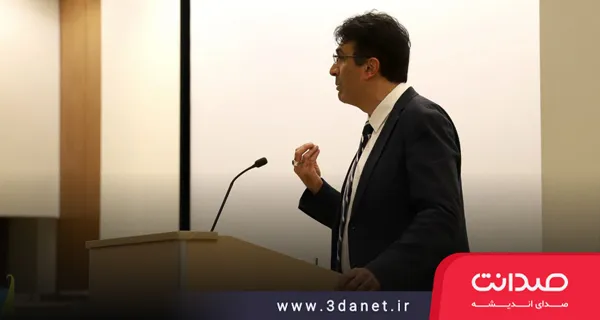
A lecture by Mostafa Malekian titled "The Crisis of Spirituality – Components of the Spiritual Life," delivered in Isfahan to members of the Totem-e Andisheh Association on July 15, 2004.
.
.
Related Content:
Mostafa Malekian; Two Lectures and an Interview on the Theme of "The Crisis of Ethics and Spirituality"
.
.




Discussion3 comments
جالب بود. اما پرسش من از جناب استاد ملکیان این است . آیا این معنویتی که جناب استاد ملکیان توضیح و تشریح دادند به طور یقینی ما را به ( حقیقت) می رساند؟ مثلا بودا که طالبِ حقیقت بود اما "موحد" نبود آیا به حقیقتی راستین رسید ؟ حقیقتی که به دیگران بگوید من به (حقیقتِ وجود) خودم رسیدم و آنرا تجربه کردم. من معتقدم شخصی مانند بودا که" موحد" نبود به حقیقتِ وجودش نرسید بلکه او فقط به خودش رسید. از خود به خود رسیدن در بودا متجلی شد. حال پرسش این است،، آیا نباید انسان فراتر رود ؟ آیا باید در همین خود، بماند؟ آن چیزی که من از سخنان جناب استاد ملکیان از معنویت بدون یکتاپرستی و خداپرستی ، درک می کنم . یک (معنویتِ سرد و عاریتی ) می باشد. بر خلاف( معنویتِ گرم و اصیل ) پر شور ادیان اللهی. آن شخصی که یک موحد راستین و حقیقی است مانند انبیا و عارفان اللهی ، معنویت در آنها،، معنویتی جهت دار و حقیقت جو و راستین است. معنویتی که انسان را به( حقیقتِ وجود ) ، تقرب می دهد. زندگی" اصیل "، زندگی است که حقیقتاً انسان را به حقیقتِ وجودش تقرب دهد. زندگی که موجبِ تقربِ انسان به (حقیقت وجود) نشود نه تنها اصیل نیست بلکه یک زندگی "عاریتی "است. عرفان های کاذب نیز به نوعی در این تقسیم بندی جناب ملکیان معنویت محسوب می شوند؟! چرا که در انسان آرامش و حس خوب مقطعی به طور موقت ایجاد می کنند ولی این حسِ مقطعی دوام ندارد ، چرا که انسان را به سمت و سوی "حقیقت" رهنمون نمی کند . انسان تشنه و طالبِ حقیقت با این (معنویتِ سرد و عاریتی) سیراب نمی شود . آنچه انسان را پُر ، غنی و سرشار می کند ،، معنویتی (گرم و پرشور و اصیل) است...
با سلام. فوق العاده متن عالی و کاربردی بود. مخصوصا اینکه با مثال مطالب سخت قایل فهم شده بود. واقعا ممنونم. عالی.....
سلام من میخوام از تجربه خودم بگم که منجر شد به معنویت رو بیارم من به بن بست عقل رسیدم و به نظرم هم نیهیلیسم هم ابزودیتی هم افسردگی هم ناامیدی مقدمات خیلی خوبی برای رسیدن به معنویت هست از این جهت انسان مدرن یعنی انسانی که صرفا به عقلانیت توجه داره یک قدم به معنویت نزدیکتر هست نسبت به انسان نیمه سنتی و نیمه دین دار قرن بیست و یکم