Philosophy
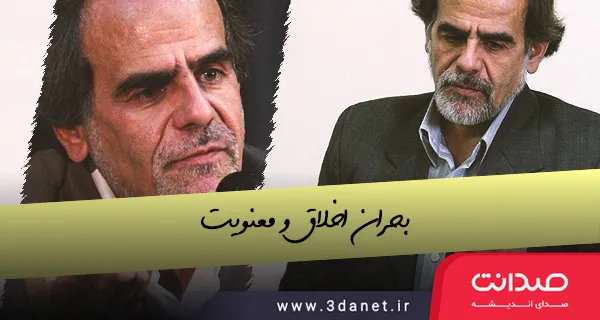
Mostafa Malekian, The Crisis of Spirituality: 'Presuppositions of the Spiritual Life' (2005)
The spiritual crisis of our time stems from the contradiction between a growing need for spirituality and the difficulty of accepting its presuppositions. Mostafa Malekian identifies the world's moral order and capacities beyond imagination as among these foundations, whose acceptance has become burdensome.

Before I present the presuppositions of the spiritual life to you, I would like to outline the skeleton and the core of the discussion for you.
The discussion of spirituality that I raised last year had four main sections: The first section concerned what spirituality essentially means; or, to put it another way, what phenomenon or phenomena are called spirituality; there we said that spirituality is precisely not religiosity and religious practice, nor is it mystical wayfaring, nor even living ethically; or, to put it another way, by stating three "is nots" we arrived at what it "is."
The second section was about what need we have for spirituality, and there I pointed out that every human being, in every era, in whatever period of history they live, needs spirituality, but in our time this need is felt more keenly; in fact, considering the factors that distinguish our time from other times, we see that the need for spirituality is felt more in this time.
The third section was about how those who live spiritually live. As was mentioned, in the previous session 13 specific actions or 13 specific behavioral approaches were pointed out, according to which spiritual people live, or in other words, it is through these 13 specific behavioral approaches that spiritual people attain tranquility; and these 13 approaches are the cost that spiritual people pay to obtain tranquility.
The fourth section is, in fact, what I want to talk about today, and that is: if a person desires to live with those 13 specific approaches, they must accept a series of presuppositions so that, with regard to them, they can have those 13 approaches in their life. My discussion today is about these presuppositions.
But before I state the presuppositions, I would like to make a point to you. Even though in this time, compared to other times, we have a greater need for the spiritual life, we are less able than in other times to have a spiritual life. That we need the spiritual life more in this time was the subject of my discussion in the previous session, but regarding being less able than in other times to have a spiritual life, it must be said that this is because accepting the components and presuppositions of the spiritual life is difficult for us in this time, hence having a spiritual life seems inaccessible.
If we want to express this matter in the form of an allegory, the example of this situation is as follows: I have a pain in the middle of the night and an urgent need for a doctor; in fact, at this time I have an urgent need for a doctor, but because it is the middle of the night, I have the least access to a doctor. The greatest need accompanied by the least access. Today, because of the 13 characteristics that were stated, we have the greatest need for the spiritual life, but because the presuppositions of the spiritual life seem unbelievable to our minds and consciousness and we cannot easily accept them, we have the least access to the spiritual life. Because we cannot live spiritually until we accept these presuppositions, and on the other hand, accepting these presuppositions is also difficult, we can interpret what was referred to in the previous session as the crisis of spirituality.
Here, I will proceed to state the presuppositions of the spiritual life, which are seemingly unavoidable and inescapable.
First Presupposition: The order of the world is a moral order.
This presupposition means that in this world, no good and no evil is ever lost. Unlike material objects, which may at times not be within our sight, every good and every evil remains in the world and is not lost. The consequence of this presupposition is that if you do good, this good will go into your pocket, and if you do evil, this evil will come out of your pocket. Of course, accepting this presupposition that the order of the world is a moral order seems very weighty and heavy, but in any case, this presupposition is necessary for the spiritual life.
This presupposition is, of course, a common presupposition in the religions and denominations of the world; all the religions and denominations of the world believe that the order of the world is a moral order. For example, we have this verse in the Quran that:
"So whoever does an atom's weight of good will see it, and whoever does an atom's weight of evil will see it" (Zalzalah/7-8). If you do good equal to the weight of an ant, you will see it, and if you do evil equal to the weight of an ant, you will see it. Now, if the world's order is a moral order, we must have two presuppositions that together depict this moral order for us; these two presuppositions are: first, that the world is such, or has been made such (depending on whether we are non-theists or theists), that it understands the good and evil of our actions, and second, that the world is such, or has been made such, that it reacts in proportion to this understanding. By accepting these two presuppositions simultaneously, we can consider that the world's order is a moral order. In other words, the world is not blind and deaf to our moral actions and behavior, but fully perceives whether this action or speech of mine stems from service or betrayal, whether it is a truthful or false word; a sincere or hypocritical word, and so on.
Of course, as I said, accepting this presupposition seems very difficult, but at the end of my talk, I will point out how one can accept these presuppositions, which are not demonstrable through reasoning.
Second Presupposition: Human abilities are far greater than the individual initially perceives.
It may be that our estimation of our abilities seems excessive in our own view, but it is never the case that our estimation of our abilities equals the extent of our abilities themselves; rather, it is always less than our actual ability.
I will clarify this presupposition with an example: Consider a room with an area of 1000 square meters, where the distance between two of its walls is, say, 25 meters. Whatever you do, the distance between the two walls of this room is 25 meters; if you lie down in the room, the distance between the two walls is 25 meters, if you sit down, it is still 25 meters, and so on... any action or reaction you perform, the distance between the two walls remains that same 25 meters and does not increase or decrease. But if we consider human abilities as a room, it is a room with this characteristic: if, for example, the distance between the walls of this room is 25 meters for all the people sitting in it, should you traverse the distance between the two walls, with every step you take, the wall also takes a step back. And in fact, by moving, whether in length or width, you continually increase the area of the room. Our abilities are exactly like this. Thus, the more we utilize the sum of mental and psychological abilities we are born with, the more we expand the scope of these abilities.
A good example that can be given in this regard is an analogy the scholars of old used to make about human abilities, using well water: If we drew 10 buckets of water from the well, 12 buckets of water would well up from it, and if we drew 12 buckets, 15 buckets of water would well up. This matter, in fact, expresses the point that the more we use our abilities, the more we increase them. Our ability is not a fixed, static, and unchangeable thing; to the extent that we use it, we increase the ability itself. You may not currently believe that, for instance, an Indian ascetic can live on one almond a week; your physical ability simply does not permit you such a thing. But we know that the same biology that governs your body also governs the body of the Indian ascetic; however, by utilizing this biology, he has managed to bring himself to that threshold. Of course, this threshold is not exemplary; for instance, when you hear that a mystic, by moving his eye, can create physical changes in the world, or can read your thoughts by looking at you—without wanting to bring you to the border of superstition—you observe that the difference between him and you is that he used his initial abilities, and his abilities increased, and he employed his abilities again, and his ability increased further, and so on...
On the first day, the dividing wall is about 10 meters, but a day will come when the distance between the walls reaches 2 kilometers. The saying attributed to Imam Ali (AS)—“You think you are a small body, but the greatest world is hidden within you”—in my opinion, illustrates this very point. Of course, if you do not move, you will certainly remain that heavy mass, but those who do move will see what unexplored regions existed in the territory of their own being: in the geography of their being, in the history of their being, in the breadth of their being, and in the depth of their being. This feeling, however, will not come to you unless the current distance between the two walls is traversed and the area of the room increases. This, too, is a presupposition for living spiritually, and if you lack this presupposition, it is impossible for you to live spiritually. Let me give an example: one of the 13 points I mentioned in the previous session was that the spiritual people of the world must live in the present moment and have a here-and-now life, not journeying from the present to the past and future except as much as necessary and at the time of necessity. Well, it is quite clear that this task—living a here-and-now life—is very difficult, so much so that it seems impossible. Yet the spiritual people of the world say, “Yes, we thought the same on the first day, but now we think that flying to the past and future gradually becomes impossible, and this matter is only possible by accepting the second presupposition,” that is, by paying attention to the fact that we can expand our abilities.
Third Presupposition: We must accept that the affairs of the world are divisible into the changeable and the unchangeable.
Neither those who think all affairs of the world are changeable, nor those who think all affairs of the world are unchangeable, can live spiritually. To use the language of the old theologians, in a sense, those who thought they had absolute free will and those who thought they were under absolute determinism—neither of them can live spiritually. This is, in fact, a presupposition; that is, the concept of absolute free will and absolute determinism, when extracted from its philosophical mold, means that not everything is changeable, but not everything is unchangeable either. The things of the world are of two kinds: things that humans truly do not have the power to change, and things that humans do have the power to change. Of course, it should be noted that as we change the changeable things, some of the unchangeable things also become changeable. Therefore, what things are changeable or unchangeable for humans is not fixed and constant.
Thus, we must accept that the world consists of two types of things: things that are alterable and things that are unalterable.
Among the unalterable things, we can name laws. In reality, we cannot change laws; if we want to pursue the alterable things, we must look for them in facts. Many facts are alterable. In allegorical language, we can give this example: facts are like the ceiling of a building, but laws are like the ceiling of the sky; no matter how much you go from under this ceiling to under another ceiling, you cannot go out from under the ceiling of the sky. I can change a fact that exists in my life, but I cannot change the laws that govern existence. In another expression, changing the facts of life is done through the laws of life. Whoever knows the laws of life better can change the facts of life more easily. But the laws themselves cannot be changed.
Therefore, the third presupposition rests on the point that the issues of the world are of two types: changeable and unchangeable. However, as I said before, the changeability and unchangeability of these facts depend on human beings. For example, someone might say, “Is it possible to give a person a billion and they tell a lie?” or “Is it possible to give a person a billion and they not tell a lie?” In reality, this is because the changeable and unchangeable things differ for different individuals.
Fourth Presupposition: Among the unchangeable things, the most important unchangeable is the past.
According to this presupposition, any wrestling with the past is wrestling with something that is unalterable. If I want to clarify this unchangeability of the past for you, I can state the matter as follows.
The past is so unalterable that even God cannot change the past. For example, God could have made it so that yesterday morning I ate cheese instead of eggs, but if I did eat eggs yesterday, God cannot make it so that I did not eat eggs yesterday.
The past is even beyond the domain of God's power. God's power never applies to the past; rather, God's power applies to the present and the future. For instance, God can make it so that right now, instead of saying x, I say y, or God can make it so that tomorrow night, instead of being at place p, I am at place q. But if I now say x instead of y, even God, one second later, cannot make it so that I said y one second ago. God's power does not apply to the past. Of course, this example itself rests on the presupposition that God is temporal—that is, that a past exists for God—whereas this matter is mistaken, and I only used this example to make it clear that if even God cannot alter the past, then a fortiori we cannot alter the past either. Therefore, any wrestling with the past, any thinking about the past, yields nothing for us but regret, nothing but sorrow, nothing but remorse, nothing but a lack of psychological health and a lack of moral perfection. The past can be repaired, but it cannot be changed. For example, if I burned my hand yesterday, I can use a special ointment to accelerate its healing process; that is, I can in fact repair the past, but I cannot make it so that my hand was not burned yesterday.
Fifth Presupposition: Accept the "Past."
The fifth presupposition actually relates to the fact that every person who looks into their own past finds instances of ignorance, errors, and ill will; this presupposition rests on the notion that anyone who wishes for their past not to be tormenting must decide to build their future differently.
In fact, at the moment a person decides that their future will no longer be like their past and will not be pinned to the past, the past becomes something else, or rather, it can be said that the past, despite its errors and ill will, becomes acceptable. As long as the future resembles the past, no lesson can be learned from the past, but as soon as a person desires change, they can learn lessons from their past.
In fact, in real life, at the moment we make a serious decision that our future will not be like our past, and we set out to change, we see that that bitter and unpleasant past was the cause of such a good life, and consequently, the past will become agreeable to us.
Sixth Presupposition: The future is not entirely in our hands.
In the two previous presuppositions, I said that the past is completely unalterable. In this presupposition, I want to point out that the future is not unalterable, but only a percentage of the future's alteration is in our hands, and we cannot change every matter in the future; this in fact means that whatever a person does to reach a goal, as soon as they have performed that action, they must forget the desire for that goal, because it is not certain whether that goal will be attained or not.
This is what the spiritual figures of the world refer to as action without craving. Action without craving means that I perform an act to achieve a goal, but once I have performed that act, I should not be preoccupied with whether or not I will attain my goal; for the attainment of the goal does not depend solely on my action, and many factors in the universe must come together for that goal to be realized. If we wish to express this matter in another way, we can say that we human beings are either without action, or with action and with craving; whereas spiritual human beings are with action and without craving. In other words, we ordinary human beings either do not desire something and naturally do nothing, or, on the other hand, in many cases we have action and also have craving, meaning we perform an act to reach a goal, but afterward we remain anxious about whether that goal will be attained or not. For example, I study to pass the entrance exam, but even though I have studied, I am still worried about whether I will pass the exam or not; I have done what was within my power, yet I expect to achieve the result, and this is while I think the result depends solely on my action; whereas, in reality, the result does not depend entirely on my action, and a certain percentage of the result depends on my action, and many other things must come together for that result to be achieved. Spiritual human beings possess action without craving, meaning they do everything within their power to reach the goal, but as soon as they have performed their action, they are no longer preoccupied with whether that goal is attained or not. Because they know that the future is not entirely in our control.
The difference between a spiritual farmer and an ordinary farmer is that an ordinary farmer either does not scatter seeds because he does not want wheat, or he scatters seeds and definitely wants the wheat, but a spiritual farmer scatters seeds and tries to cultivate an indifference within himself as to whether the wheat will be produced or not, because he knows the future is not in his control, and wheat does not come about merely through his planting, and many other things must come together for the wheat to be produced, and it is possible they may not come together; therefore, action should not necessarily be accompanied by craving.
Thus, this presupposition, as I said, rests on the fact that while it is true that a percentage of the future is changeable, its entire changeability is not in our hands, and only a negligible percentage of the changes lies in the hands of the individual. It is possible that I may make every effort for my child to grow up to be a moral and cultured individual, but if he does not grow up to be a cultured person, I should not lament; for my child's becoming moral does not depend solely on my behavior, and other factors also influence this matter.
Seventh Presupposition: Attention to the Subjective Nature of Pleasure and Pain
Pleasure and pain, suffering and agony, and on the other side, tranquility, happiness, and unhappiness are subjective matters and depend entirely on the person themselves. Non-spiritual human beings think that the pleasure-giving quality of things is an objective matter, that is, a property of the things and objects themselves, whereas the pleasure-giving and pain-giving quality of things is a property of the person, not the things. This matter can be clarified with this example: A non-spiritual human being thinks that the deliciousness of chelo kebab is a property of the chelo kebab itself, but a spiritual human being knows that the deliciousness of chelo kebab is a property of the person who eats the chelo kebab, or in other words, if you are in a particular state, chelo kebab is delicious, and if you do not have that particular state, the chelo kebab is the same chelo kebab, but it is not delicious.
This point is very important, and you may not truly be able to believe it in all instances, which is why I call it a presupposition, because a presupposition is something for which one cannot provide irrefutable reasoning. But pay attention: we imagine that a certain color, like the color green or the color blue which I favor, has its pleasure-giving property from the color itself; whereas this is not the case. For instance, suppose I am standing by the sea and enjoying the blue color of the sky; at that very moment, news arrives that my child has drowned in the sea. From that moment onward, the sea and the sky are still the same sea and sky, but I can no longer enjoy them. In fact, nothing in the sea or the sky has changed; rather, something within me has changed, such that I can no longer enjoy the blue of the sky.
Whether things are pleasurable or painful does not depend on them, but on us, and this implies that whoever wishes to take pleasure in the world must change their own inner self; and whoever does not change their inner self accordingly cannot take pleasure in anything.
Pleasurability or painfulness is not an objective feature within objects, but rather a feature within the persons upon whom this pleasure or pain befalls. This holds true for everything. For example, on the first day you buy a car or a house, the car or house has great luster and beauty for you. Now suppose that this house or car does not age, but you live with it for three months; from then on, your guests derive more pleasure from it than you do. You yourself, having grown accustomed to the house or car, no longer experience that initial pleasure. In reality, the house or car has not changed; rather, something within you has changed.
All mystics, because their inner being is something suited to taking pleasure, derive pleasure from everything. For instance, we witness that there are things in the world that we expect to give us pleasure, yet when we attain them, they do not give us pleasure. For example, when we learn that the world's wealthiest person has committed suicide, what crosses our mind? Here we will understand that the things which, in principle, should be pleasurable in the world were not pleasurable for him, and this in fact shows that the property of the objects themselves has not vanished, but rather the property of the person for whom that thing was pleasurable has vanished.
The spiritual figures of the world earnestly believe that whoever desires to take pleasure in the world must change their inner self in such a way as to be able to take pleasure in the world.
For example, it is narrated from Lady Zaynab that after the event of Karbala, when asked reproachfully, "What is your condition?" she said: "I saw nothing but beauty." This seeing nothing but beauty does not mean that my brother was not killed or that my brother's sons were not killed; the objective reality of the world did not change, but something within Zaynab caused her to see nothing but beauty.
The Eighth Presupposition: Striving to Draw Near to the Real "I"
If we consider that we imagine numerous selves for ourselves, it is in fact dealing with two of these selves that transforms a person's life into a spiritual life. Before I turn to these two selves, I would like to offer an explanation regarding the selves that exist for every person. Suppose there is a Zahra in the world; within this Zahra, there exist five other Zahras; or, in other words, five images of this Zahra exist in the world.
First, the truly real Zahra; that is, Zahra as she is. Such that, for example, if we believe a God exists, only He could discern this Zahra.
Second, Zahra as she imagines herself. In any case, Zahra or any other person has an image of themselves; for example, they think their physique is of a certain shape, their popularity is of a certain measure, their prestige is of a certain degree.
Third, the Zahra that others imagine her to be. This, of course, varies according to the number of others.
Fourth, the Zahra that Zahra imagines others have of her, and
Fifth, the Zahra that others imagine she has of herself.
Of course, other classifications exist from psychologists and anthropologists, but what I myself believe in is what I have presented to you; however, here this classification or the number of these selves is not of great concern. What matters is that the spiritual figures of the world must live based solely on two of these selves: the first self and the second self. The spiritual human being thinks only of the real self and the self they imagine themselves to be.
They pay absolutely no attention to what image others have of them, what conception they themselves have of others' image of them, and what conception others have of their image of themselves.
اما انسانهای غیرمعنوی معمولاً در منِ سوم، چهارم یا پنجم سیر میکنند. مثلاً پسر خالهام چه تصوری از من دارد یا استادم چه فکری در مورد من میکند؟ آیا همکلاسیهایم فکر میکنند من خودم را متكبر میدانم یا فکر میکنند که من در حق آنها خیانت کردهام؟ و ... یعنی دائماً در منِ سوم، چهارم و پنجم سیر میکنند. ولی انسانِ معنوی فقط به منِ اول و دوم فکر میکند و فکر کردن در اینجا به این معنا است که تصوری که از خودش دارد را به خودش (خود واقعی) نزدیک کند.
تمام دغدغه یک انسان معنوی این است که تصوری را که از خودش دارد به خود واقعی، یعنی خودی که واقعاً هست نزدیک کند. چون هر چه تصورم به چیزی که واقعاً هستم نزدیکتر باشد، آرامشم بیشتر است و این به معنا است که همانطور که در سال قبل گفتم به داوریهای دیگران در مورد خودش ابداً بها نمیدهد. به داوریهای دیگران در مورد خود بها ندادن ناشی از این پیشفرض است که من همان منِ اول و دوم است كه اهمیت دارد؛ و منِ سوم و چهارم و پنجم به پشیزی نمیارزند. اما اگر توجه کنید اکثر صلحها، جنگها، نزدیکیها، دوریها، دوستیها، دشمنیها، عشقها، نفرتها، فخرفروشیها، دلخوریها، رنجیدنها، خوشحالیها، مربوط به من سوم و چهارم و پنجم میباشد.
به عنوان مثال فرض کنید زمانی که من از بانک بیرون آمدهام و 20 هزار تومان از بانک گرفتهام، تا جایی که دیگران میبینند كه من از بانک بیرون آمدهام، خیلی خوشحالم چون فکر میکنم مثلاً دیگران تصور دارند که فلانی 2 میلیون تومان از بانک گرفته است. در واقع به تصوری که دیگران از من دارند، توجه دارم.
نقل است از بودا و هم چنین این نقل از جانب امام باقر (ع) نیز بیان شده است: که روزی بودا از كنار مردی میگذشت و دید كه او گردویی در مشت دارد؛ بودا به او گفت: اگر تمام مردم به تو بگویند که این گردو نیست، دُر و گوهر یا مروارید است، آیا خوشحال میشوی؟ فرد جواب میدهد: نه! سپس بودا میگوید اگر از آن طرف، گوهری در دست داشته باشی و تمام مردم بگویند این گردو است آیا بدحال میشوی؟ فرد دوباره پاسخ میدهد: نه! بودا میگوید چرا؟ میگوید چون میدانم این چیزی که در دست من است چیزی نیست که مردم میگویند؛ بعد بودا میگوید پس چرا در مورد خودت اینگونه نیستی. اگر خودت میدانی که چگونه هستی، اگر دیگران تصوری فوق تصور خودت داشتند، نباید خوشحال شوی و اگر تصوری دون تصور تو داشتند، نباید ناراحت شوی.
خوب چرا ما اینگونه نیستم؟ چون ما اصولاً در من سوم و چهارم و پنجم سیر میکنیم. ما در اکثر اوقات اینگونه رفتار میکنیم. مثلاً زمانیکه تشنهایم منِ اول میگوید آب بخور اما من دوم یا سوم میگوید اگر آب بخوری میگویند که فلانی بیادب بود و به همین دلیل آب نمیخوریم و باز به همین دلیل آرامش نداریم. به عبارت دیگر ما به دنبال اشتهای دیگران، غذا میخوریم و به خاطر همین مسئله آرامش نداریم. هر کس به اشتهایِ دیگران غذا خورد یا از پرخوری میترکد یا از کمخوری سیر نمیشود. هر کس بر مبنای منِ سوم و چهارم و پنجم زندگی میکند همواره دارد به اشتهای دیگران غذا میخورد.
این در واقع یک پیشفرض است؛ و بر این امر تکیه دارد که منهایِ اصلی دو من بیشتر نیستند، یکی من واقعی و یکی هم منی که از من واقعی خودمان تصور داریم؛ و باید سعی کنیم تصورمان از خودمان به منِ واقعی منطبق شود و یا به تعبیر دقیقتری به منِ واقعی نزدیک شود.
پیشفرض نهم: ریاضت و قربانی کردن شرط یک زندگی معنوی است.
Asceticism and sacrifice are a condition of the spiritual life. Of course, this is not a presupposition; if we wish to turn it into a presupposition, we must express it as follows: pleasure and displeasure are not an accurate gauge of our psychological state. The spiritual person knows that they cannot live based on what they like or dislike. Non-spiritual people base their entire lives on their likes and dislikes. This is what religions refer to as the desires of the self. Non-spiritual people, in fact, consider what they like to be good and what they dislike to be bad. In other words, they conflate taste with good and bad. If my palate and taste incline toward something, I think that thing is good, and if my palate and taste recoil from something, I say that thing is bad. This is not an accurate gauge, because in the spiritual life, you only have a spiritual life when you can sacrifice your likes for the sake of goods, or in other words, when you sacrifice something that is pleasant but not good for something that is good but not pleasant.
As you know, in English, or generally in European languages, "sacrifice" and "sacred" share the same root. Christian mystics say that the fact these two words come from the same root means that if someone wishes to attain sanctity and purity, they have no choice but to be constantly sacrificing in life. Sacrificing pleasures for the sake of goods; a spiritual life without sacrifice is impossible. A life where I do whatever I like and refrain from whatever I dislike is not a spiritual life. In the spiritual life, one is perpetually at the altar, at the place of sacrifice. One constantly sacrifices a bad pleasure for a good that is unpleasant. It is also stated in the Holy Quran: "Often, something that is good is hateful to you, and often something is bad for you, yet you like it."
In fact, it is through sacrifice that life gains sanctity and becomes pure, and this demonstrates that our pleasure is not a suitable gauge for indicating good and bad. We should not think that every pleasant thing is good and every unpleasant thing is bad. Rather, pleasure and displeasure relate to our transient desires, whereas good and bad relate to our other-regarding desires. In other words, expediency must replace pleasure, and corruption must replace displeasure.
In reality, in real life, one cannot gain something without giving something, or more precisely, to gain something, one must sacrifice certain things.
Tenth Presupposition: Truth is Redemptive.
That is, truth, no matter how bitter, is redemptive. In fact, in the words of the Buddha, one can say: only truth will set you free, or quoting Jesus Christ, one can say: only truth will save you. This is, in fact, a presupposition and cannot be proven. In reality, if you cling to your illusions, superstitions, fantasies, and wishful thinking, a time will come when they abandon you. None of these fulfill their promise; the only thing that fulfills its promise is truth. The spiritual person is always in a state of balance, meaning they place their beliefs and the truth on the two scales of a balance and see whether their beliefs are true or false; because they know that if beliefs are false, they might make them happy for two days or five more days, but ultimately, one day they will abandon them, and they know that only truth can be redemptive.
Of course, that truth is redemptive is a presupposition, but it must be noted that truth is of two types: beneficial truths and non-beneficial truths, which is not the subject of our discussion here, and I explained this matter in the previous session.
Eleventh Presupposition: Moral Perfection Depends on Being, Not Having
Psychological health and moral perfection are measured by our being, not by our having.
In explaining this presupposition, one can say that when we turn to ourselves, we actually see two categories of things within us: one is our possessions and the other is our states of being; but we think that by adding to our possessions we achieve psychological health and moral perfection. That is, we think that a psychologically healthy person and a morally perfect person is someone who has many possessions. This presupposition emphasizes the erroneousness of this idea.
Psychological health and moral perfection belong to someone who has different states of being, not different possessions. In reality, we always want to acquire what we do not have, because we think our lack of psychological health is due to a deficiency in possessions, and the incorrect notion lies precisely here.
Psychological health and moral perfection lie in a person not having and not wanting. Not having and not wanting. If you do not have and you want, it is clear how you lose psychological health and moral perfection, and if you have something and want to keep it, it is also clear how you fall into anxiety and lose your psychological health.
All individuals who possess psychological health are those who, in the words of al-Farabi, do not have and do not want. It is related that one day al-Farabi was walking in the market of Baghdad and saying, "How many goods there are in this market that I have no need for." Not that he wanted them and did not have them, but rather he did not want them. Not having and not wanting. Having and wanting has one problem, and not having and wanting has another problem. Not having and not wanting is dervishhood and contentment. Not having and yet being content with this not having.
.
.
Questions and Answers
Question: The components you have mentioned are all presuppositions, and therefore there is no proof for them, so how do you expect individuals and human beings to accept them?
Answer: Yes, as you pointed out, presuppositions cannot be proven, but the issue of how we can believe in presuppositions, given that they cannot be proven, is possible through two ways: 1. the way of reasoning, and 2. changing the existential threshold.
Merely because they are presuppositions, one cannot provide a proof for them, and therefore it cannot be definitively proven that they are correct. But if we cannot prove they are correct, why do spiritual people demand that we accept these presuppositions?
Their answer is the change of the existential threshold. Walter Kaufmann, the German-born English advocate of existentialism, demonstrates this issue in a short play of 10 or 11 pages, showing that it is through changing the existential threshold that we understand and comprehend certain things. In this play, which is the result of a dialogue between an 8-year-old boy named George and his 31-year-old brother named Jack, it is stated:
George: Jack, why can't you sleep at night?
Jack: To tell the truth, I've fallen in love.
George: Well, what does it mean you've fallen in love?
Jack: Nothing, I've just fallen in love.
George: Well, what is love anyway?
Jack: It's a pain!
George: Yeah, sometimes my tooth hurts too.
Jack: No, man, I don't mean a toothache.
George: So what is it?
Jack: You know, it's something sweet!
George: Sweeter than chocolate?
Jack: I'm saying it's sweet, but I don't mean the sweetness of chocolate!
George: What's it like, for example?
Jack: You know, it's a kind of thing where no matter what you do, you can't sleep.
George: Yeah, Grandma also says that because she has rheumatism, no matter what she does, she can't sleep?
Jack: No, man, it's not like that either, not like Grandma's rheumatism.
What Walter Kaufmann wants to say is that in such cases, no matter how many fine points you explain to the person, they will not understand; but if, say, Dad simply says, “Go to sleep, my dear, let us be comfortable, in fifteen years you will understand what it is like yourself,” then no further explanation is needed.
Why does he now understand something that could not be made intelligible to him before? Because his existential threshold has changed. What could not be conveyed through reasoning is now understood through the change in the existential threshold. In other words, for matters that require a change in the existential threshold, as long as the person’s existential threshold regarding these issues has not changed, no reasoning is of any avail; and once the person’s existential threshold has changed, no reasoning is needed or required.
To put it another way, no reasoning was of any use to George, but once he turned twenty-one, no reasoning was needed anymore. Thus, before the existential threshold changes, arguments accomplish nothing, and after it changes, these arguments are not needed. Rumi says: “What is love?” Shams replies: “That you will know when you become like us.” Since you have not yet fallen in love and become like us, I cannot explain it. But after you become like us, there is no need for explanation either.
Or consider people who have never in their lives experienced a toothache; no matter how much you explain, they cannot understand what a toothache is. But you can change their existential threshold. It suffices to punch them in the mouth and break their tooth; with the change in the existential threshold, they can understand what a toothache is.
Therefore, these presuppositions, precisely because they are presuppositions, mean that no argument can be established for them. But why did the spiritual accept these presuppositions? Because they changed their existential threshold and saw that these matters are true.
Question: You spoke of spirituality in the individual sphere; what role can social conditions and the surrounding environment play in this kind of living?
Answer: I was, in fact, discussing the theoretical presuppositions of spirituality; social issues are the practical problems of realizing spirituality. I was not discussing the practical problems of spirituality. What occurs on the stage of society, at any time, place, or situation, can facilitate or hinder the spirituality of its citizens.
If a society takes on a particular order, its citizens, should they wish to be spiritual, can do so more easily; if it takes on another kind of order, the spiritualization of its citizens becomes more difficult. But in any case, these difficulties or facilities are practical problems, whereas I was speaking about the theoretical presuppositions of spirituality.
Question: What is the criterion of truth? Sharia, ethics, etc.?
Answer: The criterion of truth, in my view, is reason itself, or the six sources of knowledge. If any statement is proven to me by one of these six sources, it is truth; otherwise, it is not.
Question: Are spirituality and rationality in conflict with each other? Do people of meaning employ their rationality fully or not?
Answer: This question is actually two questions: first, whether rationality and spirituality are in agreement and compatible or not. Well, at least if I did not believe in the agreement and compatibility of these two concepts, I would not have to take steps toward the project of rationality and spirituality. This project of rationality and spirituality that I speak of, in fact, entails the presupposition that rationality and spirituality have no incompatibility whatsoever. However, I have also said elsewhere that the rationality that is not incompatible with spirituality is a rationality that is broad and deep. If rationality’s breadth is not adequate or its depth is not adequate, it can fall into incompatibility with spirituality.
Thus, it is possible to have a rationality that is absolutely not incompatible with spirituality.
But the second question: do all the spiritual people of the world use their rationality with all the reserves they possess, or not?
I cannot say that all spiritual people in the world use their rationality, but in my opinion the great spiritual figures of the world, those by whom we define spirituality, in my view, employed their full rationality and never suspended their rationality.
For example, in a figure like Rumi, I cannot see a particle of irrationality in his spirituality. Yes, he may hold certain beliefs that I do not accept, but a belief I do not accept does not mean it is irrational; it means I do not accept it.
Thus, there are beliefs of Rumi’s that I do not accept, but this does not signify irrationality. Irrationality is when a person, by their own reckoning, cannot base their speech on the six sources of knowledge.
I do not believe that the spiritual figures of the world became spiritual by suspending their rationality. In my view, they became spiritual by making full use of their rationality.
I say this in the sense that deep rationality is generative of spirituality. But in any case, this is merely a claim, and I do not have the opportunity now to try to prove it.
Question: Do you not think that not having and not wanting, which is the eleventh presupposition of the spiritual life, calls into question all the economic theories of the modern world, which are in fact among the foundations of development and modernity?
Answer: In response to whether spiritual people create problems for the economic theories of the modern world, we must pay attention to two points: 1. The correctness of a recommendation does not lie in its universalizability. The correctness of a recommendation lies in solving the problem of the person I am addressing. For instance, if a student comes to me for consultation, and based on the total knowledge I have of all that student’s characteristics, I tell them to go into painting. Then they say to me, “Mr. Malekian, what you say is wrong, because if everyone became a painter, then life would fall apart.” I would reply, “When I tell you to go into painting, I am trying to solve your problem, not to have all the people of the world become painters.”
Therefore, in response to this objection, one can say that if all 6 billion human beings on earth acted upon these recommendations I make on behalf of spiritual figures, then perhaps the global economy would be ruined, and so on. But in all fairness, who is ready to come and say, “Yes, because we heard that Mr. Malekian made 13 recommendations, let us now go and become spiritual”? Living spiritually is a very difficult task; therefore, those who pursue it are very rare. So, do not worry about it, and the global economy will encounter no problem at all, because no one pursues the spiritual life.
But the second point I wish to make to you is that it is not at all important to me what happens to the global economy, culture, civilization, modernity, tradition, religion, Sharia, and so on. For me, it is human beings of flesh and blood and bone that matter, and what calamities befall them. I simply do not understand what it means when they say, for example, “If we do such-and-such, Iranian culture will become this, global civilization will become that.” I say that in the world, we must only think of people. We must do something so that these human beings of flesh and blood and bone, who are born, suffer, and die, leave the world with less suffering or live with less suffering.
To put it better, one must not confuse the primary and the secondary. The global economy belongs to human beings; human beings do not belong to the global economy.
Let me give you an example: The Danes are known in European language and literature for being slow-witted. One day, a Dane entered France, and since he did not know Paris, he bought a map of Paris and kept looking at the map, saying, “They must demolish this street, they should put that building over there,” and so on. He did not understand that one must align the map with the city, not make the city of Paris conform to the map.
We must not sacrifice human beings for political, economic, and other plans. These things exist for human beings, so that human beings can live more comfortably. I have said many times that if someone were to destroy all the ancient historical monuments of Iran, I would not be as upset as I would be if a single human being were slapped. Because the human being is important, not those things. For this reason, I cannot accept what you say.
Question: What does drawing closer to the real “I” mean? Since any view a person has of their real self is their conception of the real self. So the real self that is not conceived by the person can never be attained, such that we could say that the more my conception of the real self corresponds to the real self, the more spirituality is achieved?
Answer: Yes, if I had said that we must make the first “I” correspond to the second “I,” the objection would be valid. But I said that we must make the second “I” draw closer to the first “I,” not that it should correspond. A conception of an object never corresponds perfectly with the object itself, but a conception of an object can draw closer to the object itself.
Question: Is human free will absolute? Does God have power over the past?
Answer: I answered both questions in the discussion. That God has no free will, power, or ability over the past is not a deficiency in God; rather, the nature of things does not permit it. Can God create a god like Himself? No! But this is not God’s impotence; it is God’s power.
One of our friends gave an interesting example; he said: I went to my father and said that my situation is very bad, I have no money, and I am 500,000 tomans in debt; please help me. My father said, “My son, your situation is much better than mine. You have nothing, but at least you have a debt of 500,000 tomans; I don’t even have that debt.”
Anything to which we add the word “having” does not necessarily denote possession. Having a debt is the very essence of not having; it is worse than not having. Therefore, someone who has nothing and also has no debt is in a better situation than someone who has nothing and has a debt. We must not think that just because the word “having” is added, an ability has been added.
The fact that God cannot do many things stems not from His impotence but from His power. The reason a god like God cannot be created is that God is so powerful, and therefore, nothing of that magnitude of power is creatable.
Question: Are you a Heideggerian or a Cartesian?
Answer: I do not know Heidegger at all. One of the Western philosophers I truly do not know is Heidegger. Heidegger has a book called Being and Time [Sein und Zeit, English translation published in 1927 as Being and Time. Editor], which is his most important book and his masterpiece. I started reading this book three times from the beginning, but I still have not been able to finish it and have abandoned it again because I do not understand it. Therefore, I do not know Heidegger at all; but Descartes, I do know, and I can say that no, I am not a Cartesian. I am neither a Heideggerian nor a Cartesian. An authentic life is something where, if you ask Mostafa, “Who are you?” he says, “I am Mostafavi,” and if you ask Morteza, he says, “I am Mortazavi.” Therefore, I say that I am myself.
Question: After forgetting the past, or rather accepting the past as one’s own child, what can be done in a situation where we have a past whose bitter effects still continue in the present and are irreparable?
Answer: Forgetting the past is not at all advisable; it is accepting the past that is advised. Those who want to forget their past usually weaken their memory through internal states, and this is very dangerous.
Many individuals who feel guilt about their past and want to forget it do something to themselves, unaware that every scene they delete from their past is forgotten along with a portion of its surroundings, and this means they are weakening their memory.
For example, suppose there are five people in an elevator, and you want to prevent one of them from reaching the ground, so you are forced to cause the elevator to malfunction and fall while suspended between earth and sky, but in doing so, the other four people also die.
Whenever you try to erase a piece of the past, a series of other things are erased along with it; and this means that we weaken our own memory with our own hands.
We must not forget our past; we must accept our past. When I resolve firmly that my future will not be like my past, from that point onward, the past will become both beautiful and acceptable.
Rumi has a story that precisely emphasizes this point. The story goes that one day, a man was walking in the market of Baghdad and saw a woman, and instantly fell in love with her. But by bad luck, the woman disappeared into the crowd, and no matter how much he searched, he could not find her. He kept searching, going from this neighborhood to that, from this alley and street to that alley and street, and so on. At night, as he continued his search, a night watchman saw him, sensed he was suspicious, and ordered him to stop. The man became frightened and fled, and the watchman pursued him. When he reached a dead end, he saw no alternative and climbed over the wall, landing on the other side, where he saw that same beautiful woman sitting under a tree. The point I want to make is this: the man begins to say, 'I wish the whole world were watchmen chasing after me.'
Why? Because if he had not chased me, I would not have attained my love.
I want to emphasize this. Why has the wrath, the anger, the cursing, and the watchman chasing me, and so on, now become sweet? Because it led to a sweet outcome.
Now, if you decide from this moment onward to become a spiritual person, you accept your past for this reason: you see that the same bad, ugly, and filthy past has led to this good life. Therefore, you do not come to loathe your past. If I had not received those blows, had not told those lies, had not committed those betrayals, and so on, my resolve for a pure life would not have been firm.
Question: Richard Bach once said that the world and what surrounds us is illusion, meaning the world is nothing but the perception we have of it. What is your view on this? Does this statement conflict with your assertion that a person's future is not entirely within their control, or not?
Answer: Yes, Richard Bach, not only in Illusions but in the rest of his books—that is, in the seven books he wrote—his entire premise is that the world is a picture we have constructed for ourselves of it, and if we had a different picture we would see the world differently, and that the reason we see the world this way is that we wanted to see it this way. This view is heavily influenced by Schopenhauer's view, who said: the very fact that we see the world this way, we have willed to see it this way, and for that reason the world presents itself to us in this manner. Our will represents the world in this way. I do not accept this statement in its emphatic form, or better put, in its extreme form. I accept that many of the characteristics we attribute to the world are not characteristics of the world itself; they are characteristics that have, in fact, been projected from within us onto the world—that is, in reality, due to my own particular psychological states, I see a characteristic in the world that another person does not see in the world. Meaning, I have projected that characteristic onto the world. In other words, we attribute many qualities to objects because of our own psychological characteristics and think they are qualities of the objects themselves, whereas they are qualities we have projected onto the objects; in another sense, it is not reality, it is our attitude toward reality. But in the form that he believes, that this is generally the case and in all instances, I do not accept. However, in any case, I recommend that friends read Bach's books, because even if its main idea is incorrect, it has a very serious instructive value, and that is that we understand how much we could have changed the world but we ourselves did not want to change it. The extent to which our will can change the world outside us is a very important message that exists in all of Richard Bach's works.
Question: What is the criterion for good and bad?
Answer: This question is very complex because we have several types of good and bad: we have an instrumental good and bad, we have a moral good and bad, and we have a psychological good and bad. For example, when we say a certain shovel is good, we mean its function—that is, it fulfills the function expected of that shovel; this is instrumental good and bad.
At another time, we say courage is good and cowardice and timidity are bad; this is not, in fact, moral good and bad, because, for instance, cowardice is not voluntary, whereas moral issues relate to volition. In reality, these are the three types of good and bad that we have, and also the method of discovering them is not the same and has three different methodologies. If you wish, you can refer to the introduction I wrote to the book Philosophy of Ethics in the Twentieth Century.
Question: What are the pleasures and displeasures of the spiritual life? To what extent is renunciation of pleasures possible?
Answer: It is a very simple and good question, but its answer is very difficult. Truly, some parts of it are ambiguous even to me, and I cannot give a very clear answer to this question. But I will offer a general explanation.
The first point is that what the spiritual life brings us can be subsumed under five great psychological pleasures. Spiritual people have tranquility, they are hopeful, they have inner contentment, they have no conflict with themselves, they do not blame themselves, and in fact they are at peace and harmony with themselves, and finally, their lives are meaningful.
These are five highly desirable characteristics that spiritual people possess to the extent that they live spiritually. If by “pleasing” you mean what is pleasing to spiritual people—that is, what it is for the sake of which spiritual people live spiritually—I would say it is these five things. Now, some consider one of these to be important, and some cannot weigh their relative importance against one another. For example, the Buddha believed that at the peak of spirituality we only attain tranquility; that is, he does not even mention joy, hope, and so on. Rumi, in the Masnavi, has repeated the Buddha’s words several times, saying that we have reached a state where we are beyond joy and sorrow. But some believe that tranquility alone is not enough; at least, joy must also follow tranquility. For instance, the Dalai Lama, the leader of Tibetan Buddhists—who is the current leader of a minority branch of Buddhism—believes that tranquility alone is not enough; tranquility and joy together are necessary for the spiritual life. In fact, he has distanced himself somewhat from the Buddha’s original view. Suppose, for example, that in the teachings of Meister Eckhart, the famous German mystic, we want tranquility, we want joy, and we want inner contentment, but we do not want hope, for instance.
Some spiritual figures say that hope is entirely a feature of the early stages of spirituality, and once we have passed beyond the early stages of spirituality, we must sever it. For example, the Buddha explicitly states in two places that a spiritual person becomes fully spiritual when they completely cut off their hope from everything. Ali ibn Abi Talib says that hope must be cut off from everything except God, but the Buddha does not even make an exception for God. Imam Ali says in Nahj al-Balagha: Happiness has five pillars, one of which is that you should have hope in nothing except God—and he adds an “except God” to it, but the Buddha does not accept even this.
As I said, there are some disagreements. But there are also candidates who subscribe to all five. Some subscribe to four of them, and some, like the Buddha, subscribe to only one of them—that is, only to tranquility.
.
.
Audio of the Lecture “Presuppositions of the Spiritual Life”
Part One
Part Two
Part Three
.
.
Audio transcription and text editing: Ms. Sharareh Samei and Mr. Hossein Jalili
Source: Rationality and Spirituality blog
.
.
Lecture by Mostafa Malekian titled “The Crisis of Spirituality – Presuppositions of the Spiritual Life,” delivered at the Imam Sadeq Cultural Complex Auditorium in Isfahan on September 1, 2005.
.
.
Related Content:
Mostafa Malekian; Two Lectures and an Interview on the Theme of “The Crisis of Ethics and Spirituality”
.
.



Discussion0 comments
No comments yet; let yours be the first voice.