Religion
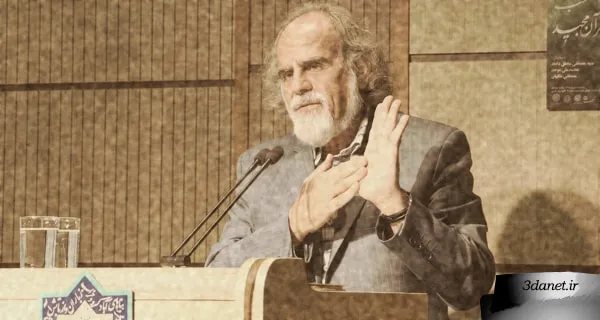
Mostafa Malekian's Lecture on the Social Consequences of Misunderstanding Religion
Religion emphasizes inner transformation and sees it as the source of outer change; misunderstandings such as treating religiosity as a monopoly on truth are the root of misguided social behavior. Mostafa Malekian counts politicization and conspiracy theories among the consequences of this neglect.

Abstract: According to Mostafa Malekian, religion emphasizes inner transformation and considers it the source of outer transformation. The misunderstandings that arise from religion are: 1- Taking religiosity to mean ownership of the truth; 2- Dogmatic adherence; 3- A purely logical conception of the discussion of monotheism; 4- Compartmentalizing religion and reducing it to one or a few compartments; 5- Ascribing intrinsic desirability to worship; and 6- Insincerity. These misunderstandings are the source of incorrect social behaviors.
One of the points that all religions and denominations have emphasized is that: "The outer world will not be transformed unless the inner world has first been transformed." Any transformation in the outer world depends on transformation in the inner world. This point is a matter of consensus among all world religions and denominations.
In more tangible and perceptible language, in the context of individual life, which is not the subject of my discussion today, and also in the context of collective life, which is the focus of my discussion today, it is impossible for a transformation to occur in your outer life unless a transformation has occurred in your inner context.
If we want to express this point in more technical language—that is, in the language of those who speak about social changes—we must say that, in terms of social transformations, psychology takes precedence over sociology.
If we do not understand these two correctly, at least two fallacies arise in the context of social life. Its first effect is that we become politicized in life. Let me clarify exactly what I mean by politics. There is no doubt that it is the moral duty of every human being to intervene in political affairs. To say that our moral duty is to enter politics is one point, and politicization is another. Politicization is the result of not understanding that outer transformation depends on inner transformation. What exactly does politicization mean? A politicized person is someone who believes that the sole problem of society, or the greatest problem of society, or the cause of all causes of society's problems, is the political regime governing society. If you believe in any of these three claims or any of these three types, then I consider you politicized.
In my opinion, revolutionaries are all politicized. They do not know that for any objective transformation, a corresponding, and of course proportionate, subjective transformation must first have emerged, and if it has not emerged, no objective transformation will occur. Failure to pay attention to this point, in addition to politicization, also gives rise to another thing, and that is conspiracy theory. The claim of conspiracy theory is precisely that others are always intending to destroy me. Now, if I am an individual, the others will be individuals, and if I am a political system or a society, the others will be other systems or societies.
This theory is, in fact, indebted to the failure to pay attention to the point that although conspiracies exist in the world, firstly, the whole world is not busy conspiring against you, and secondly, even assuming everyone is conspiring against you, the success of others' conspiracy depends on an internal ground existing within you.
Conspiracy theory stems from our failure to notice that until something changes within a person's inner being, no one can change anything in their outer being. If I express this same point in more conventional language, it means the primacy of cultural change. This demonstrates the precedence of culture over politics and its precedence over economics. This has been my claim as well, and not only my claim, but this point is also one of the teachings of all religions and denominations. Therefore, all those in our society who present political development as prior to economic development, or economic development as prior to political development, have all equally failed to understand this religious message.
But what does cultural change mean? Cultural change means change in the realm of cultures. Whenever an inner change occurs in the realm of my beliefs, we will subsequently witness outer transformation, and this cultural transformation can bring about political, economic, and social transformations.
A significant part of the beliefs of a society like ours are religious beliefs, and if this is the case, then it can be claimed that misunderstanding religion can affect social relations. Here, I will point to the misunderstandings that seem to be larger and more macro-level:
a) The first misunderstanding of religion is that we consider religiosity to mean being a possessor of truth, rather than a seeker of truth. All those who consider religiosity to be the possession of a truth, firstly, misunderstand religion, and secondly, this misunderstanding will have a profound effect on their social relations. To clarify this point, an allegory can be used; an allegory that some mystics have used and that also appears in some Eastern religions and sects: the human being cast into the ocean or sea of existence. Some think that in order to find our way to the shore in this ocean, we must board a ship, and some think that it is incumbent upon us to swim.
The religious throughout history have unfortunately thought that religiosity is riding a ship, and they do not know that it is, in reality, a kind of swimming. When you assume religiosity to be boarding a ship, this conception will entail many subsidiary consequences, and if your conception is that religiosity is like swimming, you will arrive at many other consequences. I will point out some of these consequences here:
1 _ A person who sees themselves as riding a ship imagines that all those aboard the ship are destined for salvation, except by accident. Moreover, they simultaneously imagine that all those who are not aboard the ship and are swimming amidst the waves will drown, except by accident.
From this perspective, those whose conception of religiosity is riding a ship think that Muslims are destined for salvation, unless an accident occurs, and that those who are not Muslims are all destined to drown, unless, again, an accident occurs.
2 _ When you are a swimmer, you hope for salvation only through swimming, and through no other act. In other words, all swimmers share a single concern, which is swimming itself. But all those who are aboard the ship say, "We are inside the ship and saved."
3 _ On the ship, all designations remain in place. On the ship, the engineer is still an engineer; the university professor is still a university professor, and the cook is still a cook, and so on... But once you become a swimmer, all designations must be set aside; you must pay attention solely to the extent of your swimming.
The teaching of religion is that one must swim: "That man can have nothing but what he strives for; And that his striving will soon be seen"[1] ; "So whoever does an atom's weight of good will see it, And whoever does an atom's weight of evil will see it"[2] . This verse, in fact, does not mean that we are possessors of the truth.
Real swimming in this sea does not mean flailing about; it means becoming completely still. The most capable swimmer is the one who can remain motionless on the water more than anyone else. The more still one is, the more one stays afloat, and the more one flails about, the more one sinks. This point means that religiosity is submission to the truth, not intervention in the truth.
Considering ourselves to be possessors of the truth causes us to adopt five approaches toward others in our social relations. These five approaches are five of our social predicaments:
1 _ Narcissism: Narcissism means that an individual or social group, based on an assessment of themselves that does not correspond to reality, overestimates themselves beyond what they are. In other words, I see whatever is in me, whether a virtue or a flaw, as a virtue. We are all narcissists! To the very extent that we consider ourselves possessors of a truth called religion, we are narcissistic.
2 _ Prejudice: Prejudice means judging before acquaintance and experience. We are prejudiced against all other religions and denominations. There is no doubt that a kind of universal love is propagated in all religions. Universal love means love for all human beings; whether co-religionists or not; whether those who are within our ritual community or those who are not. But in practice, those who inculcate religion in us do this: this universal love, this universal mercy, is gradually narrowed and narrowed until it is allocated to only a few people.
I believe in this expression of Gandhi (Gandhi, of course, said this from the perspective of his own religion; but all religions believe in this point) that "I hate the sin, but I love the sinner." This is the same theory of universal love. But where in history, in practice, has this theory come to fruition? Never; because we consider ourselves the owners of truth, and whoever considers themselves the owner of truth is prejudiced against others and considers them antagonistic to the truth.
3 _ Fanaticism: Fanaticism is different from prejudice; although we usually use these two with the same meaning, as synonyms and close to each other. Fanaticism means a specific kind of loyalty. A loyalty in which the loyal individual thinks that loyalty itself has value, not the object of loyalty.
4 _ Dogmatism: Dogmatism means that the degree of certainty you have regarding your beliefs is not proportionate to the evidence that supports those beliefs.
5 _ Intolerance and Lack of Toleration: Intolerance means the belief that what others believe, in theoretical matters, is false, and, in practical matters, is contrary to ethics.
All of the above five characteristics, namely narcissism, prejudice, fanaticism, dogmatism, and intolerance, arise due to that same initial misunderstanding of religion: that we consider religion as boarding a ship, not as swimming. If we consider religiosity as swimming, none of these five states will occur. Because those who are swimmers do not even understand who is a swimmer and who is not. For all their concern is focused on themselves; but those who are aboard a ship can look at others.
B) In all Abrahamic religions, there is a phenomenon called faith; but in non-Abrahamic religions, faith does not exist. In non-Abrahamic religions, such as Hinduism, Buddhism, Daoism, Shinto, etc., there is nothing called faith, and in its place, there is a phenomenon called hope, which is different from faith. There is something called submission and trust, which is also different from faith. Faith is not exactly synonymous with dogmatic adherence. At least faith, in most of its meanings, is different from dogmatic adherence. In Abrahamic religions, the devout have attributed the same sanctity they have found for faith to dogmatic adherence as well. Dogmatic adherence is, in fact, a misunderstanding of religion. Dogmatic adherence is this form of reasoning where someone says, "A is B because X says A is B." If dogmatic adherence is like this, it has no rational basis whatsoever. There is another form of dogmatic adherence that is very rare and the term dogmatic adherence does not even befit it; but if it is realized, it is rational. That form is when someone says: "A is B because X says A is B; and a conclusive proof has been established that everything X says is correct, or statements that are of the same type as 'A is B,' if issued by X, are correct." Such a thing rarely exists. Nevertheless, I am not concerned with dogmatic adherence itself. The major problem that has arisen from the misunderstanding of religion is extending dogmatic adherence to matters to which extending it is not correct.
For example, a Twelver Shia must have dogmatic adherence towards the Fourteen Infallibles. But does he have the right to extend this dogmatic adherence to the fifteenth, sixteenth, hundredth, and thousandth person as well? This extremist dogmatic adherence is the greatest misunderstanding of religion after the initial misunderstanding. Religion not only makes humans more or less ready for dogmatic adherence, it also makes them ready to extend dogmatic adherence to a very large number of people.
The Qur'an has stated historically: "They have taken their rabbis and their monks as lords apart from God"—meaning that the Jews and Christians worshipped their clergy in addition to God. One of the companions of Imam al-Baqir (peace be upon him) or Imam al-Sadiq (peace be upon him)—the doubt is mine—asks the Imam: Did the Jewish scholars really ask them to worship us? The Imam replies: They conducted with their religious scholars the transaction that a person ought to conduct with God. It is God alone whose words must be accepted without proof, and if you accept anyone's words without proof, you have worshipped them. If we accept the words of the clergy without proof as well, we have in fact become clergy-worshippers.
If I regard both myself and you as a mixture of truth and falsehood, a mixture of right and wrong, then we will no longer find enmity. We will find critical dialogue.
ج) If we investigate all the living religions of the world, we will see that they are all monotheistic—though monotheistic not in the sense of believing in a personal, anthropomorphic God. When we say our religion is monotheistic, what do we understand from this proposition? It means that whenever you show unconditional devotion to anything else, you are an idolater.
It seems the third misunderstanding we have of religion is that we have treated idolatry and monotheism as merely a logical discussion. We have said monotheism means there is one God in the universe, just as we might say the Earth has only one moon.
Monotheism did not come to express a logical fact. Rather, it came to express the point that worship must be directed solely to God. We must be worshippers of truth alone. Do we worship anything other than truth? I gave one example earlier. We are clergy-worshippers (worship does not have horns and a tail). If you say a certain statement is true because a certain cleric said it, you will be a clergy-worshipper.
There is a second characteristic that is greater than clergy-worship, and that is self-worship. We also worship ourselves. Self-worship has various aspects, and I will only point to one of them: we worship our own opinions. Whoever worships their own opinion is a self-worshipper, and whoever is a self-worshipper is not a God-worshipper. The sign that I am not a self-worshipper is that I am willing to confront my opinion with any other opinion or any other reality; if, in this encounter, the truth of my opinion is proven, then from that point on, I adhere to these opinions. My reason for adherence is that the said opinions were true; if, in this encounter, my opinion is defeated, I abandon it. The sign of a person who is not a self-worshipper is not the absence of opinions, but rather the act of confronting other opinions and realities. This point is what religious psychologists call "mature religion."
In reality, the religious, because of the conception they have of religion and because of the sanctity they ascribe to their opinions, can no longer engage in dialogue, and in a society where dialogue is impossible, two things will take place: deception and violence.
د) One of the misunderstandings is that you compartmentalize religion, which is a single vast domain, into cells and then place all of it into one cell. What does compartmentalizing religion mean? Religion is a philosophy of life that must permeate our entire life, like oil that soaks into wood. Religion must make our whole life religious. Now, if you create cells for religion and then reduce all of it to one cell, it is said here that you have confined religion to a particular cell.
Every religion and denomination usually bases commitment to itself on two or three things; for example, in Christianity, they see their identity in not drinking alcoholic beverages; or Catholics have directed all their concern toward not having sexual relations outside the framework of marriage. What does being a Shi'a in Iran consist of? A man having a beard and a woman wearing hijab. Sexual morality is also observed to a certain degree. Of course, if the person performs the prayer in the mosque and in congregation, then the matter is settled. In Hinduism—at least the sect that currently has more followers—a person who 1) does not eat beef, even if forced, 2) goes to the temple at least once a week, and 3) if she is a woman and her husband dies, is willing to be burned with her husband, will be saved.
They used to say that if you love Ali, you have attained a good deed after which no evil deed can harm you, and if you harbor enmity toward Ali, an evil deed has seized you that no good deed can benefit. This is the compartmentalization of religion. Usually, when it is said that someone is a Sunni Muslim, the first thing that comes to mind is that they perform the prayer at its earliest time. There is nothing wrong with this; but the issue is that a Sunni Muslim should not say, 'Since we perform the prayer at its earliest time, we therefore have no other problems.' Religion must be a comprehensive philosophy of life and should not be confined to two or three things.
This kind of understanding of religion creates a very great danger for us; in the sense that the social relations arising from this belief will be undesirable social relations.
e) It is a mistaken notion if we suppose that we must be servants of God and not servants of the people. This notion first emerged among Christians and later arose in other religions as well: that one must value only acts of worship, not ethics; one must be a servant of God, not a servant of the people. Kant, in his book Religion within the Limits of Reason Alone, which is the only book he wrote on the philosophy of religion, says: 'Acts of worship in religions are exactly like flattery before Eastern despots.'
If acts of worship such as prayer, fasting, pilgrimage, and so on, which also exist in other religions and denominations, do not become a prelude to our moral and spiritual growth, then this very statement of Kant holds true about them. Acts of worship are only valuable when they are in the service of ethics; then ethics acquires a social dimension, which is referred to as social ethics, and its other dimension is individual, which we call spiritual ethics. Many of us think that acts of worship are desirable in themselves, not that they are desirable for the sake of something else.
f) Another widespread social ailment is the disease of dishonesty. The disease of the disunity between one's outer and inner being, which stems precisely from the misunderstanding of religious teachings. In our religion, there are two or three concepts that are entirely susceptible to misunderstanding: the expedient lie and taqiyya (dissimulation).
Of course, taqiyya is specific to Shiites. These two concepts, the principles of which I am not addressing here, have prepared a very favorable ground for dishonesty, especially in the Islamic world and particularly in the Shiite world. Every kind of dishonesty has been justified by resorting to these two matters. This is, in fairness, our greatest moral problem. In reality, our outer and inner selves do not correspond to one another; that is, our entire existence is not integrated. It is as if 'al-taqiyya dini wa din aba'i' (dissimulation is my religion and the religion of my forefathers) propagates dishonesty.
Lying is only one instance of dishonesty. Lying occurs when one's belief does not correspond with one's speech. But many other realms must also correspond with one another. These lies, hypocrisies, and flatteries also arise from dishonesty and an incorrect understanding of religion.
Note
Important points have been raised in this article, all of which are among the issues we grapple with and are necessities of our life today. Mr. Malekian's blessed attention to such issues, with the observance of certain conditions, can be very constructive. Of course, it should not be forgotten that engaging with serious and influential issues is never without risk or misstep, and one should not expect that anyone (other than the Infallibles) can address all of them without error. There are many points worth mentioning in this article, but for the sake of brevity, we will only refer to the more important parts.
1 _ A kind of "reductionism" is observable in Mr. Malekian's article, manifesting itself in several places: one instance is in the discussion of the relationship between the inner and outer human being. In his view, no external transformation can occur unless a transformation has first taken place in the inner world of human beings. The meaning of this statement is the reduction of sociology to psychology. There is no doubt about the importance of inner transformation and its extraordinary impact on social change. Religions also emphasize this point. However, what is missing from the article is that pre-existing external structures also have a very lasting and long-term effect on the psyche and inner being of humans. The importance of the impact of social, cultural, economic, and political structures on the making of human beings is such that some attribute everything to them, and accordingly, structuralist schools have emerged in various fields. Some thinkers have spoken of human prisons and identified one of them as the prison of society. If we pay attention to the mechanism of the formation of the human inner self, we will observe the extent of the influence of structures upon it. Of course, this is not one hundred percent deterministic, and humans are always free to deconstruct and establish a new structure in place of the previous one. In any case, excess and deficiency from either side face the problem of one-sidedness and reductionism. The relationship between these two is a continuous one, where each influences the other at one step and is influenced by it at another step.
2 _ In the discussion of the primacy of culture over politics and economics, it is worth mentioning that if by primacy, priority is meant, the statement is entirely correct and apt. In any case, from the perspective of religious human beings, all human activities are in the service of their beliefs, and as Imam Hussein (peace be upon him) said: "Life is but belief and struggle; life is indeed belief and striving in the path of that belief." But if we want to say absolutely that culture, in all respects, takes precedence over economics and politics, this statement may not be defensible. For example, the political structures governing a society can themselves be culture-forming. Likewise, economic structures can be culture-forming, even if contrary to the initial beliefs of human beings. For instance, if the economic structure of a society is such that it promotes bribery, the believers who operate within this structure, despite believing that bribery is a morally reprehensible phenomenon and, jurisprudentially, forbidden, gradually become tainted by it. Of course, people differ in becoming tainted. Some become tainted later, some sooner, and some never become tainted at all, and this depends on the strength of their faith and will. But gradually, a culture is formed, and little by little, the ugliness of the act is shed, and the feeling of shame and guilt also gradually disappears; although those few individuals of faith who have not slipped remain steadfast in their initial belief. This demonstrates the primacy of economics over culture, at least in some instances.
3 _ Mr. Malekian considers religiosity solely as the "quest for truth" and contrasts it with the "possession of truth." His emphasis on the "quest for truth" is very good and correct; but confining religiosity to it is one of those instances of reductionism, which is not a correct approach. Religiosity is not a simple matter that we can reduce all its aspects to that simple matter. In religiosity, we must consider all aspects and dimensions of human life as involved and engaged. Possession of truth means that I, as a human being, by accepting religious beliefs, have performed an act that itself lies in the direction of the quest for truth. The quest for truth reaches a conclusion at some point, and as Mr. Malekian himself points out, we humans are a mixture of truth and falsehood. The meaning of this statement is that the quest for truth within us has, in some instances, reached a conclusion, and we have become possessors of truth. Therefore, we can and must stand firm on what we know to be true, adhere to it, and safeguard the truth. There is no contradiction between believing in the possession of truth and the quest for truth. It might be thought that if someone becomes a possessor of truth, they cease the quest; but this only happens where someone considers themselves the absolute possessor of all truth, and such a thing does not occur among us humans, at least not among ordinary humans.
4 _ The analogy of religiosity to swimming (as the quest for truth) or sailing (as the ownership of truth) can also be read in another way. Mr. Malekian has depicted sailing in such a way that it seems merely boarding the ship is sufficient, and after that, nothing more; the ship will take you to your destination and no effort is required on your part. Whereas 1) boarding this ship of salvation itself requires effort, and 2) after boarding the ship, one must also strive. What organizes the ship's movement is the totality of activities carried out by everyone from the passengers to the captain. This is not a pleasure cruise; it is a serious ship where everyone must work for its advancement, and the captain's labors will only bear fruit if the passengers also each undertake a part of the work and everyone, according to their condition, ability, and expertise, strives in the tasks of the ship. Thus, in sailing too, "Man shall have only that for which he strives."
4 _ It should also be noted that the passengers of the ship, based on the very image mentioned, are not identical: firstly, they possess determinations; but not the determinations Mr. Malekian referred to. Those determinations are of no use on the ship. What is useful are the titles and skills that contribute to advancing the ship toward the shore of salvation and the final destination. If someone is the head of an office outside the ship, that authority is considered as nothing inside the ship. There, they are given a title and work according to their competence in managing the ship. On this basis, all the ship's passengers share a single concern and aspiration: delivering the ship to the shore of salvation under the captain's guidance and through collective and individual activity. As the Holy Quran also says: "Say, 'I only advise you of one [thing] – that you stand for Allah, [seeking truth] in pairs and individually.'"[3] But swimmers, each thinking only of themselves, even if their sole concern is swimming, will not engage in collective work. Religion, in this image, is merely a personal and purely individual movement; but in the image of the ship, it is a collective movement that depends on individual efforts; and of course, due to the presence of a discerning captain, sooner or later this ship will reach the shore, and everyone will receive their share.
5 _ This point is also worth mentioning: reaching dry land is not confined to a single anchorage. The ship docks at various shores and disembarks passengers at different coasts based on each one's merit and ability to continue the journey and make further progress. All attain salvation; but each person's salvation is proportionate to their own merits and the amount of effort they exerted on the ship. Some disembark at the first shore, while others journey with the captain to distant shores and disembark at the most beautiful abodes. Thus, "So whoever does an atom's weight of good will see it, And whoever does an atom's weight of evil will see it."
6 _ Swimming, as Mr. Malekian described it, is not merely about finding repose; because swimming is not an end in itself. Staying afloat is not the goal; rather, it is a way to conserve our energy so we can reach the shore of salvation. The most capable swimmer is one who can, with calmness and by expending the least amount of energy, make the most movement toward the destination. Otherwise, if a swimmer merely wishes to remain stationary on the water, thirst and hunger will eventually overcome them. Therefore, one cannot say that religiosity is purely submission to the truth; rather, it also requires intervention and engagement. Of course, what is meant is an intervention that is appropriate to and in harmony with the truth, not opposed to it.
7 _ Those five social predicaments that Mr. Malekian considers consequent upon the conception of owning the truth only correspond to one reading of the ownership of truth, namely, when someone considers themselves the absolute owner of all truth. As mentioned earlier, there are other readings of the ownership of truth that do not entail such consequences. One who considers themselves the owner of a part of the truth and a seeker of the unknown and unattained parts, and regards others also as owners of portions of the truth: a) will no longer find self-infatuation; b) will not prejudge others and is ready to know them as they are and even to love them; c) will not exercise ignorant prejudice, and their loyalty is solely for the sake of truth, not anything else; d) there is no dogmatism, and they seek reason and evidence; and e) they practice tolerance and forbearance; because they grant others a share of the truth and seek to learn from them as well.
8 _ The kind of devotional adherence that Mr. Malekian described as “extremely rare” and said “the word devotional adherence does not befit it; but if that form were to be realized, it would be rational” is precisely what constitutes the foundation of any devotional adherence in religion, and no form of devotional adherence other than this is endorsed by Muslim scholars. We are not concerned here with other religions; what is known as devotional adherence in Islam is entirely of this type. Although instances may be found whose outward appearance is of this sort, they are, in reality, baseless and irrational devotional adherence. Our devotional adherence as Muslims to the Holy Quran is because we know it to be the unaltered word of God, whose every utterance is the very truth and in the interest of humanity. Likewise, our devotional adherence to the words of the Prophet, peace and blessings be upon him and his family, is because we know him to be the trustee of revelation, truthful, and protected from error; as the Holy Quran also confirms this point: “Nor does he speak from [his own] inclination. It is not but a revelation revealed”[4]; he does not speak from whim, and it is nothing but revelation. Of course, we do not cite the Quran to prove the correctness of the Prophet’s words; rather, it is historical and rational proofs that underpin devotional adherence to the Prophet’s words. Similarly, regarding the other Infallibles, peace be upon them, we do not rely solely on their own words, but seek another proof; such as what has been definitively transmitted from the Prophet, peace and blessings be upon him and his family, about them. However, regarding other individuals, Mr. Malekian is right that the words of any non-Infallible should not be accepted without support and without proof. But this does not mean that the door to consulting a specialist is closed. The referral of those who lack expertise in understanding and deducing religion to specialist clerics is like referral to any other specialist, which takes place solely because we know their statements are based on evidence and documentation. If Mr. Malekian himself were to fall ill (may God keep illness far from him), he would consult a specialist physician and accept their word, simply because he knows they act based on evidence and their medical practice is not baseless. Yet Mr. Malekian neither knows nor asks for the detailed reasoning behind the physician’s words, nor, if he were to ask and the physician were to answer, would he be able to verify its correctness. Precisely the same thing exists regarding referral to a jurist and religious scholar. They must be prepared to defend their views with reasoned argument in a specialized gathering, and the support for accepting their words will be their proofs, not merely their personality. If someone’s words are supported only by their personality, then accepting their words is baseless devotional adherence. Muslim scholars (the true scholars, of course, not the hollow noise-makers) have always invited referral to specialists based on reason, not on the basis of individuals’ personalities. Therefore, clericalism has neither existed in the Islamic world nor has it been advocated.
9 _ The point that the practice of compartmentalizing religion emerges in religious societies is a sociological reality that cannot be endorsed. One of the duties of religious scholars is to prevent this kind of reductionism as well. Mr. Malekian’s reminder is a timely reminder worthy of attention and follow-up. However, the question remains: is reducing religion to individual and psychological issues not itself a form of compartmentalizing religion?
10 _ The fifth incorrect understanding of religion, in Mr. Malekian’s view, is that “we suppose we must be servants of God and not servants of the people.” But this understanding is also incorrect that “acts of worship are only valuable when they are in the service of morality”; for one should not see a conflict between the intrinsic value of worship and the intrinsic value of morality. Just as individual and social ethics are desirable in themselves, worship and connection with God are also desirable in themselves. Only if we are servants of God can we also be true servants of the people. Indeed, it is in servitude to God that we are invited to the service of creation.
Of course, if Mr. Malekian’s intention is that the ultimate goal of worship is to reach God and attain spirituality, and therefore it is not desirable in itself, in this sense service to creation is also the same. That is, worship and service to creation are identical in this respect: either both are considered desirable in themselves or both are desirable for the sake of something else, depending on how ultimate we consider the goal to be.
11 _ Regarding the disease of dishonesty, in all fairness, it must be said that it is a deadly disease which is unfortunately very widespread in our society, and a serious and urgent pathology must be conducted in this area.
From statesmen to the cultured class, our society grapples with this affliction. Many of our cultural programs are infused with incorrect instruction in this area. In many films produced by national broadcasting and cinema with the aim of cultural growth and promotion, lying is unconsciously encouraged. But the root of this affliction should not be sought in the culture of taqiyya. For taqiyya is something that has been little discussed among us, and it is not much propagated either. It must be said here that the culture of taqiyya is not exclusive to Shia Islam or even Islam itself; it is a self-evident rational precept characteristic of a wise person. Taqiyya, especially conciliatory taqiyya, which is based on tolerating the opponent and going along with them to avoid discord and division over minor issues, meaning sacrificing small matters to preserve fundamental ones, is something emphasized in educational sciences, sociology, and anthropology, even if it is not called taqiyya.
But the expedient lie, which is misunderstood among our people, is one of the roots of the disease of dishonesty, and great effort must be made to correct the people's understanding of the "zone of permissibility" for the expedient lie.
.
.
[1] Najm: 39 - 40
[2] Zalzalah: 7 - 8
[3] Saba: 46
[4] Najm: 3 - 4
.
.
Watch the video of Mostafa Malekian's lecture titled The Social Impacts of Misunderstanding Religion
Download the audio of Mostafa Malekian's lecture titled The Social Impacts of Misunderstanding Religion
PDF file of the text of Mostafa Malekian's lecture titled The Social Impacts of Misunderstanding Religion
Text source: Baztab-e Andisheh Magazine, Issue 29, Year 1381, Mostafa Malekian
.
.





Discussion4 comments
سلام به همه ممنونم از دوستان صدانت. دست مریزاد! متاسفانه فایل صوتی ایراد داره.اواخر دقیقه ی ۳۴ میپره چند دقیقه جلوتر و بخش مهمی از سخنرانی از دست میره. گرچه در متن پیاده شده ی سخنرانی این اشکال نیست.
سلام و درود زنده باشید، لینک فیلم کامل آن در انتهای مطلب موجود است.
دوستان صدا نت، با تشکر از زحمتی که کشیده اید برای انتشار این سخنرانی، میخواستم بپرسم که آیا شما مطمئن هستید که این آخرین نظرِ آقای ملکیان، بعد از ۱۸ سال گذشتِ زمان از این سخنرانی است؟ اگر مطمئن هستید لطفا مشخصا در همین جا بنویسید. و اگر هم مطمئن نیستید، باز هم بنویسید تا خواننده به دنبال نظریات متفاوت و تحول یافتهی ایشان هم بگردد. هر کس، و بهخصوص کسی مثل آقای ملکیان (به گفتهی خود ایشان) در معرض تحول دیدگاه میتواند باشد. با احترام و تشکر.
سلام و درود مطمئن هستیم که تغییر کرده و برای همین تاریخ جلسه را قید کردیم.