Philosophy
My Story with Philosophy Classes
A student's question about the usefulness of philosophical texts becomes an occasion to critique a philosophy education system that trains textual exegetes instead of cultivating philosophers. Text-centered methods, detached from living questions, have separated and frozen philosophy out of practical life.
Note: I emphasize in advance that this text does not seek to speak in absolutes but rather considers the situation of the majority of universities and professors.
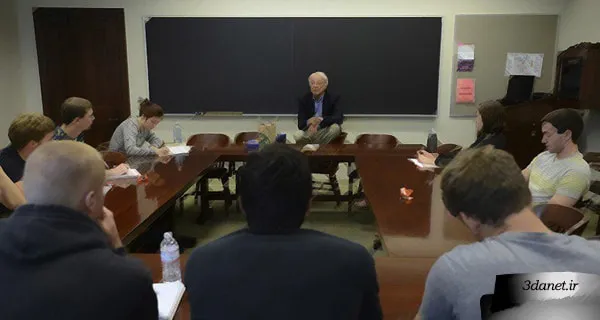
Today, May 5, 2015, I was teaching the book Bidāyat al-Ḥikmah to undergraduate philosophy students. I was teaching the negative attributes of existence. Toward the end of the class, the discussion turned to the fact that we had covered a lot of material this semester and advanced a hundred pages, so it would be better to end classes earlier for the exam break. In response, I said no, we must go further, and it is still too early to stop. One of the students said: What difference does it make if we read, say, twenty more pages? We've read these hundred pages and not a single question has arisen for us; suppose we read twenty more!
The remark was completely logical and was exactly what was on my own mind. That is, the very thought I had been wrestling with for some time: Is philosophy the teaching of topics and issues that were raised for philosophers several hundred years ago? Does learning or not learning these topics make any difference to me, and what great good have the thousands of people who do not read these topics been deprived of?
I did not know what to say. I promised him that, of course, you must be patient and read a full course of Islamic philosophy so that questions gradually arise for you, because Islamic philosophy is like a pyramid and a network rather than answers to independent questions. Besides, my dear friend, if you had pursued the topics with more seriousness, you would certainly have approached the threshold of questioning. But my own heart was not satisfied with this answer. Because I myself, who spent my entire university education in the field of philosophy and had more or less read the topics of philosophy, and in this reading, if I was not serious in the true sense of the word, at least I was not lazy or uninterested; I was still in the same position as the student who asked this question. And I felt that if I did have a question or questions, they did not arise from attending philosophy classes or studying the books of Sabzevari, Mulla Sadra, Avicenna, and Allameh Tabatabai. Rather, they originated from other books and my personal reflections. This is not just the situation of me and my questioning student; almost all professors and students consider the existing educational system an inefficient one. The proof of this claim is that one can hardly find a student at any level of higher education in the field of Islamic philosophy who expresses satisfaction with this educational system and feels that the existing educational system has brought them closer to philosophy in the true sense of the word.
This student's remark revived for me the issue of the nature and function of philosophy and our relationship with philosophical thought. Truly, if the problems and topics raised under the title of philosophical discussion are not our questions and have no relation to our lives, should we consider them the study of history or philosophical discussion? Basically, when the questions and discussions raised in philosophical books are not our questions and problems, can the goals that philosophers have enumerated for this science be achieved? When I read the views of two sects or schools on an issue, and from the very beginning it is fundamentally not a serious question for me and it does not matter what answer is given to this question, can reading the answers of these schools open a path before me?
Well, recently, "Pathology of Philosophy Education in Iran" or "Pathology of the State of Philosophy in Iran" is occasionally raised and pursued by thinkers and writers. And in the introduction to these pathologies, it is admitted that "what is taught in our land as Islamic philosophy and mysticism is mere imitation and repetition of the words of predecessors or writing commentaries on their texts"; or "the state of philosophy education in Iran does not nurture philosophers but trains commentators and scholars of philosophy"; or it is said that "the field of philosophy is largely abstract and has no relation to the practical life of the people."
It is a reality that the maximum hope and chance that philosophy has in our current universities and seminaries is that there are still professors and students who are connected to their philosophical tradition and can understand this tradition and contribute to its (not very useful) enrichment. Philosophy in our country has not yet been abandoned like the old natural sciences and mathematics and is in a state of suspension. That is, if the necessary condition for reviving philosophy and invigorating it is understanding it and the ability to connect with it, in our scholarly community this condition is fortunately met. But unfortunately, Islamic philosophy is frozen in this state.
If I too wish to pursue my discussions under this heading, my educational experience has shown me that if we want to classify the effective elements and components in the process of teaching philosophy based on their priority of impact, the best criterion for identifying the most effective component and element in education is to see which factor, when present, can compensate to some extent for the deficiencies and weaknesses of the other components. In other words, the component with priority is the one whose absence renders the strengths of the other components ineffective, yet whose presence, assuming the absence of other factors, can bring us to a somewhat desirable situation in education. It seems to me that, in this regard, the most important factors, in order, are the professor, the student, the texts, the educational regulations, and finally the socio-cultural factors. Therefore, the professor is the most fundamental factor for achieving the desired success in realizing educational goals. It is he who can even compensate for the shortcomings of textbooks and the lack of educational facilities.
What follows is an account of the sufferings and deficiencies that Islamic philosophy endures at the hands of philosophy professors and their teaching methods.
A look at the current method of professors in teaching philosophy:
The dominant method in educational centers in the field of Islamic philosophy is "text-centered/book-centered." This means that in various educational courses, one of the main philosophical texts is chosen as the core text, and teaching is pursued based on a line-by-line, section-by-section, or chapter-by-chapter study of it. In this method, the professor, having mastery over the contents of the book, centers its topics and, after introducing the main subject, proceeds to explain, interpret, and convey the text. {Some professors do not even introduce the topic and directly begin reading the text and explaining it.} In the text-centered method, at the undergraduate level, professors, after often teaching parts of the book "Bidayat al-Hikmah" by Allamah Sayyid Muhammad Husayn Tabatabai, engage in teaching one of the two books "Nihayat al-Hikmah" or "Sharh al-Manzumah" by Hajj Mulla Hadi Sabzawari. Some professors may choose Misbah's "Amuzish-e Falsafeh" (Teaching Philosophy) or 'Ubudiyyat's "Falsafeh-ye Muqaddamati" (Introductory Philosophy) as the educational text. At the master's level, they typically teach parts of Ibn Sina's "Al-Isharat wa al-Tanbihat"—usually the fourth, fifth, and sixth patterns—Suhrawardi's "Hikmat al-Ishraq," and Mulla Sadra's "Al-Shawahid al-Rububiyyah"—usually the first mashhad. At the doctoral level, they dedicate sections to parts of Mulla Sadra's "Al-Hikmat al-Muta'aliyah fi al-Asfar al-'Aqliyyah al-Arba'ah" and Ibn Sina's "Al-Shifa."
The essence of this method is based on monologue and proceeding from the particular to the universal. Two things that are in clear contradiction with philosophical training. In the text-centered method, the professor is the speaker {explainer} and the student is the listener. The student has the least involvement during the class, and their involvement is also limited to the topics of the text.
In this method, the student has the least involvement. And the final result and ultimate goal of this method is the mere accumulation of philosophical information in order to pass the barrier of exams. In this method, even if the professor is very successful, they ultimately teach "knowledge of philosophy" or the "technique of philosophy," meaning their successful student is someone who can understand the thoughts of philosophers and explain and elucidate them in their own words.
It might be said that in text-centered classes, there are successful professors who can create dialogue and engage students in discussions. Yes, one cannot deny such participations in philosophy classes, but one cannot call these participations a philosophy-generating dialogue. Dialogue is real and leads to philosophical training when it has two parties and there is a serious and fundamental disagreement. But in these participations, we often witness no party at all; rather, we witness a difference in understanding between two people called professor and student regarding a text.
Philosophical dialogue is realized when neither party represents someone else or an author, but are themselves. And this is when the question of the conversation, in the true sense of the word, belongs to themselves. Whereas in our philosophy classes, one can count on the fingers of one hand the students and professors who have a "self."
In the book-centered method, the student is mostly engaged in understanding the author's words, and there is less opportunity for questions independent of the text to arise in the student's mind. This causes the student to see themselves less in the position of a thinker. And if they do think, they think within the framework and around the text, and never dare to think about a completely new problem. Hence, in the current method of teaching philosophy, a philosophy graduate is ultimately someone who understands written philosophical problems well, is aware of prominent sayings, and perhaps has a minor critique of these sayings or a marginal note and explanation for a better clarification of written problems.
In the text-based method, the course of teaching proceeds from the particular to the general. That is, the professor begins by teaching the subheadings and subchapters of the book in order or selectively. {It is necessary here to consider this point that classic philosophical books are not written in an educational manner, and precedence and posteriority are not observed in them, and the relations between topics are not specified.} This is while Islamic philosophy is an epistemological pyramid; therefore, many of its discussions and chapters are preliminaries for subsequent discussions. Sometimes several important discussions are a prelude to stating another problem or presenting an argument. Sometimes in a chapter, there is a subheading that seemingly has no connection to the topics of that chapter.
Well, in the meantime, the undergraduate philosophy student is not at that level of analysis to have a holistic and so-called external view and be able to understand the relationships between topics. Hence, they memorize the material without logical order and conscious categorization, while feeling bewildered among seemingly disparate topics.
This ambiguity and bewilderment is sometimes expressed in the students' language with phrases like: "In my opinion, Western philosophy is better than Islamic philosophy because it is more tangible and tidier," or with expressions such as: I don't know what problem the rules of non-existence and the rules of quiddity are trying to solve; I don't know what difference knowing or not knowing the ten categories makes; I don't know if these philosophers had nothing to do that they discussed mental existence so much!; Professor, wouldn't it be better to omit the section on cause and effect because it's not very important?; I don't know what these philosophers are doing; they discuss the rules of existence, then suddenly bring up the issue of mental existence, write about the categories, then discuss the human soul, suddenly approach physics and discuss time and motion, and so on.
It rarely happens that philosophy professors explain the preliminaries and the conclusions, the relationship between topics, and the reason for introducing chapters and sections, and clarify the starting and ending points of discussions. We rarely witness a professor, when entering the discussion of the soul or the divisions of knowledge, etc., at the beginning of the discussion, sketching an overview and a general map of the topics for the student.
In the text-based method, precisely because of this progression from the particular to the general and being confined to one or a few specific books, the student is prevented from understanding the totality of a philosopher's system of thought, their position in the current of thought, their school of thought, and the consequences of their ideas. Familiarity with these matters depends on a holistic approach, an external view, and the use of the oral parts of the professor's lesson. But since most professors have also mostly been trained in a text-based manner and have rarely had an external view of philosophical issues, they cannot compensate for this deficiency.
In the text-based method, the professor unconsciously considers their mission to be the imparting of the book's content and devotes all their effort to this goal; therefore, we very often witness in philosophy classes that professors are concerned with finishing the syllabus. It is true that the student must become familiar with ideas to have material for thinking and philosophizing. But this is an intermediate goal, and the ultimate goal is for the student to learn thinking and philosophizing. When the main effort in teaching is to finish the syllabus, the ultimate and primary goal of education is neglected. The saying of His Eminence Amir (peace be upon him) regarding the manner of reciting the Quran is instructive in this context, where he says: "When reciting the Quran, let not your concern and effort be to finish the Surah."
I wish philosophy professors, alongside their concern for completing the syllabus, would also think about impact and efficacy, and try to focus more on those topics that today's student can connect with and that can better lay the groundwork for reasoning, dialogue, and critique. Christian Yahya Bonnaud relates an interesting point: “I have had a university experience, but in Paris, and my experience of the seminary relates to those seven years of being a student of Mr. Ashtiyani in Mashhad. I asked him whether I needed to attend his university classes as well; he said no, there we only read the lists. Mr. Ashtiyani believed that there is no need to read all the books, and he would say that one good book with a good professor gives you the power of analysis and free thought, and he believed in the methods of discussion and dialogue.”
Our problem is that even philosophy professors and newly published books in the field of Islamic philosophy, even when they want to enter the space of critique, free-thinking, and philosophizing, still remain within the same traditional discourse and paradigm. And their critique and philosophizing is still, at best, a marginal note and ultimately a trial. Few professors teach and understand philosophy from a new perspective, from the subject of a new and different intellectual tradition, with a research method that is fundamentally different from the research method of Islamic philosophy, from the standpoint of today's human being and society.
Research, articles, and dissertations in the current method of teaching philosophy can be nothing other than the following: collecting the opinion of one or several philosophers on an issue that has been raised in our tradition, directly or by allusion; comparing the views of two Muslim philosophers, or at most a Muslim philosopher and a Western philosopher (and not in such a way that they seek to critique and analyze the Muslim philosopher's philosophy from the perspective of a Western philosopher and according to his foundations and method. Rather, it suffices merely that, for example, in one chapter the views of Mulla Sadra on anthropology are examined, and in another chapter the views of Hegel, and in a third chapter, the similarities and differences between them are pointed out).
The clever and so-called exemplary student in this educational system is one who manages to understand the book being taught and can answer exam questions, at least 80 percent of which are based on the text of the book, even if they lack good speaking skills and cannot participate in discussions.
Exams in this teaching method .....
The questions of philosophy professors are no different from the questions of a history or Quran and Hadith professor. That is, the questions are not designed philosophically. The type of questions usually posed by philosophy professors only seek to discover two points: whether the student has memorized the material? Whether the student has understood the material?
But philosophy professors must, in addition to this, consider two other, more important goals in designing their questions: 1- The question should be such that it compels the student toward philosophizing and inventive thinking and assesses their power of philosophizing. That is, to present a new question whose answer is not in the book or the professor's explanations; a question for which the student is expected to be able to find an answer if they have understood the semester's material. 2- The question should be such that it compels the student toward critique and analysis and assesses their power of critique and analysis.
But is the teaching method something that can be corrected with directives and holding faculty development workshops? Although the impact of such efforts cannot be denied, it seems the right path is to ask: why is the method of teaching philosophy like this?
Perhaps the most important reason is that philosophy is not serious for us. Not for government and state decision-makers, not for the Ministry of Science, not for universities, not for professors, and not for students. We all maintain formal courtesies with philosophy and the philosopher. For us, philosophy and the philosopher are like the children of privilege whose father was beloved and renowned in his own time, and now, after the father's death, we hold the privileged children in respect out of deference to the father. And we always honor them. Someone oblivious to this occasion thinks that this privileged child is truly worthy of respect, or that we are genuinely honoring the person himself. Well, we must ask why the situation is like this?
Either they all have some tool or something else at hand that makes us feel no need for philosophy, or our society is fundamentally not in a position of needing philosophy. In other words, we must reconsider the proposition that philosophy can be useful at any time and place. And we must accept that philosophy emerges and manifests itself at specific times and places. And we must engage in dialogue about the nature of these places and times.
Perhaps it is not only philosophy that is dying, but rather that science is not taken seriously in our society. And our grand problem is not the decline of philosophy but the decline of science. One might respond by pointing to statistics such as the number of articles, etc. But what better witness and evidence is there than observing the state of science in universities and its efficacy in solving the problems we grapple with?
Reviving philosophy does not mean pursuing new topics such as aesthetics, the environment, the family, and lifestyle from the perspective of Avicenna and Mulla Sadra. And having our writings be such that they are either instances of comparing apples and oranges, or completely independent, non-philosophical writings in whose sources the names of the books of Avicenna, Mulla Sadra, and other philosophers are observed.
In a research project compiling the political philosophy of Muslim philosophers, a respected professor had extracted 2,500 note cards on political topics from the book Al-Asfar. 2,400 of these note cards were phrases that, even by allusion or hint, had no connection whatsoever to political issues and topics. Their connection had to be found in the entirely novel explanations of the respected professor. A relation and connection which, if we were forced to acknowledge and affirm them, would then require us to extract any statement from any text by adding several middle terms of our own devising.
In a teaching method where it is fundamentally unimportant what the reason for posing a problem was, its course of development, its relation to other discussions, its relation to the philosopher's time and place, its importance in the philosopher's system of thought, etc. Even supposing the student understands the problem well, what consequence can follow from this understanding? And what illumination can this problem create for the student?
The lack of a holistic and external perspective among professors.
Lacking the necessary philosophical knowledge:
Students plainly see their weakness and inability in the classroom to answer meta-textual questions (such as: the differences between schools, the foundations of philosophers, the history and course of development of discussions, the relation of philosophical problems and chapters to one another, meta-philosophy discussions, etc.).
One piece of evidence showing that our engagement with and approach to philosophical books is not question-oriented is that we do not follow the various books of a single philosopher.
.
.
My Story with Philosophy Classes
Author: Abbasali Mansouri (Faculty Member, Department of Philosophy, Razi University)
.
.



Discussion0 comments
No comments yet; let yours be the first voice.