Philosophy
On the 'Collection'
Responding to a review that called his translation a “collection of errors,” Mohammad Saeed Hanai Kashani criticizes the unprofessional publication process and attempts to show that the reviewer’s own writing also contains mistakes.
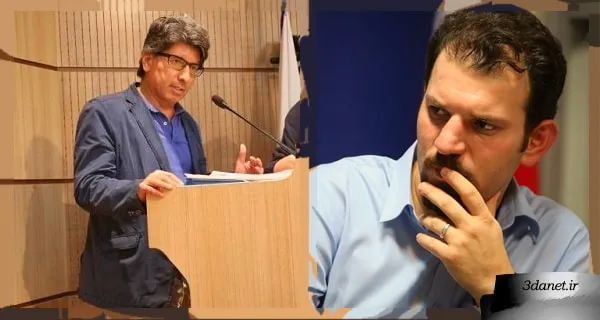
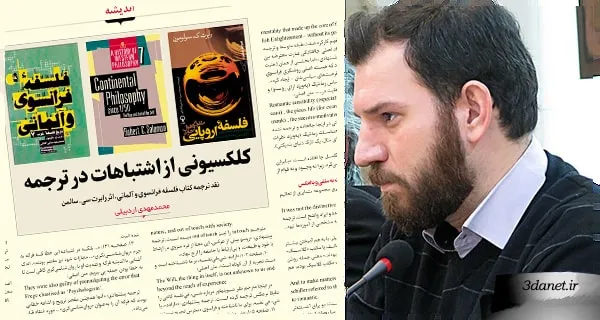
Late Friday night, 18 Esfand, thanks to a friend, I was informed that a review or critique of my translation of the book French and German Philosophy, written by Robert C. Solomon, authored by Mr. Mohammad Mehdi Ardebili, titled “A Collection of Errors in Translation,” had been published in the Shargh Daily, Saturday, 12 Esfand 1396, and subsequently republished on one or two cultural and non-cultural websites, as well as the author’s Telegram channel. Setting aside the question of what place the publication of a review or critique of a book’s “translation” holds in a “mass-circulation newspaper,” with what aims it is undertaken, and whether it can even be considered a scholarly endeavor possessing the professional and ethical standards befitting the work of criticism (for whom do we write technical and scholarly book reviews? Which audiences?), or whether its purpose is something else entirely, I will not ask now, for it is not so difficult to see many things between the lines of that piece (and outside it as well)! Had a friend not informed me, I might not have heard anything about it for a long time. How good it would have been if the author and the publisher (the newspaper editors), if not before publication, at least after publication, had notified the “victim” or the “accused” or the “convicted”—whatever one is called when something is published against them—and sought a response from them! Since not everyone reads newspapers, I certainly never do, and it is unclear how one is supposed to find out? Perhaps everyone assumes that the news will eventually reach them! Yes. It might reach them, but it arrives late. Anyway, would this not have been closer to fairness and equality? At the very least, judicial procedure dictates that both plaintiff and defendant appear together in court! Who knows, perhaps they wanted to buy time this way and stay a few weeks ahead of the “convicted” person’s response, so the piece could have its full effect before the end of the New Year! Anyway, as far as I know, in countries with humane and just judicial procedures renowned for their culture, in critiques concerning living persons and contemporary books, it is customary to give a contentious review of a book or a piece by a living author to the opposing author before publication, and then publish both together with the response, so that no water is spilled beforehand that cannot be gathered up, or the reader’s mind is not so tainted with prejudice that fair judgment becomes impossible! Anyway, we are now elsewhere, and here, of course, such things are not so important. So, I too will not attach importance to it and will proceed to the piece itself. But before beginning the discussion, I would like to recall a point.
1. Preliminary Notice
Sometimes events occur that leave one bewildered at the moment of their happening, with no explanation for them, but later one sees they fit neatly with subsequent events: a cosmic order, human planning, or an order imposed by the human mind upon external events? Call it what you will. Something I wanted to publish right here about this a week or two ago but didn’t. Now I feel I must say it. The four books discussed in this piece were published on 17 January, and until just two weeks ago nothing about them appeared in any newspaper or news agency (even those that ostensibly bear the name of books and culture and such and such!), as far as I have seen by searching the internet. You too can search and test this. It is easy. Yet many of these news agencies and newspapers are brimming with detailed reports about forthcoming or newly published books from certain specific publishers or individuals. What does this silence mean? Is there discrimination even in the dissemination of news? Of course there is. Why wouldn’t there be? But to my great surprise, two or three weeks ago, a few days after publication, I noticed that on Wednesday, 20 February, a public holiday, first thing in the morning, Mehr News Agency had published something based on a post on my own (filtered) site, titled “The book ‘French and German Philosophy’ published: ‘According to Mehr reporter, Mohammad Saeed Hanaei Kashani, a faculty member of the Philosophy Department at Shahid Beheshti University, has written about the recent printings of his books (and the rest is my text) ...’”. “Mehr News” did not mention where Kashani wrote it (?) and where they took this text from (why should an official news agency affiliated with a particular institution cite material from a banned and blocked site?), does the reporter have no other news source about the book’s publication? At the end, without mentioning the three other books, it proceeds to state the price and page count of the book “French and German Philosophy,” which was not in my text! And this is not their only addition. An image from the bottom of the book’s page adorns the news page, something unusual in page layout. As if the reporter wants to show the reader something in close-up: perhaps the book’s title and the author’s name! The wonder is why a reporter for an online platform should publish the news of a book’s publication not from the publisher’s platform, not from online bookstores, nor from bookshops around town, but by citing the translator on a filtered and banned platform, and more than a month later, as “fresh” and “daily” news? Well, we are accustomed to first reading certain things in certain newspapers or sites that have more information, and then waiting for the day of the event to arrive. Signs cannot and should not be ignored.
2. “A Collection”
I confess right at the outset that if the author of this text had merely contented himself with listing what he found in my translated text and said nothing himself, I would have had no response to them except shame, learning a lesson, and gratitude. After all, what excuse can there be for dropping a line or a phrase, or a misreading, or forgetting the beginning and end of a sentence, or the affirmative and negative of a sentence, except an error of the eye in reading and that the text should have been reviewed once or twice after translation and was not. But, by my good fortune, he wrote a preamble and a postscript to this “collection,” and, by bad fortune, revealed both his flaw and his skill, giving me this opportunity to show that he too makes mistakes, and perhaps worse ones. Because here translation is no longer at issue. A translator is heedless and makes mistakes while translating, if he drops something or forgets something or misreads. But when a person writes something while fully alert, that is when he displays more of his erudition and skill. Well, to see how error can creep into writing, it might not be bad to start with the author’s very first sentences to see how many errors the author himself has by the end of this piece; perhaps in the end we will be even, with the difference that my mistakes were in a translated book of about 300 pages, and his mistakes are in a few lines, ostensibly without translation!
Can one find fault with someone without being at fault oneself? Are those who see a mistake in another immune from error? Because someone makes a mistake, is everything they write mistaken? If someone says something correct, is everything they say therefore correct? Is it even possible for a piece of writing, a translation, a book, or anything else to be free of mistakes? Can it not be said that error in speech, action, authorship, and translation is, like everything else harmful, necessary, and that without it there is no progress? What are our criteria for correctness and truth? I read the critic's piece to the end, and wherever it is right, I gratefully take it to heart, learn, correct, and seek forgiveness from the reader and buyer; and wherever it is wrong, I expose the error of the 'collector' author.
A translator who translates a book or an author who writes something commits mistakes, but, to use the phrasing of this piece's title, does not create a 'collection,' because they have no intention of gathering 'something,' unless we ourselves set about 'collecting' these mistakes. They do their work from beginning to end. The path is sometimes smooth and sometimes rough and full of twists and turns. They are sometimes tired and sometimes fresh, like a driver who sometimes dozes and sometimes is alert. It is for this reason that they sometimes veer off course and hit something, and sometimes plunge to the bottom of a ravine. Nevertheless, they are not a 'collector.' So who is the 'collector'? A 'collector' is someone who selects 'things' from among a multitude of things, things that are desirable and pleasing to them. It is for this reason that they are a 'collector.' Some have a 'collection' of paintings, butterflies, matchboxes, stamps, and so on, and some have a 'collection' of others' mistakes, whether in private or in public. But, truly, is it only in a 'mass-circulation newspaper' that one can choose such a title: 'A Collection of Mistakes in Translation'! If this piece were to be published in an academic or specialized journal on books, translation, and philosophy, what title should it have? Choosing an appropriate title itself speaks of the power of thought, the faculty of innovation, and creativity.
3. Two Categories of Objections
The author of the “collection” has found two kinds of faults in the book. Those he did not wish to discuss, and merely named, stating of course that they are errors, without giving reasons, and those that seemed to him fundamental, which he has marked with numbers and accompanied with the English text. Naturally, his arguments are more robust where they are grounded in the text. But his weakness lies where, on the basis of certain of his definite and solid findings, he makes claims that themselves have no basis or foundation, leading him into the territory of errors beyond mere scribal mistakes: insult, distortion, and slander. He begins his piece thus: “A book has recently been published bearing the title ‘French and German Philosophy’ by ‘Robert Ch. Solomon’ [sic, Robert C. Solomon] translated by Mohammad Saeed Hanai Kashani on its cover. Of course, Robert C. Solomon does not have a book with such a title, but with a little care one can discern that this book is the same seventh volume of the Oxford History of Philosophy which the Persian translator published about 18 years ago under its true name — if we overlook the objection to translating continental philosophy as European philosophy — that is, ‘The Rise and Fall of the Self in European Philosophy’.” In this very line, the author reveals that he disagrees with three things and holds a different view from the book’s translator, finding fault with them: 1) the pronunciation of the author’s name; 2) the translation of the book’s title, now; 3) the translation of the book’s title, in the past. ۴) Further on, he also reiterates: “Even on the book’s cover, the incorrect spelling of the author’s name ‘Robert Salmen’ has not been corrected [sic? It has been corrected: Solomon has become Salomon. Have you not seen it?] and only the first letter of the middle name has been changed, and that incorrectly [What is the correct form?]. I will also refrain from criticizing the translator’s terminology, who has sometimes used irrelevant words in the translation (such as European for continental; thought for idea in Hegel’s philosophy, reformist for radical!, quasi-mechanical for mechanistic, homogeneous for organic, correct for orthodox, tribes for people, etc.)”; ۵) But besides these, there is also an implicit accusation and slander which he then states more explicitly further down, where, regarding the second edition of the book, he adds: “... and presumably motivated by ‘greater sales,’ he even changes (or arranges) the title of the work in such a way as to lead many readers to suspect that they are encountering a different (and perhaps new!) book by Robert Salmen.”
4. The Book’s Title: Why “European Philosophy” and “French and German Philosophy” and not “Continental Philosophy”?
First, I never use the adjective “continental” for philosophy, because it is meaningless in Persian, just as it is for breakfast! “Continent” means a vast, dry piece of land, and the earth has 5 continents and also many islands. “Continent” stands in opposition to “island,” and continental or, more accurately, continent-dweller (continental) stands in opposition to insular or island-dweller (insular, islander). So, just as some translate and say “continental philosophy” in Persian, or more accurately: “philosophy of the continent-dwellers,” can one say in contrast “insular philosophy” or, more accurately, “philosophy of the island-dwellers”? What property does “continent” or “island” possess that it could bestow upon “philosophy” and describe a philosophy? None; continent and island are nothing but pieces of land, one vast and the other small by comparison. So why do they say “continental philosophy / philosophy of the continent-dwellers” in English? Do they mean a philosophy as vast as a continent? No. They mean the philosophy of the continent-dwellers or inhabitants of the continent of Europe, that is, the other side of the English waters. The English “island-dwellers” understand a meaning from the word “continental” and “continent-dweller,” by itself, that we do not understand. The adjective continental in English has two meanings. A specific meaning and a general meaning. In the general meaning, “continent” refers to those vast, dry areas of the earth known as the 5 continents. But in the second meaning, it does not refer to any continent; it refers to that main part of Europe from which the island of Britain is separated and kept apart by the surrounding water, that is: continental Europe or mainland Europe. Therefore, in English, when they say continent, every English person, based on their life-world, tradition, and history, easily and by context understands that “the continent of Europe” is meant, without needing to add the adjective European or mention Europe by name, because the “continent” is across the water and opposite them. For this reason, if one consults English-to-English dictionaries, one sees that the first equivalent for continental in these dictionaries is European. But what about in Persian? Well, in Persian, one cannot understand from “continental” alone that it means the continent of Europe, or from “continent-dweller” that it means an inhabitant of Europe. So its equivalent “European” in Persian is both more meaningful, more easily understood, and correct. But are the British not themselves European? Yes, but because they are situated on an island and water separates them from the rest of the European continent, they therefore do not consider themselves part of the “continent” and call those on the other side: “continental” or “continent-dweller.” Nevertheless, from the standpoint of geographical division, they too are “European.” So do they call their own philosophy insular or island-dweller? No. They call it English or British! Because insular or island-dweller (insular) also has a bad meaning: “narrow-minded”! There is another expression with this same adjective that is very interesting: Continental breakfast. Well, should one say: continental breakfast? What sort of thing is a continental breakfast anyway? Is it as vast as a continent? No. Again, it has nothing to do with continent in the sense we understand in Persian. It refers to the breakfast of the “continent-dwellers” or inhabitants of other European countries. European breakfast means non-English or non-British breakfast that is customary in other European countries. This name is the title of a breakfast on hotel breakfast menus that specifies the type of breakfast, including sliced bread and butter and jam and honey and fruit juice and pastries and eggs and other beverages and so on .... and of course, French, German, Italian, American, and English breakfasts ... are also named individually. Therefore, if one is familiar with English philosophy books, one knows that some books concerning these very non-English and non-British philosophers and philosophies from the second half of the eighteenth century onward bear the name Continental Philosophy and others the name European Philosophy. But today, the correctness of both these titles, which have one meaning and are synonymous, is disputed. These titles became prevalent in English universities from the seventies onward and have neither genuine correctness nor any utility in application, because: 1) they are so broad and vague that they specify nothing. They lump all Europeans together.
۲) همۀ اروپاییها ذوق و مزاج یکسانی در فلسفه ندارند و برخی اروپاییها اتفاقا جزو مراجع فیلسوفان بریتانیاییاند و در کتابهای فلسفۀ انگلیسی از آنها بحث میشود، نه اروپایی، در حالی که آنها اصالتاً و از نظر ملّی اروپاییاند : فرگه، ویتگنشتاین، پوپر و .... بنابراین، صفت اروپایی یا انگلیسی، دست کم در فلسفه، مشخصکنندۀ هیچ چیز نیست.اما چرا من «فلسفۀ فرانسوی و آلمانی» را انتخاب کردم؟ من در ویراست دوم «اروپایی» را در متن به شیوۀ قبل حفظ کردم اما روی جلد را تغییر دادم. چرا چون عنوان هرچیز باید از درونمایۀ آن چیز خبر دهد: آیا در این کتاب جز فیلسوفان فرانسوی و آلمانی و اتریشی (آلمانیزبان) از کسی دیگر بحث میشود؟ آیا این عنوان چیزی را در متن کتاب تغییر داده است؟ این چالشی بود با تعابیر «اروپایی» و «قارهای/اروپایی»، اگر کسی میپرسید!
اما واقعاً وقتی دوباره میخواهم سخنان نویسندۀ «کلکسیونی» را در اینجا تکرار کنم، نمیتوانم از احساس انزجار خودم از کژنمایی و عوامفریبی موجود در این نوشته خودداری کنم، هنگامی که نویسنده مینویسد: «البته که رابرت سی. سالمن کتابی با چنین عنوانی ندارد، اما با اندکی دقت میتوان دریافت که این کتاب همان مجلد هفتم از تاریخ فلسفه آکسفورد است که مترجم فارسی حدود ١٨ سال پیش، آن را با نام راستینش ــــ اگر ایراد ترجمه continental philosophy به فلسفه اروپایی را نادیده بگیریم ــــ یعنی «طلوع و افول خود در فلسفه اروپایی» [کذا، فلسفۀ اروپایی از نیمۀ دوم قرن هجدهم تا واپسین دهۀ قرن بیستم: طلوع و افول خود»] منتشر کرده بود». کدام اندکی دقت؟ مگر عنوان تاریخ فلسفۀ غرب: ۷، بر روی جلد کتاب نیامده است؟ مگر، برخلاف سنّت رایج در طراحی روی جلد، عنوان انگلیسی کتاب و نام نویسنده حتی به صورت انگلیسی در روی جلد نیامده است؟ مگر در صفحات ۳ و ۴ و ۵ کتاب تمامی مشخصات کتابشناختی و تمامی مجلدات این مجموعه همچون قبل و نیز عنوان کامل کتاب به همراه عنوان فرعی نیامده است؟ مگر پیشگفتار فارسی مترجم با همان تاریخ ۱۸ سال قبل در آغاز کتاب نیامده است؟ مگر مترجم در یادداشت خود در جلد اول از ویراست دوم این مجموعه برای جلدهای ۱ و ۲ و ۷ خبر نداده است؟ مگر مترجم در سایت خود در معرفی کتاب از ویراست دوم سخن نگفته است؟ برای فهم این چیزها به کدام دقت یا نگاه موشکافی نیاز بوده است که خواننده فریب نخورد؟ و شگفتا بعد در پایان نویسنده درس اخلاق نیز میدهد: «... و لابد به انگیزه «فروش بیشتر» حتی عنوان اثر را نیز بهگونهای تغییر (یا ترتیب) میدهد که بسیاری از مخاطبان را بدین گمان اندازد که گویی با کتابی دیگر (و چهبسا جدید!) از رابرت سالمن مواجهاند». این سخن، بیشک، با هر معیاری، توهین و افترا به مترجم و ناشر است و مترجم و ناشر کتاب این حق را برای خود محفوظ میدارند که هم از نویسندۀ «کلکسیونی» و هم از مسئولان «روزنامۀ شرق»، در مقام نشر اکاذیب و افترا و تشویش اذهان عمومی نسبت به اشخاص حقیقی، به مراجع قانونی شکایت برند و دادخواهی کنند. من اگر این بیحرمتی نویسنده را بر خودم ببخشم، هرگز از بیحرمتی نویسنده نسبت به ناشرم که نه فقط مردی فاضل و نویسنده و مترجم بلکه مردی اهل معرفت است و پنج سال از زندگیاش را در سالهای اخیر به جرمی موهوم در زندان سپری کرده است نخواهم گذشت؟ و سرانجام، نویسنده در تلقیاش از عنوان کتاب و تغییر آن بیخبری خود از سنّت ترجمه را نیز به رخ میکشد، و بدتر اگر بداند، چون عوامفریبی کرده است، و تغییر عنوان کتاب را همچون تغییر شمارۀ خودرو میانگارد که برای دزدی صورت میگیرد! اما کسی که اندکی آشنایی با فرهنگ و تاریخ سرزمینهای دیگر داشته باشد میداند که بسیاری از کتابهای ادبی و فلسفی و، امروز، فیلمها، همان عنوانی را که در سرزمین و زبان اصلی خود دارند در جاهای دیگر ندارند. نمونۀ قدیم آن کتابی از افلاطون که ما به نام «جمهوری» میشناسیم عنوان اصلیاش «پولیتیا»ست و «پولیتیا» به طور تحتاللفظی به معنای «جمهوری» نیست! بسیاری از نمایشنامهها و داستانهای سارتر در انگلیسی عنوانهایی دارند متفاوت با عنوان فرانسوی. همین طور بسیاری از کتابهای انگلیسی در فرانسه عنوانهایی دارند متفاوت با عنوانهای اصلی و کذا و کذا.
۵. سولومون، سالومون یا «سالمن»!
The self-referentiality of the author of “The Collection” in pronouncing names is also astonishing. How easily he speaks of right and wrong. In an age when one can hear the pronunciation of anyone’s name in any language with a single click. In the first edition of the book, I wrote the author’s name as “Solomon” and used “K” for the initial of his first name, because I did not want to use “C” and, like the author of this review and many others, mark the two-letter word “C” in Persian with a dot like single English letters (C)! But why “Solomon”? Was it a mistake? I first began translating this book in 1994, and at that time there was no internet or talking dictionaries, and you either had to find pronunciations from the phonetics in dictionaries or had heard them yourself. I trusted my ear and still remembered a poem I had heard on Oxford English teaching tapes: “Solomen/Solomon Grundy” (you can listen to it now). To find the full middle name, which was abbreviated to the letter C, I also had no access anywhere, so I guessed what name “C” could be? Perhaps his name was Robert Christopher? I chose “K”; Charles did not occur to me. Years later, when the internet became common and I even corresponded with the late “Salomen/Salomon” himself, I became familiar with the American pronunciation of his name through podcasts (you can hear the pronunciation of his name from his own lips). But where did “Ch” come from? In internet searches, I came across the name Robert Charles Solomon in several places. Charles, like Christopher, is often used with Robert. And we have several Robert C. Solomons whose middle name happens to be Charles. Well, so much for me. I chose the English/British pronunciation once and the American pronunciation the second time (though the author of “The Collection,” in his piece, did not notice the change from Solomon to Salomon in the second edition and only saw the change of the middle name!). But where “Salmen,” used by the author of “The Collection” and some other translators who agree with him, comes from, I do not know! Ask them yourselves, or listen to the pronunciations of Solomon in English (you can also use talking dictionaries) and other languages and see if you hear “Salmen”? (Listen). Today’s English has many accents and differences in pronunciation, and if in the past only English and American pronunciations were recognized by official dictionaries, today Australian, Canadian, and even Indian have gained currency on the internet. Knowing a language is for communication and understanding, not for excommunicating with “right” and “wrong.” I myself heard one person’s name pronounced three ways in an American film, and that person never objected that the correct pronunciation of my name is this! To be honest, “Salmen” reminds me more of the fish “salmon” than Solomon or Salomon! Well, now, why do I and many other translators (including Arash Naraghi, Hassan Mortazavi, and Manouchehr Shadan), as well as the catalogers at the National Library—who, independently of the translator’s suggestion, write the author’s name for library cards—not write Solomon as Solomen or Solemen, and Salomon as Salomen or Salehmen? Because it is easier to pronounce with “و” in Persian and is also closer to the original written form; if we write Solomon as Solomen or Solemen, or Salomon as Salomen or Salehmen, how is the reader to know with which of the four diacritics—sukūn, fatḥa, kasra, or ḍamma—the letters L and M should be read? And finally, must every name in another language be pronounced exactly like its original form?
The pronunciation of foreign authors' names has today become an obsession or a form of showing off for some translators, to the point where adorning every name with diacritics and other marks has turned into a sign of erudition and linguistic prowess (I myself am sometimes forced to do this out of fear of being accused of ignorance!). But is there really any effort in any European language to pronounce someone's name exactly as it is uttered in the source language? No. Because in every language, ease of pronunciation for the speakers of the target language is the criterion, not uttering the word in its original form. When someone wants to say a name in another language and speak that language, they should of course try to approximate the original language so that they are understood, not seen as a foreigner, or ridiculed, but what necessity is there in their own native language? Which of the names of history's great figures—from Plato and Aristotle to Jesus Christ and other luminaries—are pronounced identically or in their original form across different languages? Which European cities and countries do we pronounce in their original form within our own language? In English, Paris is called "Paris," and in French, it is called "Paree." But if someone in colloquial English says "Paree" instead of "Paris," it is ridiculous. Because they seem like a rich, ostentatious, nouveau riche fool who wants to show they've been to Paris! Someone who tries to pronounce foreign words in their original form in their own native language is, without a doubt, an ostentatious fool. We have no shortage of these ostentatious, nouveau riche fools!
6. My Irrelevant Equivalents!
There is a principle in criticism that, if you want to attack someone, attack their strengths, not their weaknesses, because if you destroy their strength, they will be unable to resist where they are weak. The author, where he writes: "Even on the book's cover, the incorrect spelling of the author's name 'Robert Salman' has not been corrected, and only the first letter of the middle name has been changed, and that incorrectly. I will also refrain from criticizing the translator's terminology, who has sometimes used irrelevant words in the translation (such as 'European' for continental; 'thought' for idea in Hegel's philosophy, 'reformist' for radical!, 'quasi-mechanical' for mechanistic, 'homogeneous' for organic, 'correct' for orthodox, 'tribes' for people, etc.)," instead of challenging the translator on his fundamental, consciously chosen equivalents and demonstrating his own strength in comprehension, goes after things that please the lay reader. Finding omissions and such can be done by any first-year university student. But when the author boldly claims a pronunciation is a 'mistake,' or substitutes 'continental' for European, and distorts the translation of radical—which in my text is repeatedly translated as 'root-based'—into reformist, or 'orthodox belief' into 'correct,' then I realize that the esteemed author is not yet versed in terminology and is a novice in understanding core philosophical concepts.
7. What Is Important in Translation Criticism?
Errors in translation and authorship are of two kinds: conscious and unconscious. "Nonsensical" and one-hundred-percent "wrong" translations are sooner or later corrected, either by the reader themselves or by the translator and author themselves, and in this respect they cause no harm, do not gain currency, break no one's teeth, and blind no one's eyes. All authors and translators, if possible, revise and correct their books in subsequent editions, again and again. A prominent Iranian example of this is "Thus Spoke Zarathustra" in the translation of Daryush Ashouri, which, even after numerous printings, still aims to reach a seventh edition, after all those printings and all those years. Why? Because it certainly has errors and omissions, and will continue to have them! But what are the greatest errors? The greatest errors are those errors that we deem "correct" without questioning them; they cannot be understood merely by collation. We produce literal translations and deem them "correct." If someone says "continental," they have spoken correctly, and if someone says "European," they have spoken incorrectly! Why? Because the former does not think and writes whatever they see, and the latter thinks and writes what they understand. But of course, in a land where one can deceive the people by drawing a snake, what place is there for the snake-writer? Today we are so emptied of creativity and innovation that we cannot even choose an inventive title for our own writing. The names of many of our books and films are translations of foreign books and films. Where we cannot translate, we still like to use an English or European equivalent. If we have no equivalent for "collection" in our language, why do we translate at all, and why do we critique translation?
Reminder: All newspapers or websites that have published Mr. Mohammad Mehdi Ardebili's article are, according to press law or, above all, fairness, justice, ethics, and human dignity, obliged to republish this response.
.
.
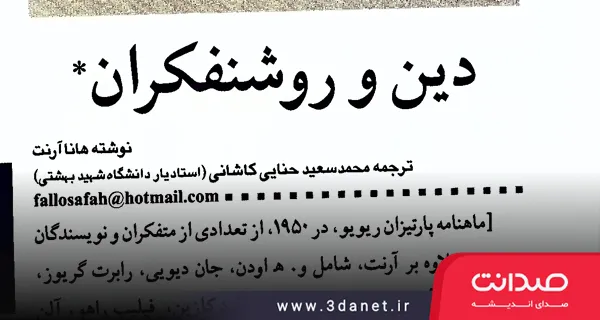
On the 'Collection'
Source: Fallosafah
Author: Mohammad Saeed Hanai Kashani
.
.

Discussion20 comments
متن را مطالعه کردم. در عجبم از دوستانی که از آقای اردبیلی دفاع می کنند. اشتباهات و تحریفهای ایشان از ترجمه ی آقای کاشانی واقعا غیرمنصفانه بود.
یعنی آن ۳۱ مورد نقد دقیق همهاش تحریف بود؟ کدامش غیرمنصفانه بود؟
فلسفه، ایرانیان را متکبر کرده است.
آیا همه چیز را با محک فلسفه سنجیدن خود کاری عقلانی است؟ تاریخ فلسفه و شکست های متوالی تمامی پروژه های فلسفی بسیار گویاست. چرا آقای شریعتی از فلاسفه فغان سر داد؟
من حقیقتا شیفته منطق قوی آقای محمد شدم. خواندن ترجمه ی کاملا غلط از یک اثر علمی یا فلسفی با دیدن فوتبال یا فیلم ضعیف یکیست؟ کسی که فوتبال یا فیلم ضعیف میبیند فریب نخورده دچار جهل مرکب نشده اما کسی که مطالب غلطی را به جای متن اصلی و به عنوان علم وارد ذهن خود میکند گمراه شده به جای دانش بر جهلش افزوده شده آن هم جهل مرکب و اگر کسی که به متن اصلی دسترسی دارد و به موضوع مسلط است خواننده ی بینوا را آگاه کند روشنگری کرده که کاری کاملا اخلاقیست و خواننده باید از او ممنون باشد
من جلد اول مجموعه را خریده و تورق کردهام . نقد آقای اردبیلی و جواب آقای کاشانی را خواندم . متاسفانه آقای کاشانی در نوشته مطول خود فقط حاشیه رفتهاند و دریغ از سرسوزنی توضیح و دفاع از ترجمه خود / اینجانب این دو بزرگوار را به واسطه نوشتههایشان شناخته و برای هر دو احترام فراوانی قائلم ، بویژه که سالها است نوشتههای آقای کاشانی را پیگیری میکنم . / اما در این مورد چاپ نقد در روزنامه نه تنها اشکالی ندارد بلکه امری بسیار نیکو است . و متاسفانه آقای کاشانی اصلا نتوانستند از جایگاه نویسنده و مترجم با این نقد برخورد کنند و برای من خواننده اینگونه است که نقد آقای اردبیلی را نزدیک به صحت میدانم / کاش همه ما ظرفیت بیشتری در مقابله با نقد داشتیم / و ظاهرا باید سخن سید جواد طباطبایی را پذیرفت که اعتمادی به اکثریت ترجمههای فلسفی نیست /
ایکاش اساتید محترم آقایان اردبیلی و حنایی کاشانی قبلا همدیگر را میدیدند و باهم صحبت میکردند. من افتخار شاگردی استاد حنایی کاشانی را داشتم، چند جلسه از سخنان آقای اردبیلی هم رفتهام و به نظرم هر دو دغدغه معرفت و فلسفه دارند. اما واقعا پاسخ آقای حنایی کاشانی درست نبود. ایکاش استاد مشورتی میگرفتند. به نظرم باید عذرخواهیای کرد بابت اشتباهات و تمام. نمیدانم آقای اردبیلی چقدر صادقند و آیا واقعا حاضرند کل ایرادات را به ناشر بدهند. اما میتوان عذرخواهیای کرد از مردم و وعده داد که در چاپ بعدی ایرادات اصلاح شود. همین. اما نهایتا لحن استاد حنایی کاشانی درست نبود.
انتقادات مترجم محترم قبول. اما متاسفانه ایشان بجای پرداختن به "متن و اصلِ"انتقادات، به "حاشیه ها" پرداخته اند. کاش مترجم محترم، همین قدر که حواشی را پر رنگ کرده اند، در برابر انتقادات درستِ منتقد هم سر تسلیم فرود می آوردند و به نحوِ "پر رنگی" بدانها اذعان می کردند. خوانندۀ هشیار منتظر چنین متنی است.
همچنین گویا برخی دوستان که اینجا شعار جمع اوری کتاب و فلان و فلان را می دهند فرق کتاب و روغن نباتی را نمی دانند.! هر کتابی غلط دارد و هر فیلمی ممکن است ناخوشایند باشد و هر بازی فوتبالی ممکن است بازیکن ها اشتباه کنند.. کسی نمی تواند برود فیلمی را ببیند و بعد به این بهانه که فیلم خوب نبود بگوید پولم را پس دهید. همین طور بازی فوتبال. اشتباه بازیکن در زدن پنالتی به معنای نابود کردن بازی و بازیکن نیست. کسانی که اینجا شعار شعور می دهند. توجه کنند که کتاب صدها سطر و هزاران کلمه است. من خودم حاضرم یکی از کتابهای ترجمه و ویراسته اقای اردبیلی را بکاوم و نشان دهم ایشان چند مرده حلاج است.
سلام دوست عزیزم به نظرم مقایسه ی نابجایی ست بین فوتبال و فیلم از یک سو و ترجمه ی کتای فلسفی از سوی دیگر ! خوب نبودن یک فیلم با خوب بودن یک ترجمه در دو فاز مختلفند ! یکی بر حول سلیقه می چرخد و دیگری بر حول عقل . کتاب فلسفی رسالتی دارد که هرگز هیچ فیلمی (حتی با محتوای فلسفی) یارای هم ترازی ندارد . فوتبال که جای خود دارد . بازیکن فوتبال که مثال زدید وقتی یک پنالتی خراب میکند کاری غیر اخلاقی انجام نداده (هر نتیجه ای هم که برای بازی رقم بخورد). اینجا بحث اخلاق است دوست عزیز . کسی که ترجمه ای غلط را در قالب کتاب می خرد قطعا احساس میکند کلاهی به سرش رفته و دروغی به او گفته شده اما باختن یک تیم فوتبال چنین اثری ندارد بزرگوار. با ارادت
چون در ذیل مطلب آقای اردبیلی از کسانی بودم که پیشنهاد جمع آوری کتاب را دادم عرض می کنم بنده هم فرق کتاب و روغن نباتی را میدانم هم تفاوت فوتبال/فیلم را با ترجمه ی یک کتاب !
به جناب "محمد" که فرموده اند "هر کتابی غلط دارد" عرض کنم که اولا تا منظور از غلط دقیقا چه باشد. آیا در حد یکی دو تا خطای ریز تایپی و ویراستاری یا در حد قلب مفهوم و محتوا؟ به ارجاعات متن بروید و مقابله ها را یک بار دیگر نگاه کنید. وجدانا، تاکید می کنم وجدانا، چه طور می شود به بعضی از آن غلط های فاحش خرده نگرفت؟ فرموده اند هر کتاب صدها کلمه و جمله است. تلویحا می خواسته اند بگویند که حالا اگر چند جمله هم غلط بود ایرادی ندارد! آقاجان من اگر بخواهم کلکسیون کلمات بی مفهوم بخوانم، لازم نیست هر بار کتاب جدیدی بخرم؛ یک بار فقط یک دیکشنری می خرم و با کلمه های فله ای، خودم را سرگرم می کنم! شما دارید در مورد ترجمه ی یک اثر فلسفی حرف می زنید و این قدر سهل می گیرید... تجدید نظر کنید. در مورد بررسی یکی از آثار اردبیلی هم من شخصا استقبال می کنم. اساسا نقد ترجمه را دوست دارم. بر ما منت می گذارید اگر تحمل این رنج کنید.
تنها بهره ای که از پاسخ جناب حنایی کاشانی بردم مفهوم کانتیننتال بود(البته اگر کامل بوده باشد) چون مثلا هتل های کانتیننتال در سراسر دنیا وجود دارد که فهمیدم معنای اروپای غیر انگلیسی دارد. ولی نقدهای 30 گانه ی جناب اردبیلی پاسخی دریافت نکردند بویژه مواردیکه ترجمه در یک منفی ضرب شده بود و معنای جمله معکوس شده بود که ممکن است کل درک مخاطب را از کتاب مخدوش نماید.
انگیزه اقای اردبیلی از کارشان کاملا روشن است. برای خاطر علم نبوده است. ایشان خواسته کتابی را که از روی ترجمه کسی دیگر ترجم کرده است بهتر درست جلوه دهد. اما با توجه به نام نویسنده و نام کتاب معلوم می شود ایشان اگر خود قبلا کتاب را ترجمه کرده بود بیش از اینها غلط داشت. ضمن این که ایشان بیشتر به شعور خواننده توهین کرده است که برای منفعت خود به تخریب کسی دیگر برخاسته است.
در پاسخ به "محمد" که ادعا می کند از نیت اردبیلی خبر دارد، می شود لطفا دلایل خود را هم ارائه دهید و ما را از این اتاق تاریک بیرون کنید؟
جالبه! ایشون چندین سال با کلکسیون اشتباهاتشون با سواد و شعور خواننده هاشون بازی کردند اونوقت دلخور هستند که جرا نقد آقای اردبیلی در روزنامه چاپ شده و بصورت کاملا مخفیانه و برای حفظ آبروشون در جمع مطرح اش کردند. قاعدتا باید اول نگران اشتباهاتی باشید که در اذهان خوانندگان به یادگار گذاشتید نه آبرو و حیثیت خودتون. ابتدا باید حقیقت براتون مهم باشه نه چهره اجتماعی تان. استاد اردبیلی رسالت شون انجام دادند. و هیچ تعارضی با اخلاق ندارد چه بسا حتا بر مدار اخلاق هم هست.
در سایت فخیمهی «صدانت» آزادی بیان تا جایی هست که نظر موافق خود را اعلام کنید. به خود زحمت میدهید بگویید اگر چه کار کنیم کامنتمان سانسور نمیشود؟
بجز موارد زیر تمام کامنتها تایید میشوند: 1- استفاده از کلمات رکیک. 2-توهین به شخص حقیقی یا حقوقی 3-عدم رعایت قوانین کشور 4- ارسال کامنت با اسامی مختلف از یک IP
یعنی بحث تلفظ نام نویسنده یا ترجمه کانتیننتال به اروپایی، پاسخی است به آن همه نقدهای دقیق و مستند آقای اردبیلی؟ یا آن نقدها وارد نبود که باید جوابشان را میدادید، یا وارد بودند که پس باید از همه عذرخواهی میکردید و کتابتان را از بازارجمع میکردید. اون نقدها فقط ربطی به سهلانگاری نداشت، بلکه اگر درست باشند، ترجمه شما را مطلقا غیرقابل استفاده میکند.
من نه اصل اثر و نه ترجمه اش را خوانده ام. نقد آقای اردبیلی و پاسخ آقای کاشانی را فقط خواندم. در مورد مواردی که اولی بر دومی خرده گرفته بود، در موارد مقابله ها، نظری ندارم. فقط با خواندن پاسخ ان نقد، به ذهنم رسید که پاسخ دهنده، تمایلی به پاسخ های دقیق ندارد. بخش زیادی از پاسخ ایشان دور و بر نام نویسنده و عنوان کتاب می گردد و از اصل مطلب، که همان موارد مقابله شده ی منتقد باشد، دور می ماند و خیلی کوتاه در کمتر از یک بند به بعضی از آنها می پردازد. شما، پاسخ دهنده به نقد، از بسم الله تا والسلام مدام تکرار می کنید که کاری به حرف های حاشیه ای منتقد ندارید و فقط می خواهید به موارد تکنیکی پاسخ دهید ولی در عمل، آن طور که از خواندن پاسخ می توان فهمید، بیشتر به همان ها اشاره کرده اید و از پاسخ به موارد تکنیکی طفره رفته اید. آن موارد بعضا اهمیت زیادی در درک مخاطب دارند و در صورتی که آن طور که منتقد اشاره کرده، غلط ترجمه شده باشد، با یک عذرخواهی نیم بند رفع نمی شود. خطای چشمی در ترجمه چه مفهومی دارد؟ آن هم در حوزه ای که نهایت دقت را طلب می کند. من اطلاعی از مناسبات بین منتقد و مترجم و ناشران و روزنامه ها و غیره، که در پاسخ به آنها اشاره شد، ندارم و اهمیتی نمی دهم. فقط ای کاش آقای مترجم به موارد مهمتر با قوت بیشتری می توانست جواب دهد. شاید هم نتوانسته. به قول آخوندها الله اعلم!