Philosophy
A Premature Work: A Critique of the Form and Content of The Dialectic of Hegel’s Philosophy and Brecht’s Drama
The book The Dialectic of Hegel's Philosophy and Brecht's Drama has been criticized for relying on sources such as dictionaries and for glaring typographical and substantive errors. The note examines the book's form and philosophical claims with concern over the proliferation of weak works.
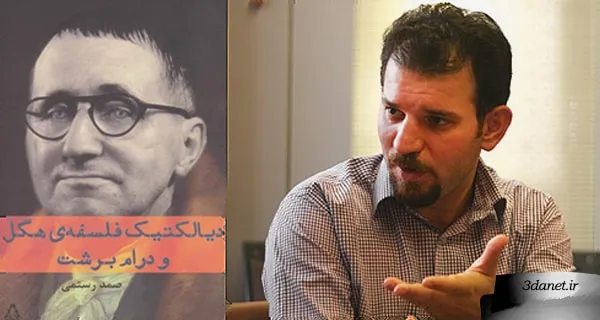
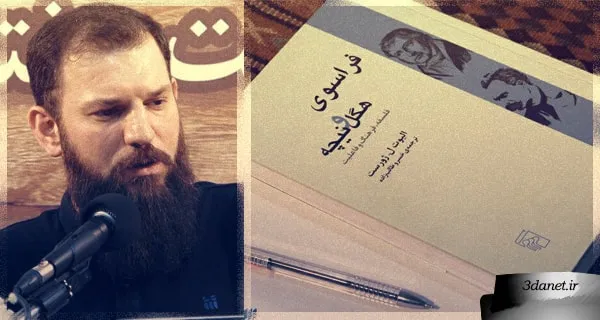
For quite some time, a book titled The Dialectic of Hegel’s Philosophy and Brecht’s Drama, authored by Samad Rostami with an introduction by Dr. Qotboddin Sadeghi, has been published by Afraz Publications. Given my field of activity, I found the book’s title intriguing some time ago and purchased it. I read the first chapter, which was devoted to the foundations of Hegelian dialectics. The book was so superficial and full of glaring errors that after a short while of reading, my desire to “know” turned into a kind of “rage.” I gave up on reading the rest and set the book aside. Some time later, I read an interview with the book’s author that compelled me to write a critique of it [1]. In that interview, the author announces the imminent publication of several other works in the field of theater (which is apparently his area of expertise). He also mentions the publication of a book titled The Phenomenology of Existentialism. The primary motivation for writing this critique is not an immediate venting of that “rage,” but rather stems more from a kind of “concern” and a desire to prevent another irreparable catastrophe and the publication of a flawed and weak work that is likely to inflict upon existentialism the same disaster it once brought upon Hegel. It is clear that, due to my field of work, I will not delve much into the theatrical and dramatic discussions of the work and will focus my attention on the form and philosophical claims of the book.
Formal Criticisms of the Book
Before mentioning the repeated errors and misunderstandings in the book, I will address the formal criticism of the first chapter, titled “Hegel and Dialectic.” It seems that even these formal criticisms will suffice to demonstrate the book’s weaknesses and the level of its writing.
The first chapter, which was supposedly meant to establish the theoretical-philosophical foundations of the discussion in order to then reread Brechtian drama based on it, is like that “crooked brick” that leads the wall astray to the heavens. This chapter begins with the definition of dialectic. In the next section of this note, I will address the content criticisms, but for now, suffice it to say that the author has extracted the definition of dialectic not from a philosophical source, nor from the various opinions of domestic or foreign commentators on Hegel, but from Dr. Moein’s Persian Dictionary! On the next page, he also recounts a lengthy direct quote explaining the various stages of Hegelian dialectic from Plato to Kant and Hegel, and finally Marx and Engels, and all of this in just 19 lines, and from the Dehkhoda Dictionary at that! That is, in order to understand and explain the meaning of dialectic, the author has treated this word as if it were an obsolete term in the Persian language. The subsequent philosophical sources referenced by the author themselves indicate the depth of the discussions presented: although I dislike verbosity, as an example, I will only mention the titles of the first 13 references in the first 15 pages of this chapter, naming them all, without any alteration or modification, in order: Persian Dictionary, Mohammad Moein (p. 17); Dictionary, by Ali Dehkhoda (p. 19); Getting to Know Socrates, by Paul Strathern (p. 23); Sophie’s World, by Jostein Gaarder (p. 24); The Story of Civilization, by Will Durant (p. 26); The Story of Philosophy, by Will Durant (p. 27); Sophie’s World, by Jostein Gaarder (p. 28); The Story of Philosophy, by Will Durant (p. 28); the same source (p. 29); Sophie’s World, by Jostein Gaarder (p. 30); The Philosophy of Hegel, by Stace (p. 30); From Socrates to Sartre, by Lavine (p. 31); Sophie’s World, by Jostein Gaarder (p. 32).
The very method of citation and their frequency clearly shows that the author's primary source for explaining the concept of dialectics is not Hegel's original texts, nor English or German-language commentaries on Hegel, nor even translated Persian commentaries on Hegel—which are not few in number—nor even the common, accessible histories of philosophy like Copleston, Émile Bréhier, or Routledge, but rather fictional books for introducing adolescent beginners to the history of philosophy, such as Sophie's World and Will Durant's The Story of Philosophy. To be more precise, by reading Will Durant's The Story of Philosophy and Sophie's World, the author has fallen under the "illusion" that they understand Hegel and have the right to write a book about him, or worse, to reinterpret Brecht's drama based on this misunderstanding. In the best-case scenario, they may have also glanced at Stace's The Philosophy of Hegel, Peter Singer's Hegel, Dr. Mojtahedi's Commentary on the Phenomenology of Spirit, Strathern's Hegel in 90 Minutes, and Michael Inwood's A Hegel Dictionary, but up to the end of the section on Hegel and Marx, the source that is still cited repeatedly and more than any other is Sophie's World (10 citations throughout the first chapter). Furthermore, by consulting the book's final references, we discover that the book has a total of 45 sources, all of which, as it happens, are in Persian. That is, in writing the book, the author has not only used second-rate and mostly outdated Persian sources, but has not even bothered to consult a single non-Persian-language source, finding themselves with no need to study other resources. This very fact indicates the level of the book's content.
In addition, we know that typographical and printing errors are sometimes unavoidable. My personal experience has shown that even after repeated re-readings and proofreadings, some errors may still escape the translator's or editor's notice and ultimately find their way into the published version. However, the typographical and printing errors in this book are so glaring and quantitatively numerous that I doubt it was even edited once. Solely to inform the reader, I will point out a few examples that appear only in the Latin names found in the "footnotes" of the "first chapter":
p. 17: Instead of Karl Marx, it reads: kral Marx
p. 18: Instead of Aristotle, it reads: Aristote
p. 19: Instead of Friedrich Hegel, it reads: friedrech hegel
p. 21: Instead of Parmenides, it reads: Paemenides
p. 25: Instead of Sophist, it reads: Sofiest
p. 36: Instead of Descartes, it reads: Dekart
p. 39: Instead of John Locke, it reads: Lak
p. 39: Instead of Berkeley, it reads: Breakley
p. 41: Instead of Schopenhauer, it reads: Sohopenhauer
p. 44: Instead of Bamburger, it reads: Banburger
p. 51: Instead of Abélard, it reads: Ablar
p. 51: Instead of Leibniz, it reads: Leibnitz
p. 64: Instead of Friedrich Nietzsche, it reads: Fridrich Nietzsche
p. 79: Instead of Ludwig Feuerbach, it reads: Lodviek fouer Bach
And as noted, the above errors are all apart from the typographical errors present in the Persian footnotes and the text itself. You yourself read the detailed tale…
Content-Conceptual Critique
When it comes to content, the situation is far more lamentable. Before addressing the misunderstandings about Hegel’s philosophy itself, it must be noted that the book is full of absolutely false and astonishing explanations and claims. For example, in the explanatory footnote for the term “Marxism-Leninism,” it states: “A political school whose idea Marx drew from Hegel’s philosophy and, with Engels’ help, founded it and…” (p. 20). Or in the footnote for the term “Idealism” in Hegel’s philosophy, a startling explanation appears: “Idealism: daydreaming, the primacy of imagination, a philosophical belief that denies certain truths and whose followers believe that many bodies are fabricated by imagination. Adherence to the ideal of perfection in philosophy, politics, economics” (p. 52). The author’s ignorance does not stop there; consider this phrase: “Aristotle, in his treatise called the Sophist, considers Zeno the discoverer of dialectic or the ‘art of logical disputation’” (p. 25). This error is not of the sort customary among authors. That is, throughout the entire writing of the work, its editing by the author, and its reading by the preface writer and the publisher’s own editors, did such a glaring mistake not catch anyone’s eye even once? Any beginner philosophy student knows that Aristotle has no treatise called the Sophist at all, and that this treatise is by Plato. Or the claim that “the Socratic method, the dialectical method, was sometimes called procedure” (p. 27). Procedure? Dialectic is called procedure? In what sense? Perhaps the author meant that “method” was sometimes called “procedure,” not dialectic. Perhaps the author has transmitted, without citing a source, a sentence he read somewhere and possibly misunderstood.
After 24 pages of rambling about the history of philosophy from the beginning up to Hegel—which can largely be considered a report from the books Sophie’s World and Will Durant’s The Story of Philosophy—the author keeps the reader waiting no longer and enters the main subject, namely Hegel’s philosophy. But right at the outset, he devotes more than 10 pages of the book to “Hegel’s Biography” and “Hegel’s Social Period,” which are fundamentally irrelevant to the main discussion. The author forgets that his intention in writing the book is not to present Hegel’s biography or a detailed exposition of the entirety of Hegel’s philosophy, but only to provide the foundations of the discussion for its application in the second part (concerning Brecht’s drama). The writer is more inclined toward biography-writing than conceptual exposition; after recounting extensive details of Hegel’s childhood life, his relationship with his sister, and other family matters, adolescence, youth, his paternal inheritance, Napoleon’s battle, and the position of “associate professorship”!! in Jena, he abruptly turns to Hegel’s death, his illness, and the childhood memories published by his sister, and finally and suddenly ends the discussion of Hegel’s life with this quotation from Russell—naturally without citing the source—that Hegel is the most difficult Western philosopher.
After all the disjointed and irrelevant preliminaries of Hegel’s biography and social period (35 pages of the book), he proceeds to Hegel’s dialectical method and devotes a chapter to it that is 13 pages in total, and then goes on to the relationship between Marx and Hegel, and so forth. In other words, the entire main idea and theoretical foundation of the book’s discussion is meant to be presented in just these 13 pages (pp. 52-64). This disproportion also indicates the lack of distinctness and definition in the author’s project.
The section on “Hegel’s dialectical method” is a hodgepodge of scattered phrases and quotations which, although all concerning Hegel’s philosophy, have little relevance to the author’s discussion and project. For example, this quotation (without a source reference, of course) from Will Durant: “In the words of Will Durant, the one who carried audacity in nonsense to the highest degree and uttered such meaningless and suspended words as had previously been heard only in madhouses was Hegel. He shamelessly spoke futile and deceptive words that no one had spoken before” (pp. 55–56). And it is interesting that we are supposed to learn Hegel’s dialectic from the mouth of this very Will Durant. The author then writes a few lines about the progressive process of the dialectic and immediately brings yet another very lengthy quotation from Sophie’s World about the concept of movement! Only here is there a brief mention of the triadic nature of Hegel’s dialectic. This section ends with scattered fragments from Sophie’s World, Paul Strathern, Peter Singer, and Dr. Enayat’s introduction to Stace, which remains more like a kind of raw note-taking where the author has failed to connect its components. And at the end, he concludes the discussion with that famous dubious quotation from Heine, that Hegel himself on his deathbed! said: “Only one man understood my philosophy, and he did not understand it either!”
The situation is the same in the subsequent sections. As mentioned, I do not intend to address the final section of the book and Brecht’s drama, but the reader will realize upon study that there is no connection between this first section (dialectical philosophical foundations) and the second section. In the second section, the author is busy recounting Brecht’s stories. Amidst the stories and dialogues, he occasionally tosses out a few sentences and mentions the name “dialectic” to satisfy himself and his audience that he is engaged in a dialectical analysis of Brecht’s text. Whereas this is neither a dialectical analysis, nor are those lengthy quotations and story summaries analysis, nor does this “dialectic” that is the author’s catchword have much to do with Hegel’s dialectic. After stating those theoretical foundations and Hegelian philosophy, when the author actually uses “dialectic,” he employs it only in the sense of transformation, evolution, contradiction, “change” (p. 122), and at best, “modification” (p. 54).
Ultimately, this work neither correctly explains Hegelian dialectic, nor, consequently, its connection to Brecht’s drama. The work is a collection of scattered quotations from second-hand, mostly weak and elementary sources. The author has not wasted his time with numerous non-Persian-language sources, and even among the Persian sources, except for two, he has turned to the weakest works on Hegel. Finally, except in a few rare instances, he shows little insight or originality of his own, and as a result, this book is generally not at all worthy of being published as a book. We know that the criteria for publishing a book, journal, article, note, and newspaper column differ from one another, and the main reason for the sharpness of this critique is precisely due to its nature as a book; although all these criticisms can be raised at other levels as well, and the form of publication cannot necessarily serve as an excuse to justify mistakes. Finally, while one can agree with Dr. Sadeghi, who writes in the work’s introduction: “Undoubtedly, such research will be more valuable when the formulation of the problem goes beyond its superficial and journalistic form and its entire set of issues is examined from the root” (p. 9); this work, in the strict sense of the word, has not gone beyond that very “superficial and journalistic form.” And if the author writes in his preface that “the main motivation in the path of this understanding was the replacement of the unknown with the known” (p. 13), it must be claimed that this motivation has not only not been realized, but has not even come close to being realized, and perhaps someone should get to work and “really” examine and research the relationship between Hegel’s dialectic and Brecht’s drama. And this person, however, might still be the author of this book himself; provided, of course, that he accepts the criticisms and understands the level of his writing and his own comprehension of authorship, critique, philosophy, dialectic, Hegel’s philosophy, and Brecht’s drama.
What Is to Be Done?
The question whose answer is of great importance at the present moment is this: what should be done in the face of such a work? The easiest path is to insult the author, to equate him with dirt, and to accuse him of all sorts of patches and labels: how has the author allowed himself, with this level of knowledge, this method of research, and these mostly second-rate and weak sources—which, at best, are recommended more for introducing teenagers to philosophy—to publish such a work and lay claim to explicating Hegel’s dialectic and applying it in the field of literature? Why has the author not read at least four acceptable domestic articles on how to establish this connection, and in general, on how to write an analytical work? Why…?
I consider the above criticisms to be valid. But let us assume that the writer himself is unaware of his ignorance regarding Hegel’s philosophy, regarding the proper manner of final editing before publication, regarding the correct method of citation, regarding the necessity of using other sources, regarding the use of primary and first-hand sources such as acceptable and desirable translations and commentaries, regarding his falsely high self-confidence that leads him to publish, in book form, a work that is not even at the level of a simple class assignment, and in general, regarding “how to author a book.” Perhaps the author does not yet know what he has done. So the author must not be assassinated. The author has undoubtedly endured considerable toil in writing this very work, which, though insufficient, cannot be ignored. The author has the right to write whatever he wants. The author has the right to harbor dreams of publishing his writings, and he also has the right to entrust his writing to a publisher for printing. Consequently, despite the above criticisms of his text, he cannot be considered the primary culprit. In the first instance, it is the duty of a philosophical publisher to disillusion the author. It is the duty of the series editor to point out the text’s inadequacies. And it is especially the duty of the editor or editors to highlight the numerous content and form defects and to at least correct the frequent typographical errors. The publisher (in the capacity of the sum of the above agents) is more guilty than the author. A publisher who, with eyes closed, publishes the book without proper editing, and whose entire thought and concern is probably the cover design (and I still do not know why, in the black-and-white photo of Brecht, his eyes have been rendered blue? Perhaps for greater appeal!) and, of course, the price on the back cover, has forgotten its true mission.
But in the second instance, we are the guilty ones. At least by searching in the virtual space, I did not find even a single sentence of criticism regarding this book, which has now been two years since its publication. If critics do not critique, if readers do not read critically (a blight that is, of course, far more common in the atmosphere of art-related disciplines, where in many cases theoretical weakness is even presented as a kind of creative virtue), then who else must make the author aware of the erroneousness of the path he has taken?
We all make mistakes. Flaws can be found in all our works. Consequently, one must not, because of committing an error, attack the author as if his right to write has been revoked. Yes, the author must be criticized (as the above note has attempted to do), but in this criticism, one must of course avoid two common blights: on the one hand, the author’s mistakes must not be turned into a pretext for venting pent-up complexes, settling scores, envies, and inferiorities, and on the other hand, criticism must not be mistaken for pleasantries and formalities and overshadowed by pseudo-ethical considerations of this sort. Therefore, one must criticize in the most fundamental way possible, but conceive of the author not as an enemy, but as an unaware friend and even, possibly, an interested and ready-to-compensate companion.
On the other hand, the author must also reflect on the critiques, delve into and discover their roots, avoid attempts at false justification, refrain from a second printing of his book in this form, and if he has a book of this caliber in the pipeline, hold off; he should study several credible research works (by any standard), and revise his writing style, his articulation of arguments, the scope of his studies, and in a word, himself as an author, so that perhaps one day he may present a work worthy of and commensurate with the level and depth of a serious publication to the public sphere, and be recognized by readers for what it deserves. His work is still premature, for it was born before its proper time. This premature work (whose prematurity, as is evident from the author's age, has nothing to do with youth or old age), must become more mature and be nurtured so that if the author submits to self-critique, it may perhaps one day find the merit to enter the public sphere in its true form.
.
.
Endnote:
[۱] http://khouzestan.isna.ir/Default.aspx?NSID=5&SSLID=46&NID=48267
.
.
A Premature Work: A Critique of the Form and Content of The Dialectic of Hegel’s Philosophy and Brecht’s Drama
Author: Mohammad Mehdi Ardebili
Source: Problematicaa
.
.


Discussion1 comments
سلام فایل صوتی ندارد؟