Religion
Pari Iranmanesh: An Inquiry into the Meaning, Types, and Scope of Religion from Ibn Arabi's Perspective
Ibn Arabi analyzes religion into three senses—submission, recompense, and custom—and divides it into two kinds: legislated and endorsed. Examining the Fusus al-Hikam and the Futuhat al-Makkiyya, this article explores his theory of affirming monasticism alongside revealed law and evaluates its Quranic evidence.
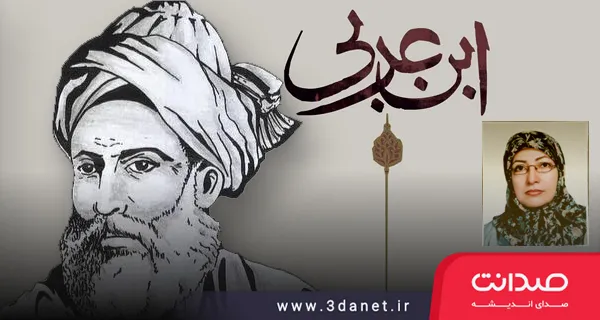
An Inquiry into the Meaning, Types, and Scope of Religion from Ibn Arabi's Perspective
(An Introduction to Sharia and Tariqa)[1]
Pari Iranmanesh (PhD graduate in Iranian Studies from the University of California)
UCLA, USA
The following article seeks to provide a precise description of certain topics in the religious thought of one of the greatest theorists in the realm of Islamic thought. At the beginning of the article, using the method of linguistic analysis, the three lexical meanings of religion, which according to Ibn Arabi are also embedded in its technical meaning, are examined. Then, the scope of religion is mentioned based on the immutable essences of the prophets, and subsequently, one of Ibn Arabi's most controversial theories—namely, the affirmation of confirmatory religion, or monasticism (or pedagogical mysticism), alongside legislatively established religion—is fully described and analyzed. Finally, the evidence and the degree of accuracy of Ibn Arabi's understanding of verse 27 of Surah al-Hadid in proving confirmatory religion are judged, with mention of the views of some proponents and opponents.
Introduction
Ibn Arabi is among the most renowned figures of dubious standing in Islamic history, who has cast both the worthy and the unworthy into the abyss of chronicling him. The history after him has been a field of assault and battery by the disciples and devotees of his school against his staunch opponents, who considered him a malevolent antinomian,[2] claiming that whatever he composed was either delirious ravings in his infatuation with the daughter of Makin al-Din al-Isfahani,[3] or the product of an extraordinary power of imagination and his potent poetic literature. In contrast, there is the camp of his admirers, who regard him as Muhyi al-Din and the father of Islamic mysticism,[4] and deem his lofty thoughts worthy of inviting even outsiders[5] to spend a lifetime of research upon them. Some have even gone so far as to consider him infallible from every error and mistake.[6] And these very disputes themselves testify to his greatness, for intellectual dwarfs are not fated to become the subject of the history of thinkers' disputes.[7]
The present article is a descriptive-analytical inquiry into Ibn Arabi's last, most mature, and most important work,[8] the concise and difficult-to-understand book Fusus al-Hikam,[9] and his other monumental work, al-Futuhat al-Makkiyya, concerning the lexical and technical meaning of religion, the types of religion, a Quranic inquiry into the meaning of Christian monasticism and Islamic Sufism (and Ibn Arabi's affirmation of both through macrocosmic and microcosmic verses), as well as his justification of the additions made by monks and true Sufis to the Christian and Muhammadan Sharia as an authentic path (tariqa) to reaching the truth of the Sharia. In the end, we will sit in judgment of his views.
The focus on the Fusus is due to the mastery of this work and also the voluminous writings of Muhyi al-Din.[10] His views on religion are systematically presented in the Fass Ya'qubiyya, and scattered throughout the Futuhat.
Although most contemporary scholars of religious studies maintain that there is no single definition for religion,[11] Ibn Arabi's final view on religion can be considered, to some extent, the same as what is now famously known as the transcendent unity of religions. He believes that the principle which is the root of all religions and divine truths is the principle of the relationship between the Real and creation (the Creator and the created), and this relationship is the relationship of love.[12] In the eleventh ode of the Tarjuman al-Ashwaq, he calls his religion love; a religiosity that has emerged due to his heart's capacity and the expansion of his breast:
My heart has become capable of every form: a pasture for gazelles and a monastery for monks,
A temple for idols and the Kaaba of the circumambulator, the tablets of the Torah and the codex of the Quran.
I profess the religion of love. Wherever its mounts turn, love is my religion and my faith.[13]
According to his view and mystical witnessing, God manifests Himself through various names. However, the hearts of those who are not perfect knowers, in proportion to their own narrowness, recognize God by one name and deny His other manifestations, and it is from here that cursing and excommunication begin. Whereas:
The difference of the believer, the Zoroastrian, and the Jew / Depends on the point of view, O essence of existence (Masnavi)
The Meaning and Function of Religion:
In the author's view, Ibn Arabi can be considered, in a way, one of the forerunners of the analytic philosophy of religious language, albeit in his own distinctive style.[14] In his examination of many theological and even jurisprudential issues, he remains faithful to the analytical method of words, etymology, tracing words back to their original root, and analyzing terminological meaning based on the original meaning.[15] According to this same analytical method, he begins the "Fass Hikmah Ruhiyyah fi Kalimah Ya'qubiyyah" (The Bezel of the Wisdom of the Spirit in the Word of Jacob), which is dedicated to the analysis of religion, by stating that the word "Ruhiyyah" can be read as both Rawh and Ruh. The first form is derived from verse 87 of the blessed Surah Yusuf, in which Jacob, following his monotheistic forefathers, invites his sons to Rawh: «O my sons, go and seek news of Joseph and his brother, and do not despair of the Rawh of God. Indeed, no one despairs of the Rawh of God except the disbelieving people.»
According to the first aspect (which means comfort and ease), Jacob tells his sons: Seek out Joseph and do not despair of God's mercy and comfort; for only the disbelievers despair of God's well-being and comfort. This is because their entire gaze is confined to the realm of natural causes, and when their means are cut off (Al-Baqarah 166), the warmth of their hope also turns cold, unlike the believer, who has faith in God, the Causer and Subjugator of causes, and it is only His remembrance and invocation that is the true soother of his heart. Therefore, what brings about true comfort and peace, not illusory or temporary, is faith and religion (in both senses we will discuss). Hence, he dedicates this bezel to the analysis of the meaning of religion. In other words, Jacob's advice to his sons is the axis of the discussions in this chapter.
But the second aspect (which we read as the conventional term Ruh, spirit), its relevance to religion is that: religion, in all three meanings it holds for Ibn Arabi (i.e., submission, recompense, and habit), pertains to the spirit, securing its governance and perfection, and then the spirit governs the body. It is through these three that spiritual well-being and comfort are attained for the human being. Thus, according to the Quran's decree, Abraham, his children, and Jacob invited their sons to religion. Furthermore, the human spirit is fashioned and molded based on religion and the innate disposition of monotheism: "the fitrah of God upon which He has created mankind" (Ar-Rum 30).[16]
Another reason that the Word of Jacob is dedicated to the wisdom of the spirit is due to the predominance of spirituality in his presence and his knowledge of the world of breaths and spirits: Indeed, I perceive the scent of Joseph (Yusuf 84).[17]
But this religion, which is known and familiar to human innate disposition and upon which the fitrah is molded, is only one of the types of religiosity, and it is from here that Muhyiddin enters into the types of religion and divides it into two types: legislated (divine) religion and endorsed (creaturely) religion.[18] Outside of these two,[19] any religion or school that has neither divine establishment nor divine endorsement is not true or acceptable; like the religion that Pharaoh fabricated for his followers: Indeed, I fear that he will change your religion or cause corruption to appear in the land (Ghafir 26).
Analysis of the Three Meanings of Religion
In Ibn Arabi's linguistic analysis, the word dīn (religion) lexically carries the meanings of submission (inqiyād), recompense (jazāʾ), and habit (ʿāda); these three are also taken into account in the technical meaning of religion, for it too speaks of islām and submission to God and His religion, the habituation of the soul to its desires, and belief in the recompense of deeds. Thus, the lexical meaning corresponds perfectly with the technical meaning. The technical term dīn encompasses all three lexical meanings of the word and their characteristics, which are as follows:
Submission (inqiyād): Of the three meanings derived for dīn, one is submission, which in technical terms means surrendering oneself entirely to God and obeying His commands and prohibitions: "For dīn is total submission, outwardly and inwardly: outwardly, by performing what God has commanded in His Book and on the tongue of His Messenger; and inwardly, by affirming His tidings and reports and believing in them without hesitation, doubt, or delay."[20]
As Ibn Arabi states in the chapter on Hud—which concerns the oneness of Lordship—in the order of creation, God is the guide and all existents are submissive to Him: There is no creature but He holds it by its forelock (Hud 11:56); and in the order of creation, all creatures are muslim (submitters) and surrendered to Him, moving toward Him: And to Him has submitted whoever is in the heavens and the earth (Āl ʿImrān 3:83). In Surah Ṭā Hā, verse 50, this matter is also indicated, where Moses, peace be upon him, reminds Pharaoh of the creational guidance of all existents.
From a mystical perspective, not only are all submissive to Him, but all are also lovers of Him:
Unbelief and faith are lovers of that Majesty
Copper and silver are servants of that Elixir
In addition to creation, Muḥyī al-Dīn states in this chapter that in the order of legislation, God is the Lawgiver and the muslimūn—"in its general sense"—are the followers of the law. In his view, unbelief in the sense of not accepting the existence of a God for the world does not truly exist at all. Unbelief is an accidental attribute that came into being after the advent of revealed laws; the unbelievers are those who deny the prophets.[21]
Therefore, since dīn is the same as islām and islām is the same as submission, dīn is submission itself. Submission is a relation with differing poles, one pole of which is God, who is the guide, and the other pole is the submitters, who are submissive to Him. Hence, dīn in the sense of guidance and the laying down of laws (sharʿ) is the act of God, the Glorified, and in the sense of submission, it is the act of the servant, and it is called dīn. This submission is subordinate to that guidance and legislation, and since existence and its modes—such as human success and ability—are all from God, the entirety of dīn again becomes from God (that is, in a more precise analysis, it becomes an illuminative relation). Yet, even so, one end of this dīn is the human being, and it is for this reason that He commanded the servants to uphold the foundation of religion: (Uphold the religion and do not become divided therein, Shūrā 42:13); for if the human being rises up, religion also rises; but if he sits down, religion also sits. In the individual aspect, He also said: That you stand for God, in pairs and singly (Sabaʾ 34:46).
But what is the purpose of legislating this religion? The ultimate goal of obeying God is for the human being to become a locus of manifestation for God. The mechanism of becoming similar to and a locus of manifestation for God is as follows: just as God's divinity is manifested through His acts, human beings' felicity is also manifested through their acts. In other words, just as the Divine Names are manifested through His effects and acts, the human being, who is His vicegerent, has no choice but to bring forth pleasing effects if he wishes to attain felicity; and if he falls into the trap of God's displeasing effects, he will be afflicted with wretchedness.
Ibn Arabi then arrives at a psychoanalytic point concerning the human being, which is that the issuance of an act from a person has two stages: initially, the human being acts with his own will and choice, and after a time, the repetition of acts leads to the formation of habit and then firmly rooted dispositions (malakāt) in the soul; and then, in the second stage, it is from that point onward that the human being's acts originate from his dispositions.
The charmer reads a spell upon the snake as a foe
He casts a spell on the snake, the snake a spell on him
Were his snare not the snake's own spell
How would he have become prey to the snake's spell? (Masnavi)
In his view, this compulsion has come into being through human will and free choice, and at the same time, the path to liberation from it remains open... .[22] In the matter of religion as well, submission, which is well-known by primordial nature, brings about the realization of psychical dispositions in the human being, the result of which is human felicity and becoming a locus of manifestation for God. Of course, he analyzes and interprets all of this using the concepts of the Divine Names and the immutable entities.
Recompense: The second lexical meaning of dīn, which is also incorporated into the meaning and reality of religion in its technical sense, is the concept of recompense. Kāna al-dīn jazāʾ, meaning that opposition to it and agreement with it entail recompense. He discusses recompense at three levels: 1. Recompense in terms of the tongue and the beliefs of the people of the outward. 2. Recompense in terms of the inward, which is the secret of the Decree. 3. Recompense in terms of the inward of the inward, which is beyond the secret of the Decree, that is, the analysis of recompense through sheer unity.
Recompense in terms of the people of the outward, which is the summit of thought and the utmost precision of religious scholars immersed in the acquired sciences, is that every action has an outward aspect in this world and an inward aspect that becomes manifest in the Hereafter. There, the embodiment of deeds and the unification of the agent and the act take place. The people of the inward go two degrees higher than this summit of the sage's thought, that is, the analysis of recompense in the language of the secret of the Decree and sheer unity.
Recompense in terms of the secret of the Decree: One of the teachings upon which Ibn Arabi insists is the discussion of God and the world being mirrors for one another. Sometimes the immutable entities, and by extension things—that is, the signs on the horizons and within the selves—are the mirror of the Real: We shall show them Our signs upon the horizons. And sometimes the Real becomes the mirror of the things of the world. And this is what the sage, as the Proof of the Veracious, has attained to a small degree (but he considers the sages' Proof of the Veracious to be incomplete because it still carries the scent of reasoning through contingency and other-than-God; since the sages and theologians have not witnessed the Truth, they therefore take the fabrications of their own minds to be God. Essentially, he regards the intellectual efforts of non-gnostics, including sages, theologians, and others, as a failed floundering in terms of epistemology and truthfulness: since they did not see the Truth, they set out on the path of fable... but they are excused and rewarded).[23]
And sometimes these two mirrors are placed face to face at the same instant, and each appears in the mirror of the other. Of course, in all three sides of this triangle, the original and principal mirror is God:
I became the mirror of the Real, and He became my mirror / We confronted one another, without directions.
Another point is that these are not three external situations, but rather three states for the wayfarer's witnessing; sometimes the wayfarer reaches a point where Whithersoever you turn, there is the Face of God (Q 2:115) becomes his portion (multiplicity), and sometimes he reaches the point where God is the Light of the heavens and the earth (Q 24:35) becomes his portion (unity), and he sees these heavens and earth and all that is within them through the light of God. And when he attains perfection, he reaches a station of synthesis where he sees both mirrors side by side, each reflecting the other and neither being a veil for the other (in Ibn Arabi's view, the perfect gnostic is one who witnesses both multiplicities and unity together, that is, reaches the station of synthesis). However, in the case where the Real is the mirror of the world, various states appear here: sometimes He is All-Knowing, sometimes All-Powerful, Creator, Outward, Expander... and sometimes He is the Requiter. In other words, God becomes a mirror through the name the Requiter, and things will be seen in the mirror of the Requiter. It is in this witnessing that the wayfarer understands that every recompense and requital that befalls and becomes the portion of things comes entirely from the things themselves and returns to them. Things are seen in the mirror of the Real, and the Real is the Requiter; therefore, nothing reaches things from the Real; rather, whatever the things are, the mirror of the Requiter shows. This is the meaning of what is said: the deeds of every person return to himself, and every person is the guest of his own action: Let him praise none but himself; let him blame none but himself; Whosoever does a righteous deed, it is for his own soul, and whosoever does evil, it is against it (Q 45:15). Everyone is given whatever they have asked for; and at the end of the affair, God appears to him either through the name Forgiving, Merciful, or Avenger: Indeed, from the criminals We shall exact retribution (Q 32:22), or through other names. Of course, since His mercy precedes His wrath, He rewards good deeds manifold: Whosoever brings a good deed shall have ten times the like thereof, or: he shall have better than it (Q 6:160, 27:89). And only in the case of evil deeds is the recompense equal: a recompense fitting (Q 78:26).
In sum, recompense here consists in the Self-manifestation of the Real in the mirror of His existence according to the immutable essences, from among the names of the Judge (al-Dayyān); and therefore recompense is solely in accordance with the requirement of the immutable essences, and what returns to the possible beings is something that their own essences require. Hence, whatever befalls them comes from themselves.
Recompense in the tongue of the innermost secret or the supra-mystery of the Decree: After traversing the previous stage, one gradually draws near to the station of Oneness (Aḥadiyya) and analyzes matters from this apex of gnostic insight. In Oneness, there is no longer anyone or anything save the (Face of) God, the divine theophanies, and divine satisfaction, wrath, mercy, displeasure, and so on: All things perish except His Face (Q 28:88). There is no longer talk of Zayd, ʿAmr, Bakr, pleasure, pain, and so forth; everything is annihilated in Him. There is no existent but the existence of the Real, which has assumed the forms of the states of possible beings; hence pleasure and pain also belong to Him. Therefore, since there is no recipient of recompense, recompense itself also vanishes. There is neither pleasure nor pain. The gnostics have several arguments here, two of which are as follows:
1. God was, and there was nothing with Him. Here, neither “was” nor “there was” is temporal. “Was” is not past, nor is “there was” present, such that the gnostic would add, “now also: as He was.” For instance, regarding the statement: Indeed God is ever Knowing of all things (Q 4:32), the gnostic no longer needs to say: “now as He was.” Because this “was” is not temporal at all, and thus already contains the qualification “now as He was.” Consequently, the immutable essences (and things), which the gnostics have described as “having never caught the scent of existence,” are not such that they suddenly “catch the scent of existence” now. Rather, even now there is nothing with God, and the immutable essences (and the things of the world) “have never caught, nor do they catch, nor are they catching the scent of existence.”
Before this, you saw the world as it was in the concealment of non-existence; It is still upon that same state, just as it was cast aside.
2. The second argument, which is illuminating in many gnostic issues, is the use of describing God as lacking any limit. That is, when God is infinite, no room remains for otherness. This argument applies both to the Essence and to the Attributes. This is the tongue of Oneness for the gnostic.[24]
A very important point, the failure to understand and heed which has caused numerous conflicts throughout history, is that, contrary to the notion of the ignorant among the Sufis (an expression of Mullā Ṣadrā), the intent of this matter is not that the fabric of the world vanishes; rather, the intent is the kind of witnessing of the wayfarer (pay attention also to the difference between the terms wujūd and kawn for the gnostic)[25]. One who does not see the multiplicities of the world, and now sees that there is nothing with God, his sense of smell is blocked, and he does not catch the scent of existence from the immutable essences and things. Just as when the gnostic reaches the station of annihilation (fanāʾ), it does not mean that he is destroyed, but rather that he no longer sees himself, or that he sees that there is nothing other than God and that everything is He. It is here that the discussion of the unity of existence or the unity of witnessing vanishes, and these two become identical with one another[26].
However, Ibn ʿArabī, in various places in the Fuṣūṣ, acknowledges that the perfect gnostic is not one who sees only multiplicity, nor one who sees only sheer unity; rather, he is one who has reached the station of the gathering of the gathering (jamʿ al-jamʿ) and sees both multiplicities and unity. The result is that the present order of the world exists now; the world, the intermediate realm (barzakh), the resurrection, and the recompense of deeds exist. According to God’s justice in the recompense of deeds, the disbeliever is in hell, and the believer is in a heavenly intermediate realm and in the paradise of comfort. But this wayfarer sometimes reaches a point where he sees only God and divine good-pleasure, or observes only God and His displeasure, and nothing else. The former is the place of grace, and the latter is the place of wrath. It is here that the form of the issue of recompense becomes more precise, not that it is nullified. It is the same meaning, with greater precision. An intra-religious example of this matter, to familiarize minds, is the Prophet’s ascension (miʿrāj). In his celestial journeys during the ascension, he saw all these scenes, that is, hell with its inhabitants and paradise with its inhabitants, and that the disbeliever is burned and the believer is caressed. But the gnostics interpret all these scenes as the Prophet having witnessed the divine names, meaning that he saw nothing in the ascension but God and His names.
In his analysis of recompense, Muḥyī al-Dīn, speaking in the tongue beyond the secret of destiny, says that if we view the world through the lens of absolute unity—not personal or numerical—only God and His single effusion are seen. It is then that the question of recompense is analyzed in this way: the one who experiences pleasure and the one who suffers are both that self-same unfolding effusion (expanded unity), and what emerges in the wake of an action is, in truth, a name that appears following another name. There is no talk of a recipient of the effusion, only talk of the effusion itself. This effusion, which possesses absolute unity, has different modes, some of which are agreeable to others and some disagreeable. Here the author delves into the meaning of punishment (ʿiqāb) and says that punishment is called ʿuqūba because this occurrence appears in the wake of (ʿaqub) and following an action, whether the consequence be unpleasant or pleasant. Although the technical religious term is to call a good reward thawāb and unpleasant consequences ʿiqāb, lexically both ʿiqāb and thawāb have a general meaning and encompass both of the aforementioned senses. Just as the Holy Qurʾān refers to both Hell and Paradise as thawāb. In any case, a person dons the garment they have woven with their own hands, which is either soft—this being the religiously technical thawāb—or else it is sharp, rough, and thorny[27]. After concluding this semi-literary point, Ibn ʿArabī enters into the meaning of habit.
Habit: The conventional meaning of habit is that when someone does something once and then returns (ʿawd) to it several times, that action becomes ordinary for them, and it is said that they have become accustomed to it. Ibn ʿArabī, according to his analytical method, analyzes this very meaning and says that religion (dīn), which is recompense, is also habit (dān = iʿtād). That is, "the matter returns to its author." Every deed ensnares its own author; in other words, every action that issues from a human being (action in the broad sense of belief, character, disposition, and outward act) neither vanishes nor releases its agent: Man shall have nothing but what he strives for (Najm 39). Rather, it returns to him.
In summary, dīn means habit, because when something is repeated it becomes a habit. Here too, since there is repetition, there is also habit; and the second aspect is to say: since the human being returns to their original abode and reaches the divine appointment of the resurrection (maʿād), the meaning of dīn becomes habit. Dīn is habit because there is return (ʿawd) and resurrection (maʿād) within it.
Muḥyī al-Dīn then enters into a profound philosophical-mystical discussion, stating that habit in the sense of a thing returning to its first state is impossible. For repetition in the order of creation is impossible, and when habit in the sense of repetition is impossible, it follows that it will also be impossible in a corner of existence called recompense. He, who explicates cosmology based on the Divine Names and their theophanies, says that since each of the Divine Names has its own sovereignty and performs its own work, and since there is no repetition in the Divine Names, therefore there is no repetition in the theophanies of the Names either: "There is no repetition in theophany." Consequently, there is no return, so habit in its rational sense is impossible. As a result, habit exists from one aspect and does not from another, and the same applies to recompense; if we say that recompense means a return to the very substance of the act, and that whoever performs the smallest deed will see its very essence, this is not devoid of figurative speech, because there is no identicalness at play; rather, recompense is a state that comes in the wake of another state, according to what the first state necessitates (ʿuqūba).
Two further points: if we view the world through the eye of multiplicity, the issues of submission, recompense, and habit are all relevant; but if we do not neglect the contemplation of unity, these three become relative and not absolute; that is, recompense exists from one aspect, yet from another aspect recompense does not exist, and the same applies to submission and habit.
Also, in mysticism and the philosophies influenced by Ibn ʿArabī (especially Ṣadrian), the resurrection (maʿād) is the very arc of ascent, and only a segment of it, from the realm of the grave to its culmination in Paradise and Hell, is called the Hereafter in religious terminology.[28]
Types of Religion and Religiosity
Instituted or Legislated Religion: This is the religion that follows a descending course, yet it is familiar to the primordial nature; therefore, when it is mentioned in the Quran, it often appears with the definite article of previous acquaintance. Instituted religion is the religion that God has chosen for the guidance, direction, perfection, and completion of the proof upon humankind, and He conveys it to people through the prophets. However, this religion is not imposed upon human beings, because it is known and familiar to them (whether in knowledge or in inclination); hence God refers to it with the definite article: Indeed, the religion in the sight of God is Islam (Āl ʿImrān 19 and numerous other verses). The general name of this religion is Islam, and it is what has been asked of humankind and was the counsel of all the prophets, such as Abraham and Jacob: O my sons, do not die except as Muslims (al-Baqarah 132). And it is based on this same counsel of Jacob that Joseph asks God: Cause me to die as a Muslim and join me with the righteous (Yūsuf 101).
Ibn Arabi considers Islam to be the common content of all divine religions, which consists of faith in God and the Last Day; Islam means turning completely toward God and excellence in deed and conduct.[29] And what causes the differences among religions is the variation in sacred laws and ordinances: For each of you We have appointed a law and a way (al-Māʾidah 48), which have been established with regard to temporal and spatial circumstances and conditions.[30] It is on account of this common core that God condemns the narrow-mindedness of the Jews and Christians, who considered only themselves deserving of Paradise (al-Baqarah 112). The Quran also describes all the prophets as Muslims.
Endorsed Religion: The second type is a religion that follows an ascending course, meaning it is constructed by the gnostic friends of God within the framework of legislated religion, but God endorses it. This is the very monasticism which, according to Ibn Arabi's interpretation of verse 27 of Sūrat al-Ḥadīd, God confirmed and endorsed in Christianity and, by extension, the spiritual path in the final religion. Unlike instituted religion, which is proclaimed by God to the prophets and their followers, endorsed religion is a religion that the elect and the people of spiritual wayfaring have devised and invented, and concerning which no specific command has come from the Lawgiver. Moreover, the people of wayfaring do not attribute these rules to the Lawgiver as a specific command, yet they have not been prohibited by the Lawgiver either. In other words, the methods that the gnostic arrives at through his own taste, experience, wisdom, and the discernment arising from the response to "Fear God", and which he finds beneficial in spiritual wayfaring, are sufficiently sanctioned by the Law as long as they fall within the general framework of the Sacred Law, are in harmony and compatible with the general aims of religion, and no specific prohibition concerning them has come from the Lawgiver; thus they are not counted among the condemned innovations[31]. Furthermore, Ibn Arabi also adduces textual proofs to support his view. In his opinion, verse 27 of Sūrat al-Ḥadīd confirms and endorses this practice.
However, the mechanism by which the people of gnosis devise this religion is that they learn the universal major premises from the bearer of the Sacred Law, and then, through their own practical experience and experimentation, they proceed to devise instances for those universal concepts received in the Law. Therefore, paying attention to three analytical points is very important here:[32]
1 These innovations are intra-religious, utilizing the major premise of the Sacred Law, and are instances of them, not contrary to them. That is, God has stated the main and general outlines and has also, to some extent, expressed the application of those universals to certain particulars; but the application of those universals to a set of particulars that are not easy for everyone to bear, and the discovery of other instances, have been devised by the perfect gnostics who are learned in religion (and not every claimant to gnosis, nor the incomplete wayfarer, nor even the perfect one who is not a jurist and learned in religion): "The knowledge of everything must be taken from its masters; therefore, in jurisprudence one should not refer to a Sufi who is not a jurist, and in Sufism one should not refer to a jurist who is not a Sufi"[33].
This particular path—or, in other words, the mysticism of spiritual training—which is coeval, concomitant, and concordant with wisdom and gnosis, and which has not been transmitted in the usual and customary manner from the Lawgiver (ʿalā ghayr al-ṭarīqa al-nabawiyya), has been chosen by the elect for wayfaring toward God. Hence, it is neither necessary nor desirable for the masses, and may even lead them astray. (Some commentators on Ibn Arabi note that certain manuscripts of the Fuṣūṣ read: ʿalā al-ṭarīqa al-nabawiyya, and they take this as corroboration for their interpretation of Ibn Arabi's words—namely, that this mystical religion comprises matters additional to the obligations brought by the prophets, not matters contradictory to them.)[34]
2: The people of wayfaring do not traverse this path of their own devising as a path that has been transmitted by a specific command from the Lawgiver, nor do they attribute these instances to the Lawgiver, such that they would be considered, from a jurisprudential standpoint, among the instances of prohibited innovation. Rather, their claim is that they have tested this path and found it good and fruitful for wayfaring toward God. Practices and rules such as seclusion from people, solitary retreat, forty-day retreats, litanies and their specific qualities and quantities, the protocols of dressing, eating, and sleeping—their measure, timing, and so forth—as well as other ascetic disciplines and practices, a glimpse of which we see in well-known books of practical spiritual wayfaring, and also those that transpired in the course of wayfaring between the perfect master and spiritual guides, many of which have not leaked outside their own circles, belong to this category and domain. Of course, certain Sufi orders have also had additional practices, including samāʿ and the like...[35] which are not a matter of consensus or agreement among all of them. Some mystics who have accepted them have also mentioned subtle conditions for them[36].
3: Since these innovations are compatible with the universal aim of religion, which is the theoretical and practical perfection of human beings, God has also endorsed them. Therefore, primacy belongs to the foundational religion, and the endorsed religion must be in harmony with it; otherwise, it would not be endorsed by God. Hence, if a ruling from the endorsed religion has a real contradiction or conflict with the definitive rulings of the foundational religion—neither in its origination nor in its continuation—it will not be confirmed or endorsed, because it is impossible for something to be in accordance with the primordial nature, for God to establish that very thing, and then to endorse something else that contradicts it. Thus, the endorsed religion is also in agreement with the foundational religion, and consequently in agreement and harmony with the primordial nature.
Ibn Arabi considers this created religion to be the very monasticism in Christianity, which, in his view, God endorses in Sūrat al-Ḥadīd: “And monasticism, which they invented—We did not prescribe it for them—except for seeking the pleasure of God; but they did not observe it with its due observance. So We gave those who believed among them their reward, but many of them are transgressors.”
Through several exegetical methods, Ibn Arabi considers this verse to indicate the endorsement of monasticism (and, by extension, Islamic mysticism and Sufism, and perhaps all forms of spiritual wayfaring that have emerged in the light of previous religions), which we will examine in what follows.
In addition to the verse, which must be interpreted in a way that aligns with Ibn Arabi's intent, certain questions must also be answered by Ibn Arabi and his followers; for example, assuming the endorsement of Christian monasticism, whether in its origination or continuation, and the verse's indication of his meaning, is this monasticism specific to the religions of the predecessors, or has it also been affirmed in Islam (Sufism and the spiritual path)? How should we interpret the traditions attributed to the Noble Prophet regarding opposition to monasticism and its rejection in Islam? Does the substitution of certain practices for monasticism in Islam not constitute, in a way, the founding of a new branch of monasticism? And can a pretext thereby be fashioned to justify the discourse of the mystics? What is the relation of the endorsed religion to that famous saying of the Prophet—which I have mentioned—that whatever brings you closer to Paradise and distances you from Hellfire [is part of religion]? Does not the practical conduct of Ali (peace be upon him)—whom many Sufi orders regard as the head of their lineage—in eating, drinking, and other personal matters indicate the affirmation of this conduct for the elite? What about the division of the Ahl al-Bayt's audience into the common, the elite, and the elite of the elite, and the imparting of special teachings to the third group? Can these arduous spiritual exercises be justified by the famous hadith, Just as in the instituted religion, those faithful to its regulations are very few: ...But few of My servants are grateful, and many verses recount the prophetic history of previous prophets and note the scarcity of their followers: And We found not therein but one house of those who had submitted themselves (muslimīn) (al-Dhāriyāt, 36); likewise, in the instituted religion, multitudes did not believe in the prophets, and of that small number of believers, only a few had—and have—true faith: O you who believe! Believe in God and His Messenger (al-Nisāʾ, 136), and many verses fault the beliefs and sayings of the believers: Of the people there are some who say: It is worth noting that some commentators have offered a third exposition of the verse[42], which relies on a literary discussion: tafsīr: ḥaqq riʿāyatihā illā ibtighāʾa riḍwān Allāh, “We did not make it obligatory upon them, and they did not undertake these binding spiritual struggles, except for seeking the pleasure of the Truth,” and although it is not obligatory, whoever makes it obligatory upon himself shall receive reward; this is based on whether the exception in the verse is disconnected or connected, something also found in certain Qurʾanic commentaries, which we shall refrain from mentioning here. The Scope of Religion In the course of his discussions, Ibn Arabi addresses the question of the scope of religion, which, of course, differs from what is discussed under this heading in contemporary philosophy of religion. One can, however, find an answer to the question of what humanity expects from religion: What is the primary aim of religion? Has it come to make our inner being heavenly, or to build an earthly paradise for us? The kind of answer given to this question will undoubtedly determine the direction of each person’s religious studies.[43] While explaining the requirements of the immutable essences of the prophets, Muḥyī al-Dīn elaborates on their prerogatives and duties. In keeping with his customary mystical approach, he resolves issues through the divine names and immutable essences. Here, too, in connection with the discussion of immutable essences in explaining the mystery of predestination, he addresses the requirements of the immutable essences of the prophets and states: The requirements of the immutable essences of the prophets are, on the one hand, service to the primordial nature of humanity and delivering spirits from spiritual ailments (the answer to the question above), and service to religion on the other. In other words, they have one relationship with religion, such that they are absolutely in the service of religion and obedient to whatever religion dictates. And they have another relationship with the faithful; but they are not absolutely in their service, because human beings, in addition to their divine primordial nature and receptivity to religion, also possess a nature that is enveloped in lusts and casts dust upon that primordial nature. Therefore, if they were to be absolute servants of people’s desires, they could no longer be perfect servants of religion, for religion calls towards paradise and lusts towards hell: ḥuffat al-nār bi-l-shahawāt. Just as physicians of the body are, on the one hand, in the service of the human body and its treatment, and on the other, in the service of medicine and the science of healing; so too are the prophets in the service of the human spirit and primordial nature, and they have come to heal it. Just as the service of physicians to medicine is absolute and they are entirely at the disposal of the science of healing, their service to the patient is relative, meaning that it is not the case that the physician obeys whatever the patient’s sick nature demands (for example, someone suffering from hemorrhage asks for a great deal of water due to extreme thirst, even though it is harmful to them); rather, he strives to impose a healthy temperament upon the patient so that, consequently, the demands of their nature may also become healthy. The prophets and messengers, who are the physicians of the soul (wa nunazzilu min al-Qurʾān mā huwa shifāʾ wa raḥmah… religion is the cure and the prophets are the healers, and the Qurʾan has both identified spiritual ailments and the way to treat them), engage in dusting off the God-seeking primordial nature and restoring the temperaments of human beings to health, so that their demands may become sound: li-yastadūhum mīthāqa fiṭratihi… wa yuthīrū lahum dafāʾin al-ʿuqūl (Nahj al-Balāgha). And their true heirs and successors, namely the saints and true gnostics, are likewise in every age: We are sages and physicians, arrived from Baghdad; / Many a sufferer have we redeemed from sorrow. Eloquent physicians are we, disciples of the Messiah; / Many a dead one have we taken and breathed spirit into him. We are divine sages, we ask no wage from anyone; / For we are pure of soul, not greedy and base. We are skilled physicians who take no urine flask; / For we course through the ailing body like thought. This statement of Ibn Arabi corresponds with al-Ghazali's words: “The mission of the Prophet consists of calling people to the Truth. However, since people live in the world and are in need of it, it becomes necessary to attend to the world to the extent of that need.” Al-Ghazali also considered true jurisprudence and the mission of the jurists after the Prophet to be the pursuit of that same prophetic mission in recognizing the spiritual ailments and treating them (the jurisprudence of the Hereafter), and he condemns those who have abandoned the true jurisprudence of religion and clung to the jurisprudence of the world.[44] Mulla Sadra, too, in the nineteenth key of Mafatih al-Ghayb, and especially in the second and fourth witnessing-places, expounds upon the nobility of the knowledge of the Hereafter over the knowledge of the world.[45] Furthermore, the prophets are absolutely in the service of God's legislative will and the propagation of His religion, and they carry out whatever His legislative will requires, paying no heed to the reactions of human beings. If a command is necessary, they command; if a prohibition is necessary, they prohibit, and in the course of proclaiming these matters, which are founded upon the holistic welfare of humanity, they have no concern for people's approval or disapproval. A more precise exposition, analyzing the issue through the Lord of the Worlds and His names, is this: God possesses two wills, the existential and the legislative, and accordingly, the divine prophets also possess two stations: prophethood (nubuwwa) and sainthood (walaya). Of course, some prophets also hold the station of messengership (risala). Prophethood and messengership pertain to the outward aspect of the world, while sainthood corresponds to the inward dimension of existence. (We shall refrain from elaborating on this part.) At the end of this section, based on this very division, he provides a mystical exposition and Qur'anic interpretation of the saying of the Noble Prophet: Shayyabatni Surat Hud (The Chapter Hud has made me old), though his more complete discussion of the interpretation of this hadith is found in the Futuhat.[46] Examination (An Introduction to Sharia and Tariqa): Among the numerous topics raised in this discussion, it is not possible to examine all of them in detail within a single article. Therefore, we shall only address the controversial subject of endorsed religion (din-e imza'i), which throughout history (aside from the historical debate) has also been a pretext for dispute and, at times, conflict with the Sufis and the people of gnosis. In examining Ibn Arabi's claim, it seems the best approach is to scrutinize his source, namely verse 27 of Surah al-Hadid, which addresses the issue of Christian monasticism. To this end, we shall first glance at various commentaries, including tradition-based exegeses, then at the views of a few commentators on the Fusus, and thereafter at the criticisms leveled against this matter. It is obvious that mentioning the understanding of all exegetes regarding the aforementioned verse is not possible here, so we shall only address a few important commentaries from both Shia and Sunni traditions. What emerges from the majority of commentaries is a confirmation of Ibn Arabi's understanding, at least concerning Christian monasticism. Majma‘ al-Bayān: “... Regarding the failure to observe the right of monasticism, there are two views: 1. They did not observe that very self-devised thing (special worship) which they had made obligatory upon themselves. 2. They did not believe in the prophethood of the Prophet and the Qur’an... . This view of Zajjāj is confirmed by a tradition received from the Prophet. Ibn Mas‘ūd has reported that: I was riding behind the Prophet on a mount when he said: ‘Hark! O servant of God! Do you know whence the Children of Israel devised and contrived monasticism?’ I said, ‘God and His Messenger know best.’ He said: ‘Tyrannical, harsh zealots gained dominance over the Children of Israel—who, after the apostleship of Christ, had stooped to wickedness and sin. Following that dreadful event, the faithful people’s patience overflowed, and they rose up three times against the oppressors; but each time they were defeated, and all but a few took to flight, saying: If we confront these tyrants again, we shall all be destroyed and no religious person will remain to call people to God and His Prophet; therefore, let us scatter throughout the earth, until God raises up the Prophet whose coming Jesus foretold. After that, they went into the mountains and plains and invented monasticism, which was a kind of self-devised worship and devotion; but some of them did not even observe that, turning away from that path as well and taking the way of unbelief and misguidance.’” After narrating this tradition, Ibn Mas‘ūd adds that the Prophet then recited the verse ‘and monasticism...’ and said: ‘Do you know what the monasticism of my community is?... Emigration for the sake of God, and Jihad, and prayer, and fasting, and Hajj, and ‘Umrah.’” ...Elsewhere, Ibn Mas‘ūd says (quoting the Prophet’s words in commentary on this verse): “He who bears witness to my heavenly apostleship and call, and remembers the glad tidings of Jesus concerning my coming, has observed the right of monasticism; and he who declares my apostleship a lie has ruined himself.”[47] Mullā Ṣadrā’s Commentary: He, who is thoroughly acquainted with mystical discussions and whose teachings are, to a great extent, indebted to the achievements of Ibn ‘Arabī;[48] in his numerous books laments the ignorant among the Sufis and considers them the cause of the deviation of mysticism and the pessimism towards it. In his commentary, after mentioning the statements and the meaning of the verse, and especially the meaning of the failure to observe (which is almost similar to other commentaries, particularly those of Ṭabarī and Fakhr al-Dīn al-Rāzī), he addresses a point that can also be considered a historical document: ‘—True monasticism—... just as, among those attributed to Sufism in these times and in the Islamic era, some of them have observed its right—by purifying the inner self, practicing asceticism in the world, and cutting off from its people and possessions, seeking God’s pleasure—yet most of them have not observed its right; rather, they have added to it reputation-seeking, hypocrisy, singing, listening to music, occupying themselves with diversions, the company of falsehoods, and idleness, refraining from reflection and journeying in the spiritual realm, and from the remembrance of God except with the mere tongue in gatherings of people. So We give those believers among them who observe it their reward, but many of them are transgressors, and they are those who did not observe it and did not fulfill it...’[49]. Al‑Mizan: “The word rahbaniyyah (monasticism) derives from rahbah, meaning awe and fear, and is conventionally applied to renouncing the world by severing one’s relations with people, the motive for this being fear of God. The word ibtida‘ (innovation) means that a person makes something part of the religion that is not part of the religion, introducing a practice or custom that did not exist in any religion. The phrase ma katabnaha ‘alayhim (We did not prescribe it for them) answers an implicit question. It is as if someone asked: What is the meaning of their innovation? It is said: That they made something part of the religion which We had not prescribed for them. The meaning of the verse is that the followers of Christ, of their own accord, innovated a monasticism that We had not legislated for them; illa ibtigha’a ridwan Allah fa ma ra‘awha haqqa ri‘ayatiha (except for seeking God’s pleasure, yet they did not observe it with its due observance). This exception is, technically, a disconnected exception, and its meaning together with the preceding clause is that We did not make that monasticism obligatory upon them, but they themselves made it obligatory upon themselves for God’s satisfaction and to obtain His pleasure; however, they did not preserve that self‑made monasticism as it ought to have been preserved and transgressed its bounds. In this statement there is an allusion to the fact that the monasticism which the companions of Christ devised of their own accord, although God Almighty had not legislated it, was nonetheless pleasing to God Almighty. Fa atayna alladhina amanu minhum ajrahum wa kathirun minhum fasiqun (So We gave those who believed among them their reward, but many of them are transgressors). This verse indicates that they are like the communities of previous messengers: some are believers and are rewarded according to their faith, while most of them are transgressors, and transgression predominates…”[50]. ‘Allamah then proceeds to relate the statement of Majma‘ al‑Bayan. Nemuneh: “…According to this interpretation, monasticism was not originally part of the Christian religion and was later invented by its followers; however, at first it was a kind of asceticism and was considered one of the good innovations, like many commendable ceremonies and customs that are currently prevalent among people and which no one relies upon as divine legislation or a religious command. But this custom later deviated… The Qur’an’s expression fa ma ra‘awha haqqa ri‘ayatiha (yet they did not observe it with its due observance) indicates that if its right had been fulfilled, it would have been a good custom… In short, if a good custom becomes prevalent among people whose general principles (such as the command to asceticism) exist in the true religion, and people do not attribute that custom specifically to a divine command but rather regard it as an instance of the general commands and fulfill its right, it is not a bad thing. The misfortune begins when excesses and deficiencies arise and turn it into an evil custom… If we see that Islam vigorously combats this monasticism, it is because of its final form. The well‑known hadith la rahbaniyyata fi al‑Islam (there is no monasticism in Islam) is found in many Islamic sources. Among the ugly innovations of these people are: the prohibition of marriage, social isolation and turning one’s back on human duties in society, choosing remote monasteries and convents for worship and living, and then the corruptions that arose in these monasteries.” This commentary then also quotes the narration from the commentary of Majma‘ al‑Bayan.[51] Tabari: This authoritative commentary among the Sunnis first recounts the disagreements concerning the meaning of failing to observe the right of monasticism; then, following its hadith‑based approach to Qur’anic exegesis, it cites hadiths. What, in Tabari’s view, emerges from these hadiths is: 1. They innovated monasticism to obtain God’s pleasure. 2. Regarding the reason for failing to observe its right: some hadiths say the same as what was mentioned in Majma‘ al‑Bayan; some are similar to the arguments mentioned in the Nemuneh commentary, and there are hadiths that enumerate other reasons. 3. This group that failed to observe it is different from the group that innovated it.[52] Fakhr al‑Din al‑Razi: This commentary adds nothing beyond what has been said in the other commentaries. Fakhr al‑Razi first explains the meaning of monasticism and strongly emphasizes that ibtida‘ (innovation) in this verse does not carry a blameworthy meaning. He then presents five exegetical aspects for the meaning of fa ma ra‘awha haqqa ri‘ayatiha (yet they did not observe it with its due observance), which in his view pertains to the monks who came after the founding group: inclination toward the Trinity and union (with God), abandoning the original monasticism through worldliness, hypocrisy, and mere verbal adherence (‘Ata’ said: they did not observe it as the disciples observed it), abandoning obligations, and not believing in the Prophet despite having recognized him.”[53] It goes without saying that these narrative claims, in addition to the examination of their chains of transmission, textual implications, and the interpretations of exegetes, require—and perhaps demand—extensive scrutiny from the standpoint of the history of Christianity and especially the history of Christian mysticism.[54] Deemed Religion in the View of the Commentators on the Fuṣūṣ: The Fuṣūṣ al-Ḥikam is one of the most fortunate books in attracting the attention of thinkers, both proponents and opponents, and it has numerous commentaries.[55] Relating all of their views would exceed the scope of this article; however, most commentators, including Qūnawī, Jandī, Ibn Turka, Jāmī, Khwārazmī, Kāshānī, Qayṣarī, Pārsā, and many ancient and contemporary commentators,[56] have accepted his words and sometimes added a supplement to them. Due to the constraints of space, we have selected only the words of two eminent figures, which more or less encompass the statements of the other commentators as well: Tāj al-Dīn Khwārazmī: "...First, there is the religion that God, glorified and exalted be He, has chosen; and the second religion is that which the masters of guidance, by the light of Truth, and the companions of reflection upon the world of Command and creation, impose and oblige upon themselves, of their own accord, hardship for the sake of recognizing the station of their servitude..., as He, the Exalted, said: 'And monasticism, which they invented...' This refers to the sacred laws that wisdom and gnosis have necessitated; not that a known messenger from God brought it to the commonality of worshippers. Rather, monks, through a specific, well-known method in tradition, originated and invented it. So, since the wisdom and outward expediency in these laws were in accord with the divine ruling in what is intended by the divinely instituted legislation—which is the perfection of souls through knowledge and action—God, the Exalted, deemed their innovations and inventions as valid, just as He deemed His own sacred laws valid, and just as He deemed valid what He has made obligatory upon the commonality of His servants; for this is the path of the elect, not the common people. ...We did not make it obligatory upon them, and they did not undertake these binding spiritual struggles except to seek the pleasure of God (the meaning of the verse). He placed veneration in their hearts for what they invented and instituted as sacred law, by which they seek God's pleasure, upon a path other than the prophetic way. Such as reducing food, refraining from excessive speech, abandoning sociability and mixing with the common people, choosing seclusion, preferring isolation, increasing fasting, decreasing sleep, and constant remembrance; not choosing what contradicts the prophetic way, such as drinking what is forbidden or worshipping idols..."[57] ʿAfīfī in his commentary on the chapter on Ezra: "But monasticism is not exclusive to Christians; rather, Islam has also moved along a parallel line, which is the line of the teachings of the ascetics and Sufis. The Sufis hold that this entire tradition is derived from an esoteric knowledge that they inherited from the possessor of this knowledge, namely, Muḥammad (peace be upon him). For, in their view, Muḥammad possesses two kinds of knowledge: a knowledge of the outward aspect of the Law, which is what God revealed to him, and a knowledge of the inward aspect of the Law, which is his legacy for the Muslim saints after him. Ibn ʿArabī made this theory, in which he explains the nature of messengership, prophethood, and sainthood, the basis of his defense of monasticism and Sufism, and he views the teachings of the Sufis as a part of the teachings of Islam—Islam in a sense more general than what people understand, not the Islam that consists solely of the rules of the revealed Law. Yes, an Islam that possesses both these rules and is constituted by the esoteric knowledge of the Law, which shone directly from the unseen world upon the heart of the Prophet and was disclosed to him not in his capacity as a prophet, but in his capacity as a saint, and will always be disclosed to every Muslim saint after him."[58] Opponents of Ibn ʿArabī's View Sayyid Ḥaydar Āmulī: He is a pure Shiʿi mystic, deeply devoted to the People of the House of Infallibility and Purity, and in many subjects, this inclination of his profoundly influences his knowledge. In his highly important book Jāmiʿ al-asrār wa manbaʿ al-anwār,[59] Seyyed repeatedly brings up the discussion of monasticism. For example, on p. 210, point 404, he relates an account of a group of monks entering Medina during the caliphate of Abu Bakr. The caliph is at a loss to answer their mystical question concerning the Quran's view on the Face of God, but through Salman al-Farsi they are guided to the true caliph and, upon receiving Imam Ali's precise answer, embrace Islam: fa-aslama al-rahbāniyyūn kulluhum bi-dhālika ʿalā yadihi wa ṣārū muwaḥḥidīn ʿārifīn. On page 358, he considers the Mosaic religion as inclined toward perfecting material aspects and the Christian religion as inclined toward spiritual aspects, which is why mystical tendencies, such as monasticism, arose within it. However, due to its comprehensive and all-encompassing nature, he holds that monasticism has been lifted in Islam: "wa qad awrada baʿḍ al-fuḍalāʾ hādhā al-baḥth bi-ʿaynihi fī baʿḍ taṣānīfihi wa huwa qawluhu: lammā kāna al-takmīl al-mūsawī fī ṭarīq al-kamāl al-muṭlaq al-nawʿī, kāna mayluhu ilā takmīl al-juzʾ al-akhass min al-insān wa huwa al-badan; wa li-dhālika shuḥinat al-tawrāh bi-bayān maṣāliḥ al-maʿāsh. wa lammā kāna ʿĪsā akmal minhu, kāna takmīluhu li-l-juzʾ al-ashraf minhu wa huwa al-nafs wa li-dhālika shaḥana al-injīl bi-bayān al-maṣāliḥ al-maʿād. wa lammā kāna Muḥammad ṣ qad ḥāza al-kamāl al-muṭlaq al-nawʿī kāna takmīluhu li-juzʾay al-insān maʿan. fa-inna ghāyat al-murakkab huwa ikmāl jamīʿ ajzāʾihi al-māddiyya wa al-ṣūriyya wa huwa sulūk al-faḍīla, wa hādhā huwa sirr rafʿ al-rahbāniyya fī dīnihi." On page 453, Seyyed proceeds to state and explain the types and categories of revelation, inspiration, and unveiling. In his discussion of general inspiration, he states that every inspiration, unveiling, and disclosure must be measured against the Book and the Sunnah (the unveiling of the Infallibles). Of course, contrary to the earlier statement, these remarks, which also appear in the seventh chapter of Qaysari's prolegomena to the Fuṣūṣ, cannot be considered in direct opposition to, or as an 'endorsed religion' (dīn imḍāʾī). Allameh Tabatabai: In his Risālat al-wilāya, he first discusses the nature of true perfection and its essence (tawḥīd), then examines the path to this perfection. He strongly attacks those who hold that the path of perfection, or a portion of it, has not been expounded in the Sharia and who therefore believe in a spiritual path (ṭarīqa) that is pleasing to God Almighty, similar to what has been said regarding monasticism: "...God, the Glorified, is the ultimate reality of every perfection... The true perfection of every contingent being is to be annihilated in Him, and the true perfection for the human being is likewise to become absolute, to be freed from all constraints, and to be annihilated in Him. Indeed, there is no perfection for the human being other than this: kullu man ʿalayhā fānin wa yabqā wajhu rabbika dhū al-jalāl wa al-ikrām (al-Raḥmān 26-27). Self-knowledge is the best and nearest path to attaining perfection, and there is no doubt in this. However, the question is: what is the quality and method of wayfaring and moving along this path? Some have supposed that the quality of wayfaring this path has not been clarified or expounded in the Sacred Law. Some writers have even claimed that the method of spiritual wayfaring in Islam is like monasticism in Christianity, which the Christians innovated and introduced as a heresy without a divine ruling descending, yet God, the Glorified, accepted it from them, based on verse 27 of Surah al-Hadid: 'rahbāniyyatan ibtadaʿūhā...'; and they have also said that the method of self-knowledge has not been set forth in the Sharia, even though the Sharia is a path to the approved perfection. This is a summary of their words. And it is for this reason that we find, among some of the wayfarers of this mode, specific ascetic practices and spiritual conducts that are not mentioned in the legal sources and are not observed in the conduct of the Prophet and his Household. All of these methods are based on the very belief we mentioned. Their goal is to cross over and arrive (at their intended perfection), by whatever means possible, while preserving that goal. Similar to this are the methods that have reached us from non-Muslims, including the theistic philosophers and their practitioners of asceticism. اما شیوهی حق و درست، که اهل حقیقت برآنند و ظاهر کتاب و سنت نیز آن را میرساند، آناست که شریعت اسلام، هیچ نحوی به سالک راه الهی اجازهی توجه به غیر الله را نمیدهد، و تمسک به(غیر) خدای سبحان را روا نمیدارد، مگر از راهی که خود شریعت به لزوم و بهکارگیری آن فرمان داده است. حقیقت آناست که شریعت اسلام ذرهای از آنچه را که مربوط به سعادت و شقاوت آدمی میشود را، ناگفته نگذاشته است و بلکه آنرا بیان نموده است و تمام چیزهای کوچک و بزرگ و سخت و آسان لازم برای سیر و سلوک به سوی خداوند را واضح نموده است...:«نزلنا علیک الکتاب تبیانا لکل شیء؛ نحل 89 ». «لکم فی رسول الله اسوة حسنة؛ احزاب 21 »...، علاوه بر آیات متعدد قرآن، روایات مستفیضه و بلکه متواترهای از اهلبیت در این باب به دست ما رسیده است، که از تمام اینها برمیآید که بهرهی هر کسی از کمالف به مقدار تبعیتش از شرع است. البته همانطورکه میدانید، کمال دارای درجات متعدد است... . خلاصه آنکه، شرع مقدس ذرهای در بیان چگونگی سیروسلوک از راه نفس و معرفت نفس اهمال و کمگویی نکرده است.»[60] سپس علامه به توضیح و تحلیل تقسیم سهگانهی معروف از عبادت و دینداری میپردازند و نتیجهی حاصله از هریک را میشمارند. رسیدن به کمال مطلوب از راه عبادة الاحرار است که منشأش عشق است و معرفت: بندهی عشقم و از هر دو جهان آزادم. نتیجه گیری: نگارنده، به هیچوجه درصدد تطهیر بِدعتهای برخی صوفیان ناصافی، و آفاتی که از ناحیة برخی عارفنمایان بر تاریخ این ملت رفته است، نمیباشد، اما در سلوک حقیقت طلبی خود، فعلاً، بر این اعتقاد است که تکیه بر معارف و دستاوردهای عرفان اصیل میتواند در جدال امروزین مدرنیته و سنت (که دین شاخصترین نمایندهی آناست)تا حدّ زیادی از خسارات این جدال بکاهد و دین را همچنان حریفی سرزنده در میدان ستیز با مادیگرایی نگهدارد؛ و محیالدین در این راه سراجی پرفروغ است که نباید از او به غفلت گذشت. قضاوت در باب شریعت و حقیقت، بسیار دشوار بوده و پردامنه است که در اینجا اشارة اندکی بدان مینماییم. سه اصطلاحِ شریعت و طریقت و حقیقت، از واژهای پراستفاده در کتب عرفانی است و برای آنها تعاریف متعددی ارائه شده است. یک تعریف سادهی آن عبارت است از: شریعت: دو معنا از شریعت در مباحث عرفانی به کار میرود: الف: معنای عام که تمام آنچه در اسلام آمده است را دربر میگیرد و مرادف با دین است؛ ب: معنای خاص: فقط به دستورالعملهای فقهی و ارزشی دین یعنی احکام (و اخلاق دینی)اطلاق میشود. در بحث شریعت و طریقت و حقیقت، محل نزاع معنای خاص شریعت میباشد، گرچه در برخی مواقع، در این بحث معنای عام نیز وارد بحث میگردد. طریقت: مقصود، مجموعه دستوراتی است که عمل به آن در وصول و رسیدن به حقتعالی شرط است و تقرب الیالله از نظر عارف بدون آنها میسور نیست. فرق میان دستوراتی که در شریعت و دین آمده است، با دستوراتی که در عرفان بیان میشود، این است که در شریعت، آن دستورات به صورت عام ذکر شده است و لکن در عرفان عملی به صورت برنامهی جزیی بیان میگردد و یا مصادیقی برای آن ذکر میشود که در شریعت نیامده است. حقیقت: به معارف و حقایقی که از راه شهود و کشف، نصیب عارف واصل میشود، حقیقت اطلاق میگردد، که بیان آن حقایق و معارف ، همان عرفان نظری است.[61] The battle of opinions between scholars of jurisprudence and mystics concerning these three is familiar to both the general public and the elite. On the one hand, mystics, by labeling jurists and people of the exoteric law as “people of outward appearance” (one does not ask al-Shafiʿi about such matters), and this group, in turn, by labeling some adherents of Sufism and mysticism as people of innovation, antinomians, and irreligious, have fueled this time-consuming dispute.[62] It seems that many of these disagreements stem from a lack of linguistic understanding and semantic misunderstanding in both groups. Furthermore, not sharing the same intellectual horizon in understanding religious concepts, in the method of jurisprudential inquiry and religious studies, in the accepted foundations regarding the domain, purpose, ultimate end, kernel and shell of religion, humanity’s expectation of religion and vice versa, as well as the historical conduct of both groups, and so on, are among the other factors of these disagreements, which have existed and continue to exist not only in the religion of Islam but in all religions, especially those where sacred law plays an active role. Another important point is that both groups, in proving their own views, cite original religious sources, and it is not the case that one can easily be dismissed from the arena by this criterion. For a brief acquaintance with the mystics’ view on the necessity or non-necessity of the sacred law and the relationship between the two, we will first present a portion of Lahiji’s commentary on the mystical poem Gulshan-i Raz (which is a summary of the views of great mystics and scholars of mysticism, including Qaysari in his treatises), and then we will sit in judgment regarding the views of Muhyi al-Din. A: Verses 346 to 367 of Gulshan-i Raz concern these three terms and the view of the people of mysticism on this matter: ...The sacred law is the shell, the kernel is the truth Between this and that lies the path... “The manner of reconciliation between the words of the saints and mystics and the scholars is that, of these three groups who have attained the station of union and true unification, the first category, which was mentioned as not having returned from the state of immersion and intoxication to the station of sobriety and having become deprived of intellect, by the consensus of all, the obligations of the sacred law and outward acts of worship are not incumbent upon them, and they are the freedmen of the Real, ‘They are neither to be followed nor reproved’ applies to their state. And those other two groups, who are commanded to guide and have come from the station of intoxication and immersion to the shore of sobriety, the obligations of the sacred law and acts of worship are not lifted from them... And by the consensus of all, they must certainly observe all the rites of the sacred laws and acts of worship: firstly, so that they themselves may move from that station of variegation and veiling to the station of steadfastness; secondly, so that they may be able to guide and direct seekers. And for this reason, commands and prohibitions are not lifted from them. And if novices are obligated and commanded from one aspect, they are obligated from two aspects...’”[63]. Therefore, the intention of that group of marketplace Sufis who shun the sacred law (whom al-Lumaʿ divides into three categories) and their saying, If the realities were to appear, the sacred laws would be nullified: I found God, I saw the Reality
I went forth from the bondage of the sacred law is an incorrect path and saying, and this saying of Rumi, who himself is an advocate of the unity of these three, must be interpreted, allegorically explained, and justified in light of his other sayings: When you have reached the rooftops of heaven
Cold would be the search for the ladder Except for aiding and teaching others
Cold would be the path of good after good The upshot is that the predominant view of the Sufis is that there is no distinction or difference between these three, and the difference and separation pertain to the degrees of religiosity and the religious. Just as true religiosity comes down to the combination of these three: “Indeed, the sacred law, the path, and the truth are names that apply truthfully to one single reality, which is the reality of the Muhammadan sacred law, considered from different perspectives, and there is no difference between them except in consideration of the stations.” And as Ibn Arabi says: “There is no truth that contradicts a sacred law, because the sacred law is part of the truths, so it is a truth for you called sacred law, and it is entirely true, so the very essence of the sacred law is the very essence of the truth, and the sacred law is true... but one who does not know imagines that the sacred law contradicts the truth, and far be it from what they imagine; rather, the truth is the very essence of the sacred law, for the sacred law is a body and a spirit: its body is the knowledge of rulings, and its spirit is the truth... So the sacred law is the kernel of the intellect, and the truth is the kernel of the sacred law; it is like the oil within the kernel which the husk protects; the kernel protects the oil, and the husk protects the kernel. Likewise, the intellect protects the sacred law, and the sacred law protects the truth. So whoever claims a sacred law without intellect, his claim is invalid... and whoever claims [truth] without a sacred law, his claim is invalid.”[64]. B: Judging Ibn Arabi's View[65] 1: Ibn Arabi is a first-rate scholar in Islamic studies and related sciences such as exegesis, hadith, jurisprudence, legal theory, philosophy, theology, etc.[66] Therefore, he cannot be dismissed with the cudgel of ignorance. 2: In his view, the Sharia is highly revered and obligatory, and the necessary path to attaining truth: The Sharia is divine etiquette, the path to felicity and reaching mystical unveilings. The laws of the Sharia are arranged based on the welfare of this world and the hereafter, and one must necessarily act upon them; their abrogation is impossible: Do not follow one whose Sharia has lapsed; The Truth is the very essence of the Sharia; Whoever claims the prophethood of legislation after Muhammad (PBUH) has lied....[67] Like other renowned mystics, he considers jurisprudence, or the science of the Sharia, as a prelude to the science of Truth (I refer the reader to the weighty treatise Sullamī on these two sciences)[68]; and, like them, he holds that: "There is no Sufism except through jurisprudence... no jurisprudence except through Sufism"[69]. In a comprehensive statement, he divides religious people, including scholars, into three groups: the Exotericists (Ẓāhiriyya), the Esotericists (Bāṭiniyya), and the People of God (Ahl Allāh). He considers the first group deficient in religious understanding and practice, deems the second group entirely void, and regards authentic religiosity and religious understanding as belonging to the third group, who, in religious understanding, attend to the inner meaning, the philosophy of rulings, and the spirit of religion, and in religious practice, integrate the exoteric and the esoteric. Regarding the Esotericists, who do not consider the outward aspect of religion and the Sharia obligatory, he says: "This sect, which deals only with the inner and has cast aside the outer, has gone astray and leads astray (Hujwīrī and Suhrawardī call them heretics)[70]... Imam Abū Ḥāmid, in al-Mustaẓhirī, has exposed their errors (and deemed the killing of some of them permissible)[71]... All felicity is with those who have combined the outer and the inner, namely the People of God and the gnostic Sufis, who are, however, very few..."[72] In distinguishing the religious understanding of the People of God from that of exotericist religious scholars (the scholars of formalities), besides the People of God's attention to the philosophy and wisdom of legislation and the spirit of religion, and their lack of unwarranted insistence on outward appearances and accidental aspects of religion, he says that the People of God derive the rulings of the Sharia directly from the original sources, without the mediation of narrators and transmitters. This is due to their spiritual strivings, whereby they elevate themselves, rather than bringing religion down to the level of their own understanding: "We took many of the rulings of Muhammad, which are established in the Sacred Law, from the scholars of formalities, and we possessed nothing of it. And when we took these rulings from this path (the gnostic wisdom and discernment which, in his view, is among the sources for deriving legal rulings for the People of God), we found that what the scholars of formalities have is the same as what we have. It is through this path that I judge the authenticity or weakness of the prophetic hadiths that have reached us. This is why the Lawgiver has affirmed the ruling of the jurist who exercises independent reasoning, even if he errs; but the people of the Path take nothing except what the Messenger of God has ruled. This is a testament from individuals, and his path in acquiring sciences is the path of Khiḍr, alongside Moses. He, too, is upon our Sacred Law, although the ways of reaching sound knowledge are diverse."[73]. Therefore, in his view, just as the world of existence, including human existence, has an outer and an inner aspect, so too does the Sharia. One address from God is with the outer, and another address is with the inner, and the People of God do not prefer one over the other, unlike the other two groups. Muḥyī al-Dīn offers a mystical reason and an epistemological-psychological reason for the intolerance of the other two groups, particularly the scholars of outward forms, toward those who hold beliefs different from their own: 1. In the Fuṣūṣ al-Ḥikam, chapter of Shuʿayb, where he analyzes the meaning of the heart (which is greatly emphasized in the Qurʾān and mysticism), he says that the hearts of human beings have mostly not attained vastness and expansion, and apart from the perfect mystics, others suffer from a constriction of the heart; therefore, they recognize God the Exalted only by a particular name and deny the other names and attributes through which He manifests Himself to others, and thus they fall into cursing and excommunication. But the people of God, on account of the expansion of the breast they have attained, know that “to God belong the Most Beautiful Names” and, based on this expansive knowledge of the aspect of the Absolute God, they do not deny His manifestation through other names, nor do they fall into cursing and excommunication. Others, however, will come to realize this point at the Resurrection, through a bestowed cognitive perfection. He thus explains inter-religious strife and the disputes among intra-religious groups. The war of the seventy-two sects—excuse them all;
Since they saw not the truth, they took to the path of fable. It is worth noting that ʿAllāma Ṭabāṭabāʾī, in his Tafsīr al-Mīzān, has also interpreted “guidance” as the expansion of the breast.[74] 2: A profound cognitive difference lies between the people of God and others. The people of God are immersed in a bewilderment beyond knowledge and dare not claim certainty:[75] A bewilderment comes from love upon that speech;
It has not the audacity to recount the adventure. For the Truth itself is ever-changing and manifold;[76] unlike the scholars of outward forms in every religion (the jurist, the theologian, and the non-mystic philosopher—with the qualification of all three) who readily claim certainty and imagine that the truth has become theirs, and thus consider themselves its defenders and guardians, yet do not know that the divine self-disclosures are in constant flow. They know nothing of the perpetual change and transformation of these self-disclosures... Know this truth, not that all these are the Truth;
Nor is this flock wholly astray. He who says all is truth is a fool;
And he who says all is false, he is wretched. Nevertheless, Ibn ʿArabī considers them excusable and rewarded from one perspective, and even, like other devout mystics, thanks and appreciates them for preventing the spread of the esoteric mystical path among the common people, who, through misunderstanding or failure to comprehend these profound teachings (trust in God, contentment, submission, annihilation, divine decree and destiny, etc.), would both lead themselves astray—and consequently cause the backwardness of society (such as clumsy fatalism and predestinationism and the individual and social laziness resulting from it)—and cause the deviation and defamation of the subtle mystical teachings. He even censures mystics who divulge these secrets to the common folk and deems them deserving of punishment: “For the one who enforces the legal punishment upon him is rewarded, and he himself is not sinful, like al-Ḥallāj and those who followed his path.”[77]. 3: But what is the Sharīʿa? A: The Sharīʿa is the manifest way brought by the messengers by God’s command, and thereafter it is the duty of the mujtahid to derive these rulings through valid proofs (not by analogy). It is here that he says: “Whatever I have, I have from the prayer mat.”[78] But as mentioned, the Sharīʿa has an inner dimension, just as the human being possesses an inner dimension. Hollow legalism and soulless, mechanical externalism (which is the product of a certain type of theology) contradict the purpose and spirit of religious devotion: Complete felicity, all of it, is with the community that has combined the outer and the inner.[79] B: The Sharīʿa, in addition to what has been mentioned, has another category: And the practices innovated in the manner of drawing near to God, as in His saying, Exalted is He: “And monasticism, which they innovated.” And the Messenger of God said: “Whoever institutes a good practice...” Thus He permitted us to innovate what is good, and placed in it the reward for the one who innovates it and for the one who acts upon it.[80] This part of Ibn Arabi's words bears a close affinity and is readily justifiable with what the esteemed author of Tafsir-e Nemuneh, who is himself one of the revered jurists, has written. Likewise, Sarrāj in al-Lumaʿ also calls it a good innovation (bidʿa ḥasana).[81] 4. What appears to be very important is that this innovation: Firstly: is not the work of every claimant to gnosis: not everyone who brightens their face knows how to captivate hearts; rather, it is the art of perfect gnostics who, under the shelter of the etiquette of the foundational Sacred Law, have attained the station of discernment (furqān) and divine wisdom, and who are themselves, moreover, scholars of the religious sciences and jurists. Secondly: Ibn Arabi and his followers emphasize that this innovation is along the lines of the foundational religion (not parallel to or a counterpart of it) and in accordance with its general aims and spirit. Therefore, in addition to the aforementioned condition, the innovator must have complete familiarity with the foundational religion and its aims and spirit. In other words, he must be a full-fledged jurist—in the general sense of jurisprudence (fiqāha), meaning a complete scholar of Islam— and not merely someone acquainted with deriving the secondary rulings of religion. (Pay close attention) Thirdly: The absence of an explicit prohibition from the Lawgiver concerning these innovations is sufficient for their legitimacy (the principle of permissibility, aṣālat al-ibāḥa). 5. Of course, as Lāhījī stated, most gnostics hold that the address of religious obligations (not the abrogation of obligation) is lifted from the gnostic who is in a state of intoxication and selflessness, or involuntary self-awareness. Therefore, in this rare state (which, according to Ibn Arabi, is the state of intermediate wayfarers; the perfect ones have attained subsistence after annihilation and sobriety after effacement, so no obligation is lifted from them; rather, the burden and hardship of obedience and worship are removed from them)[82], if an ecstatic utterance (shaṭḥ) is issued, although it stems from a deficiency in wayfaring and the persistence of egoity,[83] there is no blame. For intellect and awareness are among the conditions of obligation, and the pen is lifted from the unaware (whether intoxicated by intoxicants or intoxicated by divine annihilation): For the drunk and the drugged, there is no divorce or sale
He is like a child, exempt and freed Of course, even in describing this state, Hujwīrī states: "God keeps the servant bound to perform his actions in the state of annihilation, so that he may rise to the fulfillment of the promise; for I shall never abrogate the Sacred Law of Muhammad"[84]. Another justification is the division of gnostics into the protected and the unprotected, the details of which require another occasion. The final word is that it is fitting, even in conventional jurisprudence, for attention to be paid to the spirit and aims of the Lawgiver and the wisdom and causes of His legislation (the jurisprudence of higher objectives, fiqh al-maqāṣid) (which, of course, necessitates giving greater value to the independent achievements of human reason); lest religion lose the ability to keep pace with the times and a new Akhbārism flourish and become entrenched. Religion should not be preserved and studied merely as a historical heritage, separate from temporal human beings; rather, while preserving its essence, one must extract from it answers to the "what ought to be done" of contemporary humanity. Service to religion and its universality is commitment to its ultimate ends and aims and to its bearers, not stubborn insistence on certain specific sayings and actions that were issued based on a particular expediency and a specific temporal and spatial juncture; this lack of attention to time and place in jurisprudence and the universality of God's rulings is precisely the forgetting of the Lawgiver's aim and purpose in sending down religion for humankind. I conclude my words with this messianic saying of Christ (AS): "The Sabbath was made for man, not man for the Sabbath"[85]. . . Āqānūrī, ʿAlī, ʿĀrifān-e Musalmān va Sharīʿat-e Islāmī (Muslim Gnostics and Islamic Law). Qom, Nashr-e Markaz-e Adyān, 1387 [2008]. Āmulī, Sayyid Ḥaydar, Jāmiʿ al-Asrār wa Manbaʿ al-Anwār, with an introduction by Henry Corbin and ʿUthmān Yaḥyā. Tehran: Shirkat-e Intishārāt-e ʿIlmī va Farhangī, 1368 [1989]. Ibn Turka, Ṣāʾin al-Dīn, Sharḥ Fuṣūṣ al-Ḥikam. Qom: Bīdār, 1378 [1999]. Ibn ʿArabī, Tarjumān al-Ashwāq, translated and commented by Reynold Nicholson, Persian translation by Gul Bābā Saʿīdī. Tehran: Rawzana, 1377 [1998]. Ibn Arabi, Muhyi al-Din, Al-Futuhat al-Makkiyya. Cairo 1405 (4 vols.). Abu Zayd, Nasr Hamid, Thus Spoke Ibn Arabi, trans. Ehsan Khalkhali. Tehran: Niloufar, 2006. Austin, Ralph, An Abridgement of Fusus al-Hikam, trans. Hossein Moridi. Qom: Taha, 2005. Imam Khomeini, Ruhollah, Ta'liqat 'ala Sharh Fusus al-Hikam wa Misbah al-Uns. Qom: Pasdar-e Islam, 1406 AH. Imam Khomeini, Ruhollah, Misbah al-Hidayah ila al-Khilafah wa al-Wilayah. Institute for Compilation and Publication of Imam Khomeini's Works, 1993. Izutsu, Toshihiko, Sufism and Taoism, trans. Mohammad Javad Gohari. Tehran: Rowzaneh, 1999. Badiei, Mohammad, The Reviver of Mysticism. Tehran: Pazineh, 2005. Al-Biqa'i, Burhan al-Din, Tanbih al-Ghabi ila Takfir Ibn Arabi. Cairo: Matba'at al-Sunnah al-Muhammadiyya, 1957. Parsa, Khwaja Mohammad, Sharh Fusus al-Hikam, ed. Jalil Mesgarnejad. Tehran: University Publishing Center, 1987. Peterson, Michael, Reason and Religious Belief, trans. Naraghi and Soltani. Tehran: Tarh-e Now, 1997. Jami, Abd al-Rahman, Sharh Fusus al-Hikam, ed. Ibrahim al-Kayyali. Beirut, 1425. Jami, Abd al-Rahman, Nafahat al-Uns min Hadarat al-Quds, ed. Mehdi Heydari. Tehran: Elmi, 1996. Jami, Abd al-Rahman, Naqd al-Nusus fi Sharh Naqsh al-Fusus, ed. William Chittick. Tehran: Institute for Cultural Studies and Research, 1991. Jandi, Mu'ayyid al-Din, Sharh Fusus al-Hikam, ed. Jalal al-Din Ashtiyani. Mashhad University Press, 1982. Javadi Amoli, Abdollah, The Voice of Tawhid, A Commentary on the Imam's Letter to Gorbachev. Institute for Compilation and Publication, 1991. Jahangiri, Mohsen, Collected Articles. Tehran: Hekmat, 2004. Chittick, William, Imaginal Worlds: Ibn al-Arabi and the Problem of Religious Diversity, trans. Mahmoud Yousef Sani. Tehran: Imam Khomeini Research Institute, 2004. Kherad-e Javidan, Collected Papers of the Conference on the Critique of Modernity from the Perspective of Contemporary Traditionalists. Tehran: University of Tehran, 2004. Kharazmi, Taj al-Din, Sharh Fusus al-Hikam, ed. Najib Mayel Heravi. Tehran: Mowla, 1989. Dawud al-Qaysari, Sharh Fusus al-Hikam, ed. Ayatollah Hassanzadeh Amoli. Qom: Bustan-e Ketab, 2003. Dabbagh, Soroush, Faith in the Mirror, A Review of Abdolkarim Soroush's Religiological Views. Tehran: Serat, 2005. Zamani, Karim, The Miniaturist of Love. Tehran: Ney, 2003. Al-Sarraj al-Tusi, Abdollah ibn Ali, Al-Luma' fi al-Tasawwuf. Cairo: Dar al-Kitab, 1960. Soroush, Abdolkarim, The Tale of the Lords of Gnosis. Tehran: Serat, 1994. Suhrawardi, Shahab al-Din, Awarif al-Ma'arif, ed. Qasem Ansari. Tehran: Elmi Farhangi Publications, 1995. Al-Sha'rani, Abd al-Wahhab, Al-Yawaqit wa al-Jawahir fi Bayan 'Aqa'id al-Akabir. Cairo: Mustafa al-Babi Press, 1378 AH. Shirazi, Sadr al-Muta'allihin, Mafatih al-Ghayb, trans. Mohammad Khajavi. Tehran: Mowla Publications, 2005. Sadr al-Muta'allihin, Tafsir al-Quran al-Karim. Qom: Bidar, 1987. Tabatabai, Mohammad Hossein, Translation of Tafsir al-Mizan, trans. Mousavi Hamedani. Qom: Islamic Publications Office, 2005. Tabatabai, Mohammad Hossein, Risalat al-Wilayah, trans. Sadegh Hassanzadeh. Qom: Bakhshayesh, 2003. Tabarsi, Fazl ibn Hasan, Majma' al-Bayan, trans. group of translators, Printing and Publishing Organization of the Ministry of Culture and Islamic Guidance, 2001. Tabari, Mohammad ibn Jarir, Jami' al-Bayan fi Tafsir al-Quran. Beirut: Dar al-Ma'rifah, 1409. Afifi, Abu al-Ala, Sharh Fusus al-Hikam, trans. Nasrollah Hekmat. Tehran: Elham, 2001. Fanari, Muhammad ibn Hamza, Misbah al-Uns, introduction and correction by Muhammad Khwajavi. Tehran: Mowla, 1374 [1995]. al-Qasani, Abd al-Razzaq, Sharh Fusus al-Hikam. Qom: Bidar, 1370 [1991]. Qunawi, Sadr al-Din, Kitab al-Fukuk, translated by Muhammad Khwajavi. Tehran: Mowla, 1371 [1992]. Kashani, Izz al-Din, Misbah al-Hidaya wa Miftah al-Karama, corrected by Jalal al-Din Homa'i. Tehran: Homa, 1367 [1988]. Kakaei, Qasim, Vahdat-e Vojud be Revayat-e Ibn Arabi va Meister Eckhart (The Unity of Being as Narrated by Ibn Arabi and Meister Eckhart). Tehran: Hermes Publications, 1381 [2002]. Kubra, Najm al-Din, Fawa'ih al-Jamal wa Fawatih al-Jalal, corrected by Yusuf Zaydan. Cairo: Dar al-Misriyya, 1378 AH. . . Kasnazani Husseini, Muhammad, Mawsu'at al-Kasnazan fi ma Istalaha 'alayhi Ahl al-Tasawwuf wa al-Irfan. Beirut: Dar al-Mahabba, 1426 AH. al-Kalabadhi, Muhammad ibn Ishaq, al-Ta'arruf li-Madhhab al-Tasawwuf, annotated by Ahmad Shams al-Din. Beirut: Dar al-Kutub al-Ilmiyya, 1413 AH. Gowharin, Sadeq, Sharh-e Estelahat-e Tasavvof (A Commentary on the Terminology of Sufism). Tehran: Zavvar, 1376 [1997]. Lahiji, Shams al-Din, Mafatih al-I'jaz fi Sharh Golshan-e Raz. Tehran: Zavvar, 1371 [1992]. Muhammad al-Razi, Fakhr al-Din, al-Tafsir al-Kabir wa Mafatih al-Ghayb. Beirut: Dar al-Fikr, 1405 [1985]. Muhammad Ghazali, Abu Hamid, Ihya' 'Ulum al-Din, translated by Mu'ayyad al-Din Muhammad Kharazmi. Tehran: Elmi va Farhangi Publications, 1377 [1998]. Muhammad Ghazali, Abu Hamid, Kimiya-ye Sa'adat (The Alchemy of Happiness), edited by Hossein Khadivjam, Tehran: Elmi va Farhangi Publications, 1374 [1995]. Mahmud al-Ghurab, Mahmud, al-Fiqh 'inda al-Shaykh al-Akbar Ibn Arabi. Damascus: Matba'at Nadr, 1414 [1994]. Mahmud al-Ghurab, Mahmud, Sharh Risalat Ruh al-Quds fi Muhasabat al-Nafs min Kalam al-Shaykh al-Akbar Ibn Arabi. Damascus: Matba'at Nadr, 1416 [1996]. Mahmud al-Ghurab, Mahmud, Sharh Fusus al-Hikam. Damascus: Matba'at Nadr, 1416 [1996]. Motahhari, Morteza. Ashna'i ba 'Ulum-e Islami (An Introduction to Islamic Sciences). Qom: Jame'eh-ye Modarresin, 1362 [1983]. Motahhari, Morteza, Ensan-e Kamel (The Perfect Human). Tehran: Sadra, 1362 [1983]. Miftah, Abd al-Baqi, al-Mafatih al-Wujudiyya wa al-Qur'aniyya li-Kitab al-Fusus al-Hikam. Beirut: Dar al-Buraq, 1425 [2004]. Makarem Shirazi, Naser, Tafsir-e Nemuneh (The Ideal Exegesis). Qom: Dar al-Kutub al-Islamiyya, 1353-1356 [1974-1977]. Malekian, Mostafa. Sonnat-gara'i, Tajaddod-gara'i, Pasatajaddod-gara'i (Traditionalism, Modernism, Postmodernism), lectures by Professor Malekian, Sharif University of Technology, 1378 [1999]. Nasafi, Izz al-Din, al-Insan al-Kamil (The Perfect Human), with a preface by Henry Corbin and Marijan Molé. Tehran: French Institute of Iranian Studies, 1377 [1998]. Vala'i, Isa, Farhang-e Tashrihi-ye Estelahat-e Osul (A Descriptive Dictionary of the Terminology of Usul). Tehran: Ney, 1386 [2007]. Elhami, Davoud, Davari-ha-ye Motazadd darbareh-ye Ibn Arabi (Contradictory Judgments about Ibn Arabi). Qom: Maktab-e Islam, 1379 [2000]. Hans Küng, Neshan-e Rah (Signposts for the Way), translated by Hassan Qanbari. Qom, University of Religions and Denominations Press, 1387 [2008]. Hujwiri, Ali ibn Uthman, Kashf al-Mahjub, introduction by Qasem Ansari. Tehran: Tahuri, 1358 [1979]. Yahya, Uthman, Mu'allafat Ibn Arabi, translated from French by Ahmad Muhammad al-Tayyib. Cairo, Dar al-Sabuni, 1413 [1993]. Yazdanpanah, Yadollah. Jozveh-ye Darsi-ye Erfan-e Nazari (Course Booklet on Theoretical Mysticism). Available in the library of the University of Religions and Denominations. Yusuf Khattar, Muhammad, al-Mawsu'a al-Yusufiyya fi Bayan Adillat al-Sufiyya. Damascus, 1423 [2002]. . . [1] .The three terms Shari'ah, Tariqah, and Haqiqah are derived from the words of the Prophet: al-Shari'ah aqwali, wa al-Tariqah af'ali, wa al-Haqiqah ahwali (The Shari'ah is my words, the Tariqah is my actions, and the Haqiqah is my states); for the collection of these hadiths and the stance of the great figures of Sufism on this matter, see: Mawsu'at al-Kasnazan, vol. 12, pp. 61-91. [2] .There is a vast body of work on this subject from both opponents and proponents; see, for example: Tanbīh al-Ghabī ilā Takfīr Ibn ʿArabī, pp. 1-16 & 66; The Reviver of Mysticism, chapters 6, 7, & 8; (from the opponents' perspective:) Contradictory Judgments about Ibn Arabi; and so on...; Jami, in Nafaḥāt al-Uns (edited by Mehdi Tohidipour), pp. 558-559, recounts the assertion of his unbelief and interprets it as a misunderstanding of his ideas. [3] . Tarjumān al-Ashwāq, p. 29 and pp. 41-45. [4] . The Perfect Man, pp. 20-21; Introduction to Islamic Sciences: Mysticism, pp. 217-218; [5] . The Call of Tawhid, pp. 77-87 [6] Jandi's Commentary on the Fuṣūṣ, p. forty-seven. [7] On his life and religion, see: The Translation of Ibn Arabi's al-Futūḥāt al-Makkiyya, chapters 1-4, vol. 1, Mohammad Khajavi, translator's introduction; The Life and School of Ibn Arabi, Asín Palacios; and the work of Seyyed Hossein Nasr: Three Muslim Sages:Cambridge:Mass:1964:Pr 84-121 [8] Jami considers it the last, most mature, and most controversial work of Ibn Arabi, and quotes from Khwaja Abu Nasr Parsa that: "The Fuṣūṣ is the soul, and the Futūḥāt is the heart"; Jandi's Commentary, p. 28, quoting from: Nafaḥāt al-Uns, p. 548. [9] Thus Spoke Ibn Arabi, p. 97 [10] On the works of Ibn Arabi, see: Translation of al-Futūḥāt, ibid.; The Works of Ibn Arabi, Their Histories and Classifications, Osman Yahya, translated from French by Dr. Ahmad Muhammad al-Tayyib; they enumerate 856 works for Ibn Arabi. [11] Philosophy of Religion, pp. 15-20; Reason and Religious Belief, pp. 18-23 [12] Thus Spoke Ibn Arabi, pp. 25-26; see: The Transcendent Unity of Religions, a term from Schuon in the book: The Transcendent Unity of Religions:U.S.A. A Quest Book 1994 [13] Tarjumān al-Ashwāq, p. 57. On Ibn Arabi's view regarding the issue of religious plurality, see: Imaginal Worlds, pp. 159-185 (although the entire book is scholarly and worth reading); Hallaj also says: I pondered deeply upon the religions and found them to be a single root with many branches: I reflected on the religions with earnest investigation / And found them a single root with many branches; Eternal Wisdom, p. 91. [14] See: Sufism and Taoism, pp. 21, 78, & 95; in addition to the mentioned pages, see many instances of this method in this book. [15] Thus Spoke Ibn Arabi, pp. 254-264 & 296-317 [16] Qaysari's Commentary on the Fuṣūṣ, vol. 1, p. 638 [17] Ibid., p. 637, editor's annotation. [18] Numerous names have been enumerated for these two: rational and legal in Qunawi's Fukūk, pp. 57-63; divine and creaturely in: A Summary of Fuṣūṣ al-Ḥikam, Ralph Austin, pp. 140-142. [19] Some have fabricated Quranic evidence for these binary divisions of Ibn Arabi: al-Mafātīḥ al-Wujūdiyya li-Kitāb Fuṣūṣ al-Ḥikam, Abd al-Baqi Meftah, pp. 157-159. [20] Jandi's Commentary on the Fuṣūṣ, p. 392; Naqd al-Nuṣūṣ, Jami, p. 172 [21] Thus Spoke Ibn Arabi, p. 158 [22] Qaysari's Commentary, pp. 641–643; see also: Traditionalism, Modernism, Postmodernism; lessons of Professor Malekian, sessions 13–20. [23] Ibid., vol. 2, chapter on the Shuʿaybiyya, pp. 793–840. There, Ibn Arabi considers the theology of the philosophers and theologians to be the product of their mental fabrications, and holds that authentic knowledge of God, following the Quran, belongs to the possessors of the heart and their followers. For the mystics' arguments on this matter, see: Misbah al-Uns, the third chapter, pp. 9–32. [24] See: article by Ayatollah Javadi Amoli, Mirath-e Javidan Journal, second year, issue no. 2, p. 96. [25] In mysticism, existence (wujud) is exclusive to God; therefore, the world is referred to as "kāʾin" (that which comes into being) rather than "mawjūd" (existent); see: the entries for wujud and kawn in: Istilahat al-Sufiyya by Abd al-Razzaq al-Qashani; Farhang-e Istilahat-e Irfani-e Ibn Arabi by Gol Baba Saʿidi. [26] On this matter, see the detailed explanations in: Wahdat al-Wujud according to the Narrations of Ibn Arabi and Meister Eckhart, pp. 243–266. [27] Qaysari's Commentary, ibid., pp. 642–648. [28] Ibid., pp. 652–654; Lessons on the Fusus al-Hikam, Ayatollah Javadi Amoli, nos. 355–360. [29] Al-Futuhat, vol. 1, p. 362; Thus Spoke Ibn Arabi, pp. 217–265; for Ibn Arabi's eight reasons for the diversity of religious laws, see: ibid., pp. 288–289. [30] The great Indian Quran-centric scholar and reformer, Shah Waliullah Dehlawi (1703–1762), in his highly important book "Hujjat Allah al-Baligha" maintains that among human beings, some are sent to bring people out of darkness and into light. This is the ultimate goal of all religions. In this respect, it can be said that all religions are, in truth, one religion. Of course, the condition for entering the light is obedience to divine commands and prohibitions, and it is at this stage that the sacred law (sharia) is realized. However, despite the unity of religions, the sacred laws differ; for the differences in sacred laws arise, on the one hand, from the varying interests, conditions, and customs of those obligated, and on the other hand, from the differences in the customs, traditions, and knowledge of the age. For a translation of this part of the book, see: Kiyan, ninth year, no. 46, pp. 46–53. [31] Some contemporaries, such as Professor Yazdanpanah in his lessons on mysticism, call this "pedagogical mysticism" (irfan-e tarbiyati). [32] Qaysari's Commentary, pp. 643–646; [33] Al-Munawi, Tabaqat al-Sufiyya, vol. 4, pp. 45–55. [34] Qaysari's Commentary, ibid.; and: Sharh-e Fusus by Taj al-Din Kharazmi, p. 319. [35] Minagar-e Eshq, Karim Zamani, Music and Sama from Rumi's Perspective, pp. 566–573; Muslim Mystics and Islamic Law, chapter five. [36] See: Islamic Law and Muslim Mystics, Aqanuri (with content editing by the author), the chapter on Sama. [37] See: Kifayat al-Usul, Akhund Khurasani, vol. 2, p. 114; Fara'id al-Usul, Shaykh Ansari, p. 111; Anwar al-Hidaya, Imam Khomeini, vol. 1, p. 345; Nihayat al-Usul, Ayatollah Montazeri, p. 545, etc. [38] Farhang-e Tashrihi-ye Usul, Isa Vala'i, pp. 72, 235, 211; Awa'id al-Ayyam, Naraqi, p. 269. [39] Qaysari's Commentary, ibid., pp. 643–646. Imam Khomeini considers the nawāmīs ḥikmiyya (divine ordinances of wisdom) to be the same as the Sacred Law (Sharīʿa), which is of five kinds: life, intellect, property, honor, and the Law (divinity and normativity). He then enumerates a definition and function for each. See: Taʿlīqāt ʿalā Sharḥ Fuṣūṣ al-Ḥikam wa Miṣbāḥ al-Uns, pp. 142–145. [40] al-Futūḥāt, vol. 1, p. 251. [41] al-Futūḥāt, vol. 1, p. 180; Such Said Ibn Arabi, pp. 267–270; Pazhūhishnāmeh-ye Matīn, no. 22, Spring 1383, pp. 187–188. Of course, such a claim to perfection is made by the followers of every religion: Neshāne-ye Rāh, p. 146. [42] Khwārazmī's Commentary, pp. 319–320; Ibn Turka's Commentary, pp. 405–406; et al. [43] For an introduction to this discussion, see: Rāhī be Rahāyī, pp. 279–312; Āyīn dar Āyīne, pp. 60–117; and the entire scholarly book: Intiẓār-e Bashar az Dīn, Muḥammad Amīn Aḥmadī, Islamic Culture and Sciences Research Institute, Qom. [44] Iḥyāʾ ʿUlūm al-Dīn, Kitāb al-Murāqaba wa al-Muḥāsaba, p. 401; and its commentary in: Qiṣṣa-ye Arbāb-e Maʿrifat, ʿAbd al-Karīm Surūsh, pp. 1–133. [45] Mafātīḥ al-Ghayb, trans. Muḥammad Khwājavī, pp. 797–806. [46] Qaysari's Commentary, ibid., pp. 655–663; al-Futūḥāt, vol. 4, p. 182. [47] . Translation of Majmaʿ al-Bayān, vol. 14, pp. 548–552. [48] A suitable work on this subject: Taʾthīrāt-e Ibn ʿArabī bar Ḥikmat-e Mutaʿāliya, Dr. Fereshteh Nadri, Sadra Islamic Wisdom Foundation. [49] Tafsīr al-Qurʾān, vol. 6, p. 295 ff. [50] Vol. 19, pp. 300–307. [51] Vol. 23, p. 378 ff.; Ayatollah Makārim Shīrāzī. [52] Jāmiʿ al-Bayān fī Tafsīr al-Qurʾān, vol. 11, pp. 138–140. [53] al-Tafsīr al-Kabīr wa Mafātīḥ al-Ghayb, vol. 15, pp. 245–247. [54] Two introductory works in this field: 1.The Christian Mystery From Pagan Myth to Christian Mysticism: Louis Bouyer:Translated by Illtyd Trethowan:T&T Clark Internhtional 1990 2.Christian Mystics,Their Lives and Legacies throughout the Ages:Ursula King:Routledge 2004. [55] Uthman Yahya: "The number of these commentaries and glosses at the present time exceeds one hundred, and the number of books written in refutation and criticism of it, as well as treatises written in defense of the text of the book and its author, is no less than this amount"; see his introduction to: al-Muqaddimāt min Kitāb Naṣṣ al-Nuṣūṣ fī Sharḥ Fuṣūṣ al-Ḥikam. [56] Addresses of the books in order of names: Kitāb al-Fukūk by Qūnawī, pp. 57–63; Muʾayyid al-Dīn Jandī's Commentary, pp. 392–401; Ibn Turka's Commentary, pp. 400–418; Jāmī's Commentary on the Fuṣūṣ, pp. 208–221; Jāmī's Naqd al-Nuṣūṣ, pp. 171–176; Kāshānī's Commentary, pp. 124–133; Khwāja Muḥammad Pārsā's Commentary, pp. 199–211; Imam Khomeini's Glosses, pp. 142–145; Hidāyat al-Umam, Ghulām Ḥusayn Riḍānejād, vol. 1, pp. 428–464; Maḥmūd al-Ghurāb's Commentary on the Fuṣūṣ, pp. 121–127; et al. [57] Khwārazmī's Commentary, pp. 310–314. [58] Abū al-ʿAlā ʿAfīfī's Commentary, p. 277. [59] Bibliographic details, Jāmiʿ al-Asrār wa Manbaʿ al-Anwār, with an introduction by Henry Corbin and Osman Yahya, Elmi Farhangi Publications. [60] Risālat al-Wilāya, translated by Sadegh Hassanzadeh, pp. 77-81. [61] Adapted from: Theoretical Mysticism, course notes of Professor Yazdanpanah, from the twentieth session onwards, available in the library of the Center for Religions. [62] A suitable work on this subject: Muslim Mystics and Islamic Law, Ali Aghanouri, edited by the author. [63] Mafātīḥ al-Iʿjāz fī Sharḥ Gulshan-i Rāz, pp. 246-255. [64] Sharḥ Risālat Rūḥ al-Quds fī Muḥāsabat al-Nafs min Kalām al-Shaykh al-Akbar, pp. 13-15; al-Futūḥāt al-Makkiyya, vol. 1, p. 347, vol. 2, pp. 133, 364, 366, 383, 562, 563, vol. 3, p. 151, and vol. 4, p. 419; Seyyed Haydar also states: “Indeed, the Sharīʿa, the Ṭarīqa, and the Ḥaqīqa are names that apply truthfully to a single reality, which is the reality of the Muhammadan Sacred Law, considered from different perspectives, and there is no difference between them except in terms of the stations...”: Jāmiʿ al-Asrār, pp. 456 to 459. [65] For the views of other great mystics on this matter, see: Sharḥ Iṣṭilāḥāt al-Taṣawwuf, Seyyed Sadegh Goharin, under the entries for Sharīʿa, Ṭarīqa, and Ḥaqīqa; Muslim Mystics and Islamic Law, Chapter Four. I had prepared a diagram of these opinions, but refrained from including it to avoid prolixity. [66] Introduction to Tarjumān al-Ashwāq, p. 10. [67] For a detailed discussion of jurisprudential issues and Ibn Arabi’s statements on jurisprudence, see: al-Fiqh ʿind al-Shaykh al-Akbar, especially pp. 14-47. [68] Published in: Maʿārif Journal, Volume 14, Issue 3, Azar-Esfand 1376 [December 1997-March 1998]. [69] A statement by Ahmad Zarruq in al-Mawsūʿa al-Yūsufiyya fī Bayān Adillat al-Ṣūfiyya, Hattar Muhammad, p. 85; see also: Translation of al-Lumaʿ fī al-Taṣawwuf, p. 142; al-Insān al-Kāmil, Nasafi, pp. 439-463; al-Taʿarruf li-Madhhab al-Taṣawwuf, Kalabadhi, p. 97. [70] Kashf al-Maḥjūb, pp. 7-9 and 498-499; and also: ʿAwārif al-Maʿārif, p. 31; Nafaḥāt al-Uns, pp. 57-80. [71] Kīmiyā-yi Saʿādat, vol. 2, pp. 307-309; vol. 1, p. 462. [72] Al-Futūḥāt, vol. 1, pp. 372-373; Thus Spoke Ibn Arabi, pp. 274-275. [73] Al-Futūḥāt, vol. 1, p. 251; vol. 2, pp. 180 and 188; Thus Spoke Ibn Arabi, pp. 271 and 281-282. [74] Translation of Tafsīr al-Mīzān, vol. 1, p. 56. [75] Thus Spoke Ibn Arabi, p. 272; this mystical bewilderment differs from modern epistemological skepticism—especially its postmodern variant—which arises from ignorance of the truth and considers certainty an unattainable thing: The Ethics of the Gods, Abdolkarim Soroush, p. 8. [76] Taken from: Sharḥ Fuṣūṣ al-Ḥikam by Qaysari, vol. 2, pp. 808, 813, 830. [77] Al-Futūḥāt, vol. 2, p. 370; articles by Dr. Jahanigiri, p. 275; Rumi also enumerates two main reasons for the mystics’ secrecy: one is the misunderstanding of unqualified audiences, and the other is the inadequacy of conventional human language to convey the truth: Book One of the Masnavi, verses: 690-693 and 1760-1762; Book Five: 3241-3243. William James, in his famous book, The Varieties of Religious Experience, provides an extensive discussion on religious dogmatism from a psychological perspective. And see also: Āyīn dar Āyīneh, 411-460. [78] Lessons on Self-Knowledge, Ayatollah Hassanzadeh Amoli, Lesson 37. [79] . Al-Fiqh 'ind al-Shaykh al-Akbar, pp. 14-47 . [80] Al-Futuhat, vol. 3, p. 69; vol. 2, pp. 195 and 562; Al-Fiqh 'ind al-Shaykh al-Akbar, pp. 13-23. [81] Al-Luma', p. 147; Misbah al-Hidayah by Kashani, pp. 146-147. [82] Fawa'ih al-Jamal wa Fawatih al-Jalal, p. 171; Al-Yawaqit wa al-Jawahir, Sha'rani, p. 273. [83] Wahdat al-Wujud as Narrated by Ibn Arabi and Eckhart, pp. 364-375; Imam Khomeini's view is also the same: Misbah al-Hidayah, p. 207, Ta'liqah bar Fusus al-Hikam, p. 140. [84] Kashf al-Mahjub, Chapter on Jam' wa Tafriqa. [85] The Gospel of Mark, Chapter 2, Verse 27. . .
Bibliography
Bibliography




Discussion3 comments
بسیار عالی و کم نظیر بود این نگاشته در فهم مبانی ابن عربی. البته کمی طولانی بود. امیدوارم از این دست نوشته های تحقیقی در سایت فخیم صدانت زیادتر شود. با آرزوی موفقیت
با سلام به جرات می توانم گفت یکی از بهترین مقالاتی که خوانده ام هم از حیث انسجام و هم از این حیث که چقدر همدلانه نویسنده با موضوع پیش رفته است. معتقدم یکی از موانع فهم ابن عربی این است که محققان نمی توانند با او هم افق شوند.
سلام و بسیار سپاسگذار.مقاله جذاب و مفیدی بود خدا به شما خیر عطا کند