Philosophy
Peter Singer: The US Assassination of Soleimani Cannot Be Justified
Peter Singer considers the assassination of Qasem Soleimani to lack both moral and legal justification; an act carried out without a congressional declaration of war and outside the legal process, further undermining the international rule of law.
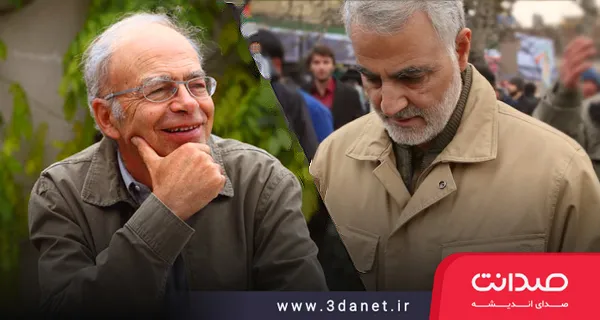
Following the US drone strike that killed a senior Iranian military commander and several others, a senior State Department official remarked at a press conference, "Jesus Christ! [You mean] we have to explain why we do these things?" In fact, the international rule of law is based on this [question]. Melbourne: On January 3, the United States killed Qasem Soleimani, a senior Iranian military commander, as he was leaving Baghdad International Airport—in a car alongside Abu Mahdi al-Muhandis, the Iraqi leader of Kata'ib Hezbollah, an Iran-backed militia. All the occupants of the vehicle were killed. The next day, at a special press briefing, a senior US State Department official said that Soleimani had been the "chief architect" of Iran's terrorist attacks for 20 years and had "killed 608 Americans in Iraq alone." He added: "Soleimani and al-Muhandis had been designated as terrorists by the United Nations." He continued: "Both of these men were the very epitome of bad guys."
In 2003, US intelligence regarding [Saddam's] possession of weapons of mass destruction was completely wrong. These errors led to the invasion of Iraq, which paved the way for Iran and Soleimani to enter and become involved in that country. But let us assume, this time, that the facts are as the US administration states. Was [this] double assassination morally defensible? We can start with the premise that taking a human life is wrong. President Donald Trump would not deny this. For example, a year ago he said: "I will always defend the first right in our Declaration of Independence; the right to life." Trump was addressing anti-abortion activists, but the right to life—which applies to fetuses—must also apply to older persons. Are "bad guys" the exception?
Again, to advance the argument as plainly as possible, let us assume that the "right to life" only guarantees the lives of innocent human beings. [Now] who is to judge innocence? If we agree, as Americans often say they intend, that we should have "a government of laws and not [a government] of men," then a legal process must be followed to determine guilt. Since 2002, the International Criminal Court has sought to apply this process on a global scale. The ICC has had notable successes in prosecuting perpetrators of war crimes and crimes against humanity, but the court's jurisdiction is limited and has not been aided by the United States' refusal to join the 122 other countries that have accepted its authority.
Following the assassination of Soleimani, Agnès Callamard, a special rapporteur on extrajudicial, summary or arbitrary executions at the Office of the UN High Commissioner for Human Rights, noted: "There is no oversight over targeted killings that are carried out beyond a single country's borders. The agents of killing simply decide who is to be killed without any legal process or approval from any other branch of government. Accepting such an action makes it difficult to discover or discern any principled objection to similar killings planned or carried out by other countries."
This includes the "Café Milano plot of 2011," allegedly planned by Soleimani, in which Iranian agents intended to assassinate the Saudi ambassador in the United States while he was having lunch at a famous restaurant in Washington, D.C. The only thing the United States can say in defense of its assassinations is that it targets really bad people, and the Saudi ambassador was not a bad person. This places the sovereignty of gentlemen [the US administration] above the rule of law. Another justification the Pentagon offered for this [recent] killing was a vague reference to "deterring Iran's attack plans."
As Callamard noted, this is not the "imminent" attack required for "self-defense," the kind of preemptive strike that is justified under international law. She also noted that others were killed in this attack—reportedly seven people died in total—and stated that these other deaths were clearly unlawful killings.
A close reading of the transcript of the January 3 press conference held by three senior State Department officials reveals the real mindset of the Trump administration. In response to repeated questions about the justification for the assassination, one official compared it to the downing of the plane carrying Japanese Admiral Isoroku Yamamoto—who was visiting Japanese forces in the Pacific in 1943; an incident that occurred in the middle of [World War II], more than a year after the Japanese attack on Pearl Harbor. Another official said: “When I hear these questions, it’s like you’re describing Belgium 40 years ago. This is the Iranian regime. We have 40 years of acts of war that this regime has committed against countries on five continents.” At that moment, the official who had compared the assassination to the killing of Yamamoto remarked: “Jesus, do we have to explain why we do these things?”
If senior State Department officials believe that the United States is in a just war with Iran, just as it was with Japan in 1943, the killing of Suleimani seems logical. According to standard just war theory, you may kill your enemies whenever you have the opportunity to do so, provided, of course, that the importance of the intended target outweighs the [importance of the potential] harm to innocent people.
But the United States is not at war with Iran. [For] the US Constitution grants only Congress the authority to declare war, [and] Congress has never declared war on Iran. [Even] House Speaker Nancy Pelosi stated: “The plan to kill Suleimani should have been consulted with congressional leaders. If the assassination of Suleimani was an act of war, Nancy Pelosi was right.”
If, on the other hand, the killing was not an act of war, then as an unlawful assassination it was also not necessary to prevent an imminent attack, [and] was both illegal and immoral. This action will have even more severe negative consequences, not only in terms of escalating [acts of] retaliation in the Middle East, but [also because it has itself caused] a further erosion of the international rule of law.
.
.
Was Killing Suleimani Justified?
|
At a press conference following the US drone strike that killed Iran's top military commander and several others, a senior State Department official blurted out: “Jesus, do we have to explain why we do these things?” In fact, the international rule of law depends on it.
.
.
PDF file of this article in the Farhikhtegan newspaper
.
.
Note by (Peter Singer), Australian philosopher and professor at Princeton University
The US assassination of Soleimani cannot be justified
Translator: Alireza Khabbazzadeh Rezaei
Source: Farhikhtegan newspaper | Issue 2956 | Sunday, January 12, 2020
.
.
Discussion2 comments
ح
ح.
سلام و ممنون از زحمتِ ترجَمه. در عنوانِ انگلیسی از "قتل/کشتن" صحبت شده است و خبری از واژۀ "ترور" نیست. در عنوانِ ترجَمۀ فارسی امّا بهجایِ "قتل" آمده است "ترور". این نکته مُشکلی را موجب میشود. تو گویی سینگر "ترور"هایی را "توجیهشدنی" قلمداد میکند! این حرفِ غریبی است که "ترور"هایی را *توجیهشدنی* تلقّی کنیم. ظاهرًا سینگر قائل نیست ترورهایی هستند که اخلاقًا موجّهاند امّا مترجم ظاهرًا با ترجمۀ عنوان این حرف را که "ترورهایی هستند که اخلاقًا موجّهاند" به سینگر نسبت داده است.
ح
حسین جورسرا
سلام به دوستان صدانتی بنده مدت هاست سایت شما را دنبال می کنم و بهره می برم و بسیار متشکرم اما انتظار داشتم بعد از جمعیت میلیونی که برای سردار در کل ایران جمع شدند اندیشمندان و یا نویسیندگان مطلبی در تحلیل این پدیده بنویسیند اما متاسفانه کاری انجام نشد. الحمد الله آقای استاد سینگر مطلبی منتشر شد که استفاده بردیم اما به موضوعی که مطرح کردم مربوط نبود با تشکر از زحمات شما




MELBOURNE – On January 3, the US assassinated Qassem Suleimani, a top Iranian military commander, while he was leaving Baghdad International Airport in a car with Abu Mahdi al-Muhandis, an Iraqi leader of Kata’ib Hezbollah, an Iran-backed militia. All the occupants of the car were killed.
The next day, at a special press briefing, an unnamed senior US State Department official said that Suleimani had been, for 20 years, “the major architect” of Iran’s terrorist attacks and had “killed 608 Americans in Iraq alone.” He added that Suleimani and Muhandis had been designated as terrorists by the United Nations, and that “both of these guys are the real deal in terms of bad guys.”In 2003, US intelligence about Iraq’s supposed possession of weapons of mass destruction was completely wrong. Those errors led to the invasion of Iraq, which cleared the way for the involvement of Iran and Suleimani in the country. But let’s assume that this time the facts are as the US administration says they are. Was the double assassination ethically defensible?We can begin with the presumption that it is wrong to take human life. President Donald Trump won’t deny that. A year ago, for example, he said: “I will always defend the first right in our Declaration of Independence, the right to life.” Trump was addressing his remarks to anti-abortion campaigners, but a right to life that applies to fetuses must also apply to older humans.Is there an exception for “bad guys,” though? Again, to keep the argument as straightforward as possible, let’s assume that the right to life protects only innocent humans. Who is to judge innocence? If we favor, as Americans often say they do, “a government of laws, not of men” there must be a legal process for deciding guilt. Since 2002, the International Criminal Court has sought to apply that process globally. The ICC has had some notable successes in prosecuting perpetrators of war crimes and crimes against humanity, but the court’s scope is limited, and its reach has not been helped by the refusal of the US to join the 122 other countries that have accepted its jurisdiction.
In the wake of Suleimani’s assassination, Agnès Callamard, a Special Rapporteur on extrajudicial, summary, or arbitrary executions at the Office of the UN High Commissioner for Human Rights, noted that there is no oversight of targeted killings carried out beyond a country’s borders. The Executive simply decides, without any legal due process or approval by any other branch of government, who is to be killed. Accepting such an action makes it difficult to find any principled objection to similar killings planned or carried out by other countries. That includes the 2011 “Cafe Milano Plot,” supposedly masterminded by Suleimani himself, in which Iranian agents planned to kill the Saudi ambassador to the US while he lunched at a well-known restaurant in Washington, DC.
The only thing the US can say in defense of its assassinations is that it targets really bad guys, and the Saudi ambassador was not such a bad guy. That puts the rule of men above the rule of law.The other justification that the Pentagon offered for the killing referred vaguely to “deterring future Iranian attack plans.” As Callamard pointed out, this is not the same as the “imminent” attack required to justify acting in self-defense under international law. She also noted that others were killed in the attack – reportedly, a total of seven people died – and suggested that these other deaths were clearly illegal killings.A careful reading of the transcript of the January 3 press briefing, held by three unidentified senior State Department officials, reveals the Trump administration’s real thinking. In response to repeated questions about the justification of the assassination, one official compared it to the 1943 downing of a plane carrying Japanese Admiral Isoroku Yamamoto, who was visiting Japanese troops in the Pacific – an incident that occurred in the midst of war, more than a year after the Japanese attacked Pearl Harbor. Another official said: “When I hear these questions it’s like you’re describing Belgium for the last 40 years. It’s the Iranian regime. We’ve got 40 years of acts of war that this regime has committed against countries in five continents.” At one point, the official who had compared the assassination to the killing of Yamamoto blurted out: “Jesus, do we have to explain why we do these things?”
If senior State Department officials believe that the US is engaged in a just war with Iran, as it was with Japan in 1943, the killing of Suleimani makes sense. According to standard just war theory, you may kill your enemies whenever you have the chance to do so, as long as the importance of the target outweighs the so-called collateral damage of harm to innocents.But the US is not at war with Iran. The US Constitution gives Congress the sole authority to declare war, and it has never declared war on Iran. Speaker of the House Nancy Pelosi suggested that congressional leaders should have been consulted on the plan to kill Suleimani. If it was an act of war, she is right.If, on the other hand, the killing was not an act of war, then, as an extrajudicial assassination that was not necessary to prevent an imminent attack, it was both illegal and unethical. It risks severe negative consequences, not only in terms of escalating tit-for-tat retaliation in the Middle East, but also by contributing to a further decline in the international rule of law.