Philosophy
Introducing Peter Singer's Effective Altruism, translated by Armin Niakan, at the second Kheir o Kherad event with talks by Mostafa Malekian and Mohammad Reza Jalaeipour
Peter Singer's The Most Good You Can Do was introduced at a 'Kheyr o Kherad' (Charity and Reason) event, with talks by Mostafa Malekian and Mohammad Reza Jalaeipour. The discussions centred on the necessity of rationality in philanthropy, distinguishing needs from wants, and methods for delivering the greatest good to society.

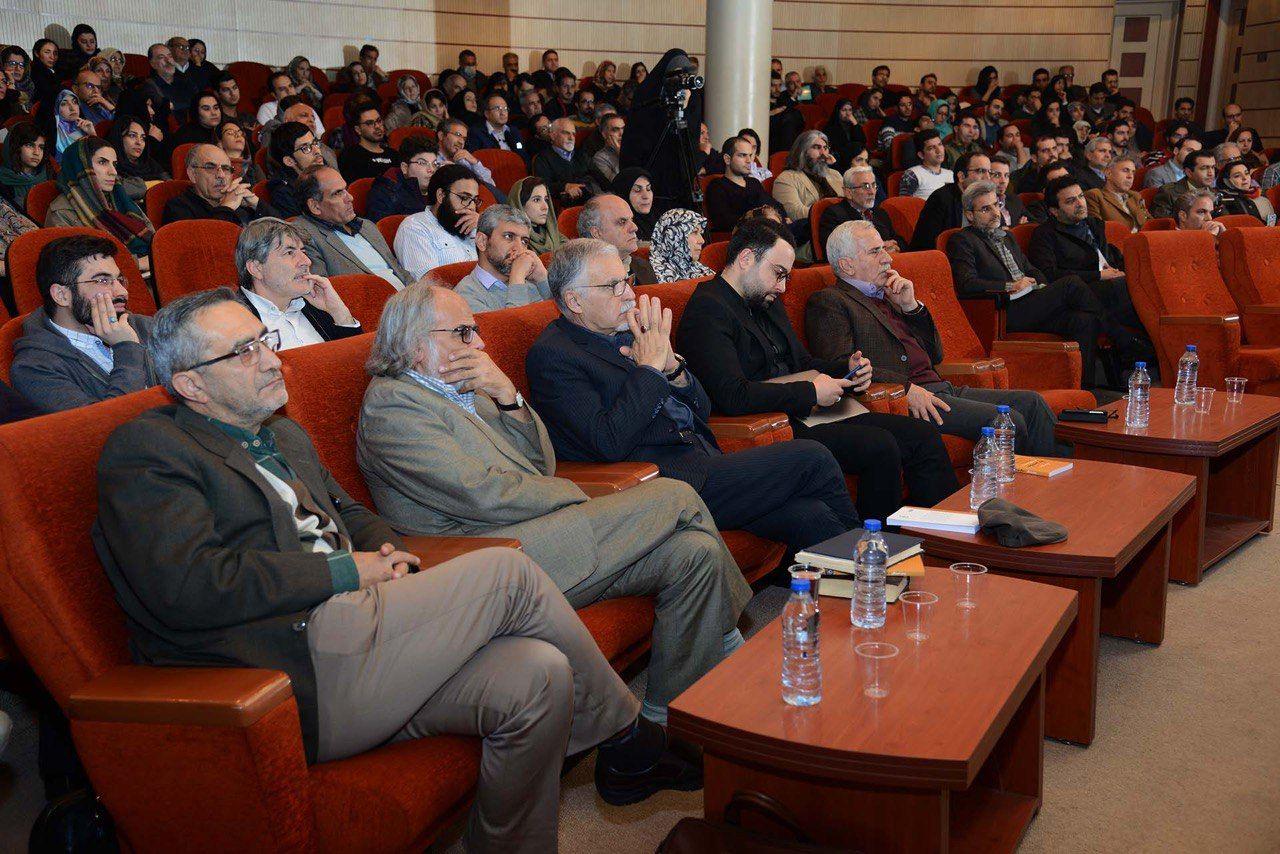
Through the efforts of Darolekram Institute and in collaboration with Ney Publishing, at the second event in the Kheir o Kherad series, the book Effective Altruism: How Doing the Most Good Changes Our Understanding of Ethical Living was introduced and unveiled. At this event, held at the Academic Center for Culture and Art, Mostafa Malekian and Mohammad Reza Jalaeipour, who authored two prefaces to the book, attended in person, while Peter Singer, the author, and Armin Niakan, the translator, shared their remarks via video.
.
.
Exclusive Video by Peter Singer, Author of "Effective Altruism" – Second Kheir o Kherad Event
Watch on Aparat | Watch on YouTube | Download on Telegram
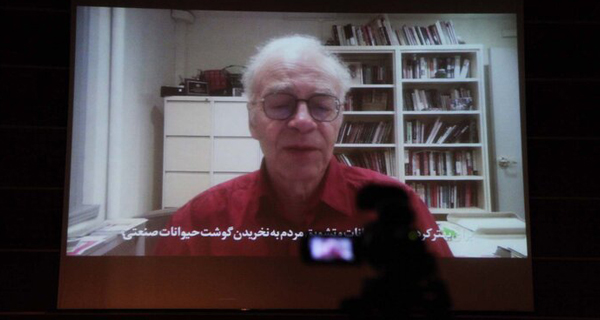
At the beginning of his video message, Singer expressed his pleasure at the translation of his book into Persian and said: The idea of effective altruism consists of two elements. First, the necessity of helping others, and second, doing so in the most effective way. Noting that Islam also recommends giving a portion of one's wealth to the poor, he said: Many donors and philanthropists think it doesn't matter how effective their help is. This is incorrect. Some aid is 10 times, some 100 times, and perhaps even more effective, while others are not. In the logic of effective altruism, we think about how our help can bring the greatest good to society, so that even with small amounts, we can have a significant impact. In this regard, sometimes even helping animals plays a greater role in spreading good. At the end of his speech, he expressed hope that such works and books in Iran would provide a foundation for forming effective altruism groups—groups that, by disseminating and sharing information about effective ways of benevolence and charity, help spread this beneficial idea.
.
.
Exclusive Video by Armin Niakan, Translator of "Effective Altruism" – Second Kheir o Kherad Event
Watch on Aparat | Watch on YouTube | Download on Telegram
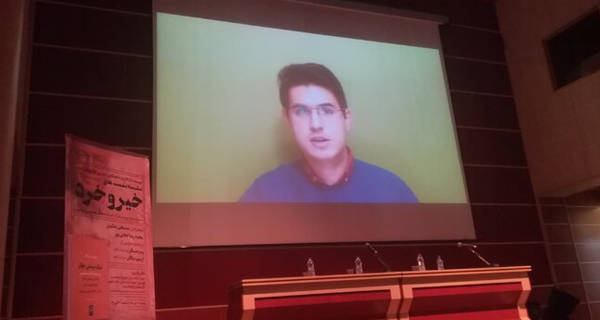
Armin Niakan, the book's translator, who participated in the event via video message, said: Well-being is a collective and communal matter, and we must establish institutions to achieve it. In the philosophy of effective altruism, we need focus, fairness, and media literacy to act. Therefore, we need education. The modern world, as Hannah Arendt said, suffers from the banality of evil. Such that we can produce evil with small, seemingly harmless decisions. One of the achievements of effective altruism is that doing good is also easy. In the psychology of effective altruism, it is said that taking refuge in complexity and uncertainty has prevented us from doing the most good possible. The effective altruist, however, through doing good, possesses a cheerful spirit and a healthy psyche. In effective altruism, it is said that we are not the neighborhood milkman; rather, we are the parents of a child who must deliver healthy milk to our child. We need to focus on projects, such as the risk of nuclear war and climate risks, which have far greater impacts.
.
.
Mostafa Malekian's Talk at the Second “Kheir o Kherad” Event on: Benevolence and Rationality
Audio of Mostafa Malekian's Talk
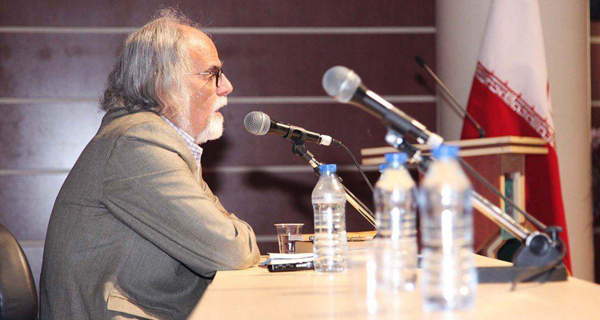
Greetings and respects to the ladies and gentlemen, and I am delighted to have a small part in this gathering, which has been convened for a matter that is good in every sense of the word.
I am very, very grateful to all those involved in convening and organizing this session, to Nashr-e Ney and Mr. Homaei, the esteemed and culture-loving head of this publishing house, and to the Darolekram Institute, Mr. Jalilian, and all their colleagues and supporters, for also inviting me to be here in the service of you all. I truly, without exaggeration, without hyperbole, without overstatement, and in all fairness, testify that the best institute in Iran that is currently an instance of effective altruism is the Darolekram Institute.
I truly say, without the slightest bias, that until now I have not seen an institute with this degree of purity, refinement, and integrity, and with so much rationality exercised in the matter of good and in aiding people. The truth is that in my 63 years of life, today is the first time I have regretted remaining faithful to the topic of my own talk. I had announced that I would speak about benevolence and rationality, but for two reasons, one of which is far more important, I regretted announcing this topic. One reason is that, as the poet says, “What can Rostam do in the line of a bouquet of flowers and basil?” Holding a bouquet of flowers and basil in the line and on the battlefield is a farce. In my country, speaking completely rational, completely benevolent, and ethical words has come to resemble something close to a farce.
In a country that has the world's second-largest gas reserves and the fourth-largest oil reserves, in this country of ours, we have people sleeping in cardboard boxes. In this country of ours, we have people sleeping in graves. And in this country of ours, we have cross-border porters. In a country that is overflowing with immense underground and above-ground resources, we still have Farhads and Azads. And if someone speaks this frank and open truth aloud, it is immediately said that they are either an agent of the CIA, or an agent of a secret service, or an agent of Mossad. I do not know what must be done in this country, to whom must one speak, about what must one speak, so that this country should not have cross-border porters at all, and should not have grave-sleepers, and should not have cardboard-box-sleepers. Well, in this situation, is speaking of rationality and speaking of ethics not more akin to a joke? This is firstly. And secondly, the more I reflected, I saw that the points I could make about benevolence and rationality, the author Peter Singer himself has said in this book, and in the three or four introductions that have been added to this book, what Singer did not say has been added, and therefore I did not have much to say here, especially since I myself wrote one of the introductions and have said what needed to be said there. For this reason, I decided to change the topic of my talk myself, and I did change it, but before I was here in your service, the officials and organizers of the esteemed Darolekram Institute deemed it advisable that I also pursue that topic of rationality and benevolence and forgo that subsequent topic. Well, I too obeyed and forwent it.
Well, as I mentioned, anything worth saying has already been said by the authors themselves and the writers of the preface to this very valuable book—we must be deeply grateful to its translator and to Mr. Jalaeipour for introducing and bringing this book into Persian. I will only address what seems to me to have received less attention in this book, and I will keep my talk brief. An important point in the matter of effective altruism, or, in other words, bringing about the greatest effective good and not merely doing good, is this: if our doing good to others is to be rational and truly bring about the greatest effective good for others, the distinction between need and want is crucial. The fact that human beings have wants, and the fact that human beings have needs, is a separate matter.
It is not the case that I want everything I need, nor that I need everything I want. There are many human beings like me who, because they have not attained the necessary spiritual and intellectual maturity, want things they do not need and do not want things they do need. In short, their wants and needs do not align. This distinction between need and want, in my view, is a very important matter in moral philosophy and, fundamentally, in all the human sciences. That we believe and acknowledge that it is not the case that we need everything we want, nor that we do not want anything we do not need—no, very often we need something and do not want it, and very often we do not need something and want it. On the other hand, very often we want something we do not need, and very often we do not want something we need. Rationality requires that, for three reasons, when we set out to help our fellow human beings—and here, material and financial help is the subject of discussion, because, as all friends are aware, we are not speaking here about the realm of ethics in general; we are only discussing the ethics of giving, and we have nothing to do with other realms of ethics.
For now, in the realm of the ethics of financial giving, the ethics of financial sacrifice, the ethics of charity, in this realm we must pay attention to three things, so that we consider the needs of the other party. One reason is that human wants are endless, and therefore, if I obligate and commit myself to fulfilling another human being's wants with the financial assets I have, I can never fulfill that person's wants fully, positively, and completely, because human wants are infinite. It makes no difference whether that person is poor or rich, cultured or uncultured; our wants are infinite, and therefore I should never obligate and commit myself to fulfilling another's wants.
But a human being's needs are not infinite. Needs are things that, if not met, will sooner or later disrupt the physical, mental, and psychological structure of the person whose needs are unmet. Now, without wanting to enter into the detailed discussions on this matter that have been given elsewhere, I want to say that these needs have limits; needs have an end, and we must commit ourselves to meeting the needs of others, not commit ourselves to fulfilling the wants of others, for these wants will have no stopping point. That is the first point. The second point is that fulfilling the wants of others is not necessarily a service to them. Very often, if I fulfill the wants of others, not only have I not served them, but I have betrayed them. In simpler terms, I have helped them, but I have not served them, and help is very different from service.
It is not the case that I have served anyone, regardless of their age or degree of cultivation, if I merely surrender to their desires. Many of these desires are better left unfulfilled than fulfilled. And therefore, there is no reason for me to perform an apparently humanitarian act while in reality I am transgressing moral rules and precepts, because moral rules and precepts dictate that if someone's pleasure is incompatible with their best interest, I must certainly sacrifice their pleasure for their best interest. That is, if their desires are incompatible with their needs, I must necessarily sacrifice their desires for the sake of their needs and not surrender to their desires. This distinction is important for this reason as well, but there is a third point, and that third point is that fundamentally, not only the person who receives help from me, but even I myself, the helper, if I had contented myself with my own needs and not surrendered to my own desires, perhaps the recipient of aid would not have fallen into that state of poverty in the first place. The vast majority of the poverty that humankind has been afflicted with and suffered from throughout history has been because people surrendered to their desires and did not content themselves with their needs.
When I do not content myself with my needs and pursue my desires, then I become avaricious; then, in investment, I become greedy; in investment, I become profit-seeking; I turn to slacking off; I turn to misconduct; I turn to hoarding; I turn to embezzlement; I turn to selling short; I turn to overcharging; I turn to fraud; I turn to deceit; and I turn to a thousand other things, and those other things make you poor. Those actions—that I, who did not want to content myself with my needs and wanted to fulfill my desires, by the necessity of wanting to fulfill my desires, was consequently drawn to avarice, which could not be satisfied unless I deviated from moral standards and turned to selling short, overcharging, embezzlement, fraud, swindling, and such things—it is these that have made you poor. You were not to blame for becoming poor; it is I, the avaricious capitalist, I, the greedy wealthy person who did not want to content myself with the bare necessities, who put you in this situation.
If all those who have financial means—whether they obtained these means through agriculture, animal husbandry, industry, trade, or services, through whichever of these five avenues—if those who have attained wealth through these five avenues had contented themselves with the necessities of their own lives and contented themselves with their own needs, perhaps they would not have caused so much poverty and misery for others, only to later want to extend a helping hand to these very others whom they themselves caused to be impoverished, to help them and, ostensibly, to assist them.
You see, this discussion, of course, has its opponents. Some have said that, on the contrary, it is the avarice of humans, the greed of humans, and the covetousness of humans that has brought the caravan of humanity to this point, that has created this culture and civilization—a statement with which I, of course, completely disagree. I believe that if all those who are well-off, and who can possess more than what suffices for their basic needs, had contented themselves with their needs, they would not have been compelled, in order to acquire this wealth, to commit so much oppression, transgression, and violation, as a result of which moral oppression, transgression, and violation, an economic and social phenomenon called poverty comes into being. For these three reasons, I believe it is very important that we rationally consider what the poor and destitute in our society need, and fulfill those things. It is possible.
Indeed, the help I give to another person—if that other person, due to not paying attention to this point, spends my help on desires that are not at all in their best interest, so that those desires are fulfilled while their needs remain unmet—it is certain that a child does not like milk and an apple as much as a cheese puff. But if I am their compassionate and caring friend, I will certainly follow up to ensure that the help I have given this child is spent on apples or milk, not on cheese puffs. But, of course, this distinction can no longer be made on an individual basis; a collective rationality must be organized in this direction, and it must be said that we have come to suffice not only with the needs of the poor but even with our own needs only to the extent of necessity, and not to the extent of fulfilling desires, which have no stopping point.
From here, I transition to the next point, and that is that, unfortunately, the reality is that material poverty more or less creates cultural poverty as well. And in this respect, many of those who suffer from material poverty also lack, culturally, the sophistication to make the best use of the help society gives them. This, too, requires a certain sophistication; as the ancients said, it requires a kind of economic reason, so that I know what things I, as a destitute person, should spend the help you have given me on, and what things I should not; what I should spend it on and what I should not consume. This requires a sophistication, an economic reason, which, if I am materially poor, as a rule, I also lack that cultural sophistication, you see.
In this regard, we have frequently seen with our own eyes that there have been people who received help, but receiving this help did not ultimately benefit them, because they themselves spent the help they received in the wrong way. Well, from this perspective, I want to transition to a second point, and that is that one of the greatest charitable acts we can do, after providing financial help, is to teach the destitute the method of using wealth, the method of using possessions, the method of using the help they receive from others. We should not leave them to their own devices, because when we leave them to their own devices, we hold a presupposition, and that presupposition is that they know better than we do what to spend it on. But this presupposition is not certain. This does not mean we should intervene in every detail, you see?
Not at all; that would conflict with the self-esteem of that poor person. No, it means that some education must be provided, telling the poor person, and even telling me, the helper of the poor, that you do not need more than this amount of food, drink, and nourishment; you do not need more than this amount of clothing; you do not need more than this amount of sleep. So that they know that whatever they spend beyond this, up to a certain point, they are spending beyond their need, and beyond a certain point, when it goes even higher, they are acting directly against their needs. In fact, if I go beyond the essentials of my life, for a while, as I go beyond my needs, I am merely wasting my wealth because I am spending it on something I do not need. But if I continue further and go even higher, I am gradually spending my wealth on something that not only do I not need, but that is directly contrary to my needs, you see.
This sophistication, unfortunately, does not exist among the destitute of society, and this sophistication is something that must always be instilled: that the best place is not necessarily the most luxurious place. Specialists in place and housing know what characteristics a suitable place and dwelling should have; these characteristics do not depend much on its materials, beauty, and luxuries. Just as a nutritionist tells me, considering your age, gender, height, and weight, you need this much calcium, protein, and vitamins per day. And this means that whatever you consume beyond this, you are needlessly losing your wealth, and of course, if this consumption increases even further, you are gradually harming yourself. And this is one of the points that, in my opinion, Peter Singer did not pay attention to in this writing: that this sophistication must also exist. In other words, you must also teach me, the poor person, the better and optimal method of using what you give me. That is the next point. The third point I want to make:
The point is that, in order to be able to help others, and indeed so that others do not fall into this situation in the first place, I must practice and learn simple living, you see? Mr. Jalaeipour alluded to this point: simple living has two great virtues. When the simple living movement, and particularly Thoreau, was proposed in America at the end of the nineteenth century and created a movement, the aim of people like Thoreau in advocating simple living was that if you do not live simply, you cannot attend to your own deep mental, psychological, and spiritual needs—you simply cannot.
Because when I do not live simply and am given to a luxurious and aristocratic life, naturally no one gives me this luxurious and aristocratic life for free. I must have an income to sustain this life. For income, I must work, and since my consumption is high, I demand a high income, and since I demand a high income, I must spend most of the hours of my day and night on my job and profession. Consequently, I absolutely cannot attend to my mental needs; I cannot attend to my psychological, spiritual, and inner needs.
He would say: so that your mental, psychological, spiritual, and inner needs are not neglected and do not remain practically unfulfilled, come and limit your bodily needs to the bare necessities. Limit yourselves to the bare biological and physiological necessities. Know how much shelter, sleep, food, drink, clothing, how much sexual gratification, and how much rest and recreation you need, and limit yourselves to that amount. Because you are not just your body; you also have mental, psychological, spiritual, and inner needs. That was their purpose. They said that if we do not have a serious practical commitment to simple living, we merely fatten one dimension of our existence—the body—while consigning the other dimensions of our existence to oblivion. But after this movement, especially from 1924 onwards, when it became a general movement in the world and some took up the advocacy of Thoreau,
we gradually became aware of a second point, which is that, quite apart from that matter, there is another discussion: simple living is also a poverty eradicator. In what sense is simple living a poverty eradicator? Not only in the sense that if I live simply, I can give my surplus income to the poor—that is true—but for a second reason: if I live simply, I do not allow poverty to arise in society in the first place. It is not that poverty arises and I help; those who live simply adopt a lifestyle such that the very nature of their lifestyle prevents the emergence of a class, a stratum, a layer called the poor. We must also pay attention to this. Paying attention to this point—that simple living, in addition to the point noted by the likes of Thoreau, is a moral duty, not just for poverty eradication, but beyond that, for preventing the emergence of poverty. A person who lives simply adopts a lifestyle such that, at least to the extent of their own influence in society, no one falls into poverty because of them. Do you see? No one falls into material and livelihood difficulties because of them. This was another point I wanted to make. And the final point I wish to make is this: we must always consider our own capacity in ethics.
My ethical living always requires capacity. Now, I will set aside the other branches of ethics; I want to speak of the ethics of charity. The ethics of charity also requires capacity, and I must consider my own capacity for the ethics of charity. What does that mean? It means I may have the psychological and mental readiness to pay a certain amount of tomans to a certain charitable institution, and because I have this mental and psychological ability, even if I have ten times that wealth which I could give to this institution, my mental and psychological ability and capacity is not more than that amount.
Well, if I pay this one toman to help the poor, from the moment I make this payment until the moment I live and as long as I exist and have life, I derive spiritual benefit from this help I gave to the needy. But if my capacity for charitable giving is that one toman, and for some reason I come and give three tomans—for instance, because you are observing my action, because others will find out how much I have paid, or for any other reason—I, who have the psychological potential and capacity to give one toman, have come and paid three tomans. From the moment I paid those three tomans, I begin to experience spiritual decline. Why? Because from that moment on, the payment is not a payment; two tomans of it were beyond my capacity. Then, from that moment, I curse that charity, I curse the poor whom I helped, I curse myself, I spit at and curse myself, I reproach and blame myself.
We have frequently seen individuals who did not have the capacity and capability for a moral act, yet performed it, and the moral act ended up to their detriment. A moral act must take place in the utmost freedom. I have said many times that, unlike a legal or juridical act, which must take place in a context and setting of compulsion and coercive force—meaning the law must always have a coercive force defending it—morality and living morally, on the contrary, must take place in a context of absolute freedom. When it takes place in a context of absolute freedom, I attain spiritual elevation through the moral act, do you see? To put it very simply for you, I have always used this example: if a poor person stretches out their hand on the street, and I have the potential and capacity to pay one thousand tomans, and I give them one thousand tomans, from the moment I perform this act, I am happy with myself. I am also happy with this poor person, who provided an opportunity and means for charity for me, and I am glad that I performed this act. But because you have been following me and watching.
How much do I want to give to the poor person myself? If you were not there, I would have wanted to give one thousand tomans, but because you are watching, instead of one thousand tomans, I give ten thousand tomans. I give nine thousand tomans beyond my psychological and mental capacity. From the moment I give this ten thousand tomans, I curse you; I curse the poor person who received help from me; I curse myself; I curse you, saying, "Well, can't you look the other way? Must you necessarily stare at my hand, so that when my hand goes into my pocket, you see how much it takes out, and so on and so forth?" I curse that poor person, saying, "Well, couldn't you have waited two minutes until this companion of mine separated from me, and then, when I was alone, you could have come and stretched out your hand?" I curse myself, saying, "Well, they were watching; you should have done your own thing. Why didn't you do your own thing?"
You see, I have given nine thousand tomans extra, but I have derived no spiritual pleasure because I did not pay attention to my own potential. Unfortunately, because we do not pay attention to this potential, and sometimes for reasons—usually showing off and self-display being one of the main causes—we come and do things to help others that are beyond our potential, beyond our capacity. Not beyond our financial capacity and means, no; we have the financial means. It is beyond our psychological and mental capacity. We are not that self-sacrificing; we are not that selfless. Well, I must help to the extent that I am self-sacrificing and can be selfless. When I help.
I attain spiritual elevation; I achieve spiritual growth and perfection. But when I do not pay attention to this, then I become disgusted with myself. Gradually, my inclination toward moral action diminishes, because I have not derived that spiritual pleasure from the moral act—that spiritual pleasure which would have motivated me for the next moral act and the one after that, and so on. Do you see? From this perspective, this point is very important: each of us, while we must constantly raise our moral capacity, must also, at every moment, pay heed to the moral capacity we possess at that moment.
This is like me telling you that while a person must constantly add to their knowledge and learning moment by moment, yet at every moment speak according to the measure of your knowledge. I would like your knowledge to increase, and you too must continually increase your knowledge, but you cannot open your mouth and speak now on account of the knowledge you will have in the future. When you open your mouth now, speak according to the measure of your present knowledge. In the same way, I can say that it is good for a person to develop their capacity for giving to such an extent that, as Jesus said, when you give, do not let your left hand know what your right hand is doing. I must develop the capacity to the point where my left hand truly does not know what my right hand has done.
I must reach that point, but until I do, at every moment I must consider the capacity specific to that temporal, spatial, and situational context; otherwise, I will gradually become embittered and no longer motivated for further activities. In this regard, I wanted to say that institutions must be careful not to place others in circumstances where they volunteer beyond their potential. When they volunteer beyond their potential, the matter of extra wealth slips from their grasp, and they have gained no spiritual elevation. One can achieve spiritual elevation with less wealth, and by giving away more wealth, one may, in fact, undergo spiritual decline and fall.
I mention this point because it has rightly been said that if others become aware of the generosity of others, this itself encourages them, and it is good that we place great philanthropists before the eyes of others and say that this gentleman or lady has performed this act of generosity. And rightly so, this point is correct; it motivates a person, but on the condition that this bringing onto the stage does not cause the person to volunteer beyond their potential, and that volunteering beyond their potential harms them. This means that living ethically is not only for the improvement of social life; it is also for the cultivation of the soul of the ethical person themselves. If I help ten times more, I have improved society, but perhaps I have not helped my own soul towards its cultivation; I may have taken a step towards its ruin. Ethics is an other-regarding ethics and a self-flourishing ethics, just as moral philosophers have repeatedly pointed out that in ethics, we do not only want to be other-regarding; we also want to flourish ourselves. Therefore, other-regardingness must take shape in a way that does not conflict with my self-flourishing.
As you have sensed, I have only pointed out a few points that I felt were not addressed in Peter Singer's book; otherwise, all points exist in the most scholarly, most precise, and most humane and benevolent form in Peter Singer's writings. Truly, Peter Singer's books are not just books on moral philosophy. Firstly, a sincerity and a humanitarianism surge through these books that is not necessarily that of an academic philosopher. And the second point is that you can no longer read the book and remain unchanged. Therefore, if you do not want to be changed, you must not read his book. If you do read it, you will gradually feel ashamed of the value of your current life. And how good it is that books are available to us which, when we finish them, make us feel a little nauseated by our current life, so that we might move towards a transformation. Without that nausea, in my opinion, there is no transformation. Peter Singer's books—not just this book, but his other books as well—are like this. When one finishes, one dislikes oneself and says, if these are human beings, what are we?
.
.
Talk by Mohammad Reza Jalaeipour at the Second Kheir o Kherad Event
Audio of Mohammad Reza Jalaeipour's Talk

In the name of the Compassionate and Just God Greetings and respects to the esteemed attendees, and thanks to the organizers of this gathering; may it have a good effect. These days, we are all mourning the death of Farhad and Azad Khosravi and are affected by the tragic story of these two brothers. In my opinion, if more citizens in Iran had intervened in an altruistic and effective manner for people like them, they would not have met such a fate. Perhaps the unspoken sentiment of many of us is that our hearts are brimming with pain, alas for a remedy. But although all our hearts are brimming with this pain, I believe, as it happens, there is a remedy, and the dissemination of the idea and the individual and collective activities of effective altruism are likely among such remedies.
In this specific case, regarding issues related to porters (Koolbars), providing scholarships for the children of porters, which the Dar al-Akram charity intends to take steps towards, and your donations will be allocated to them in an effective and transparent manner, are among the other effective altruistic actions we can all take. Or advocacy activities for implementing policies that fundamentally solve this issue, such as a free trade agreement between Iran and Iraq, or the proposed employment guarantee scheme or public employment, insuring porters, and various other types of welfare policies that expand justice and make development equitable and balanced in Iran, are among the actions through which we can, with collective and institutional interventions, prevent the victimization of the Farhads and Azads.
But now let me address the topic of this gathering. Effective altruism is both a philosophy and a social movement or campaign. My dear teacher, Mr. Malekian, is in a position to address its philosophical dimension much better; it is his specialty. I will not address this dimension further, and in response to the organizers' request, I will speak more about the effective altruism campaign. As far as I have seen, in developing and developed countries, it has been at least the strongest charitable movement we have witnessed in the past decade. I will introduce this campaign, as I did in the book's introduction, and if there happens to be time, I will offer a few transitional assessments about this philosophy and campaign at the end.
The idea upon which this philosophy and campaign of effective altruism is based is very simple: that we should all strive to bring about the greatest possible good. Peter Singer also explained here that to determine which good deed has the greatest impact, we must engage in rational assessment based on empirical evidence. In other words, according to proponents of this idea and campaign, not stealing, not harming, not killing, not lying, and avoiding immoral beliefs and behaviors are not sufficient for an ethical life. In addition to these, we must also do good to the greatest extent possible.
The term "effective altruism" itself was first used by William MacAskill in 2012. That is, Singer himself did not initially use this expression. In 2013, when I attended his practical ethics class at Princeton, he did not use this term. However, in the book he published in 2009, titled *The Life You Can Save*, he outlined the core ideas of this effective altruism movement there. And even before that, in 1972, in an article titled "Famine, Affluence, and Morality," he laid out, in my view, the main foundation of this theory, at least in the academic sphere. The statement he made in that article was: If we can prevent something bad from happening {disease, hunger, etc.} without sacrificing anything of comparable moral importance, we are morally obligated to do so. But in any case, from 2012, William MacAskill, who was a philosophy professor at Oxford University and was also very young, born in 1987, established a foundation to organize effective altruistic activities and institutions related to this type of activity. And after that, Singer himself also began using this expression.
Another question of effective altruism is, first and foremost, how can we use our resources—whether money, time, or ability—to do the most good possible. This has two main presuppositions: one, that after meeting our non-luxury needs, we have a duty to use our income, time, and ability to meet the needs of others; and two, that not all aid and beneficence are of equal value, and we are obliged to contribute to good causes that effectively deliver the greatest possible good, to the extent that we can make rational assessments. Well, many ethical schools have emphasized the necessity of doing good, but the necessity of rational assessment to rank these good causes is more a fruit of this charitable movement, which has grown considerably over the past decade. In defense of this first presupposition—that we are obliged to do good and even forgo what he calls our luxury expenses—in addition to the arguments Singer presents in his books, two thought experiments in particular have become very widespread and have had considerable persuasive power. Many people now know Singer and this intellectual movement by those two thought experiments.
They were set out in that 2009 book. I will review them very quickly; you have probably heard them. The first is this: he says, suppose you are walking in a park and you see a child drowning in the park's shallow lake. If you decide quickly and jump into the water to save him, he will be saved and there is no danger to you, but the expensive shoes you are wearing will be ruined. Then he asks whether we have a duty here to save that child or not. Those friends here who think we have a duty, despite our shoes being ruined, to jump into the water and, without taking any particular risk, save that child, raise your hands… It seems almost everyone present agrees with Singer that we have a duty to do so.
The next question he asks is this: what essential difference is there between that child who has fallen into the water before your eyes and whom you can easily save, and other children whom we know we could save at a cost far less than that of our luxury shoes? There are now effective charities, both in Iran and globally, that we know do this work. If we do not save them, we have in fact chosen not to ruin our shoes. And then, geographical distance, the fact that they are not before our eyes, and that they do not have an emotional impact on us are not sufficient, rational reasons for this responsibility to be lifted from our shoulders.
The second thought experiment he presents, which I also find powerful, says: suppose a train is moving at high speed and you see that it will hit several children who are playing on the train tracks. You are next to the track switch. You are not the cause of their being killed, but you can move this switch and, instead of hitting and killing those several children, the train will go onto the side track and hit your luxury car, which is on the track. In this situation, what is your duty? Those friends who think that in this situation we have a duty to move the track switch and lose our car instead of the children being killed, raise your hands. Well, this has very heavy consequences. If you accept this, then Peter Singer asks you what difference there is with the rest of your luxury expenses.
Every time you buy a luxury car, a luxury house, a front-row concert ticket, a business-class plane ticket, and any kind of luxury expense—jewelry, expensive cars and houses—you have in fact chosen for those children to die, because at a cost far less than that luxury car, tens, even hundreds of children can be saved through effective intervention methods that are now available to us. Among these methods are multi-dollar charities that save many children. In addition to these thought experiments, the tangible examples cited in the book, alongside the arguments they employ, have a great overall impact on the audience. And I have always wondered why such arguments and books—which you cannot read and remain unchanged—are not much discussed by translators and philosophers in Iran.
Many of the books translated into Persian in the field of practical and normative ethics do not have much impact on the reader; I do not deny their value, but I wonder why books that are, firstly, more widely read and, secondly, have been shown in other countries to have a greater effect on changing the reader's behavior are not translated. And this book is one of those books. Singer himself, in moral philosophy, is a proponent of act-utilitarianism, and he courageously accepts all its consequences. However, even if you, like me, do not agree with act-utilitarianism or purely consequentialist theories and perhaps lean towards some form of virtue ethics, rule-utilitarianism, other hybrid theories, or deontology, you can still defend Singer's main claim and support the movement that has arisen from these ideas.
Many of Singer's insights and arguments are defensible and valuable even from the perspective of virtue ethicists, deontologists, and rule-consequentialists, and can at least be one of the factors we consider in our moral judgment and decision-making. This is why many philosophers whose intellectual foundations differ from Singer's, including Nagel and Derek Parfit, have welcomed this book and this movement, even though they are not proponents of utilitarianism.
This idea of effective altruism, from around ten years ago, has turned into a movement from which many institutions have emerged and which is still expanding. If it continues in this manner, it will likely have institutions in most countries of the world. Currently, it is mostly active in universities in developed countries and some populous cities in Western Europe and North America, and has attracted tens of thousands of supporters. But even now, it is expanding in many capitals of developing countries, and one can hope that, especially after the publication of this book in Iran, and for a start in Tehran, institutions can be initiated to expand and disseminate this idea and to strengthen and coordinate effective altruism. Those who have joined this movement also place great emphasis on the effective altruist lifestyle. In this lifestyle, living simply is highly emphasized; it is very important to dedicate a large portion of your income to one of these priority charitable causes, which are chosen through rational metrics.
If you cannot do this, at least try to have a career that itself does a great deal of good or provides a high income to contribute to those charitable causes. Also, spending a part of your body for effective altruism, including donating blood or bone marrow, is among the things that receive much attention in this lifestyle. Some empirical studies have also shown that most activists in this movement report that the meaningfulness and happiness of their lives increased after joining the movement. In the words of Saadi, "The prosperous take pleasure from food, and the generous from feeding others."
Among the institutions and organizations that have emerged from this movement, I personally refer to several of them a lot, and I wanted to suggest that you Google these as much as possible and look at their websites; it is very useful and can practically help you a great deal in strengthening the effective altruist lifestyle. One is the Effective Altruism course itself by Peter Singer, which is fortunately available for free to everyone on the Coursera website. If you happen to take that class online, you will be greatly encouraged to apply these changes to your daily lifestyle.
An organization called “The Life You Can Save” was founded following the publication of Singer’s 2009 book, by himself and a group of his students. So far, 20,000 people have pledged through this site to regularly donate a portion of their income to the higher-priority causes introduced by the site. It has a calculator that I have personally recommended to many friends: you go to the site, state your income and resources, and the calculator suggests an amount, a percentage, for regular giving. The higher your income, the higher the percentage it suggests, similar to progressive tax systems. It also has giving games that can be implemented in universities and clubs; they have become very popular in European and American countries.
When you play these games, naturally, by the end, your desire to join this movement and make effective altruistic choices increases, and it is very motivating.
GiveWell is, in my opinion, the best organization to emerge from this movement for prioritizing charitable causes. All the more famous charities have been studied for their effectiveness by this institution, and among transparent and effective charities, those that practically deliver more good based on very rigorous tests have been introduced.
Most of them either help reduce painful and preventable diseases, such as deworming children, preventing blindness, and malaria—which can be prevented or treated at a very low cost—or they support charities that directly transfer the money you give to the poorest people. All of them have complete financial transparency, and if you happen to have a non-Rial account, I think paying attention to this site’s recommendations is highly advisable.
There is another organization called Giving What We Can, which, besides Singer himself, Thomas Pogge is also a serious supporter of. Derek Parfit himself, in his book *On What Matters*, argues that we should donate at least ten percent of our income, and this site tries to put that into practice. Those who join this site have ten percent of their total income regularly deducted from their account and allocated to causes determined by the site. So far, over 50,000 people have joined this site and regularly allocate ten percent of their income through it to those causes. The organization 80,000 Hours is one of the sites I personally suggest to many young friends who ask questions. Anyone who asks, “What job should I do to do the most good?” or “What should I study?” I suggest visiting this site. You fill out a questionnaire, and from among the thousands of jobs the site has reviewed, those that are considered impactful each have a profile. Based on the test you answer, it tells you which one is more suitable for you and what the path is to choosing each career.
The idea is that we work 80,000 hours in our lifetime, and based on the philosophy of effective altruism, we are obliged to spend those 80,000 hours doing work that does the most good. This site has tried to identify 300 or 400 jobs out of thousands that are effectively impactful and helps you find the path if you want to pursue these jobs. Thousands of people have changed their career paths through this site, even in their 20s, 30s, 40s, or 50s. Interestingly, based on the site’s rigorous research, conducted with the collaboration of hundreds of experts, the most impactful jobs, regardless of your interests, background, and talents, are these: first, research itself into which causes are most impactful. Two, organizing advocacy or campaigning to strengthen the effective altruism movement, because they have shown that a little collective effort in this area leads to a significant increase in helping others. Therefore, helping to spread this idea further and campaigning in this field will be among the most effective jobs.
Third, becoming an effective bureaucrat or political leader in order to help increase the policymaking and decision-making capacity of the universal servant of good, both in governments and international institutions. Next, research and organization in the area of existential risks that could themselves cause human extinction, including artificial intelligence, reducing biological and viral risks, nuclear security, and environmental change. Next, working to improve health in very poor countries is very effective, and working to reduce meat consumption and reduce animal suffering in all countries, especially in factory farms—unfortunately, both of these are very weak in Iran. We have environmental and animal rights activists, but our animal rights activists also focus more on pets, not on reducing meat consumption and reducing the suffering of farmed animals in factory farms. And the last is working to reduce cigarette consumption in developing countries, one of which is Iran; in this area, too, we do not have very effective activity in Iran. The body of studies conducted by the researchers of this site shows that these goals deliver effective good more than most other careers. I suggest that if you, or your friends and acquaintances, are thinking about what career and educational path to choose, refer to this site.
Another institution that I personally like is Animal Charity Evaluators, which strives to identify and recommend the best activities and charities that reduce animal suffering. Even if we don't have them in Iran, there are good non-Iranian examples. And while we kill 60 billion pigs, cows, sheep, and chickens annually to use their meat, in highly distressing farming conditions, many other effective altruists believe that reducing this amount of suffering is a higher priority than any other charitable goal, even reducing human suffering. The organization GiveDirectly is also one of the organizations that helps ensure the money you give reaches the poorest people in the world, who live in three countries: Kenya, Uganda, and Rwanda.
Based on other effective altruism studies, and contrary to the belief of many in Iran, giving money to the poorest citizens reduces more suffering and helps their lives more than any kind of government intervention. Even the most efficient governments do not know as well as the poorest citizens themselves where it is better to spend this money. For this reason, this institution was established, and the money you give goes directly to the poorest, with no part of it spent on bureaucracy and charity—you know that a large part of the charitable donations we make is spent on the bureaucracy of charities.
Another center, Effective Altruism, is also managed by the same William MacAskill, and it manages all these activities, including the annual conference, newsletter, and this very 80,000 Hours site. My time is up; I won't get to the critiques. If there is a chance during the Q&A, I will raise the four or five critiques that have been leveled against this movement—which, of course, do not call its core into question—there, in order to increase its effectiveness. Here, I will just say this much: unfortunately, in Iran, although the amount of charitable giving we do is considerable by global standards, we pay little attention to rational assessment for choosing a charity and a charitable goal. And the collection of local, family, and national charities we have are often not transparent and do not address these effective goals in the most effective way. Darolekram Charity is, in my opinion, one of the effective charities in Iran that transparently spends the money you pay on one of the goals that, according to these same effective altruism studies, is among the highest-priority charitable goals, namely helping out-of-school children with their education. This work is even more effective than building schools, according to these studies. And I hope that, given the Kurdistan office is also reopening to help at least the teenagers and children who are currently working as porters to return to education, friends in this gathering and others you are in contact with will help Darolekram for this goal. Thank you very much.
.
.
Full audio of the second Kheir o Kherad event
.
.
Introducing Peter Singer's *Effective Altruism* at the second Kheir o Kherad event
With talks by Mostafa Malekian and Mohammad Reza Jalaeipour - December 23, 2019
.
.
Kheir o Kherad Telegram channel
Darolekram Telegram channel
Ney Publishing Telegram channel
Mostafa Malekian Telegram channel
Mohammad Reza Jalaeipour Telegram channel
.
.





Discussion6 comments
بسیار اموزنده بود گفتارهای جلایی پور و ملکیان. کاش ناشربه برشهای کوتاهی ازکتاب که برای ایجاد انگیزه کاربرد دارد دسترسی می داد. هم برای کار نیک وهم برای خواندن کتاب.
ممنون که متن کامل نوشتاری و صوتی این نشست رو منتشر کردید. برقرار باشید.
سلام کاربر نیایش از نظرات شما استفاده کردم.فقط یک سوال از نظر سینگر چرا ما باید به فقرا کمک کنیم؟ صرف لذت؟ لذت از چی؟
با سلام متشکرم از شما فایده گرایان اعمالی را درست و منطقی می دانند که مبتنی بر “سود و لذت” این جهانی باشد. بنا بر استدلال سینگر که "معیار شخص بودن" را در کمک کردن به دیگران (معیار اصلی) می داند. و ما به انسانهای فقیر کمک می کنیم که اولاً:هم سود و هم لذت به خودمان و هم به فقرا برسانیم چون هم ما یک (شخص) محسوب می شویم و هم فقرا . در واقع حسِ بخشندگی و کمک کردن به دیگران از لحاظ روانشناختی موجب می شود که خودِ شخص کمک کننده نیز احساس ارزشمندی و "لذت" داشته باشد. ثانیاً:فیلسوفان اخلاقِ فایده گرا معتقد هستند که تنها( لذت) است که باعث می شود انسان به حیاتِ خود ادامه دهد. با کمک کردن به فقرا موجب می شود که امید به زندگی و لذت بردن از زندگی ,, در فقرا نیز افزایش پیدا کند.. در واقع ( لذتِ دوسویه) هم در ما و هم در فقرا ایجاد می شود..
پیترسینگر فیلسوف پرآوازه ایی است که مدافع سرسخت حقوق حیوانات است و خوردن گوشت حیوانات را اخلاقی نمی داند ,در صورتیکه کشتن" جنینِ انسان و نوزاد "را اخلاقی میداند؟!
اینجاست که به جای محکوم کردن یا اثبات کردن افواهی باید به استدلال های او و عمقش پی برد و اگر هم نقدی است به استدلالاتش نمود .